Home Blog Page 11

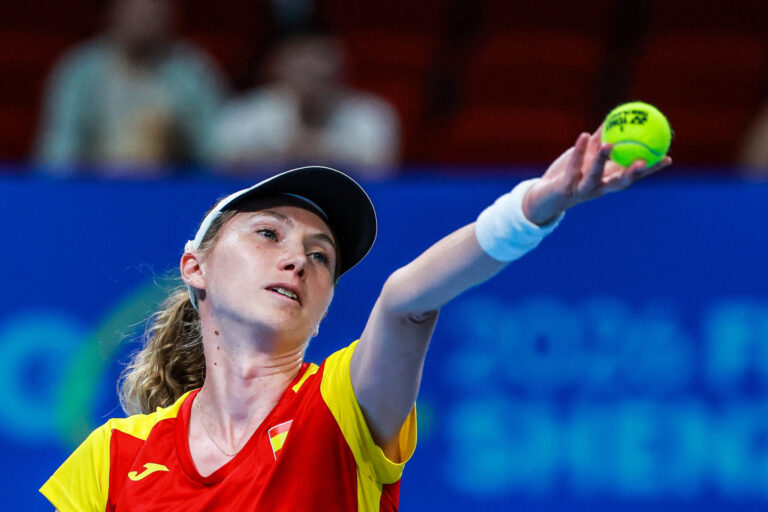
Cristina Bucsa Profile — Olympic Bronze, and a First Singles Title at 28

0

Cristina Bucsa had lost all ten of her matches against Top 10 players, every one of them in straight sets, when she walked on court against Jasmine Paolini in the Mérida semifinals at the end of February 2026. She won 7-5, 6-4. The next night she beat Magdalena Frech 6-1, 4-6, 6-4 in two hours and 15 minutes for her first WTA singles title, at 28, and then went back out and won the doubles as well.

Mérida

She came into the WTA 500 unseeded. She beat Donna Vekic in the first round, then Marina Stakusic and 2024 Mérida champion Zeynep Sonmez, all in straight sets, before the Paolini match. Paolini was the No. 1 seed and the world No. 7.

The final turned in the middle. Bucsa took the first set 6-1, then trailed 0-3 in the second, according to AFP, and lost it before winning the decider. “We gave all our best, and here we demonstrated how tough we are,” she said to Frech at the trophy presentation. It was her first singles title at any level since the WTA 125 in Limoges in 2023. In the doubles final she partnered Jiang Xinyu.

From Chișinău to Cantabria

Bucsa was born in Chișinău, Moldova, on 1 January 1998, and lives and trains in Cantabria in northern Spain, according to the WTA. She represents Spain and is coached by her father, Ion Bucsa. She won her first ITF title at a W15 event in Santarém, Portugal, in 2017.

Her first trip to Wimbledon, for qualifying in 2019, began without the right shoes. She told the WTA she had ordered grass-court shoes online, “but when I arrived home, I just received a pair of glasses.” The only pair she could find near the grounds were two sizes too big. She stuffed them with extra socks and came back from a set down to beat Whitney Osuigwe 4-6, 7-5, 6-3 at Roehampton.

Her Grand Slam main-draw debut came at the 2021 US Open, as a qualifier. In 2023 she qualified for the Australian Open and reached the third round, where she lost to Iga Swiatek, and later that year she beat Belinda Bencic in Cincinnati for her first Top 20 win.

The doubles player

Doubles made her name first. At the 2024 Paris Olympics she and Sara Sorribes Tormo won the bronze medal. That season she won four tour doubles titles, including the WTA 1000 in Madrid with Sorribes Tormo. She has nine tour-level doubles titles in all, the most recent in Guadalajara this month with Nicole Melichar-Martinez, and is ranked No. 14 in doubles. For how the format differs, see How Tennis Doubles Works.

The singles breakthrough

The singles results caught up in 2025. At Wimbledon she beat No. 22 seed Donna Vekic 6-1, 6-3 in 70 minutes to reach the third round for the first time, then lost to lucky loser Solana Sierra 7-5, 1-6, 6-1. At the US Open she beat Claire Liu, Alexandra Eala 6-4, 6-3 and No. 19 seed Elise Mertens 3-6, 7-5, 6-3 to reach the second week of a major for the first time. Against Mertens she was a set and 4-2 down in the second when, per the WTA, she won 11 points in a row. Aryna Sabalenka, the eventual champion, stopped her in the fourth round.

Late in 2025 she reached her first tour-level final, in Hong Kong, losing to Victoria Mboko, and finished the year at a career-high No. 54. The Mérida title in 2026 pushed her higher still, to a career-high No. 30.

Grand Slam best results

  • Australian Open: third round (2023, as a qualifier)
  • Roland Garros: second round (2024)
  • Wimbledon: third round (2025)
  • US Open: fourth round (2025)

Career singles titles: one — Mérida, 2026. Olympic Games: doubles bronze, Paris 2024, with Sara Sorribes Tormo.

Season Snapshot — 24 September 2026

Doubles ranking: No. 14, per the WTA. Singles: career high No. 30, reached this season; her current singles ranking is not listed because it could not be confirmed from a primary source. Coach: Ion Bucsa.

Her 2026 season includes the Mérida singles and doubles titles, doubles finals in Brisbane and Rome, and the Guadalajara doubles title with a singles semifinal there. She lost to Maja Chwalinska in Cincinnati.

This week she is in Shenzhen for the Billie Jean King Cup Finals. In Spain’s quarterfinal against Kazakhstan on Wednesday she lost her singles to Yulia Putintseva, then partnered Sorribes Tormo in the deciding doubles and won 6-2, 7-5, saving 18 of the 20 break points they faced, according to AP. The win put Spain into its first Billie Jean King Cup semifinal in 18 years, against Czechia.

This snapshot is dated and will change. The career record above does not.

More: Bucsa wins her first singles crown in Mexico, How Billie Jean King Cup Works, Olympic Tennis Explained, and the full ATP and WTA player index.

Swiatek Leads Gauff 11-5 and the Beijing Draw Puts Them in the Same Quarter

0

Iga Swiatek and Coco Gauff could meet in the China Open quarterfinals after the draw placed the former Beijing champions at opposite ends of the same quarter. Swiatek leads their head-to-head 11-5, but Gauff won their only meeting this year in straight sets at the United Cup, according to the WTA. A Beijing meeting would take place on Oct. 8 or 9.

Gauff, the third seed and 2024 champion, will open against Lanlana Tararudee or Camila Osorio, while eighth-seeded Swiatek, who won the title in 2023, faces Panna Udvardy or wild card Gao Xinyu. Both receive first-round byes, as do all 32 seeds in the 96-player field. Their quarter also includes Iva Jovic (10), Elise Mertens (13), Leylah Fernandez (23), Jelena Ostapenko (24), Cristina Bucsa (27) and Donna Vekic (30).

Paula Badosa and Daria Kasatkina will meet in the first round of the same quarter, renewing a matchup that took two days to complete at the US Open. Badosa needed nine match points to win that rain-interrupted contest, the WTA reported. The winner in Beijing advances to face Ostapenko.

The top quarter. World No. 1 Elena Rybakina returns to competition for the first time since winning the US Open, opening against Yuliia Starodubtseva or Alina Charaeva. Wang Xinyu (31) is her first potential seeded opponent, while Marie Bouzkova (18), Anna Kalinskaya (15) and wild card Zheng Qinwen are possible fourth-round opponents. Zheng opens Thursday against qualifier Shi Han after a run from qualifying to the US Open quarterfinals that lifted her from outside the top 120 to No. 52, according to the WTA. She described competing in China as “playing the 5th Grand Slam.” Sixth seed Elina Svitolina anchors the other side of the quarter, alongside Belinda Bencic (9), Ann Li (21) and Maria Sakkari (25). Bencic holds a 2-1 record against Rybakina, according to the WTA.

The bottom half. Roland Garros champion Mirra Andreeva (4) and Wimbledon champion Linda Noskova (5) lead the third quarter. Noskova, last year’s Beijing runner-up, begins against Elena-Gabriela Ruse or Lilli Tagger. Andreeva leads their head-to-head 4-2, having won their most recent meeting 5-7, 6-4, 7-5 in Brisbane in January, according to the WTA. The quarter’s other seeds are Diana Shnaider (11), Jasmine Paolini (14), Ekaterina Alexandrova (19), Diane Parry (22), Peyton Stearns (28) and Clara Tauson (32).

Second seed Aryna Sabalenka begins against Anna Bondar or Renata Zarazua. Seventh seed Karolina Muchova, who finished runner-up to Noskova at Wimbledon, anchors the other side of the fourth quarter. They are joined by Naomi Osaka (12), Anastasia Potapova (16), Maja Chwalinska (17), Sara Bejlek (20), Nikola Bartunkova (26) and Liudmila Samsonova (29). Sabalenka leads Osaka 3-2 in their meetings, although Osaka won their most recent encounter at Wimbledon, according to the WTA.

What changed Tuesday. Alina Korneeva and Petra Marcinko withdrew from the main draw, according to the WTA’s updated draw sheet released Tuesday evening in Beijing. Korneeva was listed with a thigh injury and Marcinko with a low back injury. Lucky losers Elvina Kalieva and Linda Fruhvirtova replaced them. Jessica Pegula, Amanda Anisimova, Marta Kostyuk and Sorana Cirstea had withdrawn before the draw.

What it means. Beijing opens the final stretch of the race to the WTA Finals, with Wuhan, starting Oct. 12, the only remaining WTA 1000 event after this week. Rybakina and Sabalenka have already qualified for the Finals in Indian Wells, according to the WTA, leaving six singles places available to Gauff, Andreeva, Svitolina and the other contenders. Pegula sits third on the Race leaderboard but will not add points in Beijing. Under the WTA’s Race rules, a player’s best six results count from the seven-event group comprising Indian Wells, Miami, Madrid, Rome, Canada, Cincinnati and Beijing.

The schedule. First-round play continues through Thursday, Oct. 1, before the seeds begin their campaigns in the second round on Oct. 2-3. The third round is scheduled for Oct. 4-5 and the fourth round for Oct. 6-7, followed by the quarterfinals on Oct. 8-9, semifinals on Oct. 10 and final on Sunday, Oct. 11, according to the WTA. The champion will earn 1,000 ranking points and $1,151,380 from a total prize pool of $9,415,725.

For the format, history and how to watch, see our China Open guide. Our earlier report covers the pre-draw withdrawals, and the Wuhan Open guide covers the next 1000-level stop.

Kei Nishikori Profile — The First Asian Man in a Grand Slam Singles Final

0

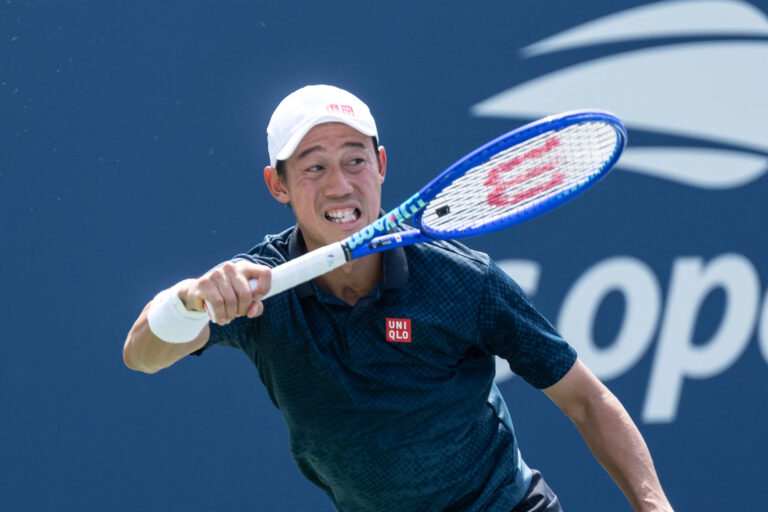
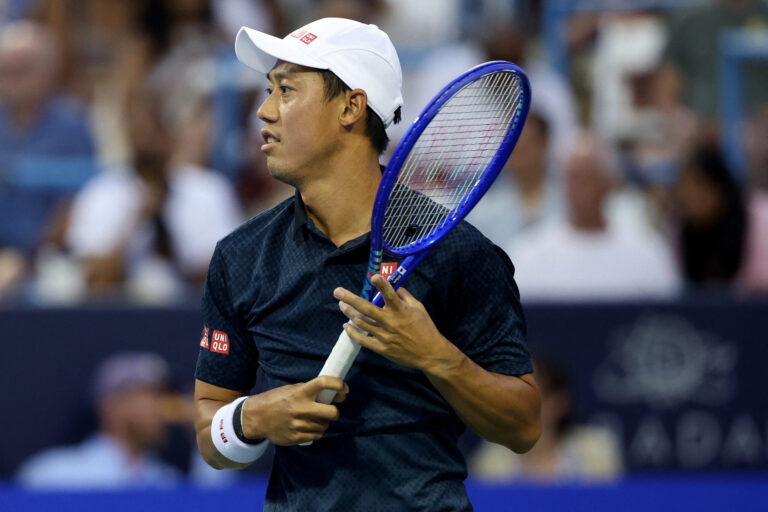
Kei Nishikori made a Grand Slam final look possible for Asian men. At the 2014 US Open he beat world No. 1 Novak Djokovic in the semi-finals to become the first Asian man to reach a major singles final, and in 2015 he climbed to No. 4, the highest ranking any Asian man has held, according to the ATP.

He won 12 ATP Tour titles, six of them at ATP 500 level, reached four Masters 1000 finals, qualified four times for the Nitto ATP Finals and won Olympic bronze in Rio in 2016. Surgery on his elbow and hip, and an ankle injury, cost him years in between. This week in Tokyo, where he won titles in 2012 and 2014, the ATP says he plays the final tournament of his career.

Leaving Japan at 14

Nishikori started playing at five and left Japan at 14 to train at IMG Academy in Bradenton, Florida, speaking no English when he arrived, according to his ATP biography. He went to the United States as one of a small group of Japanese players supported through the Masaaki Morita Tennis Fund.

His first title came quickly. He won Delray Beach in 2008 as an 18-year-old qualifier ranked 244th, and the ATP says he remains the youngest champion on tour since Lleyton Hewitt won Adelaide at 16 in 1998. He was named ATP Newcomer of the Year that season.

2014: Raonic at 2:26 a.m., Wawrinka then Djokovic

He reached his first major quarter-final at the 2012 Australian Open, the first Japanese man to do so since Shuzo Matsuoka at Wimbledon in 1995. The same year he won his home title in Tokyo.

The ATP calls 2014 the best season of his career: four titles and a 54-14 record. He reached the Miami semi-finals, beating Roger Federer in the quarter-finals, and in May he became the first Japanese man in the ATP’s top 10, The Associated Press reported. Coached then by Michael Chang, he arrived at the US Open as the 10th seed and beat Milos Raonic in a fourth-round match that ended at 2:26 a.m., equalling the tournament’s latest finish. On the Wednesday he beat third seed Stan Wawrinka 3-6, 7-5, 7-6(7), 6-7(5), 6-4 in four hours and 15 minutes to become the first Japanese man in the US Open semi-finals since Ichiya Kumagae in 1918, according to AP.

Then came Djokovic, the world No. 1, and the ATP still lists that semi-final as the biggest of his career wins. He lost the final to Marin Cilic. He won Tokyo again that autumn.

No. 4 and the Nitto ATP Finals

Nishikori reached No. 4 in 2015 and played the season finale four times, in 2014, 2015, 2016 and 2018, reaching the semi-finals in 2014 and 2016, the ATP says. He made the quarter-finals of all four majors. At the 2018 US Open he and Naomi Osaka became the first Japanese man and woman in the last eight of the same major since Kimiko Date and Matsuoka at Wimbledon in 1995, AFP reported, and he then beat Cilic, the man who had beaten him in the 2014 final, 2-6, 6-4, 7-6(5), 4-6, 6-4 for his third US Open semi-final.

Rio bronze and a drought ended in Brisbane

He won bronze in the men’s singles at the Rio 2016 Olympics. After a title in February 2016 he lost nine consecutive finals, a run that ended when he beat Daniil Medvedev in the Brisbane International final in January 2019, ABC reported. It was his 12th and last tour title.

Surgery and the way back

His ATP biography records right elbow operations in August 2009 and October 2019 and hip surgery in early 2022 that kept him out for the whole season. An ankle injury in practice late that year delayed his comeback by four to five months. He returned at the 2023 Palmas del Mar Challenger and became the first unranked player to win a Challenger title.

The deciding-set record

Nishikori’s reputation rests on long matches as much as titles. The ATP says he has won 72.4 per cent of his deciding sets at tour level, a rate bettered only by Bjorn Borg (73.4 per cent) and John McEnroe (72.8 per cent).

The farewell

He announced on 30 April that he would retire at the end of the 2026 season. “To be honest, I still wish I could continue my playing career. Even so, looking back on everything up to this point, I can proudly say that I gave it my all,” he wrote. He had 451 tour-level wins at the time, according to the ATP.

Much of his final season was spent below tour level. He went through qualifying at Cincinnati, and his last US Open bid ended in qualifying. The farewell comes at the Japan Open, where he opens against second seed Frances Tiafoe.

Grand Slam best results

  • Australian Open: quarter-finals, first reached in 2012
  • Roland Garros: quarter-finals (2015, 2017, 2019)
  • Wimbledon: quarter-finals (2018, 2019)
  • US Open: final (2014); semi-finals (2016, 2018)

Season Snapshot — 29 September 2026

  • Status: playing the Japan Open in Tokyo (30 September to 6 October), which the ATP describes as the final tournament of his career. First-round opponent: second seed Frances Tiafoe.
  • Ranking: No. 464 when he announced his retirement on 30 April, according to the ATP.
  • 2026: Challenger events and tour-level qualifying. The ATP said in April that his most recent tour-level event was the 2025 Cincinnati Open.
  • Career: 12 ATP Tour titles and 451 tour-level wins as of 30 April.

This snapshot is dated and will change. The career record above does not.

European Open Guide — Brussels Dates, Draw, Points and Past Champions

0

The European Open is Belgium’s ATP 250 week on the men’s tour calendar. It began in Antwerp in 2016, moved to Brussels in 2025, and in 2026 it runs from 19 to 25 October, the week after the Shanghai Masters and the week before the ATP 500s in Basel and Vienna.

Its short history already has a clear shape: indoor hard courts, a quick turnaround from the Asian swing, and a list of champions that runs from Andy Murray’s win as the world No. 243 to Jannik Sinner’s title at 20.

When and where

The 2026 BNP Paribas Fortis European Open is scheduled for 19 to 25 October in Brussels, according to the ATP. It shares the week with two other ATP 250 events, in Almaty and Lyon. The tournament is played indoors on hard courts. From 2016 to 2024 it was held at the Lotto Arena in Antwerp; the 2025 edition was the first in Brussels.

Draw and format

The singles draw has 28 players and the doubles draw 16 teams, the standard ATP 250 format. In a 28-player draw the top four seeds receive first-round byes. Qualifying is played over the opening weekend; in 2024 it ran on the Sunday and Monday, with both finals on the closing Sunday. Matches are best of three sets.

Ranking points

The ATP published this singles breakdown for the 2024 edition, in line with the tour’s 250 structure:

  • Winner: 250
  • Finalist: 165
  • Semi-finalist: 100
  • Quarter-finalist: 50
  • Round of 16: 25
  • First round (round of 28): 0

Past champions

  • 2016: Richard Gasquet [UNVERIFIED: year inferred from the ATP’s list of the event’s eight single-title champions through 2023; confirm on the ATP tournament page]
  • 2017: Jo-Wilfried Tsonga
  • 2018: Kyle Edmund, def. Gael Monfils 3-6, 7-6(2), 7-6(4)
  • 2019: Andy Murray
  • 2020: Ugo Humbert [UNVERIFIED: year from an ATP report title seen in citation only, not opened; confirm on the ATP tournament page]
  • 2021: Jannik Sinner
  • 2022: Felix Auger-Aliassime
  • 2023: Alexander Bublik, def. Arthur Fils 6-4, 6-4
  • 2024: Roberto Bautista Agut, def. Jiri Lehecka
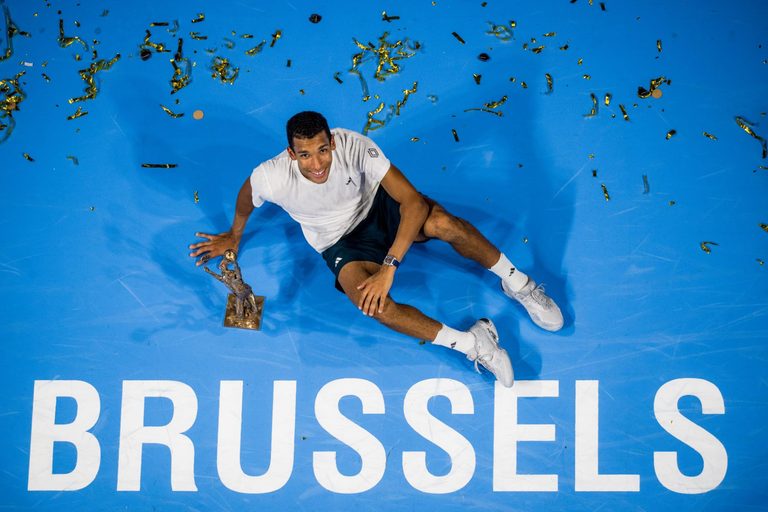
  • 2025 (Brussels): Felix Auger-Aliassime, def. Jiri Lehecka 7-6(2), 6-7(6), 6-2

Auger-Aliassime’s 2025 final took two hours and 34 minutes. He could not convert two championship points in the second-set tie-break and regrouped to win the deciding set. The ATP counted 17 aces and three break points saved from three faced. It made him the first player to win the tournament twice, and it cost Lehecka a second straight final on Belgian soil after his loss to Bautista Agut in Antwerp the year before.

Records

The ATP’s record list, published before the 2024 edition, notes that Jo-Wilfried Tsonga was the oldest champion at 32 in 2017 and Sinner the youngest at 20 in 2021. Auger-Aliassime was the highest-ranked champion, at No. 10 in 2022, and Murray the lowest-ranked, at No. 243 in 2019. Diego Schwartzman held the record for match wins, with 12.

Where it fits in the season

Brussels sits at the start of the European indoor season, with Basel and Vienna the following week and the Paris Masters after that. For players near the cut in the Race to Turin, 250 points in late October can matter. Auger-Aliassime’s 2025 title moved him to ninth in the ATP’s Live Race, 330 points behind Lorenzo Musetti.

How to watch

The ATP directs viewers to Tennis TV for live streaming of the tournament, and publishes a TV schedule by country on its tournament pages.

2026 Snapshot — 29 September 2026

  • Dates: 19 to 25 October 2026, Brussels, indoor hard courts.
  • Defending champion: Felix Auger-Aliassime.
  • Entry list: not yet confirmed from an official source at the time of writing.

This snapshot is dated and will change. The tournament record above does not.

Nishikori Draws Second Seed Tiafoe in the Last Tournament of His Career

0

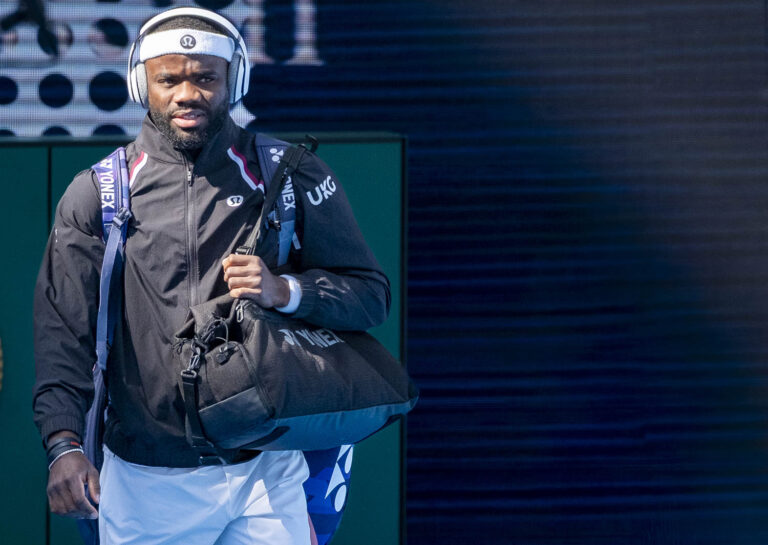
Kei Nishikori will end his career in the city where he won twice. The ATP says the Japan Open, which begins Wednesday, is the final tournament of the 36-year-old’s career, and Monday’s draw sent him straight into second seed Frances Tiafoe.

Nishikori won the Tokyo title in 2012 and 2014, reached No. 4 in the PIF ATP Rankings in 2015 and won 12 tour-level titles, according to the ATP. He announced in April that he would retire at the end of the season. Tiafoe arrives at a career-high No. 8, reached on 14 September after his third major semi-final at the US Open. He knows the Tokyo final from the losing side: Taylor Fritz beat him for the title in 2022.

The defending champion. Carlos Alcaraz won Tokyo on his debut last year, beating Fritz in the final, and opens his defence against Alex Michelsen. The Spaniard, No. 3 in the rankings, was out with a right wrist injury from mid-April until the US Open, where he reached the quarter-finals before losing to eventual finalist Ben Shelton. Michelsen, 22, reached his first major quarter-final in New York and is a former Tokyo quarter-finalist. The ATP says the two have never played.

If Alcaraz wins, he meets Matteo Arnaldi or Japanese wild card Rei Sakamoto. His seeded quarter-final opponent is Tommy Paul, whom he beat at the US Open; Paul opens against Alejandro Tabilo. Alcaraz is chasing a third title of 2026 after the Australian Open and Doha.

Rune’s return. Holger Rune plays his first ATP Tour event since tearing his Achilles tendon in Stockholm last October. The former world No. 4 came back for Denmark in the Davis Cup earlier this month and reached the Tokyo semi-finals in 2024. He opens against Kyrian Jacquet, who enters as a special exempt after reaching the Hangzhou semi-finals, the ATP’s route into a main draw for a player whose deep run one week kept him out of the next event’s qualifying. The winner could meet sixth seed Casper Ruud in the second round.

Fritz’s section. Rune landed in the quarter of third seed Fritz, the 2022 champion, who opens against a qualifier and could play Lorenzo Musetti in the second round. Musetti starts against Wimbledon semi-finalist Arthur Fery. Fritz and Alcaraz are seeded to meet in the semi-finals, a rematch of last year’s final.

The bottom half. Tiafoe’s projected quarter-final opponent is eighth seed Valentin Vacherot, the Shanghai Masters champion last year, who opens against Alexander Blockx. Rafael Jodar, the 20-year-old Spaniard who reached the Washington final and the Montreal semi-finals in August, faces a qualifier and is Tiafoe’s seeded semi-final opponent. Fifth seed Brandon Nakashima stands in Jodar’s quarter.

What it means. Jodar is ninth in the ATP’s Live Race to Turin and first in the Next Gen race. The ATP says he is trying to become the third player, after Alcaraz and Stefanos Tsitsipas, to qualify for the Nitto ATP Finals the year after playing the Next Gen ATP Finals. Tokyo is an ATP 500, one of the last big points weeks before the Shanghai Masters begins on 7 October, and GTN’s Race to Turin tracker explains how the eight places are decided.

For the home crowd, the week belongs to Nishikori. Two younger Japanese players, Sakamoto and Sho Shimabukuro, are in the draw on wild cards. The Japan Open runs from 30 September to 6 October; GTN’s Japan Open guide covers the format, points and past champions.

Alcaraz Says Tennis Is Getting Slower Because of the Balls, Not the Courts

0

Carlos Alcaraz does not mind a slow court. His complaint is the ball. Asked after Team Europe won the Laver Cup 13-5 at the O2 in London on Sunday about conditions that had looked slow all week, he started with a joke at his own expense.

“I mean, for me, I don’t mind slow courts (smiling). You know, especially with my serve, it’s not the biggest one,” he said, according to the ASAP Sports transcript. Then he made the point. “And now, you know, it’s getting slower, but I think it’s not about the courts. It is about the balls, I would say.”

“You know, we can see during a lot of tournaments how the balls’ reaction from the court is totally different. The ball becomes super big, and it’s totally different game when it’s new balls. We play two or three games with that balls, you have to adapt yourself the best you can.”

He said he had made a request, without naming who received it. “I don’t know where if they’re going to change it or not, but what I request is that they have to see the best ball possible for the courts are made, the tournaments we’re going to play. I think that’s a really important things to know.”

Not only Alcaraz. Jakub Mensik answered the same question first. He called London “one of the probably slowest surface that I have played on this year” among hard courts, and said of the balls, “I consider them that they were not that good.”

He said it a year ago. The complaint is not new for Alcaraz. After Taylor Fritz beat him 6-3, 6-2 at the 2025 Laver Cup in San Francisco, Alcaraz said: “I think these conditions, you know, it’s pretty slow. The balls are really big, so I had to be patient, I had to be solid.” He added, “It is really difficult when you are defending, turning to attack is really difficult because of the balls and the conditions that are really slow.” This year he reversed that result, saving two match points against Fritz on Saturday, the ATP reported.

What the rules already say. The pairing Alcaraz asked for is written into the Rules of Tennis. Any ball used in a tournament played under the Rules must be on the International Tennis Federation’s list of approved balls. The Rules provide three standard ball types: Type 1, the fast ball, is intended for slow courts; Type 2, the medium ball, for medium-slow, medium and medium-fast courts; and Type 3, the slow ball, for fast courts. Type 3 is physically larger, between 7.00 and 7.30 centimetres across against 6.54 to 6.86 for the other two. The ITF grades courts into five pace categories to support that matching; GTN’s court pace rating explainer sets out how the measurement works.

The wording matters. The ITF ruling says each type is “intended” for a court speed; it does not require an event to use a particular type. What the Rules do require is that organisers announce in advance how many balls are in play and the ball-change policy. When balls are changed after an agreed odd number of games, the first change comes two games early to account for the warm-up.

The test and the complaint. Alcaraz’s point about balls that grow after a few games is one the approval test only partly addresses. The ITF’s durability test uses laboratory equipment to simulate nine games of play, then measures the change. In the table of maximum permitted changes after that test, the ITF sets limits for mass, rebound and deformation, but lists no separate limit for how much the ball’s size may grow.

The lasting question. Players have pushed on two levers: how often balls are changed, which the ATP has looked at before, and which ball is used at all. Alcaraz’s request goes to the second, and the Rules already describe the answer he wants. Whether events act on it is another matter, and he said as much. “But, you know, who knows? What I can say is I’m trying to adapt myself and the game the best I can in the tournament that I go.” He starts his Japan Open title defense against Alex Michelsen this week.

Special Exempts Explained — How a Winning Week Skips Next Week’s Qualifying

0

The China Open draw published on Monday lists Roman Safiullin beside fourth seed Flavio Cobolli with two letters after his name: SE. Across the calendar, the WTA’s Ningbo Open reserves one special exempt place in its 28-player field. The designation solves a scheduling problem the tours create every week. A player who keeps winning at one tournament cannot be in another city for the next tournament’s qualifying.

What a special exempt is

Under the ATP Rulebook, a player can receive a special exempt into the singles main draw of the following week’s tournament when two conditions are met. He is still competing, in another qualified event, on the date that tournament’s qualifying begins. And his ranking at the entry deadline would not have made him a direct acceptance had he entered. A player still on court at 9 p.m. local time at the qualifying site is eligible only if he wins that match.

The second condition is the one most often missed. A special exempt replaces qualifying; it is not a bonus for a good week. Daniil Medvedev was into the Hangzhou semifinals when the Beijing draw was made, according to the ATP, but his ranking put him straight into the main draw as the third seed, so the rule never applied to him.

Which tournaments count

The rulebook limits which “qualified events” can feed a special exempt, by the level of the tournament the player wants to enter:

  • Into a Masters 1000: another Masters 1000, an ATP 500 or a Grand Slam.
  • Into an ATP 500: another ATP 500, a Masters 1000, a Grand Slam, or an ATP 250 in the same region as the 500 event.
  • Into an ATP 250: any ATP 250, ATP 500, Masters 1000 or Grand Slam.
  • Into a Challenger: an ATP Tour or Challenger event in the same geographic region, unless the region has no Challenger the following week, in which case any Challenger that week qualifies.

How many places there are

Masters 1000 and ATP 500 tournaments have one special exempt place. ATP 250 and Challenger events have two. When more players are eligible than there are places, they are selected by position on the most recent ATP rankings or by protected ranking, with two limits. A player who is already a direct acceptance on his protected ranking is not eligible, and a player who would have been a direct acceptance had he entered on his protected ranking cannot use it to set his place on the special exempt list.

What happens to an unused place

At ATP Tour events, a special exempt place that is not needed before qualifying begins goes to the next player on the original acceptance list. The rulebook notes that this can pull a player out of the qualifying draw before the first ball is struck, with an alternate taking his qualifying spot. It is one reason entry lists keep moving until the weekend before an event.

The Q/SE line in a draw

Main draws are often made before the candidate has played his Friday match. In that case the special exempt places are drawn like qualifier places and the lines are marked “Q/SE”. Once the result is known, either the special exempt player or, if he lost, the next direct acceptance is drawn at random into one of those lines.

One hour to decide

A player has until one hour after the match that makes him eligible to tell the ATP supervisor or player relations staff that he wants the place. Once he declares, he is committed. Turning it down afterwards brings the withdrawal or late-withdrawal penalties, and a player who accepts and fails to appear is treated as an entered player and penalised accordingly.

The timing cases

The rulebook’s case decisions draw the lines tightly. A player who wins a Thursday quarterfinal at an event with a Saturday final is not eligible, because he must be scheduled to play on the day qualifying begins. A match that runs past midnight on the eve of qualifying does not count as competing on qualifying day; the rule means starting or resuming a match as part of that day’s scheduled programme. A player without a singles ranking or protected ranking cannot receive a special exempt at all.

There is also a late-night exit. A player who is still on court at 9 p.m. the night before qualifying and then loses is eligible neither for the special exempt nor for qualifying sign-in. The tournament can still hand him a wild card if it knows the result before the qualifying draw and no special scheduling is needed.

Special exempt, lucky loser, qualifier

The three routes are easy to confuse. A qualifier earns a main-draw place by winning the qualifying competition. A lucky loser lost in qualifying and fills a vacancy. A special exempt never plays qualifying, because he was still winning somewhere else when it began.

The WTA version

The WTA uses special exempts too. Its rulebook lists special exempt among the ways a player can be accepted into a tournament, and the WTA’s published field for the 2026 Ningbo Open includes one special exempt place alongside six qualifiers and four wild cards. The WTA’s detailed eligibility criteria are set out in its own rulebook and are not covered here; the rules above are the ATP’s.

Ningbo Open Guide — Dates, Draw Format, Points and Past Champions

0

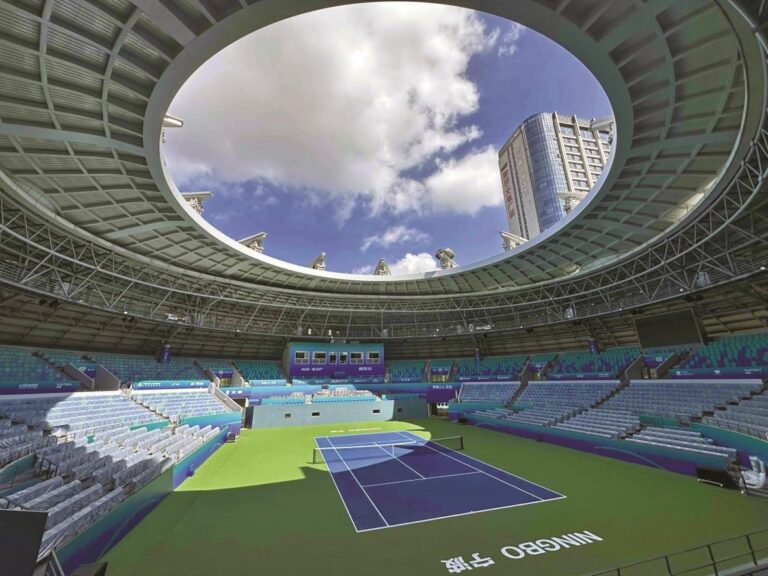
The Ningbo Open is a WTA 500 tournament played on outdoor hard courts in Ningbo, China, and one of the last stops of the Asian swing. The 2026 edition runs October 19 to 25 at the Ningbo Tennis Center.

Last year the final settled more than a title. Elena Rybakina lost the opening set to Ekaterina Alexandrova, then won nine games in a row across the second and third sets to take the trophy 3-6, 6-0, 6-2, according to the WTA. The run helped her into the WTA Finals, which she went on to win. That is the tournament’s place on the calendar: late enough that every result moves the year-end race.

Dates and venue

First-round singles matches begin on Monday, October 19, and the tournament runs through Sunday, October 25, when both the singles and doubles finals are played, according to the WTA. Matches are at the Ningbo Tennis Center on outdoor hard courts.

Draw format

The singles draw has 28 players and the doubles draw 16 teams. The singles field is made up of direct entrants plus six qualifiers, four wild cards and one special exempt spot, the WTA said. The top four seeds receive byes into the second round, so they need four match wins for the title while everyone else needs five. Qualifying works as at other tour events; our guide to tour-level qualifying explains the path.

Points and prize money

The singles champion earns 500 ranking points and $185,500, according to the WTA, which lists the tournament’s total financial commitment at $1,206,446. For how the 500 level sits between the WTA 1000 events and the 250s, see our WTA 500 guide.

History

The Ningbo Open was founded in 2010. It was a WTA 125 event in 2013 and 2014, returned in 2023 as a WTA 250 after a nine-year gap, and was upgraded to WTA 500 status in 2024, according to the WTA.

Past champions

Tour-level era, singles finals:

Each of the three finals has a story attached. Jabeur took a last-minute wild card in 2023 after a third-round loss in Guadalajara and won the first hard-court title of her career, winning all six deuce games in a 78-minute final, the WTA reported. Kasatkina won the first edition at 500 level as the fifth seed, beating Andreeva in three sets. Rybakina, the third seed in 2025, beat fourth seed Alexandrova for the 10th title of her career.

Ningbo and the WTA Finals race

The WTA describes Ningbo as the second-to-last 500 event on its calendar, which is why it tends to carry weight in the Race to the WTA Finals. With few events left in the season, a deep week here can move a player on the edge of the eight-woman singles field, as Rybakina’s did in 2025. Our guide to the ATP and WTA Finals covers the year-end events themselves.

How to watch

Television and streaming rights vary by country. The WTA’s where-to-watch page lists the rights holders for each region. Other stops on the swing are covered in our China Open guide and Wuhan Open guide.

Season Snapshot — as of 28 September 2026

Entry list. Defending champion Rybakina leads the field, joined by fellow Top 10 players Jessica Pegula, Elina Svitolina, Iga Swiatek and Marta Kostyuk, according to the entry list the WTA published on 24 September. Top 20 players Belinda Bencic, Iva Jovic, Diana Shnaider, Sorana Cirstea, Alexandra Eala, Elise Mertens and Jasmine Paolini are also entered, with Anna Kalinskaya, Maja Chwalinska, Marie Bouzkova, Ekaterina Alexandrova and Sara Bejlek completing the direct entrants. The first five alternates were Diane Parry, Leylah Fernandez, Jelena Ostapenko, Cristina Bucsa and Wang Xinyu. Entry lists change with withdrawals.

Race to the WTA Finals. On the WTA’s 24 September standings, Rybakina had already qualified, while Svitolina, Karolina Muchova and Linda Noskova held sixth, seventh and eighth. Swiatek was ninth and Kostyuk 10th. The WTA noted that Noskova, as a Grand Slam champion, would qualify unless she fell below 20th.

Rankings. Rybakina arrives in the Asian swing as world No. 1, according to the WTA.

This snapshot is dated and will change. The career record above does not.

Djokovic Is 29-0 in Beijing and the Draw Puts Zverev in His Quarter

0

Novak Djokovic has never lost a match at the China Open, and Monday’s draw gave him little room to ease back in. The six-time champion, playing the ATP 500 event for the first time since 2015, opens against Nuno Borges and landed in the same quarter as top seed Alexander Zverev.

Djokovic is 29-0 in Beijing, according to the ATP’s win-loss records, and is seeded sixth at 39. His only previous meeting with Borges came on the way to his 101st tour-level title in Athens, the ATP said. The winner plays Juan Manuel Cerundolo or Chinese wild card Bu Yunchaokete, and the draw then points to Zverev. Djokovic leads that head-to-head 9-5 and won their most recent meeting, at Roland Garros in 2025.

Zverev’s opener. Zverev plays Cameron Norrie, the British left-hander, in the first round. The ATP says the German has won 46 of his past 47 matches against left-handers. A three-time semi-finalist in Beijing, Zverev won the US Open this month for his second major and arrives from London, where his 7-6(3), 6-3 win over Learner Tien clinched the Laver Cup for Team Europe on Sunday. Shang Juncheng, one of the tournament’s four wild cards, or Sebastian Baez waits in the second round.

The rest of the top half. Third seed Daniil Medvedev beat Zverev in Beijing last year and was the runner-up here in 2023. He opens against a qualifier; the ATP noted he was into the Hangzhou semi-finals when the Beijing draw was made. Eighth seed Jakub Mensik, who won his Laver Cup doubles with Flavio Cobolli on Sunday, starts against Alexander Bublik. Jan-Lennard Struff meets Thiago Agustin Tirante, and Francisco Cerundolo faces a qualifier.

The bottom half. Second seed Felix Auger-Aliassime drew Karen Khachanov, who beat him in the second round of the US Open this month and went on to the semi-finals. Seventh seed Learner Tien, last year’s runner-up to Jannik Sinner, is in the draw on a wild card and opens against Hubert Hurkacz. Chinese wild card Zhang Zhizhen and Arthur Rinderknech each face a qualifier.

Fifth seed Alex de Minaur opens against Mariano Navone and could meet fourth seed Flavio Cobolli in the quarter-finals. Cobolli starts against Roman Safiullin, who is listed in the draw as a special exempt. Ignacio Buse plays Quentin Halys, and Tallon Griekspoor meets Andrey Rublev.

What is at stake. Sinner, the world No. 1, won Beijing last year and withdrew from this year’s event last week. The ATP said he will drop the 500 points from that title, which gives Zverev a chance to cut into Sinner’s lead in the race for year-end No. 1. Cobolli sits fifth in the Live Race to Turin and is chasing a first Nitto ATP Finals place, according to the ATP. Our guide to the Race to Turin explains how the eight places are decided.

Format and schedule. The singles draw has 32 players and eight seeds, so no one receives a bye. Qualifying runs Monday and Tuesday, and main-draw play begins Wednesday, September 30, with the final on October 6. Play starts at 11 a.m. local time on the first two days of the main draw, the ATP said. The four singles wild cards went to Shang, Bu, Zhang and Tien. The women’s WTA 1000 event runs alongside it at the National Tennis Center through October 11; our China Open guide covers both draws, prize money and how to watch.

First round. Top half: Zverev (1) v Norrie; Shang (WC) v Baez; J.M. Cerundolo v Bu (WC); Borges v Djokovic (6); Medvedev (3) v qualifier; Struff v Tirante; qualifier v F. Cerundolo; Bublik v Mensik (8). Bottom half: de Minaur (5) v Navone; Buse v Halys; Griekspoor v Rublev; Safiullin (SE) v Cobolli (4); Tien (7, WC) v Hurkacz; Zhang (WC) v qualifier; qualifier v Rinderknech; Khachanov v Auger-Aliassime (2).

ITIA Provisional Suspensions Explained — How Tennis Bars a Player Before Any Hearing

0

On Aug. 28, 2026, the International Tennis Integrity Agency said Croatian coach Marino Jakic had been provisionally suspended since June 24, pending a full investigation of potential breaches of tennis’ anti-corruption rules in 2023. Jakic had appealed. On Aug. 18, an independent hearing officer upheld the suspension. No case against him had been decided, and he was still barred from the sport.

That is what a provisional suspension does. It removes a player, coach or official from tennis while a case is still open. This explainer sets out how the ITIA uses it under the Tennis Anti-Corruption Program (TACP), what it bans, how it can be challenged and what happens to the time served, using the agency’s own published decisions.

What a provisional suspension is

The ITIA describes provisional suspensions as imposed pending the full consideration of TACP charges. It is an interim measure, not a finding. The underlying case continues and ends either in a sanction, agreed or imposed after a hearing, or in no sanction at all.

The two grounds the ITIA cites most

Section F.3.b.i.1: failing to comply with a Demand. Refusing an investigator’s Demand is a ground on its own, whatever the investigation eventually finds. Russian player Mark Kaufman was provisionally suspended under this section from Dec. 24, 2025. When the ITIA later announced his sanction, it said the underlying offence was failing to co-operate with an investigation, including refusing a request to examine his phone. Azerbaijan Davis Cup captain Yalchin Manafli was provisionally suspended from June 11, 2026, for the same kind of refusal, the ITIA said.

Section F.3.b.i.4: a likely serious offense. This ground requires the ITIA to show a likelihood that the person has committed a corruption offence, and that tennis’ integrity would be undermined without a suspension, with the harm of not suspending outweighing the hardship to the person. In its January 2026 releases the agency quoted the threshold as an offence “above Category C2 of the Sanctioning Guidelines”. Its releases from 2023 used the older term “Major Offense” for the same section.

Who can be suspended

Anyone covered by the program, not only players. On Jan. 20, 2026, the ITIA announced five provisional suspensions under F.3.b.i.4 in one release: players Alana Tuayeva of Russia and Nikol Palecek of Serbia, and three national-level officials, Marko Ristic of Serbia and Zsolt Bagosi and Tamas Tarnai of Hungary. Jakic is a coach. Manafli, besides captaining his country’s Davis Cup team, has worked as a tournament director at World Tennis Tour events in Azerbaijan, according to the ITIA.

What it bans

The ban is total. In its August 2026 wording, the ITIA says suspended and provisionally suspended individuals may not play in, coach at or attend any event organised or sanctioned by World Tennis, the WTA, the ATP, the Grand Slams or any national association. Earlier releases named the agency’s members instead: the ATP, ITF, WTA, Tennis Australia, the French Tennis Federation, Wimbledon and the USTA. The change reflects the ITF’s rebrand as World Tennis, not a narrower ban.

How to challenge it

The suspended person can appeal the imposition of the provisional suspension to an independent Anti-Corruption Hearing Officer (AHO). The ITIA’s 2026 releases show how those appeals have gone:

  • Mila Masic (Serbia) appealed on Jan. 23. AHO Charles Hollander KC dismissed the appeal on Feb. 19.
  • Mark Kaufman appealed on Jan. 9, then told the AHO panel he intended to withdraw. After no further contact, AHO Diana Tesic dismissed the appeal on Feb. 18.
  • Yalchin Manafli appealed. AHO Philippe Cavalieros dismissed it, finding substantial evidence supported the suspension.
  • Marino Jakic appealed on July 13. AHO Amani Khalifa upheld the suspension on Aug. 18 as “supported by substantial evidence.”

Many never appeal. Draginja Vukovic of Serbia chose not to, and none of the five individuals in the Jan. 20 release did. In every 2026 appeal described in the releases cited here, the suspension stood.

What happens to the time served

If a sanction follows, the time already spent provisionally suspended is credited against it. The ITIA’s own dates show the arithmetic:

  • Alana Tuayeva was provisionally suspended from Dec. 19, 2025. In March 2026 she accepted a suspension of three years and nine months and a $30,000 fine, of which $21,000 was suspended, after admitting to fixing two of her own matches at World Tennis Tour level. Her ban ends on Sept. 18, 2029, three years and nine months after the provisional suspension began, subject to repayment of outstanding fines.
  • Mark Kaufman was provisionally suspended from Dec. 24, 2025. In August 2026 he accepted 18 months and a $5,000 fine, of which $3,500 was suspended. His ban ends on June 23, 2027, 18 months after the provisional suspension began.

A sanction without a provisional stage starts when it is imposed. Serbian player Luka Todorovic accepted a nine-week suspension and a $10,000 fine, of which $7,500 was suspended, for failing to report a corrupt approach in 2023. His ban began on Aug. 19, 2026, and ends on Oct. 21, 2026.

Anti-doping runs on a separate track

The ITIA also administers the Tennis Anti-Doping Programme, which has its own rules on provisional suspensions and is not covered by the TACP sections above. It also allows a voluntary route: in August 2025 the ITIA said Australian player Dayne Kelly had elected to enter a voluntary provisional suspension while under investigation for multiple anti-doping offences. For how doping cases have tested those rules, see our report on the Vondrousova ban and the wider fight over tennis’ anti-doping rules.

The question it leaves

A provisional suspension trades one risk for another. The TACP’s own test asks whether the harm of leaving someone active outweighs the hardship of sidelining them before anything is proven, and an appeal to a hearing officer is the way to test that judgment before the case is decided. Every player named in the 2026 releases cited here had a career-high ranking outside the world’s top 500, the level of the sport where the ITIA’s corruption cases are concentrated in these examples. For how appeals can go further, and go badly, see the match-fixing appeal that ended with a longer ban.