Home Blog

Barbora Krejcikova Profile — Two Slams and a Doubles Empire

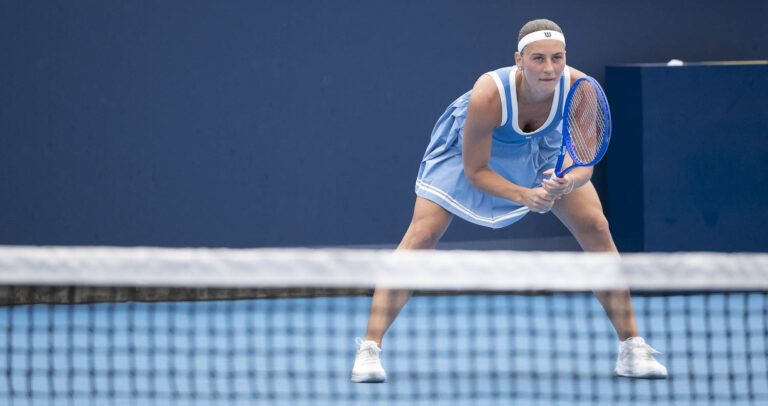
Barbora Krejcikova built one of the most unusual career paths in modern women’s tennis. She reached the top of the doubles game before she was an established singles player, then converted that foundation into two Grand Slam singles titles and a career-high singles ranking of No. 2. The Czech has won majors in singles, women’s doubles and mixed doubles, a combination only a small group of players in the modern era can claim.

Her career has also been shaped by long injury absences, which have twice pushed her far down the rankings and twice been followed by a climb back.

Early Career and the Doubles Foundation

Krejcikova was born on 18 December 1995 in Brno, Czech Republic, and turned professional in 2010. She stands 1.78m and plays right-handed with a two-handed backhand.

Her breakthrough came in doubles alongside compatriot Katerina Siniakova. The pair won Roland Garros and Wimbledon in 2018, and Krejcikova reached world No. 1 in doubles on 22 October 2018 — several years before she was a factor in singles at that level.

The Roland Garros Breakthrough

The 2021 season transformed her career. At Roland Garros she came through a semifinal against Maria Sakkari 7-5, 4-6, 9-7, then beat Anastasia Pavlyuchenkova 6-1, 2-6, 6-4 to win her first Grand Slam singles title.

She won the doubles title at the same tournament with Siniakova, completing a singles-and-doubles sweep in a single fortnight. Later that year the pair won Olympic gold in Tokyo.

Wimbledon 2024

Krejcikova won her second major at Wimbledon in 2024, beating Jasmine Paolini in the final. She finished that season at No. 10 in the year-end rankings, her second consecutive year-end top-10 finish, and reached the semifinals of the WTA Finals before losing to Zheng Qinwen.

The Wimbledon title also confirmed a pattern in her record: her biggest results have come at the majors rather than through consistent week-to-week accumulation.

The Doubles Record

Krejcikova has won 20 tour-level doubles titles, the large majority alongside Siniakova. Their Grand Slam haul covers all four majors — Roland Garros in 2018 and 2021, Wimbledon in 2018 and 2022, the Australian Open in 2022 and 2023, and the US Open in 2022.

Added to three Australian Open mixed doubles titles and her two singles majors, that gives her 12 Grand Slam titles across the three formats.

Playing Style

Krejcikova is a variety player rather than a power baseliner. Her game is built on slice, changes of pace, court coverage and comfort at the net — the last of these a direct product of her doubles background, and unusual among her singles contemporaries.

That toolkit makes her an awkward matchup for opponents who rely on rhythm and first-strike hitting. It also means her results fluctuate more than a pure ball-striker’s would, because the style depends on execution and timing rather than raw margin.

Injury and the Return

Two extended layoffs have interrupted her career. A back injury cost her the first five months of the 2025 season, and a thigh injury cost her roughly three further months the following year. Both absences dropped her well outside the top 30.

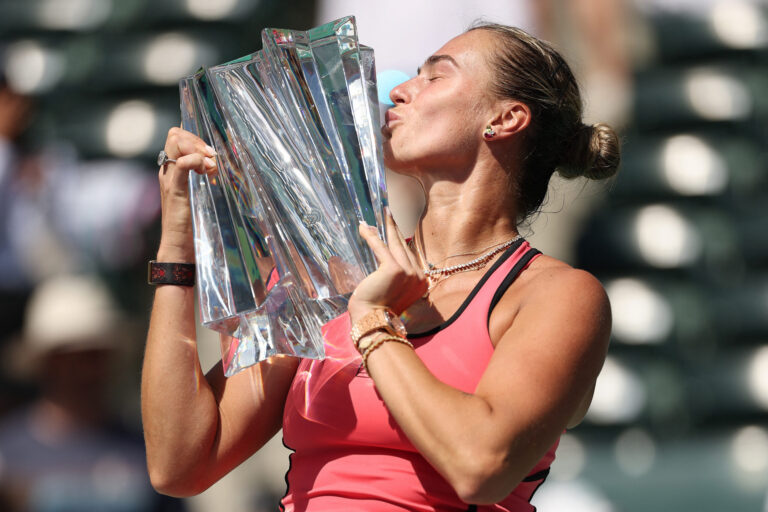
Her response to the second layoff was a title run at the inaugural Athens Open, where she beat Zheng Qinwen and top seed Clara Tauson before defeating home favorite Maria Sakkari 7-6(5), 6-3 in the final. It was her ninth career singles title and her first since Wimbledon 2024.

“Something very special and incredible,” Krejcikova told reporters afterwards.

Season Snapshot — as of 28 July 2026

The figures in this section change during the season. Everything above is current regardless of date.

  • WTA singles ranking: No. 26, up from No. 32 following the Athens title
  • 2026 singles titles: 1 (Athens Open)
  • 2026 finals reached: 2 (Athens — won; ‘s-Hertogenbosch — runner-up)
  • 2026 win-loss: 20-8
  • Career singles titles: 9
  • Career doubles titles: 20
  • Career prize money: approximately $17.9 million
  • Career-high singles ranking: No. 2 (28 February 2022)
  • Career-high doubles ranking: No. 1 (22 October 2018)

Frequently Asked Questions

How many Grand Slam titles has Barbora Krejcikova won?

Twelve in total — two in singles (Roland Garros 2021, Wimbledon 2024), seven in women’s doubles, and three in Australian Open mixed doubles.

What is Barbora Krejcikova’s highest ranking?

No. 2 in singles, reached on 28 February 2022, and No. 1 in doubles, reached on 22 October 2018.

Who is Barbora Krejcikova’s doubles partner?

Katerina Siniakova, with whom she has won all seven of her women’s doubles majors and Olympic gold in Tokyo.

Why did Barbora Krejcikova drop down the rankings?

Two injury layoffs — a back injury that cost her the first five months of 2025, and a thigh injury that cost her around three months the following season. Players in this situation can use protected rankings to re-enter tournaments at their pre-injury level.

Has Barbora Krejcikova won an Olympic medal?

Yes. She won doubles gold with Siniakova at the Tokyo Olympics in 2021.

Serena Misses Toronto as Canadian Open Wild Cards Close

Tennis Canada closed its women’s singles wild-card allocation for the National Bank Open on Sunday, awarding the final two main-draw invitations to Carol Zhao and Ariana Arseneault and confirming that Serena Williams will not return to singles competition in Toronto.

The pair join Venus Williams, Bianca Andreescu, Cadence Brace, Kayla Cross, Rebecca Marino and Katherine Sebov on a list of eight wild cards, seven of them Canadian. The main draw at Sobeys Stadium begins Saturday, with the Toronto draw ceremony set for Friday and play spread across a 12-day format. Williams does not hold a ranking that would permit direct entry into a WTA 1000 main draw, so an invitation was her only route in. With all eight now allocated, that route is closed.

What the tournament said. Valérie Tétreault, vice-president of communications at Tennis Canada and the Toronto tournament director, told L’Équipe on July 22 that talks with the player’s team were continuing and her recovery was being monitored daily. “For now, no final decision has been made,” she said, adding that all options remained on the table. That remains the last on-record tournament comment about her participation. Sunday’s announcement made no reference to Williams; Noelle van Lottum, Tennis Canada’s head of women’s tennis, framed the final two invitations around the strength of the Canadian contingent, noting the federation was “delighted to award main-draw wild cards to Ariana and Carol.”

What has not been said. No statement has been issued by Williams or her representatives, and Tennis Canada has not described an invitation as having been extended and refused. Some coverage has characterised the outcome as a declined offer. Nothing on the record supports that framing. The verifiable sequence is narrower: the tournament kept its options open on July 22, then gave its last two singles wild cards to Canadian players four days later.

The injury context. Williams hurt her right knee during a first-round loss to Maya Joint at Wimbledon on July 1, her first singles match since 2022, and withdrew from the doubles event she had been due to play with her sister. No fresh setback has been reported since. Her most recent public comment on the knee, made this month, indicated improvement rather than a new problem.

What is left of the runway. The Cincinnati Open runs from August 11, with main-draw play beginning August 13 and finals weekend on August 22 and 23. Its published entry list covers the entire top 10 and 75 of the top 77 in the WTA rankings; Williams is not among the direct entries, and the tournament has not announced main-draw wild cards. The US Open singles main draw begins August 30, with direct entry cut at No. 102 on the July 20 rankings. Williams does not appear on that entry list either, leaving a USTA wild card as her route into Flushing Meadows. Those two allocations are now the only remaining paths to a competitive hard-court singles match before New York — the scenario mapped out when three wild-card routes were still open to her.

Commentary, not confirmation. Jon Wertheim reported on July 13 that both sisters were expected in Toronto and that “Cincinnati is entirely possible as a next stop.” The first half of that has since been overtaken by events, and the second was offered before the Cincinnati field was published. It remains commentary rather than confirmed entry.

Doubles. Tennis Canada announced doubles wild cards alongside the singles allocation, pairing Leylah Annie Fernandez with her sister Bianca Jolie Fernandez and Andreescu with Cross. Williams was not among them. Whether further doubles invitations remain available has not been stated, so a low-load return in that draw cannot be ruled out on the record — but it is no longer simply an open door.

The practical effect is a divergence between two summers that had been moving in parallel. Venus Williams holds a Toronto main-draw place and has been building a doubles schedule through the American swing. Serena, four years on from her last competitive season and one match into a comeback, arrives at the start of the hard-court swing with no scheduled tennis and a single tournament left that could give her one. The comeback is not over. Its preparation window is now measured in days rather than weeks.

Related coverage: The Williams sisters and their impact on professional tennis and what the medication rules actually say.

Draper Withdraws in Washington — Arm Injury Blocks US Open

Jack Draper withdrew from the Mubadala DC Open on Monday with a left arm injury, ending his North American hard-court season before it began and removing the last scheduled opportunity to repair a ranking that no longer admits him to the US Open main draw.

The withdrawal. Tournament organisers confirmed Draper had pulled out with a left arm problem and would be replaced in the draw by lucky loser Mackenzie McDonald. The Briton, who had entered the ATP 500 event on a wildcard, was due to face American Alex Michelsen in the first round. It would have been his first match since Eastbourne in June. “These last months have felt like nothing but adversity and setbacks,” Draper wrote on Instagram.

The pattern. The sequence repeats one from a month earlier. Draper spoke publicly at the weekend about feeling physically good and said he had never previously dealt with a long-term injury, then withdrew before hitting a ball — the same order of events that preceded his Wimbledon withdrawal, which came a day before his opening match. The underlying problem is bone bruising in his left arm, first sustained at the 2025 US Open and unresolved for more than a year.

The ranking. Draper is ranked No. 147, having reached a career high of No. 4 in June 2025. He has played 13 tour-level matches in 2026 and has missed the Australian Open, Roland Garros and Wimbledon. A knee problem interrupted his clay-court preparation; the arm has interrupted everything else. He returned at Eastbourne in June and reached the semi-finals, then withdrew from Wimbledon.

The entry list. When the US Open field was published this month, world No. 101 Francisco Comesaña was the last man in on ranking. Draper sits on the alternate list with more than 40 players ahead of him, alongside Grigor Dimitrov, Stan Wawrinka and Reilly Opelka. Barring an implausible cascade of withdrawals, that leaves two routes into Flushing Meadows — a USTA wildcard, or four matches in qualifying the week before the main draw opens on Aug. 30.

The route that is closed. There is a third mechanism in the ATP rulebook designed for exactly this situation, and Draper cannot use it. Entry Protection, commonly called a protected ranking, requires a player to be absent from all tennis competition for a minimum of six continuous months, with a written petition filed within six months of his last tournament. Draper has never been away that long. Eastbourne was five weeks ago. The intermittent returns that have defined his season — a few matches, a setback, a withdrawal — have kept the clock from ever starting.

The effect is a structural trap rather than simple bad luck. Draper has competed often enough to forfeit the safety net the tour builds for injured players, and not often enough to hold a ranking. Five players entered this year’s US Open women’s and men’s draws on protected rankings. He is not among them, and on the current rule he cannot be.

What is left. Draper is understood to have withdrawn from Washington to concentrate on Montreal and Cincinnati next month, according to PA — though he would require a wildcard for both. He had also been listed for the Brownsburg Challenger, per Tennis365; his status there is unconfirmed following Monday’s withdrawal. Andy Murray, who joined his coaching team earlier this year, had been working with him in practice in the days before the pull-out.

Should he not play, the US Open would be the fourth major Draper has missed in 2026 — a full calendar year of Grand Slam tennis lost by a player who was ranked in the world’s top four thirteen months ago.

Eala and Auger-Aliassime Enter US Open Mixed Doubles Without a Guaranteed Spot

NEW YORK — Alex Eala and Félix Auger-Aliassime have entered the 2026 US Open Mixed Doubles Championship, but appearing on Monday’s initial entry list does not put them in the main draw.

The pairing sits eighth on the 16-team list released by the United States Tennis Association, which is ordered by combined singles ranking. Only the top six teams by that measure when the entry window closes will be accepted directly.

Where the cut falls. The entry window closes at noon Eastern on Aug. 17. Six teams take main-draw places on combined singles ranking at that moment, eight more are awarded wild cards, and the final two advance from an eight-team qualifying draw on Aug. 24.

A No. 4 that is not enough. Auger-Aliassime is ranked fourth in the ATP rankings, the strongest men’s ranking on the entry list other than Alexander Zverev at No. 2. Eala is ranked 28th, the career high she reached after becoming the first Filipina to make the Wimbledon fourth round, and the lowest singles ranking held by any player in the top eight teams. Their combined figure of 32 sets their position on the list. Neither half is assessed on its own.

The same arithmetic works against better-known names further down. Taylor Townsend and Zverev sit tenth, four places below a team led by the world No. 4, because the combined total is the only ordering criterion the USTA applies.

Three weeks of movement. Eala is entered at the DC Open this week and is expected in Montreal for the National Bank Open, with the Cincinnati Open also falling inside the entry window. Results at those events will move both halves of the combined figure in either direction. Withdrawals from teams above them would lift the pairing toward the cut, while entries from higher-ranked combinations would push it further away. Jannik Sinner and Carlos Alcaraz, the two highest-ranked men in the game, are absent from the initial list.

The routes that remain. Eight of the 16 main-draw places are wild cards awarded at the USTA’s discretion, and a pairing of a top-five man with the first Filipina to reach the second week at Wimbledon carries obvious appeal for an event built to fill Arthur Ashe Stadium. Sara Errani and Andrea Vavassori, the two-time defending champions, needed a wild card last year because their singles rankings were too low, and The Athletic has reported they are expected to receive one again. Qualifying offers two further places from a field of six direct entries and two wild cards.

USTA chief executive Craig Tiley said in a statement that the competition shows the sport at its best “anytime you can bring women and men together on the same team.”

The championship runs from Aug. 24 to 26 at the USTA Billie Jean King National Tennis Center, with qualifying on the Monday and the main draw played across the following two days. Aryna Sabalenka and Novak Djokovic head the entry list as the only pairing with a combined singles ranking inside the top 10.

Djokovic and Sabalenka Team Up for US Open Mixed Doubles — Dates and Format Explained

NEW YORK — Novak Djokovic and Aryna Sabalenka have entered the 2026 US Open Mixed Doubles Championship as a team, heading an initial list of 16 pairings released by tournament organisers on Monday.

The entry puts the 24-time Grand Slam singles champion alongside the world No. 1, who has won the last two US Open women’s singles titles. The two have played together once before, in a charity exhibition on Rod Laver Arena ahead of the 2024 Australian Open.

The dates. The championship runs from Monday 24 August to Wednesday 26 August, in the week before the singles main draw begins. Qualifying is played on 24 August. The main draw opens on 25 August with the first round and quarterfinals, and the semifinals and final are held on 26 August. Every main-draw match is scheduled for Arthur Ashe Stadium or Louis Armstrong Stadium.

The format. Matches up to the final are best-of-three with sets shortened to four games, no-advantage scoring and a tiebreak at four-all. A 10-point match tiebreak replaces the third set. The final is played to six games a set with tiebreaks at six-all, and also substitutes a 10-point match tiebreak for a deciding set. The winning pair takes $1 million.

How teams get in. The entry window closes at noon Eastern on 17 August. At that point the six teams with the best combined singles ranking are accepted directly into the 16-team main draw. The USTA allocates eight wild cards, to be announced later. The remaining two places go to the winners of an eight-team qualifying draw — itself made up of six direct entries and two wild cards — played on 24 August.

Qualifying is new for 2026. It was added after doubles specialists objected to a revamp that shortened the field and moved the event out of the main draw, which they argued reduced a Grand Slam title to a showcase for singles players. Sara Errani and Andrea Vavassori, who won the 2025 edition for their second straight US Open mixed doubles title, were the only established doubles team in that field and needed a wild card to enter as defending champions. They have entered again, as have Katerina Siniakova and Henry Patten.

Both players arrive with different histories in the event. Djokovic played the 2025 championship with Olga Danilovic on a wild card and lost in the first round to Mirra Andreeva and Daniil Medvedev. Sabalenka did not enter that edition at all, though she raised the possibility of this pairing in January, telling reporters in Melbourne she was waiting on Djokovic. She joked that she was still waiting for “that long message from him.”

Djokovic, 39 and ranked No. 5, remains in pursuit of a 25th major singles title, which would move him clear of Margaret Court’s record. That pursuit runs through the singles draw, which begins the following week, rather than through this event. Six of the top 10 in both the ATP and WTA rankings have entered.

The full 2026 singles fields were confirmed earlier this month in the US Open entry list.

Naomi Osaka Doesn’t Want to Be Famous. Tennis Needs Her to Be.

Naomi Osaka has spent eight years being told what she means to tennis. On Sunday, sitting in front of reporters at the Mubadala DC Open, she offered a quietly startling correction: she never asked for any of it. “I actually don’t really want to be famous,” Osaka said during media day at Rock Creek Park, adding that she is content with exactly where she is.

It is not a throwaway line. It arrives at the precise moment Osaka’s public profile has expanded past the sport that created it — and at the start of the six-week stretch that will define whether her comeback is a nostalgia act or a genuine return to the top of the women’s game.

The peak that kept moving

Osaka reached for a specific memory to explain how strange the last decade has felt. When she won Indian Wells in March 2018 — her first WTA title, a straight-sets win over Daria Kasatkina — she assumed she had arrived at the summit. The prize money meant her mother, who had been working constantly, could stop.

“I felt like that was peak,” she said. Then came the US Open. Then a second, and a third, and a fourth major. Then the world No. 1 ranking, the endorsement portfolio, the magazine covers, the activism, the withdrawal, the motherhood, the return. Every time the ground appeared to level out, Osaka said, something else happened.

That is a familiar arc for a generational athlete. What is unusual is Osaka’s refusal to describe it as ambition fulfilled. She has never considered herself famous, she told reporters — which is either the most grounded thing a four-time Grand Slam champion has said this year, or a reminder of how completely the machinery around a star can operate without their consent.

When the clothes started talking

The second half of Osaka’s answer was the more revealing one. Across all three Grand Slams in 2026, her walk-on outfits have generated more coverage than several players’ results. She has become, by her own account, better known to the fashion world than to tennis fans — people know her now for the fashion, she said, more than the tennis.

For most athletes that would be a complaint. Osaka framed it as an unexpected trade. She has always described herself as an introvert; the outfits, she noted with some irony, have forced her to speak far more often, and about subjects she is not remotely an expert in. The clothes did what a decade of press conferences could not — they pulled her into conversations, and rooms, she would otherwise never have entered.

It is a genuinely novel account of athlete celebrity. The standard version is that fame is the tax you pay on performance. Osaka is describing something closer to the reverse: a deliberate aesthetic project that functions as a social prosthetic, letting a reticent person participate in her own stardom on terms she sets.

Not everyone is buying it

That reading has its sceptics inside the locker room. Anastasia Pavlyuchenkova, speaking to TennisBolshe earlier this month, was unpersuaded — arguing that a player who walks out in such outfits cannot then claim to want no attention.

It is a fair challenge, and it exposes the tension Osaka is trying to hold. She is simultaneously the most visually conspicuous player on tour and the one insisting she would rather not be looked at. Both things can be true — visibility and celebrity are not the same currency — but the distinction is a fine one, and it will keep being tested every time she walks onto a stadium court in something the internet cannot ignore.

The part that actually decides her year

Underneath the wardrobe conversation sits a harder set of numbers. Osaka arrives in Washington ranked No. 13, on the back of the strongest major of her comeback: a first career Wimbledon quarter-final, and one she left disappointed by, believing a deeper run had been available. That result confirmed she can still live in the second week of a Slam. It did not resolve whether she can do it consistently.

She currently sits outside the WTA Finals qualification zone — alongside Iga Swiatek, Victoria Mboko and Marta Kostyuk — with Washington, Toronto, Cincinnati and the US Open ahead. It is the densest stretch of the calendar, and Osaka enters it carrying the most difficult burden in tennis: expectation that has been reset upward by a single good fortnight.

The comeback has already outlasted the sceptics. The Wimbledon run made it credible. What happens over the next six weeks on North American hard courts — the surface on which she won all four of her majors — determines whether 2026 is remembered as the year Osaka got competitive again, or the year she got interesting again.

She would presumably prefer the former. The rest of the world, judging by the traffic her outfits generate, seems to have already chosen.

Alex Eala Explains Venus Williams Doubles Withdrawal at DC Open

Alexandra Eala has explained why she withdrew from her planned doubles partnership with Venus Williams at the 2026 Mubadala DC Open, making clear that the decision was about managing her workload rather than an injury or disagreement. Eala and Williams had been expected to reunite in Washington after playing together at the Bad Homburg Open in June. Instead, Williams will compete alongside Diana Shnaider, while Eala concentrates exclusively on the singles draw at the WTA 500 tournament.

The sudden change prompted questions about why the anticipated partnership had been abandoned. Eala said she did not believe she was ready to give Williams the level of commitment she deserved while also managing her first singles tournament back. “I have so much respect for Venus,” Eala said, describing the opportunities to learn from and practice with the seven-time Grand Slam singles champion.

“Venus is someone who deserves a partner who can give their all physically, emotionally, mentally.” Eala explained that she currently feels capable of making that commitment in singles, but not across both competitions during the same week. The 21-year-old said she does not yet have the capacity to divide her energy between singles and doubles without compromising what she could contribute on court.

Her explanation pointed to a deliberate workload decision. Eala did not identify a new injury, dispute or personal issue involving Williams, and she left open the possibility that the two could play together again at a future tournament. Williams expressed a similar view when discussing the change, saying the pair had enjoyed their previous tournament and would be open to another opportunity.

Eala and Williams reached the doubles quarterfinals in Bad Homburg before losing to Olivia Nicholls and Tereza Mihalikova. Their Washington reunion had attracted attention because of the contrast between Williams’ experience and Eala’s rapid rise through the WTA rankings. Eala begins the DC Open ranked a career-high World No. 28 after moving up one position in the latest rankings. Her immediate focus is a difficult first-round singles match against Zheng Qinwen, the 2024 Olympic singles champion and former Australian Open finalist.

Zheng’s current ranking does not reflect her established level after injuries disrupted her recent seasons. She entered the Washington tournament with a wildcard, creating one of the most closely watched opening-round matches in the women’s draw. The decision to withdraw from doubles gives Eala more recovery and preparation time as she begins the North American hard-court swing. The Washington event is followed by major tournaments in Montreal and Cincinnati before the US Open begins in New York.

For Eala, the change is less about ending a partnership than recognizing what she can manage during her first week back. Williams will continue in the doubles competition with Shnaider, while Eala places her full physical and mental attention on the singles challenge ahead.

Federer’s U.S. Open Return Sells Out the Sentiment — and the Resale Market

Roger Federer will walk back onto Arthur Ashe Stadium on the evening of Tuesday 25 August, four years after retiring, for a doubles exhibition alongside three men who also once owned the place. Billed by the USTA as Roger Federer: An Icon Returns to New York, the match pairs Federer with Andy Roddick against Andre Agassi and John McEnroe. It is, on paper, the feel-good booking of the American summer. In practice, it has become the most argued-about ticket in tennis.

Resale listings for the one-off USTA-organised event have climbed to levels that have startled even a sport accustomed to premium pricing. Tennis Temple reported this week that entry-level resale seats were trading from roughly $240, with the better positions comfortably into four figures and the most expensive listings reaching as high as $24,000. Secondary marketplaces tell a similar story: Vivid Seats has listed the cheapest available seats at around $243 against an average nearer $1,256.

The reaction has split along a predictable but revealing line. Federer’s return is, for a certain generation of fans, the closest thing tennis has to a reunion tour. It is also, at those prices, something most of them will watch on a screen.

A five-time champion, one night only

Federer won the US Open five times — consecutively, from 2004 to 2008, a run no other player of either sex has matched — and finished his career with 20 major titles and 103 tour-level trophies. Arthur Ashe was where he built a good deal of that legend, and where New York gave him the nickname “Darth Federer” for the all-black kit he wore in night sessions. He last competed at the tournament in 2019.

The exhibition headlines Fan Week, the run of events that precedes the main singles draw, rather than sitting inside the championship itself. It also lands four days before Federer is inducted into the International Tennis Hall of Fame in Newport, Rhode Island, on 29 August — selected in his first year of eligibility. The New York night is, in effect, the opening act of his enshrinement week.

He framed the return in warm, uncomplicated terms when it was announced. The US Open has always been one of the most special tournaments for me, he said, adding that the stadium means a great deal to him and that he had missed the energy the crowd brings each year.

The format is a doubles match under lights, scheduled for 7 p.m., with all four participants former champions at Flushing Meadows. Tickets went on general sale on 11 June through Ticketmaster and the tournament’s own site, and were absorbed quickly.

It follows a pattern Federer established earlier in the year. Having stepped away for good at the 2022 Laver Cup, he edged back into public view in 2026 with a practice session and an exhibition appearance in Melbourne — enough to reassure a fanbase that had spent four years reading meaning into his every gym video, and enough to make New York inevitable.

The sceptics

Not everyone is convinced the occasion will land. Jon Wertheim has publicly questioned whether the format can work, and he is not alone in wondering what an exhibition doubles match between four men aged between their mid-forties and late sixties actually delivers beyond the walk-on.

The argument is not really about whether Federer can still hit a backhand. It is about what these nights are becoming, and where they are being placed. Because the exhibition sits in Fan Week rather than the main draw, it displaces no competitive tennis — a point in the USTA’s favor.

But Fan Week is also the part of the fortnight built around access: the week when the grounds are at their most open and the barrier to seeing tennis at Flushing Meadows is at its lowest. Making its marquee evening the most expensive ticket of the entire tournament inverts that logic. When a nostalgia doubles match commands a resale ceiling beyond what a fan would pay to watch the world’s best compete for the actual title, it is fair to ask what is being sold, and to whom.

Others push back that this is simply supply and demand doing its work, and that the USTA can hardly be blamed for the resale market. Tickets were sold at face value through official channels; what happened afterwards is the same thing that happens to any scarce cultural event. The counter-counter-argument is that scarcity was a choice — one night, one match, one stadium.

The commercial logic is not subtle

Nor is it new. Tennis has spent the past several years discovering how much of its audience is attached to players rather than to the sport’s competitive structure — an insight that has produced exhibition circuits, legends nights and hybrid events across the calendar. Federer at Ashe is the purest expression of that discovery yet: an evening whose entire value proposition is memory.

That it works is not really in dispute. Whether it is good for the tournament that hosts it is a different question, and one the US Open will face again, because there is no version of this that happens only once. If a Federer night can command these numbers, so eventually can others.

What to watch

Three things will determine how this is remembered by September. Whether the match itself has any competitive texture, or plays as a scripted exhibition with a highlight reel attached. Whether the atmosphere inside Ashe justifies a premium that has already priced out much of the crowd that made Federer’s night sessions famous in the first place.

And whether the USTA reads the reaction as a mandate or a warning. Federer, for his part, has never been the difficult part of this equation. He said he missed the noise. On 25 August, he will get it.

Is Serena Williams’ Weight-Loss Medication Banned in Tennis? What the Rules Say

The short answer to the question following Serena Williams around her comeback is no. The class of medication the 23-time Grand Slam champion has said she uses is not prohibited under tennis anti-doping rules, and never has been. The longer answer is that tennis knows the rule may not stay that way, and the sport’s integrity chief said as much on Sunday.

Karen Moorhouse, chief executive of the International Tennis Integrity Agency, was asked about weight-loss drugs on the “Off Court with Greg Rusedski” podcast and pointed the question upward. The ITIA administers the anti-doping program across professional tennis but does not decide what goes on the banned list. That is the World Anti-Doping Agency’s job, and Moorhouse said tennis would follow WADA’s lead and its scientific expertise on whether the drugs offer a competitive benefit. She called it a genuinely interesting area and said it was right that WADA is examining it.

What Williams has actually disclosed matters here, because the specifics have been blurred in circulation. In an August 2025 interview timed to a paid partnership with the telehealth company Ro, Williams said she had lost 31 pounds using a GLP-1 receptor agonist after struggling to reach a healthy weight following the births of her two daughters. She has consistently declined to name a brand. Her husband, Reddit co-founder Alexis Ohanian, is an investor in Ro and sits on its board. Several outlets have since named a specific product; none of those attributions trace back to Williams herself.

Under the 2026 WADA Prohibited List, GLP-1 receptor agonists are not banned, in or out of competition, and no therapeutic use exemption is required to take them. They sit one tier below that, on WADA’s Monitoring Program, which tracks substances that are not prohibited but are being watched for patterns of misuse. Markers of semaglutide have been monitored since 2024; from Jan. 1, 2026, markers of tirzepatide were added, monitored both in and out of competition.

Monitoring carries no sanction. It is a data-gathering step, and substances typically sit there for several years before WADA either prohibits them or drops them. For a substance to be added to the list, WADA requires it to meet at least two of three criteria: performance enhancement, health risk, or a violation of the spirit of sport.

The ADHD question that surfaced in the same interview is governed by an entirely separate rule, and the two should not be run together. Stimulants prescribed for attention-deficit/hyperactivity disorder, including methylphenidate, are prohibited in competition and do require a therapeutic use exemption. Moorhouse pushed back firmly on a perception she said circulates within the sport, that large numbers of players hold such exemptions, calling it flatly untrue and noting that an ADHD exemption requires two independent experts to confirm the diagnosis before the ITIA’s TUE committee will consider it.

The most-cited case remains Fernando Verdasco, the former world No. 7, who accepted a two-month voluntary provisional suspension in 2022 after testing positive for methylphenidate, having let his exemption lapse. There is no public indication that Williams has ever taken ADHD medication or applied for an exemption for one. The subjects converged in a podcast, not in her file.

Williams has her own recent history with the machinery. She re-entered the ITIA registered testing pool in October, denied a comeback was coming, then completed the mandatory six months of out-of-competition availability and became eligible to compete again on Feb. 22. Ahead of Wimbledon she described the whereabouts system as grueling and unprofessional, objecting that a missed test outside her designated hour can still count against her.

For an American audience, the stakes are at Flushing Meadows. Williams played doubles at Berlin and Queen’s Club in June, lost her Wimbledon opener to Maya Joint on June 30, then withdrew from doubles with Venus with a knee problem. She does not appear in the fields for Washington, Montreal or Cincinnati. Coach Rennae Stubbs has said the intention is the US Open if the body holds up. The rulebook, for now, poses no obstacle.

Ben Shelton Admits Frustration Despite Winning Three ATP Titles in 2026

Ben Shelton has already won more ATP titles in 2026 than in any previous season, but the American says inconsistent performances and costly early exits have left him frustrated heading into the Mubadala DC Open. Shelton arrives in Washington ranked No. 5 in the world after winning tournaments on hard courts, clay and grass this year. His titles came in Dallas, Munich and Stuttgart, making him the first American man since Sam Querrey in 2010 to win tour-level events on all three surfaces in the same season.

The 23-year-old’s ability to finish championship weeks represents clear progress. However, Shelton believes his best tennis has been interrupted too often by disappointing performances earlier in tournaments. “There are so many things I’ve been frustrated about,” Shelton said before the start of the Washington ATP 500 event.

Shelton identified inconsistency as the central issue. Although he has become better at reaching finals and converting those opportunities into titles, he remains dissatisfied with the number of matches in which his level has fallen below expectations. The American described some of those contests as “trap rounds,” matches in which a leading player is expected to advance but can quickly lose control against a dangerous opponent.

That concern has been particularly visible at the biggest tournaments. Shelton reached the Australian Open quarterfinals in January before losing to Jannik Sinner, but his results at the next two Grand Slam tournaments were far less productive. He exited Roland Garros in the second round and suffered a dramatic first-round Wimbledon defeat against Finnish qualifier Otto Virtanen.

At Wimbledon, Shelton held match point and led 8-5 in the deciding-set tiebreak before Virtanen completed a 6-4, 3-6, 6-7(8), 6-2, 7-6(9) victory. Shelton later called it one of the most difficult losses of his career. The result was especially painful because Shelton entered Wimbledon as the No. 4 seed and the highest-seeded American in the men’s draw. He had also arrived with momentum after winning his first grass-court title in Stuttgart, where he defeated Taylor Fritz in three sets.

Those contrasting results explain why Shelton’s assessment of his season is more complicated than his trophy count suggests. His victories in Dallas, Munich and Stuttgart demonstrate that he can adapt across surfaces and defeat elite opposition over the course of a full week. Shelton has now won six career ATP singles titles and reached his career-high ranking of No. 5.

The remaining challenge is producing that level more consistently at Grand Slam tournaments and ATP Masters 1000 events. Washington offers Shelton an immediate chance to begin the North American hard-court swing with a deeper run. The second seed will open against a qualifier or lucky loser after receiving a first-round bye.

Ugo Humbert is a possible third-round opponent, while fellow American Frances Tiafoe is the seeded player Shelton could meet in the quarterfinals. Lorenzo Musetti is his projected semifinal opponent. Shelton has performed well in the United States capital without reaching the final. He advanced to the Washington semifinals in both 2024 and 2025 and reached the doubles final alongside Mackenzie McDonald in 2023.

The 2026 Mubadala DC Open begins Monday, July 27, at the FitzGerald Tennis Center and runs through Sunday, August 2. For Shelton, the week is not simply another opportunity to add a fourth title. It is a chance to show that the consistency he is demanding from himself can begin before the closing rounds of a tournament.

Three trophies have already made 2026 his most successful season by one measure. Shelton’s own standard, however, is increasingly defined by what happens between those championship weeks.