

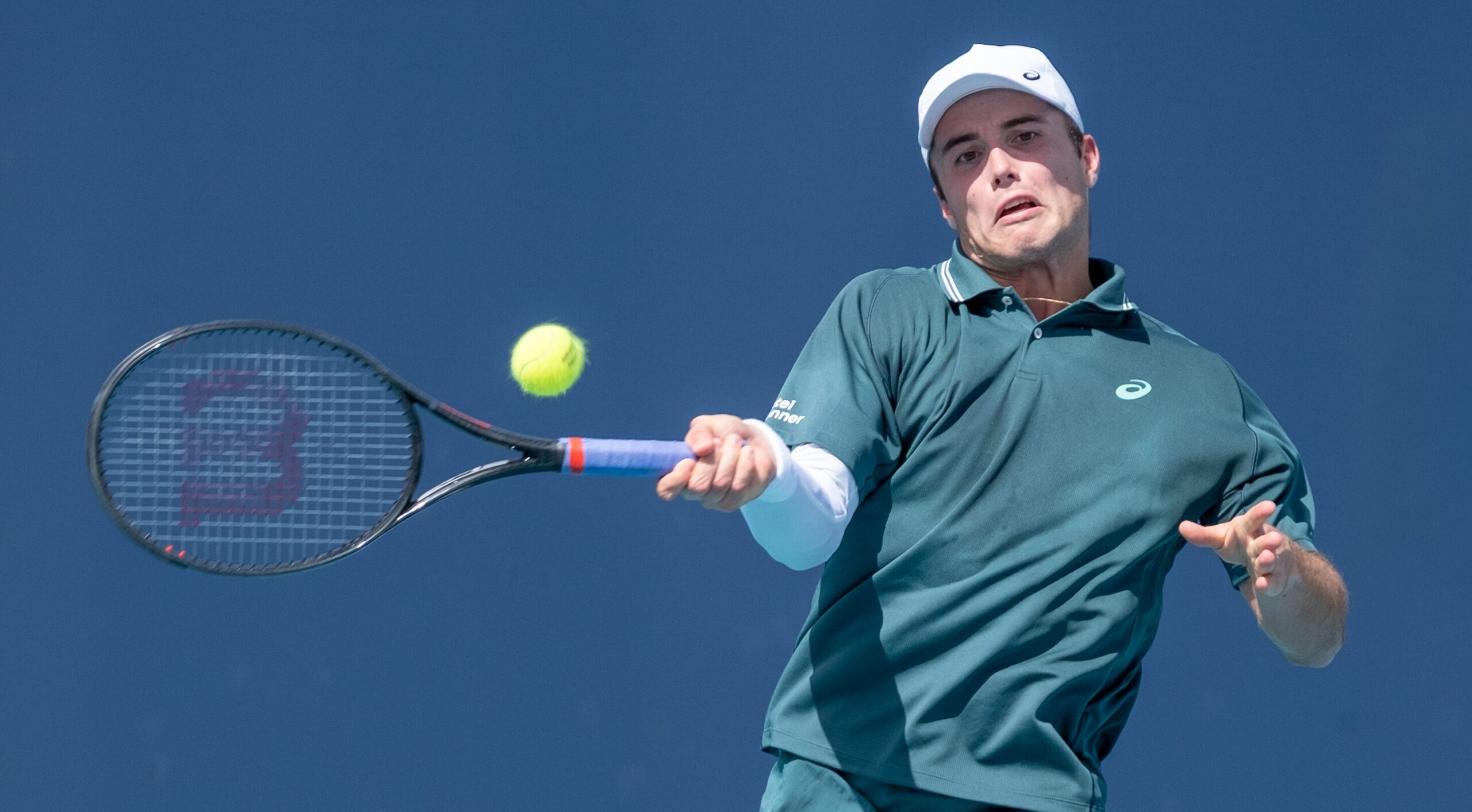
Arthur Fery is a British professional tennis player recognised for a versatile all-court game and a wild-card run to the Wimbledon singles semifinals — one of the most unlikely runs to a Grand Slam last four in recent memory. French-born and raised a short walk from the All England Club, the Stanford graduate built his game through the American college system and the Challenger circuit before grass at SW19 lifted him onto the sport’s biggest stage and to the head of British men’s tennis.
Quick facts
- Full name: Arthur Féry
- Born: 12 July 2002, Sèvres, France
- Represents: Great Britain
- Plays: Right-handed (two-handed backhand)
- Height: 5 ft 9 in (1.75 m)
- Turned pro: 2021
- College: Stanford University (two-time ITA All-American)
- Career-high ranking: see Season Snapshot
Season Snapshot
Updated 13 July 2026
Career-high ranking: No. 36 (PIF ATP Rankings), effective 13 July 2026 — a rise of 78 places from a pre-tournament No. 114.
Status: British No. 1, moving ahead of Cameron Norrie.
Best Grand Slam result: Semifinalist, 2026 Wimbledon.
2026 Wimbledon: Reached the last four as a wild card before losing to No. 2 seed Alexander Zverev 7-6(0), 6-2, 6-4. Marquee wins over Zizou Bergs, Grigor Dimitrov and French Open runner-up Flavio Cobolli (6-4, 7-6(4), 6-0) en route. Only the second wild card to reach the Wimbledon men’s semifinals after Goran Ivanišević (2001), and the lowest-ranked man in the SW19 last four since Ivanišević’s title run.
Background and breakthrough
Fery was born in Sèvres, on the western edge of Paris, to French parents, and moved to London as an infant when the family relocated to Wimbledon. He grew up a short walk from the All England Club, attended King’s College School nearby, and has been a member of the club alongside his mother since childhood. His mother, Olivia Féry, was a professional player who appeared in the women’s doubles main draw at the 1991 French Open and later represented Hong Kong in the Fed Cup; his father, Loïc Féry, is a businessman and the president of Ligue 1 football club FC Lorient. Fery holds dual French and British citizenship and represented France at under-12 level before switching his allegiance to Great Britain.
A strong junior — he reached a career-high junior ranking of world No. 12 in 2020 — Fery took the American college route rather than turning professional immediately, enrolling at Stanford University, where he studied Science, Technology and Society, became a two-time ITA All-American and reached No. 1 in the U.S. college singles rankings. He debuted professionally in 2021 and spent the following seasons building his ranking through the Challenger circuit and qualifying draws.
His rise accelerated in 2026. He qualified for the Australian Open and beat Flavio Cobolli in the first round, then arrived at Wimbledon ranked No. 114 as a home wild card. What followed was the run that defined his career to date: victories over Zizou Bergs and Grigor Dimitrov carried him into the quarterfinals, where he stunned French Open runner-up Cobolli again in straight sets. His run ended in the semifinals against second seed and Roland Garros champion Alexander Zverev, but the fortnight made him the first British male wild card to reach a Grand Slam singles semifinal, the first unseeded British player of either tour to reach the Wimbledon last four in the Open Era, and the new British No. 1.
Playing style and strengths
Baseline consistency off both wings
Fery’s game is anchored by clean, dependable groundstrokes rather than a single overwhelming weapon. At 5 ft 9 in he is not an imposing physical presence, and he wins by keeping the ball deep, absorbing pace and drawing errors from bigger hitters over longer exchanges. His Wimbledon run repeatedly showed the pattern — steady from the back of the court, comfortable trading, and able to raise his level in the sets that mattered.
All-court instincts and net play
For a player raised on grass beside the All England Club, Fery moves forward well and finishes cleanly at the net, a dimension that separated him in tight matches on the surface. His willingness to construct points and close them at the net gives his game a variety that pure baseliners of his ranking often lack.
Composure under pressure
The most consistent feature of his breakthrough was his temperament. Fery came from behind in multiple matches, held his nerve in tiebreaks, and did not appear overwhelmed by Centre Court or by opponents ranked far above him — qualities that turned a promising draw into a genuine deep run.
Pressure points and vulnerabilities
Fery’s challenge is consolidation. His breakthrough came from a low ranking base and against the backdrop of limited tour-level match experience, and the gap between a career-best fortnight and sustained results at the top level is the sport’s most familiar test. His build limits his serve as a free-points weapon compared with the tour’s biggest men, which places a premium on his return games and baseline consistency. Injuries slowed his early professional seasons, and durability across a fuller schedule is the next thing to prove.
Career milestones
- Junior world No. 1 in the United States collegiate game; two-time ITA All-American at Stanford
- Junior career-high world No. 12 (2020)
- Recorded his first Grand Slam main-draw match win at Wimbledon, upsetting Alexei Popyrin
- 2026 Australian Open — qualified and beat Flavio Cobolli in the first round
- 2026 Wimbledon — reached the semifinals as a wild card; first British male wild card to reach a Grand Slam singles semifinal and first unseeded British player to reach the Wimbledon last four in the Open Era
- Rose to British No. 1
Grand Slam record in context
Wimbledon is comfortably Fery’s most productive major. His 2026 run to the semifinals as a wild card is the defining result of his career and one of the deepest by an unseeded British player at the Championships in the Open Era. He has also contested the Australian Open, qualifying in 2026 and winning his opening match against Flavio Cobolli. The semifinal ceiling, reached from outside the top 100, places him among the most unlikely deep Grand Slam runs of the modern grass-court era.
What to watch next
The immediate question is whether Fery can turn a breakout fortnight into a settled tour-level career. His ranking rise brings direct entry into main-tour events and, for the first time, the prospect of a seeding at the majors. Grass remains his most natural surface, and how he adapts his game to hard courts and clay over a full season will shape whether the Wimbledon run proves a launchpad or a peak. His progress as British No. 1 and his first campaign as an established main-draw player will be the storylines to follow.
Frequently asked questions
Is Arthur Fery British or French? French-born, in Sèvres, but he represents Great Britain and grew up in Wimbledon, London.
Where did Arthur Fery go to college? Stanford University, where he was a two-time All-American and reached No. 1 in the U.S. college singles rankings.
Who are Arthur Fery’s parents? His mother, Olivia Féry, was a professional tennis player; his father, Loïc Féry, is the president of Ligue 1 football club FC Lorient.
What is Arthur Fery’s connection to Wimbledon? He grew up beside the All England Club, attended school in Wimbledon and has been a member alongside his mother since childhood.
Related reading
- The Wimbledon Guide
- Grass Courts Explained
- The ATP Rankings System
- Player profile — Alexander Zverev