

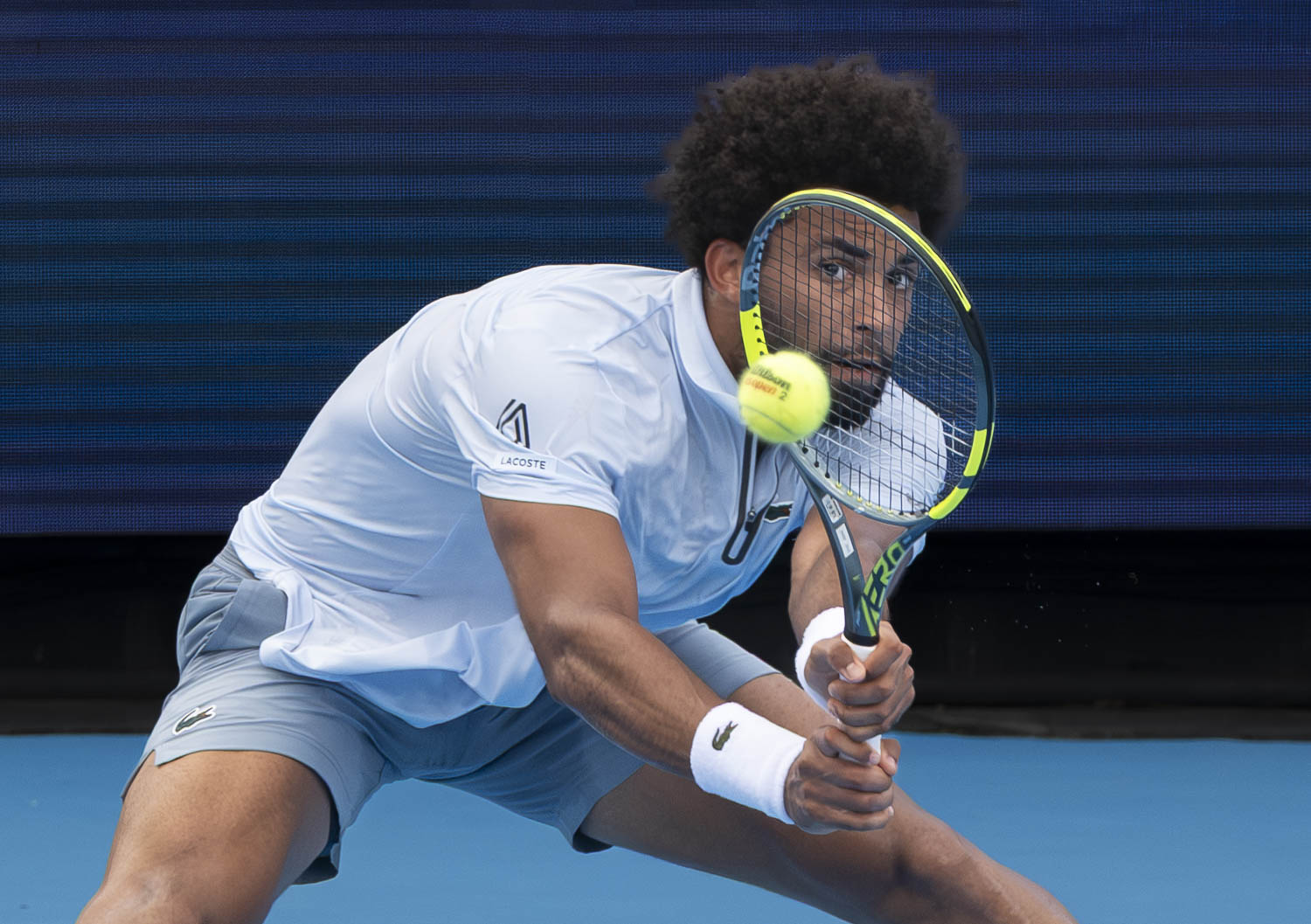
Arthur Fils has now had to restart his career twice before turning 23. Each time he has come back playing better than he did before he stopped, which is the reason expectations around France’s top-ranked man have never really dropped, and the reason his career so far reads as a series of interrupted sentences. In August 2026 the second of those comebacks produced a first Masters 1000 title, in Cincinnati, and a career-high ranking of No. 11.
He was born in Courcouronnes, south of Paris, on June 12, 2004, stands 6 feet 1 inch and plays right-handed with a two-handed backhand. He turned professional in 2021 and reached the top 100 on May 29, 2023, at the time the youngest active player to do it. His first ATP title came in Lyon that same month, and two more followed in 2024 in Hamburg and Tokyo. By April 2025 he had climbed to a then-career-high No. 14.
Then the back went. He suffered a stress fracture in his lower back during Roland Garros in May 2025 and withdrew from his home major before the third round. He missed the grass season entirely, returned in Toronto at the start of August, won one match across two, and discovered the comeback had been premature. Another long absence followed. In total he was out for eight months, and he has been candid that the hardest part was not the rehabilitation. He described the experience as being mostly mental, and said he leaned on what he had already achieved to keep going.
What happened next was the best tennis of his life. He returned at Montpellier in February 2026 and reached the quarterfinals. Within weeks he had made the final in Doha, the quarterfinals at Indian Wells and the semifinals in Miami. In April he won the ATP 500 in Barcelona, beating Andrey Rublev 6-2, 7-6 (2) in the final after saving two match points in his opening match, and took his fourth career title and his first since Tokyo. He then reached the semifinals in Madrid, extending a winning streak to nine matches before Jannik Sinner ended it, and briefly rose as high as fourth in the race for a debut at the season finale in Turin.
Then the hip went, and he missed Roland Garros for the second year running. He was back for Wimbledon, and by August he was back inside the top 25 and in form again on hard courts, beating ninth seed Jiri Lehecka 6-1, 6-7 (7), 6-3 in Cincinnati before going on to win the tournament.
The game is built on power and forward movement. He hits a heavy forehand, serves well for his height, and prefers to shorten points rather than grind, which is part of why he transitions between surfaces more easily than most young players — his five titles have come on clay, hard and indoor hard. The flip side is a body that has twice failed under the load, and the open question of his career is not whether the tennis is good enough. It plainly is. It is whether he can string together eighteen months without an interruption.
The majors remain the conspicuous gap. His best Grand Slam result is a fourth round at Wimbledon in 2024, and he has reached the third round in Melbourne and Paris. At the US Open he has never been past the second round, in two appearances in 2023 and 2024, and he did not play in 2025 while recovering. He represents France in the Davis Cup and played the 2024 Olympics in Paris, losing in the first round.
He arrived at the 2026 US Open in a men’s draw missing Sinner and, for the first time, as a Masters 1000 champion. He beat Flavio Cobolli in the Cincinnati semifinals and then Frances Tiafoe in the final, 6-3, 1-6, 6-0, on Aug. 23, 2026. The rankings published the following morning moved him to a career-high No. 11, one place outside the top 10.
New York did not follow the script. Seeded 10th and playing his first match since the title, he took the first set against Stefanos Tsitsipas, whom he had beaten in all five of their previous meetings, and led by a break in the second. Tsitsipas came back to win 4-6, 7-6(3), 6-1, 6-4, hitting 50 winners to Fils’s 38, according to the ATP Tour. The US Open remains the one major where Fils has not passed the second round. He left New York inside the top eight of the Race to Turin, the ATP Tour reported, with the Asian swing still to come.
Grand Slam best results
- Australian Open: Third round
- Roland Garros: Third round
- Wimbledon: Fourth round (2024)
- US Open: Second round
Season Snapshot — September 27, 2026
- Ranking: Career high No. 11 after Cincinnati
- 2026 titles: Barcelona (d. Andrey Rublev); Cincinnati, his first Masters 1000 (d. Frances Tiafoe 6-3, 1-6, 6-0)
- Other 2026 results: Doha final; Miami and Madrid semifinals; Indian Wells quarterfinal
- 2026 Grand Slams: Missed Roland Garros (hip); US Open first round as 10th seed (l. Tsitsipas 4-6, 7-6(3), 6-1, 6-4)
- Race to Turin: Inside the top eight after the US Open, according to the ATP Tour
This snapshot is dated and will change. The career record above does not.