Home Blog Page 64

US Open Guide — Format, Hard Courts, Draws, and Prize Money

0

The US Open closes the Grand Slam calendar each year, bringing the professional tennis season to New York in late summer. Played on outdoor hard courts at the USTA Billie Jean King National Tennis Center in Flushing Meadows, Queens, it is the fourth and final major of the year, the largest tennis tournament in the world by capacity and attendance, and the only Grand Slam to have been contested on three different surfaces in its history.

First held in 1881 and part of the Open Era since 1968, the US Open is known for its night-session culture, its enormous crowds, and its commercial scale. This guide explains how the tournament is structured, how the draws work, how ranking points and prize money are distributed, and what distinguishes the final Grand Slam of the year from the three that precede it.

Where It Is Played

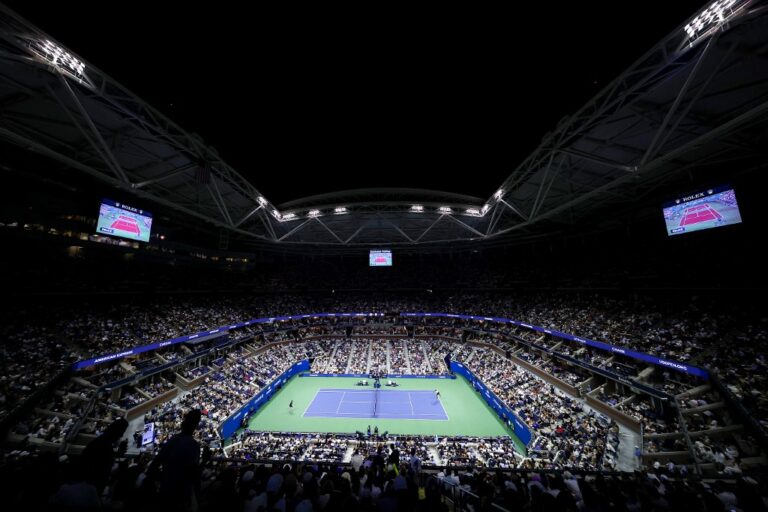
Venue: USTA Billie Jean King National Tennis Center City: Queens, New York, United States Surface: Outdoor hard court (Laykold) Main stadium: Arthur Ashe Stadium (capacity approximately 23,800, retractable roof since 2016) Secondary show courts: Louis Armstrong Stadium (capacity 14,053, retractable roof since 2018), Grandstand (capacity 8,125)

The US Open is the only Grand Slam to have been played on three different surfaces — grass (1881–1974), green clay (1975–1977), and hard court (1978 to present). The current surface is Laykold, a rubberised acrylic compound that replaced DecoTurf in 2020 after 42 years. The courts are painted blue inside the lines and green outside — a colour scheme introduced in 2005 that has since become one of the tournament’s most recognisable visual signatures.

Tournament Format

Main Draw Size

  • 128-player singles draws (men and women)
  • 64-team men’s and women’s doubles draws
  • 32-team mixed doubles draw
  • Junior, wheelchair, and invitational competitions

Match Format

  • Men’s singles: Best of five sets
  • Women’s singles: Best of three sets
  • Final-set tiebreak: First to 10 points at 6–6 in the deciding set

The US Open was the first Grand Slam to introduce the tiebreak, adopting Jimmy Van Alen’s nine-point sudden-death tiebreak in 1970 at Forest Hills. The current 10-point final-set tiebreak format has been used at the US Open since 2022, when all four Grand Slams aligned on a single format.

How the Draw Works

The US Open singles draw includes 128 players, with 32 seeds.

  • Seeds are distributed to prevent early-round matchups
  • The top two seeds cannot meet before the final
  • Seeds 1–4 cannot meet before the semi-finals
  • Unseeded players are drawn randomly into the bracket
  • Qualifiers earn entry through a three-round qualifying tournament held on-site at Flushing Meadows the week before the main draw begins
  • Wild cards are awarded by the USTA, typically to American players, returning veterans, and emerging international talents

Seeding is based directly on the ATP and WTA rankings at the entry cutoff date. Unlike Wimbledon, the US Open has never used a surface-specific seeding adjustment.

Ranking Points Distribution (Singles)

As a Grand Slam, the US Open awards the maximum ranking points.

  • Champion: 2,000 points
  • Finalist: 1,300 points
  • Semi-finalist: 800 points
  • Quarter-finalist: 400 points
  • Round of 16: 200 points
  • Round of 32: 100 points
  • Round of 64: 50 points
  • Round of 128: 10 points

Points apply within the 52-week ATP and WTA ranking systems. As the final Grand Slam of the year, the US Open frequently has a significant impact on year-end rankings and qualification for the ATP and WTA Finals.

Prize Money

The US Open distributes the largest prize purse in tennis history. The 2025 edition awarded a record $90 million in total prize money — a 20 percent increase over 2024 and the largest purse ever offered at any tennis tournament. The men’s and women’s singles champions each received $5 million, the largest cheque ever paid to a singles champion in the sport’s history.

The US Open was the first Grand Slam to offer equal prize money to men and women, adopting the policy in 1973 — driven by a campaign led by Billie Jean King, who threatened a boycott by the top women if equal pay was not introduced. That year, John Newcombe and Margaret Court each received $25,000. Equal pay has been maintained at the US Open every year since, decades before Roland Garros (2006), Wimbledon (2007), and the Australian Open (2008) followed suit.

The 2025 singles prize money breakdown:

RoundPrize Money (USD)
Champion$5,000,000
Finalist$2,500,000
Semi-finalist$1,260,000
Quarter-finalist$660,000
Round of 16$400,000
Round of 32 (third round)$237,000
Round of 64 (second round)$154,000
Round of 128 (first round)$110,000

Doubles winners (men’s and women’s) split $1 million per pair. Mixed doubles champions split $1 million per pair under the revamped 2025 format. Qualifying first-round losers receive $27,500, with totals scaling up through the three rounds of qualifying.

Scheduling Structure

  • Two-week main draw across approximately 15 days
  • Late August through early September, concluding on the Sunday of Labor Day weekend
  • Day sessions and evening night sessions on Arthur Ashe Stadium and (during the first week) Louis Armstrong Stadium
  • Singles finals: women’s on the second Saturday afternoon, men’s on the second Sunday afternoon
  • Late finishes are common, with night session matches occasionally running past 1:00 am

The US Open does not have a curfew. Matches on roofed stadiums can continue indefinitely if weather, light, or scheduling require it — a structural difference from Wimbledon’s 11pm cut-off and a source of some of the latest Grand Slam finishes in modern tennis.

What Makes the US Open Unique

  • Final Grand Slam of the year, frequently shaping year-end rankings and ATP/WTA Finals qualification
  • Arthur Ashe Stadium, the largest tennis venue in the world at roughly 23,800 seats — about 9,000 seats more than the next-largest Grand Slam main court
  • The Honey Deuce, the tournament’s signature lemonade-vodka-raspberry cocktail, served by the tens of thousands daily and now one of the most recognisable food and drink traditions in tennis
  • Night sessions under the lights of Arthur Ashe — the loudest, most electric setting in Grand Slam tennis and consistently the most expensive ticket
  • The blue and green court colour scheme, introduced in 2005 and now synonymous with the tournament’s visual identity
  • A surface history unique among the Slams, having been played on grass, clay, and hard courts
  • The first Grand Slam with equal prize money, since 1973
  • The largest crowds at any tennis tournament, with attendance regularly exceeding 850,000 spectators across the fortnight

How It Compares to Other Grand Slams

TournamentMonthSurfaceConditionsTypical Pace
Australian OpenJanuaryHard (Plexicushion/GreenSet)Outdoor, hotMedium
Roland GarrosMay–JuneRed clayOutdoorSlow
WimbledonJune–JulyGrassOutdoorFast
US OpenAugust–SeptemberHard (Laykold)Outdoor, humidMedium-fast

The US Open hard court typically plays slightly faster than the Australian Open’s hard court, with the late-summer heat and humidity in New York adding a distinctive physical demand that the other Slams do not produce in the same way.

Frequently Asked Questions

When is the US Open played? Late August through early September, with the men’s singles final traditionally held on the Sunday of Labor Day weekend.

How many players are seeded? 32 in each singles draw.

How many ranking points does the champion receive? 2,000 points — the maximum at any tournament on the calendar.

What surface is used? Outdoor hard court — Laykold, a rubberised acrylic compound, since 2020.

Does the US Open offer equal prize money for men and women? Yes. The US Open was the first Grand Slam to adopt equal prize money, doing so in 1973 — more than 30 years before Roland Garros, Wimbledon, and the Australian Open followed.

Who has won the most US Open titles in the Open Era? Jimmy Connors won five titles between 1974 and 1983 — across all three surfaces. Pete Sampras and Roger Federer each won five on hard courts. On the women’s side, Chris Evert and Serena Williams each won six titles in the Open Era.

Is there a curfew at the US Open? No. Unlike Wimbledon’s 11pm cut-off, the US Open allows matches to continue regardless of the hour, which has produced some of the latest finishes in Grand Slam history.

What is the Honey Deuce? The tournament’s signature cocktail — a mix of lemonade, vodka, and Chambord raspberry liqueur, garnished with three melon balls in the shape of tennis balls. Tens of thousands are sold daily during The Championships.

When did the US Open start? The first US National Championships were held in 1881 at the Newport Casino in Newport, Rhode Island, making it the second-oldest Grand Slam after Wimbledon (1877). The tournament moved to Forest Hills in 1915 and to its current Flushing Meadows site in 1978.
Wimbledon Guide — Format, Grass Courts, Draws, and Prize Money

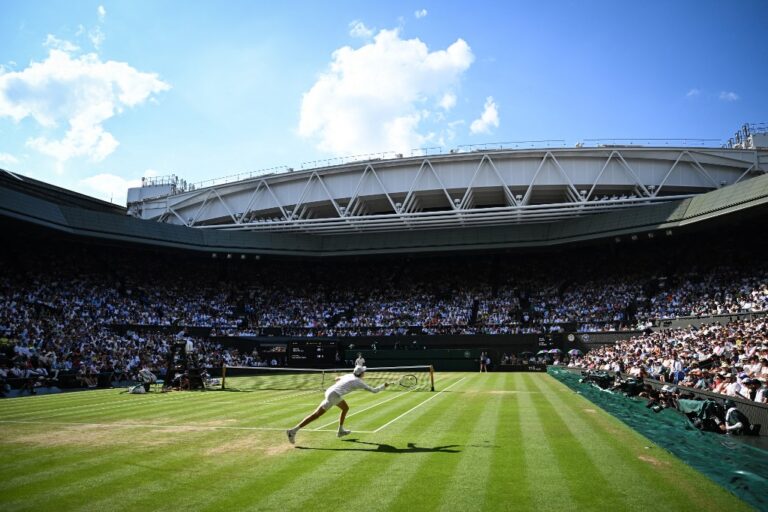
Wimbledon is the oldest and most tradition-bound tournament in professional tennis. Played each summer at the All England Club in London, it is the third Grand Slam of the calendar year after the Australian Open and the French Open and is the only major contested on grass.

First held in 1877 and part of the Open Era since 1968, Wimbledon blends historical customs with modern championship tennis. This guide explains how the tournament is structured, how the draw works, how ranking points are awarded, and what distinguishes Wimbledon from the other Grand Slams.

Where It Is Played

Venue: All England Lawn Tennis and Croquet Club
City: London, United Kingdom
Surface: Outdoor grass
Main stadium: Centre Court (capacity just under 15,000, retractable roof since 2009) Secondary show courts: No. 1 Court (roof added 2019), No. 2 Court, No. 3 Court

Wimbledon is the only Grand Slam still played on grass — the surface on which lawn tennis was invented and on which The Championships have been contested without interruption since 1877.

The courts have been 100 percent perennial ryegrass since 2001, cut to a height of exactly 8 millimetres throughout the fortnight. Qualifying matches are played at a separate site in Roehampton in the week before the main draw begins.

Tournament Format

Main Draw Size

  • 128-player singles draws (Gentlemen and Ladies)
  • 64-team Gentlemen’s and Ladies’ doubles draws
  • 32-team mixed doubles draw
  • Junior, wheelchair, and invitational competitions

Match Format

  • Gentlemen’s singles: Best of five sets
  • Ladies’ singles: Best of three sets
  • Final-set tiebreak: First to 10 points at 6–6 in the deciding set

Wimbledon adopted the 10-point final-set tiebreak in 2022, aligning with the other Grand Slams after years of using its own no-tiebreak deciding-set format that produced the famous Isner–Mahut 70–68 in 2010.

How the Draw Works

Wimbledon features 128 players in each singles draw, including 32 seeds.

  • Seeds are distributed to prevent early-round clashes
  • The top two seeds cannot meet before the final
  • Seeds 1–4 cannot meet before the semi-finals
  • Unseeded players are placed randomly
  • Qualifiers earn entry through a three-round qualifying tournament at Roehampton
  • Wild cards are awarded by the All England Club, typically to British players or returning former champions

For most of the period from 2002 to 2019, Wimbledon’s gentlemen’s singles seeding used the ATP rankings as a base but adjusted positions according to grass-court performance over the previous two years — a unique formula now discontinued. Singles seeding now follows the ATP and WTA rankings directly.

Ranking Points Distribution (Singles)

As a Grand Slam, Wimbledon awards the maximum ranking points.

  • Champion: 2,000 points
  • Finalist: 1,300 points
  • Semi-finalist: 800 points
  • Quarter-finalist: 400 points
  • Round of 16: 200 points
  • Round of 32: 100 points
  • Round of 64: 50 points
  • Round of 128: 10 points

Points apply within the 52-week ATP and WTA ranking systems.

Prize Money

Wimbledon’s total prize purse is among the largest in tennis. The 2025 edition awarded £3 million to each singles champion, with equal prize money paid to men’s and women’s winners across all rounds. Wimbledon was the second Grand Slam to achieve equal prize money for men and women, doing so in 2007, the year after Roland Garros. Prize money extends down to first-round losers and qualifying competitors, with totals published by the All England Club ahead of each year’s Championships.

Scheduling Structure

  • Two-week, 14-day main draw
  • Late June through early July
  • Play on all 14 days, including the middle Sunday (made permanent in 2022)
  • Singles finals: women’s on the second Saturday, men’s on the second Sunday
  • 11pm play curfew applies to all matches, including those on roofed courts

Weather interruptions are common due to London rain, but Centre Court and No. 1 Court now have retractable roofs that allow play to continue regardless of conditions. Outer courts remain exposed.

What Makes Wimbledon Unique

  • Only Grand Slam played on grass, producing the lowest, fastest bounce in major tennis
  • The all-white dress code — players must wear almost entirely white from the moment they step on court, the strictest dress code in professional sport
  • No advertising on Centre Court — the only major venue free of courtside sponsor branding
  • Royal patronage — Catherine, Princess of Wales has been Patron since 2016, presenting the singles trophies on finals weekend
  • The Queue — show-court tickets sold on the day to fans who line up outside the grounds, a tradition since 1927
  • Strawberries and Pimm’s — the defining food and drink of the fortnight
  • A short grass-court season of just three to four weeks separates Wimbledon from Roland Garros, the shortest surface transition window in the calendar

How It Compares to Other Grand Slams

TournamentSurfaceConditionsTypical Pace
Australian Open (January)HardOutdoor, hotMedium
Roland Garros (May–June)ClayOutdoorSlow
Wimbledon (June–July)GrassOutdoorFast
US Open (August–September)HardOutdoor, humidMedium-fast

Surface and climate variation across the four majors shapes career legacies, stylistic matchups, and which players historically peak at each event.

Frequently Asked Questions

When is Wimbledon played? Late June through early July, across 14 consecutive days.

How many players are seeded? 32 in each singles draw.

How many ranking points does the champion receive? 2,000 points — the maximum at any tournament on the calendar.

What surface is used? Outdoor grass — 100 percent perennial ryegrass, mown to 8 millimetres. Wimbledon is the only Grand Slam still played on grass.

Does Wimbledon offer equal prize money for men and women? Yes. Wimbledon adopted equal prize money in 2007, one year after Roland Garros.

Is there play on the middle Sunday? Yes, since 2022. The traditional rest day was scrapped to make Wimbledon a full 14-day tournament.

What is The Queue? The line of fans who camp outside the grounds to buy show-court tickets on the day of play, allocated first-come, first-served. The tradition dates to 1927 and has its own published code of conduct.

When did Wimbledon start? The first Championships were held in 1877, making it the oldest tennis tournament in the world. It has been at its current Church Road site since 1922..

Roland Garros Guide | Format, Clay Surface, Draws and Ranking Points

Roland Garros, commonly known as the French Open, is the second Grand Slam tournament of the calendar year after the Australian Open and the premier event on clay. Held each year in Paris France its the biggest stage in Europe for professional tennis.

Roland Garros Guide — Format, Clay Surface, Draws and Ranking Points

Roland Garros, commonly known as the French Open, is the second Grand Slam of the calendar year and the premier clay court event in professional tennis. Held each spring in Paris at the Stade Roland Garros, it is the most physically demanding major on the professional calendar — a two-week test of endurance, topspin, and tactical patience that has produced the sport’s most distinctive competitive narratives for nearly a century.

This guide covers everything you need to know about how Roland Garros works — the format, the draw structure, the ranking points, the prize money, and what makes the French Open unique among the four Grand Slams. For deeper coverage of any specific topic, follow the links throughout.

Where Roland Garros Is Played

Venue: Stade Roland Garros
City: Paris, France
Surface: Outdoor red clay
Main stadium: Court Philippe-Chatrier
Capacity: Approximately 15,000 (Court Philippe-Chatrier)

The Stade Roland Garros complex sits in the 16th arrondissement of Paris, adjacent to the Bois de Boulogne. The venue is named after Roland Garros — a French aviation pioneer killed in the First World War — whose name was given to the stadium in 1928 when it was built to host France’s Davis Cup defense following their 1927 title.

The complex includes three show courts — Court Philippe-Chatrier, Court Suzanne-Lenglen, and Court Simonne-Mathieu — plus multiple numbered courts used for qualifying and early-round matches. A retractable roof installed over Court Philippe-Chatrier in 2020 enabled night sessions for the first time in 2021.

Read more: The History of Roland Garros — How the French Open Was Founded

The Clay Surface

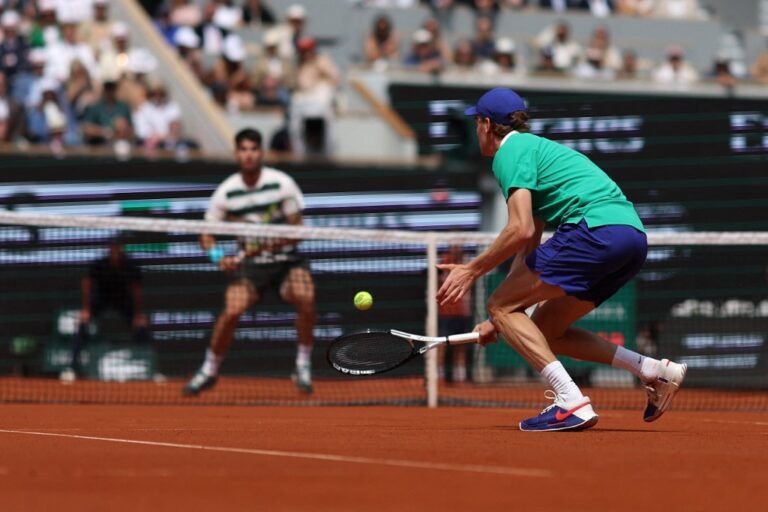
The red clay of Roland Garros is the tournament’s defining characteristic. Made from crushed brick laid over drainage and stability layers, the surface slows the ball significantly after the bounce, produces higher bounces than hard courts or grass, and amplifies the effects of topspin in ways that no other Grand Slam surface replicates.

The practical competitive consequences are significant. Rallies are longer. Serve dominance is reduced. Physical endurance matters more than at any other major. Clay court specialists — players whose games are built around heavy topspin, lateral movement, and tactical patience — thrive at Roland Garros in ways that often confound the expectations that overall rankings create.

Read more: How Red Clay Changes Tennis at Roland Garros · Why Clay Specialists Thrive in Paris · Why Roland Garros Is the Hardest Grand Slam to Win

Tournament Format

Draw Size

  • Men’s and women’s singles: 128-player main draw
  • Men’s and women’s doubles: 64-team draw
  • Mixed doubles, junior singles and doubles, and wheelchair competitions run concurrently

Match Format

  • Men’s singles: Best of five sets
  • Women’s singles: Best of three sets
  • Deciding set tiebreak: First to 10 points at 6–6 in the final set
  • All matches played on outdoor red clay regardless of weather conditions — the Court Philippe-Chatrier roof provides weather protection for the main show court only

Duration

The Roland Garros main draw runs across two weeks in late May and early June. Qualifying takes place in the three days before the main draw begins. The men’s singles final is played on the second Sunday of the fortnight, with the women’s final, doubles finals, and mixed doubles final distributed across the final days.

How the Draw Works

The Roland Garros draw places 128 players into a bracket structured around 32 seeds — the highest-ranked players at the entry cutoff date who receive protected positions that prevent them from meeting each other too early.

The key structural rules:

  • Seeds 1 and 2 are placed in opposite halves — they can only meet in the final
  • Seeds 3 and 4 are drawn into the remaining two quarters — they cannot meet seeds 1 or 2 before the semifinals
  • Seeds 5 through 8 cannot meet the top four before the quarterfinals
  • Seeds 9 through 32 are distributed across the bracket in protected zones
  • Unseeded players are placed randomly and can face any seeded player in the first round

The 128-player field is filled through direct acceptances based on ranking, 16 qualifying spots earned through the pre-tournament qualifying competition, eight wild cards awarded by the French Tennis Federation, and protected ranking entries for players returning from injury.

The draw ceremony is held approximately three days before the first round begins and is the first major competitive event of the Roland Garros fortnight.

Read more: The Roland Garros Draw — How the French Open Bracket Works

Ranking Points

As a Grand Slam, Roland Garros awards the maximum ranking points available in professional tennis. Points are distributed across all rounds of the main draw and qualifying competition and count within the standard 52-week ATP and WTA rolling ranking systems.

Men’s and Women’s Singles — Main Draw:

RoundPoints
Champion2,000
Finalist1,300
Semifinalist800
Quarterfinalist400
Fourth Round200
Third Round100
Second Round50
First Round10

Qualifying Points:

RoundPoints
Qualifying winner (main draw entry)30
Final qualifying round loss16
Second qualifying round loss8

Points earned at Roland Garros expire when the following year’s edition begins — the defending champion must win again to retain their 2,000 points, and any player who reached any round last year must match or exceed that performance to avoid a ranking decline.

Read more: How ATP Rankings Work — The Complete Guide · How Tennis Qualifying Works

Prize Money

Roland Garros distributes prize money across all rounds of the main draw and qualifying competition. The total purse is announced before the tournament begins each year and has increased consistently across recent editions — the French Tennis Federation announced a prize money increase ahead of Roland Garros 2026.

Prize money is equal between men and women at Roland Garros — the French Open was the last Grand Slam to achieve full prize money parity, completing equalization in 2006.

Read more: How Prize Money Works in Professional Tennis

Scheduling Structure

Roland Garros day sessions begin at 11:00 AM Paris time. The daily match order — which match plays first, second, and third on each court — is announced the evening before play begins.

Night sessions on Court Philippe-Chatrier begin at 9:00 PM Paris time and were introduced in 2021 following the installation of the retractable roof. Night session matches are announced alongside the day session schedule.

The Paris spring climate means weather interruptions are more common at Roland Garros than at the Australian Open or US Open — though the Court Philippe-Chatrier roof provides protection for the main show court. Courts Lenglen and Mathieu remain weather-dependent.

What Makes Roland Garros Unique

Among the four Grand Slams Roland Garros stands apart in several specific ways:

It is the only Grand Slam played on clay. The Australian Open and US Open use hard courts. Wimbledon uses grass. Roland Garros is the sole major on clay — making it the most surface-specific of the four and the one whose competitive outcomes are most directly shaped by a single surface’s properties.

It is the most physically demanding major. The combination of clay’s pace absorption, the extended rallies it produces, and the two-week accumulation of clay court competition creates the greatest physical demand of any Grand Slam.

It has the most dramatic specialist versus all-court dynamic. Clay court specialists regularly defeat higher-ranked all-court players at Roland Garros in ways that other surfaces do not produce. The list of great champions who never won the French Open — Sampras, McEnroe, Becker — reflects the tournament’s specific demands more than any comparable list at the other three majors.

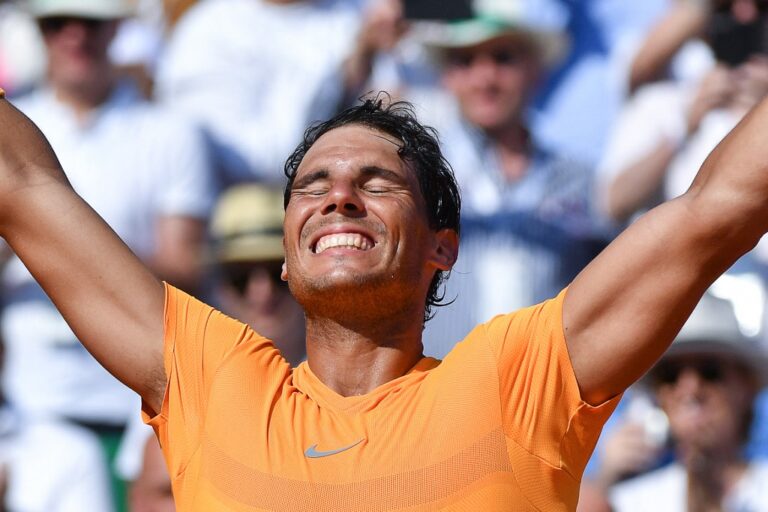
It produced the most dominant single-player performance in Grand Slam history. Rafael Nadal’s fourteen Roland Garros titles — across seventeen years of competition with only two career losses at the tournament — represent the most extreme concentration of excellence at a single major in professional tennis.

How Roland Garros Compares to the Other Grand Slams

TournamentSurfacePaceTypical Match Duration
Australian OpenHardMediumModerate
Roland GarrosClaySlowLong
WimbledonGrassFastShort to moderate
US OpenHardMedium-fastModerate

The surface diversity across the four Grand Slams is what makes the Career Grand Slam — winning all four — one of the rarest achievements in professional tennis. Roland Garros is most frequently the missing piece for players who have won the other three.

Frequently Asked Questions

When is Roland Garros played? Late May through early June. The exact dates vary year to year but the tournament consistently occupies the final two weeks of May and the first week of June.

How many players are in the draw? 128 in men’s and women’s singles. 64 teams in men’s and women’s doubles.

How many seeds are there? 32 seeds in singles.

How many ranking points does the champion receive? 2,000 points — the maximum available at any single professional tennis event.

What surface is Roland Garros played on? Outdoor red clay at the Stade Roland Garros in Paris.

When were night sessions introduced? 2021 — following the installation of the retractable roof over Court Philippe-Chatrier in 2020.

Has a player ever won Roland Garros without losing a set? Yes. Rafael Nadal completed the tournament without dropping a set in 2008 and 2010. Steffi Graf won the 1988 French Open without losing a set as part of her Golden Slam season.

Who has won Roland Garros the most times? Rafael Nadal — 14 titles between 2005 and 2022. Chris Evert and Steffi Graf share the women’s record with 7 titles each.

Explore the full Roland Garros coverage: The History of Roland Garros · Rafael Nadal at Roland Garros · The Greatest Roland Garros Finals · Roland Garros Records · How Red Clay Changes Tennis · Why Roland Garros Is the Hardest Grand Slam to Win · How to Watch Roland Garros · Night Sessions at Roland Garros · The Roland Garros Draw

Australian Open Guide — Format, Surface, Draws and How It Works

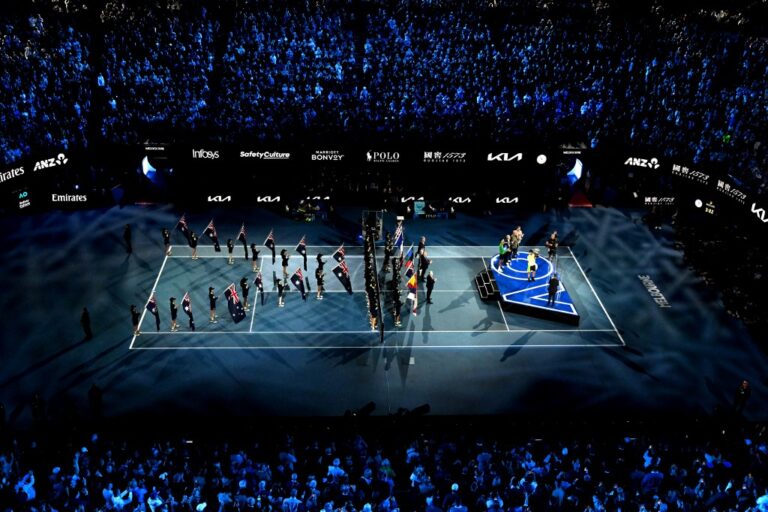
The Australian Open opens the Grand Slam calendar each January in Melbourne, launching the professional tennis season on outdoor hard courts at Melbourne Park. As one of the four major championships, it awards 2,000 ranking points to singles champions and sets the tone for the ATP and WTA seasons. Often known as the “Happy Slam” for its open, festival atmosphere, the event is the most-attended Grand Slam by total visitors and has consistently broken attendance records over the past decade.

Founded in 1905 as the Australasian Championships and part of the Open Era since 1968, the tournament has evolved into one of the largest sporting events in the Southern Hemisphere. This guide explains how the Australian Open is structured, how the draws work, how ranking points and prize money are distributed, and what distinguishes it from the other Grand Slams.

Where It Is Played

Venue: Melbourne Park
City: Melbourne, Australia
Surface: Outdoor hard court (GreenSet acrylic)
Main stadium: Rod Laver Arena (approximately 15,000 seats)
Other roofed arenas: Margaret Court Arena, John Cain Arena
Retractable roofs: Three (the most of any Grand Slam venue)

Melbourne Park has hosted the Australian Open since 1988, when the tournament moved from the grass courts of the Kooyong Lawn Tennis Club to a purpose-built precinct on the edge of Melbourne’s central business district. The venue introduced the first retractable roof on a tennis stadium anywhere in the world, and remains the only Grand Slam venue with retractable roofs on three courts — giving the tournament more flexibility to manage heat and weather than any of its peers. For the full venue history, see How the Australian Open Found Its Home at Melbourne Park.

The Surface

The Australian Open is played on GreenSet, a medium-fast acrylic hard court surface introduced in 2020 to replace the long-running Plexicushion Prestige. GreenSet is classified by the ITF as a Category 4 (Medium Fast) surface — playing notably faster than its predecessor and faster than the US Open’s Laykold (Category 2, Medium Slow), the other hard court Grand Slam. The ball travels faster and stays lower on GreenSet than on the US Open surface, rewarding flatter, more aggressive hitters while still permitting topspin-based games.

The Australian Open has changed its hard court surface three times since switching from grass in 1988 — from Rebound Ace (1988–2007) to Plexicushion (2008–2019) to GreenSet (2020–present) — reflecting Tennis Australia’s willingness to evolve the playing conditions over time. For a deeper comparison with the other hard court Grand Slam, see Why the Australian Open Plays Differently From the US Open.

Tournament Format

Main draw size:

  • 128-player singles draw (men and women)
  • 64-team doubles draw (men’s, women’s, and mixed)
  • Junior, wheelchair, and legends competitions also held

Match format:

  • Men’s singles: best of five sets
  • Women’s singles: best of three sets
  • All sets use tiebreaks at 6–6 (regular tiebreak to 7 points)
  • Final-set tiebreak: first to 10 points at 6–6 in the deciding set (consistent across all four Slams since 2022)

The Australian Open expanded to a 15-day event starting in 2024, beginning on a Sunday rather than the traditional Monday to give the schedule more breathing room around late-finishing night matches. For more on how that change affected the evening schedule, see Australian Open Night Sessions Explained.

How the Draw Works

The singles draw includes 128 players, of whom 32 are seeded based on their ATP or WTA ranking at the entry deadline. The draw is structured to keep the top players apart in the early rounds:

  • The top two seeds cannot meet before the final
  • Seeds 1–4 cannot meet before the semifinals
  • Seeds 1–8 are placed to avoid meeting before the quarterfinals
  • Unseeded players are drawn randomly into the bracket

Additional players enter through one of three routes. Direct acceptance by ranking covers the bulk of the field. Qualifying takes place during the preliminary rounds the week before the main draw, with 128 players competing across three rounds for 16 main-draw spots in each singles event. Wild cards are awarded by Tennis Australia at its discretion, with a portion typically reserved for Australian players, reciprocal arrangements with the other Slams, and exceptional returning players.

Ranking Points Distribution

Grand Slams award the most ranking points of any events on tour. The singles points structure breaks down as follows:

RoundATP (men)WTA (women)
Winner2,0002,000
Finalist1,3001,300
Semifinalist800780
Quarterfinalist400430
Round of 16200240
Round of 32100130
Round of 645070
Round of 1281010

These points apply within the 52-week rolling ranking systems on both tours. For the full mechanics of how rankings are calculated, see How Tennis Rankings Work, WTA Rankings Explained, and ATP Rankings Explained.

Prize Money

The Australian Open distributes prize money across every round of competition, including qualifying. The 2026 edition offered a record total purse of A$111.5 million — the first time the tournament has crossed nine figures — with the singles champion earning A$4.15 million and the first-round loser receiving A$150,000. The full breakdown is announced by Tennis Australia each year, with men’s and women’s events offering equal prize money at every round since 2001.

Official prize money figures are released by Tennis Australia in the weeks before each tournament.

The Trophies

The men’s singles champion receives the Norman Brookes Challenge Cup, first presented in 1934 and named after the Australian who won Wimbledon in 1907 and again in 1914 and became a foundational figure in Australian tennis administration.

The women’s singles champion receives the Daphne Akhurst Memorial Cup, named in honour of the five-time Australian Championships winner of the 1920s who died at age 29 in 1933. Daphne Akhurst’s name has been on the women’s trophy since 1934.

Both trophies are permanent — winners receive a replica trophy to keep.

Scheduling Structure

  • Two-week main draw, expanded to 15 days from 2024
  • Preliminary rounds and qualifying held the week before the main draw
  • Day sessions and night sessions on the main show courts (separate ticketing)
  • Played in mid-to-late January through early February
  • Extreme Heat Policy in place (see how the AO Heat Stress Scale works)

As the first Grand Slam of the calendar year, the Australian Open often shapes the season’s early ranking narratives and sets the tone for the year’s storylines.

What Makes the Australian Open Unique

  • First major of the season — the only Slam that opens the year, played when many of the sport’s biggest names are at peak off-season conditioning
  • Three retractable roofs — the only Slam venue with that level of weather protection across multiple courts
  • City-centre location — Melbourne Park sits on the edge of Melbourne’s CBD, walkable from the city in a way no other Slam venue can match
  • The “Happy Slam” identity — a relaxed, festival atmosphere driven by Melbourne’s summer climate, the open grounds, and the venue’s multi-purpose design
  • Highest attendance of any Slam — the AO draws more than 1.2 million visitors annually
  • Surface evolution — the only Slam that has changed its main playing surface multiple times in the modern era
  • A pioneer in technology — the first Slam to introduce a retractable roof, an early adopter of Hawk-Eye Live electronic line calling, and a leader in fan technology

For a fuller comparison with the other major venues, see What Makes Melbourne Park Different From Other Grand Slam Venues.

How It Compares to the Other Grand Slams

TournamentSurfaceSurface CategoryTypical Pace
Australian OpenHard (GreenSet)Category 4Medium Fast
Roland GarrosClayCategory 1Slow
WimbledonGrassCategory 5Fast
US OpenHard (Laykold)Category 2Medium Slow

Surface variation across the four majors is central to player legacies. Only a handful of players in tennis history have completed the career Grand Slam — winning at least one title at each of the four majors — making it one of the sport’s most exclusive achievements.

Frequently Asked Questions

When is the Australian Open played? The main draw runs over two weeks in mid-to-late January, with the qualifying rounds and preliminary events in the week before. Since 2024, the tournament has expanded to a 15-day format starting on a Sunday.

Where is the Australian Open played? At Melbourne Park, a purpose-built tennis precinct on the edge of Melbourne’s central business district. The main court is Rod Laver Arena.

What surface is used at the Australian Open? GreenSet, a medium-fast acrylic hard court surface in use since 2020. It is classified by the ITF as Category 4 (Medium Fast).

How many players are seeded? 32 in each singles draw, based on ATP and WTA rankings at the entry deadline.

How many ranking points does the Australian Open champion receive? 2,000 points — the maximum for any single tournament outside of an undefeated Nitto ATP Finals or WTA Finals run.

What are the trophies called? The men’s trophy is the Norman Brookes Challenge Cup. The women’s trophy is the Daphne Akhurst Memorial Cup. Both have been awarded under those names since 1934.

Why is it called the “Happy Slam”? The nickname reflects the tournament’s relaxed atmosphere, summer climate, open grounds, and festival-style fan experience — features Melbourne Park was deliberately designed to deliver. Players have consistently described it as one of the most welcoming tournaments on the calendar.

How much prize money does the Australian Open offer? The 2026 edition offered a record A$111.5 million total prize pool, the first time the tournament crossed nine figures. The singles champion earned A$4.15 million, with prize money increases applied to every round.

A Look Back at the Open Era in Tennis

0

The Open Era in tennis dawned on April 22, 1968, when the British Hard Court Championships in Bournemouth, England, became the first tournament to allow professional and amateur players to compete together, ending decades of division in the sport, according to the International Tennis Federation (ITF).

This pivotal shift, approved by the ITF’s predecessor, the International Lawn Tennis Federation (ILTF), in a unanimous vote just weeks earlier, opened Grand Slam events to professionals who had been barred since the 1920s, ushering in an age of commercialization, higher prize money and global superstars that has defined modern tennis, as detailed in ATP Tour records.

Key points in the Open Era’s history include the formation of player associations, the introduction of rankings and technological innovations that enhanced the game’s accessibility and fairness.

The mechanism behind the Open Era stemmed from growing frustration with “shamateurism,” where amateurs received under-the-table payments while professionals were excluded from prestige events like the Grand Slams, per Britannica’s account of tennis history.

Failed ILTF votes in 1960, 1964 and 1967 to allow open competition prompted the British Lawn Tennis Association (LTA) to defy the governing body in December 1967, voting 295-5 to abolish distinctions between amateurs and professionals in its tournaments.

This bold move, coupled with the rise of professional tours like World Championship Tennis, forced an emergency ILTF meeting on March 30, 1968, in Paris, where 47 nations approved 12 open tournaments across eight countries, categorizing players to facilitate the transition.

A reality check reveals that while the Open Era is often romanticized as an immediate equalizer, early events showed amateurs could compete: British amateur Mark Cox became the first to defeat a professional, beating Pancho Gonzales and then Roy Emerson at Bournemouth before losing to Rod Laver in the semifinals.

Common misconceptions overlook the ongoing political battles post-1968, including player boycotts and lawsuits that shaped governance.

Example: The First Open Tournament

At the 1968 British Hard Court Championships in Bournemouth, Ken Rosewall defeated Rod Laver in the men’s final, 3-6, 6-2, 6-0, 6-3, claiming £1,000 (equivalent to about £16,500 in 2018 values, per ATP estimates from that era), while Virginia Wade won the women’s title but declined prize money to retain amateur status. The event drew 23,000 spectators, a 20-year high, and generated a surplus of £3,192, proving open tennis’s viability.

The first match featured Owen Davidson beating John Clifton 6-2, 6-3, 4-6, 8-6, watched by about 100 fans amid rain delays.

What has changed over time includes the establishment of the Association of Tennis Professionals (ATP) in 1972 and the Women’s Tennis Association (WTA) in 1973, which empowered players and led to unified tours; the introduction of ATP rankings in 1973; and rules like the tiebreak in 1970 and yellow balls in 1972 for better visibility.

Prize money has escalated dramatically—Wimbledon’s 1968 total purse was £26,150, while modern majors offer tens of millions—and the sport has expanded globally, with tennis returning to the Olympics in 1988 and innovations like electronic line-calling in 2006.

Details such as prize distribution and tournament formats vary by event and year, reflecting ongoing governance by the ITF, ATP and WTA. This timeline highlights pivotal moments that shaped professional tennis since 1968.

YearEvent
1968ILTF approves open tournaments; First event in Bournemouth won by Ken Rosewall (men) and Virginia Wade (women).
1968First open Grand Slam: French Open.
1970Tiebreak introduced and tested at US Open.
1972ATP founded; Yellow balls approved.
1973WTA founded; ATP rankings begin; ATP boycotts Wimbledon over eligibility dispute.
1988Tennis returns to Olympics in Seoul.

Key Milestones in the Open Era of Tennis, as of 2026 (dates and events sourced from ITF and ATP records).

How the Billie Jean King Cup Works: Format, Stages and Rules Explained

0

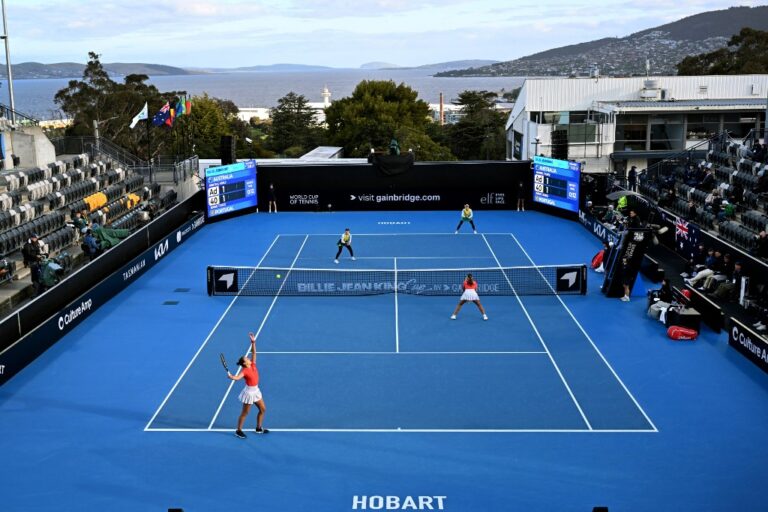
The Billie Jean King Cup, organized by the International Tennis Federation, stands as the premier international team competition in women’s tennis, drawing a record 148 nations in 2026 across its multi-tiered structure.

Formerly known as the Fed Cup until its 2020 renaming in honor of tennis pioneer Billie Jean King, the event features a pyramid of regional groups, play-offs, qualifiers and a culminating finals week, with promotion and relegation determining advancement. The format emphasizes home-and-away ties in early stages and a neutral-site knockout for the finals, aligning closely with the men’s Davis Cup.

Key elements include best-of-five-match ties in qualifiers and play-offs, guaranteed doubles rubbers starting in 2026, and round-robin pools in regional events. Nations compete for promotion to higher tiers, with the top eight battling for the title in September. Eligibility requires teams of three to five players, nominated by national associations based on rankings, with captains overseeing strategy.

The competition unfolds over the year, starting with regional groups in April, followed by qualifiers the same month, play-offs in November and finals in September. Regional groups span four levels (I to IV), divided by zones: Africa, Americas, Asia/Oceania and Europe (merged with Africa for Groups I and II).

These week-long events at single venues begin with round-robin pools, followed by play-offs for promotion and relegation; formats adjust based on entrant numbers, with ties typically best-of-three (two singles, one doubles). Winners from Group I advance to play-offs.

Play-offs, set for the week of Nov. 16, 2026, pit seven losers from April qualifiers against seven Group I winners in home-or-away ties. Hosts choose the surface, and ties span two days: two singles on day one, doubles first on day two, then two more singles. The first nation to three wins advances; all matches are best-of-three tiebreak sets. Winners move to the next year’s qualifiers, losers drop to regional Group I.

Qualifiers on April 10-11, 2026, involve 14 nations: seven non-host teams from the prior finals and seven play-off winners. Like play-offs, these are home-or-away ties with the same two-day, five-rubber structure, guaranteeing a live doubles match—a 2026 innovation. Seven winners qualify for finals; losers enter play-offs. The host nation for finals automatically qualifies.

The finals, from Sept. 22-27, 2026, in Shenzhen, China, feature eight teams in a straight knockout: quarterfinals, semifinals and final. Ties here are best-of-three: two singles followed by doubles, all best-of-three sets. The defending champion earns a home qualifier tie the following year.

While the cup promotes global participation, lower-tier events can vary in competitiveness, and top players’ availability depends on schedules. Nations rankings, based on recent results, influence seeding and draws.

Example: A Typical Qualifier Tie

In a 2026 qualifier between Nation A (host) and Nation B on hard court: Day 1 features A’s No. 2 vs. B’s No. 1, then A’s No. 1 vs. B’s No. 2. Day 2 starts with doubles, followed by reverse singles if needed. If A wins 3-0 by end of doubles, remaining singles are not played.

Formats evolve; the 2026 shift to guaranteed doubles and pairwise ties in qualifiers and play-offs replaced 2025’s group-of-three round robins, per ITF adjustments for engagement and alignment with Davis Cup. Team counts and venues can fluctuate annually based on entries and hosting bids.

The table illustrates the progression through the Billie Jean King Cup’s tiers as of the 2026 edition.

StageTeamsFormatKey Outcome
Regional Groups (I-IV)Varies by zoneRound-robin pools + play-offs at one venuePromotion to play-offs (Group I winners); relegation to lower groups
Play-offs147 home-or-away ties over 2 days (2 singles Day 1; doubles + 2 singles Day 2)Winners to qualifiers; losers to Group I
Qualifiers147 home-or-away ties over 2 days (same as play-offs)Winners to finals; losers to play-offs
Finals8Knockout (QF, SF, Final) at neutral site; best-of-3 tiesChampion determined

The structure ensures broad participation while funneling top teams to a high-stakes finals.

How the Davis Cup Works: Format, Qualification and Structure Explained

0

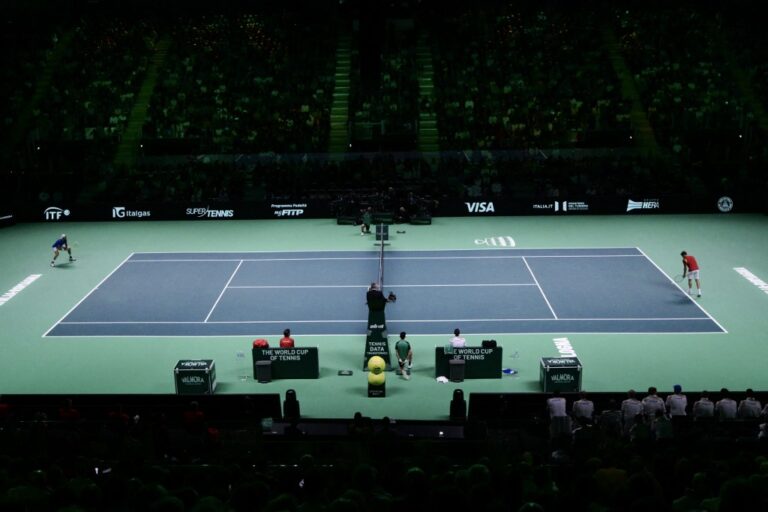
The Davis Cup stands as the premier international team competition in men’s tennis, drawing nations from across the globe in a quest for the coveted trophy, according to the International Tennis Federation (ITF), which organizes the event.

Known as the World Cup of tennis, it features a multi-tiered format that combines home-and-away ties with a climactic finals event, involving promotion and relegation to ensure competitive balance.

In essence, the Davis Cup operates on a pyramid structure where lower-ranked nations battle through regional events to ascend to higher levels, culminating in an elite eight-team finals. The competition spans the calendar year, with key stages aligned around the Grand Slam schedule, and emphasizes national pride over individual rankings.

Details such as the number of participating nations—157 in 2025, per ITF records—can vary annually, as can specific qualification criteria like wild cards. The ITF oversees all aspects, from rankings to anti-doping, making it one of the largest annual team events in any sport.

Key points include the competition’s division into four main tiers: the Davis Cup Finals, Qualifiers, World Groups I and II, and regional groups (III, IV and V). Nations are seeded based on the ITF’s Nations Ranking system, which accounts for recent performances and adjusts for format changes to distribute points fairly.

Ties, the term for matchups between nations, are typically best-of-five rubbers (individual matches), though some levels use best-of-three. Each rubber is best-of-three tiebreak sets, with teams nominating players and captains strategizing lineups.

The mechanism begins with regional events in the summer months (June to August), where lower-tier nations compete in round-robin formats at centralized venues. Top performers promote to World Group II Play-offs, held in February alongside other early-season ties.

World Group II features 26 nations in 13 home-or-away ties in September, with winners advancing to World Group I Play-offs and losers potentially dropping to regional levels. World Group I follows a similar pattern, with its 26 nations vying for spots in the next year’s Qualifiers.

The Qualifiers represent the gateway to the trophy, starting with a first round in February involving 26 nations in 13 ties—drawn from prior finals participants, World Group I winners and occasional wild cards, such as the defending champion.

Winners proceed to a second round in September, joined by another wild card, totaling 14 nations in seven ties. The seven victors from this round, plus one host nation (which must meet criteria like a top-50 ranking or a top-10 ATP singles player), form the Final 8 in November. This finals event, held in a single host city over six days, uses a knockout format to crown the champion.

A reality check: While the Davis Cup promotes global participation, not all ties draw massive crowds, and home advantage—decided by draws or prior results—can influence outcomes significantly.

Misconceptions often arise around its scale; unlike individual tournaments, it prioritizes team strategy, with captains able to substitute players mid-tie under specific rules. Dead rubbers, played after a tie is decided, allow for experimentation but don’t affect the result.

Example Box: Italy’s Path in Recent Years

Italy, as three-time defending champions entering 2025, received a wild card directly to the Final 8 as hosts, bypassing qualifiers—a perk tied to their success and meeting host criteria.

In a hypothetical tie, such as a Qualifiers first-round matchup, Italy might host a lower-seeded nation, playing two singles on day one (e.g., No. 1 vs. opponent’s No. 2), followed by doubles and reverse singles on day two if needed. This illustrates how top nations leverage rankings for easier paths, while underdogs must grind through multiple levels.

What changes over time: The Davis Cup format has evolved significantly, with a major overhaul in 2019 introducing a centralized finals week to boost appeal. Further adjustments approved in 2024 reincorporated more home-or-away ties, replacing some group stages to enhance national engagement, per ITF announcements.

Scheduling aligns with the ATP calendar, but specifics like wild card allocations or host requirements can shift based on governance decisions. Nations’ rankings, updated after each tie, influence seeding and progression for future seasons.

Here is a table detailing the stages of the Davis Cup, from regional groups to the Final 8, including timing, participants, formats and progression outcomes:

StageTimingNations/TiesFormatOutcome
Regional Groups (III-V)June-AugustVaries by region (round-robin)Best-of-three rubbers (2 singles, 1 doubles) at one venueTop teams promote to World Group II Play-offs; bottom relegate
World Group II Play-offsFebruary26 nations/13 tiesHome/away, best-of-five rubbers over 2 daysWinners to World Group II; losers to regional groups
World Group IISeptember26 nations/13 tiesHome/away, best-of-fiveWinners to World Group I Play-offs; losers to WG II Play-offs
World Group I Play-offsFebruary26 nations/13 tiesHome/away, best-of-fiveWinners to World Group I; losers to World Group II
World Group ISeptember26 nations/13 tiesHome/away, best-of-fiveWinners to next year’s Qualifiers 1st Round; losers to WG I Play-offs
Qualifiers 1st RoundFebruary26 nations/13 tiesHome/away, best-of-fiveWinners to 2nd Round; losers to World Group I
Qualifiers 2nd RoundSeptember14 nations/7 tiesHome/away, best-of-fiveWinners to Finals; losers to next year’s 1st Round
Final 8November8 nationsKnockout in one cityChampion crowned

This structure highlights the Davis Cup’s progressive ladder, where nations must win successive ties to reach the elite Final 8

ATP 250 vs. 500 Tournaments: The Core of Men’s Professional Tennis Circuits

0

ATP 250 and 500 tournaments anchor the men’s professional tennis calendar, bridging the gap between elite Grand Slams and Masters 1000s while providing essential ranking points and earnings for a wide range of players.

These events, categorized by the points awarded to singles champions, vary in scale and appeal, influencing how athletes schedule their seasons and build toward higher-tier competitions. While specifics like event counts and rules evolve annually, the core distinctions remain consistent, with 500s offering greater rewards and drawing stronger fields.

ATP 250s function as accessible entry points, often featuring emerging talents and regional favorites in smaller draws. In contrast, ATP 500s elevate the competition, mandating participation from top-ranked players and incorporating advanced features like expanded video review.

Points allocation underscores the hierarchy. Singles winners at 250-level events earn 250 ranking points, dropping to 165 for finalists, 100 for semifinalists, 50 for quarterfinalists and 25 for round-of-16 participants. ATP 500s double these figures: 500 for champions, 330 for runners-up, 200 for semifinalists, 100 for quarterfinalists and 50 for the round of 16. Doubles follows suit, with winning teams sharing equivalent points at each level.

Draw sizes typically range from 28 to 32 players for 250s, expanding to 32 or 48 for many 500s, which can adjust points slightly for additional rounds. Prize money scales accordingly, with 250s offering total purses from about $500,000 to $1 million—champions claiming $80,000 to $200,000—and 500s exceeding $1 million, often up to $2.5 million, per ATP guidelines. Exact amounts vary by location and year, as seen in official calendars.

Player commitments highlight the prestige gap. Top-30 ranked athletes must enter a set number of 500s—three as of recent seasons, including one post-U.S. Open—to qualify for bonuses, with no such obligation for 250s. This ensures star power at 500s, while 250s prioritize development, granting wild cards to locals or prospects ranked as low as 100 or below.

In the rankings mechanism, results from these tournaments contribute to a player’s best 18 events (or 19 if qualifying for finals), allowing up to three 250 or 500 outcomes to replace weaker Masters 1000 showings under certain rules. A 500 title can propel a mid-ranked pro toward top-10 seeding, while consistent 250 runs build foundational points.

Reality checks reveal variations: event numbers fluctuate—29 for 250s and 16 for 500s in a typical recent year—with some 250s upgrading to 500 status, like Dallas or Doha, to enhance global distribution. Surfaces span hard, clay and grass, clustering regionally for efficiency, but early-round competitiveness intensifies due to zero points for first-round losses.

EXAMPLE: Brisbane International (ATP 250) vs. Rotterdam Open (ATP 500).

Brisbane’s hard-court event suits early-season preparation with a $661,585 purse and 32-player draw, ideal for tune-ups. Rotterdam, meanwhile, commands a $2.2 million pot, attracting top seeds and featuring video review on all courts for precise officiating.

Over time, the ATP refines these categories through scheduling tweaks, like reducing countable events for flexibility or introducing profit-sharing at 500s to align player and organizer interests. Trends favor fewer but richer 250s, with technology rollouts—such as video review—phased in starting at higher tiers.

The WTA employs a parallel structure, with 250s and 500s mirroring points and draws but adjusted for women’s tour specifics, including 22 to 25 events at 250 level and 17 at 500 in recent calendars.

CategoryATP 250ATP 500
Number of Events (typical)2916
Champion Points250500
Finalist Points165330
Semifinal Points100200
Quarterfinal Points50100
Round of 16 Points2550
Typical Draw Size28-32 players32-48 players
Prize Money Range$500K-$1M total$1M-$2.5M+ total
Player CommitmentsOptional for top ranksTop 30 must play 3
Tech FeaturesStandard line callsVideo review on all courts
Comparison of key metrics for ATP 250 and 500 tournaments, based on standard structures as of recent seasons (points in ATP rankings points; prize money in U.S. dollars).

Takeaway: ATP 500s provide double the points and larger purses than 250s, accelerating rankings climbs for consistent performers.

How Protected Rankings Work in Tennis: ATP and WTA Rules Explained

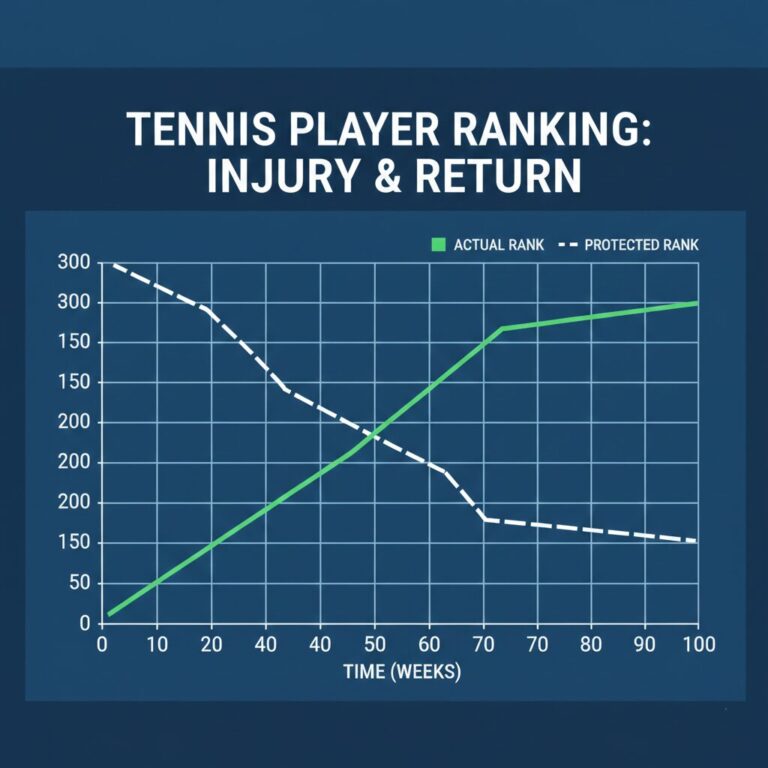
In professional tennis, protected rankings provide a lifeline for players sidelined by injury or other qualifying absences, enabling them to enter tournaments at a level reflecting their pre-absence standing rather than a diminished current rank.

This system, known as Protected Ranking on the ATP Tour and Special Ranking on the WTA Tour, aims to ease the transition back to competition for athletes who miss extended periods, ensuring they can compete in events they might otherwise miss due to ranking drops during downtime. While similar in purpose, the ATP and WTA versions differ in calculation, duration and application, with rules outlined in their respective official rulebooks.

Protected rankings apply primarily to absences due to injury, illness or other specified reasons, but they come with strict eligibility requirements and limits on usage. Players must submit documented petitions within set timelines, and the protected status is used solely for tournament entry, not seeding or other privileges.

On the ATP Tour, a player qualifies for a Protected Ranking after a minimum six-month absence from all tennis events due to physical injury, documented medical illness or compulsory military service.

The WTA Tour requires at least 26 weeks out of competition for reasons including medical conditions, pregnancy, parental start (such as adoption or guardianship) or military service, with a ranking between 1 and 750 prior to the break. Both tours prohibit participation in any organized tennis or other sports during the qualifying period, with limited exceptions like one exhibition event on the WTA.

The WTA also offers distinct protections for maternity and fertility treatments. For pregnancy, the out-of-competition period begins after the last event before pregnancy and can extend up to 104 weeks post-pregnancy.

A recent update introduced a Fertility Protection Special Entry Ranking for procedures like egg or embryo freezing, requiring at least 10 weeks off and allowing entry into up to three lower-level tournaments. The ATP does not have equivalent provisions for maternity or fertility, focusing solely on injury-related absences.

To calculate the protected rank, the ATP uses the player’s average ranking over the first three months following their last event. The WTA bases it on the ranking the week after the last tournament, except for fertility cases, which use a 12-week average (eight weeks prior and four after the last event). Applications must be filed within six months of the last event on the ATP and within 26 weeks on the WTA, with medical or other documentation required.

The duration and number of uses vary by tour and length of absence. On the ATP, a six-month absence allows use in the first nine tournaments or over nine months, whichever comes first; for 12 months or more, it extends to 12 singles tournaments and separately 12 doubles events, or 12 months.

The WTA scales combined singles and doubles uses: up to eight for less than 39 weeks out, 10 for less than 52 weeks and 12 for 52 weeks or more, with caps like five WTA 1000 events and two Grand Slams. Protected status lasts 52 weeks from return on the WTA, extendable in cases like subsequent injuries.

Protected rankings facilitate entry into main draws, qualifying or special exempt spots but cannot be used for seeding, lucky loser status or year-end finals qualification on either tour. The WTA allows limited “additional seed” opportunities in the first eight tournaments post-return if the special ranking is top-100 for singles in certain draw sizes. Withdrawals without prize money do not count toward usage limits but may incur fines or zero points.

In practice, protected rankings prevent players from starting over in lower-tier events after long layoffs, but they do not guarantee success or protect against further ranking slides if performance lags upon return. High-profile users, like Rafael Nadal on the ATP or Naomi Osaka on the WTA, have leveraged them to access major tournaments, though outcomes depend on fitness and form.

Example: A Player’s Return Path

Consider a top-20 WTA player out for nine months due to injury. She applies for a Special Ranking based on her pre-absence position, receives approval and uses it to enter 10 tournaments over the next year, including up to three WTA 1000 events and one Grand Slam. If she withdraws from one without playing, it does not count toward her limit, but she must rebuild her actual ranking through results to regain seeding eligibility.

Details can shift with tour updates. The ATP reduced overall ranking-counted events to 18 in 2026, but protected ranking rules remained unchanged. The WTA added fertility protections in 2025 and is reviewing broader calendar and ranking reforms for potential 2027 implementation. Players should consult current rulebooks, as eligibility thresholds or usage caps may evolve based on governance decisions.

To compare core elements:

AspectATP Protected RankingWTA Special Ranking
Minimum Absence6 months26 weeks
CalculationAverage over first 3 months post-last eventRanking week after last event (12-week average for fertility)
Usage Limits (for ≥12 months/52 weeks out)12 singles + 12 doubles tournaments or 12 months12 combined singles/doubles tournaments; caps on majors
SeedingNot allowedNot standard; limited additional seeds possible
Other Qualifying ReasonsInjury, illness, militaryPlus pregnancy, parental start, fertility (limited)

This table highlights key differences in protected ranking systems between the ATP and WTA tours, aiding players in navigating return strategies.

How Prize Money Works in Professional Tennis

Professional tennis players earn prize money based on their performance in tournaments, with payouts increasing as they advance through rounds. This system rewards progression but provides compensation even for early exits, supporting a broad range of competitors on the global circuit.

Tennis prize money is funded primarily through tournament revenues, including ticket sales, broadcasting rights, and sponsorships, according to the Association of Tennis Professionals (ATP) and Women’s Tennis Association (WTA).

The four Grand Slam events—Australian Open, French Open, Wimbledon, and U.S. Open—offer the largest purses, overseen by the International Tennis Federation (ITF) but operated independently. These majors, along with ATP and WTA tour events, distribute funds across singles, doubles, and mixed doubles draws, with singles typically commanding the highest shares.

Key points include tiered tournament categories that dictate prize pools. On the men’s ATP Tour, events range from Masters 1000s (highest non-Slam level) to 500s, 250s, and Challengers. The women’s WTA Tour mirrors this with WTA 1000s, 500s, and 250s, while lower-level ITF World Tennis Tour events provide entry points for emerging players.

Grand Slams award equal prize money to men and women, a standard achieved progressively since the 1970s, per ITF records. Combined ATP-WTA events are moving toward parity, with the WTA targeting equal pay at 1000- and 500-level tournaments by 2027 and all 500s by 2033.

The mechanism is straightforward: Organizers set a total prize fund before the event, allocating portions by round. A first-round loser receives the base amount for that stage, while the champion claims the largest share.

Distributions escalate exponentially; for instance, advancing from early rounds to finals can multiply earnings several times over. Doubles payouts are generally lower than singles, and players may compete in both to boost income. Payments occur at tournament’s end via bank transfer, as explained by former players in ATP discussions. Prize money does not include appearance fees, which are rare on the main tours but sometimes offered at exhibitions.

A reality check tempers the glamour: Taxes significantly reduce net earnings. Prize money is taxed in the host country, with withholding rates varying—up to 30% in the U.S. and Italy, or 45% in France for high earners, according to tax analyses from Reuters. Players may claim credits in their home countries to avoid double taxation, but global travel complicates filings.

Endorsements, often a larger income source for top players, are taxed based on residence, prompting many to base in low-tax locales like Monaco. Expenses for travel, coaching, and agents (typically 10-15% commissions) further cut into profits, leaving lower-ranked players struggling to break even.

Example: Australian Open 2026 Prize Money Breakdown (in AUD)
Total Prize Fund: $111,500,000 (per Tennis Australia fact sheet for 2026 edition)
Singles Champion: Typically around 3-4% of total, varying by year
Singles Runner-Up: About half the champion’s share
First-Round Singles Loser: Entry-level payout, often 0.1-0.2% of total
Note: Exact per-round figures vary annually; doubles and qualifiers receive smaller allocations. Details fluctuate by Slam and season.

What changes over time: Prize funds have risen steadily, with Grand Slams increasing 10-16% year-over-year in recent editions, driven by revenue growth. Players, via the Professional Tennis Players Association, push for higher revenue shares—currently 12.5-20% at majors—aiming for figures closer to 22% seen in some tour events. ATP’s profit-sharing formula at Masters 1000s splits excess profits 50-50 with players, adding millions annually.

Gender equity advances, but disparities persist in non-combined events. Economic factors like inflation and media deals influence adjustments, with totals tied to specific years or editions.