

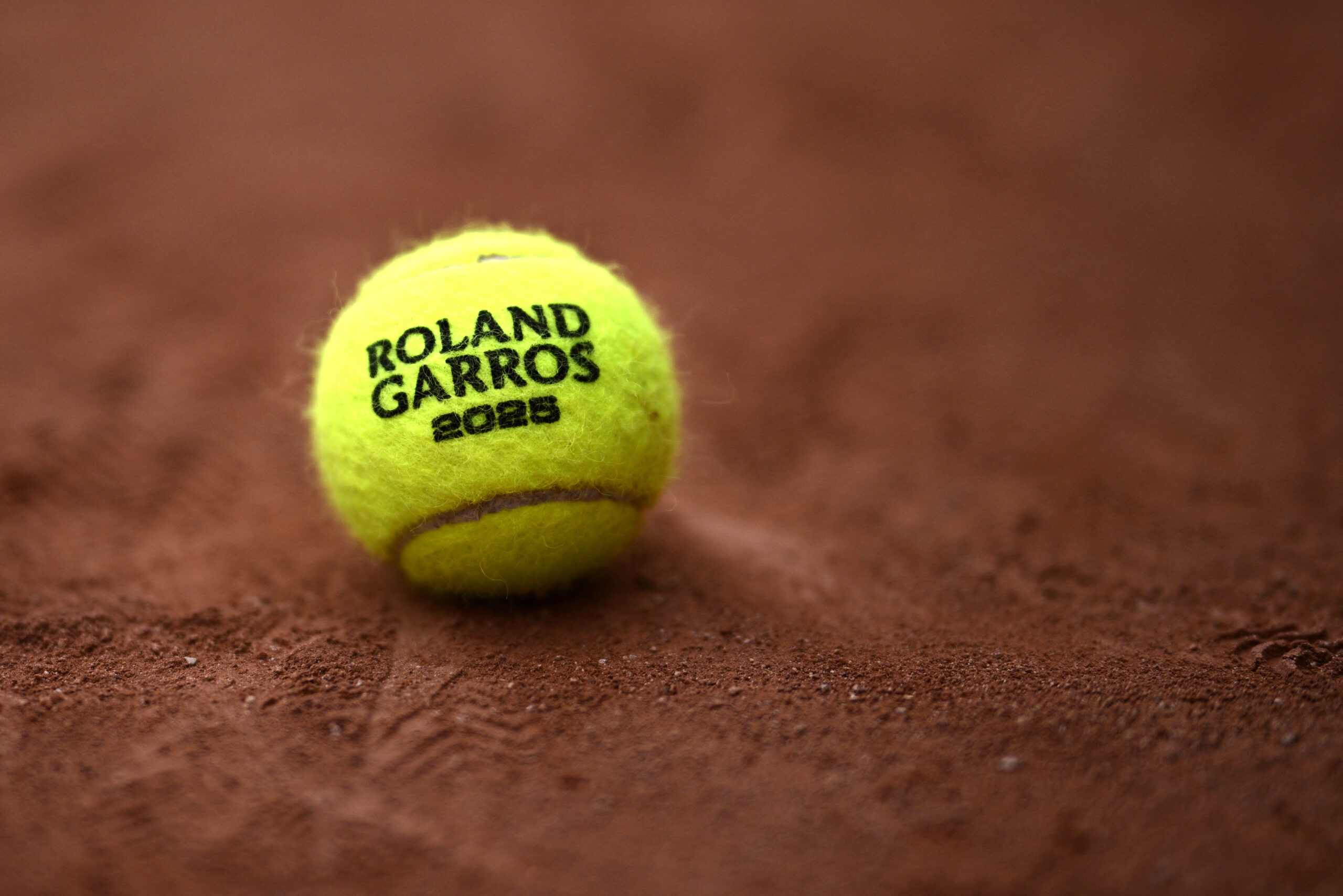
The red clay of Roland Garros is not simply a different color from the surfaces at the other Grand Slams. It is a fundamentally different playing environment — one that changes the physics of the ball, the tactics that succeed, the physical demands on players, and the specific qualities that competitive excellence requires.
Understanding what red clay actually does to tennis — how it changes the ball’s behavior, why it rewards certain playing styles and punishes others, and what it demands from players that no other surface requires — is the foundation for understanding why Roland Garros produces the competitive outcomes it does.
Clay court tennis at Roland Garros looks different from hard court tennis and grass court tennis because it is different — governed by physical properties that alter the game’s fundamental parameters in ways that the touring professional must specifically prepare for and that the casual viewer, once understood, can read in every rally they watch.
What Red Clay Actually Is
The surface at Roland Garros is not simply dirt or mud. It is a specific composition of crushed brick — historically from the terra cotta tiles of demolished buildings, now sourced and processed specifically for tennis court use — laid over a series of substrate layers that provide drainage, stability, and the specific playing characteristics that distinguish Roland Garros’s courts from other clay surfaces around the world.
The visible red layer is approximately three to five millimeters of crushed brick — fine enough to pack into a consistent playing surface but coarse enough to provide the friction properties that give clay its specific ball-interaction characteristics. Below the red layer are successive layers of clinker, gravel, and drainage material that together create the moisture management and structural stability the surface requires.
The specific composition of Roland Garros’s clay is maintained by a dedicated groundskeeping team that manages the moisture content, the packing density, and the surface condition of the courts across the tournament fortnight.
Clay courts must be watered before play to prevent the surface from drying out and cracking — dry clay produces a harder, faster surface with a lower bounce. Wet clay produces a slower, higher-bouncing surface that amplifies the specific characteristics that make clay court tennis distinct.
The specific moisture management at Roland Garros is therefore a direct determinant of the playing conditions that the tournament produces.
How Clay Changes Ball Physics
The physics of ball-surface interaction on clay are fundamentally different from hard courts and grass — and understanding those physical differences explains why clay court tennis looks and plays so differently.
Pace absorption is clay’s defining characteristic. When a tennis ball strikes a clay court surface, the friction between the ball and the clay is significantly higher than the friction between a ball and a hard court or grass court surface. That high friction absorbs the ball’s horizontal momentum — slowing the ball after the bounce more dramatically than on faster surfaces.
A ball hit at 120 kilometers per hour on hard courts may retain 80 or 85 percent of its pace after bouncing. The same ball on clay may retain only 60 to 70 percent of its pace — a reduction that changes the amount of time a player has to respond and the specific tactical options available to both players.
The bounce is higher and heavier. Clay’s friction properties do not simply slow the ball — they redirect some of its horizontal momentum into vertical momentum. The ball bounces higher on clay than on hard courts or grass, rising above the comfortable knee-to-shoulder strike zone that players optimize their groundstroke technique around.
Balls that bounce at shoulder height or above force players to adjust their swing mechanics upward — reducing leverage and making it harder to generate the pace and direction that comfortable-height contact produces.
Topspin is amplified by the surface interaction. A ball struck with heavy topspin arrives at the court surface already rotating forward — the topspin interacting with the clay’s friction to produce a more pronounced kick than the same ball would generate on a faster surface.
Clay amplifies topspin’s post-bounce behavior in ways that make heavy topspin more effective on clay than on any other surface — the high-kicking bounce it produces on clay is more difficult to handle than the equivalent bounce on hard courts, where the lower friction prevents the same degree of kick amplification.
Flat shots lose their pace advantage. A flat-hit groundstroke — struck with minimal spin and maximum pace — relies primarily on raw pace to create difficulty for the opponent. On hard courts and grass, that pace is largely preserved through the bounce, maintaining the time pressure on the opponent that the pace was designed to create.
On clay, the pace absorption means that the flat shot arrives at the opponent having lost a significant proportion of its pace — sitting up in a more comfortable strike zone and giving the opponent more time to react than the same shot would on a faster surface.
How Clay Changes Serving
The serve is the most powerful weapon in professional tennis — the shot that initiates every point and that generates more free points through aces and service winners than any other single shot. Clay reduces that weapon more dramatically than any other surface.
On grass and fast hard courts, a well-placed serve at pace gives the returner minimal time to respond. The ball bounces low and fast, skidding through before the returner can set their feet and generate a quality return.
Aces — serves the returner cannot touch — are common in serves of 200 kilometers per hour or more on grass. The serve’s dominance on fast surfaces is one of the reasons that serve-and-volley tactics, which exploit the short time between a serve landing and the returner’s response, were viable competitive strategies for decades.
On clay, the same serve — same pace, same placement — behaves fundamentally differently. The pace absorption reduces the ball’s velocity after bouncing. The higher bounce gives the returner more time to set their feet and prepare their swing.
The specific interaction between a powerful flat serve and the clay surface produces a ball that arrives at the returner more slowly and at a more comfortable height than the serve’s initial velocity would suggest — creating opportunities for aggressive returning that fast surfaces do not provide.
The practical consequence is that ace counts at Roland Garros are the lowest of any Grand Slam. Players who rely heavily on serving free points — who build their competitive strategies around first-serve dominance, short points, and the specific advantages that a powerful serve creates on faster surfaces — find those advantages significantly reduced at Roland Garros. The serve remains important on clay but it cannot be the primary competitive weapon that it is at Wimbledon or the US Open.
How Clay Changes Return of Serve
The same surface properties that reduce the serve’s effectiveness make the return of serve at Roland Garros more aggressive and more significant than at any other Grand Slam.
Returners at Roland Garros can stand closer to the baseline than at fast Grand Slams — the reduced serve pace and higher bounce giving them more time to read the serve’s direction and prepare a quality return. Top returners at Roland Garros can step inside the baseline on second serves and generate attacking returns that would be impossible against the same serve on grass or hard courts.
The quality of returning at Roland Garros is therefore higher than at other Grand Slams — not because returners are more skilled in general but because the surface’s specific properties create conditions where returning excellence can be expressed more fully.
The game’s best returners — players whose inside-the-baseline positioning and aggressive return technique make them the most dangerous players to serve to — are disproportionately dangerous at Roland Garros precisely because the clay surface gives their returning skills more room to operate.
How Clay Changes Rally Structure
The most visible consequence of clay’s physical properties is the change in rally structure — the specific way that points are constructed and resolved on the red surface.
Rallies are longer. The pace absorption means that shots that would end rallies on faster surfaces — baseline winners, aggressive approach shots, powerful passing shots — keep the ball in play on clay.
Points that would consist of three or four shots on grass or hard courts often extend to eight, ten, or fifteen shots on clay as both players sustain the exchanges that the surface’s pace reduction makes survivable.
Cross-court exchanges dominate. The high-percentage cross-court groundstroke — hit with topspin from baseline to baseline — is the rally staple of clay court tennis. The higher net clearance that topspin provides and the diagonal distance of the cross-court shot combine with clay’s pace absorption to make cross-court topspin exchange the fundamental rally currency of clay court tennis in a way that is less pronounced on faster surfaces.
Down-the-line attacks create different patterns. On hard courts, a well-struck down-the-line winner can end a point immediately through pace. On clay, the same shot loses pace through the surface and must be more precisely placed to win the point outright.
The attacking down-the-line shot on clay therefore plays a more positional role — opening the court for the subsequent cross-court winner — than the outright winner role it frequently fills on faster surfaces.
Defensive retrieving has more value. Clay’s pace absorption gives defenders more time to retrieve shots that would be winners on faster surfaces. A defensive player who can cover the court and return pace without necessarily generating pace — whose game is built around sustaining rallies, redirecting pace, and waiting for opponents to make errors — is more competitive on clay than on fast surfaces where their defensive qualities cannot compensate for the offensive disadvantage their game creates.
How Clay Changes Movement
The physical demands of moving on clay are different from moving on hard courts or grass in ways that have specific consequences for the competitive strategies that succeed at Roland Garros.
Sliding is possible and necessary. Clay’s loose surface layer allows players to slide into shots — using the surface’s friction properties to stop their movement gradually rather than abruptly.
Sliding on clay is a specific physical skill that clay court specialists develop and refine across years of competition — it allows them to cover more ground per movement, arrive at the ball in better balance, and recover their position after wide shots more efficiently than stopping abruptly would allow.
Players who have not developed sliding technique on clay must stop and reset in ways that cost them time and positioning relative to their clay court-trained opponents.
Lateral movement becomes paramount. The extended rallies of clay court tennis require players to cover significantly more court laterally than on faster surfaces — moving to wide balls, recovering to the center, moving to the next wide ball in a sustained cycle of lateral movement across long exchanges.
The physical conditioning required to sustain high-quality lateral movement across five-set matches on clay is greater than the equivalent requirement on faster surfaces where shorter points reduce the movement volume per match.
Court surface deterioration affects footwork. Over the course of a match — and particularly over the course of a two-week tournament — clay court surfaces develop worn areas near the baseline where players consistently position themselves.
These worn areas can affect footing and ball bounce in ways that hard courts do not — creating a specific unpredictability in the tournament’s later stages that the earlier rounds on fresher surfaces do not produce.
What Clay Rewards and What It Punishes
Synthesizing the physical properties of clay and their competitive consequences, it becomes clear that clay rewards a specific combination of competitive qualities and punishes their absence more severely than any other surface.
Clay rewards: Heavy topspin generation, physical endurance, lateral movement and court coverage, tactical patience and point construction, defensive retrieving, sliding technique, consistency over aggression.
Clay punishes: Reliance on serving free points, flat-hitting approaches that depend on pace retention, net-rushing tactics that depend on the serve’s time advantage, physical conditioning that prioritizes power over endurance, and the aggressive point-ending style that faster surfaces reward.
The players who have dominated Roland Garros across the Open Era — Nadal’s fourteen titles, Graf and Evert’s seven each, Borg’s six — represent the competitive profiles that these properties reward most completely.
Their games were built around the qualities that clay amplifies and away from the qualities that clay neutralizes — a specific optimization for the surface that produced the most extreme concentrations of Grand Slam excellence in the tournament’s history.
Reading Clay Court Tennis
Understanding what red clay does to the ball and to the competitive environment transforms how you watch Roland Garros. The extended rallies are not simply longer versions of hard court exchanges — they are the specific product of clay’s pace absorption creating rally structures that fast surfaces cannot generate.
The serve’s reduced dominance is not a function of the servers’ quality — it is the surface preventing the serve from operating as the dominant weapon it is elsewhere. The sliding movement of clay court specialists is not simply a stylistic preference — it is the specific physical adaptation that clay’s loose surface layer makes both possible and necessary.
Roland Garros looks different because it is different. Every element of the competitive environment — the ball physics, the rally structure, the movement patterns, the tactical approaches — is shaped by the specific properties of the red clay surface that has been the French Open’s defining characteristic for nearly a century. Reading those properties is reading the tournament itself.
Part of the Roland Garros series. Related: Why Roland Garros Is the Hardest Grand Slam to Win · Why Clay Specialists Thrive in Paris · The Architecture and Importance of Court Philippe-Chatrier