Home Blog Page 63

Novak Djokovic Profile β€” 24 Majors and Chasing 25

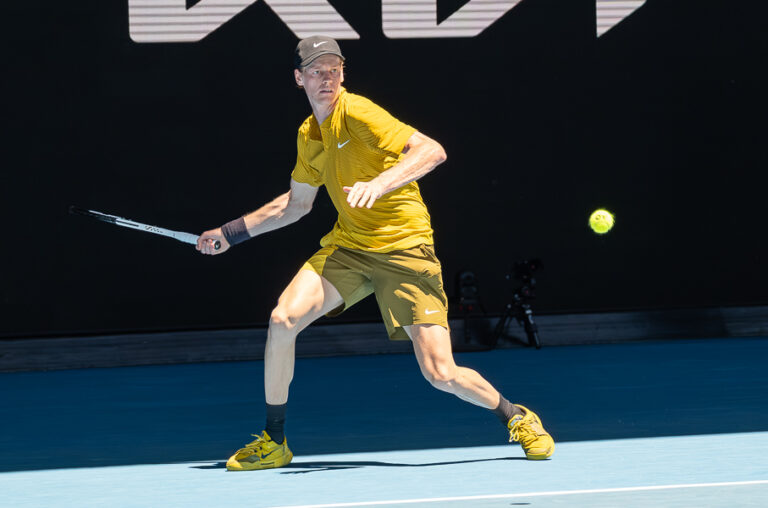
Novak Djokovic is, by most measures, the most accomplished male player in tennis history: 24 Grand Slam titles, a record number of weeks at World No. 1, and a near-complete sweep of the sport’s records. At 39, he is no longer the dominant force he was, but 2026 proved he can still reach the sport’s biggest stages, beating reigning No. 1 Jannik Sinner to reach the Australian Open final before losing to Carlos Alcaraz.

The defining storyline now is the chase for a record-breaking 25th major, which would move him clear of Margaret Court atop the all-time list. He remains the “third man” in an era increasingly defined by the Alcaraz–Sinner duopoly β€” dangerous on his day, but no longer the favorite. The profile is an all-time great in a late, record-hunting phase.

Quick facts

  • Full name: Novak Djokovic
  • Nationality: Serbia (born Belgrade)
  • Born: May 22, 1987
  • Height: 6 ft 2 in (1.88 m)
  • Turned pro: 2003
  • Plays: Right-handed, two-handed backhand
  • Coach: Coaching setup has changed recently β€” verify current arrangement before publishing
  • Identity: The most decorated man in tennis history, an all-court master and elite returner

Season snapshot β€” June 2026

  • Current standing: Around World No. 4 (verify against the live ATP list before publishing; the rankings update on June 8 after Roland Garros)
  • 2026 Grand Slams: Australian Open runner-up (beat Sinner in the semifinals, lost the final to Alcaraz); Roland Garros third round, losing to JoΓ£o Fonseca from two sets up
  • Records extended in 2026: First man to reach 400 career Grand Slam match wins; record 82nd major main-draw appearance; a seventh major final after turning 35, an Open Era record
  • Career majors: 24 β€” a men’s record β€” including 10 Australian Opens
  • Other honors: Olympic singles gold (Paris 2024); record weeks at World No. 1

Snapshot data is time-sensitive and scheduled for quarterly review.

Snapshot

Djokovic’s game is built on the best return in the sport’s history, elite movement and flexibility, and a backhand that remains a benchmark. The physical margins have narrowed with age, and full seasons are now beyond him, but his ability to raise his level for the majors β€” as the 2026 Australian Open run showed β€” keeps him a threat to anyone over best-of-five.

Playing style and strengths

Return of serve. Historically the greatest returner the game has seen, still capable of neutralizing the biggest servers.

Movement and flexibility. Court coverage and elasticity that let him turn defense into offense.

Big-match experience. No one has played or won more major matches; the know-how remains an edge.

Pressure points and vulnerabilities

  • Age: at 39, sustaining peak level across two weeks is increasingly difficult
  • Reduced schedule and the conditioning that comes with fewer matches
  • The rising level of Alcaraz and Sinner, who now set the standard
  • Closing the final step at majors, as the 2026 Australian Open final showed

Career milestones

  • A men’s-record 24 Grand Slam titles, including 10 at the Australian Open
  • Record total weeks at World No. 1 and record year-end No. 1 finishes
  • Completed the career Grand Slam (multiple times over) and won Olympic gold in 2024
  • 2026: 400th major match win and a 38th major final, at 38 years old

Grand Slam record in context

Djokovic’s major record is the deepest in the men’s game: titles at every Slam, a record 10 in Melbourne, and more major match wins than anyone in history. The 2026 season β€” an Australian Open final at 38 and a rare early Roland Garros exit β€” captures both his enduring class and the reality of his age. Whether he reaches 25 is the question that frames whatever remains of his career.

What to watch next

  1. The 25th major β€” whether he can win one more to stand alone atop the all-time list
  2. Schedule β€” which events he prioritizes as he manages his body
  3. The big stages β€” whether he can still trouble Alcaraz and Sinner over five sets
Related reading

Jannik Sinner Profile β€” Career, Titles and Playing Style

Jannik Sinner is one of the two players who have defined men’s tennis in the mid-2020s. A multiple Grand Slam champion who has spent extended stretches at World No. 1, the Italian built his rise on clean, flat power and season-long consistency rather than spin or variety. Alongside Carlos Alcaraz, he forms the rivalry β€” the Big Two β€” the rest of the tour measures itself against.

Two threads run through his story. In 2025 he served a three-month doping suspension arising from a contamination case that anti-doping authorities accepted was unintentional. And the one major still missing from his collection is the French Open β€” the clear piece of unfinished business in an otherwise complete rΓ©sumΓ©. The portrait is of a dominant No. 1 with a single ambition left to satisfy.

Quick facts

  • Full name: Jannik Sinner
  • Nationality: Italy (born San Candido, South Tyrol)
  • Born: August 16, 2001
  • Height: 6 ft 3 in (1.91 m)
  • Turned pro: 2018
  • Plays: Right-handed, two-handed backhand
  • Coach: Simone Vagnozzi and Darren Cahill
  • Identity: Flat, early-strike baseliner with elite consistency and depth

Season Snapshot β€” 2026

  • Standing: World No. 1
  • 2026 majors: Won Wimbledon (def. Alexander Zverev 6-7(7), 7-6(2), 6-3, 6-4); semi-final at the Australian Open; shock second-round exit at Roland Garros as the No. 1 seed, cramping in a five-set loss to Juan Manuel CerΓΊndolo after leading two sets and 5-1
  • 2026 Masters: Swept all five Masters 1000 events he entered β€” Indian Wells, Miami, Monte-Carlo, Madrid and Rome β€” completing the career Golden Masters
  • Career majors: Five β€” Australian Open (2024, 2025), US Open (2024), Wimbledon (2025, 2026); still seeking the French Open
  • Career tour-level titles: 30
  • 2026 record: 44-3 through Wimbledon
  • Honors: 2024 ITF World Champion

Playing style and strengths

Sinner plays clean, flat, early-struck tennis off both wings, taking time away from opponents with depth and pace rather than spin or angle. He strikes the ball early and deep, controls baseline exchanges and rushes opponents into errors. His movement is excellent for his height, and his consistency is the trait that turned him from contender into a long-reigning No. 1.

Flat power off both wings. He hits through the court, keeping rallies short and dictating from neutral positions.

Backhand. One of the cleanest and most reliable shots on tour, equally effective in defense and attack.

Consistency and composure. Low error counts and steady nerves underpin his dominance across a full season. His 2025 Wimbledon title, his first on grass, confirmed the game travels across surfaces.

Pressure points and vulnerabilities

  • The French Open remains the one major he has not won, having lost the 2025 final from championship points and exited early in 2026.
  • Clay, where his flat game yields ground to heavier-spin specialists.
  • Physical resilience in extreme heat, a factor in the 2026 Roland Garros loss.
  • Generating variety when an opponent neutralizes his pace.

Career milestones

  • 2024: First two majors at the Australian Open and US Open; first reached World No. 1; won the ATP Finals; named ITF World Champion.
  • 2025: Defended the Australian Open; won a maiden Wimbledon, becoming the first Italian man to do so; defended the ATP Finals; served a three-month doping suspension (February–May).
  • 2026: Reclaimed World No. 1; completed the career Golden Masters, becoming the second man after Novak Djokovic to win each of the nine ATP Masters 1000 events; defended Wimbledon, joining the short list of men to retain the title in the Open Era and reaching his 100th career Grand Slam match-win.

The 2025 doping case, in brief

Sinner twice tested positive for trace amounts of clostebol in March 2024. Authorities accepted his explanation that the substance entered his system through treatment by a member of his team, and an initial tribunal found no fault or negligence. After the World Anti-Doping Agency appealed, Sinner agreed in February 2025 to a settlement that included a three-month suspension, served from February 9 to May 4, 2025. WADA stated he did not intend to cheat and gained no competitive advantage, and none of his prior results were affected. He returned to competition at the Italian Open in May 2025.

Grand Slam record in context

Sinner’s major record is built on hard courts and grass β€” two Australian Opens, a US Open and two Wimbledons. The missing piece is Roland Garros, where he came within championship points of the 2025 title before a five-set loss to Carlos Alcaraz, the defining match of their rivalry to date, then suffered a shock second-round exit in 2026. Completing the set on clay is the clear ambition of his prime, and it is the one line on his record that separates him from the small group of men who have won all four majors.

What to watch next

  • Roland Garros β€” whether he can win the one major that has eluded him.
  • Grand Slam defenses β€” protecting the titles and points that anchor his ranking.
  • The Alcaraz rivalry β€” the meetings that continue to shape the top of the men’s game.

Frequently asked questions

How many Grand Slam titles has Jannik Sinner won? Five majors β€” the Australian Open (2024, 2025), the US Open (2024) and Wimbledon (2025, 2026). He has not yet won the French Open.

Which Grand Slam has Jannik Sinner not won? The French Open. He reached the final at Roland Garros in 2025, losing to Carlos Alcaraz from championship points, and it remains the one major missing from his collection.

Why was Jannik Sinner suspended? He served a three-month suspension in 2025 after testing positive for trace amounts of clostebol in March 2024. Anti-doping authorities accepted the positive tests resulted from contamination during treatment by a team member and stated he did not intend to cheat or gain an advantage.

What is the career Golden Masters? Winning each of the nine ATP Masters 1000 events at least once over a career. Sinner completed it in 2026, becoming the second man to do so after Novak Djokovic.

What is Jannik Sinner’s playing style? A flat, early-striking baseliner who hits through the court off both wings. His backhand is among the best on tour, and his defining trait is consistency β€” low error counts sustained across long seasons.

Related reading

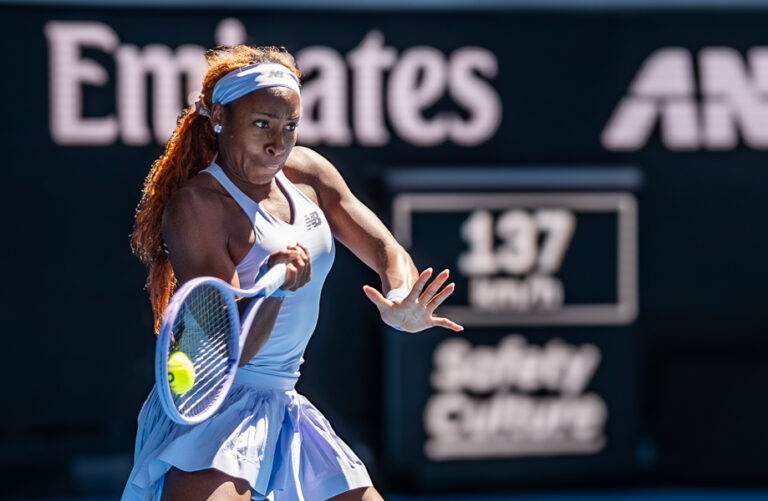
Coco Gauff Profile β€” Two-Time Slam Champion at 2

Coco Gauff has spent her early twenties doing what most players never manage at all: winning majors on more than one surface. The American claimed the US Open in 2023 and the French Open in 2025, and added the year-end WTA Finals title in 2024 β€” a rΓ©sumΓ© that, at 22, already marks her as one of the defining players of her generation.

The current chapter is about maintaining that standard. Gauff remains a fixture in the top five and one of the best movers and competitors in the sport, but her serve continues to swing between weapon and liability, and 2026 has so far produced consistency without a title. The profile is a established champion managing the gap between very good and dominant.

Quick facts

  • Full name: Cori Dionne “Coco” Gauff
  • Nationality: United States (born Atlanta, Georgia; based in Delray Beach, Florida)
  • Born: March 13, 2004
  • Height: 5 ft 9 in (1.75 m)
  • Turned pro: 2018
  • Plays: Right-handed, two-handed backhand
  • Coach: Jean-Christophe Faurel
  • Identity: Elite athlete and competitor with a counter-punching base and improving offense

Season snapshot β€” June 2026

  • Current standing: Ranked World No. 4 (verify against the live WTA list before publishing); career-high was No. 2, reached June 10, 2024
  • 2026 Grand Slams: Australian Open quarterfinal; lost in the Roland Garros third round to Anastasia Potapova as defending champion
  • 2026 titles: None yet this season; a solid win record without a final breakthrough
  • Career titles: 11 WTA singles titles
  • Career prize money: More than US$32 million

Snapshot data is time-sensitive and scheduled for quarterly review.

Snapshot

Gauff wins with speed, defense, and competitive resolve more than raw power. She covers the court as well as anyone in the game, turns defense into offense, and rarely beats herself mentally. The two majors came on hard court and clay, underlining how her movement and tenacity travel across surfaces even when her own game isn’t firing.

Playing style and strengths

Movement and defense. Gauff’s court coverage is elite; she retrieves balls others put away and extends rallies until opponents over-press.

Forehand and aggression, improving. Long a relative weakness, her forehand has become a more reliable offensive tool, letting her dictate rather than only absorb.

Big-match temperament. She has won a major from a set down and closed out finals against the world’s best β€” the competitive nerve is a genuine asset.

Pressure points and vulnerabilities

  • The serve: double faults remain a recurring vulnerability under pressure
  • Generating free points against opponents who neutralize her movement with pace
  • Converting deep runs into titles in a deep, top-heavy field
  • Form dips when the forehand timing deserts her

Career milestones

  • 2023: Maiden Grand Slam title at the US Open, beating Aryna Sabalenka in the final
  • 2024: WTA Finals champion; career-high ranking of World No. 2
  • 2025: Second major at the French Open, again over Sabalenka in the final
  • Career: 11 WTA singles titles and more than US$32 million in prize money

Grand Slam record in context

Gauff’s major record is unusually complete for her age: a hard-court Slam, a clay-court Slam, an Australian Open semifinal, and repeated deep runs elsewhere. The 2026 setbacks β€” a quarterfinal in Melbourne and a third-round loss defending her Paris title β€” read as a consolidation year rather than a decline, with the serve the clearest variable between contention and another title.

What to watch next

  1. The serve β€” whether technical work translates to fewer double faults in tight moments
  2. Title conversion β€” turning semifinals and quarterfinals back into trophies in 2026
  3. Surface balance β€” sustaining her level across the hard-court swing into the US Open

Related reading

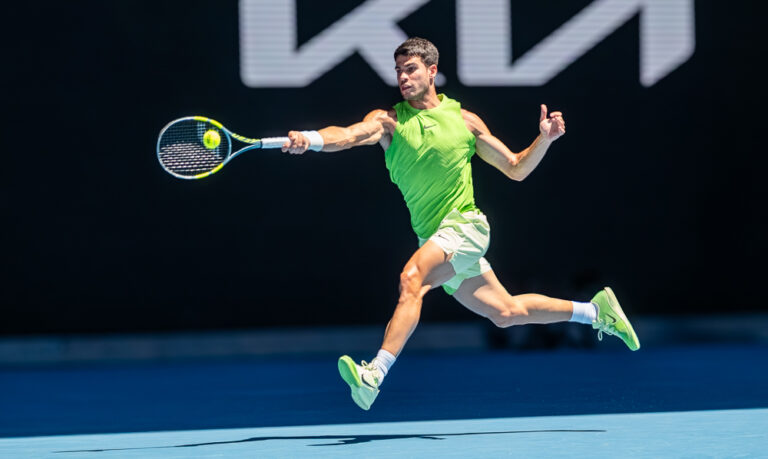
Carlos Alcaraz Profile β€” Career Grand Slam at 22

Carlos Alcaraz has already done what almost no one manages in a full career. By winning the 2026 Australian Open, the Spaniard completed the career Grand Slam at 22 β€” the youngest man ever to hold all four major titles β€” and reached seven majors faster than anyone in the Open Era. His blend of power, speed, touch and showmanship has made him the box-office face of men’s tennis and the central figure, with Jannik Sinner, of its defining rivalry.

The immediate concern is health rather than form. A right wrist injury sustained in April has sidelined him through the clay and grass seasons, dropping him to World No. 2 behind Sinner. The profile is a generational champion, career Slam already secured, managing his first significant injury layoff.

Quick facts

  • Full name: Carlos Alcaraz Garfia
  • Nationality: Spain (born El Palmar, Murcia)
  • Born: May 5, 2003
  • Height: 6 ft 0 in (1.83 m)
  • Turned pro: 2018
  • Plays: Right-handed, two-handed backhand
  • Coach: Samuel LΓ³pez (since January 2026, after parting with Juan Carlos Ferrero)
  • Identity: Complete all-court attacker with elite speed, power and feel

Season snapshot β€” June 2026

  • Current standing: World No. 2, behind Jannik Sinner (verify against the live ATP list before publishing; the rankings update on June 8 after Roland Garros)
  • Headline 2026 result: Won the Australian Open over Novak Djokovic to complete the career Grand Slam β€” the youngest man ever to do so β€” for his seventh major
  • Injury status: Sidelined since April with right-wrist tenosynovitis (sustained at Barcelona); withdrew from Rome, Roland Garros and Wimbledon, with a return targeted for the North American hard courts in August
  • 2026 titles: Australian Open and the Doha ATP 500
  • Career majors: 7 β€” Australian Open (2026), French Open (2024, 2025), Wimbledon (2023, 2024), US Open (2022, 2025)

Snapshot data is time-sensitive and scheduled for quarterly review.

Snapshot

Alcaraz plays a complete, attacking game: explosive movement, heavy forehand, a willingness to come forward, and a drop shot that has become a signature. He can win from the back of the court or the net, on any surface, which is why he holds majors on hard, clay and grass. The variety and athleticism that make him so dangerous also make him box office.

Playing style and strengths

All-court versatility. Few players are as comfortable attacking the net as grinding from the baseline; Alcaraz wins both ways.

Movement and explosiveness. His speed and recovery let him defend, then flip instantly to offense.

Touch and variety. The drop shot, the forehand, and an improving serve give him answers most opponents can’t match.

Pressure points and vulnerabilities

  • Health: the 2026 wrist injury is his first significant layoff and the central question of his season
  • Consistency lapses against lower-ranked players on off days
  • The serve, strong but not yet the automatic weapon some rivals possess
  • Maintaining his level across a full calendar after time away

Career milestones

  • 2022: Maiden major at the US Open; youngest-ever ATP World No. 1 at 19
  • 2023–2024: Wimbledon titles and a first French Open
  • 2025: French Open and US Open titles, the latter reclaiming No. 1
  • 2026: Australian Open title and the completed career Grand Slam, the youngest man ever to achieve it

Grand Slam record in context

Alcaraz’s major record spans all three surfaces and now all four events: two US Opens, two Wimbledons, two French Opens and an Australian Open. The Melbourne title in 2026 closed the only gap in his collection and set a youngest-ever mark for the career Slam. With the rivalry against Sinner now the sport’s centerpiece, the open questions are longevity, health, and how high his major count can climb.

What to watch next

  1. The comeback β€” whether the wrist heals cleanly for an August return and the US Open
  2. The Sinner rivalry β€” the next chapter once both are fit and meeting again
  3. Major count β€” how many more Slams he adds across a long career ahead

Related reading

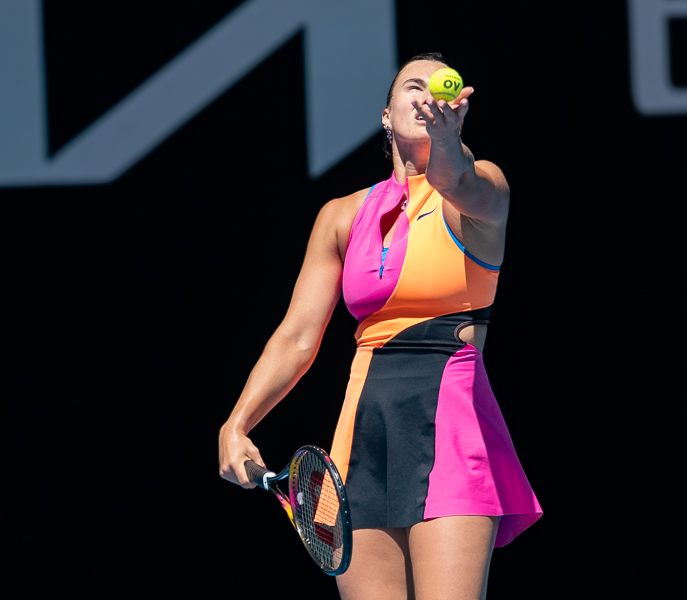
Aryna Sabalenka Profile β€” World No. 1 and Power

Aryna Sabalenka has turned raw power into sustained dominance. The Belarusian has held the World No. 1 ranking continuously since October 2024, owns four Grand Slam titles, and opened 2026 in arguably the best form of her career β€” including the Sunshine Double of Indian Wells and Miami. At her best, she overwhelms opponents with a serve and groundstrokes few can live with.

The one gap in an otherwise complete rΓ©sumΓ© is recent Slam conversion: Sabalenka reached the Australian Open final and the Roland Garros quarterfinals in 2026 without adding to her major tally. The profile is the sport’s clear No. 1 looking to convert week-to-week dominance back into Grand Slam trophies.

Quick facts

  • Full name: Aryna SiarhiejeΕ­na Sabalenka
  • Nationality: Belarus (currently competes as a neutral athlete, without the Belarusian flag)
  • Born: May 5, 1998
  • Height: 6 ft 0 in (1.82 m)
  • Turned pro: 2015
  • Plays: Right-handed, two-handed backhand
  • Coach: Anton Dubrov
  • Identity: Elite power baseliner with one of the biggest serves and forehands in the game

Season snapshot β€” June 2026

  • Current standing: World No. 1, held continuously since October 2024; first reached the top ranking in September 2023
  • 2026 form: Won Brisbane, Indian Wells and Miami, completing the Sunshine Double; a win rate above 90% through the first half of the season
  • 2026 Grand Slams: Australian Open runner-up (lost to Elena Rybakina); Roland Garros quarterfinal (lost to Diana Shnaider)
  • Career majors: 4 β€” Australian Open (2023, 2024) and US Open (2024, 2025)
  • Recognition: Named the 2026 Laureus World Sportswoman of the Year

Snapshot data is time-sensitive and scheduled for quarterly review.

Snapshot

Sabalenka plays first-strike, high-octane tennis: a huge serve, flat and heavy hitting off both wings, and a willingness to take risks that few can match. Early in her career that aggression came with costly error counts; she has since paired it with markedly better consistency and emotional control, which is what turned her into a long-term No. 1 rather than a high-variance contender.

Playing style and strengths

Power off both wings. Sabalenka hits through the court as hard as anyone, ending points quickly and pinning opponents behind the baseline.

Serve. A genuine weapon that produces free points and sets up her forehand.

Improved consistency. Tighter error control and composure under pressure have made her dominance sustainable across surfaces and seasons.

Pressure points and vulnerabilities

  • Variance can still surface in tight moments against elite defenders
  • Roland Garros remains the one major she has yet to win, despite a 2025 final
  • Heightened expectation as the clear No. 1 in every event she enters
  • Closing out the biggest matches after near-misses at recent Slams

Career milestones

  • 2023: Maiden major at the Australian Open; first reached World No. 1
  • 2024: Second Australian Open title and a maiden US Open crown
  • 2025: Successful US Open title defense; year-end No. 1 for all 52 weeks
  • 2026: Sunshine Double and a stretch of near-untouchable form

Grand Slam record in context

Sabalenka’s major record spans hard courts, with two Australian Open titles and two US Open titles, plus a 2025 French Open final that showed her clay game is closer than once thought. The 2026 results β€” a Melbourne final and a Paris quarterfinal β€” keep her among the favorites everywhere, with the next Slam title the obvious marker, and Roland Garros the prize that would complete her collection.

What to watch next

  1. Slam conversion β€” turning deep runs back into major titles in 2026
  2. Roland Garros β€” whether she can eventually win the one major missing from her rΓ©sumΓ©
  3. No. 1 streak β€” extending one of the longer reigns at the top of the modern game

Related reading

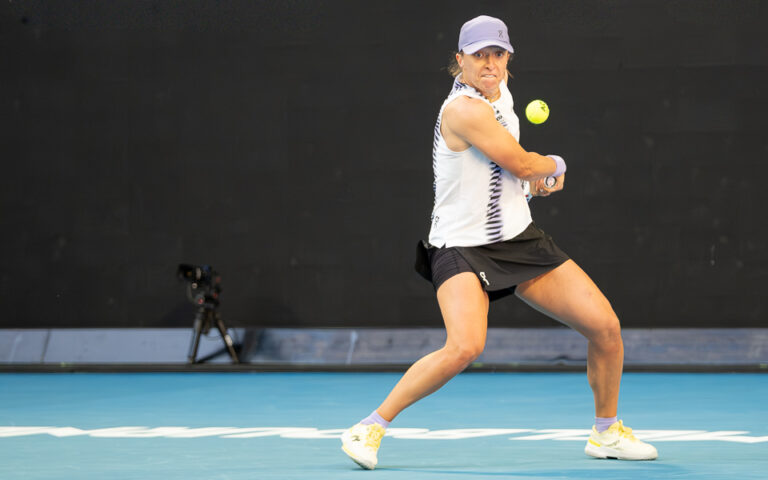
Iga Swiatek Profile β€” Six-Time Grand Slam Champion

Iga ŚwiΔ…tek built one of the most dominant peaks in modern women’s tennis: long stretches at World No. 1, four French Open titles, and a level on clay that drew comparisons to Rafael Nadal. In 2025 she completed her surface set with a maiden Wimbledon crown, taking her major tally to six and answering the one lingering question about her grass-court game.

The 2026 season has been a different and more difficult story. ŚwiΔ…tek has slipped from the top of the rankings, gone without a title, and β€” most strikingly β€” lost before the Roland Garros quarterfinals for the first time since 2019. The profile now is a generational champion working through the most inconsistent stretch of her career.

Quick facts

  • Full name: Iga ŚwiΔ…tek
  • Nationality: Poland (born Warsaw)
  • Born: May 31, 2001
  • Height: 5 ft 9 in (1.76 m)
  • Turned pro: 2016
  • Plays: Right-handed, two-handed backhand
  • Coach: Francisco Roig (joined ahead of the 2026 clay season)
  • Identity: Heavy-topspin baseliner and former World No. 1, historically dominant on clay

Season snapshot β€” June 2026

  • Current standing: Ranked around World No. 3 (verify against the live WTA list before publishing); former long-reigning World No. 1
  • 2026 Grand Slams: Australian Open quarterfinal; Roland Garros fourth round (lost to Marta Kostyuk) β€” her earliest Paris exit since 2019
  • 2026 highlights: Rome semifinal (lost to Elina Svitolina); no titles yet this season
  • Race position: Outside the qualifying places for the WTA Finals as of early June, with her 2025 Wimbledon title to defend
  • Career majors: 6 β€” French Open (2020, 2022, 2023, 2024), US Open (2022), Wimbledon (2025)

Snapshot data is time-sensitive and scheduled for quarterly review.

Snapshot

ŚwiΔ…tek’s game is built on heavy topspin, exceptional movement, and a forehand that can bully opponents off the court. On clay it has produced sustained dominance; her 2025 Wimbledon title showed the same weapons can win on grass once she trusts them. The 2026 dip has been less about the tools than about consistency and confidence over best-of-three weeks.

Playing style and strengths

Forehand and topspin. Her forehand is among the heaviest in the women’s game, kicking high off clay and pushing opponents behind the baseline.

Movement. ŚwiΔ…tek slides and recovers as well as anyone, turning defense into offense on the surface she grew up on.

Mentality at her best. At her peak she closed matches ruthlessly; rediscovering that certainty is central to her 2026.

Pressure points and vulnerabilities

  • Consistency: 2026 has featured uncharacteristic early exits and a thin record against the current top 10
  • Faster, flatter hitters who take time away before her topspin can take effect
  • Managing the points and expectation tied to a Wimbledon title defense
  • Confidence in tight moments after a run of disappointing results

Career milestones

  • 2020: Maiden major at Roland Garros, then long reigns at World No. 1
  • 2022: US Open title and a 37-match win streak
  • 2022–2024: Three more French Open titles, cementing her clay-court legacy
  • 2025: Maiden Wimbledon title, completing her set of major surfaces and a sixth Slam

Grand Slam record in context

ŚwiΔ…tek’s major record is front-loaded with clay dominance and rounded out by hard-court and grass titles, leaving her a six-time champion before turning 25. The 2026 results β€” a Melbourne quarterfinal and a rare early loss in Paris β€” stand out precisely because the bar she set was so high. The question is whether the grass and hard-court swings restore the form that made her the sport’s benchmark.

What to watch next

  1. Wimbledon defense β€” whether she can protect the title and points that anchor her ranking
  2. Form trend β€” signs the Roig partnership is rebuilding consistency
  3. Top-10 record β€” turning close losses against elite opponents back into wins

Related reading

WTA 500 Guide | Format, Ranking Points and Tour Structure

0

WTA 500 tournaments represent the middle tier of the women’s professional calendar, positioned between WTA 250 and WTA 1000 events.

The β€œ500” refers to the 500 ranking points awarded to the singles champion.

These events frequently attract top-20 and top-10 players and play a significant role in shaping rankings throughout the season.

What Is a WTA 500 Tournament

WTA 500 tournaments:

  • Award 500 ranking points to the singles champion
  • Feature strong competitive fields
  • Occur on multiple surfaces
  • Often precede major championships

They provide substantial ranking returns relative to draw size.

Ranking Points at WTA 500 Events (Singles)

  • Champion: 500
  • Finalist: 325
  • Semifinalist: 195
  • Quarterfinalist: 108
  • Round of 16: 60

Points count within the WTA’s 52-week ranking system.

Draw Size and Format

Common Draw Sizes

  • 32-player draw
  • 48-player draw

Match Format

  • Best-of-three sets
  • Standard tiebreak rules

Seed placement follows standard WTA draw procedures.

Why WTA 500 Events Matter

WTA 500 tournaments often:

  • Influence top-10 rankings
  • Provide seeding advantages at Grand Slams
  • Serve as preparation for WTA 1000 events
  • Offer meaningful ranking movement opportunities

Consistent results at this level can significantly affect year-end standings.

WTA 500 vs Other Tiers

LevelWinner PointsTypical Draw
Grand Slam2,000128
WTA 10001,00056–96
WTA 50050032–48
WTA 25025032

Frequently Asked Questions

How many WTA 500 tournaments are there?
Typically around 15–18 per season.

Are WTA 500 tournaments mandatory?
Certain participation requirements may apply under WTA rules.

How do WTA 500 results affect rankings?
They provide significant point gains and can influence seeding positions.

WTA 250 Guide | Format, Ranking Points and Tour Structure

0

WTA 250 tournaments form the foundation of the women’s professional calendar. While they award fewer ranking points than WTA 500 and WTA 1000 events, they provide essential opportunities for players to build rankings, gain match experience and establish consistency on tour.

The β€œ250” refers to the 250 ranking points awarded to the singles champion.

What Is a WTA 250 Tournament

WTA 250 events are entry-tier tournaments on the main WTA Tour.

They typically feature:

  • 32-player singles draws
  • Competitive fields mixing established and emerging players
  • Multiple surface types across the season
  • Opportunities for ranking advancement

These tournaments are staged throughout the year across different regions.

Ranking Points at WTA 250 Events (Singles)

  • Champion: 250
  • Finalist: 163
  • Semifinalist: 98
  • Quarterfinalist: 54
  • Round of 16: 30

Points apply within the WTA’s 52-week ranking system.

Draw Size and Match Format

Common Draw Size

  • 32-player singles draw

Match Format

  • Best-of-three sets
  • Standard tiebreak rules

Top seeds are positioned to avoid meeting in early rounds.

Why WTA 250 Events Matter

WTA 250 tournaments often:

  • Serve as breakthrough opportunities
  • Allow players to defend points
  • Provide momentum between higher-tier events
  • Help stabilize ranking positions

While smaller in scale than 500 or 1000-level events, 250 titles remain meaningful achievements.

WTA 250 vs Higher Tiers

LevelWinner PointsTypical Draw
Grand Slam2,000128
WTA 10001,00056–96
WTA 50050032–48
WTA 25025032

Frequently Asked Questions

How many WTA 250 tournaments are there?
The number varies annually but typically exceeds 20 events.

Are WTA 250 tournaments mandatory?
No. Participation depends on scheduling and ranking.

Do top players compete in WTA 250 events?
Occasionally, depending on schedule and preparation plans

ATP 500 Guide | Format, Ranking Points and Tour Structure

0

ATP 500 tournaments represent the middle tier of the men’s professional calendar, positioned between ATP 250 events and the Masters 1000 series. The β€œ500” refers to the 500 ranking points awarded to the singles champion.

These events often attract stronger fields than ATP 250 tournaments and play a major role in ranking battles throughout the season.

What Is an ATP 500 Tournament

ATP 500 tournaments:

  • Offer 500 ranking points to the winner
  • Typically feature top-20 and top-10 players
  • Serve as preparation for Grand Slams and Masters events
  • Occur on multiple surfaces throughout the year

They are strategically important in shaping seeding and rankings.

Ranking Points at ATP 500 Events (Singles)

  • Champion: 500
  • Finalist: 330
  • Semifinalist: 200
  • Quarterfinalist: 100
  • Round of 16: 50

Points count within the ATP 52-week ranking structure.

Draw Size and Format

Common Draw Sizes

  • 32-player draw
  • 48-player draw

Match Format

  • Best-of-three sets
  • Standard tiebreak rules

Seeds are distributed to prevent early-round matchups between top-ranked players.

Why ATP 500 Events Matter

ATP 500 tournaments often:

  • Influence year-end top-10 positioning
  • Provide momentum ahead of Masters 1000 events
  • Offer substantial ranking returns
  • Feature strong competitive depth

Many players rely on consistent 500-level results to stabilize rankings.

ATP 500 vs Other Tiers

LevelWinner PointsTypical Draw
Grand Slam2,000128
Masters 10001,00056–96
ATP 50050032–48
ATP 25025028–32

Frequently Asked Questions

How many ATP 500 tournaments are there?
Typically around 13–16 per season, depending on the calendar.

Are ATP 500 tournaments mandatory?
Some participation requirements apply to top players under ATP rules.

Do ATP 500 winners receive automatic major seeding advantages?
No direct seeding guarantees, but ranking gains influence seedings

ATP 250 Guide | Format, Ranking Points and Tour Structure

0

ATP 250 tournaments form the foundation of the men’s professional calendar. While they award fewer ranking points than Masters 1000 and Grand Slam events, they make up a significant portion of the season and provide critical opportunities for players to build rankings and momentum.

The β€œ250” refers to the number of ranking points awarded to the singles champion.

What Is an ATP 250 Tournament

ATP 250 events are the entry-level tournaments on the main ATP Tour structure.

They typically feature:

  • Smaller draws than Masters events
  • Fewer top-10 players
  • Strong representation from rising players
  • Strategic scheduling throughout the year

These tournaments are held across multiple continents and surfaces.

Ranking Points at ATP 250 Events (Singles)

  • Champion: 250
  • Finalist: 165
  • Semifinalist: 100
  • Quarterfinalist: 50
  • Round of 16: 25

Points count toward the 52-week ATP ranking system.

Draw Size and Match Format

Common Draw Sizes

  • 28-player draw
  • 32-player draw

Match Format

  • Best-of-three sets
  • Standard tiebreak rules

Top seeds may receive byes depending on draw size.

Why ATP 250 Events Matter

ATP 250 tournaments are often:

  • Crucial for players ranked outside the top 20
  • Opportunities to defend points
  • Strategic stops between larger events
  • Testing grounds for young players entering the tour

While prestige differs from Masters 1000 events, 250 titles remain significant career milestones.

ATP 250 vs Higher Tiers

LevelWinner PointsTypical Draw
Grand Slam2,000128
Masters 10001,00056–96
ATP 50050032–48
ATP 25025028–32

Frequently Asked Questions

How many ATP 250 tournaments are there?
The number varies by season but typically exceeds 25 events.

Are ATP 250 tournaments mandatory?
No. Participation is optional.

Do top players compete in ATP 250 events?
Yes, but less frequently than in higher-tier tournaments.