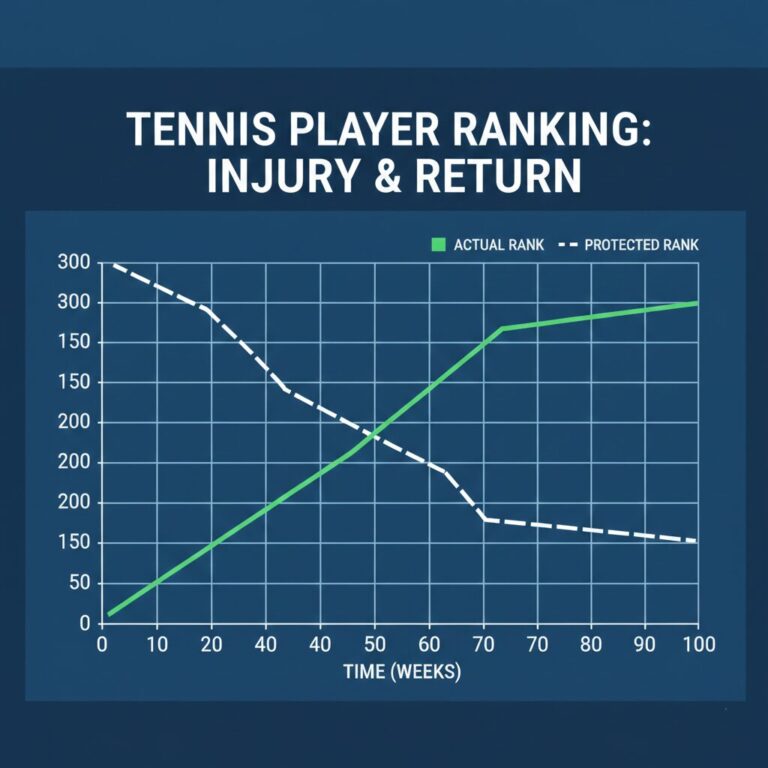
In professional tennis, protected rankings provide a lifeline for players sidelined by injury or other qualifying absences, enabling them to enter tournaments at a level reflecting their pre-absence standing rather than a diminished current rank.
This system, known as Protected Ranking on the ATP Tour and Special Ranking on the WTA Tour, aims to ease the transition back to competition for athletes who miss extended periods, ensuring they can compete in events they might otherwise miss due to ranking drops during downtime. While similar in purpose, the ATP and WTA versions differ in calculation, duration and application, with rules outlined in their respective official rulebooks.
Protected rankings apply primarily to absences due to injury, illness or other specified reasons, but they come with strict eligibility requirements and limits on usage. Players must submit documented petitions within set timelines, and the protected status is used solely for tournament entry, not seeding or other privileges.
On the ATP Tour, a player qualifies for a Protected Ranking after a minimum six-month absence from all tennis events due to physical injury, documented medical illness or compulsory military service.
The WTA Tour requires at least 26 weeks out of competition for reasons including medical conditions, pregnancy, parental start (such as adoption or guardianship) or military service, with a ranking between 1 and 750 prior to the break. Both tours prohibit participation in any organized tennis or other sports during the qualifying period, with limited exceptions like one exhibition event on the WTA.
The WTA also offers distinct protections for maternity and fertility treatments. For pregnancy, the out-of-competition period begins after the last event before pregnancy and can extend up to 104 weeks post-pregnancy.
A recent update introduced a Fertility Protection Special Entry Ranking for procedures like egg or embryo freezing, requiring at least 10 weeks off and allowing entry into up to three lower-level tournaments. The ATP does not have equivalent provisions for maternity or fertility, focusing solely on injury-related absences.
To calculate the protected rank, the ATP uses the player’s average ranking over the first three months following their last event. The WTA bases it on the ranking the week after the last tournament, except for fertility cases, which use a 12-week average (eight weeks prior and four after the last event). Applications must be filed within six months of the last event on the ATP and within 26 weeks on the WTA, with medical or other documentation required.
The duration and number of uses vary by tour and length of absence. On the ATP, a six-month absence allows use in the first nine tournaments or over nine months, whichever comes first; for 12 months or more, it extends to 12 singles tournaments and separately 12 doubles events, or 12 months.
The WTA scales combined singles and doubles uses: up to eight for less than 39 weeks out, 10 for less than 52 weeks and 12 for 52 weeks or more, with caps like five WTA 1000 events and two Grand Slams. Protected status lasts 52 weeks from return on the WTA, extendable in cases like subsequent injuries.
Protected rankings facilitate entry into main draws, qualifying or special exempt spots but cannot be used for seeding, lucky loser status or year-end finals qualification on either tour. The WTA allows limited “additional seed” opportunities in the first eight tournaments post-return if the special ranking is top-100 for singles in certain draw sizes. Withdrawals without prize money do not count toward usage limits but may incur fines or zero points.
In practice, protected rankings prevent players from starting over in lower-tier events after long layoffs, but they do not guarantee success or protect against further ranking slides if performance lags upon return. High-profile users, like Rafael Nadal on the ATP or Naomi Osaka on the WTA, have leveraged them to access major tournaments, though outcomes depend on fitness and form.
Example: A Player’s Return Path
Consider a top-20 WTA player out for nine months due to injury. She applies for a Special Ranking based on her pre-absence position, receives approval and uses it to enter 10 tournaments over the next year, including up to three WTA 1000 events and one Grand Slam. If she withdraws from one without playing, it does not count toward her limit, but she must rebuild her actual ranking through results to regain seeding eligibility.
Details can shift with tour updates. The ATP reduced overall ranking-counted events to 18 in 2026, but protected ranking rules remained unchanged. The WTA added fertility protections in 2025 and is reviewing broader calendar and ranking reforms for potential 2027 implementation. Players should consult current rulebooks, as eligibility thresholds or usage caps may evolve based on governance decisions.
To compare core elements:
Aspect
ATP Protected Ranking
WTA Special Ranking
Minimum Absence
6 months
26 weeks
Calculation
Average over first 3 months post-last event
Ranking week after last event (12-week average for fertility)
Usage Limits (for ≥12 months/52 weeks out)
12 singles + 12 doubles tournaments or 12 months
12 combined singles/doubles tournaments; caps on majors
Seeding
Not allowed
Not standard; limited additional seeds possible
Other Qualifying Reasons
Injury, illness, military
Plus pregnancy, parental start, fertility (limited)
This table highlights key differences in protected ranking systems between the ATP and WTA tours, aiding players in navigating return strategies.
Professional tennis players earn prize money based on their performance in tournaments, with payouts increasing as they advance through rounds. This system rewards progression but provides compensation even for early exits, supporting a broad range of competitors on the global circuit.
Tennis prize money is funded primarily through tournament revenues, including ticket sales, broadcasting rights, and sponsorships, according to the Association of Tennis Professionals (ATP) and Women’s Tennis Association (WTA).
The four Grand Slam events—Australian Open, French Open, Wimbledon, and U.S. Open—offer the largest purses, overseen by the International Tennis Federation (ITF) but operated independently. These majors, along with ATP and WTA tour events, distribute funds across singles, doubles, and mixed doubles draws, with singles typically commanding the highest shares.
Key points include tiered tournament categories that dictate prize pools. On the men’s ATP Tour, events range from Masters 1000s (highest non-Slam level) to 500s, 250s, and Challengers. The women’s WTA Tour mirrors this with WTA 1000s, 500s, and 250s, while lower-level ITF World Tennis Tour events provide entry points for emerging players.
Grand Slams award equal prize money to men and women, a standard achieved progressively since the 1970s, per ITF records. Combined ATP-WTA events are moving toward parity, with the WTA targeting equal pay at 1000- and 500-level tournaments by 2027 and all 500s by 2033.
The mechanism is straightforward: Organizers set a total prize fund before the event, allocating portions by round. A first-round loser receives the base amount for that stage, while the champion claims the largest share.
Distributions escalate exponentially; for instance, advancing from early rounds to finals can multiply earnings several times over. Doubles payouts are generally lower than singles, and players may compete in both to boost income. Payments occur at tournament’s end via bank transfer, as explained by former players in ATP discussions. Prize money does not include appearance fees, which are rare on the main tours but sometimes offered at exhibitions.
A reality check tempers the glamour: Taxes significantly reduce net earnings. Prize money is taxed in the host country, with withholding rates varying—up to 30% in the U.S. and Italy, or 45% in France for high earners, according to tax analyses from Reuters. Players may claim credits in their home countries to avoid double taxation, but global travel complicates filings.
Endorsements, often a larger income source for top players, are taxed based on residence, prompting many to base in low-tax locales like Monaco. Expenses for travel, coaching, and agents (typically 10-15% commissions) further cut into profits, leaving lower-ranked players struggling to break even.
Example: Australian Open 2026 Prize Money Breakdown (in AUD)
Total Prize Fund: $111,500,000 (per Tennis Australia fact sheet for 2026 edition)
Singles Champion: Typically around 3-4% of total, varying by year
Singles Runner-Up: About half the champion’s share
First-Round Singles Loser: Entry-level payout, often 0.1-0.2% of total
Note: Exact per-round figures vary annually; doubles and qualifiers receive smaller allocations. Details fluctuate by Slam and season.
What changes over time: Prize funds have risen steadily, with Grand Slams increasing 10-16% year-over-year in recent editions, driven by revenue growth. Players, via the Professional Tennis Players Association, push for higher revenue shares—currently 12.5-20% at majors—aiming for figures closer to 22% seen in some tour events. ATP’s profit-sharing formula at Masters 1000s splits excess profits 50-50 with players, adding millions annually.
Gender equity advances, but disparities persist in non-combined events. Economic factors like inflation and media deals influence adjustments, with totals tied to specific years or editions.
In professional men’s tennis, the ATP Masters 1000 tournaments rank among the most significant events outside the Grand Slams. These nine annual competitions attract the top players, offer substantial ranking points, and serve as critical battlegrounds for titles and momentum.
For athletes chasing year-end rankings or major preparation, they provide essential tests. For spectators, they deliver consistent high-level matches across continents and surfaces.
Each Masters 1000 awards 1,000 ranking points to the singles winner, explaining the name. This figure places them below Grand Slams, which give 2,000 points, but above ATP 500 events (500 points) and ATP 250s (250 points).
Top players must enter at least eight of the nine, with Monte-Carlo as the exception, though most compete there anyway for the prestige. Singles draws feature 56 or 64 entrants, with best-of-three-set matches that keep the pace sharp compared to the majors’ best-of-five format.
The schedule spreads from March to November, covering hard courts, clay, and indoor venues. This variety demands adaptability from players. Hard-court events include Indian Wells and Miami in the U.S. during spring, Canada’s National Bank Open (alternating between Montreal and Toronto) and Cincinnati in summer, Shanghai in fall, and the indoor Paris Masters to end the season. Clay specialists shine in Monte-Carlo, Madrid, and Rome, which cluster in April and May as lead-ins to Roland Garros.
Financial rewards match the status. Champions often earn over $1 million, with total prize pools surpassing $8 million per tournament. In 2025, for example, Indian Wells distributed $19 million overall, reflecting the growth in tennis economics. Doubles competitions run alongside, with their own draws and points, though singles dominate headlines.
The series began in 1990 as part of the ATP Tour’s restructuring, evolving from earlier Grand Prix events. Initially dubbed the Championship Series, it later adopted names like Mercedes Super 9 and Tennis Masters Series before settling on Masters 1000 in 2009.
Adjustments over time included replacing Hamburg with Madrid on clay and shifting other sites to modernize the calendar. These tweaks aim to balance player workloads while expanding global reach.
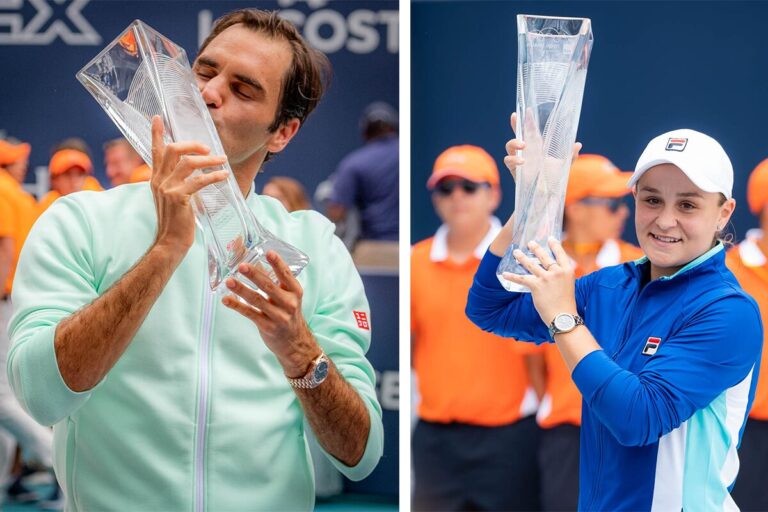
Competition depth sets Masters 1000 apart. With mandatory participation for elites, fields routinely include the top 30 or more, fostering upsets and rivalries. On clay, Rafael Nadal has claimed 36 titles, mostly in Monte-Carlo, Madrid, and Rome. Novak Djokovic holds the all-time record with 40 wins, excelling on hard courts like Indian Wells and Miami.
Roger Federer follows with 28. As of February 2026, no active player has surpassed these marks, though Carlos Alcaraz and Jannik Sinner have added multiple titles in recent years, signaling a shift.
A “Career Golden Masters” means winning all nine at least once—a milestone only Djokovic has reached, completing it in 2018 at Cincinnati. Such feats underscore the challenge. Young talents often break through here; Alcaraz’s 2022 Miami victory at 18 echoed earlier triumphs by players like Andy Murray in 2008.
Venues enhance the appeal. Indian Wells’ expansive California site hosts over 450,000 fans annually, while Rome’s Foro Italico blends history with modern facilities. Weather and scheduling can test resilience, as seen in rain-interrupted finals or the grueling clay swing.
Doubles adds another layer, with partnerships like Bob and Mike Bryan amassing 39 titles. Current standouts include teams with Wesley Koolhof or Marcel Granollers, emphasizing strategy over raw power.
These events shape seasons. A strong Masters run can propel a player toward the ATP Finals or boost confidence for Slams. They also highlight trends, like the rise of big servers on hard courts or sliders on clay.
Tournament
Location
Surface
Month
Notable Records
Indian Wells Masters
Indian Wells, USA
Hard (Outdoor)
March
Djokovic: 5 titles
Miami Open
Miami, USA
Hard (Outdoor)
March/April
Agassi/Djokovic: 6 titles each
Monte-Carlo Masters
Monte-Carlo, Monaco
Clay (Outdoor)
April
Nadal: 11 titles
Madrid Open
Madrid, Spain
Clay (Outdoor)
May
Nadal: 5 titles
Italian Open
Rome, Italy
Clay (Outdoor)
May
Nadal: 10 titles
National Bank Open
Montreal/Toronto, Canada (alternates)
Hard (Outdoor)
August
Djokovic: 6 titles
Cincinnati Masters
Cincinnati, USA
Hard (Outdoor)
August
Federer: 7 titles
Shanghai Masters
Shanghai, China
Hard (Outdoor)
October
Djokovic: 4 titles
Paris Masters
Paris, France
Hard (Indoor)
October/November
Djokovic: 7 titles
This lineup illustrates the geographic and surface diversity, with records showing dominance by legends. As tennis evolves, Masters 1000 remain core to the sport’s narrative, bridging daily grind and Grand Slam glory.
Tennis’s four Grand Slam tournaments form the sport’s backbone, hosting the top players in high-stakes battles each year. The Australian Open, French Open, Wimbledon, and US Open each bring their own traditions, but they share a common framework that determines how the action unfolds. This setup, governed by the International Tennis Federation with input from the ATP and WTA tours, keeps the competition fair and intense.
Each Grand Slam is run by a national body: Tennis Australia oversees the Australian Open in Melbourne, the French Tennis Federation handles Roland Garros in Paris, the All England Club manages Wimbledon in London, and the United States Tennis Association directs the US Open in New York. These organizations handle logistics, from court maintenance to fan experiences, while adhering to unified rules.
The main singles events feature 128 players in a knockout format. This means losers exit after one match, and winners advance through seven rounds to the title. The bracket starts with the round of 128, then moves to 64, 32, 16 (often called the fourth round), quarterfinals, semifinals, and the final. To visualize this progression, here’s a simple outline of the draw stages:
Round
Players Remaining
Matches Played
First Round
128
64
Second Round
64
32
Third Round
32
16
Fourth Round
16
8
Quarterfinals
8
4
Semifinals
4
2
Final
2
1
Players enter the main draw through rankings, qualifying, or wildcards. The top 104 in the ATP or WTA rankings get direct spots based on standings six weeks prior. Sixteen more come from a qualifying event with 128 entrants playing three rounds to advance. Eight wildcards are awarded by organizers, often to local talents or those returning from breaks. This system mixes proven performers with underdogs.
Seeding adds strategy to the draw. The top 32 players are seeded to avoid early clashes among favorites. The No. 1 seed anchors one half, No. 2 the other, ensuring they can only meet in the final. Seeds 3-4 split quarters, and lower seeds are placed randomly within sections. The draw is made publicly days before the start, using software for impartiality.
Matches follow set formats that vary by category. Men’s singles go best-of-five sets, where a player needs three sets to win. Women’s singles and all doubles are best-of-three. A set requires six games, with a tiebreak at 6-6 (first to seven points, by two). Since 2022, all Slams use a 10-point tiebreak in the deciding set at 6-6, ending marathon finals. Doubles uses no-ad scoring at deuce and super tiebreaks in the third set for quicker play.
Doubles draws include 64 teams for men’s and women’s, needing six wins for the title, and 32 for mixed doubles. Juniors under 18 have 64-player singles and 32-team doubles. Wheelchair events offer singles and doubles in open and quad divisions, with 16 and 8 entrants respectively.
The tournaments span two weeks, starting Monday after qualifying. Early rounds fill the first week, with later stages in the second. Most have a rest day on the middle Sunday, though weather can shift that. Finals typically wrap with women’s singles and mixed doubles on Saturday, men’s on Sunday. Night sessions at the Australian and US Opens extend hours, while roofs at all venues now combat rain.
Surfaces set each Slam apart, influencing play styles. Hard courts at the Australian and US Opens suit big servers with even bounces. Clay at the French Open slows rallies, favoring endurance. Grass at Wimbledon rewards volleyers, though it’s less slick today. Here’s a comparison of the four:
Tournament
Location
Surface
Typical Dates
Unique Feature
Australian Open
Melbourne, AUS
Hard
Mid-to-late January
Extreme heat challenges
French Open
Paris, FRA
Clay
Late May to early June
Demanding slides and rallies
Wimbledon
London, GBR
Grass
Late June to early July
All-white dress code
US Open
New York, USA
Hard
Late August to early September
Energetic crowds and night play
These differences force players to adjust, making all-around skills essential for multiple titles.
Prize money and points highlight the Slams’ status. Champions earn 2,000 ranking points, far above other events, and purses top $50 million with equal pay since 2007. This draws full fields of stars.
Running a Slam involves massive efforts. Venues like Flushing Meadows accommodate over 700,000 fans, with show courts seating thousands. Tech like Hawk-Eye for calls and on-court coaching (allowed since 2022) modernizes the game.
For athletes, the structure demands fitness and focus. Seven matches over two weeks test limits, with recovery and tactics key. Upsets add drama, but the format rewards consistency.
This blueprint has evolved little, preserving tennis’s appeal. From entry to endpoint, it creates paths for glory.
The PIF WTA Rankings are the official measure of women’s professional tennis. They determine who enters which tournaments, who earns seedings, who qualifies for the WTA Finals, and who reaches the No. 1 ranking that defines a career. For players, the numbers reflect a year of scheduling decisions, match results, and the ability to defend points already on the board.
The system was introduced on November 3, 1975, and has been run by computer from the start. Its mechanics have been adjusted over the decades, but the structure — a rolling 52-week cumulative model based on tournament results — has held throughout.
How the 52-Week Rolling System Works
A player’s ranking reflects her points earned over the previous 52 weeks. Points drop off exactly 52 weeks after they were earned, meaning every tournament result a player produced one year ago is being defended in the present.
The rankings update every Monday during standard tour weeks, with adjustments around longer events like Grand Slams, Indian Wells, and Miami. This rolling structure rewards consistency: a player who reaches the second week of multiple Slams and contends at the WTA 1000 level will sustain a high ranking; a player who peaks for two months and then misses events can slide quickly as old points expire without replacement.
The 18-Result Formula for Singles
A singles ranking is built from a player’s best results in up to 18 tournaments over the rolling 52 weeks. The structure of those 18 is fixed:
Four Grand Slams — the Australian Open, Roland Garros, Wimbledon, and the US Open. These are mandatory and always count.
Best six results from seven combined WTA 1000s — Indian Wells, Miami, Madrid, Rome, Toronto/Montreal, Cincinnati, and Beijing.
Best one result from three non-combined WTA 1000s — Doha, Dubai, and Wuhan.
Best seven results from any other counting events — additional WTA 1000s, WTA 500s, WTA 250s, WTA 125s, or ITF Circuit events.
That formula totals exactly 18. The structure forces top players to commit to mandatory events while leaving room for emerging players to climb through WTA 125s and ITF tournaments.
A penalty applies to missed mandatory events: if a top-ranked player skips a mandatory WTA 1000 or designated WTA 500 without an approved exemption, a zero-point result counts toward that slot. The same result with fewer events on the calendar will not produce the same ranking.
To appear in the rankings at all, a player must have points from at least three tournaments or a minimum of 10 singles points from one event.
Singles vs. Doubles Rankings
Doubles rankings follow the same 52-week rolling logic but cap at the best 12 results, not 18. Points come from Grand Slams, the WTA Finals, WTA 1000s, 500s, 250s, 125s, and ITF events. Because partnerships shift more frequently in doubles, the system rewards consistent results across pairings rather than long-term team chemistry.
Points by Tournament Tier
Points are awarded by tournament category and round reached. Higher-tier events offer significantly more points, reflecting the depth of field. Below are the standard singles distributions across the major tiers.
Grand Slams (Singles)
Round
Points
Winner
2,000
Finalist
1,300
Semifinalist
780
Quarterfinalist
430
Round of 16
240
Round of 32
130
Round of 64
70
Round of 128
10
Qualifier (Final Round)
40
Qualifier (Third Round)
30
Qualifier (Second Round)
20
Qualifier (First Round)
2
WTA 1000 (Combined, 96-Draw Singles)
Round
Points
Winner
1,000
Finalist
650
Semifinalist
390
Quarterfinalist
215
Round of 16
120
Round of 32
65
Round of 64
35
Round of 128
10
Qualifier (Final Round)
30
Qualifier (Third Round)
20
Qualifier (Second Round)
2
WTA 500 (32-Draw Singles)
Round
Points
Winner
500
Finalist
325
Semifinalist
195
Quarterfinalist
108
Round of 16
60
Round of 32
1
Qualifier (Final Round)
25
Qualifier (Third Round)
13
Qualifier (Second Round)
1
WTA 250 (32-Draw Singles)
Round
Points
Winner
250
Finalist
163
Semifinalist
98
Quarterfinalist
54
Round of 16
30
Round of 32
1
Qualifier (Final Round)
18
Qualifier (Third Round)
12
Qualifier (Second Round)
1
WTA 125 events and selected ITF Circuit tournaments offer smaller point allocations and primarily serve as building blocks for players ranked outside the top 100.
The WTA Finals Bonus Mechanics
The year-end WTA Finals offers a separate points structure that sits on top of a player’s main ranking total — the event counts as a 19th tournament for qualifiers, without displacing lower-scoring results.
The eight singles qualifiers compete in two round-robin groups of four, with the top two from each group advancing to single-elimination semifinals and a final. Points are awarded per win:
Round-robin win: 200 points (maximum 600 for a 3–0 group stage)
Semifinal win: 400 points
Final win: 500 points
Maximum undefeated total: 1,500 points
An undefeated champion takes 1,500 points home — the largest single-event haul on the WTA calendar outside the Grand Slams. A finalist with a perfect group stage earns up to 1,000 points. Players who fail to win a round-robin match leave with no ranking points from the event.
Doubles at the WTA Finals follows a similar structure scaled to that draw, with an undefeated team also earning 1,500 ranking points.
Elena Rybakina’s undefeated run at the 2025 WTA Finals in Riyadh — defeating Aryna Sabalenka in the final — is a recent example of a maximum 1,500-point Finals haul. The same run earned her a record $5.235 million, the largest single-event prize-money payout in women’s tennis at the time.
Tiebreakers
When two players sit on identical point totals, the rankings apply a sequence of tiebreakers. For singles, the order is:
Higher points from the four Grand Slams, mandatory WTA 1000s, and the WTA Finals combined
Higher total points across all WTA events and Grand Slams
Fewer tournaments played (rewards efficiency)
Head-to-head comparison of the highest single-tournament point totals
Doubles tiebreakers follow a parallel sequence, comparing team results first, then total points, then tournaments played, then top single-event hauls.
The Race to the WTA Finals — A Separate Standing
Alongside the main rolling rankings, the WTA maintains the PIF Race to the WTA Finals — a year-to-date tally that begins at zero each January and tracks only the current season’s results. The Race determines qualification for the WTA Finals. The main ranking, by contrast, is the rolling 52-week measure used for tournament entry and seeding.
Both standings run in parallel through the season, often telling different stories: a player can be ranked No. 4 in the world while sitting No. 8 in the Race because the rolling ranking is carrying older points she hasn’t yet matched in the new year.
History and Notable Milestones
In the five decades since the rankings began, only 29 women have reached singles No. 1. Of those, just 15 have finished a season as year-end No. 1. Chris Evert was the first WTA World No. 1 on the inaugural list dated November 3, 1975. In doubles, 26 different players have finished a season as year-end No. 1, reflecting both the format’s partnership dynamics and the careers built around it.
Why Rankings Matter Beyond the Number
The rankings drive nearly every meaningful decision on tour: which players gain direct entry into Grand Slams and WTA 1000s, which players are seeded, who qualifies for the year-end Finals, and how protected rankings function for players returning from injury or maternity leave. They also shape sponsorship opportunities, prize-money structures, and the public perception of where players sit in the sport’s hierarchy.
For fans, understanding how the rankings work transforms a week of tournament results from isolated events into a connected narrative — explaining why a deep run at a smaller event can matter as much as winning a higher-tier title, depending on what a player is defending.
Frequently Asked Questions
How often are the WTA rankings updated? Every Monday, with adjustments during longer events such as the Grand Slams, Indian Wells, and Miami. Points drop off exactly 52 weeks after they were earned.
How many tournaments count toward a WTA ranking? A maximum of 18 for singles and 12 for doubles, drawn from the previous 52 weeks.
Which tournaments are mandatory in the WTA rankings? The four Grand Slams, six of the seven combined WTA 1000s, and one of the three non-combined WTA 1000s. A zero-point result counts for missed mandatory WTA 1000s and designated WTA 500s without an approved exemption.
Who was the first WTA World No. 1? Chris Evert, on the inaugural rankings list dated November 3, 1975.
How many women have reached WTA No. 1 in singles? Twenty-nine players have held the No. 1 ranking in singles since 1975. Of those, only 15 have finished a season as year-end No. 1.
What is the maximum points a player can earn at the WTA Finals? 1,500 ranking points for an undefeated champion — three round-robin wins (200 each), a semifinal win (400), and the final (500).
Is the WTA Race the same as the WTA Rankings? No. The Race is a year-to-date standing that resets every January and determines WTA Finals qualification. The main rankings are the rolling 52-week measure used for tournament entry and seeding.
The PIF ATP Rankings are the official measure of men’s professional tennis. They determine which players enter which tournaments, who earns seedings, who qualifies for the year-end Nitto ATP Finals, and who claims the No. 1 ranking that defines a career. For players, the numbers are the cumulative record of a year of scheduling decisions, match results, and the ability to defend points already on the board.
The Association of Tennis Professionals introduced computerised rankings on August 23, 1973, with Romanian Ilie Năstase as the inaugural world No. 1. The mechanics have been refined repeatedly in the half-century since, but the foundation has held throughout: a rolling 52-week cumulative model based on tournament results across a structured schedule.
How the 52-Week Rolling System Works
A player’s ranking reflects points earned over the previous 52 weeks. Points drop off exactly 52 weeks after they were earned, meaning every tournament result a player produced one year ago is being defended in the present.
Rankings update every Monday during standard tour weeks, with adjustments around longer events such as Grand Slams. The system rewards consistency: a player who reaches deep rounds at multiple Slams and contends at Masters 1000 level will sustain a high ranking; a player who peaks for two months then misses events can fall quickly as old points expire without replacement.
The ATP also publishes a live ranking projection that updates in real time during tournament weeks, factoring in points being earned and points scheduled to drop. The live ranking is unofficial — the published Monday ranking is the official record — but analysts and commentators frequently reference live projections during major events.
The 18-Result Formula for Singles (2026 Update)
Beginning with the week of December 29, 2025, the ATP reduced the maximum counting results from 19 to 18. The change, announced in the 2026 ATP Official Rulebook, gave top players one less ATP 500 commitment and slightly eased the schedule pressure that had built through the 2024 restructure.
For a top-30 player, the best 18 breaks down as follows:
Four Grand Slams — the Australian Open, Roland Garros, Wimbledon, and the US Open. Mandatory, always counted.
Eight mandatory ATP Masters 1000 events — Indian Wells, Miami, Madrid, Rome, Canada, Cincinnati, Shanghai, and Paris. Monte Carlo is the one Masters 1000 that is not mandatory, and it counts toward the optional events pool instead.
Best six results from any other counting events — Monte Carlo, the United Cup, all ATP 500s, ATP 250s, ATP Challenger Tour events, and select ITF Men’s World Tennis Tour tournaments.
The Nitto ATP Finals sits on top of the 18 as an additional counting tournament for players who qualify — a 19th result that does not displace any lower-scoring tournament. Players who fail to qualify for the Finals have their rankings calculated from the standard 18.
A separate change for 2026: top-30 players must now commit to four ATP 500 events, down from five. The reduction is meant to give players more scheduling flexibility through what has become an extremely demanding calendar.
Mandatory Events and the Zero-Point Penalty
The mandatory event system is one of the most consequential rules in professional tennis. For every Grand Slam or mandatory ATP Masters 1000 that an eligible player skips without an approved exemption, the ranking calculation records a zero — not a missing result, but an actively counted zero that pulls the average down.
The 2026 rulebook introduced a replacement mechanism that softens this penalty in limited cases. In a 52-week period, players may replace up to three mandatory Masters 1000 zero-point results with a better score from an ATP 500 or ATP 250 event played after the mandatory event was scheduled. The provision recognizes that players sometimes miss mandatory events through injury and gives them a route to recover ranking through smaller tournaments.
Approved exemptions exist for documented injury, illness, and certain other exceptional circumstances. Without an exemption — and once the three-replacement allowance is exhausted — the zero stays in the calculation.
Singles vs. Doubles Rankings
The PIF ATP Doubles Rankings follow the same 18-best-results structure as singles, including the Nitto ATP Finals as an additional event for qualifying teams. Points are earned as a team and credited to each player’s individual doubles ranking.
No mandatory event requirement applies for doubles entry, but once a team is accepted into a Grand Slam or Masters 1000 main draw, the result counts toward their ranking regardless of whether they ultimately play — with one annual pre-match withdrawal exception. Singles and doubles rankings are calculated entirely independently. A player ranked in the top 20 in singles may carry a much lower doubles ranking, or none at all if they rarely enter doubles draws.
Points by Tournament Tier
Points are awarded based on tournament category and round reached. Higher-tier events offer substantially more points. The 2024 ATP point restructure introduced two distinct Masters 1000 formats: five events now use a 96-draw, 12-day schedule with slightly stretched point tables (Indian Wells, Miami, Madrid, Rome, Shanghai), while the remaining four keep the older 56-draw, one-week format (Monte Carlo, Canada, Cincinnati, Paris).
Grand Slams (Singles)
Round
Points
Winner
2,000
Finalist
1,300
Semifinalist
800
Quarterfinalist
400
Round of 16
200
Round of 32
100
Round of 64
50
Round of 128
10
ATP Masters 1000 — 96-Draw (Singles)
Round
Points
Winner
1,000
Finalist
650
Semifinalist
400
Quarterfinalist
200
Round of 16
100
Round of 32
50
Round of 64
30
Round of 128
10
ATP Masters 1000 — 56-Draw (Singles)
Round
Points
Winner
1,000
Finalist
650
Semifinalist
400
Quarterfinalist
200
Round of 16
100
Round of 32
50
Round of 64
10
ATP 500 and ATP 250 (Singles)
Round
ATP 500 (48-draw)
ATP 500 (32-draw)
ATP 250 (48-draw)
ATP 250 (32-draw)
Winner
500
500
250
250
Finalist
330
330
165
165
Semifinalist
200
200
100
100
Quarterfinalist
100
100
50
50
Round of 16
50
—
25
—
Round of 32
25
—
13
—
ATP Challenger Tour events offer reduced point allocations across five tiers (Challenger 175, 125, 100, 75, and 50), with a winner of a Challenger 175 earning 175 points and a Challenger 50 winner earning 50. ITF Men’s World Tennis Tour tournaments offer the smallest counters and primarily serve as building blocks for players outside the top 200.
The Nitto ATP Finals Bonus Mechanics
The year-end Nitto ATP Finals offers a separate points structure that sits on top of a player’s main ranking total. The event has been hosted in Turin since 2021 and is contested by the eight top-ranked singles players and eight top doubles teams from the season’s Race standings.
Points are awarded per win:
Round-robin win: 200 points (maximum 600 for going 3–0 in the group stage)
Semifinal win: 400 points
Final win: 500 points
Maximum undefeated total: 1,500 points
An undefeated champion takes 1,500 points — the largest single-event haul on the ATP calendar outside the Grand Slams. A finalist with a perfect group stage earns up to 1,000 points. Players who fail to win a round-robin match leave with no Finals ranking points.
Jannik Sinner’s undefeated run at the 2024 Nitto ATP Finals — three round-robin wins, a semifinal win, and a victory over Taylor Fritz in the final — produced a maximum 1,500-point haul. Doubles at the Finals follows a parallel structure scaled to that draw.
Tiebreakers
When two players sit on identical point totals, the rankings apply a sequence of tiebreakers. For singles:
Higher points from the four Grand Slams, the eight mandatory Masters 1000s, and the Nitto ATP Finals combined
Fewer tournaments played in the ranking period, including any missed mandatories that recorded zeros
Highest single-tournament point total, then second-highest, and so on until the tie is broken
Doubles tiebreakers follow a parallel sequence, comparing team results first.
The Race to Turin — A Separate Standing
Alongside the main rolling rankings, the ATP maintains the PIF ATP Race to Turin — a year-to-date tally that begins at zero each January and tracks only the current season’s results. The Race determines qualification for the Nitto ATP Finals.
The top seven players in the Race after the Paris Masters secure their Finals places, with the eighth spot reserved for a Grand Slam winner ranked between 8 and 20 in the Race — failing which, the eighth spot goes to the next-best Race finisher. A 2026 adjustment routes points earned in the week between the Paris Masters and the Finals into the following year’s Race rather than the current season, simplifying the late-season qualification picture.
Both standings run in parallel through the season and often tell different stories: a player can be ranked No. 4 in the world while sitting No. 8 in the Race because the rolling ranking is carrying older points he hasn’t yet matched in the new year.
Protected Rankings
Players who are absent from the tour for at least six consecutive months due to documented injury, illness, or parental leave can apply for a Protected Ranking. The protected number is based on the average ATP ranking over the first three months of the absence and can be used for entry into a defined number of tournaments on return — typically nine events over nine months for absences of six to 12 months, with extended provisions for longer absences. A Protected Ranking governs main-draw acceptance only; it does not affect seedings or Finals qualification, both of which are calculated from the player’s live ranking at the relevant deadline.
Notable Milestones
In the five decades since computerized rankings began, 29 men have held the singles No. 1 ranking. Ilie Năstase was the first, on August 23, 1973. Pete Sampras holds the record for total weeks at No. 1 (286), while Novak Djokovic holds the record for year-end No. 1 finishes (8). The youngest player ever to reach No. 1 was Lleyton Hewitt at 20 years, 8 months in November 2001.
Why Rankings Matter Beyond the Number
The rankings drive nearly every meaningful decision on tour: direct entry into Grand Slams and Masters 1000s, seedings at every tour event, qualification for the Nitto ATP Finals, sponsorship value, and access to events otherwise capped by acceptance lists. They also shape how protected rankings function for players returning from injury or parental leave.
For fans, understanding the rankings transforms a week of tournament results from isolated events into a connected narrative — explaining why a deep run at a smaller event can matter as much as winning a higher-tier title, depending on what a player is defending.
Frequently Asked Questions
How often are the ATP rankings updated? Every Monday during standard tour weeks, with adjustments around longer events such as Grand Slams. Points drop off exactly 52 weeks after they were earned.
How many tournaments count toward an ATP ranking? A maximum of 18 for singles starting from the week of December 29, 2025 (down from 19). For players who qualify, the Nitto ATP Finals counts as an additional 19th tournament that doesn’t displace any other result. Doubles follows the same 18-best-results structure.
Which tournaments are mandatory in the ATP rankings? The four Grand Slams and the eight mandatory ATP Masters 1000s — Indian Wells, Miami, Madrid, Rome, Canada, Cincinnati, Shanghai, and Paris. Monte Carlo is the only Masters 1000 that is not mandatory.
What happens if a player skips a mandatory event? A zero-point result is recorded in their ranking calculation. The 2026 rulebook allows players to replace up to three mandatory Masters 1000 zeros in a 52-week period with a better score from an ATP 500 or 250 event, but the zero otherwise stays in the calculation.
Who was the first ATP world No. 1? Ilie Năstase, on August 23, 1973, when the ATP launched its computerised rankings.
What is the maximum points a player can earn at the Nitto ATP Finals? 1,500 ranking points for an undefeated champion — three round-robin wins (200 each), a semifinal win (400), and the final (500).
Is the ATP Race the same as the ATP Rankings? No. The Race is a year-to-date standing that resets every January and determines qualification for the Nitto ATP Finals. The main rankings are the rolling 52-week measure used for tournament entry and seeding.
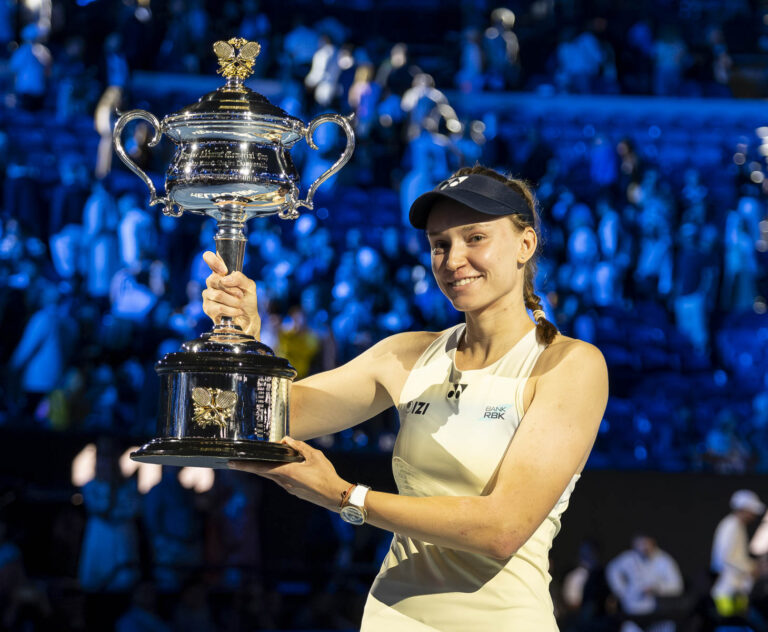
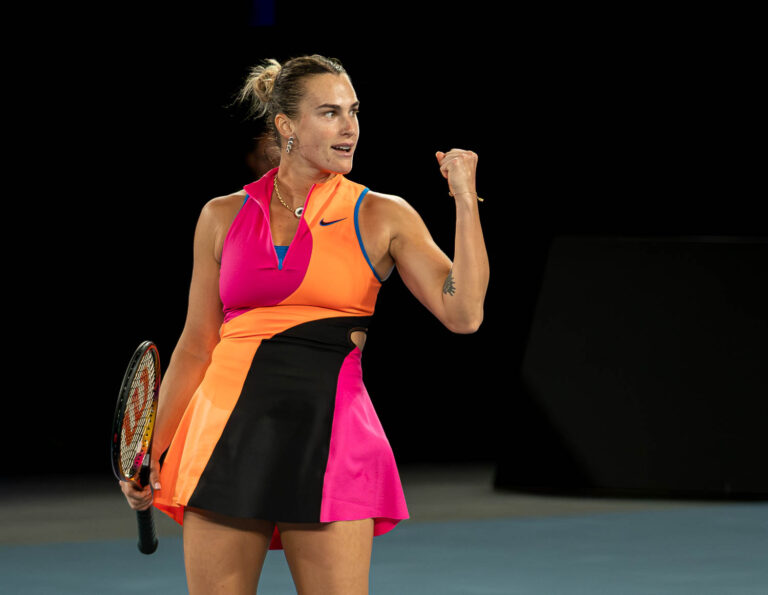
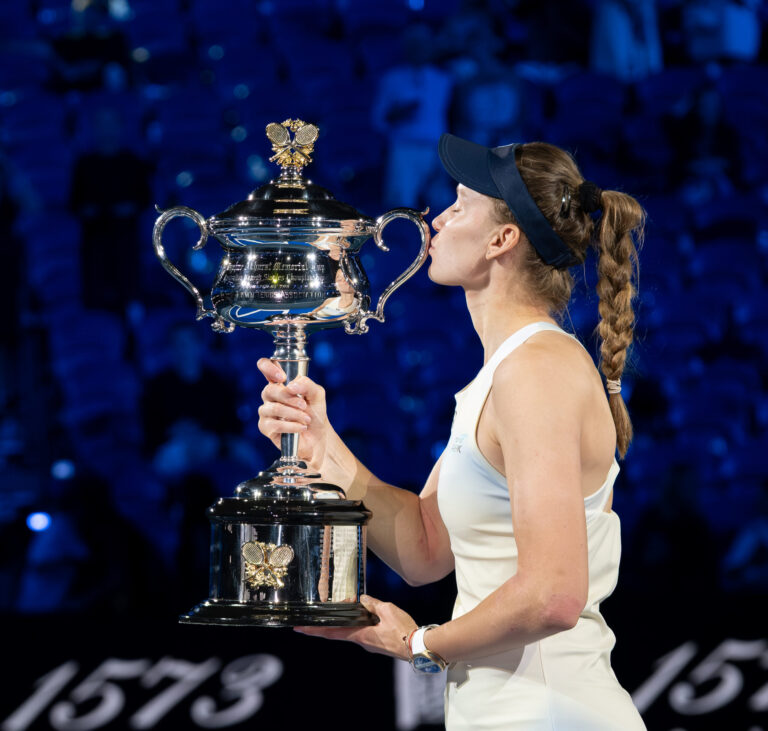
Elena Rybakina defeated world No. 1 Aryna Sabalenka 6–4, 4–6, 6–4 on Jan. 31, 2026 to win the Australian Open women’s singles title at Melbourne Park, securing her second Grand Slam trophy and avenging her loss to Sabalenka in the 2023 final.
What happened
Rybakina struck first, taking the opening set 6–4 as she matched Sabalenka’s pace and kept her own service games stable under pressure.
Sabalenka responded in the second set, 6–4, raising her level in the baseline exchanges and forcing the match into a deciding set in a final that quickly became a contest of first-strike patterns and nerve on serve.
In the third, Rybakina recovered from an early deficit and finished stronger, stringing together six of the last seven games to close the match 6–4 and claim the Daphne Akhurst Memorial Cup.
Turning point
Down a break in the deciding set, Rybakina steadied her patterns, held firm on serve, and flipped the match with a sustained run that left Sabalenka defending more and pressing harder on key points.
Key numbers
Final score: 6–4, 4–6, 6–4
Rybakina won six of the last seven games in the deciding set
What it means
For Rybakina, the win delivered her first Australian Open title and a second major overall, adding Melbourne to a résumé already defined by top-end serve-and-strike tennis on big stages. For Sabalenka, it was a narrow loss in a final that doubled as a rematch of the 2023 championship match in Melbourne.
What’s next
Both players move into the next phase of the season with the hard-court calendar continuing through the Sunshine Double, with Rybakina carrying early-season momentum and Sabalenka looking to reset quickly after another deep Melbourne run.
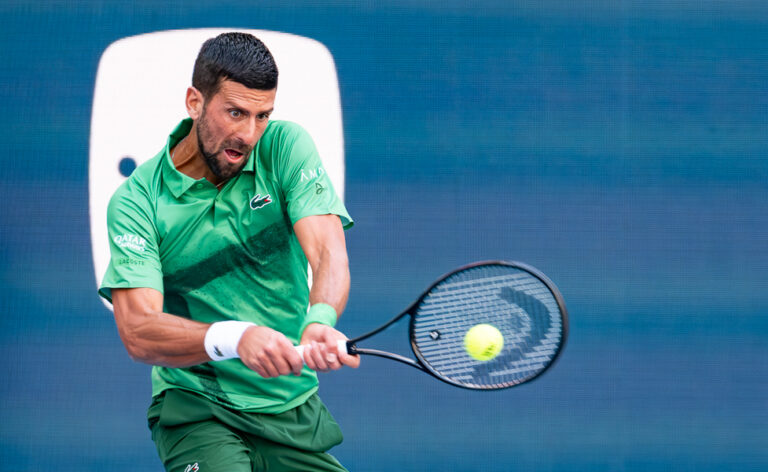
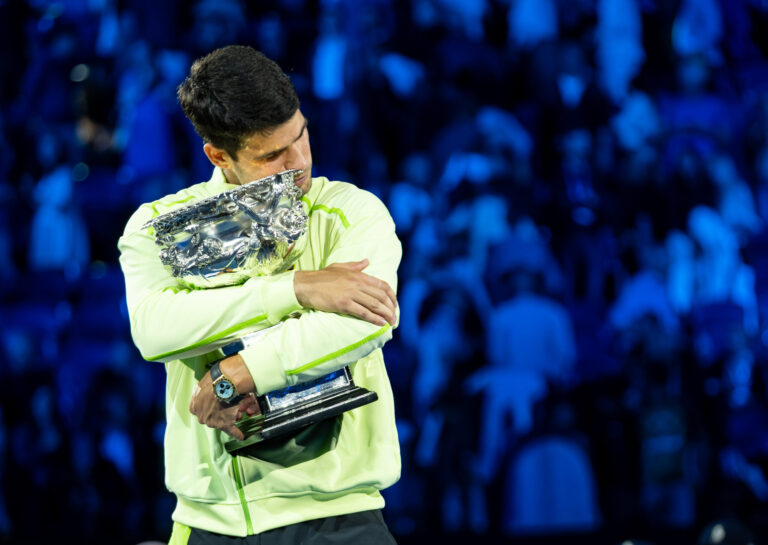
Carlos Alcaraz defeated Novak Djokovic 2–6, 6–2, 6–3, 7–5 on Feb. 1, 2026 to win the Australian Open men’s singles title at Melbourne Park, earning his first championship in Melbourne and completing a career Grand Slam.
What happened
Djokovic struck first, taking the opening set 6–2 as he controlled the early exchanges and kept Alcaraz from settling into his usual rhythm.
From the second set on, the match flipped into Alcaraz’s preferred tempo. He steadied his baseline patterns, raised his return pressure, and pulled level with a 6–2 set that shifted the balance of the night.
Alcaraz carried that momentum through the third, taking it 6–3, then closed in a tight fourth set, 7–5, to deny Djokovic an 11th Australian Open final win and end his perfect record in Melbourne finals.
Turning point
After losing the first set, Alcaraz stopped donating short points and began consistently making Djokovic play extra balls, which increased the pressure on Djokovic’s service games and gradually moved the match onto Alcaraz’s terms.
Key numbers
Sets: Alcaraz won the last 3 sets after dropping the first
Final score: 2–6, 6–2, 6–3, 7–5
What it means
For Alcaraz, the win delivered his first Australian Open title and completed a career Grand Slam, adding Melbourne to his major résumé. For Djokovic, the loss ended a run of perfection in Australian Open finals, after he entered the match with a 10–0 record in Melbourne title matches.
What’s next
Both players now turn to the next phase of the season with the Sunshine Double and the spring calendar ahead, with Alcaraz carrying the season’s first major title and Djokovic showing he can still reach the final stages of majors at 38.
As the tennis world turns its eyes to Melbourne Park for the 2026 Australian Open, set to begin this Sunday, a familiar debate has resurfaced among the sport’s top stars.
Coco Gauff, the world number three and a two-time Grand Slam champion, has described the tournament’s record-breaking prize pool as a step in the right direction, but she insists it’s far from sufficient. Her comments highlight an ongoing push by players for a fairer share of the revenues generated by the majors.
The Australian Open organizers announced earlier this month that the total prize money for the event would rise to 111.5 million Australian dollars, equivalent to about 75 million US dollars. This marks a 16 percent increase from last year’s figure.
The champions in both the men’s and women’s singles will each pocket 4.15 million Australian dollars, a 19 percent bump from 2025. These figures represent the highest payouts in the tournament’s history, underscoring the event’s growing financial clout.
Yet, for Gauff, the raw numbers tell only part of the story. Speaking to reporters on Friday ahead of her campaign, the 21-year-old American emphasized that the proportion of overall tournament revenue allocated to players remains inadequate.
“The percentage is still, of revenue comparison, not where we would like it,” Gauff said. “I think there’s still further conversations that have to be had, not just with the Australian Open, but with all the slams.”
Gauff’s stance reflects a broader movement that gained momentum last year when leading figures from both the men’s and women’s tours banded together. They formed a united front to demand a larger slice of the pie from the four Grand Slams – the Australian Open, French Open, Wimbledon, and US Open.
Beyond higher prize money, their agenda includes contributions to player welfare initiatives, such as pension funds, and greater involvement in decisions that impact their careers.
The players argue that these changes would strengthen the entire tennis structure, from elite competitors to those grinding on the lower rungs of the professional circuit. “The collective feeling is that, yes, there’s been progress, but I still think it’s not where we would like to see it,” Gauff added.
She suggested that discussions could intensify in the coming year, potentially with more involvement from top-ranked players. “I think no one wants this conversation to be continuing for years and years. So I would imagine that we would continue to have those conversations and maybe more pressure being applied with especially the top 10.”
Gauff’s push comes at a time when she is poised for another strong showing in Melbourne. As the third seed, she opens against a qualifier and could face tough tests later in the draw. Her best result here was a semifinal appearance in 2024, and with two majors already under her belt – the 2023 US Open and the 2025 French Open – she remains a formidable contender on hard courts.
Not all players share Gauff’s measured optimism. Alexander Zverev, the world number three on the men’s side and last year’s runner-up in Melbourne, expressed frustration with the pace of change. “Don’t really feel like there’s any progress, to be honest,” the German told the media.
“I feel like it’s just a lot of talk, a lot of time invested into it, and not really any changes.” Zverev’s comments underscore the impatience felt by some in the locker room, where the disparity between tournament profits and player compensation has long been a sore point.
Aryna Sabalenka, the women’s world number one and a four-time Grand Slam winner, including back-to-back Australian Open titles in 2023 and 2024, offered a diplomatic take. Having represented players in negotiations with the majors, she acknowledged efforts to bridge the gap.
“I think we always can do better,” Sabalenka said. “But I think all of the slams, they are trying to work together with us and come to a conclusion. I hope one day we’ll get to a happy place for everyone.”
The Australian Open’s prize money evolution provides context for the current discourse. Over the past decade, the tournament has steadily increased its payouts, driven by booming attendance, television deals, and sponsorships.
In 2016, the total purse was 44 million Australian dollars; by 2025, it had more than doubled. This year’s hike continues that trend, with significant boosts across all rounds. First-round losers in the main draw will receive 150,000 Australian dollars, up 14 percent, while qualifying rounds also see double-digit increases.
Comparisons to other Grand Slams reveal varying approaches. The US Open, the richest major, offered over 75 million US dollars in 2025, with champions earning 3.6 million each. Wimbledon and the French Open lagged slightly behind but have also ramped up prizes in recent years.
Players, however, point out that Grand Slams operate as non-profits or with unique structures that allow them to retain substantial revenues for reinvestment in facilities and grassroots programs. The argument is that a higher percentage – some suggest aiming for over 20 percent of revenues – could go directly to athletes without undermining those efforts.
This push aligns with the formation of groups like the Professional Tennis Players Association (PTPA), co-founded by Novak Djokovic and Vasek Pospisil, which advocates for player rights. Gauff and Sabalenka have been active in these discussions, representing the women’s side. The unity between ATP and WTA players is a relatively new development, amplifying their voice in negotiations traditionally dominated by tournament officials.
Beyond finances, the demands touch on governance. Players seek consultation on rule changes, scheduling, and other matters that affect their livelihoods. For instance, recent debates over extended match formats or health protocols have highlighted the need for athlete input.
As the 2026 season kicks off, the prize money issue could influence dynamics on and off the court. With stars like Gauff, Zverev, and Sabalenka voicing concerns, the pressure on Grand Slam organizers may mount. Tournament director Craig Tiley has defended the Australian Open’s increases, noting they prioritize early-round players to support the broader tour. “We’re committed to making sure the benefits flow through the entire sport,” Tiley said in a statement accompanying the prize money announcement.
For fans, the debate adds another layer to the excitement of the Australian Open, where over 900,000 spectators are expected across the two weeks. The event’s global appeal, boosted by stars like Gauff, continues to drive its economic success. Yet, as players like her remind us, sustaining that success requires addressing the needs of those who make it possible.
Gauff’s campaign begins amid this backdrop, but her focus remains on the tennis. With a strong 2025 behind her, including a title defense at the French Open and a WTA 1000 win in Wuhan, she enters Melbourne with confidence.
Whether the prize money talks yield further concessions remains to be seen, but one thing is clear: the conversation is far from over.
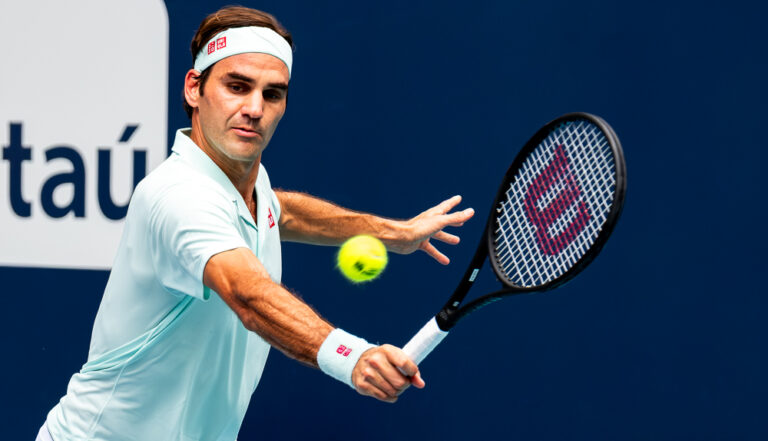
Roger Federer, the Swiss tennis icon with 20 Grand Slam titles, returned to Melbourne Park on Thursday and offered high praise for the burgeoning rivalry between world No. 1 Carlos Alcaraz and No. 2 Jannik Sinner. Speaking at a press conference just days before the start of the 2026 Australian Open, Federer described their competition as formidable for the sport, highlighting how it has captivated fans and elevated men’s tennis.
“They play incredible tennis and their rivalry is formidable,” Federer said, two days ahead of the tournament’s inaugural opening ceremony, where he will serve as the headline guest. The 44-year-old, who retired in 2022 after a storied career that included six Australian Open crowns, drew from his own experiences facing Rafael Nadal and Novak Djokovic to underscore the impact of the Alcaraz-Sinner matchup.
Federer singled out their 2025 Roland Garros final as a standout moment. In that grueling encounter, Alcaraz, the 22-year-old Spaniard, overcame Sinner in five sets after saving three match points, prevailing in 5 hours and 29 minutes.
“For tennis it was fantastic to have a match like that,” Federer noted. “At one moment, the sports world started looking at Paris and what was happening in that epic fifth set. It ended in the craziest way possible. It was perhaps one of the best matches in the history of this sport.”
The duo, often dubbed “Sincaraz” by fans, has dominated the majors in recent years. Between them, Alcaraz and Sinner have claimed the titles at the last eight Grand Slam tournaments, splitting the spoils evenly.
Alcaraz secured back-to-back French Open wins in 2024 and 2025, along with Wimbledon triumphs in 2023 and 2024, and US Open victories in 2022 and 2025. Sinner, the 24-year-old Italian, countered with consecutive Australian Open titles in 2024 and 2025, plus a US Open win in 2024.
This dominance marks a shift from the “Big Three” era, where Federer, Nadal—who retired in 2024—and Djokovic ruled for nearly two decades. Djokovic, at 38, remains active and is set to compete in this year’s Australian Open, aiming for an unprecedented 11th title at Melbourne Park.
But Federer sees the new generation taking center stage. “That’s why we’re here,” he said of the potential for another Alcaraz-Sinner clash, possibly in the final. “We’re here to see what happens. What we know about sports, anything can happen.”
Alcaraz enters the tournament as the top seed, chasing his first Australian Open crown to complete a career Grand Slam at just 22—the youngest man ever to achieve the feat. He has never progressed beyond the quarterfinals in Melbourne, a hurdle Federer likened to golfer Rory McIlroy’s long pursuit of the Masters.
“He knows about it. It’s like Rory going for the Masters, you know, those things are tough,” Federer said. “His momentum shifts toward the first round, and then it’s point for point mentality.”
Federer expressed optimism for Alcaraz’s chances, saying it would be “crazy” and an “unbelievably special moment for the game” if he succeeded. However, he acknowledged the challenges ahead. “But at his young age, to be able to complete the career Grand Slam would be crazy, so let’s see if he’s able to do crazy this week.
I hope he does, because that would be an unbelievably special moment for the game. But he has another 100-whatever players that say ‘we don’t agree with those plans’, so they’ll try everything to stop him.”
Sinner, the defending champion, is seeded second and seeks a third straight Melbourne title, a streak that would echo Djokovic’s past supremacy. He opens against France’s Hugo Gaston, while Alcaraz faces Australia’s Adam Walton, ranked 79th, in the first round. The draw positions them on opposite sides, setting up a possible final rematch of their intense battles.
Federer, who has hit with both players in practice sessions, marveled at their skills. “I’ve practised with both of them a little bit and they’re incredible ball strikers,” he said. “Their progression in the last few years is wonderful. There’s more to come, I hope they stay injury-free.” He praised their touch and rapid development, adding that the best is yet to come from the pair.
The rivalry extends beyond the majors. In 2025 alone, Alcaraz and Sinner met in six finals, with Alcaraz holding a slight edge in their overall head-to-head at 6-4. Their matches have featured high-octane rallies, tactical depth, and dramatic turnarounds, drawing comparisons to Federer’s own epic duels with Nadal and Djokovic.
Federer reflected on how such competitions drive the sport forward. “It’s good we still live off that momentum and they backed it up by playing each other in all those other finals,” he said. “Everybody else has tried to keep up while they’re trying to pull away.”
Federer’s appearance in Melbourne marks his first visit since his 2020 semifinal loss here, and it comes amid the tournament’s new features, including the opening ceremony on Saturday night. The event aims to celebrate tennis’s history and future, with Federer as the star attraction. “I’m excited to be back,” he said, noting the warm welcome from fans.
When asked about potential coaching roles with either player, Federer laughed off the idea for now. “You can never say never,” he smiled, “but I’m very busy. I have four kids, so for the moment there’s no option.” Instead, he prefers to watch from afar, enjoying the fresh energy Alcaraz and Sinner bring.
As the Australian Open begins on Sunday, all eyes will be on whether “Sincaraz” delivers another chapter. Alcaraz, fresh off his 2025 US Open win, has spoken about his hunger for Melbourne success. “I want to win here more than anywhere,” he said in a pre-tournament interview. Sinner, meanwhile, has emphasized consistency, crediting his back-to-back titles to improved mental resilience.
The tournament draw also features other threats. Djokovic, seeded third, opens against a qualifier and could face Sinner in the semifinals. On Alcaraz’s side, potential challengers include Alexander Zverev and Hubert Hurkacz. Women’s top seed Aryna Sabalenka aims for her third straight title, but the men’s side promises the most intrigue with the new rivalry at its peak.
Federer’s endorsement underscores a pivotal moment for tennis. After years of transition following the Big Three’s dominance, Alcaraz and Sinner have filled the void with flair and intensity. Their matches not only showcase athletic prowess but also strategic innovation, from Alcaraz’s explosive forehand to Sinner’s relentless baseline game.
Fans in Melbourne and worldwide anticipate a fortnight of high-stakes drama. If Alcaraz completes his Slam collection or Sinner cements his hard-court mastery, it could define 2026. As Federer put it, the French Open final was “unreal,” but the Australian Open could push boundaries further.
For now, Federer’s words set the tone: this rivalry is formidable, and it’s just getting started.