

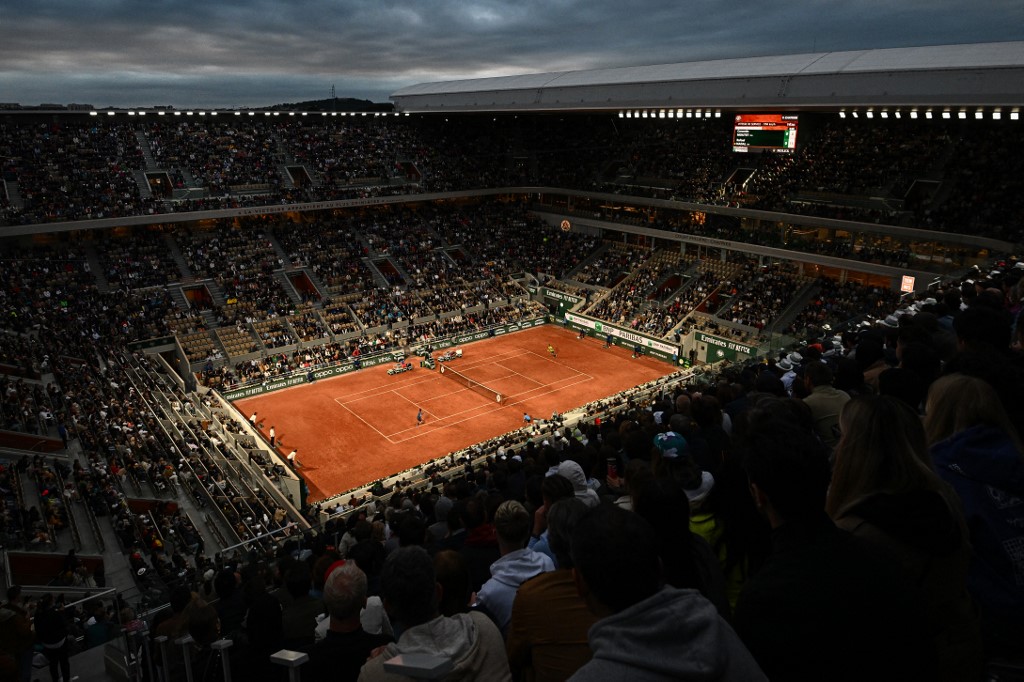
Every Grand Slam is hard to win. Winning any of the four major championships requires seven consecutive victories over a fortnight against the deepest competitive field in professional tennis, under the specific physical and psychological pressures that Grand Slam competition generates.
The Australian Open’s heat. Wimbledon’s grass and tradition. The US Open’s crowd and night sessions. Each major has its own specific demands that make claiming its title a genuine test of competitive excellence across multiple dimensions.
But Roland Garros is harder. Not marginally harder — structurally, physically, and psychologically harder in ways that the sport’s historical record consistently confirms. The list of players who have dominated professional tennis across their careers but never won the French Open is longer than the equivalent list for any other Grand Slam.
The number of players who have won all four majors — the Career Grand Slam — is smaller than it would be if Roland Garros were as accessible as the other three. And the physical demands of competing across two weeks on the red clay surface are greater than at any other major — a fact that the sport’s players, coaches, and analysts acknowledge consistently and that the injury patterns of the professional calendar confirm.
This article examines why Roland Garros is the hardest Grand Slam to win — the specific surface properties, the physical demands, the tactical requirements, and the psychological challenges that make winning in Paris a fundamentally different achievement from winning at the other three majors.
The Clay Surface: Why It Changes Everything
The fundamental reason Roland Garros is the hardest Grand Slam to win is the surface it is played on. Red clay — crushed brick packed into a specific composition that absorbs pace, amplifies topspin, and produces the highest-bouncing, most physically demanding playing conditions in professional tennis — is not simply a different surface from the hard courts and grass of the other Grand Slams. It is a surface that rewards a specific and relatively rare combination of qualities in ways that the other surfaces do not.
Hard courts — the surface of the Australian Open and US Open — are the most neutral major surface. They reward all-around excellence without dramatically amplifying the advantage of any single playing style. A flat hitter can succeed.
A topspin player can succeed. A serve-dominant player can succeed. The surface is demanding but it does not impose the same specific requirements on successful competitors that clay imposes.
Grass — the surface of Wimbledon — rewards serving power and net play more specifically than hard courts but is not as extreme in its demands as clay. The low bounce keeps rallies shorter, which means that physical endurance is less critical than on clay, and the serve’s dominance creates more free points that reduce the reliance on sustained baseline construction.
Clay rewards physical endurance above all other qualities — and punishes its absence more completely than any other surface. The high bounce forces players behind the baseline. The slow pace extends rallies to lengths that hard courts and grass do not produce. The surface absorbs the pace of flat shots, reducing the effectiveness of serves and groundstrokes that would end points immediately on faster surfaces.
The physical demands of competing across five-set men’s matches on clay — sustaining the movement, the topspin generation, and the baseline construction that clay court success requires across four to five hours — are greater than the equivalent demands at any other Grand Slam.
The Physical Demands of Winning Seven Matches on Clay
Winning Roland Garros requires winning seven matches. That is the same number required at every Grand Slam. But the physical cost of winning seven matches on clay is meaningfully greater than the physical cost of winning seven matches on hard courts or grass — and that difference compounds across the fortnight in ways that make the final stages of the French Open uniquely demanding.
The average match duration at Roland Garros is longer than at any other Grand Slam. The combination of extended rallies, slower-paced exchanges, and the surface’s specific resistance to the pace-based point-endings that faster surfaces produce means that Roland Garros matches simply take longer — more points per game, more games per set, more physical expenditure per match than equivalent rounds at the Australian Open, Wimbledon, or US Open.
The cumulative physical toll of seven long matches across two weeks on a physically demanding surface creates a specific fatigue profile that players managing toward the final stages of Roland Garros experience differently from other majors.
A player who reaches the Roland Garros final has typically spent more time on court, covered more ground, generated more topspin, and sustained more physical wear than a player who has reached the final of any other Grand Slam.
This accumulated physical demand means that the Roland Garros final is not simply a match between two excellent players — it is a match between two players who have each endured the most physically demanding path to a Grand Slam final that professional tennis produces.
The specific quality of physical preparation that Roland Garros champions require is different from what other Grand Slam champions require — not just the technical clay court excellence but the endurance base that sustains that excellence across seven matches of extraordinary physical demand.
Surface-Specific Technical Requirements
Beyond the physical demands, Roland Garros imposes specific technical requirements that players whose games are optimized for faster surfaces must develop or acquire to compete effectively.
Heavy topspin is a necessity, not an option. On clay, a flat-hit groundstroke loses pace through the surface and sits up in the opponent’s comfortable strike zone — an invitation to attack rather than a weapon in its own right.
Heavy topspin — which kicks above shoulder height on clay, forces opponents behind the baseline, and generates physical pressure through the height and pace of the bounce — is the primary offensive weapon on the surface. Players who cannot generate heavy topspin consistently are playing with a fundamental tactical limitation at Roland Garros that faster surfaces do not expose.
Serve dominance is significantly reduced. The clay surface absorbs the pace of first serves and reduces their effectiveness more completely than any other Grand Slam surface. Players who rely heavily on serving free points — aces, service winners, and the rally-shortening effect of a powerful first serve — find those advantages dramatically reduced at Roland Garros. The serve is still important on clay, but its ability to dominate points as completely as at Wimbledon or the US Open is significantly curtailed.
Movement and court coverage become paramount. The extended rallies that clay produces mean that court coverage — the ability to reach and return balls that faster surfaces would allow to pass — is more important at Roland Garros than at any other Grand Slam.
Players with exceptional movement who can sustain that movement across five-set matches are significantly advantaged on clay over players with similar technical skills but inferior movement.
Patience and point construction replace aggression. On faster surfaces, aggressive baseline play — stepping inside the baseline, taking balls early, generating pace that opponents cannot handle — is the primary tactical approach. On clay, that aggression is often neutralized by the surface — the ball sits up and allows opponents to handle pace that would be unmanageable on hard courts.
Clay court success requires building points through patient construction, moving opponents around the court, creating openings through accumulated pressure rather than individual explosive shots.
The Career Grand Slam Test
The most revealing statistical evidence that Roland Garros is the hardest Grand Slam to win is the Career Grand Slam record — the list of players who have won all four majors across their careers.
The Career Grand Slam requires winning at Wimbledon, the US Open, the Australian Open, and Roland Garros. Players who have achieved all four are genuinely exceptional — the combination of all-surface excellence required to win at each major makes the Career Grand Slam a rare achievement. But the specific missing piece for players who have won three of the four majors but not the fourth is almost always Roland Garros.
Pete Sampras won fourteen Grand Slams including seven Wimbledons and five US Opens but never won Roland Garros. John McEnroe won seven Grand Slams across three surfaces but never won Roland Garros. Jimmy Connors won eight Grand Slams but never won Roland Garros. Stefan Edberg won six Grand Slams but never won Roland Garros. Boris Becker won six Grand Slams but never won Roland Garros.
The pattern is consistent — the players who failed to complete the Career Grand Slam are overwhelmingly players whose games were built around the serve-and-volley or flat-driving approaches that clay penalizes most severely.
Their failure to win Roland Garros was not a reflection of overall excellence — each of these players was among the most accomplished of their era. It was a reflection of the specific gap between their technical profiles and the specific demands of the clay court game.
On the women’s tour, the equivalent pattern is less extreme — the specific demands of clay court tennis in the women’s game are somewhat more accessible to all-round players than in the men’s game — but the same principle applies.
Players whose games are not specifically suited to clay have consistently found Roland Garros the most difficult of the four majors to add to their collection.
The Transition Challenge: From Other Surfaces to Clay
One of the specific challenges that makes Roland Garros harder than the other Grand Slams is the transition problem — the difficulty of arriving at the French Open in optimal competitive condition after a season that has been played primarily on hard courts.
The professional calendar year begins on hard courts in Australia and concludes on hard courts in North America and Europe. The clay court season — running from approximately April through Roland Garros in early June — is a relatively brief window in which players must transition from the fast, flat-ball game that hard courts reward to the topspin-heavy, physically demanding game that clay requires.
This transition is genuinely difficult for players whose games are hard court-oriented. The technical adjustments required — different swing paths, different court positions, different tactical constructions — take time to implement.
Players who arrive at Roland Garros having spent five months on hard courts are not playing the clay court game at its most refined level regardless of how much preparation time they have invested in the weeks before the tournament.
Clay court specialists — players whose games are built around clay court excellence — do not face the same transition problem. They have maintained clay court technique across the hard court months through training and have arrived at the clay season ready to compete at their clay court ceiling.
This asymmetry in transition difficulty is one of the structural factors that makes Roland Garros more accessible to clay specialists than to hard court players, and more difficult for hard court players than for clay specialists — regardless of overall ranking.
The Weather Factor
Roland Garros is the Grand Slam most affected by weather conditions — a factor that adds a specific layer of difficulty that the other majors, with their greater weather protection or more predictable climates, do not produce to the same degree.
Paris in late May and early June is not reliably warm and dry. The spring weather produces frequent cloud cover, occasional cold spells, and rain interruptions that have historically been one of the defining characteristics of the French Open experience.
Cool temperatures affect ball behavior on clay specifically — the ball sits heavier and bounces lower in cold conditions, changing the tactical parameters of clay court tennis in ways that players must adapt to mid-tournament.
Rain delays at Roland Garros have historically been more frequent and more disruptive than at other Grand Slams — a consequence of the Paris spring climate and, until 2020, the absence of a roof over Court Philippe-Chatrier.
The delays could extend matches across multiple days, disrupting rhythm and preparation in ways that the controlled environments of hard court Grand Slams do not produce.
The retractable roof has addressed the rain delay problem for Court Philippe-Chatrier but has not changed the broader weather reality of competing in Paris in spring. Courts without roof protection — including Courts Lenglen and Mathieu — remain weather-dependent, and the overall climate of the French Open fortnight continues to be one of the most variable of any Grand Slam.
The Psychological Demands
The psychological challenge of winning Roland Garros is different from the psychological challenge of winning other Grand Slams — and in certain specific ways it is more demanding.
Patience under sustained pressure. Clay court tennis requires maintaining tactical patience across long rallies and long matches in ways that faster surfaces do not. The temptation to force the pace — to try to end points aggressively before the construction work that clay requires has been completed — is one of the most common tactical errors on clay, and resisting it across seven matches over two weeks requires a specific form of psychological discipline.
Managing physical fatigue while maintaining technical quality. As the tournament progresses, the accumulated physical demands of clay court competition become a psychological challenge as well as a physical one. Maintaining the technical precision that clay requires — the swing mechanics, the court positioning, the topspin generation — when physically fatigued is harder than on faster surfaces where physical condition matters somewhat less.
Performing under the specific pressure of Roland Garros’s cultural significance. The French Open carries a specific cultural weight in the tennis world — its historical status as the most physically demanding Grand Slam, its association with the sport’s greatest clay court champions, and the specific awareness that winning it requires overcoming challenges that have defeated many great players creates a psychological environment that competitors at other majors do not face in quite the same way.
For players who have reached the later rounds of Roland Garros multiple times without winning, the psychological weight of previous near-misses adds a dimension of accumulated pressure that the other Grand Slams rarely produce.
The Evidence Is in the Records
The clearest evidence that Roland Garros is the hardest Grand Slam to win is not any single argument about surface or weather or physical demands — it is the accumulated record of professional tennis across the Open Era.
The Career Grand Slam list is shorter than it would be if Roland Garros were as accessible as the other three majors. The list of players who have dominated the sport without winning the French Open is longer than the equivalent list for any other Grand Slam.
The specific players who have won Roland Garros most frequently — Nadal, Graf, Evert, Borg — are players whose technical and physical profiles were specifically optimized for clay in ways that all-court players rarely match.
And the reactions of players who have finally won Roland Garros after years of attempting — the specific emotional intensity, the sense of relief alongside the joy, the acknowledgment of what was overcome to achieve the title — reflect something that winning on faster surfaces does not always produce in the same way.
Roland Garros is harder. The evidence is everywhere. The records confirm it. And the experience of every player who has competed at the French Open and either won it or failed to win it — knows it.
Part of the Roland Garros series. Related: How Red Clay Changes Tennis at Roland Garros · Why Clay Specialists Thrive in Paris · Rafael Nadal at Roland Garros — The Most Dominant Performance in Grand Slam History