

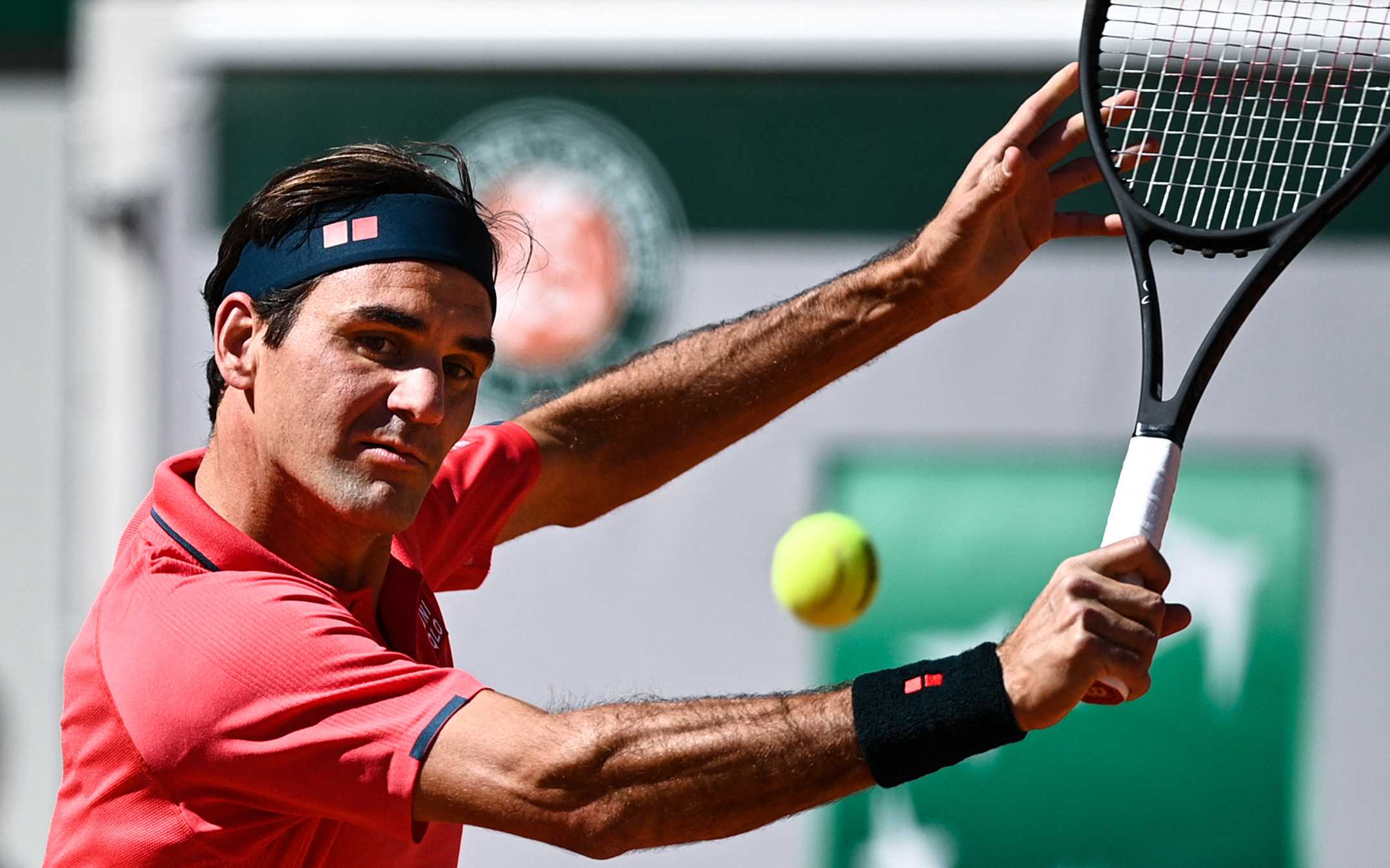
A Roland Garros final is unlike any other match in professional tennis. The red clay of Court Philippe-Chatrier slows the ball, amplifies topspin, and extends rallies to lengths that no other Grand Slam surface produces.
The Paris spring weather — clouds, wind, occasional cold that stiffens the ball and changes its flight — adds an environmental dimension that fast hard courts and pristine grass cannot replicate.
The physical demands of two weeks of competition on the most grueling surface in the sport arrive at their peak precisely when the two best players remaining must compete for the title.
These conditions do not guarantee great finals. They guarantee demanding ones. The greatest Roland Garros finals are the matches where the competitive quality of both players rose to meet those demands — where the specific challenges of clay court tennis at its most extreme produced matches that revealed things about both competitors that no other competitive environment could have exposed.
What follows is an examination of the Roland Garros finals most consistently cited as the greatest in the tournament’s history — what happened, what was at stake, and what made each of them something more than an exceptional competitive encounter.
2008 Final: Nadal defeats Federer 6–1, 6–3, 6–0
The 2008 Roland Garros final between Rafael Nadal and Roger Federer is not simply the most lopsided scoreline in a Roland Garros final since the Open Era began. It is the match that most completely expressed the specific competitive hierarchy between two all-time greats on the surface where the gap between them was greatest — and the performance that, more than any other single result, established what Nadal’s clay court dominance actually meant.
Federer arrived at the 2008 French Open having already lost three consecutive Roland Garros finals to Nadal — in 2006, 2007, and their most recent meeting. He was still the world number one, still the most gifted player in the history of men’s tennis by most technical measures, and still capable of competing with Nadal on virtually every surface except the one they were about to play on.
His preparation for 2008 had been specifically focused on finding tactical adjustments that could disrupt the rhythms that Nadal had imposed on him in their previous Paris meetings.
Whatever adjustments Federer had planned, the 2008 final produced their opposite. Nadal won the first set 6–1 — six games to one against the world number one in a Grand Slam final — in a performance that combined his heaviest topspin with his most precisely targeted placement to produce a competitive one-sidedness that no one watching had anticipated. The second set followed at 6–3. The third at 6–0.
The final scoreline — 6–1, 6–3, 6–0 — is the most decisive in a men’s Roland Garros final since the Open Era began. Federer won four games across the entire match. Against the most technically gifted player in the sport’s history, in a Grand Slam final, Nadal produced a performance whose competitive dominance exceeded anything the historical record had previously shown to be possible between two players of that quality.
What the 2008 final revealed was not simply that Nadal was better than Federer on clay — that had been established across three previous Roland Garros finals. It revealed the specific magnitude of the gap — that on the red clay of Roland Garros, the competitive distance between Nadal at his best and Federer at his best was larger than the distance between Federer and any other player in the world on any other surface.
2012 Final: Djokovic vs. Nadal — The Match That Defined Clay Court Rivalry
Nadal defeated Djokovic 6–4, 6–3, 2–6, 7–5
The 2012 Roland Garros final between Rafael Nadal and Novak Djokovic produced the most competitive and most analytically significant clay court final of the modern era — a match whose specific competitive dynamic reflected the evolving tactical contest between the two players who had defined men’s professional tennis through the early 2010s.
Djokovic arrived at the 2012 Roland Garros final as the world number one and the player who had beaten Nadal in the quarterfinals of the same tournament the previous year — ending his consecutive Roland Garros match winning streak and demonstrating that his game was specifically capable of challenging Nadal’s clay court dominance in ways that no other contemporary had managed.
His preparation for the 2012 final reflected everything he had learned about competing with Nadal on clay — the inside-the-baseline positioning, the two-handed backhand that handled topspin from positions that one-handers could not, the physical endurance to sustain four or five hours of clay court baseline exchange.
The match lasted four hours and twelve minutes — one of the longest Roland Garros finals in the Open Era — and produced a competitive quality that reflected two players pushing each other to the outer limits of what clay court tennis could demand. Djokovic won the third set convincingly, creating the possibility of a fifth-set conclusion, before Nadal reasserted his dominance in the fourth to close out the match.
What made the 2012 final historically significant was not the result — Nadal winning was consistent with the competitive record — but the competitive process. Djokovic extended the match to four sets, won one of them decisively, and produced sustained pressure that no previous Roland Garros final opponent had been able to maintain for a comparable duration.
The 2012 final established that the Djokovic challenge to Nadal’s Roland Garros dominance was genuine — a preview of the competitive dynamic that would eventually produce Djokovic’s 2021 quarterfinal victory.
1999 Final: Graf defeats Hingis 4–6, 7–5, 6–2
The 1999 Roland Garros women’s final between Steffi Graf and Martina Hingis is one of the most emotionally extraordinary matches in Grand Slam history — a final that produced a result few had anticipated, featured a crowd dynamic unlike anything previously seen at Roland Garros, and completed a comeback story that remains one of professional tennis’s most celebrated career narratives.
Graf arrived at the 1999 French Open unseeded for the first time in her career — managing chronic knee problems that had significantly disrupted her ranking — while Hingis was the world number one and the dominant player in women’s tennis.
The competitive expectation was straightforward — Hingis was expected to win — and the match’s early progress appeared to confirm that expectation as she took the first set 6–4.
What happened in the second set transformed the match into something beyond its competitive dimensions. Hingis called a ball out on a crucial point and disputed a line call in a way that generated hostile crowd reaction from the Paris audience — whose specific enthusiasm for Graf was transformed into active antagonism toward Hingis as the set progressed. The crowd turned against Hingis with an intensity that was audible and visible and that progressively affected her competitive composure.
Graf won the second set 7–5 and the third 6–2 — the last two sets reflecting Hingis’s psychological deterioration as much as Graf’s tennis. The match ended with Hingis in tears, Graf receiving a standing ovation, and the realization that an unseeded thirty-year-old managing chronic knee injuries had won her twenty-second and final Grand Slam title against the world number one.
The 1999 final is remembered as much for what it revealed about competitive psychology under crowd pressure as for Graf’s competitive achievement. Its place among Roland Garros’s greatest finals reflects both the quality of the competitive outcome and the specific human drama that made it one of the sport’s most discussed single matches.
2004 Final: Gaudio defeats Coria — The Most Improbable Clay Court Final
Guillermo Gaudio defeated Guillermo Coria 0–6, 3–6, 6–4, 6–1, 8–6
The 2004 Roland Garros men’s final between Guillermo Gaudio and Guillermo Coria is the most improbable result in the history of the tournament’s final and one of the most remarkable competitive reversals in Grand Slam history.
Two Argentine clay court specialists — Coria the favorite, Gaudio the underdog who had barely qualified to compete — produced a match whose narrative arc exceeded anything that competitive tennis scripting could have produced deliberately.
Coria won the first two sets 6–0, 6–3 — a scoreline that left virtually no doubt about the outcome. Gaudio was competing but not competing at the level that the tournament’s dominant clay court specialist required. A third set needed to go differently for the match to remain alive at all.
It went differently. Gaudio won the third set 6–4 — creating a competitive opening that the first two sets had not suggested was possible. He won the fourth 6–1 — reversing the competitive dynamic of the match with a speed and completeness that left Coria visibly unsettled. The fifth set extended to 8–6 — Gaudio converting after an extraordinary final-set battle between two players whose combined clay court quality made every game a competitive miniature.
Gaudio’s victory from 0–6, 3–6 down to win a Grand Slam final remains the greatest competitive comeback in Roland Garros final history. The specific circumstances — the apparent inevitability of Coria’s victory after two sets, the progressive deterioration of Coria’s performance as Gaudio found his game, and the fifth-set conclusion that left both players and the crowd exhausted — produced a match that illuminated the specific psychological demands of clay court tennis at their most extreme.
1984 Final: Lendl defeats McEnroe — The Match That Changed Men’s Tennis
Ivan Lendl defeated John McEnroe 3–6, 2–6, 6–4, 7–5, 7–5
The 1984 Roland Garros final between Ivan Lendl and John McEnroe is examined in detail in the Greatest Matches article in the Tennis History series — and its place in that list reflects its significance not just as a Roland Garros final but as one of the most consequential competitive results in the history of men’s professional tennis.
McEnroe arrived at the 1984 final in the midst of the greatest single season in men’s tennis history — 82 wins, 3 losses, a year-end number one ranking that reflected a level of competitive dominance that no contemporary could match. He won the first two sets 6–3, 6–2 — his serve-and-volley game functioning at its highest level against a baseline opponent who appeared unable to disrupt the rhythms that had made McEnroe unbeatable across the season.
Lendl’s recovery — winning the third, fourth, and fifth sets to claim the title — was not simply a competitive reversal. It was the match that ended McEnroe’s best chance at a French Open title and his Career Grand Slam, the result that marked the beginning of Lendl’s sustained dominance of men’s tennis through the mid-1980s, and the competitive turning point that reflected the tactical shift from serve-and-volley to baseline power that would define the subsequent decade of men’s professional tennis.
The psychological dimension of McEnroe’s collapse — from two sets up in a Grand Slam final against a player he was comprehensively outperforming — remains the most discussed single competitive deterioration in Roland Garros history and the result whose consequences extended furthest beyond the match itself.
2022 Final: Nadal defeats Ruud — The Fourteenth Title
Nadal defeated Casper Ruud 6–3, 6–3, 6–0
The 2022 Roland Garros final was not the most competitive in the tournament’s history. Its place among the greatest finals reflects something different — the specific historical context that made a 6–3, 6–3, 6–0 victory over Casper Ruud one of the most emotionally significant Roland Garros results since the tournament’s modern era began.
Nadal was thirty-six years old and had spent the previous two years managing the chronic foot injury — Mueller-Weiss syndrome, a degenerative bone condition — that had raised genuine questions about whether he would ever compete at Grand Slam level again.
His path through the 2022 draw had included a quarterfinal victory over Djokovic — his most direct Roland Garros rival — played partly under the new Court Philippe-Chatrier roof in a night session that had generated the most intensely anticipated atmosphere the tournament had produced in years.
His final against Ruud was played in the specific emotional context of what fourteen Roland Garros titles meant — not just for Nadal’s career but for the tournament’s identity. Every rally on the red clay carried the weight of seventeen years of competition at the same venue, against different opponents across different eras, through injuries and competitive challenges and the natural physical attrition of a long professional career at the highest level.
The scoreline reflected competitive dominance. The specific emotional register of the match — Nadal’s composure, the crowd’s sustained engagement with every point, the awareness that each game might be among the last he would play at Roland Garros — reflected something beyond competitive dominance.
It reflected the recognition that what was happening on Court Philippe-Chatrier was simultaneously a sporting event and a farewell ceremony, and that both dimensions deserved full attention.
2021 Final: Djokovic defeats Tsitsipas — Completing the Career Grand Slam Redux
Novak Djokovic defeated Stefanos Tsitsipas 6–7, 2–6, 6–3, 6–2, 6–4
The 2021 Roland Garros final between Novak Djokovic and Stefanos Tsitsipas produced the most dramatic comeback in a Roland Garros men’s final since Gaudio’s 2004 recovery and the result that confirmed Djokovic’s status as the most complete competitive player in the history of men’s tennis.
Tsitsipas won the first two sets — 7–6, 6–2 — and was two sets from his first Grand Slam title against the player who had won the Australian Open that January and who was competing for his second French Open title and nineteenth Grand Slam overall.
The competitive situation recalled every other Roland Garros final comeback the tournament had produced — and produced a fifth-set resolution that reflected Djokovic’s specific quality under maximum competitive pressure.
His recovery across the final three sets — winning 6–3, 6–2, 6–4 after losing the first two — reflected a competitive temperament that improves rather than deteriorates as the stakes increase.
Against a younger opponent competing for his first Grand Slam title, in a final where Tsitsipas had seemingly established decisive control, Djokovic produced the competitive equivalent of a gear change — not simply winning the remaining sets but winning them with an authority that made the final scoreline look more straightforward than the match’s first two sets had suggested was possible.
What Makes a Roland Garros Final Great
The finals examined in this article share certain qualities that illuminate what elevates a Roland Garros final from exceptional to historic.
The clay court surface specifically rewards competitive resilience over competitive brilliance — the ability to maintain quality across extended physical demands rather than producing isolated moments of exceptional shot-making.
The greatest Roland Garros finals are therefore matches where sustained competitive quality rather than individual brilliant points determines the outcome — where the better player across four or five hours of clay court attrition wins rather than the player who produces the more spectacular single performance.
They are also matches that revealed something about the competitors beyond what their regular tour results had shown — the 1984 final revealing McEnroe’s psychological vulnerability in the moment of apparent complete dominance, the 2008 final revealing the specific magnitude of Nadal’s clay court advantage over the most gifted player in the sport’s history, the 2022 final revealing what competitive excellence at thirty-six means in the specific context of a seventeen-year career at a single venue.
Roland Garros does not simply test tennis ability. It tests the whole competitor — the physical endurance, the mental resilience, the tactical sophistication, and the competitive character that the red clay’s specific demands expose in ways that faster surfaces do not.
The greatest Roland Garros finals are the matches where all of those dimensions were simultaneously tested and simultaneously revealed. That combination — comprehensive competitive revelation under maximum pressure — is what makes them the matches that define what the French Open is.
Part of the Roland Garros series. Related: Rafael Nadal at Roland Garros — The Most Dominant Performance in Grand Slam History · The History of Roland Garros — How the French Open Was Founded · Why Roland Garros Is the Hardest Grand Slam to Win