

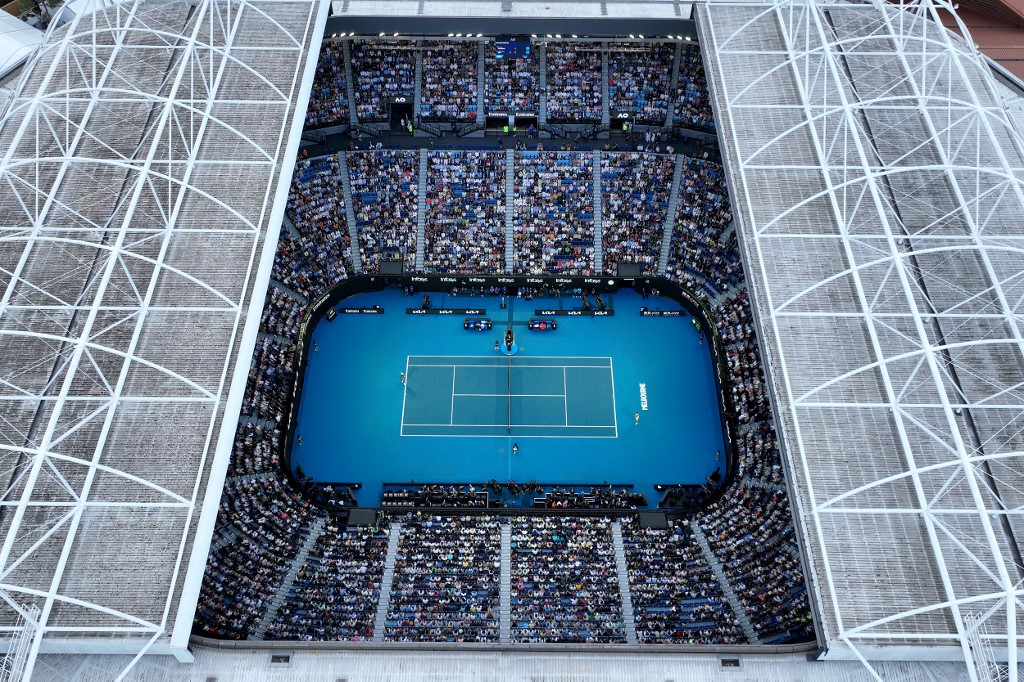
Night sessions at the Australian Open are some of the most anticipated events on the tennis calendar — but they come with a scheduling structure, a ticketing system, and a history of controversy that first-time attendees and new fans don’t always know about. Here’s everything you need to understand before you go, or tune in.
When Did Night Sessions Begin at the Australian Open?
Night sessions at the Australian Open were born the moment the tournament moved to Melbourne Park in 1988. The new venue was purpose-built with floodlighting infrastructure that the old Kooyong Lawn Tennis Club simply didn’t have, making evening play possible for the first time in the tournament’s history.
The very first night session at Flinders Park — as Melbourne Park was then known — took place on January 11, 1988, the opening day of that inaugural tournament. Ivan Lendl and Martina Navratilova were the winners in the first-ever night matches, making them unlikely footnotes in Australian Open history. It was an immediate hit with fans and broadcasters, and night tennis has been a defining feature of the tournament ever since.
How the Session Structure Works
The Australian Open divides each day of competition into two separate ticketed sessions on its main show courts: a day session and a night session. These are distinct events, each requiring their own ticket.
Day sessions begin at 11:00am, with gates opening from 10:00am. Traditionally, two to three matches are scheduled on Rod Laver Arena and two to three on Margaret Court Arena during the day session.
Night sessions begin at 7:00pm, with night ticket holders permitted to enter the grounds from 5:00pm. Typically two matches are scheduled across the main courts during the evening — usually one on Rod Laver Arena and one on Margaret Court Arena.
An important practical note for ticket buyers: day session ticket holders cannot stay in the main stadiums for the night session.
They must vacate Rod Laver Arena and Margaret Court Arena at the conclusion of day play, though they may remain on the grounds and watch matches on the outside courts. Night session ticket holders, by contrast, cannot access the grounds before 5:00pm.
Why the Night Session Matters for Fans
Night sessions are where the biggest names are most often scheduled. Tournament directors use evening slots to showcase marquee players — the likes of Novak Djokovic, Carlos Alcaraz, Aryna Sabalenka, and Iga Świątek — when the largest audiences, both in-person and on television, are available.
As a result, night session tickets tend to be more expensive than day session equivalents, typically by around AU$15–20, because of the premium placed on the star power they’re likely to deliver.
The downside for fans is that because the draw is only released a few days before the tournament and the order of play is only confirmed the evening before each match day, it is impossible to guarantee which player you will see when you buy a night session ticket. You are buying access to the session, not a specific match.
The Late Night Problem
Night sessions at the Australian Open have a well-documented scheduling problem: they regularly run very, very late.
Because the day session on the main courts can feature up to three matches, delays from long earlier matches push the night session start time back. The night session itself then kicks off no earlier than 7:00pm — and when it features competitive five-set men’s matches, the final ball can be struck deep into the early hours of the morning.
The all-time record for the latest finish in Australian Open history belongs to Lleyton Hewitt and Marcos Baghdatis, whose first-round match in 2008 concluded at 4:33am. The second-latest finish came in 2023, when Andy Murray defeated Thanasi Kokkinakis at 4:05am after a five-set, five-hour-and-45-minute second-round battle.
Murray was candid afterwards, saying that finishing matches at 4 in the morning was not good for players and not good for the sport. Novak Djokovic echoed the sentiment, noting that even winning such a late match left players with a severely disrupted sleep cycle and insufficient time to recover before their next match.
The problem was still present in 2024, when Daniil Medvedev did not begin his second-round match until 11:16pm after two preceding matches on Rod Laver Arena overran.
The 2024 ATP and WTA Scheduling Rules — and Why the AO Doesn’t Have to Follow Them
In January 2024, the ATP and WTA jointly introduced scheduling rules for their own tour-level events aimed at reducing late-night finishes. The new framework set a cap of no more than five matches per day per court — three in the day session, two in the evening — with a recommended night session start of 6:30pm and a requirement that no new match start after 11:00pm except with specific approval.
As a Grand Slam, the Australian Open is governed independently by the International Tennis Federation rather than by the ATP and WTA. The tour-level rules do not apply to it. The Australian Open kept its 7:00pm night session start time and continued to schedule up to three day-session matches on the main courts when the rules took effect.
This is a recurring tension in tennis governance: rule changes the tours introduce to protect players don’t automatically extend to the four majors, which have their own scheduling authority. The same dynamic applies to the ATP’s new 2026 heat rule, which similarly doesn’t bind Grand Slams.
What the Australian Open Did to Fix It
Starting in 2024, the Australian Open expanded to a 15-day event by beginning on a Sunday rather than a Monday. As part of that change, the number of day session matches on the main show courts was reduced from three to a minimum of two, giving the schedule more breathing room before the night session begins.
The move was broadly welcomed as a practical improvement, though critics — including ESPN commentator John McEnroe — pointed out that the extra day also conveniently added another day of ticket and broadcast revenue.
Whether the change has fully solved the late-night problem remains a matter of ongoing debate: overruns still occur when earlier matches go long, and the 7:00pm night session start time has not been brought forward.
Players and commentators have continued to suggest further fixes, including starting night sessions at 6:00pm or 6:30pm, limiting the day session to two matches per court, or scheduling just one match per court in the evening with a backup plan for injury retirements. None of these changes has been formally adopted as of 2026.
Night Sessions and Television Scheduling
One reason the Australian Open’s late nights have persisted is the tournament’s unusually favourable position on the global broadcast calendar. Melbourne’s time zone — Australian Eastern Daylight Time, which is UTC+11 in January — puts the Australian Open in prime daytime viewing slots across major European and Asian markets.
A match finishing at 3:00am in Melbourne is reaching viewers in London, Paris, and Beijing during their evening hours. That broadcast value is considerable, and it creates a structural incentive for the tournament to pack as much marquee tennis into the evening hours as possible.
This tension between broadcast revenue, player welfare, and the live spectator experience is at the heart of the scheduling debate — and it is unlikely to be fully resolved as long as the commercial interests at stake remain so significant.
How Night Tennis Plays Differently
Beyond the scheduling debate, night tennis at Melbourne Park genuinely plays differently than day tennis. With the roof closed and the air conditioning engaged, the GreenSet hard court surface and the air conditions create a faster, lower-bouncing court than during sun-soaked day sessions. Hot air expands the gas in tennis balls, making them fly faster and bounce higher; cooler night conditions produce the opposite effect.
The crowd also feels different. Night sessions at Rod Laver Arena are some of the loudest, most electric atmospheres in tennis — the closed roof traps the noise, and the dedicated single-session audience that arrived after 5:00pm tends to be more vocal than day-session fans who have been on the grounds for hours.
For a sense of how other Grand Slam venues compare, see What Makes Melbourne Park Different From Other Grand Slam Venues.
Night Session Tickets: What You Need to Know
For anyone planning to attend, here are the key practical points:
- Tickets are session-based, not match-based. You cannot buy a ticket to see a specific player. You buy access to a session and discover the order of play the night before.
- Night session gates open at 5:00pm. Night ticket holders cannot enter earlier.
- Day session holders must vacate the main arenas at the end of the day session, though they can stay on the grounds for outside court matches.
- Night sessions typically feature two matches — one women’s match followed by one men’s match, or two singles matches across the two main courts.
- Be prepared for a late finish. If the men’s match is competitive, you may be there well past midnight.
- Public transport runs limited services after midnight on weekdays. Check train and tram schedules in advance, particularly for matches that may run deep into the night.
Frequently Asked Questions
When did night sessions begin at the Australian Open? On January 11, 1988, the opening day of the first tournament held at Melbourne Park. Ivan Lendl and Martina Navratilova won the inaugural night matches. The old Kooyong Lawn Tennis Club lacked the floodlighting infrastructure for night play.
What time do Australian Open night sessions start? 7:00pm Australian Eastern Daylight Time. Gates open at 5:00pm for night ticket holders. Day session holders must leave the main arenas before night play begins.
Can I see the same matches on a day session ticket and a night session ticket? No. Day and night sessions are separately ticketed events. Day ticket holders cannot stay in Rod Laver Arena or Margaret Court Arena for the night session, though they may remain on the grounds to watch outside-court matches.
What is the latest finish in Australian Open history? Lleyton Hewitt and Marcos Baghdatis finished their first-round match at 4:33am in 2008 — the all-time record. Andy Murray’s 4:05am win over Thanasi Kokkinakis in 2023 sits second. The Murray-Kokkinakis result prompted significant debate about late-night tennis and contributed to broader scheduling reforms.
Did the ATP and WTA’s 2024 scheduling rules fix late-night tennis? Partially, but those rules apply only to ATP and WTA tour events — not to the Grand Slams. The Australian Open made its own change in 2024 by expanding to a 15-day format and reducing main-court day-session matches, but the 7:00pm night session start was retained, and late finishes still occur when day-session matches overrun.
How is the Australian Open night session different from other Grand Slams? The Australian Open has the latest night session start (7:00pm) of the four Slams and uses the most pronounced day-vs-night session split. Wimbledon has limited night play due to its 11pm curfew. Roland Garros has only one night-session match per evening on Court Philippe-Chatrier. The US Open runs night sessions but with a different start time and structure. Of the four, the Australian Open has the most distinct day/night session culture.
Why can’t I find out which players I’ll see at a night session before buying? The Australian Open releases the order of play the evening before each day’s matches, and the draw itself is only released a few days before the tournament begins. Both schedules can shift based on weather, retirements, and earlier-match overruns. Tickets are sold for access to the session, not for a specific match.
The Bottom Line
Night sessions are one of the most electric experiences in tennis — Rod Laver Arena under the lights, with a full crowd and a big match in progress, is genuinely hard to match anywhere in the sport.
But they come with trade-offs: the uncertainty of not knowing who you’ll see, the real possibility of a very late finish, and an ongoing scheduling tension that the tournament has only partially addressed. Go in with realistic expectations, check the order of play the night before, and plan your transport home accordingly — and you’ll have a great time.