

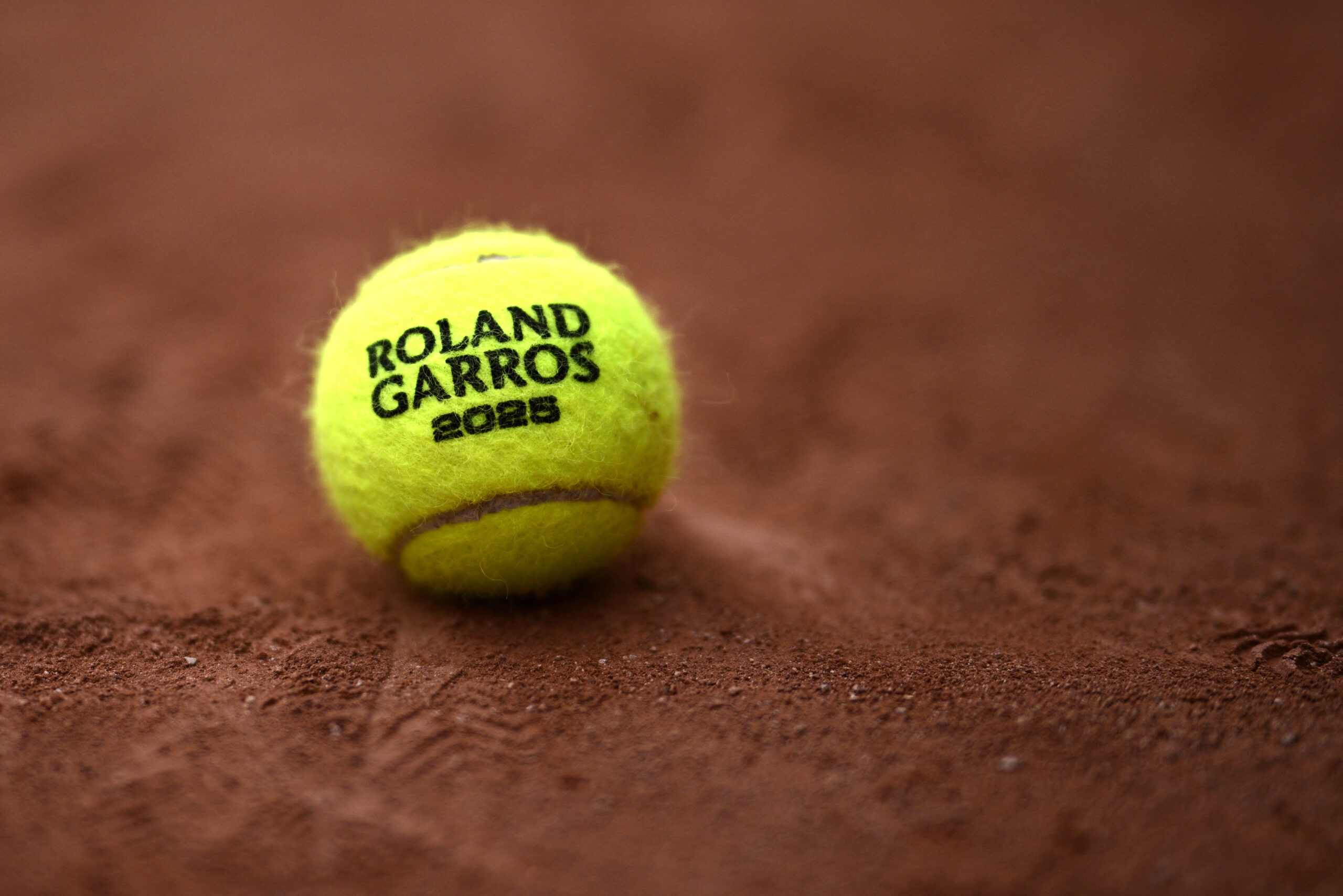
Every Grand Slam tournament has an origin story. Wimbledon’s is the oldest — a private club in a London suburb organizing the first lawn tennis championship in 1877. The US Open’s traces back to a Newport, Rhode Island resort in 1881.
The Australian Open began in Melbourne in 1905. But Roland Garros has the most unusual founding story of the four — because the tournament is named after a man who never played tennis, died in aerial combat fourteen years before the current stadium was built, and whose connection to the sport is entirely accidental.
That accident of naming produced one of sport’s most distinctive identities. The red clay courts of Roland Garros, the Parisian setting, the specific competitive demands of the surface, and the historical narratives that have accumulated across nearly a century of competition at the current venue have made the French Open the most distinctive of the four Grand Slams — the one most associated with a specific style of play, a specific physical challenge, and a specific category of champion whose excellence on this surface defines their entire legacy.
Understanding how Roland Garros became what it is requires understanding both the tournament’s competitive history and the specific circumstances — a diplomatic emergency, a national hero’s memory, and a Davis Cup final — that created the stadium and established the venue that has hosted the tournament ever since.
Before Roland Garros: The French Championships’ Early History
The tournament that would eventually become the French Open began in 1891 — thirty years before the current Roland Garros stadium was built — as one of the most deliberately exclusive major tennis events in the world. The Championnat de France was open only to members of French tennis clubs, a restriction that explicitly excluded the international players who were simultaneously competing at Wimbledon and the growing international tennis circuit.
This exclusivity was not simply a product of organizational provincialism. It reflected a specific philosophy about what the French Championships were supposed to be — a national competition for French players, organized by and for the French tennis community, without the international complexion that made Wimbledon and the US Championships genuinely global events.
In the first three and a half decades of its existence, the French Championships was won exclusively by French players, many of whom competed only domestically and were unknown outside France.
The administrative consequences of this restriction were significant. While Wimbledon was building its reputation as the world’s most prestigious tennis event and the US Championships was developing an international field, the French Championships was accumulating a long history of national competition that gave it deep roots in French sporting culture but limited relevance to the broader international tennis world.
The woman who won the first French Championships was Mme. Laumier — whose first name has been lost to historical record — competing at the Racing Club de France in Paris in 1891. The men’s competition that year was won by Briton H. Briggs, one of the few early exceptions to the French-only field, competing in a period when the membership restrictions were enforced less consistently than they would later become.
The early decades of the French Championships produced champions who are largely forgotten outside French tennis history — players who were genuinely excellent within the national context but who never competed internationally and whose records cannot be compared directly to the simultaneous achievements of players competing at Wimbledon and the US Championships.
Opening to the World: The 1925 Transition
The decision that transformed the French Championships from a national competition into an international major was made in 1925 — when the tournament was restructured to allow entry from players of any nationality.
The specific administrative change was simple: the membership restriction requiring entrants to be members of French clubs was removed, and the tournament was opened to any amateur player regardless of nationality.
The practical consequences were immediate and dramatic. The world’s top players — who had been simultaneously winning Wimbledon and the US Championships while the French Championships remained closed to them — could now compete in Paris.
The competitive level of the event rose immediately, and the French Championships began to accumulate the international competitive credibility that would eventually make it one of the four Grand Slams.
The first four years of the open French Championships — 1926 through 1929 — produced results that both validated the decision to open the tournament and immediately established France’s competitive relevance in the newly international event.
French players dominated the early years of the open era, with Suzanne Lenglen winning the women’s title and a group of French men’s players who would become the tournament’s first legendary champions beginning their dominance.
Suzanne Lenglen’s impact on the French Championships deserves specific attention. Already one of the most celebrated athletes in the world by the mid-1920s, Lenglen had won the French Championships six times in the women’s competition and was the defining figure in women’s tennis internationally.
Her presence in the newly opened competition gave the tournament immediate international credibility and established the French Championships as an event of genuine global significance from its first year of open competition.
The Four Musketeers: France’s Golden Era
The period between 1927 and 1932 produced the most celebrated national concentration of tennis talent in the sport’s history — four French players known collectively as the Four Musketeers whose simultaneous excellence transformed France into the dominant force in international tennis and whose Davis Cup achievements directly created the stadium that bears Roland Garros’s name.
René Lacoste, Henri Cochet, Jean Borotra, and Jacques Brugnon were not simply four good players who happened to compete at the same time. They were four players of genuinely exceptional quality whose different playing styles and complementary competitive strengths made France essentially unbeatable in team competition throughout their shared peak years.
René Lacoste — the Crocodile, whose nickname came from a wager over an alligator-skin suitcase and whose legacy extends far beyond tennis through the clothing brand that still bears his name — was the most technically sophisticated of the four. His baseline game and tactical intelligence made him the most complete player of his era, and his two French Championships titles and two Wimbledon titles established him as one of the greatest players of the pre-Open Era.
Henri Cochet was the most naturally gifted of the four — a player of extraordinary instinct and improvisational brilliance whose ability to recover from seemingly impossible competitive positions became one of tennis’s most celebrated qualities. His four French Championships titles between 1926 and 1932 and his two Wimbledon titles reflected a level of sustained Grand Slam excellence that no French player has matched until the modern era.
Jean Borotra — the Bounding Basque — was the most athletic and most entertaining of the four, whose acrobatic court coverage and exuberant playing style made him one of the sport’s first genuine crowd favorites. His two French Championships titles and one Wimbledon title represented the competitive achievement of the four Musketeers’ most distinctive personality.
Jacques Brugnon was primarily a doubles specialist — arguably the finest doubles player of his era — whose partnership contributions to the French Davis Cup team were as significant as any of his colleagues’ singles achievements.
Together, the Four Musketeers won the Davis Cup six consecutive times between 1927 and 1932 — defeating the United States in 1927 and defending the title through five successive challenges. Their Davis Cup dominance was the most significant sustained national achievement in the sport’s history to that point and the direct cause of the stadium that would become Roland Garros’s permanent home.
Roland Garros: The Man Behind the Name
Roland Garros was a French aviator born in Saint-Denis, Réunion in 1888. He was not a tennis player and had no connection to the sport. His place in tennis history is entirely a product of the diplomatic circumstances surrounding the construction of a new stadium to defend France’s Davis Cup title in 1928.
Garros’s aviation achievements were genuinely extraordinary. He was the first person to fly solo across the Mediterranean Sea, completing the crossing from Fréjus in southern France to Bizerte in Tunisia on September 23, 1913 — a distance of approximately 800 kilometers across open water that had not previously been attempted in a single continuous flight. The crossing took seven hours and fifty-three minutes and established Garros as one of the pioneering figures of early aviation.
When the First World War began, Garros became one of France’s most celebrated military aviators. He developed the technology that allowed machine gun fire to be synchronized with aircraft propeller rotation — a breakthrough that transformed aerial combat — and became one of France’s first aerial combat heroes. He was shot down and captured by German forces in 1915, escaped from a prisoner of war camp in 1918, and was killed in aerial combat on October 5, 1918 — just five weeks before the Armistice ended the war.
Garros died at the age of twenty-nine, celebrated as a national hero, having never witnessed the establishment of professional tennis as a global sport or the construction of the stadium that would carry his name.
How Roland Garros Got Its Name
The naming of the Stade Roland Garros was a product of specific political and personal circumstances that had nothing inherently to do with tennis and everything to do with the intersection of French national pride, Davis Cup competition, and personal loyalty.
When France won the Davis Cup in 1927 — defeating the United States in the final on American soil — the victory created both a celebration and a logistical challenge. As the defending champion, France was obligated to host the 1928 Davis Cup Challenge Round. The existing French tennis facilities in Paris were insufficient to accommodate the expected crowds for an international final of this significance.
The French Tennis Federation needed a new stadium — quickly. They identified a site adjacent to the existing Stade Français sports complex in the 16th arrondissement of Paris, near the Bois de Boulogne. The construction of a new tennis stadium was authorized, built in approximately six months — a remarkable construction timeline — and ready for the 1928 Davis Cup Challenge Round.
The naming of the new stadium was the decision of Émile Lesieur, the president of the Stade Français club, and reflected personal loyalty rather than any connection between the honoree and tennis. Lesieur had been a close friend of Roland Garros — the two had been schoolmates — and proposed naming the new facility after the aviator as a tribute to a personal friend and national hero. The proposal was accepted and the Stade Roland Garros was inaugurated in 1928 with France defeating Italy in the Davis Cup Challenge Round.
The French Championships moved to the new Stade Roland Garros in 1928 — a natural relocation given that the new facility had been built as a tennis venue — and have been played there ever since.
The accident of naming that made Roland Garros the French Open’s permanent home has given the tournament one of sport’s most distinctive identities: named after an aviation pioneer whose connection to the sport is entirely indirect but whose name has become inseparable from the most celebrated clay court tennis competition in the world.
The Evolution of Court Philippe-Chatrier
The stadium at the center of Roland Garros — the main show court that hosts the tournament’s most significant matches — has undergone several transformations since 1928 that reflect both the tournament’s growing prestige and the physical evolution of major sports venues across the twentieth century.
The original Court Central at Roland Garros was a modest facility by modern standards — a grass court stadium that reflected the surface preferences of the era rather than the clay association that would eventually define the venue.
The surface at Roland Garros was changed from grass to clay in the early years of the tournament’s residence at the stadium, establishing the red clay surface that has defined the venue’s competitive character ever since.
The court was renamed Court Philippe-Chatrier in 1988 in honor of Philippe Chatrier — the president of the French Tennis Federation from 1973 to 1993 and one of the most influential figures in the development of professional tennis globally.
Chatrier was the driving force behind the modernization of the French Open, the expansion of the Roland Garros facilities, and the elevation of the French Federation to a position of global leadership in tennis administration. His fourteen-year presidency transformed both the tournament and the broader governance of the sport.
The most significant recent transformation of Court Philippe-Chatrier was the installation of a retractable roof — completed in 2020 — that ended the French Open’s status as the only Grand Slam without weather protection for its main show court.
The roof installation was a major engineering undertaking given the constraints of the existing stadium structure and the surrounding facilities, and its completion allowed night sessions to be added to the French Open schedule for the first time — a significant commercial development that brought the French Open’s broadcast structure closer to the other Grand Slams.
The current Court Philippe-Chatrier holds approximately 15,000 spectators — expanded through successive renovations from the original capacity — and its distinctive red clay surface, the surrounding Parisian architecture visible above the stadium walls, and the specific atmosphere of a Grand Slam final on clay remain among the most recognizable settings in professional sport.
The Open Era at Roland Garros
The French Open entered the Open Era in 1968 — becoming one of the first Grand Slams to allow professional players to compete alongside amateurs for prize money. The first Open Era French Open was won by Ken Rosewall — the Australian professional who had been excluded from Grand Slam competition during his professional exile and who, at thirty-three, finally had the opportunity to compete at Roland Garros against the full international field.
The Open Era French Open established the competitive dynamics that have defined the tournament ever since. The red clay surface — slower than any other Grand Slam surface, producing the highest-bouncing and most physically demanding conditions in professional tennis — created a specific competitive environment that rewarded particular playing qualities above all others.
Sustained physicality, heavy topspin, extraordinary movement and court coverage, and the mental endurance to compete through long baseline exchanges under Paris’s spring weather conditions — these qualities defined the French Open champion year after year in ways that made Roland Garros the most surface-specific of the four Grand Slams.
The champions who have defined the Open Era French Open represent the fullest expression of clay court excellence — Bjorn Borg’s six titles in the 1970s establishing the topspin baseline game as the court’s dominant tactical approach, Chris Evert’s seven titles demonstrating that consistency and mental resilience could be as effective as power on clay, and Ivan Lendl’s three titles reflecting the baseline power game that would eventually dominate professional tennis on all surfaces.
Rafael Nadal and the Defining of a Legacy
No discussion of Roland Garros history is complete without acknowledging the achievement that has permanently transformed how the tournament is understood — Rafael Nadal’s fourteen French Open titles between 2005 and 2022.
Nadal’s relationship with Roland Garros is the most extreme concentration of excellence at a single Grand Slam event in the history of professional tennis. He won the tournament on his first appearance in 2005 at the age of nineteen and continued winning it across seventeen years of competition — losing only twice at Roland Garros across his entire career, to Robin Soderling in 2009 and Novak Djokovic in 2021.
His fourteen titles — more than double the previous record of seven held by both Evert and Bjorn Borg — are not simply a statistical record. They represent a fundamental transformation of what Roland Garros means in the history of the sport. The tournament that was already the most distinctively surface-specific of the Grand Slams became, through Nadal’s dominance, almost synonymous with a single player’s competitive identity.
The specific quality of Nadal’s Roland Garros performance — the heavy topspin forehand that kicks above shoulder height on clay, the extraordinary physical endurance, the mental resilience that produced comeback victories from seemingly impossible competitive positions — represented clay court excellence taken to its logical extreme. His performance at Roland Garros will define the standard against which clay court excellence is measured for as long as the sport is played.
The Modern Roland Garros: Expansion and Evolution
The Roland Garros of the twenty-first century has undergone the most significant physical transformation in its history — a comprehensive renovation and expansion project that added significant capacity, created new show courts, and modernized the facility while preserving the specific atmosphere that distinguishes the French Open from the other Grand Slams.
The expansion project — approved after years of debate about whether the French Open could remain competitive with the Australian Open and US Open’s modern facilities — added Court Simonne-Mathieu, a new show court built within the greenhouses of the adjacent botanical garden and named in honor of one of France’s greatest women’s tennis champions.
The court’s extraordinary setting — surrounded by the glass walls of the greenhouse structure, with tropical plants visible above the clay surface — is one of the most visually distinctive venues in professional sport.
The Lenglen Court — named after Suzanne Lenglen, the French Open’s greatest early champion — was expanded and modernized as the tournament’s second show court, and new practice facilities, player areas, and public spaces were added to create a tournament campus worthy of a modern Grand Slam.
The retractable roof on Court Philippe-Chatrier, completed in 2020, was the most operationally significant single addition — allowing the tournament to guarantee completion of scheduled matches regardless of Paris’s famously unpredictable spring weather and enabling the night sessions that have become one of the French Open’s most commercially significant scheduling innovations.
Why Roland Garros Remains Unique
Among the four Grand Slams, Roland Garros occupies a specific and irreplaceable position — not simply as one of four major championships but as the event that most completely defines a specific style of tennis and a specific kind of champion.
The red clay of Roland Garros does not merely provide a different surface for the same game that is played at the Australian Open, Wimbledon, and the US Open. It creates a fundamentally different competitive environment — slower, higher-bouncing, more physically demanding, more receptive to topspin and endurance than to pace and power — that rewards a specific combination of physical and technical qualities in ways that identify clay court specialists as genuinely distinct from all-court champions.
The tournament’s Parisian setting adds cultural dimensions that the other Grand Slams cannot replicate. The combination of the red clay, the spring weather, the Bois de Boulogne setting, and the specific atmosphere of French tennis culture creates an event whose identity is inseparable from its location in a way that makes Roland Garros genuinely irreplaceable in the professional tennis calendar.
The history that has accumulated at the Stade Roland Garros since 1928 — the Four Musketeers’ founding triumphs, the Open Era’s greatest clay court champions, and the Nadal era’s transformation of what dominance at a single Grand Slam can mean — gives the venue a competitive narrative as rich and as distinctive as any in professional sport.
Roland Garros began with an accident of naming. It became one of the sport’s most distinctive institutions through nearly a century of competitive history on the most demanding surface professional tennis offers.
Part of the Roland Garros series. Related: Why Roland Garros Is the Hardest Grand Slam to Win · How Red Clay Changes Tennis at Roland Garros · Why Clay Specialists Thrive in Paris