

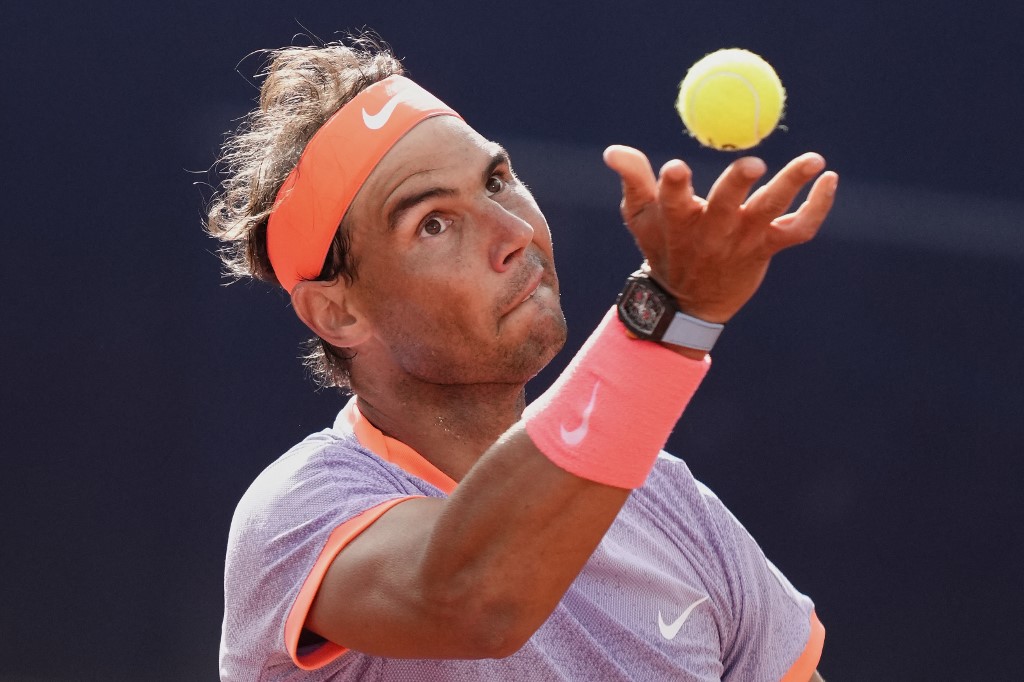
There is a category of sporting achievement that exists beyond the reach of conventional superlatives — performances so far outside the normal parameters of what competitive sport produces that the language of greatness becomes inadequate. Rafael Nadal’s record at Roland Garros belongs in that category.
Not simply as the most dominant performance at a single Grand Slam in tennis history. Not simply as the most titles at a single major by any player in the Open Era. But as the most extreme concentration of sustained excellence at a specific competitive venue that professional sport has ever documented.
Fourteen French Open titles across seventeen years of competition. Two losses at Roland Garros across an entire career. A winning percentage at a single Grand Slam that no player in any era of the sport has come close to matching.
Nadal’s relationship with Roland Garros is not a chapter in tennis history. It is the chapter that defines what the French Open means and will mean for as long as the sport is played.
The Numbers That Define the Record
Before examining what Nadal’s Roland Garros dominance means, the specific numbers deserve to be stated clearly — because they are extraordinary enough that no amount of contextual analysis fully prepares a reader for what they represent.
Nadal competed at Roland Garros seventeen times between 2005 and 2022. He won the tournament fourteen times. He lost twice — to Robin Soderling in the fourth round in 2009 and to Novak Djokovic in the quarterfinals in 2021. He withdrew once in 2022 due to injury after winning the title, missing the event entirely.
His match record at Roland Garros across those seventeen years was 112 wins and 3 losses — a winning percentage of 97.4 percent at a single Grand Slam across a career spanning nearly two decades.
He won the French Open without losing a set in 2008 — completing the tournament across twelve sets without a single set being dropped, the most dominant performance in Grand Slam final history at that point.
He won his first title in 2005 at the age of nineteen and his final title in 2022 at the age of thirty-six — a seventeen-year span between first and last Roland Garros title that is the longest gap between first and last titles at any single Grand Slam event in professional tennis history.
His fourteen titles are more than double the previous men’s record of six held by Bjorn Borg and more than double the women’s record of seven held by both Chris Evert and Steffi Graf. No player in the Open Era — men’s or women’s — has won a single Grand Slam tournament more than nine times. Nadal won Roland Garros fourteen times.
The Beginning: 2005 and the Arrival of Something New
Nadal’s first Roland Garros title in 2005 arrived before most of the tennis world had fully understood what it was witnessing. He was nineteen years old, competing in his first French Open main draw, ranked fourth in the world after a clay court season that had already announced his exceptional surface-specific quality.
The draw included Roger Federer — the world number one and defending champion at the other three Grand Slams — and virtually every other elite men’s player of the era.
Nadal won the tournament without losing a set — dropping only thirty-five games across seven matches in a performance that reflected the specific competitive gap between his clay court game and every other player in the draw.
His final against Mariano Puerta was won 6–7, 6–3, 6–1, 7–5 — the only set he dropped across the entire tournament going to Puerta in the first set of the final before Nadal’s physical and technical dominance asserted itself.
The specific quality of his 2005 performance was immediately recognized as exceptional. The combination of his heavy topspin forehand — generating more revolutions per second than any player previously measured — his extraordinary defensive retrieving, and his physical endurance across five-set matches in the Paris spring conditions created a profile of clay court excellence that was genuinely unprecedented in the Open Era.
What was not immediately clear in 2005 was that his first Roland Garros title was not a peak — it was a beginning.
The Federer Finals: Defining a Rivalry Through Clay
The four Roland Garros finals between Nadal and Federer — played in 2005 through 2008 — were the defining matches of the most celebrated bilateral rivalry in men’s tennis history and the specific encounters that most clearly established the competitive hierarchy on clay that Nadal’s Roland Garros record reflects.
Federer arrived at Roland Garros in 2006 as the dominant player in men’s tennis — the world number one, the winner of nine Grand Slams, and the player most widely considered the greatest of all time.
His one weakness in the historical record was Roland Garros — where Nadal had beaten him in the 2005 semifinals — and the 2006 final was widely anticipated as the match that would determine whether Federer could overcome that specific competitive challenge.
The 2006 final produced one of the most comprehensive performances in Grand Slam final history. Nadal won 1–6, 6–1, 6–4, 7–6 — a scoreline that reflected Federer’s initial dominance before Nadal’s physical and tactical game overwhelmed him across the final three sets.
The specific tactical dynamic — Nadal’s heavy topspin forehand targeting Federer’s one-handed backhand, generating kicks above shoulder height that Federer could not comfortably attack — was the clearest early evidence of a surface-specific vulnerability that Nadal exploited more systematically than any other player in Federer’s career.
The 2007 final was even more comprehensive — Nadal winning 6–3, 4–6, 6–3, 6–4 in a match that produced perhaps his most technically complete Roland Garros performance to that point. The 2008 final — won 6–1, 6–3, 6–0 — produced the most lopsided scoreline in a Roland Garros final since the Open Era began and remains the most decisive men’s Grand Slam final performance in the modern game.
The specific significance of the Federer finals was not simply that Nadal won them — it was that he won them in a way that made the competitive gap visible. Against the most technically gifted player in the history of the sport, on a surface where Federer had repeatedly demonstrated his ability to compete with any player in the world, Nadal produced performances that were simply beyond what the competitive context suggested was possible.
The Soderling Loss: 2009 and the Only Early Exit
The 2009 Roland Garros fourth-round loss to Robin Soderling is the most discussed single result in Nadal’s Roland Garros career — not because it diminishes his record but because it is the one interruption in a seventeen-year narrative of near-complete dominance and the loss that, in retrospect, made his subsequent return and continued dominance even more remarkable.
Soderling was ranked twenty-third in the world when he faced Nadal in the fourth round of the 2009 French Open. He was a powerful flat hitter whose game — aggressive, pace-oriented, designed to take time away from the opponent — was specifically suited to unsettling Nadal’s topspin-based rhythms on clay.
His victory over Nadal — 6–2, 6–7, 6–4, 7–6 in a match that reflected genuine competitive excellence rather than a Nadal off-day — was the biggest upset in Roland Garros history and the result that ended Nadal’s streak of four consecutive French Open titles.
What made the loss historically significant was what followed. Soderling went on to reach the final before losing to Federer — who completed his Career Grand Slam with the French Open title, a moment that would not have been possible had Nadal not been eliminated in the fourth round.
And Nadal, having lost for the first time at Roland Garros, returned the following year and began a new winning streak that would eventually produce nine more titles across the subsequent thirteen years.
The Return and the Second Era: 2010–2014
Nadal’s five consecutive Roland Garros titles between 2010 and 2014 — broken only by a 2012 loss to Djokovic in the quarterfinals and a 2013 title that was the centerpiece of his career renaissance after knee injuries threatened to end his ability to compete at the highest level — constitute the second defining phase of his Roland Garros dominance.
The 2010 title was won without losing a set — his second Roland Garros title without a set dropped — against a field that included the world number one ranking Djokovic and a returning Federer.
The 2011 title produced the most comprehensive Roland Garros final since his 2008 demolition of Federer — a 7–5, 7–6, 5–7, 6–1 victory over Federer that reflected the sustained quality of his clay court excellence across seven years of Roland Garros competition.
The 2012 quarterfinal loss to Djokovic — 4–6, 6–3, 1–6, 7–5, 6–3 in one of the longest and most physically demanding matches in Roland Garros history — was his second career loss at the tournament and the one that most directly reflected the Djokovic competitive challenge.
Unlike the Soderling loss, which had felt like an aberration, the 2012 Djokovic match was the first evidence of a genuine competitive threat to his Roland Garros dominance — a player whose game, unlike any previous challenger, could match Nadal’s physical and technical demands on clay at the highest level.
His 2013 return — after knee injuries that had cost him the second half of the 2012 season and raised genuine questions about whether he would return to Grand Slam level — produced perhaps the most emotionally significant Roland Garros title of his career.
Winning his eighth French Open, equaling Borg’s men’s record and then surpassing it, in a season that had seemed likely to produce nothing at all given the severity of his injury, was the clearest single demonstration of the competitive resilience that his Roland Garros record ultimately reflects.
The Djokovic Era: The Most Significant Challenge
No player in the history of Roland Garros challenged Nadal’s dominance more consistently and more directly than Novak Djokovic — whose game, uniquely among Nadal’s contemporaries, was specifically designed to neutralize the topspin advantage that made Nadal essentially unbeatable against every other competitor on clay.
Djokovic’s two-handed backhand — struck with pace and precision that allowed him to handle Nadal’s high-kicking forehand from positions that would have produced defensive responses from any other player — was the specific technical weapon that made him the most credible challenger to Nadal’s Roland Garros dominance.
His inside-the-baseline positioning — taking balls early before Nadal’s topspin could develop its full kick — was the tactical response to Nadal’s clay court game that years of competitive analysis had identified as the most effective available approach.
Their Roland Garros meetings — including the 2012 quarterfinal Djokovic won, the 2014 and 2015 finals Nadal won, and the 2021 quarterfinal Djokovic won — were the most physically and tactically demanding matches in the tournament’s history and the encounters that most clearly defined the competitive ceiling of men’s clay court tennis.
Djokovic’s 2021 quarterfinal victory over Nadal — 3–6, 6–3, 7–6, 2–6, 6–4 in a match that lasted four hours and eleven minutes and was played partly under the new Court Philippe-Chatrier retractable roof in a night session — was the most significant result in Roland Garros history after Soderling’s 2009 win, both because of the competitive quality of the match and because it ended Nadal’s Roland Garros run in a quarter that he had historically dominated.
The Final Chapter: 2022 and the Fourteenth Title
Nadal’s fourteenth Roland Garros title in 2022 — won at the age of thirty-six, after managing chronic foot injuries that had limited his competitive calendar for two years and raised serious questions about whether he would ever again compete at Grand Slam level — was the most remarkable single performance of his Roland Garros career in the specific context of what he had to overcome to achieve it.
He entered the 2022 French Open ranked fifth in the world — below Djokovic, Alexander Zverev, Carlos Alcaraz, and Stefanos Tsitsipas — and arrived with limited competitive preparation due to the foot injury that had affected his movement throughout the clay court season.
His path through the draw included a quarterfinal against Djokovic — a rematch of the previous year’s result that many expected to end Nadal’s tournament in the same round — which Nadal won 6–2, 4–6, 6–2, 7–6 in a performance that reflected the most complete tactical execution of his Roland Garros game at an age when his physical capabilities had been significantly reduced.
His final against Casper Ruud — won 6–3, 6–3, 6–0 — was the most comprehensive Roland Garros final performance of his later career and the result that produced his fourteenth title. The scoreline belied the physical difficulty of what he had accomplished — competing through a chronic injury, across seven matches over two weeks, at the age of thirty-six, against a field that included the world number one and multiple former Grand Slam champions.
What the Record Means
Nadal’s fourteen Roland Garros titles are not simply a statistical record. They are the clearest demonstration in the history of professional sport that a single athlete can so completely master a specific competitive environment that the environment itself becomes synonymous with their identity.
Roland Garros existed for eighty years before Nadal arrived in 2005. Its history — the Four Musketeers, the great clay court champions of the Open Era, the specific competitive demands of the red clay — was already rich and distinctive. What Nadal did across the subsequent seventeen years was not simply add to that history but rewrite the terms by which the tournament is understood.
When tennis fans think about Roland Garros today, they think about Nadal. When analysts discuss clay court excellence, they use Nadal’s game as the reference point. When future generations of players develop their clay court games, they will be measured against the standard that his fourteen titles established. That transformation of a tournament’s identity — achieved through competitive performance rather than institutional decision — is the ultimate measure of what his Roland Garros record means.
The red clay of Roland Garros produced many great champions before 2005. It will produce many more after 2022. But the seventeen years between Nadal’s first and last title at the tournament are the period that defines what the French Open is and will always be understood to have been.
Part of the Roland Garros series. Related: The History of Roland Garros — How the French Open Was Founded · Why Roland Garros Is the Hardest Grand Slam to Win · Why Clay Specialists Thrive in Paris