

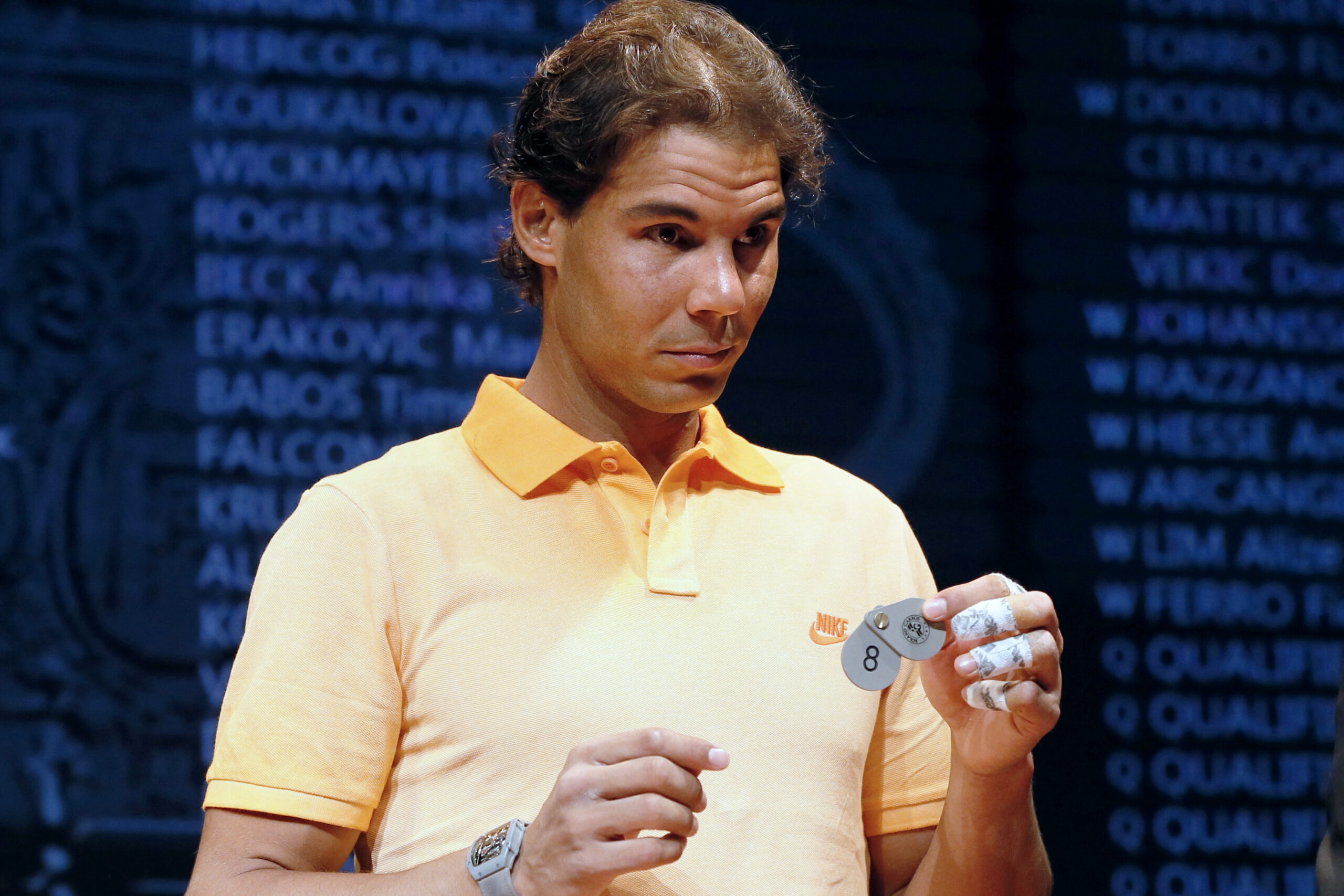
Every Roland Garros tournament begins not on Court Philippe-Chatrier but in a draw ceremony held several days before the first ball is struck. In the space of an hour, 128 men and 128 women are assigned their positions in a bracket that determines who plays whom, when, and under what competitive conditions.
The draw does not determine who will win Roland Garros. But it shapes every player’s path to the title, creates the projected quarterfinal and semifinal matchups that analysts discuss for weeks, and produces the first competitive narratives of the tournament before competition begins.
Understanding exactly how the Roland Garros draw works — how players get into the draw, how seeds are placed, what the draw ceremony involves, and how the bracket structure determines projected paths — transforms the draw announcement from a scheduling document into the first chapter of the tournament’s competitive story.
The Roland Garros Draw Size
The Roland Garros main draw contains 128 players in both the men’s and women’s singles competitions — the same draw size used at all four Grand Slams and the largest competitive field in professional tennis at any single event.
With 128 players and seven rounds of competition, the draw’s structural mathematics are straightforward. Round one eliminates 64 players. Round two eliminates 32 more. The third round eliminates 16. The fourth round — the round of 16 — eliminates 8. The quarterfinals eliminate 4. The semifinals eliminate 2. The final determines the champion from the two remaining players.
This seven-round structure means that winning Roland Garros requires seven consecutive victories over a fortnight of competition — each match played on the red clay surface, each victory accumulating the physical and psychological wear that the tournament’s specific demands produce. No player can win Roland Garros without winning every match — a single loss ends the tournament regardless of how many matches have been won previously.
How Players Enter the Roland Garros Main Draw
The 128 spots in the Roland Garros main draw are filled through four distinct entry mechanisms — each reflecting a different pathway into the tournament.
Direct Acceptances
The majority of Roland Garros main draw spots — approximately 104 to 108 depending on the specific year’s allocation — are filled through direct acceptance. Players ranked inside the direct acceptance cutoff at the entry deadline receive automatic main draw entry based on their ATP or WTA ranking.
The entry deadline for Roland Garros falls approximately five weeks before the tournament begins — set by the French Tennis Federation in accordance with Grand Slam and tour regulations. Players who are ranked inside the cutoff at that deadline receive direct acceptance regardless of their subsequent results or ranking movements.
The specific direct acceptance cutoff varies year to year — typically falling somewhere between approximately 90th and 110th in the world depending on how many wild cards and protected ranking entries have been awarded and how many higher-ranked players have withdrawn. A player ranked 95th in the world at the entry deadline can generally expect direct acceptance into the Roland Garros main draw.
Wild Cards
Roland Garros is allocated eight wild cards for the singles main draw — split between the men’s and women’s competitions. The French Tennis Federation controls the wild card allocation and distributes them at its discretion, subject to ATP and WTA regulations governing minimum requirements for wild card distribution.
Wild cards at Roland Garros are typically distributed across three categories. The French Tennis Federation awards wild cards to French players who would not otherwise receive direct acceptance — reflecting the tournament’s obligation to support domestic development and the commercial value of French players competing at the national Grand Slam.
The Grand Slam organization also awards wild cards to returning champions or prominent players whose current ranking does not reflect their established level, and to promising young players whose competitive development the tournament wishes to support.
The specific wild card recipients are announced in the weeks before the tournament — generating their own wave of media analysis and occasionally controversy when selections appear to reflect commercial or political considerations rather than purely competitive merit.
Qualifiers
Sixteen qualifying spots in the Roland Garros main draw are earned through the qualifying competition held in the three days before the main draw begins. The qualifying draw contains 128 players competing across three rounds for the sixteen main draw spots — a competitive field drawn primarily from players ranked approximately 100th to 250th in the world.
Qualifying at Roland Garros is among the most competitive qualifying competitions in professional tennis — the combination of the Grand Slam’s prestige, the points available, and the specific clay court demands that make qualifying performance a genuine test of surface-specific quality.
Players who win three qualifying matches have demonstrated the competitive level required to belong in the main draw and arrive in the main draw in match rhythm from their qualifying competition.
Protected Rankings
Players returning from injury who hold a protected ranking can use that ranking for entry into the Roland Garros main draw if their current ranking falls outside the direct acceptance cutoff. Protected ranking entries receive a main draw spot but are not seeded — they compete as unseeded players regardless of the ranking they are using for entry purposes.
How Roland Garros Seedings Work
The seeding structure at Roland Garros follows the standard Grand Slam format — 32 seeds placed into protected positions in the 128-player draw to prevent the highest-ranked players from meeting each other too early.
Seeds are determined by the ATP or WTA ranking at a specific cutoff date set by the French Tennis Federation — typically approximately two weeks before the tournament begins. The player ranked first in the world at the cutoff becomes the first seed, the player ranked second becomes the second seed, and so on through the 32 seeded positions.
The practical effect of seeding is to divide the draw into protected zones that guarantee specific competitive outcomes cannot occur before specific rounds. The first and second seeds are placed in opposite halves of the draw — guaranteeing they cannot meet before the final.
The third and fourth seeds are placed in the two quarters not occupied by the first and second seeds — guaranteeing they cannot meet the top two before the semifinals. Seeds five through eight are distributed across the four quarters — guaranteeing they cannot meet the top four before the quarterfinals.
This protection structure creates the concept of a player’s quarter of the draw — the specific section of the bracket they occupy, which determines which seeds they could potentially face at each stage.
A player drawn into the same quarter as the first seed faces the possibility of a quarterfinal against the world number one if both players win their first four matches. A player in the opposite quarter from the first seed cannot face them until the final.
Wimbledon Comparison
Roland Garros uses a pure ranking-based seeding system — the ATP and WTA ranking at the cutoff date determines seed order without surface-specific adjustment. This contrasts with Wimbledon, which has historically applied a grass court performance modifier to its seedings.
Roland Garros’s pure ranking approach means that clay court specialists are not seeded higher than their overall ranking suggests — a player ranked 15th in the world is the 15th seed at Roland Garros regardless of their clay court record.
The Draw Ceremony
The Roland Garros draw ceremony — held three to four days before the first round begins — is a formal event that assigns all 128 players their specific bracket positions. The ceremony is broadcast on the Roland Garros official platforms and covered extensively by tennis media as the first major event of the tournament fortnight.
The process works in stages that reflect the seeding protection structure described above.
Seeds one and two are assigned to the top and bottom halves of the draw — not drawn randomly but fixed by convention. Seed one goes to the top half, seed two to the bottom half. Their specific quarter and section within those halves may be determined by draw or fixed by convention depending on the specific year’s procedures.
Seeds three and four are drawn to determine which of the two remaining quarters each occupies — one in the top half, one in the bottom half, in the quarters not occupied by seeds one and two. The draw between seeds three and four determines which specific quarter each player occupies and therefore which seed they would potentially face in the semifinal.
Seeds five through eight are drawn into the four eighths of the draw not occupied by seeds one through four — ensuring they cannot meet the top four until the quarterfinals. Seeds nine through 16 are drawn into the remaining sections. Seeds 17 through 32 are distributed across the draw in protected positions that prevent them from meeting the top 16 until the third round.
The unseeded players — direct acceptances, qualifiers, and wild cards who are not among the 32 seeds — are drawn into the remaining positions after all seeds have been placed. An unseeded player can be drawn against any seeded player in the first round, including the first or second seed, depending purely on where their name falls in the draw.
Reading the Roland Garros Draw
Once the draw is announced, the competitive analysis that follows focuses on several specific elements that determine how each player’s tournament is likely to unfold.
Quarter of the Draw
The quarter of the draw a player occupies determines which seeded player they could potentially face in the quarterfinals if all favorites advance. A player drawn into the first seed’s quarter faces a projected quarterfinal against the world number one — a significantly harder projected path than a player drawn into a quarter with a lower seed. The analysis of which players have received favorable or unfavorable quarters is typically the first and most significant discussion following the draw announcement.
Projected Semifinal Matchups
The draw’s seeding structure creates projected semifinal matchups based on which seeds occupy which halves of the draw. If seeds one and three are in opposite halves from seeds two and four, the projected semifinals would be one versus three and two versus four — producing specific matchup narratives that analysts discuss from the moment the draw is announced.
These projections are frequently disrupted by upsets and early-round surprises — particularly at Roland Garros, where clay court specialists can defeat higher-ranked all-court players in ways that faster surfaces would not allow.
The specific vulnerability of certain playing styles on clay means that Roland Garros draw projections are less reliable than at hard court Grand Slams where ranking differences translate more directly into match outcomes.
The Lucky Loser Positions
After the main draw is announced but before play begins, withdrawals can create vacancies that are filled by lucky losers — players who lost in the final qualifying round and inherit the withdrawing player’s draw position. Lucky loser entries at Roland Garros are identified in the draw sheet and inherit both the position and the projected path of the player they replace.
How Clay Court Specialization Affects Draw Analysis
One of the specific features of Roland Garros draw analysis that distinguishes it from the other Grand Slams is the degree to which clay court specialization affects the competitive assessment of the draw.
At hard court Grand Slams — the Australian Open and US Open — the ATP and WTA rankings are generally a reliable guide to likely competitive outcomes. The surface is fast enough and neutral enough that ranking differences translate reasonably directly into match results across most of the draw.
At Roland Garros, the clay surface’s specific properties create meaningful gaps between a player’s overall ranking and their clay court competitiveness. A player ranked 30th in the world whose game is built around hard court pace and flat groundstrokes may be less competitive on clay than their ranking suggests.
A player ranked 50th in the world whose heavy topspin and physical endurance are optimized for clay may be more competitive at Roland Garros than their ranking suggests.
This clay court adjustment is what makes Roland Garros draw analysis a specific exercise rather than a simple ranking-order exercise. Experienced analysts assess each player’s clay court record, their specific game characteristics on the surface, and the specific matchups their section of the draw presents — producing draw assessments that frequently identify dangerous lower-ranked clay court specialists whose positions in the bracket present specific threats to higher-seeded players whose games are better suited to other surfaces.
The Draw as the Tournament’s First Chapter
The Roland Garros draw ceremony produces the tournament’s first competitive narrative — the projected paths, the potential matchups, the favorable and unfavorable sections that will define how each player’s French Open fortnight is likely to unfold. Understanding how that draw is constructed — how seeds are placed, how unseed players are distributed, how clay court specialization affects the competitive assessment of what the bracket contains — is what transforms the draw announcement from a scheduling exercise into the genuinely revealing competitive document it actually is.
Every Roland Garros champion has navigated seven rounds of a specific bracket whose structure was determined in that ceremony. Their path to the title — the opponents they faced, the specific challenges their section of the draw presented, the projected matchups that materialized or were disrupted by upsets — is inseparable from the draw that created it. Reading the draw is reading the first chapter of the story that the subsequent fortnight will complete.
Part of the Roland Garros series. Related: Roland Garros Records — Titles, Matches, and Statistics · How to Watch Roland Garros — Broadcast, Schedule, and Streaming Guide · Why Roland Garros Is the Hardest Grand Slam to Win