Home Blog Page 7

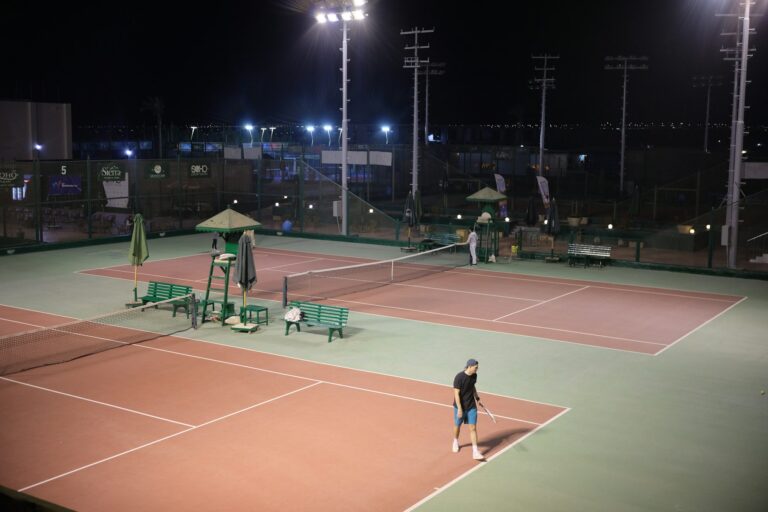
Tennis Order of Play Explained — The Supervisor Has the Final Say and No Match Should Start After 11 p.m.

0

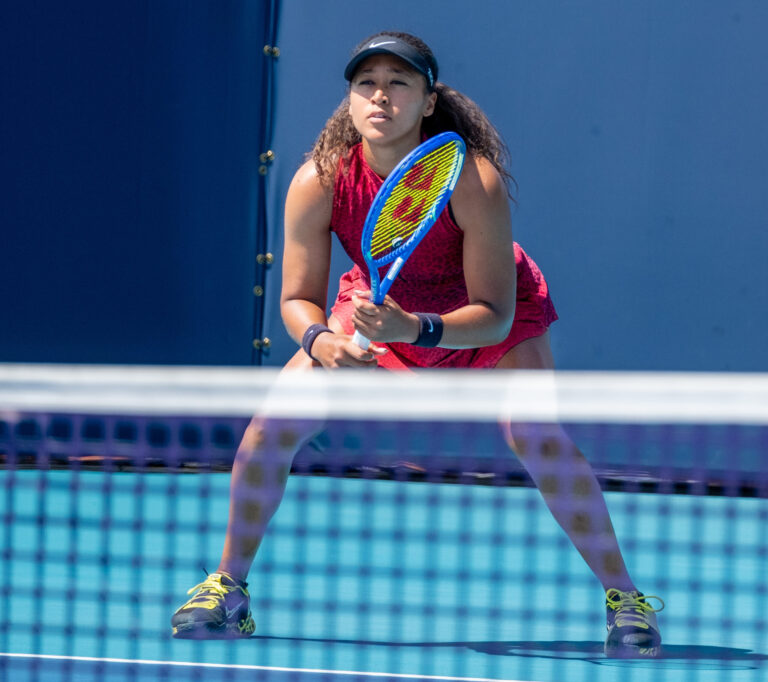
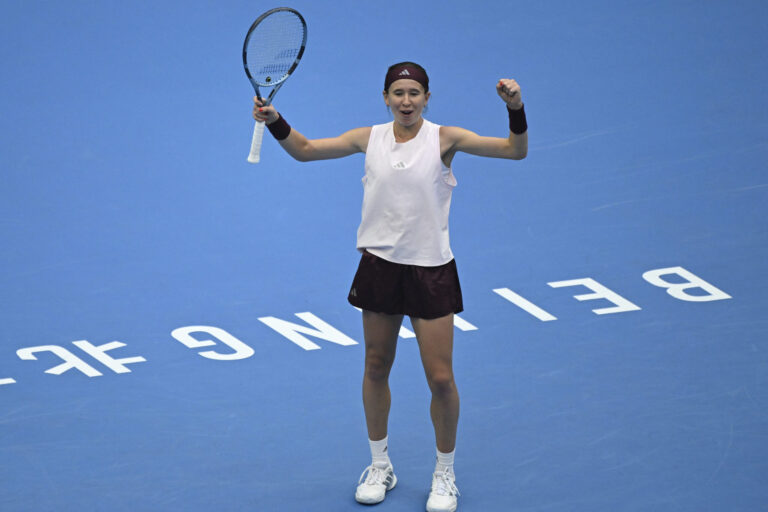
Karolina Muchova needed nine match points and two hours and 52 minutes to beat Naomi Osaka 7-5, 1-6, 7-6 (7) in a late-night fourth-round match at the China Open this week. When a match like that starts, and on which court, was decided the day before, by a small group of people working to a written set of rules.

Here is who builds a tournament’s daily order of play, what its wording means, and the tour rule that is meant to stop matches starting near midnight.

Who writes the order of play

At ATP events, scheduling runs through a scheduling committee. The ATP Supervisor chairs it and makes the final decision on any scheduling matter the committee cannot agree on. The Supervisor is also responsible for making sure the daily order of play is posted on the official bulletin board and at the official hotel. The ATP Tour Manager sits on the committee as the players’ representative, and the tournament Referee is available to serve on it and assists the Supervisor.

The groundwork is laid months earlier. Each ATP tournament must send the ATP a match schedule plan, including proposed daily starting times and the number of courts it will use, at least 180 days before the event starts, and the plan needs the ATP’s written approval. WTA events work under the WTA’s own rules with WTA supervisors on site; the Beijing draw sheets this fortnight list four of them. More on the people who run a match is in our tennis officials explainer.

How to read one

An order of play lists each court with its first match under a fixed time, such as “Starting at 11:00 AM” on the China Open sheets, and every match after it as “Followed by”. A “followed by” match has no clock time: it begins when the match before it ends, which is why the third match on a court can start in mid-afternoon one day and after dark the next.

A “not before” time sets the earliest a match may start. At the United Cup, for example, organisers may assign “not before” times in consultation with the ATP Supervisor. The Supervisor also designates the tournament’s official clock and decides where and when matches are called.

When a match moves

The order of play is not fixed once printed. Under ATP rules, the Supervisor decides whether a court is fit for play and may move a match to another court, indoors or outdoors and regardless of surface, if that is needed to stop a player having to play two singles matches in one day or to finish the event. The Supervisor can also suspend or postpone play when weather or other conditions threaten safety. Rain has its own procedures, covered in our rain delay explainer.

The 11 p.m. rule

In January 2024 the ATP and WTA announced joint scheduling rules for their events, saying the number of matches finishing after midnight had risen considerably and was tied to an increase in average match length. The rules were:

  • No more than five matches per court per day, with an 11 a.m. start: three in the day session and two in the evening session.
  • No match to go on court after 11 p.m. unless approved by the ATP or WTA Supervisor in consultation with tour management.
  • A match not on court by 10:30 p.m. is moved to another court, no later than 11 p.m.
  • Night sessions to begin no later than 7:30 p.m., with 6:30 p.m. recommended.

Tournaments may ask for waivers based on local cultural traditions, weather or other extenuating circumstances. The rules were introduced as a one-year trial in 2024, with further review to follow.

The concern about midnight finishes had a recent precedent. At the 2023 Australian Open, Andy Murray’s match against Thanasi Kokkinakis ended at 4:05 a.m.

The Grand Slams set their own

The tour rules apply to ATP and WTA events, not to the four majors, which have their own scheduling rules. The Australian Open took a different route, moving to a Sunday start and a 15-day event from 2024 to spread out the early rounds. The Slams’ evening programmes are covered in our Australian Open night sessions and US Open night sessions explainers.

What no schedule controls

An order of play can cap the number of matches on a court and stop a late start; it cannot shorten a match. A two-hour-52-minute fourth round still pushes everything after it back, and a “followed by” match waits for it. The time between points is a separate rulebook question, covered in our shot clock explainer.

ATP Finals Alternates Explained — How a Withdrawal Opens Turin to the Next Man on the List

0

When Jannik Sinner ended his 2026 season on October 6 with a knee injury, he ruled himself out of the ATP Finals in Turin, the event he had won in each of the previous two years, Reuters and AFP reported. At the time he was second in the ATP’s Live Race To Turin, 800 points behind Alexander Zverev, according to the ATP Tour.

His absence does not leave a hole in the eight-man field. The ATP Rulebook decides who fills it, and the same rules guarantee a spare player on site in case anyone else drops out once the tournament has started. Here is how it works.

How the selection list is built

Qualification for Turin is not decided by a single cut-off number. The rulebook builds an ordered selection list on the Monday after the last ATP Tour tournament of the calendar year: first the top seven players in the ATP Rankings, then up to two Grand Slam champions of that year who are ranked between eighth and 20th, then everyone else from eighth place down.

The top eight names on that list are the direct acceptances. Participation is mandatory for them, and all must be at the site for the official pre-tournament media conference and available through the end of the round robin and the knockout rounds if they advance. During the season the ATP tracks the running count as the Race To Turin; how those points are counted is a separate question from what happens once the list is drawn up. [UNVERIFIED: rule text taken from the ATP’s 2023 Rulebook, chapter 4 (October 2023 edition); the 2026 edition was not checked for changes]

Withdrawal before the tournament

A player who withdraws before the official pre-tournament media conference starts is replaced by the next highest player on the selection list, and that player becomes a direct acceptance in his own right. In practice, a qualifier who is out before the event begins moves the ninth player into the field rather than calling up an alternate.

The alternate

Once the field is set, the next highest player on the list who is not a direct acceptance at the time of the media conference is designated as the alternate. He must attend the media conference and stay available until the start of the last scheduled round-robin match. If a player withdraws after that point, the alternate takes his place. The ATP may also select additional alternates from the list, on terms it agrees with them, and those extra alternates are not obliged to take part.

What an alternate can earn

The rulebook sets out three cases. An alternate who never plays is paid a fee. An alternate inserted for a player’s second or third round-robin match receives that fee plus any prize money and ranking points he wins. An alternate who replaces a player before that player’s first round-robin match becomes a direct acceptance and does not receive the alternate fee. The rulebook does not state the size of the fee.

An alternate is also eligible for the semifinals and final, with the points and prize money that come with them, if he qualifies from the group. That is harder than it sounds. The first tiebreaker in a group is the number of wins, and the second is the number of matches played, so a 2-1 record beats 2-0. An alternate who comes in for the last two group matches and wins both can still be edged out by a player who went 2-1.

Withdrawing during the round robin

A player who withdraws from any round-robin match after the first round is not eligible for the knockout stage. For the group tiebreakers, a retirement or conduct default counts as a straight-set result, but the games from that match are left out of the games-won percentage. A player who retires through illness or injury may continue in the event if the tournament doctor approves.

Not turning up

A direct acceptance or designated alternate who fails or refuses to play, without a bona fide injury or other good cause, is not in good standing with the ATP. Failing to appear at the site and the pre-tournament media conference carries a penalty of five per cent of the player’s total ATP prize money for the year.

The Grand Slam champion clause

The second step of the selection list exists for one scenario: a major champion who has slipped out of the top seven but is still inside the Top 20. In 2026 the majors went to Carlos Alcaraz at the Australian Open, Zverev at Roland Garros and the US Open, and Sinner at Wimbledon, according to AP and Reuters. The clause only changes the field if one of them finishes between eighth and 20th; a champion who is in the top seven takes his place through the first step, and a champion who withdraws is replaced like anyone else. The last ATP Masters 1000 of the year, the Rolex Paris Masters, runs from November 2 to 8.

On the women’s side

The WTA Finals, held at Indian Wells this year, also carries alternates under the WTA’s own rules. Ekaterina Alexandrova played a round-robin match at the 2025 WTA Finals as an alternate and lost to Elena Rybakina, the eventual champion, according to WTA match notes. The women’s qualification rules are covered in our WTA Finals qualification explainer, and both season finales in the ATP Finals and WTA Finals guide.

Bartunkova Took the Last Seven Games From Muchova and Now Plays Andreeva for a Place in the Beijing Final

0

Nikola Bartunkova was 5-0 up on Karolina Muchova before the seventh seed had a game on the board, and when Muchova finally clawed three back, the 20-year-old Czech simply started again. Bartunkova won 6-3, 6-0 on Thursday to reach her first WTA 1000 semifinal at the China Open, taking the last seven games and closing it when Muchova sent a ball long.

The opening burst took 19 minutes, and the second set followed the same script: another five-game lead, no way back for Muchova, who had needed nine match points to get past Naomi Osaka two days earlier. “Honestly I don’t know. It was (an) unbelievable match,” Bartunkova said on court. “She’s a great player and also a great human being.” She called the win a dream come true.

The run. It is the third win over a Top 10 player of Bartunkova’s career, and all three have come this year: No. 10 Belinda Bencic at the Australian Open, No. 2 Aryna Sabalenka 6-4, 6-3 in the third round here and now Muchova. On the way she also beat Magdalena Frech 6-2, 6-2 and Sinja Kraus 6-0, 4-6, 6-3. This is only her fourth WTA 1000 main draw.

Her previous best at the level was the fourth round in Rome in May, as a lucky loser. She began 2026 in qualifying at the Australian Open, and this time last year she was ranked No. 144; she arrived in Beijing at a career-high No. 34.

The semifinal. Saturday’s opponent is Mirra Andreeva, who finally got past Ekaterina Alexandrova at the third attempt, 7-6 (4), 7-6 (3). The Roland Garros champion dropped just three points in racing to a two-game lead and still needed a tiebreak to close the first set. Alexandrova had beaten her in straight sets on clay in Stuttgart in 2025 and on grass in Bad Homburg in June. “She played unbelievable today, and I’m very happy to get my very first win against her,” Andreeva said.

At 19, Andreeva is the youngest Beijing semifinalist since Agnes Szavay in 2007. It is her fourth WTA 1000 semifinal. She has won three titles this year, including Roland Garros, and is chasing a fourth.

The other half. Zheng Qinwen, a wild card ranked No. 54, beat sixth seed Elina Svitolina 6-3, 7-6 (6) on Friday for her first straight-sets win of the week. She double-faulted on the first point and trailed 0-2 before winning the opener, and fell on her back after converting her second match point in the tiebreak.

“Truthfully, because I really wanted to grab this win, I was really nervous,” Zheng told the crowd. “I played really aggressive in important moments.” It is her second Beijing semifinal after 2024, and comes 15 months after elbow surgery in July 2025, after which she played only one more event that season.

Zheng will play the winner of Friday night’s last quarterfinal, between 2023 champion Iga Swiatek and Elise Mertens. Swiatek leads that head-to-head 2-0 without dropping a set; Mertens arrived having beaten Coco Gauff for the first time in six meetings.

What it means. None of the top three seeds reached the last eight in Beijing — Elena Rybakina and Sabalenka went out in the first week and Gauff fell to Mertens — and the quarterfinals took two more contenders for the season finale with them. In mid-September, Svitolina and Muchova held the last two qualifying places in the Race to the WTA Finals, with Marta Kostyuk and Swiatek chasing. Both lost in the quarterfinals here; Swiatek is still playing. The WTA Finals is at Indian Wells this year. The Beijing final is Sunday, and the last WTA 1000 of the year, the Wuhan Open, starts the next day. How the Finals field is chosen is set out in our WTA Finals qualification explainer.

WTA 125 Explained — The Tier Below the Tour, Its Points and Who Is Allowed to Play

0

While the leading women play the Wuhan Open in the week of 12 October, three other WTA events are being played that week in Lisbon, Mallorca and Rovereto. They are WTA 125 tournaments, the level that sits between the ITF World Tennis Tour and the WTA’s tour-level events, the WTA 250, 500 and WTA 1000. This explainer covers what a 125 is worth, how players get in, and which players are kept out, using the WTA’s rankings guide and its 2026 Official Rulebook.

What a WTA 125 is worth

The champion of a WTA 125 earns 125 ranking points in singles and 125 in doubles, according to the WTA. That places the level just above the ITF’s top tier, the W100, whose champion earns 100 points, and half a WTA 250, whose champion earns 250. Points fall away round by round below that.

How much a 125 result can help depends on where it lands in a player’s ranking. Up to 18 tournaments count in a WTA singles ranking: the four Grand Slams, a player’s best six results at combined WTA 1000s, her best result at a non-combined WTA 1000, and her next best seven results from WTA 1000, 500, 250, 125 and ITF events, the WTA says. A 125 result competes for one of those last seven places. GTN’s WTA rankings explainer covers the rest of the system.

How players get in

The entry bar is low. A player needs a WTA singles ranking of 500 or better to enter a WTA 1000 or 500, and 750 or better for a WTA 250, but any WTA singles ranking at the entry deadline is enough to enter a WTA 125, according to the rulebook. Doubles works the same way: any WTA singles or doubles ranking will do.

Every WTA 125 has four regular singles wild cards and one doubles wild card. Qualifying draws of eight or 16 players get two wild cards, and draws of 24 or 32 get four. A player may receive up to three singles wild cards into WTA 125 events in a calendar year, and those are counted separately from her wild cards at tour level. A player ranked in the top 10 at the wild card deadline may not accept one.

Who is kept out

The rules on who may not play a 125 are what separate it from the tour. A player ranked in the top 10 at a 125’s entry deadline may not enter it, accept a wild card into it or compete in it, in singles or doubles. Below that, the restrictions depend on what else is on the calendar that week.

  • The same week as a WTA 1000. Any player who qualifies for main draw acceptance at the 1000 may not play the 125.
  • The second week of a WTA 1000 or a Grand Slam. Players ranked 21 and below may enter. Players ranked 11 to 20 may not enter, but up to two of them may play on wild cards. A player who was in the big event must also have lost in every draw she played there by the 125’s qualifying sign-in deadline.
  • The same week as a WTA 500 or 250. Players ranked 1 to 75 who qualify for main draw acceptance at that 500 or 250 may not play the 125.
  • A week with no tour-level event, or the off-season. Players ranked 1 to 50 at the entry deadline may not enter. Up to four players ranked 21 to 50 may play on WTA-approved wild cards. For these weeks, the 125 gets two extra wild card places, called WTA 125 Exemption Wild Cards, reserved for players in that ranking band.
  • The week of the WTA Finals. Players who qualify for the Finals, including the two confirmed alternates, may not play a 125 that week even if they withdraw from the Finals.

Who plays them

The level has grown quickly. The WTA said in 2025 that more than 50 WTA 125 tournaments were scheduled that year, more than double the number of just over three years earlier, with 24 events in the 2022 season. The 2025 events were spread across more than 20 countries on five continents and all three surfaces, some of them combined with ATP events, and carried more than $6 million in prize money, a record for the level, according to the WTA.

“The growth of the WTA 125 Circuit exemplifies the massive appeal and interest we are seeing in women’s tennis,” Portia Archer, the WTA’s chief executive, said in that 2025 announcement.

The fields mix players climbing from the ITF circuit with established players looking for matches. Naomi Osaka won her first clay-court title at the Saint-Malo 125 in 2025, according to the WTA. At the other end, 16-year-old Sun Xinran, the junior world No. 1 and US Open girls’ champion, had already played ITF and WTA 125 events before her tour-level debut as a wild card at the China Open last week, the WTA reported.

Some tournaments have used the level as a starting point. Rouen was a WTA 125 in 2022 and 2023 before it became a WTA 250 in 2024, and Guadalajara was a 125 event in 2019 before it went on to stage 250, 500 and 1000 tournaments and the 2021 WTA Finals, according to the WTA.

Season Snapshot: autumn 2026

Updated 8 October 2026. The WTA’s 2026 WTA 125 calendar, dated 25 September, lists these events for the rest of the year. Week of 12 October: Lisbon (clay), Mallorca (clay) and Rovereto (indoor hard). Week of 26 October: Courmayeur (indoor hard), Curitiba (clay) and Queretaro (clay). Week of 2 November: Cali (clay) and Luanda (hard). Week of 9 November: Sopo (clay). Week of 16 November: Colina (clay). Week of 23 November: Buenos Aires (clay). Week of 30 November: Angers (indoor hard) and Quito (clay). Week of 14 December: Limoges (indoor hard). Dates can change; the WTA calendar is the reference. This snapshot is dated and will change. The rules above do not, until the WTA amends them.

WTA Play Down Exemptions Explained — Why a Top 30 Player Usually Cannot Drop to a 250

0

Twice in the last fortnight of the WTA’s regular season, a WTA 500 and a WTA 250 are played in the same week. Ningbo and Osaka share the week of 19 October, and Tokyo and Guangzhou share the week of 26 October, according to the WTA. A leading player cannot simply choose the smaller event. The WTA’s Play Up Rule decides where she plays, and a short list of exemptions decides who is allowed around it. This explainer sets out how the rule works, using the WTA’s 2026 Official Rulebook.

The Play Up Rule

In any week with both a WTA 500 and a WTA 250, a player ranked 1 to 30 at the 500’s singles main draw entry deadline may not play the 250, in singles or doubles, if her ranking is good enough to get her into the 500’s main draw. The rulebook calls her a Top 30 Player. The only way around it is a WTA 250 Play Down Exemption, and a Top 30 Player can receive two of those in a Tour Year.

The ranking that counts is the one at the entry deadline, not the one in the week of the event. For WTA 1000, 500 and 250 tournaments, the main draw entry deadline falls four weeks before the Monday of the tournament week, unless the WTA sets another date. A player who has climbed into the top 30 since then is not caught by the rule for that event, and one who has dropped out of it since then still is. How deadlines and acceptance lists work in general is covered in GTN’s guide to tennis entry lists.

Who can get an exemption

The rulebook names three kinds of Exemption Player.

  • The defending champion. The previous year’s singles champion qualifies, provided the tournament is held within 125 miles of the venue it used the year before and in the same host country. A tournament that moves city or country loses this route.
  • The local player. A player whose nationality, as the WTA records it, is the country where the tournament is held.
  • The 11-30 player. A player ranked 11 to 30 at the main draw entry deadline.

A tournament may take one Exemption Player from each category. If the defending champion or a local player does not enter, or does not need an exemption to play, the tournament can take a second 11-30 player in that place. The ceiling is three Exemption Players in all. Inside that total, a 250 played in a 500 week may accept only one player ranked 1 to 10 at its entry deadline, counting the defending champion and the local player. If both of those are top-10 players, the tournament chooses one of them.

How a tournament locks them in

The tournament, not the player, makes the first move. By 2 p.m. Eastern time on the day of its main draw entry deadline, it must send the WTA an Exemption Player Nomination Form. That form lists its Confirmed Exemption Players, each of whom must then return an acceptance form, and any Alternate Exemption Players it wants next in line. A top-30 player who enters the 250 but is not nominated is not a Confirmed Exemption Player and is not accepted at the deadline.

The rulebook also covers what happens when plans change. If a Confirmed Exemption Player withdraws after the entry deadline but before qualifying sign-in, the first alternate from the same category takes her place. If there is no alternate in that category, the tournament has until the qualifying sign-in deadline to find an eligible replacement of its choice; if it cannot, the next player on the main draw list moves in. A tournament with no Confirmed Exemption Player at the deadline can still bring one in later through a wild card.

The yearly limits

Two caps apply on top of the two Play Down Exemptions a top-30 player may use in a Tour Year. A top-10 player may play three WTA 250 tournaments in a Tour Year only if she played all her WTA 500 commitment tournaments the year before; if she did not, her limit is two. And an Exemption Player or top-10 player who withdraws from a 250 after being confirmed, after the entry deadline or after accepting a wild card still uses up one of her permitted 250s, unless the withdrawal is for a Long-Term Injury.

Weeks with no bigger event

The rule changes when a 250 has the week to itself, with no WTA 1000 or WTA 500 alongside it. Players ranked 11 and below may then play it freely, and the tournament may accept one top-10 player. It nominates that player through a Top 10 Player Nomination Form by the same 2 p.m. deadline. If it nominates no one, the highest-ranked top-10 player who entered is accepted.

How it fits with the 500 commitment

The Play Up Rule sits beside the WTA 500 commitment rules. A player accepted, or who would have been accepted, as a direct entry into six or more WTA 500 main draws at the entry deadline must play six of them, and a player who misses a commitment tournament takes a zero-point result on her ranking, according to the rulebook. Two provisions soften the pairing of 500 and 250 weeks. A 500 that loses a top-30 direct entrant after the deadline, with no other top-30 player next in, may name a replacement top-30 player of its choice until qualifying sign-in. And a player ranked 31 to 50 who would not have made the 500 main draw can play the 250 in the same week and have it count towards her 500 commitment, up to twice in a Tour Year. The WTA’s planned changes for next season, including fewer required 500s, are covered in GTN’s explainer on the WTA’s 2027 changes.

Season Snapshot: October 2026

Updated 8 October 2026. Two 500-and-250 weeks remain in the 2026 season, according to the WTA. The Ningbo Open (WTA 500) and the Japan Women’s Open in Osaka (WTA 250) run from 19 to 25 October. The Pan Pacific Open in Tokyo (WTA 500) and the Guangzhou Open (WTA 250) run from 26 October to 1 November. The 2025 champions were Leylah Fernandez in Osaka and Ann Li in Guangzhou, according to the WTA. The rules above are from the WTA Official Rulebook dated 27 July 2026. This snapshot is dated and will change. The rule above does not, until the WTA amends it.

Wuhan Has Lost Its Defending Champion and the World No. 1 Before a Ball Is Hit

0

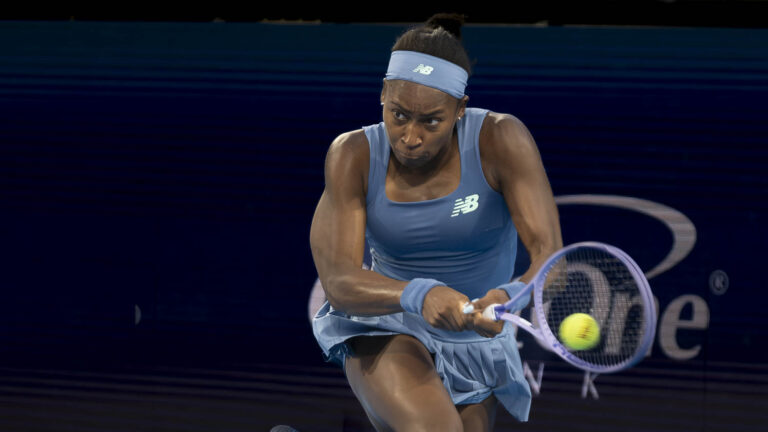
Coco Gauff walked off in Beijing yesterday admitting she had been “just a bit flat,” according to the WTA. A few hours later she was out of the Wuhan Open as well, the tournament where she is the defending champion and where, the WTA noted, she won the title last year without dropping a set.

“I’m disappointed to withdraw from Wuhan, especially as the defending champion,” Gauff said in a statement the tournament posted to its Instagram story, according to the WTA. “I always love playing there. After a long year, my body needs some time to rest and recover. I look forward to returning next year.”

Her last match of the Asian swing was a 6-3, 6-3 fourth-round defeat by Elise Mertens in which she hit 34 unforced errors, eight of them double faults, as GTN reported on Wednesday. “I think I just didn’t play well,” Gauff told reporters afterwards, according to the WTA. “I think I wasn’t moving well. There were a lot of things I didn’t do well.”

Naomi Osaka will miss Wuhan too, the tournament announced. She also went out in the Beijing round of 16, beaten 5-7, 6-1, 7-6(7) by Karolina Muchova in 2 hours and 52 minutes after leading by a break in both the first and third sets. Muchova won on her ninth match point, the WTA said. Zheng Qinwen, the home favorite who is still in the field in Beijing, takes Osaka’s place in the Wuhan draw, according to the tournament.

The field. Gauff and Osaka are not the only absentees. World No. 1 Elena Rybakina and Amanda Anisimova will also miss Wuhan, the WTA said. Anisimova has shut down her season to recover from a wrist injury, according to the WTA, after the problem that first kept her out of Singapore. That leaves Aryna Sabalenka projected as the top seed at the last WTA 1000 of the season, according to the WTA.

The race. Gauff’s withdrawal costs her the last 1000-level points on offer before the WTA Finals at Indian Wells, which the WTA calendar places in the week of 9 November. She sat fifth in the PIF WTA Race to the Finals on 5,654 points in the standings the WTA published on Wednesday, after Mirra Andreeva moved past her into fourth on 5,722.

Jessica Pegula was third on 5,825. Rybakina, on 7,492, and Sabalenka, on 6,485, were the only two singles players marked as qualified. Behind Gauff were Elina Svitolina on 4,809, Muchova on 4,400 and Linda Noskova on 4,234. How the eight places are decided is set out in GTN’s WTA Finals qualification explainer.

Gauff was not among the top-10 players the WTA listed in the field for the Pan Pacific Open in Tokyo, the last WTA 500 of the year, in its preview of that event last week.

The rule. Under the WTA’s 2026 rulebook, a player accepted into the main draw of a WTA 1000 must play it and a player receives a zero-point result for each commitment tournament she does not play, which must count on her singles ranking. The exemptions are covered in GTN’s guide to WTA mandatory events.

What comes next. The China Open finishes on Sunday 11 October. Wuhan’s first round starts on Monday 12 October, and both the singles and doubles finals are on Sunday 18 October, according to the WTA. The main draw has 56 players. GTN’s Wuhan Open guide covers the format, prize money and past champions.

Next Gen ATP Finals Explained — Who Qualifies, the Four-Game Sets and Reggio Calabria

0

The Next Gen ATP Finals is the season-ending event for the best young men on the ATP Tour: eight players, all aged 20 or under, playing round-robin groups and knockout rounds under scoring rules found nowhere else on the tour. The 2026 edition will be played at the PalaCalafiore in Reggio Calabria, Italy, from 9 to 13 December, with prize money of $2 million.

The move was announced on 9 September in New York by Angelo Binaghi, president of the Italian Tennis and Padel Federation, the ATP’s chief tour officer Andre Silva and Roberto Occhiuto, governor of the Calabria region. “The Next Gen ATP Finals have proven to be a powerful platform in shaping the future of men’s professional tennis,” Silva said.

Who Can Play

The event is for singles players aged 20 and under. The limit was 21 and under until 2024, when the ATP lowered it by a year. Eligibility runs by year of birth: in 2024, a player had to be born in 2004 or later.

How Players Qualify

Qualification runs through a separate points race, the PIF ATP Live Next Gen Race, which this year is billed as the Race To Reggio Calabria. It counts the season’s results for eligible players only. The field is the top eight singles players aged 20 and under, and in 2025 the top eight in the race qualified, with a race cut-off of 10 November. The 2026 cut-off date has not been published.

It has not always been eight straight from the race. In 2019 the field was the best seven qualifiers plus one wild card, and the wild card went to an 18-year-old Italian, Jannik Sinner, who won the title. The senior equivalent works on similar race lines; GTN’s Race to Turin explainer covers how the Nitto ATP Finals field is decided.

The Format

The eight players are split into two groups of four, and each plays the other three in his group. The top two in each group reach the semifinals, where the winner of one group plays the runner-up of the other. Group ties are broken by number of wins, then head-to-head, then percentages of sets and games won, then the PIF ATP Rankings.

The Scoring Rules

The scoring is what makes the event different. Under the rules for the 2025 edition, every match is best of five sets, and each set is first to four games with a two-game margin, with a tie-break to seven points at 3-3. Every game uses no-ad scoring. The 2026 rules have not yet been published.

The clock runs tighter too. Under the 2025 rules, the warm-up is three minutes, players have up to eight seconds between first and second serve, and the time between points is 15 seconds when the previous point lasted fewer than three shots and 25 seconds otherwise. There is no change of ends after the first game; players sit for 90 seconds after the third game and again at 3-2, change ends every six points in a tie-break, and get 90 seconds between sets instead of the usual 120. Fans may move around the stands during the first three games of a set.

A Testing Ground

The event has been used to try ideas before the rest of the tour adopts them. Live electronic line calling, video review and the integration of data from wearable devices were all tested at the Next Gen ATP Finals and later adopted across the ATP Tour. The 2019 edition also ran a 25-second shot clock and allowed in-match coaching, years before the tour’s current coaching rules.

Where It Has Been Played

Milan staged the first five editions, in 2017, 2018, 2019, 2021 and 2022. The event was not held in 2020 because of COVID-19. Jeddah hosted it from 2023 to 2025, and Reggio Calabria takes it over in 2026.

Champions

Medjedovic, ranked No. 110 when he won, is the lowest-ranked champion and won the first five-set final. Tien was the third top seed to win the title, after Tsitsipas in 2018 and Alcaraz in 2021. GTN’s explainer on the PIF ATP Next Gen Accelerator covers the separate programme that gives young players extra entries into tour events.

Race Snapshot — as of 5 October 2026

The top 10 of the PIF ATP Live Race To Reggio Calabria after the week ending 5 October: 1. Rafael Jodar 2,509 points; 2. Joao Fonseca 1,200; 3. Martin Landaluce 748; 4. Federico Cina 358; 5. Joel Schwaerzler 327; 6. Darwin Blanch 326; 7. Rei Sakamoto 321; 8. Diego Dedura 292; 9. Moise Kouame 287; 10. Jan Kumstat 283.

Cina and Sakamoto both came through qualifying into the Shanghai Masters main draw. Cina lost his first-round match to Alex Molcan 4-6, 6-1, 6-2, and Sakamoto beat Marco Trungelliti 6-3, 7-5 to set up a second-round match against Andrey Rublev. Jodar is seeded 12th in Shanghai, and Landaluce plays Jan-Lennard Struff in the first round.

This snapshot is dated and will change. The rules and the list of champions above do not.

Mertens Beat Gauff at the Sixth Attempt and Andreeva Is the Top Seed Left in Beijing

0

Elise Mertens had led Coco Gauff by a set and a break before at Eastbourne in 2021, and held three match points against her in Dubai in February. She lost both times. On Wednesday in the China Open fourth round she finished the job, 6-3, 6-3, winning 10 of her last 11 service points and closing the match with her second ace, according to the WTA.

Gauff’s serve went first and she hit eight double faults among 34 unforced errors, the WTA reported, and four of those double faults came in the game she dropped to lose the first set. Trailing 4-1 in the second set, she told her team courtside that she had “no energy” and felt as though she might pass out, according to the WTA. Mertens, the No. 13 seed, did not give her a way back.

“My coach/boyfriend [Christopher Heyman], it’s his birthday tomorrow,” Mertens said in her on-court interview. “So for me, this win is dedicated to him.”

It was the Belgian’s first win over Gauff in six meetings and her first straightforward scoreline of the week. She needed 2 hours and 54 minutes to beat Katie Volynets 6-0, 4-6, 7-5 in the second round and came from 2-0 down in the third set to beat Jelena Ostapenko in the third, the WTA said. The win was her 10th over a top-5 player and her second of 2026, after she beat Elena Rybakina in the third round at Wimbledon, and it puts her in her first Beijing quarterfinal in her seventh appearance.

The quarterfinal. Mertens plays Iga Swiatek, the No. 8 seed and 2023 champion, who beat 18-year-old Iva Jovic 6-1, 6-3 in 1 hour and 36 minutes. Swiatek won the first five games, and after Jovic broke back to level the second set, Swiatek broke twice in a row to finish it, the WTA reported. It was her 148th main-draw win at WTA 1000 level, level with Serena Williams. Swiatek leads Mertens 2-0, and Mertens is bidding for her first semifinal at WTA 1000 level or above since Dubai in 2021.

The seeds. Beijing has now lost its top three seeds. Rybakina and Aryna Sabalenka went out over the weekend, as GTN reported on Sunday, and Gauff, the 2024 champion, followed on Wednesday. Linda Noskova, the No. 5 seed, lost 6-2, 6-2 to Ekaterina Alexandrova on Tuesday, according to the WTA draw. That leaves Mirra Andreeva, the No. 4 seed, as the highest seed in the draw. She beat Daria Snigur 6-2, 6-2 and plays Alexandrova, the No. 19 seed and a player she has yet to beat, according to the WTA.

The rest of the last eight. Karolina Muchova, the No. 7 seed, beat Naomi Osaka 5-7, 6-1, 7-6(7) on her ninth match point on Tuesday, according to the WTA, and plays Nikola Bartunkova, the No. 26 seed who beat Sabalenka in the third round and Sara Kraus 6-0, 4-6, 6-3 in the fourth. The last two fourth-round matches, home favourite Zheng Qinwen against Alina Charaeva, the world No. 118 who beat Rybakina, and Ann Li against Elina Svitolina, the No. 6 seed, were still to be played when this was written. Their winners meet in the quarterfinals.

What comes next. The China Open final is on Sunday, 11 October. The tour moves the next day to the Wuhan Open, the last WTA 1000 of the season, which starts on Monday 12 October. GTN’s China Open guide covers the format, prize money and past champions.

WTA 2027 Changes Explained — Equal Prize Money at Every Combined 1000 and Fewer Required 500s

0

The WTA will change three things about how its tour works in 2027. Every WTA 1000 tournament played alongside the men will pay women and men the same prize money. Top-50 players will have to play fewer WTA 500 events. And a player will be able to swap one WTA 1000 result for a better result at a smaller event when her ranking is calculated. The WTA announced the changes on 1 October 2026 with its 2027 calendar, and the commitment and ranking changes run as a one-year pilot.

Equal prize money at the combined WTA 1000s

A combined event is one where the ATP and WTA tournaments are played together. In 2027 the Italian Open in Rome, the National Bank Open in Montreal and Toronto and the Cincinnati Open will pay equal prize money for the first time, according to the WTA. They join Indian Wells, Miami, Madrid and Beijing, along with the United Cup and the four Grand Slams, which already do.

The gap being closed is not small. Total prize money at the 2026 Italian Open was $9.6 million for the men and $8.3 million for the women, the Associated Press reported. Rome’s organizers pledged in 2023 to pay equal prize money from 2025 but did not do so, according to the AP.

Rome carries history here. Billie Jean King has often said she was moved to form the women’s tour after earning $600 for winning the 1970 Italian Open, while Ilie Nastase received $3,500 for the men’s title, the AP noted.

“Achieving equal prize money across all combined WTA 1000 tournaments is a major milestone for tennis,” WTA chair Valerie Camillo said in the WTA’s announcement.

Where this sits in the WTA’s 2023 plan

In June 2023 the WTA set out a pathway to equal prize money: combined WTA 1000 and 500 events by 2027, and single-week WTA 1000 and 500 events by 2033, according to the WTA’s release at the time and Agence France-Presse. The 2027 announcement completes the combined WTA 1000 part of that plan on schedule.

Two parts are still open. The October 2026 announcement names the combined WTA 1000s; it does not say whether the combined WTA 500 events, which the 2023 plan also targeted for 2027, have reached equal pay. And the one-week WTA 1000s that the women play without the men, Doha, Dubai and Wuhan, sit under the later 2033 target. The WTA said a new Tournament Investment Fund, which will direct money to selected tournaments, is intended to advance its equal prize money initiative.

Fewer required WTA 500 events

Under the current rules, a top-50 player’s WTA 500 commitment is up to six events a year, alongside every WTA 1000 she is accepted into. GTN’s WTA mandatory events explainer sets out how that works, including the zero-point results and fines for missed commitments.

In 2027 the WTA 500 requirement for top-50 singles players falls from six to four. The WTA said that leaves a base playing commitment of 14 WTA tournaments plus the four Grand Slams.

“As players, we’re on the road most of the year, so having more flexibility in our schedules and commitments makes a real difference,” said Jessica Pegula, who chairs the WTA’s Tour Architecture Council. “The 2027 changes give us more ability to build our seasons around our own goals — competitively and personally.”

The ranking change

Players will be allowed to replace one eligible WTA 1000 result with a stronger WTA 500 or 250 result in their ranking, the WTA said. In practice, a poor week or a missed WTA 1000 no longer has to stand in the ranking if the player has a better result elsewhere. The announcement does not define which WTA 1000 results count as eligible; that detail will be set out in the 2027 rules.

Who decided it, and for how long

The commitment and ranking changes came from the Tour Architecture Council, a working group of players, tournaments and WTA leadership chaired by Pegula, and were approved by the WTA Board of Directors. The WTA said they will run as a one-year pilot in 2027 so it can assess their effect before deciding on 2028 and beyond.

“We have listened to player feedback on the demands of the calendar, and responded with a meaningful reduction in commitments,” Camillo said.

The rest of the 2027 calendar

The 2027 WTA season has 55 events in 26 countries and territories, including a new WTA 250 tournament in Manila, according to the WTA. The season ends at the WTA Finals in Charlotte, North Carolina, which the WTA described as the event’s new home. GTN’s WTA Finals qualification explainer covers how players earn a place there.

What to watch

The equal prize money step at the combined WTA 1000s was a long-standing commitment, so it is the commitment and ranking changes that are being tested. The WTA has said it will use the 2027 season to evaluate them. Three questions remain open: whether the pilot continues into 2028, whether the combined WTA 500s are paying equal prize money, and how the one-week events move toward the 2033 target.

Guangzhou Open Guide — Dates, Venue, Venus Williams and Past Champions

0

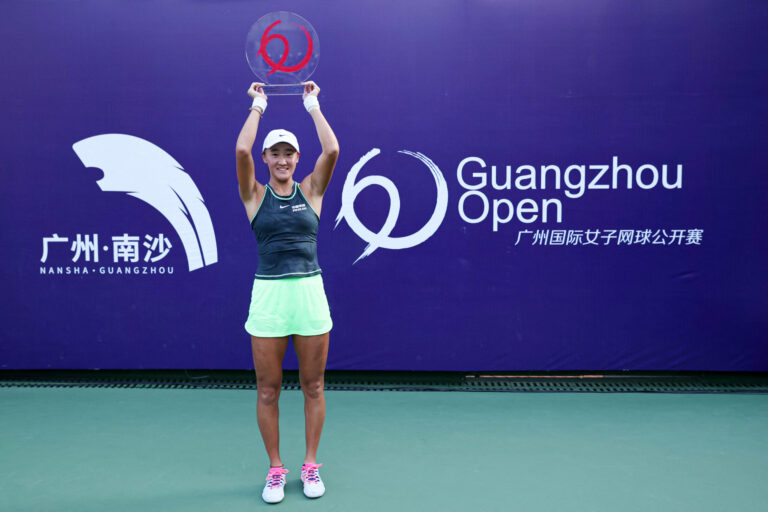
The Guangzhou Open is a WTA 250 tournament played on outdoor hard courts in southern China in the last week of October. The 2026 edition runs from 26 October to 1 November and is the tournament’s 20th, according to the WTA. It was the event where Li Na won the first WTA singles title by a Chinese player, in 2004, and this year it has a wild card for Venus Williams.

Dates and schedule

The main draw starts on Monday 26 October. The singles final is scheduled for Sunday 1 November, not before 4:30 p.m., with the doubles final at 2 p.m. Local time in Guangzhou is China Standard Time, GMT+8, which puts a 4:30 p.m. start at 3:30 a.m. in New York (daylight saving time ends in the United States that morning), 8:30 a.m. in London and 7:30 p.m. in Sydney. The schedule comes from the WTA.

Guangzhou shares its week with the WTA 500 Toray Pan Pacific Open in Tokyo. It follows the Ningbo Open and the Japan Women’s Open in Osaka, and it comes in the closing weeks of the regular season before the WTA Finals, which the WTA lists at Indian Wells this year. GTN’s Asian swing explainer sets out how the autumn calendar fits together.

Venue

The tournament is played on outdoor hard courts at the Nansha International Tennis Center, according to the WTA.

Draw, points and prize money

The singles draw has 32 players and the doubles draw 16 teams. Ranking points and singles prize money by round, as published by the WTA in US dollars:

  • Champion: 250 points, $37,390
  • Finalist: 163 points, $22,125
  • Semifinal: 98 points, $12,331
  • Quarterfinal: 54 points, $7,025
  • Second round: 30 points, $4,285
  • First round: 1 point, $3,065

Venus Williams’ wild card

The tournament announced on 28 September that Venus Williams had been given singles and doubles wild cards, the WTA reported. It will be the seven-time Grand Slam champion’s first tournament in Asia since Tianjin in 2019, and she will play doubles with Indonesia’s Janice Tjen, who won the Guangzhou doubles title in 2025 with Katarzyna Piter.

Williams, 46, came back to the tour in Washington in July 2025 after a 16-month layoff and has played selected events on wild cards since. She beat Peyton Stearns in Washington but has not won a singles match in the 15 she has played since, according to the WTA. Her most recent event was the US Open, where she lost in the first round of both singles and doubles.

History

Guangzhou has been on the WTA calendar since 2004. Li Na won the first edition, and the WTA records it as the first WTA singles title won by a Chinese player. Chinese players have won five more of the 19 editions played so far: Yan Zi in 2005, Zhang Shuai in 2013 and 2017, Wang Qiang in 2018 and Wang Xiyu in 2023. Zhang is the only player to win the singles title twice.

The WTA honor roll lists no champion between 2019 and 2023. Every edition from 2004 to 2023 was played in mid- to late September, running into the first days of October in the early years; since 2024 the tournament has been held in late October.

Recent finals. Ann Li won in 2025, beating Lulu Sun 7-6(6), 6-2 in the final for her first title in four years, according to the WTA. Sun had come through qualifying and beat another qualifier, Claire Liu, in the semifinals. In 2024, Olga Danilovic beat Caroline Dolehide in the final to end a six-year title drought, the WTA reported.

Past singles champions

  • 2025: Ann Li (United States)
  • 2024: Olga Danilovic (Serbia)
  • 2023: Wang Xiyu (China)
  • 2019: Sofia Kenin (United States)
  • 2018: Wang Qiang (China)
  • 2017: Zhang Shuai (China)
  • 2016: Lesia Tsurenko (Ukraine)
  • 2015: Jelena Jankovic (Serbia)
  • 2014: Monica Niculescu (Romania)
  • 2013: Zhang Shuai (China)
  • 2012: Hsieh Su-wei (Chinese Taipei)
  • 2011: Chanelle Scheepers (South Africa)
  • 2010: Jarmila Groth (Australia)
  • 2009: Shahar Peer (Israel)
  • 2008: Vera Zvonareva (Russia)
  • 2007: Virginie Razzano (France)
  • 2006: Anna Chakvetadze (Russia)
  • 2005: Yan Zi (China)
  • 2004: Li Na (China)

The WTA lists the 2010 champion under her later name, Jarmila Wolfe. Peng Shuai won the doubles title four times, in 2007, 2013, 2016 and 2019, with four different partners.

2026 entries (as of 6 October 2026)

The tournament announced Williams’ wild cards on 28 September. The WTA entry list, draw and order of play will be published on the tournament page in the week before the event, and GTN will cover the draw when it is made.

This entries section is dated and will change. The history above does not.