

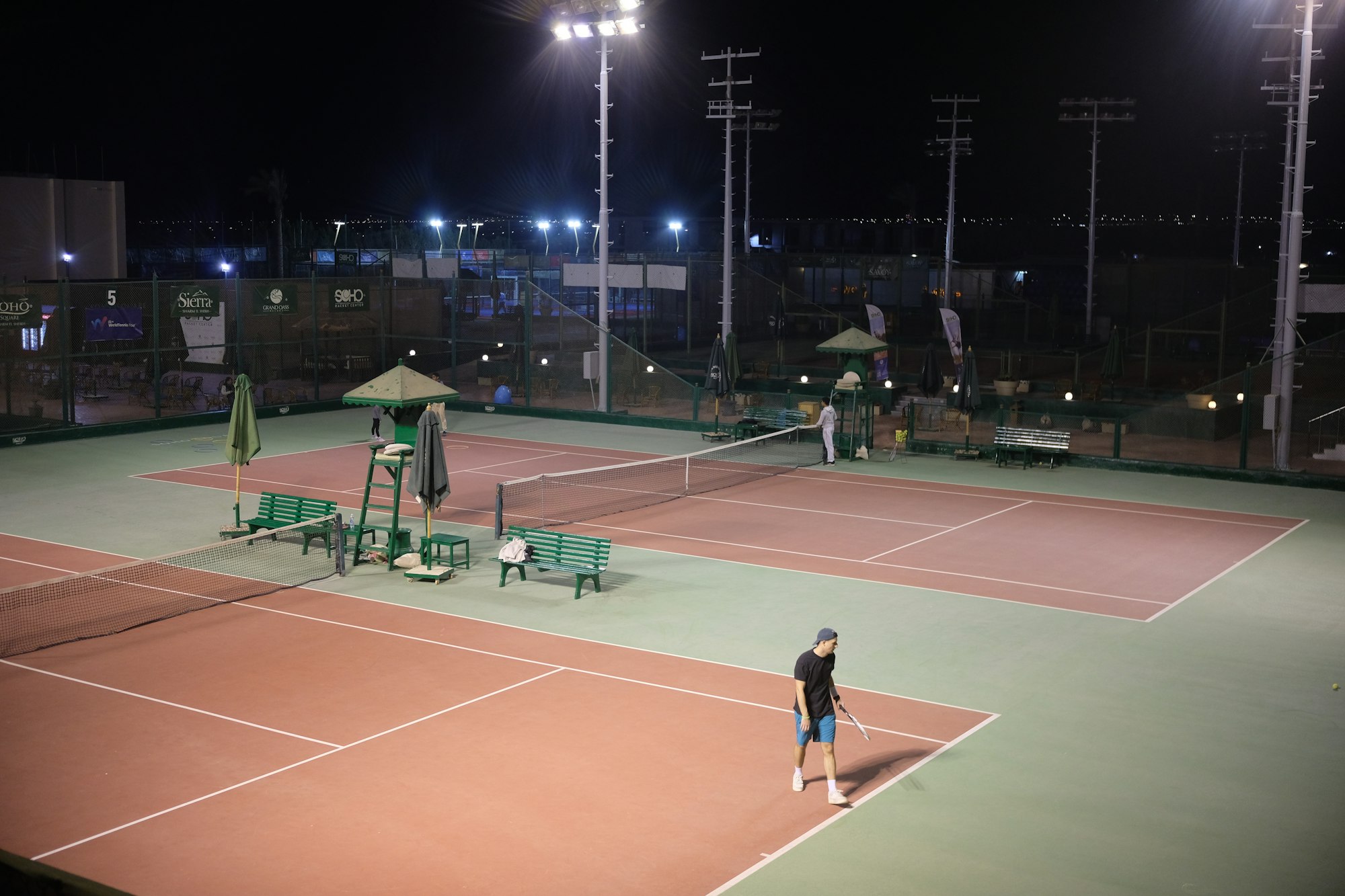
Karolina Muchova needed nine match points and two hours and 52 minutes to beat Naomi Osaka 7-5, 1-6, 7-6 (7) in a late-night fourth-round match at the China Open this week. When a match like that starts, and on which court, was decided the day before, by a small group of people working to a written set of rules.
Here is who builds a tournament’s daily order of play, what its wording means, and the tour rule that is meant to stop matches starting near midnight.
Who writes the order of play
At ATP events, scheduling runs through a scheduling committee. The ATP Supervisor chairs it and makes the final decision on any scheduling matter the committee cannot agree on. The Supervisor is also responsible for making sure the daily order of play is posted on the official bulletin board and at the official hotel. The ATP Tour Manager sits on the committee as the players’ representative, and the tournament Referee is available to serve on it and assists the Supervisor.
The groundwork is laid months earlier. Each ATP tournament must send the ATP a match schedule plan, including proposed daily starting times and the number of courts it will use, at least 180 days before the event starts, and the plan needs the ATP’s written approval. WTA events work under the WTA’s own rules with WTA supervisors on site; the Beijing draw sheets this fortnight list four of them. More on the people who run a match is in our tennis officials explainer.
How to read one
An order of play lists each court with its first match under a fixed time, such as “Starting at 11:00 AM” on the China Open sheets, and every match after it as “Followed by”. A “followed by” match has no clock time: it begins when the match before it ends, which is why the third match on a court can start in mid-afternoon one day and after dark the next.
A “not before” time sets the earliest a match may start. At the United Cup, for example, organisers may assign “not before” times in consultation with the ATP Supervisor. The Supervisor also designates the tournament’s official clock and decides where and when matches are called.
When a match moves
The order of play is not fixed once printed. Under ATP rules, the Supervisor decides whether a court is fit for play and may move a match to another court, indoors or outdoors and regardless of surface, if that is needed to stop a player having to play two singles matches in one day or to finish the event. The Supervisor can also suspend or postpone play when weather or other conditions threaten safety. Rain has its own procedures, covered in our rain delay explainer.
The 11 p.m. rule
In January 2024 the ATP and WTA announced joint scheduling rules for their events, saying the number of matches finishing after midnight had risen considerably and was tied to an increase in average match length. The rules were:
- No more than five matches per court per day, with an 11 a.m. start: three in the day session and two in the evening session.
- No match to go on court after 11 p.m. unless approved by the ATP or WTA Supervisor in consultation with tour management.
- A match not on court by 10:30 p.m. is moved to another court, no later than 11 p.m.
- Night sessions to begin no later than 7:30 p.m., with 6:30 p.m. recommended.
Tournaments may ask for waivers based on local cultural traditions, weather or other extenuating circumstances. The rules were introduced as a one-year trial in 2024, with further review to follow.
The concern about midnight finishes had a recent precedent. At the 2023 Australian Open, Andy Murray’s match against Thanasi Kokkinakis ended at 4:05 a.m.
The Grand Slams set their own
The tour rules apply to ATP and WTA events, not to the four majors, which have their own scheduling rules. The Australian Open took a different route, moving to a Sunday start and a 15-day event from 2024 to spread out the early rounds. The Slams’ evening programmes are covered in our Australian Open night sessions and US Open night sessions explainers.
What no schedule controls
An order of play can cap the number of matches on a court and stop a late start; it cannot shorten a match. A two-hour-52-minute fourth round still pushes everything after it back, and a “followed by” match waits for it. The time between points is a separate rulebook question, covered in our shot clock explainer.