Home Blog Page 13

LA28 Olympic Tennis Eligibility — Two Davis Cup or Billie Jean King Cup Call-Ups Required

0

The players on the eight teams at this week’s Billie Jean King Cup Finals in Shenzhen are playing for a trophy, and they are also banking something that matters two years from now. Under the eligibility rules for tennis at the Los Angeles 2028 Olympic Games, nobody can play the Olympic event without having been part of a nominated Davis Cup or Billie Jean King Cup team at least twice during the Olympic cycle, and at least once in 2027 or 2028. The same applies to the men who will contest the Davis Cup Final 8 in Bologna.

The rules are set out in the ITF document Eligibility for the Olympic Tennis Event – LA28, in the version dated July 2026. The document now uses the governing body’s World Tennis name and refers to the World Tennis Davis Cup and Billie Jean King Cup Regulations. It sits alongside, and is separate from, the qualification system that decides who gets the places in each draw, which we cover in Olympic Tennis Explained.

The five conditions

To be nominated for and take part in the LA28 tennis event, a player must meet all five of the following, unless the rules provide otherwise:

  • The Olympic Charter. The player must comply with it, including Rule 41 on the nationality of competitors.
  • Good standing. The player must be in good standing with their national association and the governing body under the Davis Cup or Billie Jean King Cup Regulations in force at the time of the Games.
  • Eligibility to represent the nation. The player must satisfy the “Eligibility to Represent a Nation” rule in those same regulations for the country whose national association and national Olympic committee nominate them.
  • Age. Men must be 14 and women 15 by the opening day of the Olympic tennis event, checked against the passport used for accreditation.
  • Team participation. The player must meet the minimum participation requirement in the Davis Cup or Billie Jean King Cup.

What counts as an appearance

The participation requirement is specific. A player must be part of the final nominated Davis Cup or Billie Jean King Cup team, and be present at the tie or event, on at least two occasions during the Olympic cycle. One of those two occasions must fall in 2027 or 2028. The cycle runs from Monday 5 August 2024 to Monday 12 June 2028, a closing date the ITF still marks as to be confirmed.

Two details decide most cases. First, being named is not enough: the player has to be on the final nominated team and physically present. Second, a nomination for a Davis Cup Finals, a Billie Jean King Cup Finals or any Regional Group event counts as a single occasion, however many ties the player takes part in that week. A player who travels to Shenzhen this week and plays three ties has one occasion, not three.

The timing rule means that appearances in 2025 and 2026 cannot complete the requirement on their own. A player with two nominations already in the bank still needs one more in 2027 or the first half of 2028 unless the exceptions below apply.

When the rule bends

A player who meets every other condition but not the participation requirement can still be declared eligible. The decision belongs to a panel named in the regulations for the Olympic tennis event, which may use its discretion when there are special circumstances. The document lists four, while making clear the list is not closed:

  • Injury or illness, supported by medical records that clearly identify the period of absence from all competitive tennis.
  • Newcomers, meaning players who only reached a ranking good enough for national team selection late in the cycle.
  • Strength of nation, where a country has so many highly ranked players that the competition for places limits a player’s chances to be selected.
  • Commitment and achievement, meaning a player’s past participation or results at the Olympics, the Davis Cup or the Billie Jean King Cup.

The injury ground is narrower than it looks. The records must show an absence from all competitive tennis, which on the wording of the rule does not fit a player who was well enough to play tour events but did not turn up for national team duty.

The passport half of the rule

Because Olympic eligibility borrows the team competitions’ nationality test, the 2026 Billie Jean King Cup Regulations show what a woman needs to represent a country. She must be a citizen who holds a valid passport of that nation and has held it for at least two years in the past five.

Where a nation does not issue its own passport, a qualifying passport confirming the player’s birthplace as that nation, held for the same period, can be used instead. A player who has lived in the country for five consecutive years can qualify without a passport if she has a genuine reason she cannot hold one and was born there, has a parent or grandparent born there, or has the right to remain permanently or humanitarian protection.

She must also not have represented another nation in a previous Billie Jean King Cup, other than the junior event, or at the Olympic tennis event. For that purpose, being nominated counts as representing: at the Finals from midday local time on the day before the first match, and at every other tie from the time of the draw.

There are two routes around those limits, and both take time. A national association can apply to the ITF’s Internal Adjudication Panel for a special exemption, but it must show that the player has a sufficient, genuine connection and commitment to life and tennis in the nation, and the complete application must reach the ITF at least three months before the tie.

Where a player may be eligible for more than one nation, the nominating nation must also file three months in advance; the ITF notifies the other nation, which has 15 days to comment. The ITF Executive then decides, with one appeal to the panel within 14 days and no appeal beyond that.

Good standing is more than a clean record

The good-standing test in the Billie Jean King Cup Regulations is broader than avoiding suspensions. Among its criteria, a player must make herself available for selection for the ITF’s official team championships and the Olympic tennis event, must not owe the ITF fines of 500 dollars or more after being given time to pay, and must accept her national association’s jurisdiction while playing ties for it.

Her national association makes the first decision on good standing, and only some parts of that decision can be reviewed by the Internal Adjudication Panel. The Davis Cup has its own set of regulations, which the LA28 document cites in the same way; this piece quotes the women’s text because it is the rulebook in use in Shenzhen this week.

What is still to come

The eligibility rules are not the last word. The ITF says it will publish separate regulations for the Olympic tennis event, covering conditions of entry and how to apply to the panel, and a qualification system setting out how the places are allocated. The eligibility rules themselves can still be supplemented or amended by the International Olympic Committee or the governing body before the tennis event begins. For the timing of the event itself, see our report on the LA 2028 tennis schedule, and for the structure of the women’s team competition, How Billie Jean King Cup Works.
Court Pace Rating Explained — How the ITF Measures Tennis Court Speed

0

A hard court is not one surface. The International Tennis Federation, which writes the technical standards for the sport, puts every court on a single scale called the Court Pace Rating, and sorts surfaces into five categories from slow to fast according to where they land. The number decides which ball a tournament should use, and in the ITF’s own team competitions it sets a hard limit on how quick or slow a home nation may make its court. With the season now on the hard courts of the Asian swing and heading indoors for Europe, it is the governing body’s measure of what players mean when they call a court quick or slow.

Everything below comes from the ITF’s 2026 technical booklet, ITF Approved Tennis Balls, Classified Surfaces and Recognised Courts, which is effective from 1 January to 31 December 2026, and from the 2026 Billie Jean King Cup Regulations.

What the number measures

Court Pace Rating, or CPR, measures what happens to the ball when it hits the court. Two properties matter. The first is friction: a rougher surface grips the ball harder and takes more speed off it horizontally, so it plays slower. The second is restitution, the energy the surface gives back upwards. A surface that sends the ball up higher is also perceived to play slower, the ITF explains, because the player has more time to reach it.

CPR combines the two in one formula: 100 multiplied by one minus the coefficient of friction, plus 150 multiplied by the difference between 0.81 and the coefficient of restitution. The 0.81 is the ITF’s mean restitution value across all surface types, and the restitution figure is corrected for the temperature of the test balls. A court scores higher, and so counts as faster, when friction goes down, when the bounce goes down, or both.

How the test is done

The ITF test method, coded ITF CS 01/02, uses a compressed-air ball cannon. It fires a ball at the court at 30 metres per second, plus or minus two, at an angle of 16 degrees, with almost no spin: no more than three revolutions per second. Instruments measure the ball’s horizontal and vertical speed before and after the bounce to within 0.05 metres per second, and friction and restitution are calculated from those readings.

Three high-specification test balls are fired three times each, for nine impacts, with the impact point moved every time. On site, the ITF recommends testing in at least four locations covering heavily and lightly used areas of the court, and the result is the mean rating for all impacts excluding the lines. Grass and artificial grass, which have a grain, are tested in the direction of play. Testing should not go ahead if the average temperature of the balls cannot be kept between 10 and 30 degrees Celsius. In the laboratory, samples at least half a metre square are conditioned at 23 degrees for three hours first.

The five categories

  • Category 1, slow: a CPR of 29 or lower. Most clay courts and other unbound mineral surfaces fall here.
  • Category 2, medium-slow: 30 to 34.
  • Category 3, medium: 35 to 39. The ITF says most acrylic-coated surfaces and some carpets fall in categories 2 and 3.
  • Category 4, medium-fast: 40 to 44.
  • Category 5, fast: 45 or higher. Most natural grass, artificial grass and some carpets fall in categories 4 and 5, according to the ITF.

The categories describe pace only. The ITF is explicit that classification is not an approval or endorsement of a product, and that a product can be refused classification if the ITF considers it unsuitable for tennis.

How precise it is

The rating is not exact, and the ITF says so. Round-robin testing between accredited laboratories puts the uncertainty of the method at plus or minus two points. When a surface’s mean rating is within two points of the next category, the manufacturer is allowed to choose which of the two categories it is listed in.

Installation adds more variation. For a new court built by experienced contractors with quality materials, the ITF’s guide tolerance is five points either side of the product’s quoted rating, and the difference between test locations on the same court should not exceed ten points. The layers underneath the playing surface can change the reading too. ITF classification of a surface product lasts three years, after which it must be retested to stay on the list.

Which ball goes with which court

The reason the ITF classifies courts at all is to match them to balls. The Rules of Tennis approve three standard ball types. Type 1, the fast ball, is intended for slow courts. Type 2, the medium ball, is intended for medium-slow, medium and medium-fast courts. Type 3, the slow ball, is intended for fast courts; it is physically larger, between 7.00 and 7.30 centimetres across against 6.54 to 6.86 for the other two, and the ITF also recommends it for play at altitudes above 1,219 metres on any surface. The ball, not only the court, therefore shapes how quickly a match plays. For more on the balls the majors use, see our guide to tennis balls at the major tournaments.

Where the rating becomes a rule

For most tournaments the ITF’s test methods are recommendations, not requirements; the booklet says so in capital letters. The ITF’s team competitions are different. Under the 2026 Billie Jean King Cup Regulations, any court other than grass or clay used in the competition must have a measured Court Pace Rating between 24 and 50 inclusive, tested with the ball chosen for the tie. Hard courts at the Finals, the Qualifiers and the Play-offs must be ITF-classified surface products.

That matters because the home nation in a Qualifier or Play-off tie chooses the surface and the ball, and a very fast or very slow court is an obvious way to tilt a tie. If on-site testing shows the match court is outside the permitted range, the ITF’s Internal Adjudication Panel can dock Nations Ranking points, impose a fine, withhold payments, strip the nation of its future choice of ground, relegate it, disqualify it or order it to compensate the visitors. We explain the competition’s structure in How Billie Jean King Cup Works and its men’s counterpart in How Davis Cup Works.

What the number does not tell you

A Court Pace Rating describes one court on one day. The ITF notes that a surface’s properties change with the weather, with use and with maintenance, and its court recognition scheme states that test results are valid only for the day they were taken. An acrylic court needs about a week to settle after it is laid before it is tested, and clay or artificial grass can take months.

The rating also measures only the ball and the surface. It says nothing about air density, altitude or humidity, and the ITF’s own tolerances allow two new courts laid with the same product to test several points apart. That wider picture is covered in our explainers on why hard courts do not all play the same and why court surfaces matter.

WTA Mandatory Events Explained — Zero Point Penalties Fines and Exemptions

0

Alexandra Eala will spend next week at the Asian Games in Nagoya rather than at the China Open in Beijing. Under the WTA’s rules, a player of her ranking who misses a WTA 1000 without an exemption takes a zero-point result that must count on her ranking, and she can be fined on top of it. The rule applies to every eligible adult player on the tour, not just her, and it will come up again the next time a national multi-sport Games lands on the tennis calendar.

What makes an event mandatory. The WTA rulebook calls them Commitment Tournaments. All WTA 1000 events are designated WTA 1000 Mandatory, and any player who is accepted into the main draw, or would have been accepted had she entered, must play. She does not have to opt in: a player whose ranking qualifies her for a WTA 1000 main draw is entered automatically. WTA 500 events carry a separate commitment of up to six a year, depending on how many a player is accepted into, and a WTA 500 is not a commitment for anyone ranked 51 or lower at its entry deadline.

Who is exempt. The commitment is subject to four sets of rules: age eligibility, years of service, long-term injury and the integrity rules. Players under 17 are not required to play WTA 1000 events, and 17-year-olds must play a maximum of four. Players aged 34 or older at the start of a year escape zero-pointers for missed WTA 500 events, but not for WTA 1000s: the rulebook says a Years of Service player must still play every WTA 1000 she is accepted into. Players serving integrity suspensions remain subject to the commitments and the zero-point results. Once a player is 18, a missed WTA 1000 commitment produces a zero.

How the zero-pointer works. A WTA singles ranking is built from a maximum of 18 results: the four Grand Slams, the best six of the seven combined WTA 1000s (Indian Wells, Miami, Madrid, Rome, Toronto/Montreal, Cincinnati and Beijing), the best one of the three non-combined WTA 1000s (Doha, Dubai and Wuhan), and the next best seven results from everything else. A zero from a missed mandatory event counts inside its own group.

A zero from Beijing therefore takes one of the six combined WTA 1000 places, and the WTA’s Race rules say the same penalty is applied to Race to the WTA Finals points by removing the player’s lowest-scoring result in that group. In practice, the player loses the cushion that lets her drop her worst combined WTA 1000 week. Our WTA rankings explainer and Race to the WTA Finals explainer cover the full structure.

The fines. A player automatically entered into a WTA 1000 who withdraws receives the zero and is subject to the Late Withdrawal fines, the rulebook says. A singles withdrawal counts as late once the player has been accepted into the main draw. For a WTA 1000, the fine is set by her ranking at the entry deadline: $20,000 for the top 10, $10,000 for players ranked 11 to 25, $5,000 for 26 to 50 and $2,500 below that. Fines double with each further offence in the same category.

A player can use up to three Excused Withdrawals a year to avoid the fine if she withdraws before her first match, but an Excused Withdrawal does not remove the zero. In an extreme personal emergency, a player can appeal a fine to the Code of Conduct Committee.

Playing somewhere else that week. The rulebook also covers a player who withdraws from a WTA event and plays an Exhibition/Non-WTA Event in the same week. A player ranked in the top 50 who does so faces the Late Withdrawal fine plus a separate fine under the Exhibition/Non-WTA Event Rule.

Elsewhere in its withdrawal rules, the rulebook lists Olympic and Olympic Qualification events as a category of their own, alongside Grand Slams, ITF events and exhibitions. The Asian Games singles events are part of the ITF’s qualification pathway for Los Angeles 2028. How the WTA applies its rules to a Games of that kind is the WTA’s decision, and the rule text GTN reviewed does not name the Asian Games.

The Eala case. The Philippine Tennis Association has formally asked the WTA to exempt Eala from the China Open, Reuters reported on 16 September. “We have formally requested an exemption and we respect the WTA’s process,” PHILTA secretary general John Rey Tiangco said. “At the same time, Alex has made her decision to represent the Philippines at the Asian Games, and we fully support her.” The WTA’s own China Open preview lists Eala among the players not competing in Beijing, citing a schedule change. GTN has not found a published WTA decision on the exemption request.

Eala has been clear about why she is going. “I love playing and competing with the Philippines team; I think it’s a really fun environment,” she told Olympics.com at the US Open. “I love being with the team.” How much a zero would cost her in practice depends on details that have not been made public, including when her withdrawal was lodged relative to the entry deadline and where she was ranked on that date. Those facts decide whether a Late Withdrawal fine applies and at what level.

Why this will happen again. The ITF gives the singles champions of the Asian, Pan-American, African and Pacific Games places at the Los Angeles 2028 Olympics, provided they are ranked inside the top 500 and their nation’s quota is not already full. The first of those places are decided at Nagoya, and the rest in 2027, when the Pacific Games run from 24 July to 8 August.

For a player whose ranking would not carry her into the Olympics directly, a regional Games title is a route in. Each time one of those events overlaps a WTA 1000, the player faces the same choice Eala did. The mechanics of the 1000 tier itself are in our WTA 1000 guide, and general withdrawal rules across both tours are in our withdrawal rules explainer.

Jelena Ostapenko Profile — Unseeded in Paris, Then a Major in Every Event

0

Jelena Ostapenko was born in Riga on 8 June 1997, the day Gustavo Kuerten won his first Roland Garros title. Twenty years and two days later she won Roland Garros herself, unseeded, ranked 47th, and without a tour-level title of any kind to her name before that fortnight.

Paris, 2017

She had never been ranked inside the top 30 before that Roland Garros, according to the WTA, and had never gone past the third round at a major, according to the Associated Press. She hit her way through the draw instead: 245 winners across the tournament, past Samantha Stosur, Caroline Wozniacki and Timea Bacsinszky, into a final against third seed Simona Halep, who was playing for her first major title and the world No. 1 ranking.

Halep led by a set and 3-0 and had three break points for 4-0. Ostapenko held, won the next three games as well, took the second set and then, from a break down at 3-1 in the third, won the last five games. The score was 4-6, 6-4, 6-3. She finished with 54 winners and 54 unforced errors, the AP counted; Halep had eight winners. Ostapenko became the first unseeded woman to win the title in the Open Era and the first Latvian to win a Grand Slam singles title.

“I think there are similarities because, of course, when I was born he won the first Roland Garros,” she said afterwards of Kuerten. “So I think it kind of maybe lucky, lucky number or something.”

After Paris

The breakthrough had been building. Ostapenko started on the ITF circuit in 2012, made her WTA main-draw debut as a wild card in Tashkent in 2014, and scored her first top-10 win at Wimbledon in 2015, over Carla Suárez Navarro. She reached her first WTA final in Quebec City that year and the Doha final in 2016, which lifted her into the top 50.

The rest of 2017 confirmed the Paris result was not a one-off. She reached the Wimbledon quarter-finals, won her second title in Seoul by beating Beatriz Haddad Maia in the final, reached the Charleston final and qualified for the WTA Finals for the first time. She returned to Seoul as the runner-up in 2022.

Doubles, and the full set

Ostapenko has built a second career in doubles without stepping away from singles. With Lyudmyla Kichenok she won the 2024 US Open women’s doubles title without dropping a set, beating Kristina Mladenovic and Zhang Shuai 6-4, 6-3 in the final, Reuters reported. “We didn’t expect anything, we were just playing better and better every match,” she said.

The third major came at Wimbledon in July 2026, in mixed doubles with Marcelo Arévalo. The second seeds trailed Storm Hunter and Marc Polmans by a set and a break on Centre Court before winning 4-6, 7-5, 6-2 in an hour and 56 minutes, the first title of the Championships. “In the second set, we were down a break. But I told myself just fight till the last moment,” Ostapenko said. It was her first Wimbledon title and gave her major titles in singles, women’s doubles and mixed doubles.

The game

The numbers from Paris describe the game better than any adjective. She hit 245 winners across that tournament, and in the final she broke Halep in the opening game with return winners, according to the WTA. She finished that match with as many unforced errors as winners and kept swinging anyway. The risk is built in: the same approach that won her a major from outside the top 40 is the one that produces the wide swings in her results.

Grand Slam titles

  • Roland Garros: women’s singles (2017)
  • US Open: women’s doubles, with Lyudmyla Kichenok (2024)
  • Wimbledon: mixed doubles, with Marcelo Arévalo (2026)

Season Snapshot — 25 September 2026

Ostapenko was the top seed at the Korea Open in Seoul this week, the event she won in 2017. Her first-round match against Anastasia Zakharova was her first win since July, according to the WTA: she came from 3-1 down in the first set to win 11 of the next 13 games, 6-4, 6-1. Her run ended in the second round.

Her current singles and doubles rankings are deliberately not listed here: we could not confirm them against an approved primary source, so they have been left out rather than guessed.

This snapshot is dated and will change. The career record above does not.

More: The Asian Swing Explained, the China Open Guide, and the full ATP and WTA player index.

Denis Shapovalov Profile — The Teenager Who Beat Nadal in Montreal

0

Denis Shapovalov was 18 when he played Rafael Nadal in the third round in Montreal in August 2017. According to his ATP biography, he ripped a poster of Nadal off the wall before the match, and he was sleeping in Felix Auger-Aliassime’s basement that week. He beat the world No. 2, kept winning, and left the tournament as the youngest Masters 1000 semi-finalist since the series began in 1990.

The climb

Montreal was the first big result, not the first sign. Shapovalov had finished his junior career by winning the Wimbledon boys’ singles title in 2016, and he broke into the top 50 of the rankings less than 15 months later. The ATP named him both its Newcomer of the Year and its Most Improved Player for 2017.

The first title took longer than the early results suggested. It came at the Stockholm Open in October 2019, where the fourth seed beat Filip Krajinovic 6-4, 6-4 without dropping a set all week, the first Canadian to win the event. “I am definitely super happy and just really proud,” he said. Weeks later he reached the final of the Paris Masters. In 2020 he became the first Canadian man to reach a US Open quarter-final and then joined Milos Raonic as only the second Canadian man to break into the top 10.

Wimbledon, Melbourne and Malaga

His deepest run at a major came on his favourite surface. At Wimbledon in 2021 he beat two-time champion Andy Murray and won five-set matches against Philipp Kohlschreiber and Karen Khachanov on the way to his first Grand Slam semi-final, at 22. “Having been in semi-finals here in 2021, I think Wimbledon always has a very special place in my heart,” he said three years later.

Six months after that semi-final he reached his first Australian Open quarter-final, beating third seed Alexander Zverev 6-3, 7-6(5), 6-3 in the fourth round. And in November 2022 he opened the Davis Cup final in Malaga by beating Thanasi Kokkinakis 6-2, 6-4, before Auger-Aliassime beat Alex de Minaur to give Canada its first title. “Denis and I grew up together, dreaming of these types of stage, dreaming of winning the Davis Cup,” Auger-Aliassime said. Canada’s place in the competition’s history is on our list of Davis Cup winners.

The knee, and the way back

Then came the injury years. A knee problem wrecked his 2023, and by the time he returned to Wimbledon in 2024 he was ranked No. 136 in the live rankings. “There were a lot of times where I didn’t know if I was going to step back onto the tennis court, if I was even going to come back at all,” he said later. “Sometimes I had good days, sometimes I couldn’t even step with my leg because my knee was hurting.”

The way back ran through indoor hard courts. He won Belgrade in November 2024, then took the Dallas Open in February 2025, the biggest title of his career. He had gone into that week with an 11-33 record against top-10 players and beat three of them: Taylor Fritz, then the world No. 4, in the second round, defending champion Tommy Paul in the semi-finals and Casper Ruud 7-6(5), 6-3 in the final, with 13 aces. Later that season he won Los Cabos on his tournament debut.

The game, and where it comes from

Shapovalov is a left-hander with a one-handed backhand, a combination that is rare on the modern tour. He was born in Israel and raised in Canada from the age of nine months, and his mother Tessa, a former professional player, coached him from the age of five. The backhand was, by his own account, a matter of irritation: “When I was small a lot of people would get the ball up to my backhand. I remember one practice I just got tired of going back all of the time, so I hit a couple in the air and they worked out well.”

At his best the pattern is the one the Dallas final showed: a big first serve, the lefty angles that sent Ruud from corner to corner, the forehand used to open the court, and a willingness to follow it forward. His idol growing up was Roger Federer; as a 15-year-old junior he warmed Federer up before the Swiss played a semi-final in Toronto in 2014. His favourite surface is grass.

Grand Slam best results

  • Australian Open: quarter-final (2022)
  • Wimbledon: semi-final (2021)
  • US Open: quarter-final (2020)

Career titles: four — Stockholm (2019), Belgrade (2024), Dallas (2025) and Los Cabos (2025). Team: Davis Cup champion with Canada, 2022.

Season Snapshot — 25 September 2026

Shapovalov went back to Los Cabos as defending champion at the start of August, reached the final again with an 8-0 record at the event, and lost it 6-3, 6-4 to 21-year-old Arthur Gea. “A few weeks ago we didn’t know if I would even be at this tournament,” he said. “So to be back, playing at such a high level, is definitely very special.”

This week he is the seventh seed at the Chengdu Open, his first appearance there since 2019. His opening win over Tallon Griekspoor, 6-4, 7-6(3), was the 250th tour-level win of his career, making him the third Canadian man to reach that mark after Raonic (383) and Auger-Aliassime (300). He followed it by beating Vit Kopriva 6-2, 6-3 in 64 minutes, winning 23 of 25 first-serve points, to reach his fourth tour-level quarter-final of the season. Third seed Alejandro Tabilo or Adrian Mannarino is next.

His current ranking is deliberately not listed here: we could not confirm it against an approved primary source, so it has been left out rather than guessed.

This snapshot is dated and will change. The career record above does not.

More: the Chengdu Open Guide, The Asian Swing Explained, and the full ATP and WTA player index.

Asian Games Tennis 2026 Guide — Dates, Venue, Events, Olympic Places

0

Tennis at the 20th Asian Games starts in Nagoya on Sunday September 27 and runs to October 3rd. It matters more than a multi-sport event on the edge of the tour calendar usually does: the men’s and women’s singles champions take the first places decided anywhere for the Los Angeles 2028 Olympic tennis event, and one of the region’s biggest names has given up a WTA 1000 to be there.

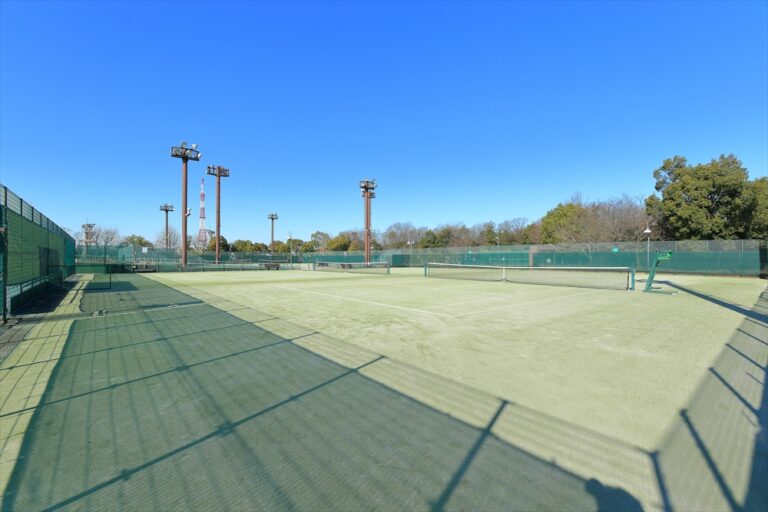
The venue. Matches are played at the Nagoya City Higashiyama Park Tennis Center. It opened in 1993 and was renovated for the Games, according to the organising committee, and it also stages the soft tennis and wheelchair tennis events. The Games as a whole run from 19 September to 4 October across Aichi Prefecture and Nagoya.

The events. Five titles are on offer: men’s singles, women’s singles, men’s doubles, women’s doubles and mixed doubles.

What is at stake for LA 2028. The ITF sets aside six ITF Places in each of the men’s and women’s Olympic singles draws, and four of them go to regional champions. The Asian, Pan-American, African and, for the first time, Pacific Games singles winners qualify for Los Angeles as long as they are ranked inside the top 500 and their nation’s quota of four has not already been filled by direct acceptance. The top-500 threshold is new; at the last Olympics it was top 400.

Nagoya is where the first of those places are decided, with the other continental places settled in 2027. Direct acceptance itself is based on the ATP and WTA singles rankings of 12 June 2028. Our Olympic tennis explainer covers the rest of the qualification system, and our LA 2028 schedule piece covers the calendar.

The last champions. The 2023 singles titles in Hangzhou went to China’s Zheng Qinwen and Zhang Zhizhen, according to the ITF. Zheng went on to win Olympic gold in Paris a year later. The ITF notes that both would have qualified on ranking anyway; the route matters most to players who would not, and it points to Brazil’s Laura Pigossi, who reached Paris 2024 solely by winning the Pan-American Games singles title.

The Beijing clash. The tennis event overlaps the China Open, whose WTA 1000 main draw begins on 30 September. The China Open is a mandatory event for eligible players, and skipping a mandatory WTA 1000 without an exemption brings a ranking penalty and may bring fines, Reuters reported. The Philippine Tennis Association has formally requested an exemption from the WTA so that Alexandra Eala can represent the Philippines, Reuters reported on 16 September.

“We have formally requested an exemption and we respect the WTA’s process,” PHILTA secretary general John Rey Tiangco said. “At the same time, Alex has made her decision to represent the Philippines at the Asian Games, and we fully support her.” The WTA’s own China Open preview lists Eala among the players not competing in Beijing, citing a schedule change. How the zero-point rule works for mandatory events is set out in our WTA 1000 guide.

Alexandra Eala. Ranked 18th, Eala is the highest-ranked player in the Asian Games women’s singles draw, according to Reuters. She arrives after the best season of her career, including her first WTA title at the DC Open in August, and she won two bronze medals at the 2023 Games. The women’s singles is scheduled to open on the first day, with the first and second rounds and the first round of the mixed doubles on 27 September from 10:00 local time.

Entries and draws. The full entry lists and draws are published on the Games’ official results site, results.asiangames2026.org. This guide does not list seeds or entrants because we could not confirm them against an official source before publication.

How to watch. The host broadcaster is CMG-IMP, and national rights holders carry the Games in each territory. In the Philippines, coverage is on ONE Sports and Cignal TV. Local time in Nagoya is Japan Standard Time, GMT+9.

The same week on tour. While Nagoya plays, the ATP moves to Tokyo and Beijing and the WTA begins its two-week China Open. Our China Open guide and The Asian Swing Explained cover the tour side of the calendar.

Sinner Won Beijing Last Year – He Won’t Defend It

0

Jannik Sinner will not defend his China Open title. The world No. 1 said on Friday that his right knee is still not ready, extending an absence that began after he won Wimbledon in July and has already taken in the whole of the North American hard-court swing, the US Open included.

“I’m very sorry to announce that I won’t be able to play in Beijing this year,” Sinner said in a video posted on X, according to the ATP Tour. “My knee is not where I would like it to be and I’m not ready to compete yet.”

What he leaves in Beijing. Sinner has made the ATP 500 at the China National Tennis Center his own: champion in 2023 and 2025, finalist in between. “I’ve had great times there in the past, winning the title also last year,” he said. “I’m very disappointed that I cannot defend it this year.” The tournament runs from 30 September to 6 October, and the ATP lists Alexander Zverev, Felix Auger-Aliassime, Flavio Cobolli, Daniil Medvedev and Alex de Minaur among the top-10 players still in the field. Our China Open guide covers dates, draw and how to watch.

The plan that did not hold. When Sinner withdrew from the US Open on 21 August, his team said he would stay in Europe to continue his recovery with the aim of being ready for the Asian swing and the tournaments in Beijing and Shanghai, the ATP Tour reported. Beijing is now gone and Friday’s announcement, as the ATP reported it, said nothing about Shanghai. “I will do everything possible to be there on court as soon as I can,” was as far as Sinner went.

What it does to No. 1. On 23 September the ATP put the gap between Sinner and Zverev in the PIF ATP Rankings at 1,810 points. Sinner’s 500 points from last year’s Beijing title come off his total with nothing to replace them. Zverev is defending 100 points in Beijing, and when those drop the ATP says 40 points from this year’s United Cup take their place unless he earns more than 40 in Beijing.

On those figures, and with nothing else changing, the range is wide. If Zverev wins the title, the gap falls to 910 points. If he loses his first match, it still falls, to 1,370. Those are GTN’s calculations from the ATP’s published numbers, not an ATP projection.

The rest of the season. Beijing was the first of five points drops for Sinner. After it he is defending 50 points in Shanghai, 500 in Vienna, 1,000 in Paris and 1,500 at the Nitto ATP Finals, where he won every match last year. Zverev’s remaining defence is 50, 330, 400 and 200 at the same four events. Across the whole run-in, the ATP counts 3,550 points coming off for Sinner and 1,080 for Zverev.

The season-only count already favours the German. Zverev’s US Open title took him to 8,650 points in the PIF ATP Live Race To Turin, 700 clear of Sinner, and the ATP treats the Race as the barometer for year-end No. 1. Both men have qualified for Turin; our Race to Turin page tracks the rest of the field.

The season so far. None of this touches what Sinner did before July. He is 44-3 for 2026, according to the ATP, with Masters 1000 titles at Indian Wells, Miami, Monte-Carlo, Madrid and Rome that completed the Career Golden Masters, and a second Wimbledon title on top of them.

What comes next. Shanghai follows Beijing and Tokyo, and both Sinner and Zverev have only 50 points to defend there; our Shanghai Masters guide has the dates. After that the tour moves indoors, the stretch laid out in our guide to the European indoor season, where most of Sinner’s remaining points sit.

Byes in Tennis Explained — Why Top Seeds Skip the First Round

0

Mirra Andreeva‘s first match at the Singapore Tennis Open this week was a second-round match. The No. 1 seed beat Aliaksandra Sasnovich 6-2, 6-2 without having played a first-round match at all. Maja Chwalinska, the No. 5 seed, had to start in the first round. The difference between them is a bye.

What a bye is

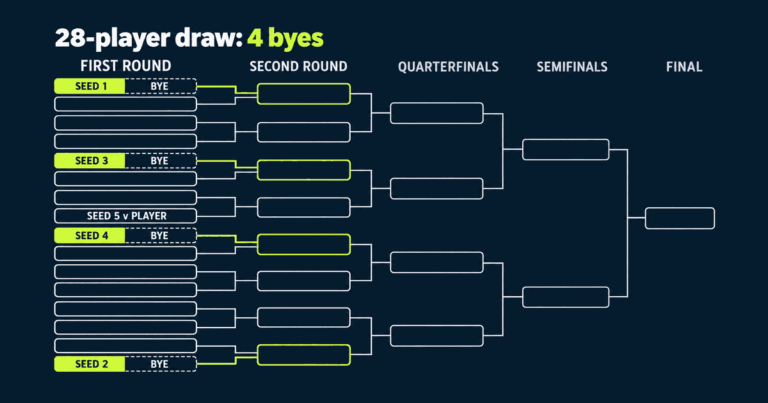
A knockout bracket only works cleanly with a power of two: 32, 64 or 128 players. Many tour events use draws that fall between those numbers, such as 28, 48, 56 or 96 players. The empty lines in the bracket are byes. A player drawn next to one goes into the second round without playing and waits there for the winner of a first-round match.

The ATP rulebook builds the draw that way. For a field of 48 or 56, it specifies a draw sheet with 64 places: the seeds and byes are placed first, and the remaining players, qualifiers included, are drawn into the spaces left over.

How many byes each draw size creates

  • 28-player draw: four byes, on a 32-line bracket. Singapore, Ningbo and Tokyo all use 28-player singles draws on this year’s WTA Asian swing.
  • 32-player draw: no byes. Seoul, Osaka and Guangzhou use 32.
  • 48-player draw: 16 byes, on a 64-line bracket.
  • 56-player draw: eight byes, on a 64-line bracket. The Wuhan Open uses 56.
  • 96-player draw: 32 byes, on a 128-line bracket. The women’s event at the China Open in Beijing uses 96.
  • 128-player draw: no byes. The four Grand Slams use 128.

Draw sizes for each tournament category are covered in the guides to ATP 250, ATP 500, ATP Masters 1000, WTA 500 and WTA 1000 events.

Who gets them

Byes go to the top seeds, in order. In Singapore’s 28-player draw the four byes went to the top four seeds, which is why Andreeva, as No. 1, started in the second round and Chwalinska, at No. 5, did not. In a 96-player draw there are 32 byes to hand out, so a much deeper group of seeded players skips the first round.

Seeds come from the rankings, so a bye is usually earned over months rather than in the week itself. How rankings translate into seedings is explained in How Grand Slam Seedings Are Determined by Rankings.

The WTA has also used byes to protect players coming off a deep run the week before. In 2019 the Wuhan semifinals and final were played on the Friday and Saturday, with the Beijing main draw starting on the Saturday, and the WTA gave the Wuhan semifinalists what it called performance byes into the second round in Beijing. Whether an event uses them depends on the tour’s rules for that season.

What a bye is worth in ranking points

A bye is not a win. The ATP’s 2026 rulebook states that a player who reaches the second round by drawing a bye and then loses is treated as having lost in the first round and receives first-round loser’s points.

That matters because of how the ATP points table is built. At ATP 500 and ATP 250 events, a first-round loss earns no points, so a seed who receives a bye at one of those events and loses the opening match leaves with nothing. At a 96-player ATP Masters 1000, a first-round loss is worth 10 points, so a seed who loses straight after a bye leaves with 10. From the second match on, the table applies as normal: a seed who wins after a bye and then loses in the third round of a 96-player Masters takes the round-of-32 figure, 50 points.

The WTA publishes its own points table for each event. On the current Asian swing, a first-round loss is worth 1 point in Singapore’s 28-player WTA 500 and 10 points in Beijing’s 96-player WTA 1000. For the wider picture, see How Tennis Rankings Work.

Why it matters on court

The arithmetic is simple. In a 28-player draw, a player with a bye needs four wins to take the title and everyone else needs five. In a 96-player draw it is six against seven. On a stretch of the calendar with back-to-back weeks across Asia, one fewer match is a real saving.

The other side of it is that a seed’s first match always comes against a player who has already won a match at the event that week, while the seed has not yet played one there.

More: the Singapore and Seoul draws, the China Open Guide, the Wuhan Open Guide, What Is a Lucky Loser in Tennis and How Tennis Qualifying Works.

Maja Chwalinska Profile — The Qualifier Who Reached the Roland Garros Final

0

Maja Chwalinska arrived at Roland Garros in May 2026 ranked No. 114, entered in qualifying, with six tour-level main-draw wins in her whole career. She left three weeks later as the runner-up. Along the way she became the first qualifier to reach the Roland Garros final, and only the second in the Open Era to reach a Grand Slam final, after Emma Raducanu at the 2021 US Open, according to the WTA.

Paris, 2026

She won three qualifying matches and then beat Olympic champion Zheng Qinwen 6-4, 6-0 in the first round. No. 23 seed Elise Mertens went by the same score, then Maria Sakkari 1-6, 6-3, 6-2 and Frenchwoman Diane Parry 6-3, 6-2. In the quarterfinals she beat No. 22 seed Anna Kalinskaya 7-6(3), 6-3, and in the semifinals No. 25 seed Diana Shnaider 7-6(4), 6-4, with 32 winners to 17 unforced errors, per the WTA.

“It’s like a dream, honestly,” she said in her on-court interview after the semifinal. “I don’t know what’s going on.” It was her first tour-level final of any kind. The WTA noted that only Venus Williams and Raducanu had previously reached their first WTA-level final at a major in the Open Era.

The final went to Mirra Andreeva, 6-3, 6-2. Chwalinska led 3-2 in the first set before Andreeva won nine games in a row. “I felt like I have no weapon against her today,” Chwalinska said afterwards. “She definitely handled wind much better than me, and she played so smart.” The run was worth €1.4 million in prize money and took her from No. 114 to a career-high No. 21.

Ten years to get there

Chwalinska was born on 11 October 2001 in Dąbrowa Górnicza, according to the WTA, and started playing at seven. As a junior she partnered Iga Swiatek, a fellow 2001-born Pole. The pair won European junior doubles titles at under-14 and under-16 level and reached the 2017 Australian Open girls’ doubles final, losing to Bianca Andreescu and Carson Branstine.

She made her professional debut in November 2015, a month after turning 14, and reached the Top 200 in August 2019 at 17, after a 15-match winning streak that took in three ITF titles in Poland. Then the setbacks came. In 2021, after losing in Wimbledon qualifying, she stepped away from the tour for several months; she later revealed she had been dealing with depression.

Her first tour-level main draw came at Wimbledon in 2022, through qualifying. She beat Katerina Siniakova 6-0, 7-5 for her first Top 100 win before losing to Alison Riske-Amritraj in the second round. That summer she climbed to No. 153, and then right knee surgery ended her season. She came back in 2023 with post-surgery viral complications and had fallen to No. 532 by August.

The rebuild went through the WTA 125 level. She won titles at Florianópolis in 2024, Montreux in 2025 and Oeiras in April 2026, where she beat former Top 10 player Beatriz Haddad Maia 6-0, 6-4 on the way. In a 2025 Billie Jean King Cup qualifier she held five set points in the opening set against Elina Svitolina before losing 7-6(4), 6-3. “It was not an easy match,” Svitolina said. “I was playing well but all the credit to Maja, she was playing amazing tennis.”

In February 2026 she qualified for Cluj-Napoca and reached her first tour-level quarterfinal. In May she travelled to Rome as a possible alternate and narrowly missed the qualifying cut. She went to Paris with a 20-9 record for the season.

How she plays

Chwalinska is a left-hander, 1.64 metres tall by the WTA’s measure, and her game has never been built on size. The WTA describes the reputation she built among close followers of the sport as one founded on variety, touch and court craft. Her own account of grass, given in Paris, was that her slice and touch suit the surface and that she can cover the court well on it.

After the final

The Wimbledon entry list had closed while she was still No. 114, so the All England Club gave her a wild card. By the draw she had risen high enough to be seeded 20th. Leading qualifier Mananchaya Sawangkaew 6-2, 5-2 in the first round, she injured her ankle while serving for the match, according to Olympics.com, and lost 2-6, 7-5, 6-2.

At the US Open she drew Taylor Townsend in the first round and lost 6-2, 6-3.

Grand Slam best results

  • Australian Open: first round (2025, as a qualifier)
  • Roland Garros: final (2026, as a qualifier)
  • Wimbledon: second round (2022, as a qualifier)
  • US Open: first round (2026)

Tour-level singles titles: none. WTA 125 singles titles: three — Florianópolis 2024, Montreux 2025, Oeiras 2026.

Season Snapshot — 24 September 2026

Ranking: No. 25, per the WTA; career high No. 21, reached after Roland Garros. Coach: Jaroslav Machovsky.

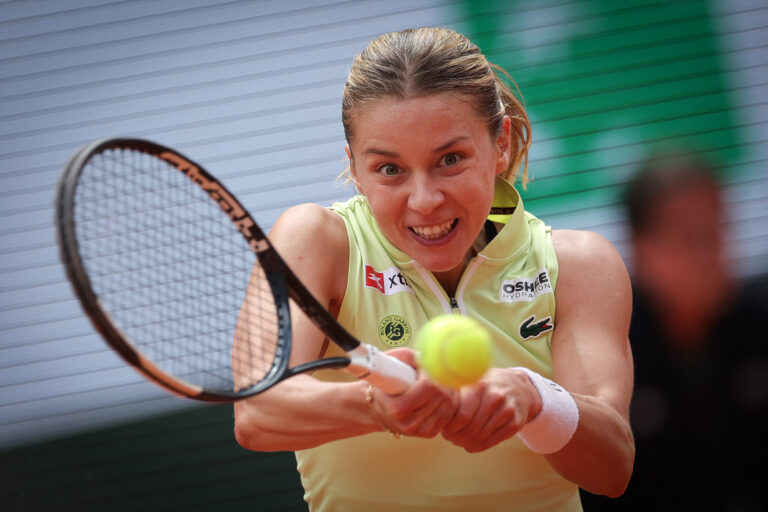
This week she is the No. 5 seed at the Singapore Tennis Open, a WTA 500 where only the top four seeds received first-round byes. She beat Sramkova in the first round and Oleksandra Oliynykova 6-0, 6-1 in 59 minutes in the second, and was drawn to face No. 4 seed Elise Mertens, whom she beat in Paris, in the quarterfinals. That match was scheduled after this snapshot was written. Her 2026 season also includes a win over Cristina Bucsa in Cincinnati.

This snapshot is dated and will change. The career record above does not.

More: Chwalinska becomes the first qualifier to reach the French Open final, Grand Slam Qualifying Explained, the Roland Garros Guide, and the full ATP and WTA player index.

Alcaraz Waits for Friday Night’s Doubles as Ruud and Cerundolo Open the Laver Cup

0

Carlos Alcaraz will not hit a singles ball on the opening day of the Laver Cup. When the Friday lineups for The O2 were announced on Thursday, Team Europe captain Yannick Noah had put his best player where he put him a year ago in San Francisco: in the night-session doubles, alongside Jakub Mensik.

The ninth edition opens at 1 p.m. with Casper Ruud against Francisco Cerundolo, a rematch of the first match of the 2024 event in Berlin. Cerundolo won that one 6-4, 6-4, and it is still Ruud’s only singles defeat at the Laver Cup, according to the organizers. Across the tour the two are close. Cerundolo leads their head-to-head 5-4, but Ruud won the most recent meeting, a Madrid semifinal in 2025, 6-4, 7-5.

The lineups are set by blind draw. Noah and Team World captain Andre Agassi submitted theirs on Wednesday without seeing each other’s, and the organizers published them on Thursday. Every Friday match is worth one point and is played on the event’s black indoor hard court.

The Friday lineup. All times are London time (BST), with U.S. Eastern in brackets.

  • Day session, 1 p.m. (8 a.m. ET): Casper Ruud (Europe) v Francisco Cerundolo (World), followed by Jakub Mensik (Europe) v Brandon Nakashima (World).
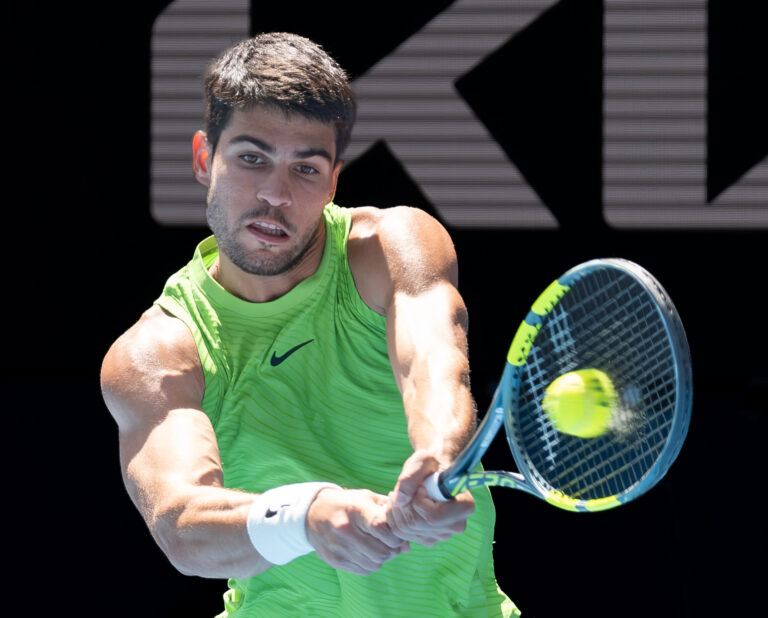
  • Night session, 7 p.m. (2 p.m. ET): Rafael Jodar (Europe) v Alexander Bublik (World), followed by Mensik and Alcaraz (Europe) v Bublik and Taylor Fritz (World).

The organizers note that the night session can start late if the day session runs long.

Mensik and Nakashima. The organizers bill the second match as a meeting of two of the tour’s biggest servers. Nakashima, 25, makes his Laver Cup debut after replacing Ben Shelton on Team World, and he won their only tour-level meeting, 7-6(5), 3-6, 6-4 in Washington this summer, on his way to the semifinals there. He arrives at a career-high No. 16, according to the organizers, after a summer that took in the Montreal final and the Cincinnati semifinals. Mensik, 21, won the Miami Masters in 2025 and played for Europe in San Francisco last year.

Jodar and Bublik. The night session opens with two Laver Cup debutants who have never played each other. Jodar, who turned 20 only days ago, is the one first-timer on Noah’s roster. A year ago he was ranked No. 325; this week he is No. 14, according to the organizers.

“I try not to be impatient,” Jodar told LaverCup.com on Wednesday. “I’m aware that this is my first year, that I’ve been on tour for only eight months.”

Bublik, who broke into the Top 10 earlier this season, is one of two players scheduled twice on Friday.

The doubles. Mensik and Alcaraz started Europe’s campaign in San Francisco last year too, beating Alex de Minaur and Alex Michelsen 7-6(7), 6-4. This time they meet a first-time pairing in Fritz and Bublik. Mensik and Bublik will both be playing their second match of the day.

What it means for Saturday. Six players have no singles match on Friday: Alcaraz, Alexander Zverev and Flavio Cobolli for Europe, and Fritz, Alex de Minaur and Learner Tien for World. The event’s rules require every player to play at least one singles match in the first two days, and Saturday’s schedule holds three singles. Unless a team brings in an alternate, Saturday’s singles will be drawn from those six, three a side, at two points a match.

Europe, as hosts, chose to select first on Saturday and second on Sunday. Saturday’s lineup is announced an hour after Friday’s night session ends.

Zverev comes to London as the US Open champion, 12 days after the final in New York. “[Zverev] is probably the best player in the world right now, so having him by my side is going to be a great weapon that we are going to use,” Alcaraz said in London, according to the ATP Tour.

Where it stands. Team World are the defending champions after beating Europe 15-9 in San Francisco last September. Europe have won five of the eight previous editions. The first team to 13 of the 24 available points takes the cup, and with Sunday matches worth three points each, no Friday lead is safe. The full schedule, rosters and broadcast details are in our Laver Cup 2026 guide, the two teams’ alternates are covered here, and the format is explained in Laver Cup Explained. Every past result is in Laver Cup Winners.