

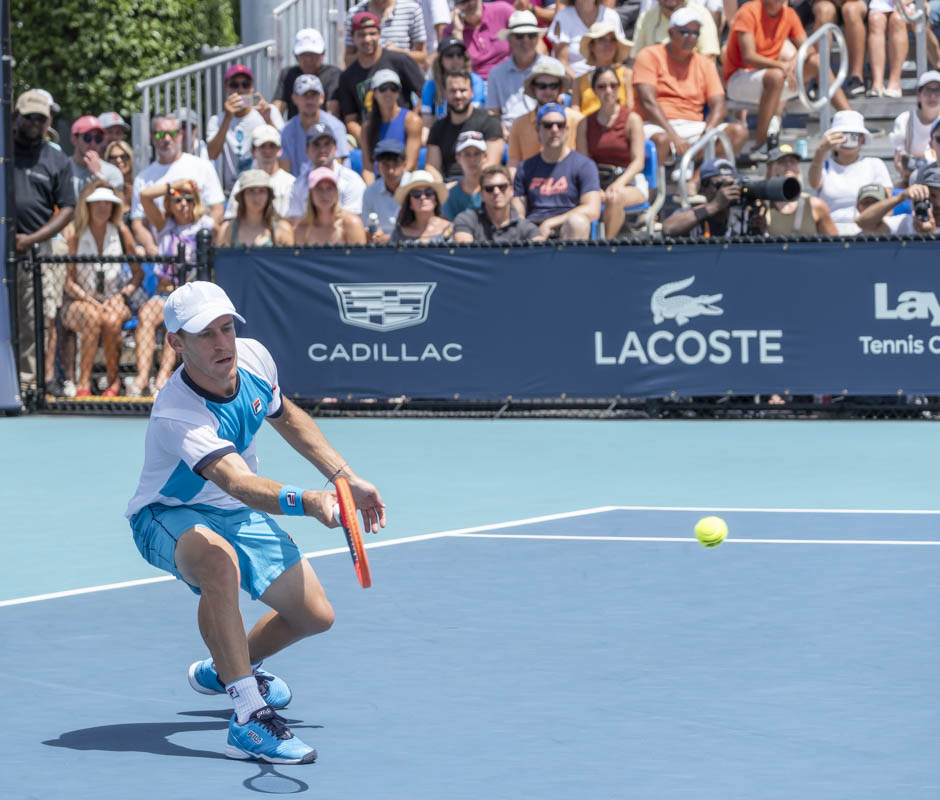
To casual fans, a hard court can look like a hard court. The color may change from tournament to tournament, the stadium may be bigger or smaller, and the weather may feel different on television, but the basic idea seems simple enough. Clay is clay, grass is grass, and hard courts are supposed to be the middle ground.
In reality, that is not how professional tennis works.
Some hard courts reward first-strike tennis and aggressive serving. Others turn into grinding physical contests where players must build points patiently and defend one extra shot over and over again. One event can make a flat hitter look unstoppable. Another can make a heavy topspin player seem almost impossible to hit through. A server who dominates one week may suddenly look ordinary the next, even though the surface listed on the schedule has not changed.
This is one of the most important things to understand about modern tennis. Surface labels tell part of the story, but not the whole story. On the ATP and WTA tours, the word hard court describes a category, not a single playing experience. That is why players and coaches talk so often about court speed, bounce, conditions, and the way a tournament actually plays once matches begin.
For fans trying to understand results, styles, and why certain players thrive in some events but struggle in others, this matters a great deal.
Hard court is a category, not a single style of tennis
When a tournament is called a hard-court event, that does not mean every court in that category behaves the same way. Hard courts are built with layers and coatings that can vary in feel, pace, and response. Even if two tournaments are technically using similar materials, they can still produce different tennis because of texture, weather, altitude, maintenance, and the balls used during the event.
That difference may sound small, but at the elite level it can shape everything.
A few inches of extra bounce can change how comfortable a player feels on the backhand side. A slightly slower court can give returners just enough time to neutralize serves that would be more damaging elsewhere. A grittier surface can make heavy topspin jump more sharply, which can pull opponents out of position and create openings. A lower, quicker court can shorten points and reward players who hit through the court early.
This is why players do not simply say they like hard courts. They usually mean they like certain hard courts.
Some players love a court where they can take control quickly, flatten out their groundstrokes, and keep points short. Others want more time to track balls down, extend rallies, and force opponents to hit extra shots. That distinction helps explain why results can swing so dramatically across the season even when the official surface category remains the same.
What makes one hard court play faster than another
The easiest way to think about court speed is to ask one simple question: after the ball hits the court, how much does the surface slow it down and how high does it bounce?
Those two factors, pace and bounce, go a long way toward explaining how a court plays.
A faster hard court tends to let the ball move through the court more quickly after the bounce. It gives aggressive players a better chance to finish points early and helps big servers earn more free points or weaker returns. A slower hard court grips the ball more, reducing some of that pace and giving defenders more time to react.
But speed is not just about the court itself.
Weather plays a major role. Heat can make balls livelier and conditions quicker. Humidity can affect how heavy the ball feels and how the court responds. Wind can turn a clean attacking match into a scrappy survival contest. Altitude can also matter, since balls travel differently when the air is thinner.
Then there is bounce. Two courts can both be called hard courts and still produce very different ball trajectories. A player who loves shoulder-high rallies and heavy spin may feel comfortable on one surface and far less effective on another where the ball stays lower and skids more.
The ball itself matters too. Different tournament balls can change how points unfold. Some fluff up more and become slower through rallies. Others stay livelier and help big hitters push through the court more easily. When players talk about conditions, they are rarely talking about one factor alone. They are talking about the combined effect of surface, weather, bounce, and ball behavior.
That is why tennis insiders often describe tournaments less by official surface category and more by how the event is actually playing that week.
Why court speed changes tactics
Once you understand that not all hard courts are the same, the tactical side of tennis starts to make more sense.
On a quicker hard court, serving becomes even more valuable. Players can earn easier holds because the returner has less time to react. A strong first serve can immediately create a short ball. Aggressive returning is still possible, but it requires cleaner timing and more commitment. Baseline exchanges also tend to shrink. There is less room for hesitation. If a player gets a look at a forehand, the instinct is often to step in and strike before the opponent can reset.
A slower hard court changes that equation.
Returners gain a little more time. Servers may still hold often, but they have to work harder for it. Rally tolerance becomes more important. Players who defend well, change direction intelligently, and stay patient can absorb pace and gradually take control. Shot selection also changes. Instead of forcing early winners, smart players may use more shape, more spin, and more margin until the opening is clearer.
This is where tactical discipline becomes so important. A player who insists on playing ultra-aggressive tennis on a slower hard court may end up donating errors. A player who remains too passive on a fast court may never get enough neutral balls to turn points around.
The best players are often the ones who adjust fastest.
They recognize whether the serve is doing damage. They notice whether the backhand is sitting up or staying low. They understand whether defending five feet behind the baseline is workable or whether they need to take time away from the opponent by stepping in. At the highest level, adaptation is a skill of its own.
Which players usually benefit from faster or slower conditions
There is no perfect rule here, because great players can win in many kinds of conditions, but certain patterns show up again and again.
Faster hard courts often favor players who serve big, take the ball early, and finish points with direct aggression. Flat hitters can be especially dangerous because the ball stays penetrating through the court. First-strike tennis becomes more rewarding. Players who like short points and early control usually feel more comfortable.
Slower hard courts often suit players with strong movement, reliable defense, and the ability to construct points carefully. Heavy topspin can become more effective when the court helps the ball jump up higher. Counterpunchers can redirect pace and make opponents hit extra shots. Players who can absorb power without losing depth become harder to beat.
Still, style labels can oversimplify things.
Some elite defenders have excellent serves and can thrive on fast courts too. Some big hitters are strong enough physically to dominate on slower courts when they stay patient. What really matters is whether a player’s strengths are amplified and whether their weaknesses are exposed.
For example, a fast court can hide limited movement if points stay short. A slow court can expose that same weakness because rallies stretch longer and recovery becomes more important. On the other hand, a slow court can also expose a player who lacks finishing power, because creating openings is one thing and ending points is another.
This is why matchups become so interesting. Court speed does not operate in a vacuum. It interacts with each player’s style. A slower court may help one player against most of the field but hurt them against an opponent with superior patience and defense. A faster court may boost a server’s chances overall but still leave them vulnerable against an elite returner who reads patterns well.
Why the same player can look completely different from week to week
Fans often describe a player as being in form or out of form, and sometimes that is true. But conditions deserve more credit than they usually get.
A player can look brilliant one week and strangely ineffective the next without any major change in fitness or confidence. The reason may be as simple as the new court taking away their preferred patterns.
Consider an aggressive baseliner who loves stepping inside the court and flattening out forehands. On a quicker surface, those forehands may rush through opponents and force short replies. On a slower surface, the same shots may sit up just enough to come back one more time. That extra ball can change the entire match dynamic. Suddenly the player looks impatient, overhitting, or tactically off, when in fact the court is just asking different questions.
The same is true for defenders and counterpunchers. On a slower court, their ability to extend rallies may frustrate opponents and gradually tilt the match their way. On a quicker court, they may not get enough time to turn defense into offense. They can look less solid not because their game disappeared, but because the court gave attackers a more favorable environment.
This is why tournament results should always be read in context. Winning one hard-court event does not automatically mean a player will dominate the next. A draw matters. Confidence matters. Health matters. But so do conditions.
It also explains why players often build reputations for loving certain stops on the calendar. Sometimes that is about comfort and routine. Often it is also about how the court allows them to play.
Why fans should pay closer attention to conditions
If you want to understand tennis more deeply, one of the best habits you can develop is to stop thinking only in terms of surface labels and start paying attention to how a tournament actually plays.
Listen to what players say after matches. Are they talking about the ball getting big and heavy? Are they mentioning how hard it is to hit through the court? Are they saying the serve is especially effective? Those comments are not filler. They are often clues to the tactical story behind the results.
This can also improve how fans read draws and previews. Instead of simply asking which player is ranked higher, it helps to ask which player’s game is likely to be helped by these particular conditions. A matchup is never played in abstract. It is played on a specific court, in specific weather, with a specific ball, against a specific opponent.
That is part of what makes tennis so compelling. The sport may seem simple at first glance, but the details matter. A hard court in one city can produce a very different kind of tennis from a hard court somewhere else. The players know it. Coaches know it. Serious fans should know it too.
In the end, the term hard court is useful, but only up to a point. It tells you the family of surface, not the full personality of the event. And in professional tennis, personality matters. It shapes tactics, influences confidence, rewards certain skills, and helps explain why players can look dominant one week and vulnerable the next.
So the next time a tournament is described as a hard-court event, do not stop there. Ask the more revealing question.
What kind of hard court is it really?