Home Blog Page 14

Alejandro Davidovich Fokina Profile — Five Finals, Then Mallorca

0

Alejandro Davidovich Fokina won his first ATP Tour title with a slice serve. At 5-3 in the second set of the Mallorca final in June 2026, he curled his sixth ace of the match out wide in the deuce court to beat Ethan Quinn 7-6(4), 6-3, then walked to the net and shook hands without any visible celebration, according to the ATP Tour. It was his sixth tour-level final. He had lost the first five.

“It feels amazing to have the first title after five finals,” he said. “In the tie-break, I was pushing myself. In the end I knew that this one has to be mine, in Spain, at home, the first one.” He was the first Spanish champion in the tournament’s history, and he saved three of the four break points Quinn created, according to the ATP Tour.

The five finals

The first came at the Monte-Carlo Masters in 2022, where Stefanos Tsitsipas beat him. The next four all came in 2025, according to his ATP biography. In Delray Beach he held two championship points and lost. In Washington he held three and lost again. The fifth was in Basel in October, and the run there took him to a career-high No. 14 in November 2025, after a top-20 debut that July.

Nine breaks of Djokovic

The route to that first final in Monte-Carlo went through the world No. 1. In the second round in April 2022 he beat Novak Djokovic and broke him nine times, the most breaks anyone has made against Djokovic in a best-of-three-set match, according to the ATP Tour. A year earlier he had reached his first Masters 1000 quarterfinal on the same court and his first Grand Slam quarterfinal at Roland Garros, where he beat Casper Ruud in five sets in the third round.

Malaga, and Wimbledon at 18

He grew up near Malaga. His father, Eduard Mark Davidovich, was a boxer and started him on a tennis court at two and a half, according to his ATP biography. He trained first at La Cala del Moral with Manolo Rubiales, moved at 11 to Jorge Aguirre at Racket Club Fuengirola, and left home at 16. In 2017 he won the Wimbledon boys’ singles title, went 20-1 for the year and finished his junior career ranked No. 2.

Away from the court he launched Adoptas.org in April 2021, a platform that connects people looking to adopt or foster pets with shelters across Spain. He lists his best quality as sensibility and his worst as impatience.

Playing style

Davidovich Fokina is a right-hander with a two-handed backhand, which he names as his favourite shot. He says he was inspired by Roger Federer but thinks his own game is closer to Djokovic’s, and he names grass as his favourite surface and Wimbledon as his favourite tournament, according to his ATP biography. His first title came on grass, in the last week before Wimbledon.

Grand Slam best results

  • Roland Garros: quarterfinal (2021)

Season snapshot — 21 September 2026

Ranked 29th before the Chengdu Open. In his first tournament since Umag in July, he won it as the second seed, beating Nikoloz Basilashvili 4-6, 6-4, 6-3 in the semifinals and Hubert Hurkacz in the final for his second title of 2026, according to the ATP Tour. The Mallorca title lifted him two places, to No. 23 in the live rankings, the week he won it. How the autumn events fit together is in the Asian swing explained.

This snapshot is dated and will change. The career record above does not.
Hangzhou Open Guide — Dates, Draw, Seeds and Past Champions

0

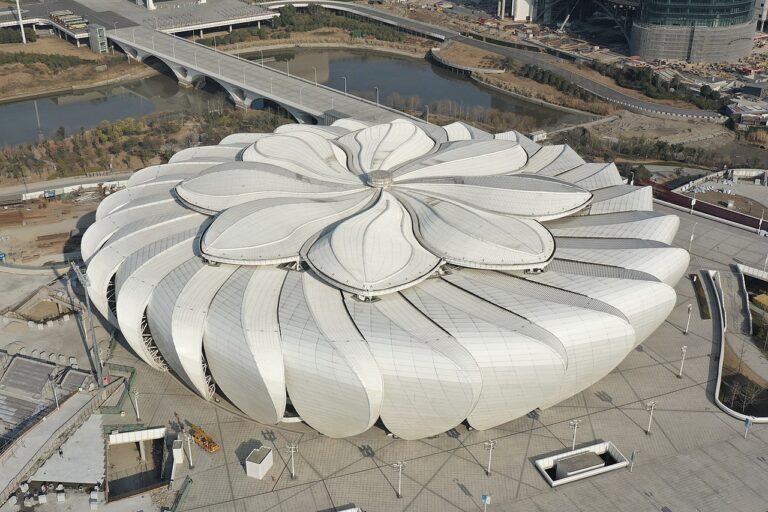
The AITO Hangzhou Open is one half of the ATP 250 doubleheader that opens the men’s Asian swing, running alongside the Chengdu Open in the same week. In two editions it has produced one of the strangest title runs in the tour’s modern history and one of the cleanest. Here is what the week involves.

The basics

The AITO Hangzhou Open runs 23-29 September 2026 in Hangzhou, China. It is an ATP 250 on outdoor hard courts, and the ATP lists the event’s official site as hangzhouopen.com.

Global Tennis News could not confirm the 2026 singles and doubles draw sizes or the prize money from a primary source before publication; the ATP tournament page serves those figures dynamically and they did not resolve. They are deliberately left out here rather than estimated.

The field

Daniil Medvedev and Andrey Rublev are the top two seeds, according to the ATP Tour. Medvedev arrives eighth in the PIF ATP Live Race To Turin and chasing a return to the Nitto ATP Finals after missing qualification last year for the first time since 2019. His US Open ended in the fourth round against Frances Tiafoe.

Rublev, the world No. 25, won two of five matches across the North American hard-court swing and is chasing a 19th tour-level title and a second of the season, after winning on clay in Bastad in July.

Tomas Martin Etcheverry and Quentin Halys are seeded third and fourth. Halys took eventual US Open champion Alexander Zverev to five sets in the second round at Flushing Meadows earlier this month. Adolfo Daniel Vallejo is the fifth seed, with Fabian Marozsan, Jaime Faria and Kamil Majchrzak also seeded.

In doubles, Halys pairs with Lucas Miedler for the first time as top seeds, in a draw that also includes Petr Nouza and Neil Oberleitner, and Francisco Cabral and JJ Tracy.

The Chinese contingent

Three Chinese players are in the singles main draw, led by Zhang Zhizhen and Buyunchaokete. Zhang has beaten Buyunchaokete in each of their past two meetings in Hangzhou, including the 2024 semi-final — the first all-Chinese semi-final in ATP Tour history. Wild card Cui Jie opens against Vallejo.

How the week opens

The ATP’s published order of play for the opening days has Aleksandar Vukic against Kyrian Jacquet and Valentin Royer against Adam Walton in the first round on Centre Court, with second-round qualifying running alongside: Alex Bolt against Akira Santillan, Bernard Tomic against Fajing Sun, Taro Daniel against Hiroki Matsuoka, and Dalibor Svrcina against Rio Noguchi.

Royer is the reason to look twice at that schedule. He reached last year’s final here as a qualifier. We covered the draw and Royer’s route back when it was made.

Past champions

Two editions, two very different weeks.

2024 — Marin Cilic d. Zhang Zhizhen 7-6(5), 7-6(5). Cilic came in as a wild card ranked No. 777, playing his first tour-level event since Buenos Aires in February of that year after months lost to a knee injury, and left as the lowest-ranked champion in ATP Tour history since 1990. Neither man was broken. Cilic hit 34 winners to Zhang’s 26 and simply played the two tie-breaks better. It was his 21st tour-level title and his first since 2021. “Thank you to my family, my boys, my wife,” he said at the ceremony.

2025 — Alexander Bublik d. Valentin Royer 7-6(4), 7-6(4). Bublik did not lose serve all week, joining Taylor Fritz as the only men that season to win a title without dropping serve. He hit 21 aces in the final, saved both break points he faced, and won in one hour and 51 minutes. The title took him to a career-high No. 16 and was his first on outdoor hard courts. Royer, playing his first tour final after coming through qualifying and beating top seed Rublev in the second round, rose to a career-high No. 75.

Bublik is not defending the title. He is in London this week, named to the Team World roster for the Laver Cup alongside Alex de Minaur, Taylor Fritz, Learner Tien, Francisco Cerundolo and Brandon Nakashima. Royer, the man he beat in the final, is the one who came back.

What the winner gets

An ATP 250 champion earns 250 ranking points. Global Tennis News could not verify the full round-by-round points and prize-money breakdown for the 2026 edition from a primary source and has left it out rather than reproduce an unofficial table.

How to follow it

The ATP publishes live results, draws and the daily order of play on its tournament pages, and broadcast listings on its TV schedule. Global Tennis News could not confirm territory-by-territory broadcasters for the 2026 edition from a primary source and has not listed any.

Where it sits in the calendar

Hangzhou and Chengdu open the men’s Asian swing. From here the tour moves to the ATP 500s in Tokyo and Beijing, then to the Masters 1000 in Shanghai. Our guides: Japan Open, China Open, Shanghai Masters. For the shape of the whole stretch, see The Asian Swing Explained.

Shang Juncheng Profile — The First Chinese Man to Win an ATP Title at Home

0

Shang Juncheng had never reached a tour-level final when he walked onto court in Chengdu in September 2024. He was 19, playing the tournament for the first time, and across the net was Lorenzo Musetti, the top seed and the world No. 19. Ninety-nine minutes later Shang had won 7-6(4), 6-1, and Chinese tennis had a first it had been waiting a long time for.

The Chengdu week

The first set was the match. Shang served for it, got tight, and was pegged back. His own account afterwards was that he kept his cool in the tie-break, listened to his coach, and set about fixing the serve and the forehand. He took the tie-break 7-4, and the second set was the one-sided one: 6-1.

“It’s really, really special for me,” he said, adding that doing it at home was what made it so. The result made him the first Chinese player to win an ATP Tour title on home soil, and only the second Chinese man to win one at all, after Wu Yibing in Dallas in 2023. It also made him the first player born in 2005 or later to win an ATP Tour title — a marker that says as much about where he sat in his generation as any ranking did.

The climb

The Chengdu title was the peak of a year that had been building since January. Shang opened 2024 by reaching his first ATP semi-final in Hong Kong and then the third round of the Australian Open. By the spring he had become the youngest Chinese player in history to crack the top 100, climbing to No. 89 after a semi-final run at the Challenger 175 in Bordeaux. Two years earlier he had been No. 401.

Between those markers came a fortnight in New York. Shang beat 27th seed Alexander Bublik 6-4, 3-6, 5-7, 6-3, 6-4 in three hours and 34 minutes for his first US Open win, then beat Roberto Carballes Baena to reach the third round. He had entered the season with four tour-level wins to his name and no tour-level quarter-final anywhere; by the US Open he had 18 wins for the year, semi-finals in Hong Kong and Atlanta and a quarter-final at Eastbourne behind him.

In October 2024, a few weeks after Chengdu, he became the first player born in 2005 or later to break into the top 50. The title also pushed him into second place in the race to the Next Gen ATP Finals, ahead of Alex Michelsen.

The game, and where it comes from

Shang is a left-hander, which on a tour where the lefty is a diminishing species is half his advantage before a ball is struck. The Chengdu final showed the rest of it: a willingness to shorten points from the back of the court once he has the forehand running, and a first serve that holds up under pressure after it has briefly stopped doing so.

Both his parents are athletes, and he has said the lesson he took from them was about not reading too much into either outcome — that success often carries luck in it, and failure often does too, and neither tells you much about the person. It is an unusual thing for a 19-year-old to say after the biggest win of his life.

Grand Slam best results

  • Australian Open: third round (2024)
  • Wimbledon: second round (2024)
  • US Open: third round (2024)

Career titles: one — Chengdu, 2024.

Season Snapshot — 23 September 2026

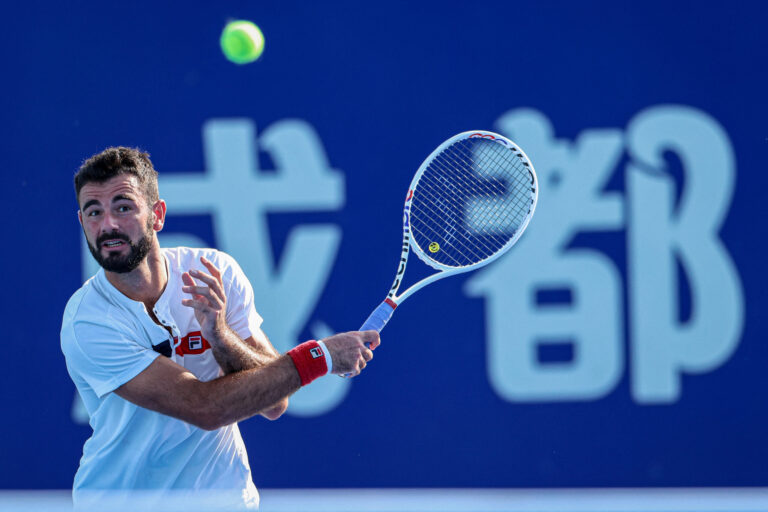
Shang is back in Chengdu this week, in the main draw of the event that gave him his only tour-level title. He opens against Adrian Mannarino. Win that, and a second-round meeting with defending champion Alejandro Tabilo is the likely reward. He is one of the players the ATP named as a home draw for the week, alongside Valentin Vacherot and Alejandro Davidovich Fokina at the top of the field.

His current ranking is deliberately not listed here: the figures available to us conflicted and none came from an approved primary source, so it has been left out rather than guessed.

This snapshot is dated and will change. The career record above does not.
More: the Chengdu Open Guide, The Asian Swing Explained, and the full ATP and WTA player index.

The PIF ATP Next Gen Accelerator Explained — How Young Players Get In

0

When a 17-year-old ranked outside the top 150 appears in an ATP 250 main draw, the usual assumption is a wild card. Increasingly, it is not. Moise Kouame is in the Chengdu Open field this week through the PIF ATP Next Gen Accelerator, and the same programme has already put a first ATP title in the hands of one of the tour’s fastest-rising players. Here is how it actually works.

What it is

The PIF ATP Next Gen Accelerator is the ATP Tour’s development pathway for young players, backed by PIF. Rather than leaving early-career access to the discretion of tournament directors, it creates a defined set of entry opportunities for players who earn eligibility through junior, college and professional routes.

The point is narrow and practical. A promising 19-year-old outside the top 200 can lose a year to travel costs and closed draws. The Accelerator removes some of that friction by guaranteeing a number of entries.

The ranking tiers

For 2026 the ATP sets out three bands for players aged 20 and under:

  • Inside the top 500: access to eight main-draw spots at ATP Challenger 50 or 75 events.
  • Inside the top 350: eight main-draw or qualifying spots at ATP Challenger 100 or 125 events.
  • Inside the top 250: one main-draw spot and two qualifying spots at certain ATP 250 tournaments.

That top band is the one that produces the headlines, because it is the one that drops a teenager straight into a tour-level draw.

The college route

A separate pillar runs through American college tennis. Players qualify by finishing in the top 20 of the year-end ITA singles rankings or by reaching the quarter-finals of the NCAA Division I singles championship. The ATP announced 23 qualifiers for the 2026-27 class, with opportunities running for 12 months from July 2026 for those leaving school, and a shorter six-month allocation for players returning to college so they can use it during the offseason and part of the fall season.

This is the pillar that has changed the complexion of the men’s tour fastest. Several players who came through it are now inside the top 100.

What else comes with it

Entry is not the whole program. The ATP added Tennis IQ powered by PIF in 2026, an analytics platform giving qualifying players match data of a kind that was previously the preserve of established tour professionals.

Who it has produced

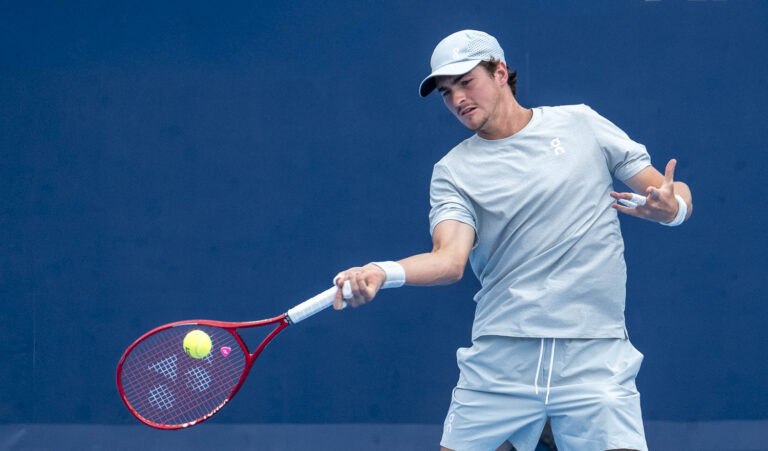
Joao Fonseca. The clearest case since Fonseca used the Accelerator to enter the ATP 250 in Buenos Aires and won it — his first ATP Tour title. He has since taken Jannik Sinner to two tie-break sets in Indian Wells, pushed Carlos Alcaraz in Miami, and reached a first Masters 1000 quarter-final in Monte-Carlo. He has just withdrawn from the Asian swing to recover.

Martin Landaluce. The Spaniard used the programme to enter the ATP 250 in Brisbane and the Challenger 125 in Monza. “This programme allows me to escalate in the rankings more easily,” he said of it.

Rafael Jodar. The ATP cites Jodar as qualifying for the 2026 Accelerator through the top-500 band. He makes his Laver Cup debut this week.

Moise Kouame. The 17-year-old Frenchman, ranked No. 191, received his entry to Chengdu through the programme. He already has three tour-level wins this year, and Global Tennis News covered him in March when he won at the Miami Open as the youngest to do so since Nadal.

How it differs from qualifying and wild cards

Three routes into a tour-level draw are easy to confuse. A wild card is discretionary and granted by the tournament. Qualifying is earned on court in the days before the main draw — we explain that in How Tour-Level Qualifying Works and for the majors, in How Tennis Qualifying Works. The Accelerator is neither: it is an entitlement earned by ranking, junior record or college results, allocated centrally by the ATP rather than by the host event.

That distinction matters when reading an entry list. An Accelerator entry is not a favor. It is a place the player qualified for months earlier, on paper.

Anisimova Hasn’t Played Since the US Open and Now Her Wrist Has Ended Singapore Too

0

Amanda Anisimova has not played a competitive point since Anastasia Potapova beat her in the third round of the US Open. She will not play one this week either.

The No. 2 seed withdrew from the Singapore Tennis Open on Tuesday with a left wrist injury, the WTA said, before she had struck a ball in the main draw. Anisimova had a first-round bye and was due to meet Australia’s Talia Gibson in the second round. Lucky loser Viktoria Morvayova takes her place and will face Gibson instead.

The season. Anisimova is ranked No. 11 and is 22-12 on the WTA Tour this season, according to the WTA. She was chasing her first title of 2026, and her first since last year’s Asian swing, when she won in Beijing.

Two wrists, one draw sheet. Anisimova is the second player to come out of this draw with a wrist problem. The official WTA draw sheet lists Janice Tjen as having withdrawn with a right wrist injury, with Mei Yamaguchi entering as a lucky loser. Anisimova’s is the left.

The seeds thin out. Donna Vekic, seeded eighth, went out on the same day, beaten 6-1, 6-2 by China’s Xinyu Wang. It was Wang’s second consecutive win over Vekic and levelled their head-to-head record at 2-2.

Elsewhere on Tuesday, Alycia Parks beat Yamaguchi 6-4, 6-3 to reach the round of 16, Tatiana Prozorova came through 5-7, 7-6(6), 6-2 against Sofia Costoulas, and Oleksandra Oliynykova beat Vivian Wolff 6-1, 7-6(5).

Who is left at the top. The official draw sheet has Mirra Andreeva seeded first at No. 5 in the rankings, ahead of Anisimova at No. 11, Alexandra Eala at No. 18, Elise Mertens at No. 19, Maja Chwalinska at No. 26, Leylah Fernandez at No. 31, Maria Sakkari at No. 33 and Vekic at No. 37. Two of those eight are now out of the tournament.

What it means. Singapore sits early in a WTA Asian swing that runs on through Beijing, Wuhan and Ningbo, and the withdrawal costs Anisimova match play at exactly the point in the calendar where she made her biggest gains a year ago. Global Tennis News could not confirm her entry status for the rest of the swing from a primary source at the time of writing.

Hubert Hurkacz Profile — Federer’s Last Opponent and a Shanghai Masters Title

0

Hubert Hurkacz arrived at Wimbledon in 2021 on a six-match losing streak. He left it as a Grand Slam semifinalist, having beaten Daniil Medvedev and then Roger Federer, 6-3, 7-6(4), 6-0. That quarterfinal was the last singles match of Federer’s career, according to the ATP Tour, and the Pole who closed it out had grown up with Federer as his idol.

He is the most successful man Poland has produced. His ATP biography credits him with eight tour-level titles from 12 finals, two ATP Masters 1000 trophies, two Nitto ATP Finals appearances and a career-high ranking of No. 6, reached in August 2024.

A tennis family in Wroclaw

Hurkacz started playing at five because his mother, Zosia, had been a junior champion in Poland, according to his ATP biography. His uncles Lech and Tomek also played, his grandfather played volleyball internationally, and his parents met as swimming teammates at the Wroclaw University of Economics. He grew up on clay and describes his game as all-around, with offensive and defensive skills. Growing up he idolised Federer and Michael Jordan. His favourite shot is the serve, and his favourite surface is hard court.

Miami, Halle, Shanghai

The breakthrough came in 2021. Hurkacz upset five seeds and beat Jannik Sinner to win the Masters 1000 title in Miami, then reached the Wimbledon semifinals and the semifinals of the Paris Masters. He finished the year at No. 9 after qualifying for the ATP Finals.

At Halle in 2022 he beat Medvedev, then ranked No. 1, 6-1, 6-4 in 63 minutes, for his fifth title in his fifth final. He lost the Montreal Masters final that summer and made the Miami semifinals. In Shanghai in 2023 he saved a championship point against Andrey Rublev to win his second Masters 1000 title, reached the Cincinnati semifinals and again finished the year at No. 9 after another ATP Finals appearance. He also won Masters 1000 doubles titles in Paris in 2020 with Felix Auger-Aliassime and in Miami in 2022 with John Isner.

Melbourne and Paris, 2024

At the 2024 Australian Open Hurkacz became the first Polish man to reach the quarterfinals in Melbourne, according to the tournament. In the fourth round the French wild card Arthur Cazaux raced to a 3-0 lead and never saw another break point, as Hurkacz won 91 per cent of his first-serve points and 76 per cent on his second, the ATP Tour reported. Medvedev beat him in the quarterfinal 7-6(4), 2-6, 6-3, 5-7, 6-4 in just under four hours, saving 10 of the 15 break points he faced. Afterwards Medvedev described Hurkacz as one of the three best volleyers on the tour, the tournament reported.

At Roland Garros that June he reached the fourth round as the eighth seed and served 20 aces against Grigor Dimitrov, who still won 7-6(5), 6-4, 7-6(3). It was Dimitrov’s sixth win in six tour-level meetings with Hurkacz, a close friend and practice partner, according to the ATP Tour. Two months later Hurkacz reached No. 6.

Knee surgery and the United Cup

His 2025 season stopped in June, when he withdrew from his second-round match in ‘s-Hertogenbosch with a back injury. He had arthroscopic surgery on his right knee on 2 July, and in late September he announced he would not play again that year. He finished the season 15-11 and ranked 69th, according to the ATP Tour. “In order to return to tournaments and compete at the highest level, I need to be prepared 110%,” he wrote.

The return began with a team title. At the 2026 United Cup he beat Alexander Zverev, then ranked third, and Taylor Fritz, then ninth, as Poland won the event, according to his ATP biography. He had lost to Zverev in the 2024 United Cup final and to Fritz in the 2023 semifinals and the 2025 final.

Playing style

Hurkacz names the serve as his favourite shot, and his best weeks have been built on it: 91 per cent of first-serve points won against Cazaux in Melbourne, 20 aces against Dimitrov on the clay in Paris. Behind it sits a volleying game that Medvedev, who has lost to him at Wimbledon and Halle, ranked among the three best on tour. Hurkacz himself describes an all-around game formed on the clay courts he grew up on, with defence as well as attack.

Grand Slam best results

  • Wimbledon: semifinals (2021)
  • Australian Open: quarterfinals (2024)
  • Roland Garros: fourth round (2024)

Season snapshot — 22 September 2026

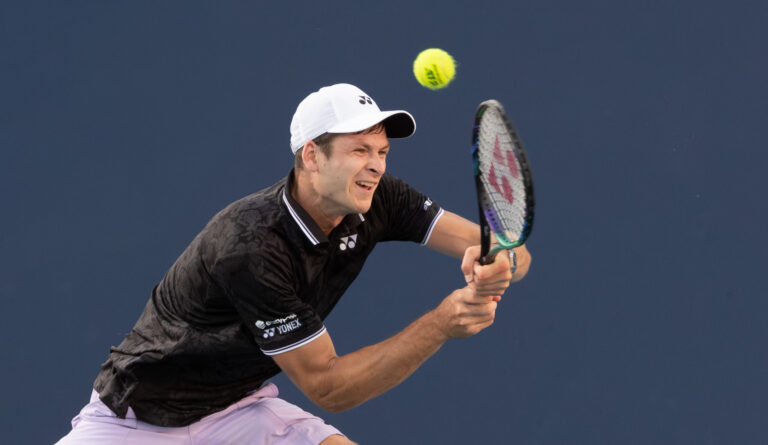
Hurkacz reached the final of the Chengdu Open in September as the fifth seed. He beat qualifier Lloyd Harris, who had knocked out top seed Valentin Vacherot, then Denis Shapovalov in the semifinals, before Alejandro Davidovich Fokina beat him in the final, according to the ATP Tour. He won the United Cup with Poland in January. Next on the calendar after the Asian ATP 500s is the Shanghai Masters, the event he won in 2023.

This snapshot is dated and will change. The career record above does not.
Tomas Martin Etcheverry Profile — Two Matches in One Day for a First Title

0

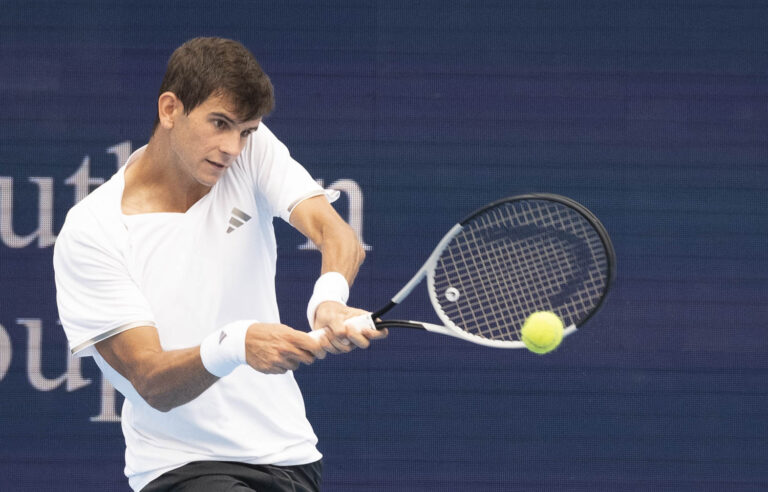
Tomas Martin Etcheverry needed three lost finals and one very long day to win his first ATP Tour title. At the ATP 500 in Rio de Janeiro in February 2026 he played his semifinal and his final on the same day. He came from a set down to beat Kopriva in three hours and 57 minutes, then beat Alejandro Tabilo in a final that lasted three hours and four minutes, according to his ATP biography.

Three months later he reached a career-high No. 25 and became Argentina’s No. 1 for the first time.

La Plata

Etcheverry is from La Plata, where both his parents, Fernando and Maria Lia, work as lawyers in family court, according to his ATP biography. He started at five, after his parents gave him a paddle ball on a beach holiday. “I would play with it for four hours each day,” he told the ATP. “When I came home, I asked my parents for tennis lessons and that’s how it started.”

His idols were Novak Djokovic and Juan Martin del Potro, and the shot he would take from another player is del Potro’s forehand. He has a dog named Roland Garros. He reached No. 12 in the junior rankings.

Through the Challengers

Etcheverry built his ranking on the Challenger Tour, going 49-19 in 2021 and 41-16 in 2022 with clay titles in Perugia, Trieste and Concepcion, according to the ATP Tour. He entered the top 200 in June 2021 and the top 100 in April 2022.

Roland Garros, 2023

His breakout came on clay in 2023. He beat Fabio Fognini, Francisco Cerundolo, Dusan Lajovic and Sebastian Baez on the way to his first tour final in Santiago, then beat Juan Manuel Cerundolo and Cristian Garin to reach the Houston final. At Roland Garros he reached the quarterfinals without dropping a set, taking his first two wins over top-20 players along the way: Alex de Minaur, then 19th, in the second round and Borna Coric, then 16th, in the third, according to the ATP Tour.

He won 31 matches in 2024, a personal best, and reached a third final in Lyon, where he held a match point against Giovanni Mpetshi Perricard and lost.

Playing style

Etcheverry’s best results have come on clay: his first title, the three lost finals before it and his Grand Slam quarterfinal. The Rio title also showed his endurance, with two matches of three hours or more on one day, the first of them from a set down. “I try to make myself better every day and I give my heart to everything I do,” he has said of himself, according to the ATP.

Grand Slam best results

  • Roland Garros: quarterfinals (2023)

Season snapshot — 22 September 2026

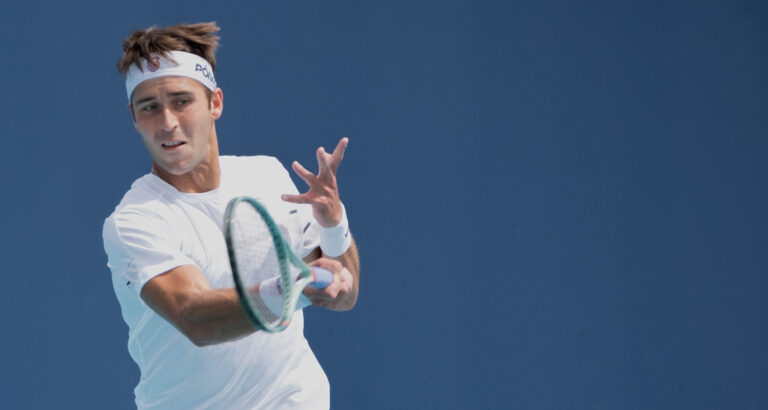
Etcheverry is the third seed at the Hangzhou Open this week, behind Daniil Medvedev and Andrey Rublev, according to the ATP Tour. He won his first title in Rio in February and reached his career-high No. 25 in May. Our Hangzhou and Chengdu draw report covers the field.

This snapshot is dated and will change. The career record above does not.
Fonseca Beat Stricker in Rio – Then Called Off Tokyo and Shanghai

0

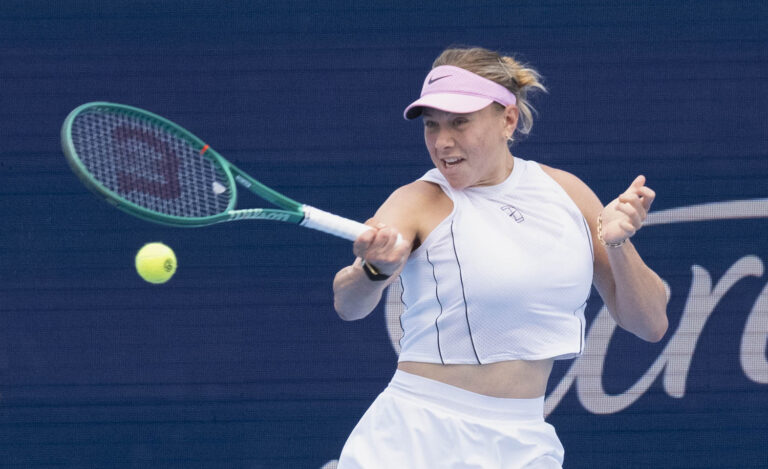
Joao Fonseca came back from the abdominal injury that kept him out of the US Open to win a Davis Cup rubber for Brazil in Rio de Janeiro last weekend, beating Dominic Stricker 4-6, 6-3, 6-2. On Monday he said he was done until the tour leaves Asia.

The 20-year-old Brazilian, ranked 28th, announced on Instagram that he would skip the Asian swing, according to AFP. That takes him out of the ATP 500 in Tokyo, which runs from 30 September to 6 October, and the Shanghai Masters that follows it.

“I made a huge effort to return and represent Brazil in the Davis Cup, but I still need more time,” Fonseca wrote, in AFP’s translation. “I talked a lot with my team, and we came to the conclusion that the best decision right now is to listen to my body, give my mind and body a break, and skip the Asian swing.”

The win in Rio. Stricker took the first set, and Fonseca turned the match around from there to give Brazil the opening point of a tie it went on to win 3-1 over Switzerland, AFP reported. It was his comeback match. The Instagram post that followed on Monday called 2026 “a very challenging year.”

The season so far. The injuries began early as recurring back problems contributed to a first-round exit at the Australian Open in January. The best tennis of his career came in between: in Paris he beat Novak Djokovic in the third round on his way to his first Grand Slam quarterfinal and he reached the third round at Wimbledon.

What changes in Tokyo. Fonseca was one of 23 names on the Tokyo entry list the ATP Tour published on 3 September, alongside the defending champion Carlos Alcaraz, Ben Shelton, Taylor Fritz and the 19-year-old Spaniard Rafael Jodar. His withdrawal opens a main-draw place for the next player on the alternates list. Our Japan Open guide and Shanghai Masters guide cover both events.

Another name on that Tokyo list is moving the other way. Alejandro Davidovich Fokina returns this week at the Chengdu Open, his first event since Umag in July after a back injury, according to the ATP Tour.

What comes next. Fonseca did not give a date for his return in the post. After Shanghai the tour moves indoors to Europe, the stretch our guide to the European indoor season lays out. “I know that’s just part of an athlete’s life,” he wrote, “but even so, it’s still frustrating.”

Chengdu Open Guide — Dates, Draw, Points, Past Champions

0

The Chengdu Open is an ATP 250 tournament played on outdoor hard courts at the Sichuan International Tennis Center in Chengdu, China. It was first held in 2016 and sits in the late-September weeks of the Asian swing, in the same week as the ATP 250 in Hangzhou and ahead of the ATP 500 events in Tokyo and Beijing. The tournament director is Nikhil Waugh.

No one has won it twice. Eight players have one title each, and the 2024 and 2025 finals were both lost by the same man, Lorenzo Musetti, who also holds the tournament record of eight match wins, according to the ATP Tour.

Format and points

The singles draw has 28 players. The top four seeds receive byes into the second round, and four places go to qualifiers from a two-day qualifying event, explained in how tour-level qualifying works. The doubles draw has 16 teams. The champion receives 250 ranking points, the finalist 165, semifinalists 100, quarterfinalists 50 and second-round losers 25. First-round losers receive no points.

Past champions

  • 2026: Alejandro Davidovich Fokina d. Hubert Hurkacz 6-4, 7-6(7)
  • 2025: Alejandro Tabilo d. Lorenzo Musetti 6-3, 2-6, 7-6(5), after saving two championship points
  • 2024: Shang Juncheng d. Lorenzo Musetti
  • 2023: Alexander Zverev d. Roman Safiullin
  • 2020 to 2022: not held
  • 2019: Pablo Carreño Busta d. Alexander Bublik 6-7(5), 6-4, 7-6(3)
  • 2018: Bernard Tomic d. Fabio Fognini, after saving four match points
  • 2017: Denis Istomin
  • 2016: Karen Khachanov

Records

The oldest champion is Istomin, who was 31 in 2017. The youngest is Shang, who was 19 in 2024 and remains the only home winner. The highest-ranked champion is Zverev, No. 10 when he won in 2023, and the lowest-ranked is Tomic, No. 123 in 2018, according to the ATP Tour.

Season snapshot — 2026 edition

Update — Oct. 2, 2026: Second seed Alejandro Davidovich Fokina won the title, beating fifth seed Hubert Hurkacz 6-4, 7-6(7) in the Sept. 29 final, according to the ATP. It was his second title of the season, after Mallorca in June, and came in his first tournament since Umag in July, after a back injury kept him off the tour.

The 2026 Chengdu Open runs from Wednesday 23 to Tuesday 29 September, with qualifying on 22 and 23 September. Total prize money is US$1,210,115, and the singles champion takes $184,085. Main-draw play starts at 1 p.m. local time from Wednesday to Sunday, with evening sessions on Monday 28 September, and the doubles final is on Tuesday 29 September at 4 p.m.

The seeds are Valentin Vacherot, Alejandro Davidovich Fokina, defending champion Tabilo, Botic van de Zandschulp, Hubert Hurkacz, Nuno Borges, Denis Shapovalov and Sebastian Baez. Tabilo opens against the winner of Shang, a wild card, and Adrian Mannarino. The cut for direct entry fell at No. 97. The draw and first-round matches are in our Hangzhou and Chengdu draw preview.

This snapshot covers the 2026 edition only. For the tournaments either side of Chengdu, see the Asian swing explained, the China Open guide and the Shanghai Masters guide.

Andreeva Leads a Singapore Draw With Byes for the Top Four, and Seoul Drops to a 250

0

Mirra Andreeva, Amanda Anisimova, Alexandra Eala and Elise Mertens will all start the week in the second round. The top four seeds have byes in the 28-player draw at the Singapore Tennis Open, which opened the WTA’s Asian swing on Monday alongside the Korea Open in Seoul.

Singapore has moved up to a WTA 500 this year and moved across the calendar. Mertens won it last season, when it was played in February after the Australian swing, so she arrives as the defending champion of a tournament that is seven months later than the one she won. Seoul has gone the other way. The Korea Open was a 500 for the past two seasons and is a WTA 250 in 2026, according to the WTA.

Singapore seeds. Andreeva (1), Anisimova (2), Eala (3), Mertens (4), Maja Chwalinska (5), Leylah Fernandez (6), Maria Sakkari (7), Donna Vekic (8).

Who the top four play first. Andreeva meets Daria Kasatkina or Aliaksandra Sasnovich. Mertens meets Barbora Krejcikova or Anna-Lena Friedsam. Eala meets Tatiana Prozorova or Sofia Costoulas. Anisimova meets Talia Gibson or Fiona Ferro. Among the other seeds, Fernandez opens against Kyoka Okamura, Chwalinska against Rebecca Sramkova, Sakkari against Linda Fruhvirtova and Vekic against Wang Xinyu.

How the draw falls. By seeding, the quarterfinals would be Andreeva against Fernandez, Mertens against Chwalinska, Eala against Vekic and Anisimova against Sakkari, with Andreeva and Mertens in the top half and Eala and Anisimova in the bottom. The winner takes 500 ranking points and the runner-up 325, according to the WTA. The singles final is on Sunday 27 September, not before 5 p.m. in Singapore, which is 5 a.m. ET.

Seoul. Jelena Ostapenko is the top seed in a 32-player draw at the Seoul Olympic Park Tennis Center, with no byes, and opens against Anastasia Zakharova. Kimberly Birrell is seeded second, followed by Lanlana Tararudee, Elena-Gabriela Ruse, Maya Joint, Anna Bondar, Magda Linette and Kamilla Rakhimova. Sofia Kenin, unseeded, plays Alina Charaeva. Three Korean players are in the first round: Sohyun Park against Robin Montgomery, Dayeon Back against Yuan Yue and Yeonwoo Ku against the qualifier Alevtina Ibragimova.

Iga Swiatek won Seoul last year, beating Ekaterina Alexandrova 1-6, 7-6(3), 7-5 in the final, according to the WTA. She is not in this year’s draw. The winner this week takes 250 points, and the final is on Sunday 27 September, not before 3:30 p.m. local time, which is 2:30 a.m. ET.

What the week is for. Both events are the last stop before the China Open in Beijing, the second-to-last WTA 1000 of the season, which begins on 29 September and is where Elena Rybakina and Aryna Sabalenka are scheduled to play their first tour-level event since the US Open final, according to the WTA. The Wuhan Open follows. The WTA lists 10 tour-level events over the seven weeks of the swing, the last push toward the WTA Finals at Indian Wells. In the Race standings the WTA published on 17 September, Rybakina had already qualified and Andreeva was fifth. For the full shape of the swing, see the Asian swing explained.