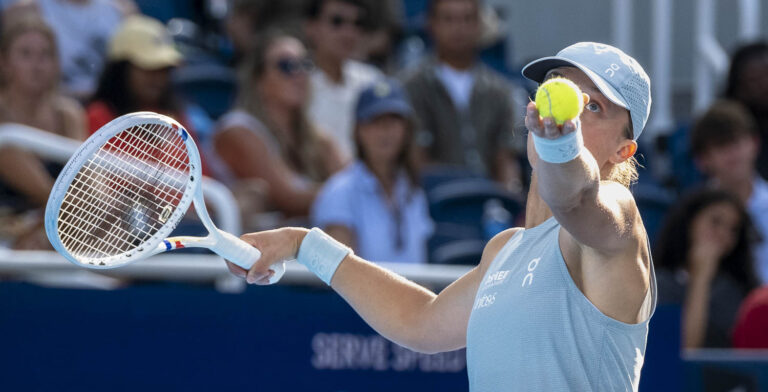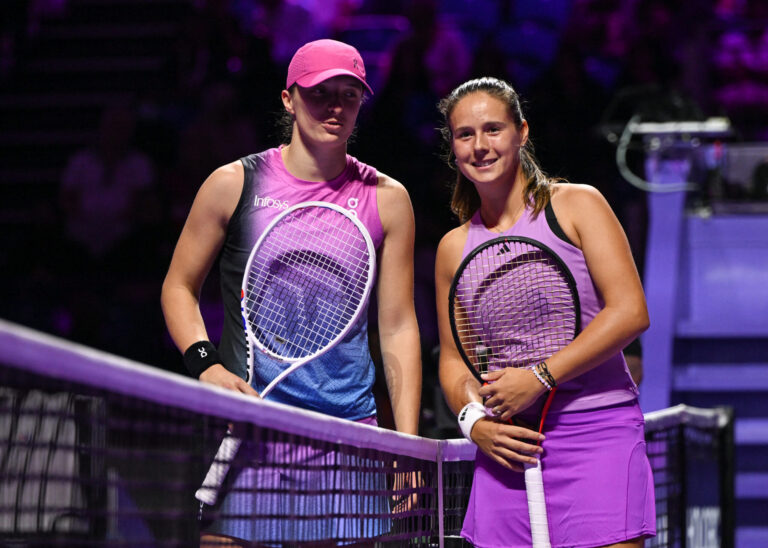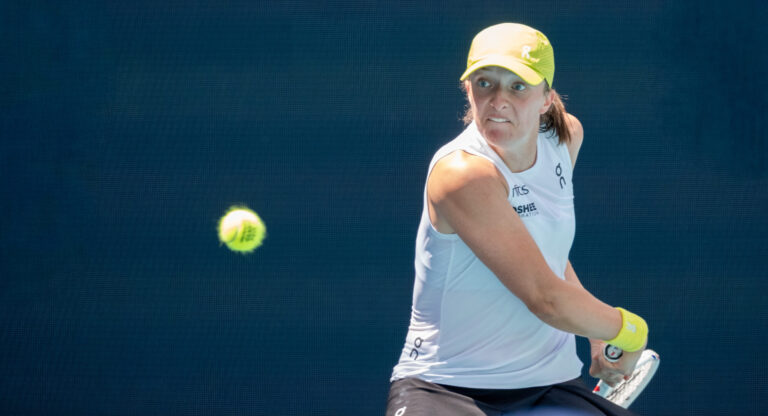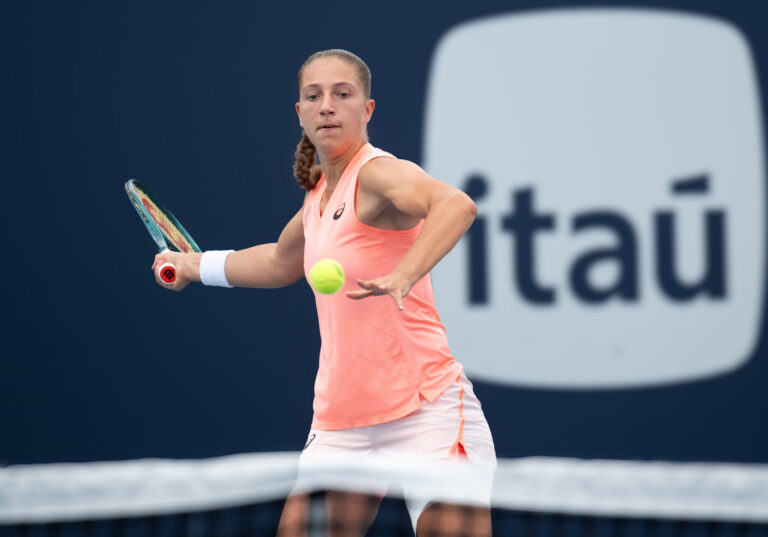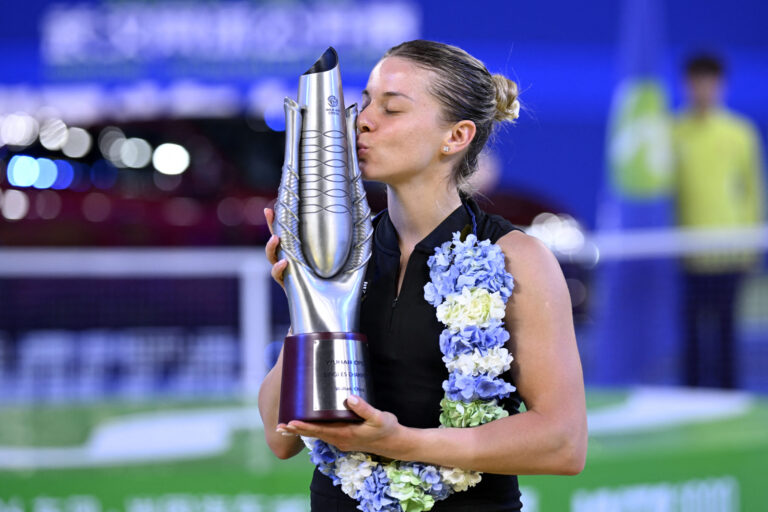
Venus Williams has made a late change to her doubles plans for the 2026 Mubadala DC Open, with Diana Shnaider replacing Alexandra Eala as her partner in Washington. Williams and Eala had initially been announced as a wild-card team after reaching the quarterfinals together at the Bad Homburg Open during the grass-court season. The updated Washington entry list, however, now pairs Williams with Shnaider.
No reason for the change has been publicly announced. Eala remains entered in the singles competition but is no longer listed in the women’s doubles field. The switch ends an anticipated reunion between Williams and Eala, whose partnership attracted attention because of the age difference between the two left-handed players.
They won their opening match together in Bad Homburg before advancing to the quarterfinals. Washington was expected to provide another opportunity for them to develop the partnership during the North American hard-court swing. Williams will instead join forces with one of the leading young players on the WTA Tour.
Shnaider, 22, brings an aggressive left-handed game and experience in both singles and doubles. Her power from the baseline and Williams’ ability around the net could make the new combination one of the more dangerous wild-card teams in the Washington draw. Williams remains one of the most accomplished doubles players in tennis history. The 46-year-old has won 22 WTA doubles titles, including 14 Grand Slam women’s doubles championships alongside her sister Serena Williams.
The sisters also won three Olympic gold medals together in women’s doubles. The Washington appearance will give Williams another chance to build match time ahead of the larger hard-court tournaments in August. She is entered in both singles and doubles at the DC Open. The partner change also creates an unusual possibility in the singles competition. Shnaider is among the seeded players in Washington, meaning the new doubles partners could potentially meet each other during the singles tournament.
Eala will continue with her own singles campaign after emerging as one of the WTA Tour’s most closely watched young players. Although the Williams-Eala reunion has been postponed, there has been no indication that they will not play together again later in the season. For now, Williams will begin her Washington doubles campaign alongside Shnaider in a late switch that adds another major storyline to the 2026 Mubadala DC Open.
Jack Draper’s ruinous season reached a new low this week when the entry list for the US Open was published without his name on it. The Briton has slid to No. 147 in the world, well beyond the cut for direct acceptance, and will need either a wildcard from the United States Tennis Association or three wins in qualifying to reach the main draw at Flushing Meadows, which begins on 30 August.
He sits on the alternate list with more than forty players ahead of him in the queue — a position that, barring an implausible cascade of withdrawals, offers no realistic route in. The ranking tells the story of a year lost to the treatment room rather than any decline in ability. Draper reached a career high of No. 4 last summer before a complex bone bruise in his left arm cost him the 2025 US Open and then swallowed most of this season.
He missed the Australian Open with the same problem, picked up a knee injury during the build-up to Roland Garros, and returned at Eastbourne in June to reach the semi-finals — only for the arm to flare again and force him out of Wimbledon days before his opening match against Taylor Fritz. In total he has played thirteen tour-level matches in 2026.
There is still time to move. Draper is entered for the Washington DC Open next week and has also signed up for a Challenger event in Brownsburg, and a decent fortnight would lift him a handful of places. It would not be nearly enough to close a gap of nearly fifty spots, but it would strengthen a wildcard case that already looks compelling on merit alone.
He is not the only former top-five player left waiting. Grigor Dimitrov, once ranked No. 3, is at No. 142 after a long recovery from the torn pectoral muscle he suffered at Wimbledon in 2025 and a season of poor results either side of it. Dimitrov was given a wildcard at the All England Club last month and repaid it by reaching the fourth round before losing to Arthur Fery.
Stan Wawrinka, a three-time major champion, Alexei Popyrin and Reilly Opelka are also absent from the direct entries. World No. 101 Francisco Comesaña was the last man to squeeze in. That quartet of names — Draper, Dimitrov, Wawrinka, Opelka — will now shape one of the more difficult wildcard decisions the USTA has faced in years, given that such places are usually reserved for emerging Americans.
The picture is happier elsewhere on the British list. Emma Raducanu keeps her place despite not having competed since withdrawing from Wimbledon with a stress fracture in her leg, her ranking still comfortably inside the cut. And Fery, who came through as a wild card to reach the Wimbledon semi-finals, has earned direct entry to a Grand Slam for the first time in his career.
At the top of the men’s list, Jannik Sinner is entered as the world No. 1 and reigning Wimbledon champion, alongside Roland Garros winner Alexander Zverev. Carlos Alcaraz appears as the No. 3 and defending champion, despite having not played a competitive match since injuring his right wrist in Barcelona in April; his camp is targeting a return at the Cincinnati Masters in mid-August. Thanasi Kokkinakis, Juncheng Shang and Filip Misolic are all in on protected rankings.
The North American hard-court swing lost two of its biggest names on Friday, when world No. 1 Jannik Sinner and 24-time Grand Slam champion Novak Djokovic both withdrew from the National Bank Open. Tournament organizers confirmed the withdrawals barely a week before main-draw play begins at the ATP Masters 1000 event, which runs Aug. 2-13 in Montreal. Both men had appeared on the original entry list. Sinner was set to be the top seed, Djokovic the No. 7.
Sinner said in a statement that the call was made after he and his team weighed every factor, and that stepping away was “the right decision to prioritize my health.” He described the withdrawal as a difficult one and said he expects to play the tournament again in the future.
Djokovic offered no public explanation. His absence is consistent with the reduced calendar the 39-year-old Serbian has kept all season, skipping smaller events and building his year around the majors. Treat it as workload management rather than a stated injury: nothing beyond the tournament’s confirmation has been put on the record.
Neither man has competed since Wimbledon, where Sinner beat Djokovic in the semifinals and then defeated Alexander Zverev in the final to defend his title and claim a fifth major. Sinner has since gone quiet, and he is expected to stay off the match court until the Cincinnati Open, which opens Aug. 11 and closes with a Sunday final on Aug. 23. That would leave him roughly a month between competitive matches at the point in the season when reps on hard courts matter most.
For Montreal, the sting is that this is not new. Sinner, Djokovic and Carlos Alcaraz — the three biggest draws in men’s tennis — all missed last year’s edition in Toronto. Alcaraz is absent again in 2026, left off the entry list entirely as he continues to recover from the right wrist injury that cost him Roland Garros and Wimbledon. Three of the four marquee names in the sport are gone from a US Open tune-up for the second consecutive year.
She said the tournament has already opened discussions with the ATP about it. Organizers had also expected a lighter attrition rate this year: the event begins three weeks after the Wimbledon finals, a full week later in the calendar than in 2025.
The sharper question for an American audience is what the absences mean for the last stretch before New York. Sinner arrives at the US Open as the sport’s dominant force — he is 44-3 this season with six titles — but with almost no recent hard-court match play, and Cincinnati alone as a tune-up. Djokovic, 14-5 on the year, has leaned on the same low-volume approach for several seasons and has generally made it work at the majors, though the margin for a 39-year-old is thinner every summer.
That matters beyond a trophy. A Masters 1000 title carries 1,000 ranking points, and with the top two absent, the ceiling on the draw has been lifted for a group of players who will also be jockeying for US Open seeding as the cutoff approaches. For Shelton and Fritz in particular, Montreal is a chance to build hard-court form and ranking cushion in the same fortnight.
Whether the players who capitalize can carry it to Flushing Meadows is the open question. The men who did not turn up are betting they will not need the reps.
Roger Federer is coming back to Arthur Ashe Stadium — but before anyone mistakes it for a comeback, the details matter. The 44-year-old Swiss great, who retired in 2022, will headline a one-night exhibition titled “Roger Federer: An Icon Returns to New York” on Tuesday, Aug. 25, during US Open Fan Week, the U.S. Tennis Association has confirmed.
It is an exhibition, not a competitive entry: Federer will play a legends doubles match on the sport’s biggest show court, partnering longtime rival Andy Roddick against Andre Agassi and John McEnroe. The evening falls before the main draw begins, and the USTA has promised additional celebrity appearances and surprises through the night.
For a five-time US Open champion who has not set foot on court in Flushing Meadows since a 2019 quarterfinal, the return carries obvious weight. Federer won five straight titles in New York between 2004 and 2008 — the only man or woman ever to do so — and beat both Agassi and Roddick in finals along the way. “The US Open has always been one of the most special tournaments for me,” he said in the announcement, framing the night as a celebration rather than a contest.
So what has Federer actually been doing to get ready? Less grinding, more easing back in. His return to a match court this year began in January at the Australian Open, where he took part in a doubles exhibition during the tournament’s opening celebrations alongside fellow legends including Agassi, Lleyton Hewitt and Pat Rafter. It was his first time hitting competitively since retiring, and a low-stakes way to test the arm and the timing on a big stage.
Since then, much of Federer’s summer has looked more like a victory lap than a training block. He was a familiar presence at Wimbledon, taking his customary seat in the Centre Court Royal Box. In July he visited Rafael Nadal’s academy in Mallorca, touring the newly opened Rafa Nadal Museum; in comments published by the academy, Federer called the space beautiful and emotional and praised the work behind it. The two former rivals, now close friends, have been spotted together repeatedly in recent weeks.
His summer schedule also appears to include lighter off-court preparation, such as golf outings, hitting sessions and family court time, although several of those details are based on unconfirmed sightings rather than verified appearances.
Federer has hardly disappeared since walking away. He remains the driving force behind the Laver Cup, the team event he co-founded, and his stake in the Swiss sportswear brand On has turned into one of the more lucrative second acts in sports. Retirement, for him, has meant a shift in venue rather than an exit from the game — which is precisely why an Arthur Ashe cameo feels natural rather than forced.
The New York night is only the first half of a headline August. Two days after the exhibition, Federer heads to Newport, Rhode Island, where he will be inducted into the International Tennis Hall of Fame as the centerpiece of the Class of 2026, alongside broadcaster Mary Carillo. The three-day celebration runs Aug. 27–29, and Federer is set to play the Hall of Fame Celebrity Pro Classic on grass on Aug. 28 — his first outing on the surface since his 2021 Wimbledon farewell — before the formal enshrinement on Aug. 29.
Demand for the New York night has been intense. Follow-up reporting this week noted that tickets for the exhibition are proving hugely popular, underscoring that Federer’s pulling power remains undimmed nearly four years into retirement. New York, where his black-clad night matches once earned him the “Darth Federer” nickname, was always one of his loudest rooms.
None of it changes the essential fact for fans hoping for one more competitive run: this is a celebration, not a return to the tour. But for a crowd that watched Federer own the place for the better part of a decade, an August night on Arthur Ashe — with Roddick, Agassi and McEnroe for company — may be the next best thing.
Lorenzo Musetti is poised to end nearly three months on the sidelines, appearing on the entry list for the Mubadala Citi DC Open as the Italian looks to salvage an injury-wrecked season and rebuild form before the U.S. Open.
Musetti, now ranked No. 14, has not played a tour-level match since a tear to the rectus femoris in his left thigh — sustained at the Italian Open in Rome in May — forced him to withdraw from both the French Open and Wimbledon. His inclusion among the acceptances for the ATP 500 event in Washington, which runs July 27 to Aug. 2 at the William H.G. FitzGerald Tennis Center, signals that the 24-year-old intends to open his North American hard-court swing in the U.S. capital.
The return, if it holds, would cap a frustrating stretch for a player who began the year as one of the sport’s fastest risers. Musetti climbed to a career-high No. 5 in January after reaching the Hong Kong final, then pushed Novak Djokovic to the brink in the Australian Open quarterfinals, leading by two sets before a leg injury forced him to retire from the match. It was the latest in a run of physical setbacks that have repeatedly interrupted his best tennis at the biggest moments.
What followed was a stop-start spring. Musetti made only a handful of appearances through the Sunshine Double and the clay swing, showing flashes — including a quarterfinal run in Barcelona — without stringing results together. Then came the Rome injury, a muscle tear that ruled him out of Roland Garros, where he had reached the semifinals a year earlier, and cost him the entire grass season through Wimbledon. By the time the tour reached the North American hard courts, Musetti had slipped nine places out of the top 10 he had occupied at the start of the year.
Washington offers a favorable landing spot. The men’s field has thinned considerably in the run-up to the tournament, with Arthur Rinderknech, Sebastian Korda, Reilly Opelka and Felix Auger-Aliassime all off the list, leaving defending champion Alex de Minaur and Taylor Fritz as the only top-10 players in the draw. That reshaped field could hand Musetti seeding and a manageable early path as he shakes off the rust. He is not the only marquee name returning from injury in Washington either: Britain’s Jack Draper, sidelined much of the season with an arm problem, is also set to make his comeback there, alongside wildcard entrants Stefanos Tsitsipas and Kei Nishikori.
For Musetti, the timing is about more than one tournament. Washington is the first hard-court event before the two Masters 1000 stops in Canada and Cincinnati that traditionally set the table for the U.S. Open, which begins Aug. 23 at Flushing Meadows. With minimal match play since the winter and a ranking to defend down the stretch, the Italian needs court time as much as results, and the DC Open gives him a low-pressure runway on a surface where he has historically been less comfortable than on clay.
The comeback is not without caveats. An entry-list appearance is not a guarantee of match play, and players can and do withdraw before the first ball is struck, particularly when returning from a muscle injury that demands full match-intensity loading before it can be trusted. Reporting from Italy has described his rehabilitation as progressing well, but Musetti himself has not competed since spring, and the gap between a clean practice block and a best-of-three battle in Washington’s late-July heat is where comebacks are often tested.
Should he come through it, the reward is significant. Musetti at his best is a top-five talent with a one-handed backhand and a shot-making range few on tour can match, and a healthy summer would put him back in the conversation among the second tier of contenders chasing Jannik Sinner and Carlos Alcaraz. First, though, comes the simplest and hardest test of all after so long away: getting back on court and staying there.
Serena Williams gave her comeback a pulse this week with nine words on TikTok: “Looks like my knee is finally getting better. Finally!” The clip, posted alongside a dancing video, was the clearest signal yet that the right knee that derailed her return at Wimbledon is no longer the emergency it looked like three weeks ago, when she shared images of syringes filled with fluid drained from the joint. What the post did not do was put her name on an entry list.
Williams, 44, does not appear in the fields for Washington, the Canadian swing or Cincinnati — the three hard-court stops that make up the traditional runway into Flushing Meadows. The DC Open begins Monday. Cincinnati wraps in the third week of August. The US Open singles main draw starts Sunday, August 30. On current paper, Williams would arrive in New York without a competitive hard-court match in her legs.
That is a problem her own camp has already identified. Coach Rennae Stubbs said at Wimbledon that Williams intends to keep going — “Her intention is to keep playing; the US Open as well” — and made clear that she would like to compete somewhere before the final major. Stubbs also suggested hard courts should be kinder to her than grass, where her movement was visibly compromised in a three-set first-round loss to Maya Joint, her first singles match since 2022.
The preparation gap matters because of what happened last time. Williams went into Wimbledon with two doubles matches and zero singles matches behind her. She still pushed a rising Australian to three sets, and Stubbs said she had been beating main-draw players in practice sets before the tournament. But she injured the knee mid-match, could not defend herself in the rallies, and withdrew from the doubles reunion with Venus before it ever started.
Repeating that formula in New York — a cold start, best-of-three on a slower, higher-bounce surface, in front of the biggest audience of her career — is the outcome nobody around her wants. So the summer now hinges on a wild card. There are three of them available, and each one buys her something different.
Route one: a singles wild card into a lead-in event
The purest option, and the one Stubbs has effectively asked for. A singles wild card at a hard-court tournament would give Williams what she has not had since 2022: a competitive match on the surface she is preparing for, with the option to withdraw quietly if the knee objects. She would have no difficulty getting the invitation. Tournament directors would take the ticket sales and the broadcast numbers without blinking.
The cost is exposure. A first-round loss in a smaller draw becomes a referendum on whether the comeback is real, two weeks before she is due in New York. There is also the perennial wild-card argument — that spots handed to a 44-year-old icon are spots taken from a player who spent the season grinding for them. Williams has heard that argument for a decade. It has never stopped a tournament from making the offer.
The window is narrowing. The events left before the US Open are few, and a late entry into a 250 in the final week would be tight preparation rather than proper preparation.
Route two: doubles with Venus
The reunion that Wimbledon was denied. Doubles is the softest landing available: shorter points, half a court to cover, a partner to absorb the workload, and a knee that gets asked to change direction far less often. It is also, commercially, close to bulletproof — the Williams sisters on a hard court in an American summer is a stadium-filling event regardless of the result.
The catch is that it is not a singles tune-up. Two doubles matches were exactly the preparation that failed her at Wimbledon. Doubles keeps the comeback alive and gives the knee a live test; it does not solve the problem Stubbs has publicly named.
Route three: the mixed doubles event
The most interesting card in the deck, and the one most people are overlooking. The US Open’s reimagined mixed doubles championship runs during Fan Week, from August 24 to 26, in the days before the singles main draw begins — a compressed, short-set, no-ad format spread over three days, with eight of the sixteen team slots handed out as wild cards. This year the event has added an eight-team qualifying competition on August 24.
For Williams, the appeal is obvious. It is played at the venue she has owned more than any other. It is the lightest physical load of any of the three routes. And critically, it is not a separate trip — she could use it as a live rehearsal on the exact courts she would play the following week, then decide about singles with real information rather than a hunch. The format’s star-power draw makes her one of the most obvious wild-card recipients on the board.
It also raises the question that will dominate the next month: who partners her, and does that decision tell us anything about how the knee is actually doing?
What to watch
Entry deadlines and wild-card announcements are the tell. If Williams accepts a singles wild card at a lead-in event in the next fortnight, the ambition is intact and New York is a genuine target. If the only card she takes is mixed doubles during Fan Week, the comeback is being managed carefully rather than pushed. If nothing comes at all, the TikTok update was a health bulletin, not a schedule.
Her own summary after Wimbledon still stands as the best guide to her intentions. Stay tuned, she said, to a city near you.
Olympic tennis will begin three days after the Wimbledon final in 2028 — and the sport is already arguing about what that will cost. The confirmed schedule for the Los Angeles Games puts the tennis event at Carson Courts from Wednesday 19 July to Friday 28 July 2028. Wimbledon closes on Sunday 16 July. Mixed doubles opens the Olympic programme on the 19th, with the men’s and women’s singles draws starting a day later.
That leaves a champion crowned on Centre Court roughly 96 hours to cross an eight-hour time difference, move from grass to hard court, and walk out for a first-round Olympic match on the other side of the world. It is the tightest turnaround the modern Olympic tennis event has ever asked for, and it arrives at the exact moment the sport is trying to sell itself to the American mainstream.
Two ways to read the same calendar
Olympic tennis spent two decades rebuilding its standing with the elite, climbing out of the thin, patchy fields of the 1990s to a Paris 2024 draw that featured essentially everyone worth featuring. A three-day gap threatens that progress in one stroke: tired bodies, jet lag, a surface switch, and a ranking-points calculus that already forces players through 20 mandatory events on the ATP side and 21 on the WTA. Push a fatigued or slightly injured player toward that decision and the honest answer is often a withdrawal — which would hand the Games a depleted draw in the sport’s largest commercial market.
The calmer reading points at the draw sheet. By the Tuesday of Wimbledon’s second week, the singles fields are down to eight men and eight women. The overwhelming majority of the players who will compete in Los Angeles will therefore have lost at Wimbledon well over a week before the Olympic event starts — plenty of time to fly, adjust, and train on hard courts. The genuine crunch applies to a handful of semi-finalists and finalists, not to the field.
Both readings are defensible. What neither can dodge is that the small group actually affected is precisely the group the Olympics is selling tickets on.
The names in the squeeze
Novak Djokovic has said repeatedly that Los Angeles is the finish line he is aiming at. He will be 41. He arrives as reigning champion, having beaten Carlos Alcaraz in one of the great gold-medal matches in Paris — and he is exactly the kind of player who would need the deepest possible Wimbledon run to be at his best, and exactly the kind who could least afford the recovery bill afterwards.
Alcaraz, still chasing the gold that eluded him in Paris, and Jannik Sinner, for whom an Olympic title would complete a set that almost nothing else can, face the same arithmetic from the other end of a career. So does Zheng Qinwen, the defending women’s champion, and so do Iga Swiatek, Aryna Sabalenka and Coco Gauff.
For all of them the question is not really about logistics. It is about which trophy they are willing to compromise. Ease off in the second week at the All England Club and the Olympic body arrives fresh. Go the distance at Wimbledon and Carson becomes a survival exercise. No top player will say out loud which one they would choose. Every one of them will have to.
One surface change, not two
There is a mitigating detail worth keeping in view. In 2024 the transition was grass to clay, a genuinely alien switch that sent players to warm-up events on the dirt before Paris. Los Angeles asks only for grass to hard — the move the tour makes every year on the way to the North American summer. It is a shorter adjustment, even if it is being compressed into almost no time at all.
The event itself is also growing. Ten days instead of nine, with draws unchanged at 64 in each singles event, 32 teams in the doubles and 16 in mixed. Nations can send up to four singles players, two doubles teams and one mixed pair. Entries will be set by the rankings of Monday 12 June 2028, the day after Roland Garros concludes, with medal matches across 27 and 28 July.
Two years out, none of this is fixable by the players. The schedule is the schedule. What is left is the decision — and by the time the grass season of 2028 comes into view, “Wimbledon or gold?” will be the only question anyone is asking the top eight.
The 2026 Cincinnati Open entry list is out, and it is close to a full house. Every player in the WTA top 10 is entered, and 75 of the world’s top 77 will head to the Lindner Family Tennis Center in Mason, Ohio, for the final WTA 1000 event before the US Open. World No. 1 Aryna Sabalenka heads the list, defending champion Iga Swiatek returns to a tournament that may matter more to her than anyone, and 2023 winner Coco Gauff is one of five past champions in the field.
Main-draw play begins Thursday, August 13, with the singles final on Sunday, August 23 — a scheduling tweak for 2026, after last year’s finals landed on a Monday. Qualifying starts August 11. From there the tour goes straight to New York, where the US Open runs August 31 to September 13.
Who is in: the top 20
The direct-entry list is led by Sabalenka, followed by Elena Rybakina, Jessica Pegula, Gauff, Mirra Andreeva, Karolina Muchova, Linda Noskova, Swiatek, Amanda Anisimova and Elina Svitolina — the complete top 10, with no exceptions.
The rest of the top 20 is equally intact: Marta Kostyuk, Belinda Bencic, Iva Jovic, Sorana Cirstea, Diana Shnaider, Ekaterina Alexandrova and Anna Kalinskaya are all entered, alongside Naomi Osaka and Jasmine Paolini.
Ten Grand Slam singles champions are in the field. Beyond the obvious names, that group includes Jelena Ostapenko and Barbora Krejcikova, plus 2021 US Open winner Emma Raducanu, 2020 Australian Open champion Sofia Kenin, 2019 Cincinnati and 2025 Australian Open champion Madison Keys, and Osaka.
Five former Cincinnati champions
Cincinnati’s honor roll is unusually well represented this year. Swiatek (2025), Sabalenka (2024), Gauff (2023), Keys (2019) and Karolina Pliskova (2016) all hold direct entry.
Add the past finalists and the depth grows again: Osaka (2020 finalist), Paolini (2025), Pegula (2024) and Muchova (2023) have all played for the Rookwood Cup and lost.
Draw composition: how the 96 spots break down
Cincinnati expanded to a 96-player singles draw in 2025 and keeps that format in 2026. The breakdown:
Category
Spots
Direct entrants
75
Qualifiers
12
Wild cards
8
Special exemption
1
Total
96
The eight wild cards will be announced closer to the start of the tournament. With a 96-draw, the top 32 seeds receive first-round byes, meaning the biggest names will not appear until the second round.
Who is missing
Only two players inside the top 77 are absent, and both are injuries rather than schedule choices.
Victoria Mboko (No. 12) remains sidelined with the MCL injury she picked up at the HSBC Championships at Queen’s Club — a significant absence for a player who has spent 2026 establishing herself inside the top 15.
Hailey Baptiste (No. 34) is out for the remainder of the season after tearing an ACL at Roland Garros.
There is one further change at the back end of the list: Lois Boisson, who had entered using a protected ranking, has withdrawn. Kamilla Rakhimova takes her place in the main draw.
The alternate list
If more withdrawals follow — and at this stage of a long hard-court swing, they usually do — these are the next eight players in line, in order:
Maria Timofeeva
Taylor Townsend
Simona Waltert
Yulia Putintseva
Renata Zarazua
Lilli Tagger
Eva Lys
Solana Sierra
Townsend at No. 2 on that list is the name to watch. The former world No. 1 in doubles has become a genuine singles threat on US hard courts, and a single withdrawal puts her in the draw.
The Spanish-speaking and Latin American contingent
For fans in Spain and across Latin America, the published field carries a solid representation. Paula Badosa leads the Spanish group, joined by Jessica Bouzas Maneiro and Cristina Bucsa. Colombia has two players in Camila Osorio and Emiliana Arango, while Brazil’s Beatriz Haddad Maia is entered as her country’s standard-bearer.
Two more names sit on the alternate list and could yet make it in: Mexico’s Renata Zarazua, fifth in line, and Argentina’s Solana Sierra, eighth. Both have shown they can win matches at this level, and both are one or two withdrawals away from a main-draw spot.
Note that entry lists shift daily between publication and the draw ceremony, so the cut line will move.
Three storylines that will define the week
Swiatek is defending 1,000 points and a decade of consistency
No player arrives in Mason with more on the line than the defending champion. Swiatek has slipped to No. 8 after an uneven 2026 that included earlier-than-expected exits at Roland Garros and Wimbledon, and she is now defending the full 1,000 points from last year’s title run. Another early loss would put real pressure on a top-10 streak that has run unbroken for close to five years — one of the most remarkable stretches of consistency in modern women’s tennis.
Sabalenka wants momentum, not just the ranking
Sabalenka is world No. 1 and has titles in Brisbane, Indian Wells and Miami in 2026, but she has not won a major this season. Cincinnati is her last WTA 1000 before she returns to New York to defend her US Open crown, and it is the closest thing to a dress rehearsal she will get.
Rybakina has a live shot at No. 1
The Kazakh sits at No. 2 and enters the North American swing with a mathematical path to the top ranking. Deep runs in both Montreal and Cincinnati, followed by a strong US Open, would put the top spot genuinely in play. On hard courts, she has been as consistent as anyone on tour this year.
The American angle
Twelve American women are entered, the largest national contingent in the field. Pegula leads at No. 3, with Gauff, Anisimova, Jovic, Keys and Emma Navarro also inside the world’s top 30. Cincinnati native Peyton Stearns is in the draw as well, along with hometown favourite Caty McNally on the wider tournament roster — a local storyline the event has leaned into before.
Cincinnati Open 2026: key facts
Event: Cincinnati Open (WTA 1000)
Venue: Lindner Family Tennis Center, Mason, Ohio
Surface: Outdoor hard
Qualifying: August 11–12
Main draw: August 13–23
Singles final: Sunday, August 23
Draw size: 96 singles, 32 doubles teams
Points for the champion: 1,000
Defending champion: Iga Swiatek
Next up: US Open, August 31 – September 13
Cincinnati Open 2026 FAQ
When does the Cincinnati Open 2026 start?
Qualifying begins Monday, August 11, 2026. Main-draw play starts Thursday, August 13, and the singles finals are on Sunday, August 23.
Who is the defending women’s champion at the Cincinnati Open?
Iga Swiatek, who won the 2025 title and is defending 1,000 ranking points in Mason.
How big is the Cincinnati Open women’s draw?
The singles draw holds 96 players: 75 direct entrants, 12 qualifiers, eight wild cards and one special exemption. The top 32 seeds receive first-round byes.
Where is the Cincinnati Open played?
At the Lindner Family Tennis Center in Mason, Ohio, about 22 miles north of Cincinnati, on outdoor hard courts.
Alex Eala begins the North American hard-court swing with less to lose than almost anyone ranked near her, and that arithmetic — more than any single result — is what puts a top-20 debut in play before the US Open.
The 21-year-old Filipina sits at No. 29 in the PIF WTA Rankings published July 20 with 1,666 points, one week after climbing to a career-high No. 28 on the strength of her run to the Wimbledon fourth round. The slip was not her doing. Barbora Krejcikova’s title at the Athens 250 vaulted the Czech from No. 32 to No. 26 and pushed everyone beneath her down a rung.
That is the traffic Eala is now sitting in. Krejcikova holds 1,679 points, Emma Navarro 1,674 and Anastasia Potapova 1,667 — meaning a single point separates Eala from No. 28, and 13 points separate her from No. 26. At that density, one completed match at a WTA 1000 reorders the board.
The more consequential number is what she has to protect. Eala defends just 70 ranking points across the entire swing, all of them from her second-round finish at the 2025 US Open. A left shoulder problem picked up after Wimbledon last year limited her to two tour-level events in the second half of the summer; she lost her opening match at the National Bank Open and skipped Cincinnati altogether.
Her only other returns from that stretch — 10 points in Canada and 25 from a quarterfinal at the ITF W100 in Cary, North Carolina — fall outside the best-18 tournaments that make up her ranking total, so they contribute nothing now and cost her nothing when they expire. Almost everything she earns over the next six weeks is therefore additive.
The schedule gives her four chances to add. Eala is listed for the Mubadala Citi DC Open in Washington from July 27 to Aug. 2, a WTA 500 where a quarterfinal is worth 108 points and the title 500. She is on the entry list for the National Bank Open in Toronto, the WTA 1000 running Aug. 1-13 at Sobeys Stadium, where 72 of the world’s top 75 are entered.
The Cincinnati Open, also a 1000, follows Aug. 8-23 in Mason, Ohio, with tournament organizers name-checking her in their field announcement. And the USTA listed her at No. 29 among direct entries for the US Open, which runs Aug. 30 to Sept. 13 in Flushing Meadows — her second main-draw appearance there.
Getting to No. 20 outright is a steep ask on current numbers. Anna Kalinskaya occupies that position with 2,300 points, 634 clear of Eala. No quarterfinal, and no single 500-level title, closes that gap by itself; it takes something like a semifinal at a WTA 1000, or two deep runs stacked.
But the target is moving toward her. Kalinskaya was the Washington runner-up last year and drops 325 points if she fails to repeat. Leylah Fernandez, currently No. 25 on 1,784 points, defends the full 500 from her DC title. The 20-to-25 band is carrying real weight into a fortnight in which Eala carries none, and it is likely to compress whatever she does.
The form argument is stronger than the raw ranking suggests. Eala finished the grass season 12-4, reaching the semifinals in Berlin with wins over then-No. 2 Elena Rybakina and Elina Svitolina, taking the title in Birmingham, then beating defending champion Iga Swiatek in the Wimbledon third round before losing to Jasmine Paolini. On hard courts this spring she made the fourth round at both Indian Wells and Miami.
There is also a seeding thread running underneath all of this. The US Open seeds 32 players; at No. 29, Eala is currently inside that line, having become the first Filipina seeded at a major when she entered Wimbledon at No. 29. Protecting that position through Washington, Toronto and Cincinnati matters as much for her draw in New York as the ranking number itself does.
The honest read: top 25 is the realistic near-term destination, reachable on a quarterfinal in Washington plus one win in Canada. Top 20 before the US Open requires a genuine breakthrough week at a 1000 — the kind she has already produced twice in the last 18 months.
Linda Noskova won Wimbledon a fortnight ago. This week she found herself illustrating a story she had nothing to do with. The 21-year-old Czech publicly questioned why her photograph had been attached to coverage of the WTA’s new mandatory genetic sex-testing policy, asking why she was there at all.
It was brief, and it was not a comment on the policy itself. But it is the first time a leading player has been visibly drawn into a rule change that now governs every woman on tour — and it points at the thing the WTA has been least willing to discuss, which is how any of this was arrived at.
The policy, in brief: every WTA player must complete a one-time SRY gene test — cheek swab, blood or saliva — to be eligible for the women’s category. A negative result clears a player immediately; a positive result triggers further medical assessment. The rule applies at all WTA events including the four Grand Slams. Full detail in our explainer: WTA Genetic Sex Testing: SRY Gene Policy Explained.
What the tour has said, and what it hasn’t
There was no press release. The change reached the public as a website update and was surfaced by the tennis press rather than announced. The WTA has not set out its reasoning publicly, has not said whether it consulted medical experts before adopting the mandate, and has not said whether it consulted players.
Its formal statement runs to a few lines: the eligibility policy has existed since 1975, is reviewed periodically, and the board approved an updated version for 2026 based on biological sex after weighing changing standards elsewhere in women’s sport. The tour has called it a sensitive and complex matter and promised players will be treated with dignity.
That is the entirety of the public case for the most significant change to the WTA’s eligibility rules in a generation. Even the policy’s most prominent supporter appears to have been outside the process. Martina Navratilova, who welcomed the move, was careful to note she had no hand in drafting it.
There is also confusion about when the rule began. Coverage has placed the effective date at 21 July. The document circulated to players carries a commencement of 1 July. For most of this month the WTA’s own rulebook pointed only to an eligibility policy available on request from its legal department, while the version linked on the public rules page dated from October 2024.
What players still don’t know
The practical questions are not small ones, and none of them currently has a public answer.
Where and when does testing happen? — at tournaments, through national federations, or somewhere else? Who holds the sample and the result, and for how long? The WTA has said screening will proceed with confidentiality and data-privacy safeguards, but has not described them.
What does refusal actually cost? Players are understood to be signing documentation acknowledging that declining to be tested may bring disciplinary action. The scale of that sanction has not been set out.
And who hears an appeal? A positive result routes a player into medical assessment conducted by the WTA’s own staff. There is no publicly described independent review, which matters most for the group least likely to have seen it coming: women with differences of sex development who have competed as women their whole lives and may learn something about their own biology from a tour-administered swab. More than 80 human-rights and sport advocacy organisations raised versions of these objections with the International Olympic Committee in March.
A consultation fight already under way
The timing is awkward for the WTA in a way that goes beyond this policy. Player representatives are in the middle of a bruising negotiation with the Grand Slams over prize money and revenue sharing — a campaign in which one of the three stated demands is a greater say in decisions that affect players, from scheduling to rule changes. Roland Garros broke ranks on that last week by tabling a revenue-share offer that included consultation commitments, and the US Open is under pressure to follow.
Against that backdrop, a rule requiring every woman on tour to submit a DNA sample, introduced by website update with no stated reasoning, is a difficult exhibit for anyone arguing that players are adequately consulted. The WTA has framed the policy as bringing tennis into line with World Athletics, World Boxing and the IOC. On the substance, that is accurate. On the process, the tour has so far declined to make any case at all.
Noskova’s question was about a photograph. The one the rest of the locker room is asking is who got asked.