

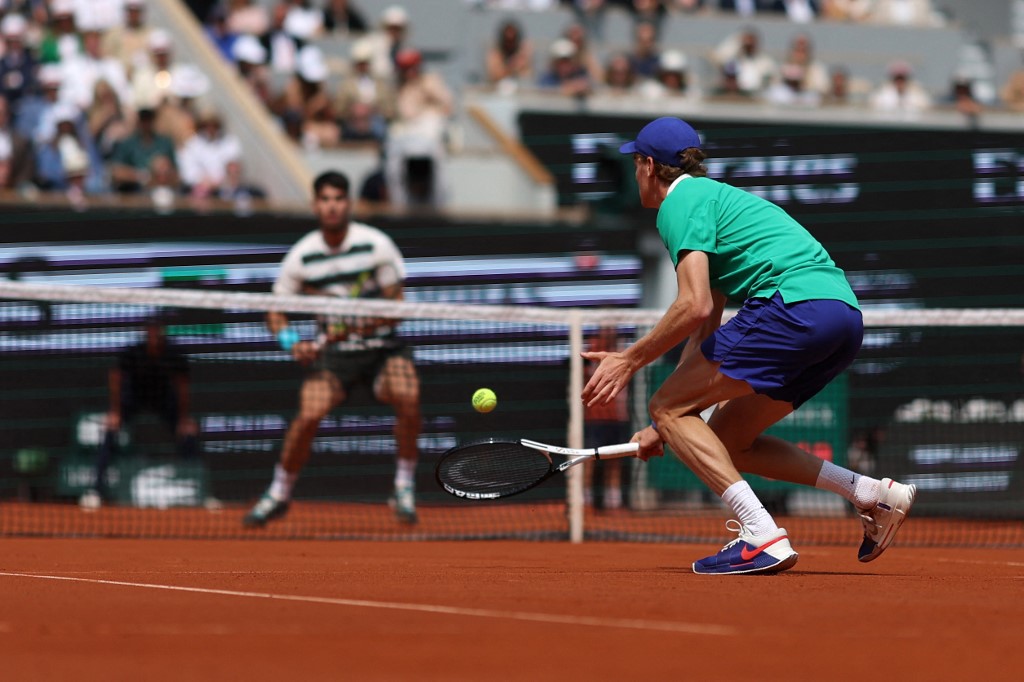
Roland Garros, commonly known as the French Open, is the second Grand Slam tournament of the calendar year after the Australian Open and the premier event on clay. Held each year in Paris France its the biggest stage in Europe for professional tennis.
Roland Garros Guide — Format, Clay Surface, Draws and Ranking Points
Roland Garros, commonly known as the French Open, is the second Grand Slam of the calendar year and the premier clay court event in professional tennis. Held each spring in Paris at the Stade Roland Garros, it is the most physically demanding major on the professional calendar — a two-week test of endurance, topspin, and tactical patience that has produced the sport’s most distinctive competitive narratives for nearly a century.
This guide covers everything you need to know about how Roland Garros works — the format, the draw structure, the ranking points, the prize money, and what makes the French Open unique among the four Grand Slams. For deeper coverage of any specific topic, follow the links throughout.
Where Roland Garros Is Played
Venue: Stade Roland Garros
City: Paris, France
Surface: Outdoor red clay
Main stadium: Court Philippe-Chatrier
Capacity: Approximately 15,000 (Court Philippe-Chatrier)
The Stade Roland Garros complex sits in the 16th arrondissement of Paris, adjacent to the Bois de Boulogne. The venue is named after Roland Garros — a French aviation pioneer killed in the First World War — whose name was given to the stadium in 1928 when it was built to host France’s Davis Cup defense following their 1927 title.
The complex includes three show courts — Court Philippe-Chatrier, Court Suzanne-Lenglen, and Court Simonne-Mathieu — plus multiple numbered courts used for qualifying and early-round matches. A retractable roof installed over Court Philippe-Chatrier in 2020 enabled night sessions for the first time in 2021.
Read more: The History of Roland Garros — How the French Open Was Founded
The Clay Surface
The red clay of Roland Garros is the tournament’s defining characteristic. Made from crushed brick laid over drainage and stability layers, the surface slows the ball significantly after the bounce, produces higher bounces than hard courts or grass, and amplifies the effects of topspin in ways that no other Grand Slam surface replicates.
The practical competitive consequences are significant. Rallies are longer. Serve dominance is reduced. Physical endurance matters more than at any other major. Clay court specialists — players whose games are built around heavy topspin, lateral movement, and tactical patience — thrive at Roland Garros in ways that often confound the expectations that overall rankings create.
Read more: How Red Clay Changes Tennis at Roland Garros · Why Clay Specialists Thrive in Paris · Why Roland Garros Is the Hardest Grand Slam to Win
Tournament Format
Draw Size
- Men’s and women’s singles: 128-player main draw
- Men’s and women’s doubles: 64-team draw
- Mixed doubles, junior singles and doubles, and wheelchair competitions run concurrently
Match Format
- Men’s singles: Best of five sets
- Women’s singles: Best of three sets
- Deciding set tiebreak: First to 10 points at 6–6 in the final set
- All matches played on outdoor red clay regardless of weather conditions — the Court Philippe-Chatrier roof provides weather protection for the main show court only
Duration
The Roland Garros main draw runs across two weeks in late May and early June. Qualifying takes place in the three days before the main draw begins. The men’s singles final is played on the second Sunday of the fortnight, with the women’s final, doubles finals, and mixed doubles final distributed across the final days.
How the Draw Works
The Roland Garros draw places 128 players into a bracket structured around 32 seeds — the highest-ranked players at the entry cutoff date who receive protected positions that prevent them from meeting each other too early.
The key structural rules:
- Seeds 1 and 2 are placed in opposite halves — they can only meet in the final
- Seeds 3 and 4 are drawn into the remaining two quarters — they cannot meet seeds 1 or 2 before the semifinals
- Seeds 5 through 8 cannot meet the top four before the quarterfinals
- Seeds 9 through 32 are distributed across the bracket in protected zones
- Unseeded players are placed randomly and can face any seeded player in the first round
The 128-player field is filled through direct acceptances based on ranking, 16 qualifying spots earned through the pre-tournament qualifying competition, eight wild cards awarded by the French Tennis Federation, and protected ranking entries for players returning from injury.
The draw ceremony is held approximately three days before the first round begins and is the first major competitive event of the Roland Garros fortnight.
Read more: The Roland Garros Draw — How the French Open Bracket Works
Ranking Points
As a Grand Slam, Roland Garros awards the maximum ranking points available in professional tennis. Points are distributed across all rounds of the main draw and qualifying competition and count within the standard 52-week ATP and WTA rolling ranking systems.
Men’s and Women’s Singles — Main Draw:
| Round | Points |
|---|---|
| Champion | 2,000 |
| Finalist | 1,300 |
| Semifinalist | 800 |
| Quarterfinalist | 400 |
| Fourth Round | 200 |
| Third Round | 100 |
| Second Round | 50 |
| First Round | 10 |
Qualifying Points:
| Round | Points |
|---|---|
| Qualifying winner (main draw entry) | 30 |
| Final qualifying round loss | 16 |
| Second qualifying round loss | 8 |
Points earned at Roland Garros expire when the following year’s edition begins — the defending champion must win again to retain their 2,000 points, and any player who reached any round last year must match or exceed that performance to avoid a ranking decline.
Read more: How ATP Rankings Work — The Complete Guide · How Tennis Qualifying Works
Prize Money
Roland Garros distributes prize money across all rounds of the main draw and qualifying competition. The total purse is announced before the tournament begins each year and has increased consistently across recent editions — the French Tennis Federation announced a prize money increase ahead of Roland Garros 2026.
Prize money is equal between men and women at Roland Garros — the French Open was the last Grand Slam to achieve full prize money parity, completing equalization in 2006.
Read more: How Prize Money Works in Professional Tennis
Scheduling Structure
Roland Garros day sessions begin at 11:00 AM Paris time. The daily match order — which match plays first, second, and third on each court — is announced the evening before play begins.
Night sessions on Court Philippe-Chatrier begin at 9:00 PM Paris time and were introduced in 2021 following the installation of the retractable roof. Night session matches are announced alongside the day session schedule.
The Paris spring climate means weather interruptions are more common at Roland Garros than at the Australian Open or US Open — though the Court Philippe-Chatrier roof provides protection for the main show court. Courts Lenglen and Mathieu remain weather-dependent.
What Makes Roland Garros Unique
Among the four Grand Slams Roland Garros stands apart in several specific ways:
It is the only Grand Slam played on clay. The Australian Open and US Open use hard courts. Wimbledon uses grass. Roland Garros is the sole major on clay — making it the most surface-specific of the four and the one whose competitive outcomes are most directly shaped by a single surface’s properties.
It is the most physically demanding major. The combination of clay’s pace absorption, the extended rallies it produces, and the two-week accumulation of clay court competition creates the greatest physical demand of any Grand Slam.
It has the most dramatic specialist versus all-court dynamic. Clay court specialists regularly defeat higher-ranked all-court players at Roland Garros in ways that other surfaces do not produce. The list of great champions who never won the French Open — Sampras, McEnroe, Becker — reflects the tournament’s specific demands more than any comparable list at the other three majors.
It produced the most dominant single-player performance in Grand Slam history. Rafael Nadal’s fourteen Roland Garros titles — across seventeen years of competition with only two career losses at the tournament — represent the most extreme concentration of excellence at a single major in professional tennis.
How Roland Garros Compares to the Other Grand Slams
| Tournament | Surface | Pace | Typical Match Duration |
|---|---|---|---|
| Australian Open | Hard | Medium | Moderate |
| Roland Garros | Clay | Slow | Long |
| Wimbledon | Grass | Fast | Short to moderate |
| US Open | Hard | Medium-fast | Moderate |
The surface diversity across the four Grand Slams is what makes the Career Grand Slam — winning all four — one of the rarest achievements in professional tennis. Roland Garros is most frequently the missing piece for players who have won the other three.
Frequently Asked Questions
When is Roland Garros played? Late May through early June. The exact dates vary year to year but the tournament consistently occupies the final two weeks of May and the first week of June.
How many players are in the draw? 128 in men’s and women’s singles. 64 teams in men’s and women’s doubles.
How many seeds are there? 32 seeds in singles.
How many ranking points does the champion receive? 2,000 points — the maximum available at any single professional tennis event.
What surface is Roland Garros played on? Outdoor red clay at the Stade Roland Garros in Paris.
When were night sessions introduced? 2021 — following the installation of the retractable roof over Court Philippe-Chatrier in 2020.
Has a player ever won Roland Garros without losing a set? Yes. Rafael Nadal completed the tournament without dropping a set in 2008 and 2010. Steffi Graf won the 1988 French Open without losing a set as part of her Golden Slam season.
Who has won Roland Garros the most times? Rafael Nadal — 14 titles between 2005 and 2022. Chris Evert and Steffi Graf share the women’s record with 7 titles each.
Explore the full Roland Garros coverage: The History of Roland Garros · Rafael Nadal at Roland Garros · The Greatest Roland Garros Finals · Roland Garros Records · How Red Clay Changes Tennis · Why Roland Garros Is the Hardest Grand Slam to Win · How to Watch Roland Garros · Night Sessions at Roland Garros · The Roland Garros Draw