

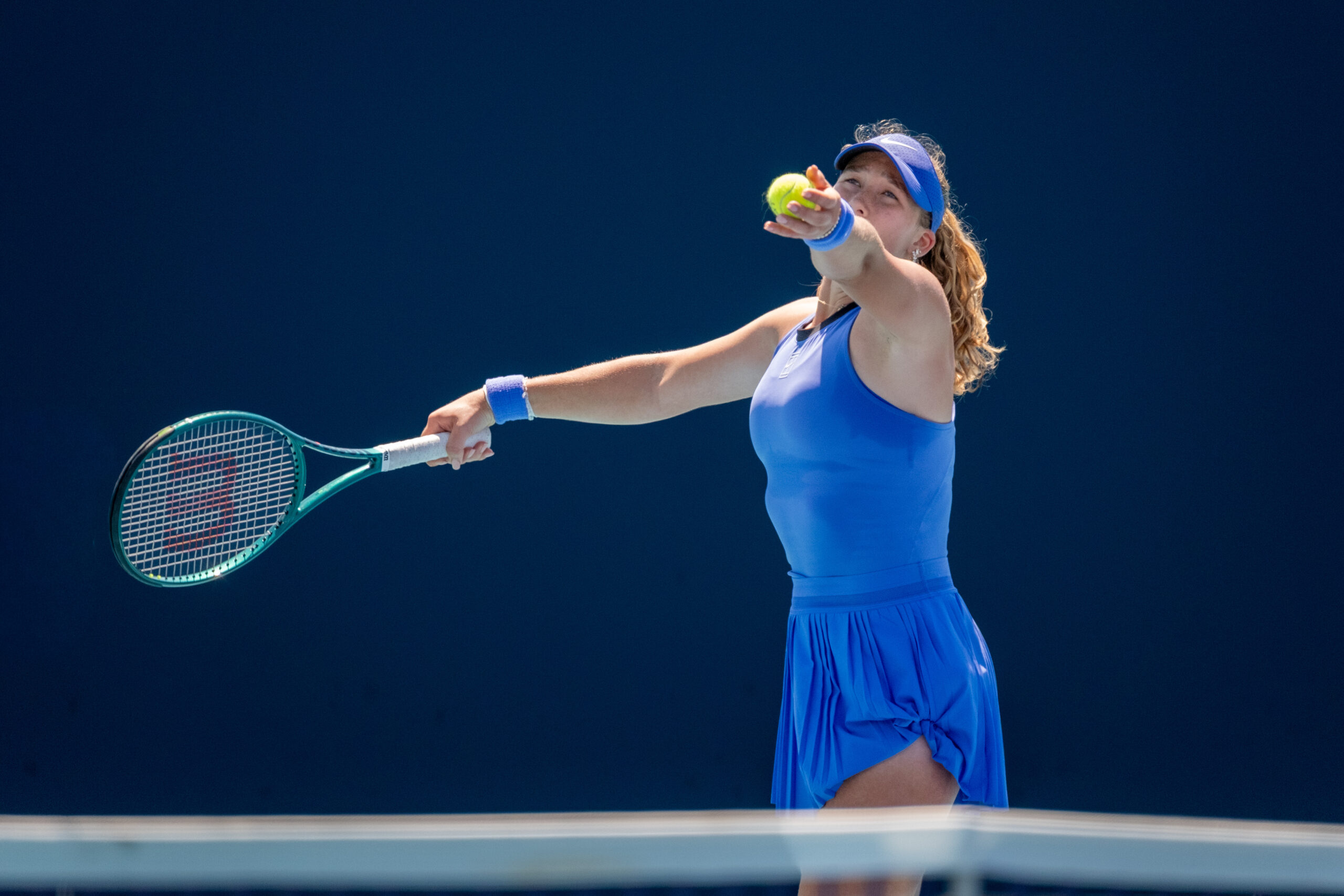
A 15-year-old who wins a junior Grand Slam cannot simply turn up at every professional event that will have her. The WTA’s Age Eligibility Rule caps how many professional tournaments a player aged 14 to 17 may play in a year, and the closing weeks of the junior season, through the Orange Bowl in December, help decide which of them earn a few more.
The rule sits in Section X of the WTA Rulebook, under Age Eligibility and Player Development. It sets a tournament allowance for each age, defines what counts toward it, adds a small number of earned extras and attaches education requirements and penalties.
The Limits by Age
| Age | Professional tournaments allowed | Notes |
|---|---|---|
| Under 14 | None | May not play any professional tournament |
| 14 | 8 | No more than three at W75 level or above; no direct acceptance into WTA tournaments |
| 15 | 10 | Up to 14 with earned increases |
| 16 | 12 | Up to 16 with earned increases |
| 17 | 16 | Up to 20 with earned increases |
| 18 and over | No limit | Player Development continues until the WTA signs her off |
Age is fixed on the first day of a tournament’s singles main draw, and each allowance runs from birthday to birthday rather than over the calendar year. A 14-year-old may earn a WTA ranking, but she cannot be accepted directly into a WTA tournament.
What Counts as a Tournament
A tournament counts when the player appears in the singles or doubles main draw or qualifying draw of any event at which she earns WTA ranking points. That has three consequences:
- Qualifying and main draw at the same event count once. A player who qualifies and then plays the main draw has used one tournament, not two.
- Singles and doubles at the same event count once.
- Doubles alone counts. A doubles-only appearance at a points-earning event uses a tournament from the allowance.
ITF World Tennis Tour events where no WTA points are earned do not count. Everything from the ITF circuit through WTA 125 events, the tour and the Grand Slams that does award WTA points does count.
What Does Not Count
- Billie Jean King Cup. A player aged 14 or older may play at any level of the competition, and those ties do not come out of her allowance. The format is explained in our guide to the Billie Jean King Cup play-offs.
- The WTA Finals. A 14-year-old may not play the WTA Finals. A player aged 15 to 17 who is accepted directly does not use a tournament from her allowance.
- The Olympics. Olympic eligibility for teenagers is left to the age rule in force in 2028 and to the ITF’s Olympic regulations, covered in our explainer on LA28 tennis eligibility.
Wild Cards by Age
The rule also limits wild cards for the youngest players. A 14-year-old may take three: one into a WTA 250, WTA 125 or ITF event, one into a WTA 125 or ITF event, and one into an ITF event only. A 15-year-old may take three: one into any category of WTA tournament and two into WTA 250, WTA 125 or ITF events. A 16-year-old may take four, into any WTA or ITF event. At 17 the standard wild-card limits apply.
Earning Extra Tournaments
The rulebook calls them Merited Increases. A player can earn no more than four a year, which is why the ceilings are 14 at 15, 16 at 16 and 20 at 17. There are two routes.
Getting into the biggest events on ranking. A player aged 15 to 17 who is directly accepted into the main draw or qualifying of a Grand Slam or a mandatory WTA 1000 can earn an increase, provided she is up to date with her Player Development requirements. A wild card does not qualify, and the route is closed to 14-year-olds. The wider rules on those events are in our explainer on WTA mandatory events.
The junior route. A player ranked in the top five of the ITF junior ranking in the final week of the previous calendar year earns increases, and so does a player who reaches the singles final of a junior Grand Slam or of the World Tennis Tour Junior Finals. That is the link to the junior calendar: the points from the last J500 events of the year can move a girl into or out of the top five that the rule rewards.
Player Development and Penalties
The tournament limits come with a Player Development programme that runs in phases as a player rises: Pro Path for the top juniors, Introductory from her first WTA tournament, Rookie once she plays more, Elite on reaching the top 150 at 18 or under and Premier inside the top 100 at 18 or under. The requirements include coursework and an exam, an education certificate, an annual physical, a schedule submitted to the WTA for approval, a mentor programme and media training. Players under 18 are also limited to four hours of media a tournament week.
Breaking the limit is expensive. A player who plays a tournament beyond her allowance forfeits the ranking points from it, can be fined up to the lesser of her prize money from the event or $25,000, and can be suspended for up to six months.
Why the Rule Exists
The WTA brought in its age rules and development programme in their current form in 1995, to protect young players from injury and burnout, and it describes the rule as a managed dose of tennis that lets players play more, and at a higher level, as they get older. It has since reviewed the rule in studies after 10 and 25 years.
The rule shapes careers without stopping them. Mirra Andreeva reached the top 20 as a teenager while still playing a limited schedule under it. The practical effect is that a gifted 15-year-old has to choose her ten events carefully, and that the girls at the top of the junior ranking each December go into the new year with a little more room.
Season Snapshot — 9 November 2026
- The 2026 WTA Rulebook keeps the same base limits, junior route, four-increase cap, $25,000 fine and six-month suspension as the 2025 edition.
- The junior top five that earns increases for 2027 will be taken from the ITF junior ranking in the final week of 2026.
- No change to the rule for 2027 had been announced as of 9 November 2026.
This snapshot is dated and will change. The career record above does not.