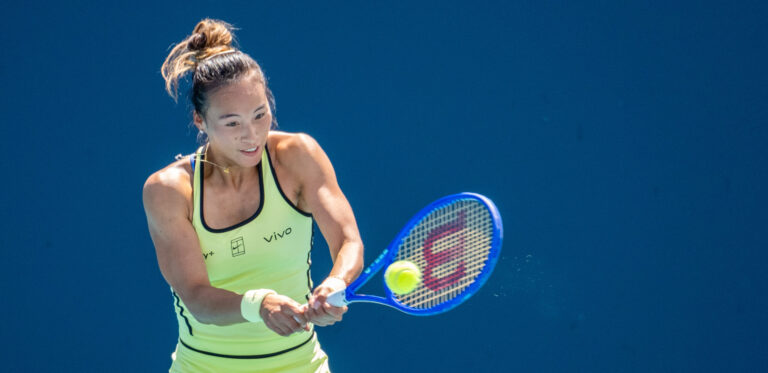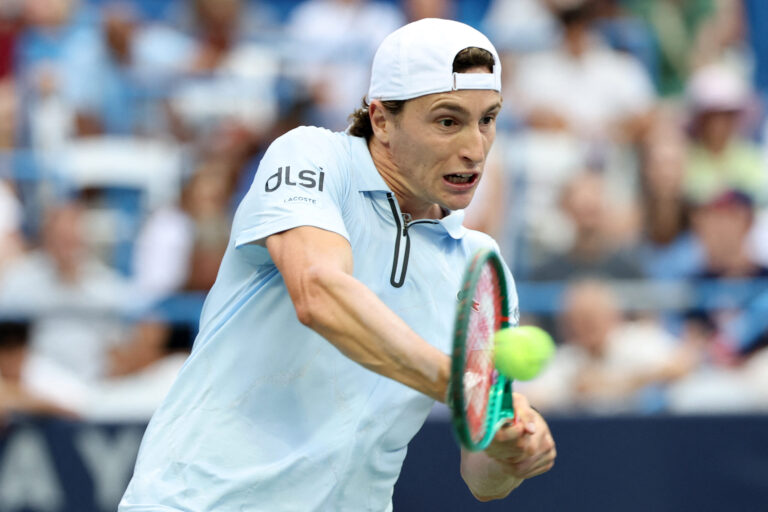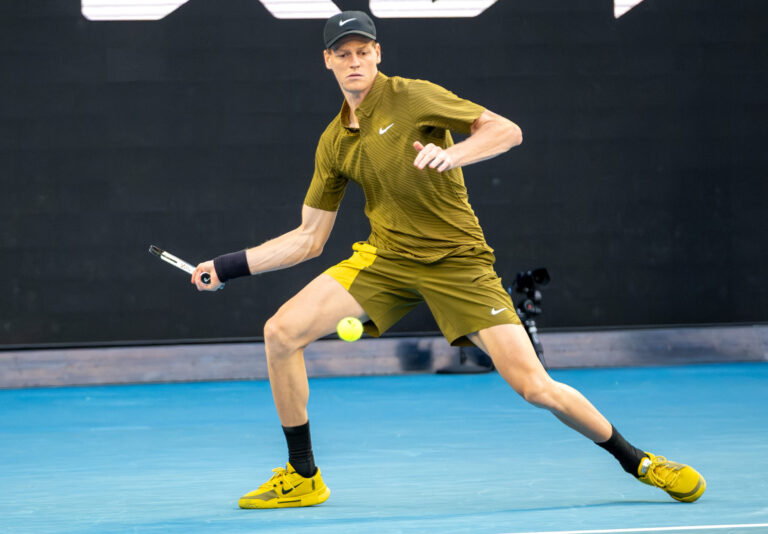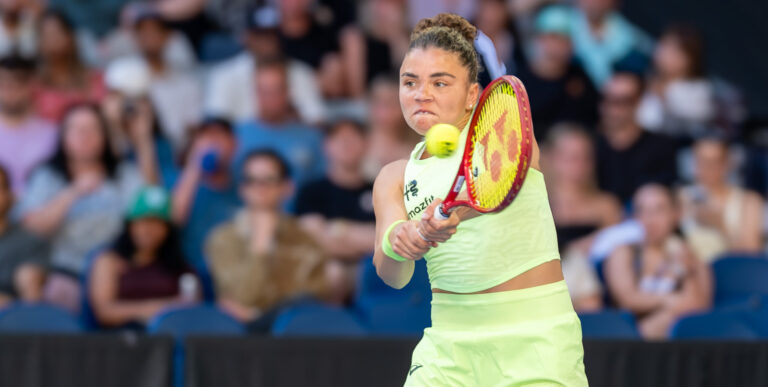
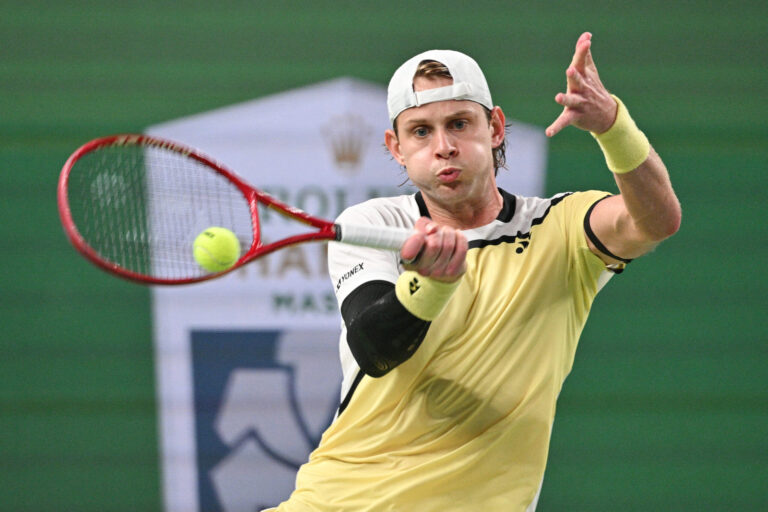
Zizou Bergs is the first Belgian man to win an ATP Tour title on grass and, since 12 October 2026, the player whose win over Carlos Alcaraz in Shanghai guaranteed Alexander Zverev the year-end No. 1 ranking. He did not reach the Top 100 until he was 25. Most of what he has built came through the ATP Challenger Tour and qualifying.
Early years
Bergs was born on 3 June 1999 in Lommel, Belgium, according to the ATP Tour. His first name comes from the nickname of the French footballer Zinedine Zidane, and he speaks Dutch, French and English.
He began playing at three with his father, Koen, moved to a tennis academy at eight and to the Flemish Federation’s training centre at 15, according to his ATP biography. He credits former coaches Bertrand Tinck, Tom Devries and Johan Van Herck. His idols growing up were Andy Roddick and Jo-Wilfried Tsonga. He names the serve as his favourite shot, indoor hard as his favourite surface and Antwerp as his favourite tournament. He plays piano and guitar, and works with a sports psychologist on visualization, mindfulness and breathing.
He was ranked as high as No. 12 in the juniors and turned professional in 2018. He stands 1.85 metres (6 ft 1 in), is right-handed and hits a two-handed backhand. His coach is Jan De Witt. “He really understands me as a person, but also as an athlete,” Bergs said of De Witt in Shanghai in 2025, in remarks published by the tournament.
The Challenger years
Bergs broke into the Top 200 in July 2021 and won three Challenger titles that season, two of them as a qualifier: St. Petersburg and Lille, then Almaty. In 2022 he won the Ilkley Challenger as a qualifier, beating former World No. 8 Jack Sock, and the result earned him a wild card into Wimbledon. He added Challenger titles in Tallahassee in 2023 and 2024, and in Drummondville and Yokkaichi in 2023.
His first deep run at a major came at Roland Garros in 2024. He came through qualifying and reached the third round, where 10th seed Grigor Dimitrov beat him 6-3, 7-6(4), 4-6, 6-4 in three hours and 57 minutes on Court Philippe-Chatrier, according to Roland Garros. He entered the Top 100 that June.
Breakthrough in 2025
Bergs opened 2025 with his first tour-level final in Auckland, losing 6-3, 6-4 to Gael Monfils. He reached a second final in ‘s-Hertogenbosch in June, losing 7-5, 7-6(8) to Gabriel Diallo, who was winning his first title, according to the ATP.
His first win over a Top 10 player came at the Miami Open, where he beat No. 9 Andrey Rublev 7-5, 6-4. He reached the third round of the US Open after Jack Draper withdrew before their second-round match and lost there to Jaume Munar 6-1, 6-4, 6-4.
In Shanghai he reached his first ATP Masters 1000 quarter-final, saving two match points in the deciding tie-break against Diallo before winning 3-6, 7-5, 7-6(8). Novak Djokovic beat him 6-3, 6-4 in the quarter-finals. Bergs finished 2025 with 31 tour-level wins, a personal best, according to the ATP.
Eastbourne and the grass
The 2026 season began with the best week of his career to that point. At the United Cup in Sydney he beat World No. 5 Felix Auger-Aliassime 6-4, 6-2, the first United Cup match won by a Belgian man, according to the event. He added wins over Jakub Mensik and Stan Wawrinka as Belgium reached the semi-finals, which they lost to Switzerland in the deciding mixed doubles.
Bergs arrived in Eastbourne in June on a six-match tour-level losing streak, according to the ATP. He beat Jan Choinski, Daniel Altmaier and Jaume Munar, then came from a set down to beat British lucky loser Toby Samuel 4-6, 7-6(5), 6-2 in the semi-finals. The final against Ugo Humbert was stopped by rain after three games on the Saturday. Bergs finished it on Sunday 28 June, again from a set down, winning 3-6, 6-1, 6-4, according to the ATP and Reuters.
It was his first ATP Tour title and the first by a Belgian man on grass. “If the results are not there, we keep focusing on improving, and that’s why we’re here today standing with the trophy,” he said, the ATP reported. He rose to a career-high No. 33 in August.
At Wimbledon he beat Humbert again in five sets in the first round and Jaime Faria in the second, according to ATP results. There he lost to Arthur Fery 6-2, 5-7, 6-2, 6-7(3), 6-7 in a match of more than four and a half hours, decided by a 10-5 final-set tie-break, PA Media reported. The LTA reported that Bergs led by a double break at 4-1 in the fourth set and served 14 double faults.
He reached the US Open third round for a second straight year, losing in five sets to Botic van de Zandschulp in four hours and 29 minutes, according to the ATP.
Beating Alcaraz in Shanghai
Alcaraz won their first meeting 6-4, 6-3 in Tokyo in 2025. Their second, in the third round in Shanghai on 12 October 2026, went to Bergs 7-5, 7-6(4). He broke Alcaraz three times, won 79 per cent of his first-serve points, and recovered from being broken while serving for the match at 5-4 to win the tie-break from 4/4, according to the ATP.
Because Ben Shelton had already lost, Alcaraz’s defeat meant Zverev could no longer be caught for the year-end No. 1 ranking. Bergs said afterwards that respect for the biggest names had held him back. “I feel like now I really can win against these guys,” he told the ATP. “Not just I can play against them, but I can win against them.”
How he plays
Bergs builds his game from the serve, the shot he names as his favourite, and he ties his return game to it. “I have a good return, and if I serve well, I can utilise this even more,” he said in Shanghai. His only tour-level title came on grass, and his biggest win came on a Shanghai court the ATP described as fast.
Grand Slam best results
- Australian Open: first round (2023, 2024, 2025, 2026)
- Roland Garros: third round (2024, as a qualifier)
- Wimbledon: third round (2026)
- US Open: third round (2025, 2026)
Season Snapshot — as of 12 October 2026
- PIF ATP Ranking: No. 39 (career high No. 33, 10 August 2026)
- Coach: Jan De Witt
- 2026 title: Eastbourne (grass), his first ATP Tour title
- 2026 record: 20-21 before the Rolex Shanghai Masters, according to the ATP; he has since won three matches in Shanghai
- 2026 Grand Slams: Australian Open first round, Roland Garros first round, Wimbledon third round, US Open third round
- Rolex Shanghai Masters: in the fourth round after beating Vit Kopriva, Ignacio Buse and Carlos Alcaraz; next opponent Valentin Vacherot or Tommy Paul
- Davis Cup: won his opening rubber against Lukas Neumayer in Vienna in September but lost the deciding rubber to Jurij Rodionov as Austria qualified for the Final 8
- Head-to-head with Carlos Alcaraz: 1-1
This snapshot is dated and will change. The career record above does not.