Home Blog Page 4

Krejcikova beats Sakkari to win inaugural Athens Open title

Barbora Krejcikova ended more than two years without a trophy on Sunday, defeating home favourite Maria Sakkari 7-6(5), 6-3 to win the inaugural Athens Open and spoil what the Greek capital had hoped would be a storybook coronation.

For Krejcikova, the win is the ninth WTA singles title of her career and her first since she lifted the Wimbledon trophy in 2024. The two seasons in between were shaped by injury and interrupted form, and the two-time Grand Slam champion arrived in Athens ranked outside the world’s top 30. A clean week on the hard courts of the Olympic Tennis Centre has now steered her back towards it.

The final followed the pattern of the Czech’s entire tournament: a slow start, then relentless recovery. Sakkari, roared on by a partisan crowd, broke early in both sets and led 4-1 in the first. Each time, Krejcikova reeled her back in. She forced a tie-break and edged it 7-5, then answered an early second-set break immediately before taking six of the closing eight games to seal the title in one hour and 43 minutes. She converted all three break points she created.

Krejcikova had good reason to believe in the comeback. Her route to the final included a first career win over Zheng Qinwen in the quarter-finals — avenging losses in the 2023 Zhengzhou final and at the 2024 WTA Finals — and a semi-final victory over top seed Clara Tauson, the only player to take a set off her all week. The win over Sakkari makes it 4-0 in their head-to-head.

If the result read as a triumph of experience, the occasion belonged as much to the woman who lost. The Athens Open marks the WTA Tour’s return to the Greek capital for the first time since 1990, and Sakkari had turned it into a personal homecoming. She reached the final 40 years after her mother, Angeliki Kanellopoulou, contested the final of the inaugural Athens Trophy in 1986 — mother and daughter, the same city, a generation apart.

Sakkari had not dropped a set all week, beating teenager Alina Korneeva 6-1, 7-5 in the semi-finals to reach her first final since Indian Wells in 2024. It was the 11th final of a career that peaked at world No. 3, and she was chasing a third tour-level title. The support was deafening; the finish, agonising. Twice in front, twice pegged back, the Greek No. 1 could not hold either advantage.

The near-miss did not dampen a landmark weekend for Greek tennis. A day earlier, Stefanos Tsitsipas had reached the Gstaad final, meaning both of the country’s leading players were in title matches on the same afternoon. Tsitsipas, who went on to win his own trophy, called it “a special moment for Greek tennis” — the kind of double that would have been unthinkable a decade ago, and exactly the momentum the new Athens event was created to harness.

For Krejcikova, the significance runs deeper than a 250-level title. After a stretch in which fitness questions had begun to shadow one of the most gifted all-court players on the tour, Athens is evidence that, healthy and settled, she remains a threat to anyone. The timing matters too, with the North American hard-court swing and the US Open now on the horizon. Ranking points banked here ease her path back towards seeding contention at the majors.

The result also reframes the closing image of a quietly compelling week. The inaugural Athens Open was sold as a celebration of tennis returning to a historic market, and it delivered the drama it needed — even if the script did not end the way the home crowd had written it. Sakkari leaves with the affection of a city and the sense that the final chapter of her career may yet include the home title that slipped away here.

Krejcikova leaves with the trophy, the ranking lift, and something less tangible but more valuable: proof that the comeback is real.

Sinner overtakes Hewitt to enter all-time top 10 for weeks at No. 1

Jannik Sinner has climbed another rung of tennis’s most exclusive ladder. On Monday the Italian began his 81st week as ATP world No. 1, overtaking Lleyton Hewitt to become just the 10th man to spend that long at the summit since computerised rankings were introduced in 1973.

Sinner had drawn level with Hewitt on 80 weeks after retaining his Wimbledon crown, beating Alexander Zverev in four sets in the final on 12 July for the 31st title of his career. This week’s ranking release — which brought no change at all to the top 10 — nudged him clear of the Australian, who finished his career on 80 weeks at No. 1.

The company Sinner now keeps is rarefied. The all-time list is headed by Novak Djokovic’s 428 weeks, ahead of Roger Federer (310) and Pete Sampras (286), with Ivan Lendl, Jimmy Connors, Rafael Nadal, John McEnroe, Bjorn Borg and Andre Agassi completing the group above and around him. Reaching this list at all marks a player out as more than a one-Slam wonder: weeks at No. 1 reward sustained week-in, week-out excellence across surfaces and seasons rather than a single hot fortnight.

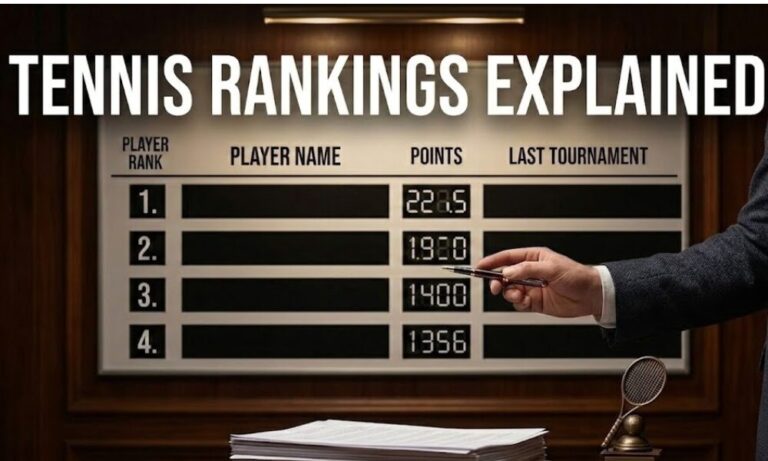
His grip on the ranking, meanwhile, has rarely looked firmer. Sinner leads the ATP standings with 13,450 points, almost 5,000 clear of Zverev, who is second on 8,480. Carlos Alcaraz is third on 8,160 — the Spaniard having slipped a place while he recovers from the wrist injury that has kept him sidelined. Sinner has now held No. 1 for 14 more weeks than his great rival, and with Alcaraz not yet back to full training, that gap looks set to widen through the North American hard-court swing.

The margin between Sinner and the rest is the kind of buffer that turns a ranking into a fortress. A near-5,000-point cushion means the 23-year-old would have to endure a genuinely calamitous late-summer run — while Zverev simultaneously caught fire — for the top spot to be under any realistic threat before the US Open. That security is what makes the next milestone a matter of when, not if.

Next in his sights is Agassi, who sits ninth on the all-time list with 101 weeks as world No. 1. To move past the eight-time major champion, Sinner would need to hold the ranking for a further five months or so — putting the record within reach around mid-December, provided he stays at the top through the autumn indoor season and the year-ending finals in Turin. It would be a fitting way to close a year in which he has turned dominance into routine.

For Italian tennis, the milestone is another marker of a golden era. Eight Italians sit inside the world’s top 100 and 16 inside the top 200, with Flavio Cobolli holding firm at No. 9. But it is Sinner who continues to rewrite the record books, methodically converting his consistency into a place among the sport’s genuine immortals — and doing so at an age when many of the names above him were still years from their peak weeks at the top.

There is, too, a quiet symbolism in passing Hewitt specifically. The Australian was one of the last teenagers to reach No. 1 and a symbol of a scrappier, counter-punching era; Sinner represents the modern power-baseline archetype that has come to define men’s tennis. That the torch passes on the ranking list this week, rather than on court, only underlines how far Sinner’s steadiness has carried him.

The immediate schedule now shifts to the hard courts of Washington, Montreal and Cincinnati before the US Open, where Sinner will begin his title defence as the overwhelming favourite. Each week he holds serve at the top of the rankings brings Agassi — and then Borg, eighth with 109 weeks — a little closer. On current form, both look less like distant targets than dates already pencilled into the calendar.

For now, though, the headline number is 81 — and a place in the top 10 of the most demanding list in the sport, earned one dependable week at a time.

Muchova withdraws from Canadian Open as Toronto field thins

The 2026 Canadian Open keeps shedding star power. Karolina Muchova, the Wimbledon runner-up and world No. 6, confirmed on Saturday that she will miss next month’s WTA 1000 event in Toronto after undergoing a minor operation. Her exit is the latest in a run of high-profile absences that has already stripped the tournament of its defending women’s champion and the biggest name on the men’s entry list.

Muchova shared the news in a brief post on social media. The Czech said the surgery had been a success and that she had begun her recovery, but that it would keep her off court for several weeks. She did not name the injury or offer a timeline for her return. Muchova had been due to appear in Toronto for the first time, a debut she said she had been looking forward to. “Recovery comes first,” she wrote.

The 29-year-old has spent much of her career fighting her own body. She reached the Wimbledon final this month, losing to compatriot Linda Nosková, and was runner-up at the 2023 French Open, but repeated wrist problems and other setbacks have interrupted almost every promising run. Her best week at this tournament came in Montreal in 2024, when she reached the fourth round. She is expected back in time for the US Open later in the summer, though she set no date herself.

Her withdrawal follows that of the defending champion. Victoria Mboko announced on 7 July that she would not play, having failed to recover from a knee injury sustained at Queen’s Club in June, when she slipped on the grass during a match against Karolina Plíšková. The Canadian tore the medial collateral ligament in her left knee, an injury that also ended her grass-court season and her planned doubles run alongside Serena Williams.

For Mboko the timing is cruel. The women’s event alternates between Montreal and Toronto each year, and in 2026 it is Toronto’s turn — the city the 19-year-old grew up beside. She won last year’s title in Montreal as an 18-year-old wildcard ranked outside the top 300, beating Coco Gauff, Elena Rybakina and, in the final, Naomi Osaka to announce herself on the world stage. Now ranked No. 10, she stands to forfeit the 1,000 ranking points that came with that breakthrough and faces a slide down the standings.

The men’s field in Montreal has been hit too, though far less heavily. Carlos Alcaraz remains the only leading name to pull out, the Spaniard still working his way back from the right wrist injury that has kept him off court since the Barcelona Open in April. His absence means he will miss the first Masters 1000 event of the North American hard-court swing for a third straight year. On the women’s side, Emma Raducanu is also absent as she manages a stress fracture in her right leg.

In all, six players had come off the two main-draw entry lists as of Sunday, five of them from the women’s field in Toronto. Even with those gaps, the tournament retains real strength. Organisers have pointed to one of the deepest entry lists in the event’s history for the expanded 96-player format, with the vast majority of the men’s top order due in Montreal. But the thinning of the Toronto draw changes the shape of the women’s competition. With the champion gone and several seeds missing, the title looks unusually open, and the door widens for the next tier of contenders to make an early-summer statement.

The National Bank Open runs from 1 to 13 August, with the men in Montreal and the women in Toronto, before the tour moves on to Cincinnati and then the US Open. For a field that had hoped to showcase a Canadian defending her crown close to home and a Wimbledon finalist on debut, the build-up has instead become a story about who is missing.

Djokovic admits age is catching up as he targets 25th major at US Open

Novak Djokovic has offered one of his most candid assessments yet of life at the top as he approaches 40, admitting that age is now impossible to ignore even as his hunger for a record-extending 25th Grand Slam title remains undimmed.

Speaking to CBS Mornings in an interview aired on Friday, the 39-year-old was asked whether his age crosses his mind while he keeps chasing the sport’s biggest prizes. He replied that when other people do not remind him, his own body does — “my body reminds me of my age,” he told host Gayle King — before adding that he is constantly hunting for any extra edge that lets him compete with a younger generation.

That generation is now led by Jannik Sinner and Carlos Alcaraz, the two men who have turned Djokovic’s pursuit of major number 25 into the hardest challenge of his late career. The Serb has not lifted a Grand Slam trophy since the 2023 US Open, a drought that would once have seemed unthinkable across a career that has produced 24 majors, an Olympic gold medal and a record 428 weeks at world No. 1.

Yet Djokovic framed the situation less as decline than as fuel. He said there is always something to prove — chiefly to himself — and that his aim remains simply to be better than he was the day before. It is a theme he has returned to repeatedly through a run of near-misses at the majors, and one that suggests retirement is nowhere near his immediate plans, whatever the physical cost of staying in the fight.

The interview arrives as Djokovic promotes a new film on his life and career, Novak Djokovic: The Wolf in Winter, which streams worldwide on Prime Video from 20 August. Directed by The Last Dance filmmaker Jason Hehir, the documentary lands days before the final Grand Slam of the season, giving the veteran a rare double presence — on screen and on court — as the North American hard-court swing builds toward New York.

Djokovic’s 2026 has been strong by most standards, if short of the titles he craves. He reached the Australian Open final, where he was beaten by Alcaraz, and made the semi-finals at Wimbledon before losing to eventual champion Sinner. Both results underlined the same truth: he remains capable of beating almost anyone over three sets, but the physical toll of going the distance against Sinner or Alcaraz in best-of-five has grown steeper.

The draw that awaits him in New York is unusually open at the top. Sinner arrives as the man to beat after defending his Wimbledon crown, while Alcaraz — the two-time defending US Open champion — is working back from a wrist injury that has kept him off tour since the spring. For Djokovic, that uncertainty around his chief rivals may offer a sliver of opportunity, provided his own body holds up across a fortnight of five-set tennis in the New York heat.

The frankness about his physical limits is not new, but its timing is pointed. Djokovic turned 39 in May and has trimmed his schedule in recent seasons to protect himself for the events that matter most to him. The majors are now the organising principle of his calendar, and the US Open — whose main draw begins on 30 August — is his last, best chance of the year to end the Grand Slam wait.

Asked about the wider game, Djokovic also touched on Serena Williams’ recent return to the sport, a reminder that questions of age, motivation and legacy hang over more than one of tennis’ defining champions this summer.

Whether he can turn that motivation into a 25th title remains the sport’s most compelling open question. What his latest comments make clear is that, for now, the fire has not gone out — even if the body occasionally reminds him how long it has been burning

Who is Raphael Collignon? The Belgian breakout reaching his first ATP final in Gstaad

Raphael Collignon was one of tennis’ best-kept secrets until this week. On Sunday the 24-year-old Belgian became the name the sport is searching for, having stormed into the first ATP Tour final of his career at the EFG Swiss Open in Gstaad.

Seeded seventh at the clay-court ATP 250, Collignon assembled the best week of his life to get there, beating Timofey Skatov, Lorenzo Sonego and third seed Valentin Vacherot before a semi-final for the ages against sixth seed Juan Manuel Cerundolo. A set down and staring at defeat, he saved a match point and reeled off the closing games to win 1-6, 7-6(5), 7-5 — the kind of escape that turns an unknown into a talking point overnight.

His reward was a title match against Stefanos Tsitsipas, the former world No. 3 chasing a revival of his own — and it was the more experienced man who prevailed. Tsitsipas won 6-4, 6-7(3), 6-3 to claim the 13th title of his career and his first in 16 months. Collignon had his moment, taking the second set in a tiebreak and briefly looking capable of a shock, but Tsitsipas surged in the decider, winning 12 points in a row as the Belgian faded physically. There was no fairytale ending, then, but the run itself was the making of Collignon’s fortnight.

So who is he? Collignon’s story begins, improbably, in Rochester, Minnesota, where he was born in January 2002 while his father worked at the Mayo Clinic. The family returned to Belgium before his first birthday, and he grew up in Liège, first picking up a racket at the age of four by hitting against a wall while his father played at the local club. He is now guided by Steve Darcis, Belgium’s Davis Cup captain and a former world No. 38 who knows intimately the tour grind Collignon is climbing through.

That climb has been steep but steady. He broke into the top 100 for the first time in February 2025 and has since risen to a career high around No. 42 — progress built on the Challenger circuit and punctuated by eye-catching wins at the highest level. He beat two-time champion Grigor Dimitrov to reach the Brisbane quarter-finals, upset then-No. 12 Casper Ruud en route to the US Open third round in 2025, and produced arguably his biggest result by defeating Alex de Minaur to help Belgium past Australia in the Davis Cup. This year he reached the third round at Roland Garros — with a win over American Ben Shelton along the way — and the quarter-finals on grass in Halle.

At 6-foot-3, Collignon pairs a heavy serve with an aggressive, two-handed-backhand baseline game that has translated increasingly well from Challenger courts to the main tour. But he is not a standard baseline grinder off it. He is an unabashed fashion obsessive who has dabbled in modelling and likes to wear, in his own words, things “not many others are wearing.” He counts Barcelona and Standard Liège among his football loyalties and lists cycling among his hobbies — a personality with edges, and part of why casual fans are warming to him so fast.

The runner-up finish still guarantees a fresh career-high ranking when the new list is published on Monday, and pushes him firmly into view as the North American hard-court swing approaches. The title eluded him, but reaching a first ATP final by beating three seeded players is comfortably the breakthrough fortnight of his career — and a marker of what may be coming.

For Belgian tennis, long carried by David Goffin, Collignon’s emergence offers a timely lift. For everyone else, he is the weekend’s discovery: a big-hitting shotmaker with a flair for the dramatic and, as of this week, a name worth remembering.

Paula Badosa Reaches Iasi Final as US Open Ranking Push Gains Momentum

Paula Badosa’s long climb back from a year lost to injury has produced its most tangible reward yet: a place in a WTA final, and with it a fast-closing route back into a Grand Slam main draw.

The former world No. 2 recovered from a set down to beat Tamara Zidansek 3-6, 7-5, 7-6(1) in the semifinals of the UniCredit Iasi Open, the WTA 250 on the clay of Romania, reaching her first final at tour level since she lifted the trophy at the Citi Open in Washington in the summer of 2024.

It was Badosa’s ninth consecutive win, and the run tells the story of a genuine reset. The streak began last week in Sweden, where the Spaniard won the WTA 125 title in Bastad — her first silverware of a season she started ranked outside the world’s top 100 — before carrying the momentum straight into Iasi. There she has dropped just one set in four matches, dispatching Anhelina Kalinina 6-3, 6-1, edging Alevtina Ibragimova 7-6(5), 1-6, 6-4, and outlasting fifth seed Panna Udvardy 6-4, 7-6(2) to set up the semifinal.

For a player who spent much of 2025 in medical timeouts rather than finals, the turnaround has been striking. Badosa was named the WTA’s Comeback Player of the Year in 2024 after climbing back into the top 12 and reaching the quarterfinals of the US Open. But a chronic back problem — a psoas tear that lingered from early in the year — wrecked her 2025, forcing a string of withdrawals and mid-match retirements, costing her the entire North American hard-court swing and sending her ranking tumbling. She began 2026 vowing simply to stay on court.

The nine-match streak now carries a concrete stake beyond confidence: her US Open eligibility. Badosa’s official ranking sits at No. 115, but the points banked from Bastad and this week’s run have lifted her live ranking to roughly No. 103 — right on the margin that typically separates direct entry into a Grand Slam main draw from a trip through qualifying.

There is no fixed number that guarantees a place at Flushing Meadows; the direct-acceptance cutoff shifts each year with withdrawals, protected rankings and the strength of the entry list, and in recent seasons the women’s line has fallen around the world’s top 104 to 108. That makes Badosa’s timing close to ideal. The 2026 US Open main draw begins on Sunday, 30 August, with qualifying draws made on 24 August — meaning the entry list is being finalized now, and every place she climbs in these weeks tightens her grip on a direct berth rather than a qualifying gamble.

Winning the Iasi title on Sunday would push her further still, and there is history riding on it too: a ninth straight victory equals the longest winning streak of Badosa’s career, matching the nine she strung together in 2021 during her breakout summer. Standing between her and the trophy is Mayar Sherif. The Egyptian, herself enjoying a strong clay run, came through the other half of the draw, and the pair share a 1-1 career head-to-head.

For Badosa, though, the final is almost the secondary prize. Six weeks ago a US Open main-draw place looked like a stretch that would hinge on qualifying week. Nine wins later, it is within touching distance — and a player who has beaten every WTA final she has ever reached will fancy her chances of finishing the job.

Djokovic Documentary Coming to Prime Video in August

Novak Djokovic will give tennis fans an unusually close look at his life, career and late-stage pursuit of history when Novak Djokovic: The Wolf in Winter premieres worldwide on Prime Video on August 20, 2026. The feature-length documentary follows Djokovic from his childhood in Serbia to the top of men’s tennis, while also examining the sacrifices, rivalries and controversies that have shaped one of the sport’s most complicated champions.

Directed by Jason Hehir, the filmmaker behind the acclaimed Michael Jordan documentary series The Last Dance, the film includes behind-the-scenes access to Djokovic at major tournaments, during training sessions and at home with his family. It will be available exclusively through Prime Video in more than 240 countries and territories.

What The Wolf in Winter Will Cover

The documentary traces Djokovic’s journey from growing up during conflict and economic hardship in Serbia to becoming a 24-time Grand Slam singles champion, Olympic gold medalist and the holder of the men’s record for most weeks ranked world No. 1. It also explores the resistance Djokovic encountered when he emerged as a threat to Roger Federer and Rafael Nadal, two players who had already established one of the most popular rivalries in sports.

Rather than focusing only on trophies and records, The Wolf in Winter is expected to examine the mentality behind Djokovic’s longevity and the physical demands of competing against a younger generation late in his career. The film’s title presents Djokovic as an aging but still dangerous champion, fighting to remain near the top of the sport while confronting the limits imposed by time.

Djokovic said the production will show doubts, sacrifices and private moments that audiences have not previously seen, adding that his journey is “far from over.”

Rafael Nadal and Other Tennis Greats Featured

The documentary includes interviews with Djokovic’s wife, Jelena Djokovic, as well as several of the most prominent figures in tennis history. Rafael Nadal, Andre Agassi, Pete Sampras, Boris Becker and Jim Courier are among the former champions appearing in the film. Tennis broadcasters Mary Carillo and Patrick McEnroe also provide perspective on Djokovic’s career and public image.

Nadal’s participation is especially notable. The Spaniard and Djokovic produced one of the most demanding rivalries in tennis history, meeting across every surface and in some of the sport’s biggest matches. Becker also brings a different perspective after coaching Djokovic during a successful period in which the Serbian added six Grand Slam titles between 2014 and 2016.

Documentary Arrives Just Before the US Open

The Wolf in Winter will debut 10 days before the singles main draw begins at the 2026 US Open on August 30. The timing places Djokovic’s career and future at the center of attention shortly before he returns to New York, where he has won four men’s singles titles. Djokovic remains focused on competing at the highest level at age 39, although he has acknowledged that recovering between long matches has become more difficult after more than two decades on tour.

Following his semifinal defeat to Jannik Sinner at Wimbledon, Djokovic said his attention had turned toward the US Open and the challenge of preparing his body to face players considerably younger than him. That late-career struggle appears to be central to the documentary. Hehir described the film as an examination of an all-time great reaching a crossroads while continuing to challenge the leading players of a new generation.

For Djokovic, the documentary offers an opportunity to present a fuller version of his story: not only the records and victories, but also the pressure, criticism and personal sacrifices behind them. Novak Djokovic: The Wolf in Winter premieres exclusively on Prime Video on Thursday, August 20.

Venus Williams, Alex Eala Reunite for DC Open Doubles

Venus Williams and Alexandra Eala will team up again, this time on hard courts, after the Mubadala DC Open confirmed the pair as a wildcard entry in its women’s doubles draw.

The tournament announced the pairing on Friday night, billing the seven-time Grand Slam singles champion and the summer’s breakout WTA star as a “Dream Team.” It reunites a 46-year-old former world No. 1 with a 21-year-old sitting at a career-high ranking, only weeks after the two reached the quarterfinals together at the grass-court Bad Homburg Open — their first event as a team.

That debut partnership offered enough promise to be worth extending. In Germany, Williams and Eala came through their opening match against Alexandra Osborne and Catherine Harrison 6-3, 6-4 before falling to Olivia Nicholls and Tereza Mihalikova in the last eight. It was a short run, but a competitive one, and it planted the idea that has now carried across the Atlantic to the North American hard-court swing.

For Eala, Washington caps a stretch that has turned a promising junior into one of the most talked-about names on tour. The Filipina won the biggest title of her career at the Birmingham grass-court event, reached the semifinals in Berlin, and then produced one of Wimbledon’s defining moments of 2026, beating defending champion Iga Swiatek 7-6(9), 6-2 in the third round on her way to the fourth round — the first time she, or any player from the Philippines, has reached the second week of a major. She left the All England Club at a career-high ranking and firmly established among the game’s rising elite.

Williams, meanwhile, is deep into a comeback that began in this same city. She chose Washington to return to professional tennis in 2025 after a long absence, and in doing so became one of the oldest players to win a tour-level singles match in the Open Era. This will be her third appearance at the DC Open, and she arrives having been denied a doubles outing at Wimbledon, where a planned pairing with sister Serena was scrapped after Serena withdrew injured. The chance to keep competing at doubles alongside a fast-rising partner gives her return fresh purpose.

The generational gap is central to the story’s appeal. Eala, who trained at the Rafael Nadal Academy, has spoken warmly about what she took from those first matches beside a player she grew up watching. Describing the experience in an interview on Philippine television, she said she found Williams remarkably grounded and was struck by the American’s work ethic and mindset. It is the kind of mentor-and-protégé framing — veteran icon, hungry newcomer — that tends to travel well beyond the tennis core audience.

The pair will not have an easy passage. The DC Open doubles field is led by top seeds Sara Errani, a multiple Grand Slam doubles and mixed-doubles champion, and former Wimbledon mixed-doubles winner Nicole Melichar-Martinez. Defending champion Zhang Shuai also returns, this year alongside Indonesia’s Janice Tjen. Between Williams’ vast experience — she owns 22 WTA doubles titles, including 14 women’s doubles majors won with Serena — and Eala’s current form, the wildcard team will fancy their chances of a run, but the draw offers little margin.

Both are also entered in singles as they build toward the US Open. Williams takes a singles wildcard, while Eala continues a campaign that has already reshaped expectations for her season. The singles field underlines the event’s pull, headlined by world No. 3 Jessica Pegula and No. 10 Elina Svitolina, with Naomi Osaka, Jasmine Paolini, Marta Kostyuk, Diana Shnaider and Anna Kalinskaya among the names in a combined ATP/WTA 500 that opens the hard-court run to Flushing Meadows.

For a tournament, the reunion is a marketing gift: maximum name recognition, a feel-good narrative and a genuine competitive angle rolled into one wildcard. For the tour, it is a reminder that Williams, more than a quarter of a century after her first Grand Slam final, is still choosing the court over the exit — and that in Eala she has found a partner whose story is only beginning.

Play in Washington is scheduled to run through the first days of August, with the doubles draw offering an early look at whether the grass-court experiment can grow into something more durable on a faster surface.

ATP Ball Change Trial: What It Means for Tennis Injuries

After years of players blaming modern tennis balls for a wave of arm injuries, the ATP appears ready to do something about it. The men’s tour is set to trial more frequent ball changes at a hard-court Challenger event next month — the first tangible sign that a complaint voiced by some of the sport’s biggest names, Novak Djokovic, Carlos Alcaraz, Daniil Medvedev and Emma Raducanu among them, is finally being heard.

The experiment is due to take place at the Lexington Challenger in Kentucky, which begins on August 3. According to reporting from tennis insider Parsa Nemati that has since been picked up widely across tennis media, main-draw singles matches will see the first ball change after five games rather than the usual seven, with subsequent changes every seven games instead of every nine. The measure is said to carry the backing of the ATP’s Player Advisory Council and to follow sustained feedback about how quickly balls wear down on hard courts.

The logic is straightforward. A fresh ball is lively and predictable, but as the felt fluffs up and the ball grows heavier, players have to swing harder to generate the same pace — precisely the kind of repeated strain many believe is driving an epidemic of wrist, elbow and shoulder problems. Changing balls sooner, and more often, would keep them closer to their original condition for longer, and in theory reduce the load running through a player’s arm over the course of a long match.

One of the most vocal current backers is Taylor Fritz. The American, a fixture in the world’s top ten, has complained publicly that balls fluff up almost immediately and slow down far too early, arguing bluntly that “seven and nine is just too much.” Fritz has also tied his own wrist trouble to the merry-go-round of different balls used from week to week, saying he dealt with three different balls across three tournaments during a single US hard-court stretch.

He is far from alone. The grievance has been building for years. Djokovic, reflecting on how the sport has changed, has said the single biggest difference he notices compared with a decade or more ago is simply “the balls.” Alcaraz — currently sidelined by the wrist injury he sustained at April’s Barcelona Open — called for reform in an interview early last year, insisting: “It needs to change. I know they will change it.” The Spaniard described how a new ball moves quickly before ballooning in size after only a few exchanges, making aggressive play difficult.

The women’s tour has echoed the concern. Raducanu, who underwent surgery on both wrists in 2023, told The Guardian last October that the balls represent a genuine challenge for the whole locker room, noting that “it gets very fluffy” as they deteriorate and connecting that wear to the rise in wrist, elbow and shoulder injuries across the game. Medvedev has likewise flagged the balls as a factor behind the injury trend.

Whether a Challenger-level trial can move the needle at the top of the sport is another question. The results in Lexington are expected to determine whether the idea is worth expanding to the main ATP Tour, and there are practical hurdles. More frequent changes mean significantly more balls per match, which would likely force a renegotiation of the tours’ supply contracts with manufacturers such as Dunlop and Penn, who would have to provide far more product to get through a tournament.

Crucially, the trial addresses only half of the complaint. Players have long argued that the deeper problem is not simply how fast balls degrade, but the sheer variety of balls in use — a different brand and specification, it can feel, almost every week — leaving them constantly re-adapting. Faster changes do nothing to standardise which ball is being hit in the first place.

Still, the move has been welcomed as a start. Tennis Channel analyst Gill Gross endorsed the plan, predicting the change “should happen and will happen.” For a tour often accused of moving slowly on player welfare, even a modest, low-profile experiment on the Challenger circuit represents a rare instance of the game testing a fix rather than merely debating one. With the North American hard-court swing looming, it has put the ball question firmly back in the conversation.

Bublik Says Tour Has ‘Given Up’ on Sinner & Alcaraz

Alexander Bublik has delivered one of the most candid assessments of men’s tennis in the SinnerAlcaraz era, admitting that he and much of the ATP field have effectively stopped believing they can win a Grand Slam while the world’s top two are fit.

Speaking to the German magazine Tennis Magazin, the world No. 11 said the gap at the majors had grown so wide that beating Jannik Sinner or Carlos Alcaraz over five sets was now closer to fantasy than a realistic target. “The other players have given up — me too,” Bublik said, explaining that the realisation had reshaped how he defines a successful tournament.

Rather than chasing a title, the Kazakh said his ambition at the biggest events had narrowed to reaching the quarter-finals or semi-finals — a result he can now go home content with. He framed the shift as realism rather than a collapse of self-belief: in his words, a player has to accept that he is “not Novak Djokovic” and will not win majors the way Rafael Nadal or Roger Federer did.

The remarks carry unusual weight because they come from a player who has actually beaten Sinner. At Halle in 2025, Bublik recovered from a set down to defeat the then-reigning No. 1 3-6, 6-3, 6-4 on grass — one of the very few losses Sinner suffered across that stretch. Asked how he managed it, Bublik was disarming: he put it down to “a lot of luck,” and insisted he meant it seriously. He has previously described Sinner as a tennis “robot” built by artificial intelligence.

Bublik is no journeyman reaching for excuses. The 29-year-old climbed to a career-high world No. 10 in January, has won nine ATP Tour titles from 16 finals, and has enjoyed the most productive spell of his career over the past year. His best Grand Slam run remains a quarter-final at Roland Garros in 2025; this season he reached the fourth round at both the Australian Open and Wimbledon. When a player of that standing publicly concedes the majors are beyond him, it says as much about the summit of the game as it does about the man saying it.

The numbers behind his fatalism are stark. Sinner and Alcaraz shared all four Grand Slams between them in both 2024 and 2025 before Alexander Zverev finally broke the run, claiming his maiden major at Roland Garros this year. Alcaraz then underlined the duopoly’s grip in Melbourne, beating Djokovic in the Australian Open final to complete the career Grand Slam and become, at 22, the youngest man in the Open era to win seven majors. Sinner responded at Wimbledon, defending his title with a four-set victory over Zverev on 12 July for a fifth career Slam.

That leaves the rest of the tour competing, in effect, for what is left — and Bublik’s honesty exposes a psychological problem the ATP would rather not talk about. If a top-15 player believes the trophy is unattainable when the top two are healthy, the question at the majors is no longer simply who can challenge Sinner and Alcaraz, but how many of their rivals still genuinely think they can win.

Not everyone shares the surrender. Bublik acknowledged the dominance may not last forever, and pointed to an emerging generation — teenagers who have yet to accumulate years of defeats to the top two — arriving without that scar tissue. Prospects such as Joao Fonseca have already pushed Sinner at the Masters level without conceding an inch mentally. But for now, Bublik’s verdict stands as the bluntest summary yet of a two-man age.

The next examination comes on the North American hard courts. Sinner heads into the US Open swing as world No. 1, with Zverev second and Alcaraz third in the live rankings, and Alcaraz is targeting a comeback at the Cincinnati Open after a wrist injury. Whether anyone outside the top two arrives in New York believing they can lift the trophy — Bublik included — may prove the more revealing storyline of the summer.