Home Blog Page 92

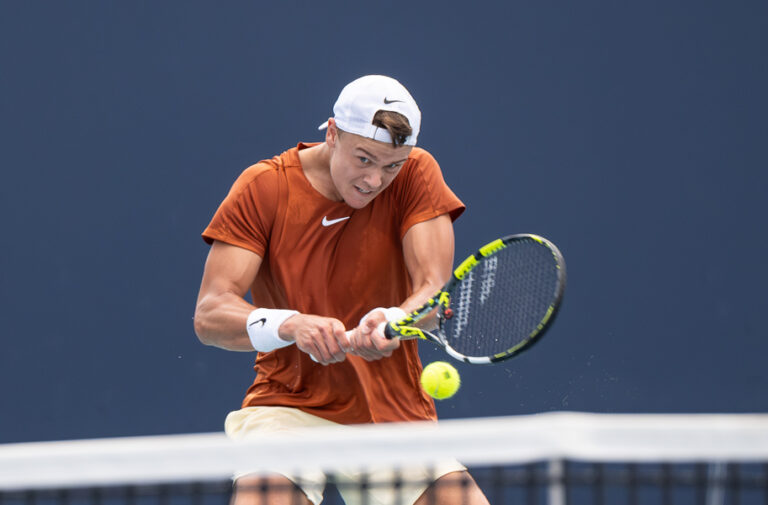
Holger Rune Profile — Back From an Achilles Rupture

0

Holger Rune is back. The Danish former world No. 4 tore his left Achilles tendon at the Stockholm Open in October 2025 and did not play a competitive match for 11 months. He returned in September 2026 for Denmark’s Davis Cup World Group I tie against Bulgaria in Copenhagen, beat Iliyan Radulov in his first match, and the next day edged Grigor Dimitrov 3-6, 6-3, 7-6(4) to keep Denmark alive in a 3-2 win, according to the ATP Tour. “It has been 11 months of hard work and I can’t wait to see all my fans and all the Danish people and all the fans around the world again,” he had said on Instagram when announcing the return.

Before the injury, Rune was one of the most dangerous young players on tour: a Masters 1000 champion at 19, a five-time titlist and a 2023 Nitto ATP Finals qualifier. The questions now are how quickly he regains his movement and ranking after a year away, and whether the explosiveness that defined his game comes back with it.

Quick facts

  • Full name: Holger Rune
  • Nationality: Denmark
  • Born: April 29, 2003
  • Height: 6 ft 2 in (1.88 m)
  • Turned pro: 2020
  • Plays: Right-handed, two-handed backhand
  • Career titles: 5, including the 2022 Paris Masters
  • Career high: World No. 4 (2023)
  • Identity: Aggressive, all-court shotmaker with a big forehand and competitive fire

Game overview

At full health, Rune is an aggressive, flat-hitting shotmaker with a heavy forehand, a strong serve and the competitive intensity that produced wins over the very best as a teenager. After an Achilles rupture, the first thing to watch is movement: whether he changes direction without hesitation and trusts the leg in long rallies. Against Dimitrov he held his nerve in the deciding tiebreak after failing to serve the match out at 5-4, the ATP Tour reported.

Playing style and strengths

Forehand and power. A heavy, aggressive forehand that can take over rallies.

Shotmaking and variety. Drop shots, angles and improvisation that make him dangerous and watchable.

Competitive intensity. A fierce on-court temperament that, channelled well, lifts his level against top opponents.

Pressure points and vulnerabilities

  • The Achilles: durability over a full schedule after only three matches back
  • A ranking that fell steeply during the layoff, meaning unseeded draws on his return
  • Match sharpness after 11 months without competition
  • Converting his ceiling into deeper major runs, having never reached a Grand Slam semifinal

Career milestones

  • 2022: Roland Garros quarterfinal; maiden Masters 1000 title at the Paris Masters at 19, beating Novak Djokovic in the final
  • 2023: Quarterfinals at Roland Garros and Wimbledon; career-high world No. 4; Nitto ATP Finals debut
  • 2025: Barcelona Open title, beating Carlos Alcaraz in the final
  • 2025: Tore his left Achilles at the Stockholm Open in October
  • 2026: Returned after 11 months with two Davis Cup singles wins in Copenhagen

Grand Slam record in context

Rune’s major record is the clearest unfinished business: three quarterfinals, two in Paris and one at Wimbledon, but no semifinal. He missed all four majors in 2026 while recovering. The comeback resets that timeline, and the first real test at a major will be the 2027 Australian Open, where his best is the fourth round.

Grand Slam best results

  • Australian Open: Fourth round (2023, 2025)
  • Roland Garros: Quarterfinal (2022, 2023)
  • Wimbledon: Quarterfinal (2023)
  • US Open: Third round (2022)

What to watch next

  1. The tour return: he lost his first ATP Tour match back, to Kyrian Jacquet in Tokyo, and entered Shanghai on a protected ranking. The test now is how the Achilles responds to back-to-back weeks.
  2. Movement: whether his explosiveness comes back to pre-injury levels.
  3. Ranking rebuild: how quickly he climbs back toward seeding territory for the 2027 majors.

Related reading

Season Snapshot — October 7, 2026

  • Status: Returned from a left Achilles tear sustained in Stockholm in October 2025
  • ATP ranking: No. 195
  • 2026 record: 2-1
  • 2026 matches: Davis Cup World Group I, Denmark d. Bulgaria 3-2 in Copenhagen; d. Iliyan Radulov and d. Grigor Dimitrov 3-6, 6-3, 7-6(4). First ATP Tour match back: lost to Kyrian Jacquet 6-3, 6-1 in the first round in Tokyo on October 1
  • This week: Entered the Shanghai Masters on a protected ranking, the only player in the singles draw to do so; first-round match against Daniel Altmaier
  • Coaches: Lars Christensen and Kenneth Carlsen, as listed by the ATP
  • 2026 Grand Slams: Did not play (injury)
  • Career high: World No. 4 (2023)

This snapshot is dated and will change. The career record above does not.

Alcaraz Eyes Historic Three-Peat at Indian Wells

0

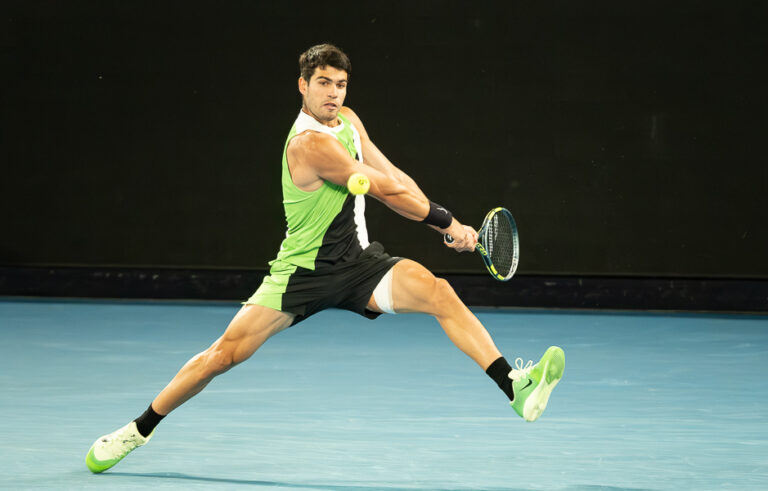
Indian Wells, California – Carlos Alcaraz steps into the BNP Paribas Open this week with a flawless 12-0 record in 2026, setting his sights on a third consecutive title in the California desert.

The Spanish world number one, fresh off his maiden Australian Open crown in January—which made him the youngest man to complete the career Grand Slam at 22—followed that with a dominant run at the ATP 500 in Doha last month.

Now, he aims to join an elite group of three-time champions at Indian Wells, including Rafael Nadal, Jimmy Connors, and Michael Chang, while closing in on the tournament’s record holders, Roger Federer and Novak Djokovic, who each boast five wins.

The draw, released earlier this week, places Alcaraz in a loaded top half where a semifinal clash with Djokovic could materialize if both advance. Alcaraz opens his campaign in the second round against either Bulgaria’s Grigor Dimitrov or France’s Terence Atmane, following a first-round bye as the top seed.

Djokovic, seeded third, starts against either France’s Giovanni Mpetshi Perricard or Poland’s Kamil Majchrzak. The Serbian, a 24-time Grand Slam winner, reached the Australian Open final but fell to Alcaraz, and he’s hunting a record sixth Indian Wells trophy after his last victory here in 2016.

Alcaraz, speaking at his pre-tournament press conference, reflected on Djokovic’s legendary 41-match winning streak from 2011, which Federer ended in the Roland Garros semifinals. “You don’t realize how difficult it is until you attempt it,” Alcaraz said with a smile.

“I only have 12. I know I’d still have to win four or five of the biggest tournaments in the world. I’m very proud of my start to the season and I hope the streak continues as long as I keep playing good tennis.” He credited his hot form to better emotional control on court, noting it has helped him maintain a high level without overthinking technical aspects.

On the other side of the bracket, second seed Jannik Sinner represents the primary obstacle to an Alcaraz-Djokovic rematch. The Italian, who sat out last year’s event due to a suspension from a positive clostebol test in 2024, cannot reclaim the No. 1 ranking here but seeks momentum after surprise defeats to Djokovic in Melbourne and Jakub Mensik in Doha.

“I’m trying to be a bit more aggressive at certain moments from the baseline,” Sinner said, signaling tweaks to his game. His quarter includes potential challenges from American Ben Shelton and Germany’s Alexander Zverev, the fourth seed.

Defending champion Jack Draper, the British 13th seed, faces a stern test in his title defense amid lingering injuries that forced his US Open withdrawal last August. Draper, who stunned Alcaraz in the 2025 semifinals before beating Holger Rune in the final, opens against a qualifier and could meet Sinner in the quarterfinals if he regains full fitness.

The tournament’s buildup has been overshadowed by travel disruptions stemming from the ongoing Middle East conflict and airspace closures. A group of players, including Russians Daniil Medvedev—the Dubai champion and two-time Indian Wells runner-up (2023 and 2024)—Andrey Rublev, and Karen Khachanov, were stranded in Dubai after the ATP 500 there concluded.

The ATP confirmed they were pulled from Tuesday’s mixed doubles but remained in the singles draw. Latest reports indicate they have secured flights out, with Medvedev expected to arrive by Saturday for his second-round match, and Rublev and Khachanov potentially playing Friday.

The ATP covered flight costs to facilitate their exit from the region, where bomb threats and drone interceptions disrupted air travel. Alcaraz expressed concern, saying, “Seeing some players trapped there has been a bit worrying.”

Medvedev, seeded fifth, lands in Sinner’s half and could face the Italian in the semifinals. His absence from early practice sessions had raised doubts, but he’s now listed on the schedule for Wednesday and Thursday, signaling his intent to compete despite the ordeal.

On the women’s side, 18-year-old Russian Mirra Andreeva returns as the defending champion, seeded eighth. She kicked off 2026 with a WTA 500 title in Adelaide but exited in the Australian Open round of 16, still chasing her first major final.

Andreeva’s draw pits her in a tough fourth quarter, with a potential semifinal against two-time champion Iga Swiatek, the second seed. Swiatek, who won in 2022 and 2024, aims to become the first woman since Martina Navratilova (1990-91) to secure three titles here.

World No. 1 Aryna Sabalenka, the top seed, has unfinished business after back-to-back final losses—to Elena Rybakina in 2023 and Andreeva in 2025. Sabalenka, who skipped the Middle East swing, opens against a qualifier and could meet American Amanda Anisimova in the quarterfinals. Rybakina, the third seed and reigning Australian Open champion, anchors the third quarter and seeks her second Indian Wells crown.

A strong Latin American contingent adds flavor to the men’s field. Argentina’s Francisco Cerundolo, ranked 20th and fresh off a Buenos Aires title, leads the group alongside compatriots Tomas Etcheverry and Sebastian Baez.

Brazil’s 18-year-old Joao Fonseca, who notched a first-round win here in 2025 before falling to Draper, opens against Belgium’s Raphael Collignon. Fonseca looks to rebound from early exits in Melbourne and Rio de Janeiro.

The BNP Paribas Open, often dubbed “Tennis Paradise,” runs from March 4-15 at the Indian Wells Tennis Garden, marking the first combined ATP Masters 1000 and WTA 1000 of the year. Qualifying wrapped up with Spain’s Dani Merida earning a main-draw spot, while compatriot Martin Landaluce fell short. Wild cards include veterans like Gael Monfils, Bianca Andreescu, and Sloane Stephens, plus rising talents such as Rafael Jodar and Michael Zheng.

With $9.4 million in prize money on the line and a star-studded lineup, the hard-court event promises high-stakes action. Main-draw play begins Wednesday, with first-round matches featuring Stefanos Tsitsipas against Denis Shapovalov and Marin Cilic versus Zachary Svajda.

As the Sunshine Double kicks off—followed by Miami—Indian Wells sets the tone for the hard-court swing, where Alcaraz’s streak, Sinner’s adjustments, and the stranded players’ resilience could define the narrative.

(Word count: 912)


Sinner Seeks Reset as Djokovic Lurks in Indian Wells Draw
Stranded Stars Escape Dubai Drama Ahead of Indian Wells Start
Andreeva Defends Title Against Sabalenka and Swiatek at Indian Wells
Latin American Hopes Rise with Cerundolo Leading Charge in Desert

Carlos Alcaraz aims for a third straight Indian Wells title with a perfect 12-0 start to 2026, facing threats from Jannik Sinner and Novak Djokovic amid travel disruptions for stranded players. (158 characters)

Stefanos Tsitsipas Profile — Two-Time Slam Finalist

0

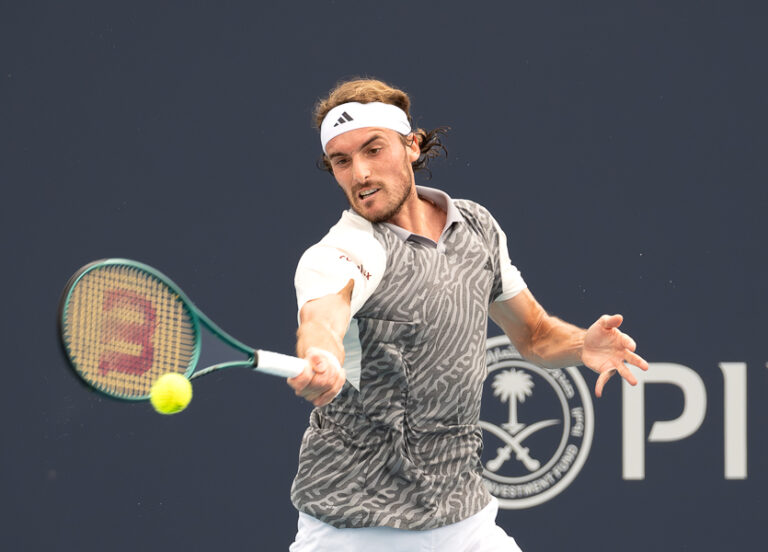
Stefanos Tsitsipas reached the top of the men’s game at his peak — a career-high World No. 3, an ATP Finals title, and two Grand Slam finals — before a steep decline driven by a recurring back injury and a loss of form pushed him out of the top 50. He began the 2026 US Open unseeded for the first time in his career there.

New York then produced his best week in a long time. In the first round he came back from a set and a break down to beat the 10th seed, Arthur Fils, who had won the Cincinnati Masters eight days earlier and had beaten Tsitsipas in all five of their previous meetings. He went on to reach the fourth round at the US Open for the first time, beating Jiri Lehecka in the third round. The profile is a former elite and two-time major finalist showing the first real signs of rediscovering the level that made him one of the most distinctive players of his generation.

Quick facts

  • Full name: Stefanos Tsitsipas
  • Nationality: Greece (born Athens; based in Monte Carlo)
  • Born: August 12, 1998
  • Height: 6 ft 4 in (1.93 m)
  • Turned pro: 2016
  • Plays: Right-handed, one-handed backhand
  • Career-high ranking: World No. 3 (August 2021)
  • Career majors: None — finalist at the 2021 French Open and the 2023 Australian Open; ATP Finals champion (2019)
  • Identity: One-handed-backhand stylist with a heavy forehand, at his best on clay

Season snapshot — September 25, 2026

  • US Open: Fourth round, his first at Flushing Meadows, as an unseeded player; beat 10th seed Arthur Fils 4-6, 7-6(3), 6-1, 6-4 in the first round, hitting 50 winners, and Jiri Lehecka in the third
  • The Fils win: His first against the Frenchman after five straight defeats
  • The slide: Fell from the top 10 in 2025 and out of the top 50 in 2026, hampered by a recurring lower-back injury

This snapshot is dated and will change. The career record elsewhere on this page does not.

Game overview

Tsitsipas plays an aggressive, one-handed-backhand game built around a heavy forehand and forward movement, historically most dangerous on clay. At his peak he combined that firepower with the athleticism to reach two major finals. The decline has been tied to back trouble and a dip in confidence rather than any single change in style, and his 50 winners against Fils showed the firepower is still there when he is healthy.

Playing style and strengths

Forehand. A heavy, aggressive weapon that anchors his offense.

One-handed backhand. A classic, admired shot, effective on clay though exposed by the biggest hitters.

Big-stage pedigree. Two major finals and an ATP Finals title.

Pressure points and vulnerabilities

  • Health: a recurring lower-back injury has disrupted his recent seasons
  • The backhand wing under heavy, high pace from the top players
  • Turning one strong week into consistent results
  • Rebuilding a ranking and seedings from outside the top 50

Career milestones

  • 2019: ATP Finals champion at 21
  • 2021: French Open final and career-high World No. 3
  • 2023: Australian Open final
  • 2026: First US Open fourth round, as an unseeded player

Grand Slam record in context

Tsitsipas’s major record features two finals — both lost to Novak Djokovic, at the 2021 French Open (from two sets up) and the 2023 Australian Open — plus multiple deep clay-court runs. His 2026 US Open fourth round, at a major where he had never previously reached the second week, is the clearest sign yet that the recovery is real. Roland Garros, given his clay pedigree, remains his most natural route back to the latter stages of the majors.

What to watch next

  1. Health — whether the back holds up through the autumn
  2. Ranking — climbing back toward seeded status at the majors after New York
  3. Clay in 2027 — the surface most likely to extend a recovery

Related reading

Andrey Rublev Profile — Power and the QF Barrier

0

Andrey Rublev is one of the most consistent presences in the men’s game and the owner of one of its most striking statistics: he has reached the quarterfinals of all four Grand Slams, ten times in all, without ever reaching a semifinal. That 0-10 record at the last-eight stage defines a career that has otherwise featured a career high of world No. 5, 18 titles and two Masters 1000 crowns.

His 2026 has been a season of swings. He lost the Barcelona final to Arthur Fils, fought back from two sets down against Jakub Menšík in the Roland Garros fourth round before losing the fifth, and then ended a 17-month title drought in Bastad in July. “To be able to win here for a second time is a special feeling,” he said, according to the ATP Tour. Six weeks later he lost in the second round of the US Open to Daniel Mérida.

Quick facts

  • Full name: Andrey Rublev
  • Nationality: Russia (currently competes as a neutral athlete; based in Dubai)
  • Born: October 20, 1997
  • Height: 6 ft 2 in (1.88 m)
  • Turned pro: 2014
  • Plays: Right-handed, two-handed backhand
  • Coach: Marat Safin (since April 2025) and Fernando Vicente
  • Career titles: 18, including Masters 1000 crowns at Monte Carlo (2023) and Madrid (2024)
  • Identity: Heavy-hitting power baseliner with intense competitive fire

Game overview

Rublev plays high-intensity, high-risk tennis built on a heavy flat forehand and relentless aggression. The power and work rate made him a near-permanent top-15 player and a two-time Masters champion. The same all-out approach, and the emotional volatility that sometimes comes with it, has been part of the story behind his repeated stumbles at the quarterfinal stage of majors.

Playing style and strengths

Forehand. One of the heaviest in the game, the engine of his offense.

Intensity and work rate. Relentless effort that overwhelms opponents on his best days, and a capacity to drag matches back from losing positions, as he did against Menšík in Paris.

All-surface results. Quarterfinals at every major and titles on hard and clay.

Pressure points and vulnerabilities

  • The Grand Slam quarterfinal barrier, 0-10, that defines his major record
  • Emotional control, with on-court frustration that can derail him in tight matches
  • Finals: in Barcelona he broke Fils to lead 6-5 in the second set, then lost the tiebreak as Fils closed out the match with seven straight points, according to the ATP Tour
  • A ranking that has slid from the top 15 to the mid-20s during 2026

Career milestones

  • 2017: First Grand Slam quarterfinal, at the US Open
  • 2020: A breakout season with five ATP titles
  • 2021: Career-high world No. 5; Olympic mixed-doubles gold; Davis Cup title
  • 2023: Maiden Masters 1000 title at Monte Carlo; quarterfinals at all four majors completed at Wimbledon
  • 2024: Second Masters 1000 title in Madrid
  • 2026: Second Bastad title, his 18th overall

Grand Slam record in context

Rublev’s major record is the purest example of consistency without breakthrough: ten quarterfinals across all four Slams, and not a single semifinal. In 2026 he did not reach another. Francisco Cerundolo beat him 6-3, 7-6(4), 6-3 in the Melbourne third round.

Paris came closest. As the 11th seed he lost the first two sets to Menšík on Court Suzanne-Lenglen, took the third 6-4 and the fourth 6-2 late into the night, and was beaten 6-3 in the fifth after three hours and 45 minutes. In New York, seeded 23rd, he won the first set against Mérida in a tiebreak and lost the next three, the ATP Tour reported.

Grand Slam best results

  • Australian Open: Quarterfinal (2021, 2023, 2024)
  • Roland Garros: Quarterfinal (2020, 2022)
  • Wimbledon: Quarterfinal (2023)
  • US Open: Quarterfinal (2017, 2020, 2022, 2023)

What to watch next

  1. Ranking: whether the autumn swing lifts him back toward seeding territory for Melbourne.
  2. The first semifinal: whether he can finally clear the quarterfinal hurdle at a major.
  3. Temperament: channeling his intensity in the decisive moments.

Related reading

Season Snapshot — September 25, 2026

  • Ranking: No. 24 during the US Open, according to the ATP Tour; career high No. 5 (September 13, 2021)
  • 2026 title: Bastad (d. Luciano Darderi 6-4, 6-3), his first since Doha in February 2025
  • 2026 finals: Barcelona (l. Arthur Fils); Hangzhou, as second seed (l. Daniil Medvedev 7-5, 6-4, according to the ATP Tour; Medvedev now leads their head-to-head 8-2)
  • 2026 Grand Slams: Australian Open third round as 13th seed (l. Cerundolo 6-3, 7-6(4), 6-3); Roland Garros fourth round as 11th seed (l. Menšík 6-3, 7-6(6), 4-6, 2-6, 6-3); US Open second round as 23rd seed (l. Mérida 6-7(3), 6-2, 6-4, 6-4)
  • Mixed doubles: US Open semifinal with Mirra Andreeva
  • Coach: Marat Safin and Fernando Vicente

This snapshot is dated and will change. The career record above does not.

Alexander Zverev Profile — Two Majors in One Season

0

Alexander Zverev spent years as the best player never to win a major. In 2026 he won two. The German broke through at Roland Garros in June, beating Flavio Cobolli in a five-set final, reached his first Wimbledon final five weeks later, and on September 13 won the US Open, beating Ben Shelton 6-3, 7-6(2), 5-7, 6-2 in the final. He is the fourth man in the Open Era to win his first two Grand Slam titles in the same season, and he joined Boris Becker as the only German men to win more than one major.

The turnaround is stark. Early in 2025 he lost his third major final, to Jannik Sinner in Melbourne, after surrendering a two-set lead in the 2020 US Open final and another lead to Carlos Alcaraz in the 2024 French Open final. In 2026 he was the only man to reach the quarterfinals at all four majors. The profile is a long-established elite who has turned into the most successful major player of the season.

Quick facts

  • Full name: Alexander Zverev
  • Nationality: Germany (born Hamburg)
  • Born: April 20, 1997
  • Height: 6 ft 6 in (1.98 m)
  • Turned pro: 2013
  • Plays: Right-handed, two-handed backhand
  • Coach: Alexander Zverev Sr. (his father)
  • Career majors: 2 — Roland Garros (2026), US Open (2026)
  • Career titles: 26, including two ATP Finals (2018, 2021) and Olympic singles gold (Tokyo 2020)
  • Identity: Towering power baseliner with a major serve and heavy groundstrokes

Season snapshot — September 25, 2026

  • Ranking: World No. 2, behind Sinner, and first in the Race to Turin after the US Open; already qualified for the ATP Finals (November 15 to 22)
  • US Open: Champion as the top seed, after needing five sets in each of his first two matches; beat Shelton 6-3, 7-6(2), 5-7, 6-2 in the final
  • Laver Cup: Clinched Team Europe’s 13-5 win in London by beating Learner Tien 7-6(3), 6-3 on the final day, after losing to Alex de Minaur 2-6, 7-6(5), 11-9 and winning in doubles with Casper Ruud on Saturday. It was the fourth time he has clinched the event, and he is its all-time leading scorer with 26 points, according to the Laver Cup
  • Wimbledon: Runner-up to Sinner, his first final at the All England Club; beat Taylor Fritz 6-4, 6-4, 6-2 in the quarterfinals, ending a seven-match losing streak against him, and Arthur Fery 7-6(0), 6-2, 6-4 in the semifinals
  • Roland Garros: Champion, beating Flavio Cobolli 6–1, 4–6, 6–4, 6–7(5), 6–1 in the final
  • Australian Open: Semifinal, lost to Alcaraz
  • Between the majors: A first-round loss in Montreal to Tallon Griekspoor and a fourth-round loss in Cincinnati to Tommy Paul, after holding a match point

This snapshot is dated and will change. The career record elsewhere on this page does not.

Game overview

Zverev plays a power game anchored by one of the biggest serves in tennis and flat, heavy hitting from the baseline. At 6 ft 6 in he generates huge pace and free points, and his movement for a player of his height is exceptional. The long wait for a major was less about the tools than about closing the biggest matches. In 2026 he closed two of them, and in the US Open final he answered Shelton’s third-set comeback by losing only two games in the fourth.

Playing style and strengths

Serve. A genuine weapon that produces aces and short replies, the foundation of his game.

Baseline power. Flat, deep hitting off both wings, with a backhand that can end long rallies from defensive positions.

Movement and durability. Rare court coverage for his size, and the stamina to win five-set battles; he opened his US Open title run with two of them.

Pressure points and vulnerabilities

  • Sinner: the Italian beat him in the 2025 Australian Open final and the 2026 Wimbledon final
  • Form outside the majors: he failed to reach a quarterfinal in Montreal or Cincinnati this summer
  • Second-serve reliability under pressure
  • A baseline pattern that can turn passive against aggressive opponents

Career milestones

  • 2018, 2021: ATP Finals champion
  • 2020: First major final at the US Open
  • 2021: Olympic singles gold at the Tokyo Games
  • 2024–2025: Further major finals at Roland Garros and the Australian Open
  • 2026: Roland Garros and US Open titles, a first Wimbledon final, and the quarterfinals or better at all four majors

Grand Slam record in context

Zverev’s major record was long defined by what he hadn’t won — three finals lost, two from winning positions — alongside consistent deep runs. 2026 rewrote it: a semifinal, two titles and a final, from a player who had never gone past the fourth round at Wimbledon before this year. The context matters too — Alcaraz missed two majors through injury and Sinner withdrew from the US Open — but Zverev beat the players in front of him, and both of his second-week losses at the majors came against the eventual champions: Alcaraz in Melbourne and Sinner at Wimbledon.

Grand Slam best results

  • Australian Open: Runner-up (2025)
  • Roland Garros: Champion (2026)
  • Wimbledon: Runner-up (2026)
  • US Open: Champion (2026)

What to watch next

  1. Year-end No. 1 — he trails Sinner in the rankings but has far fewer points to defend over the rest of the season
  2. The ATP Finals — a chance at a third year-end title, November 15 to 22
  3. Melbourne — a major where he has reached the final but not won, with Alcaraz defending the title

Related reading

Daniil Medvedev Profile — US Open Champion Rebuilds

0

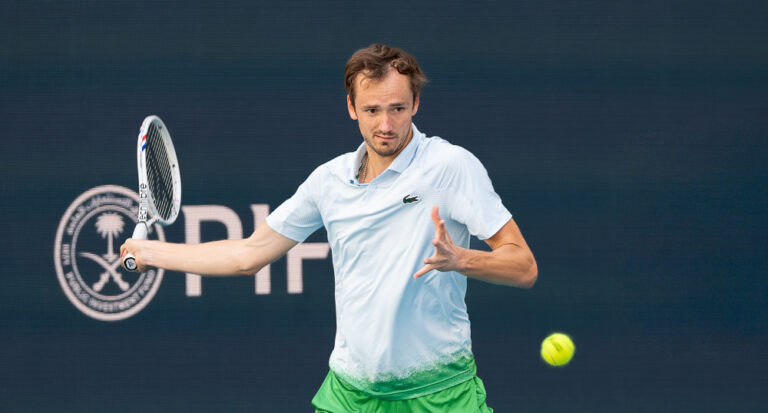
Daniil Medvedev is a former world No. 1 and Grand Slam champion who has steadied himself in 2026 after a difficult 2025. The Russian won the 2021 US Open, ending Novak Djokovic’s bid for a calendar Grand Slam, reached three Australian Open finals, and spent 16 weeks at No. 1 in 2022. His rebound began in October 2025, when he ended a title drought of two and a half years in Almaty working with new coaches Thomas Johansson and Rohan Goetzke, according to the ATP Tour.

2026 opened with titles in Brisbane and Dubai. The Dubai title, his 23rd, was the first time in his career he had won the same event twice. He followed it with an Indian Wells final and a return to the top 10. The majors were more mixed: a first-round loss at Roland Garros to No. 97-ranked Australian Adam Walton in five sets, and a US Open run that began with no match wins in his warm-up event and ended in the fourth round against Frances Tiafoe. In late September he won a third title of the year in Hangzhou, beating his friend Andrey Rublev 7-5, 6-4 with 23 aces, which moved him to eighth in the Race to Turin, according to the ATP Tour.

Quick facts

  • Full name: Daniil Sergeyevich Medvedev
  • Nationality: Russia (currently competes as a neutral athlete; born Moscow, based in Monte Carlo)
  • Born: February 11, 1996
  • Height: 6 ft 6 in (1.98 m)
  • Turned pro: 2014
  • Plays: Right-handed, two-handed backhand
  • Career titles: 24, including the 2021 US Open and the 2020 ATP Finals
  • Career high: World No. 1 (February 28, 2022)
  • Identity: Cerebral counterpuncher with a deep return position and an elite hard-court record

Game overview

Medvedev plays unlike anyone else at the top: an extreme deep return position, flat and heavy hitting, exceptional defence for his height, and a tactical, problem-solving mind. The style has produced a major, an ATP Finals title and a No. 1 ranking, and it is at its most effective on hard courts, where his consistency and court coverage wear opponents down. Twenty of his first 22 titles came on hard courts, according to ATP Tour match notes. The Hangzhou title in September was his 22nd on hard courts, level with Michael Chang, Stefan Edberg and John McEnroe for the 11th most in the Open Era, according to the ATP Tour.

Playing style and strengths

Defence and movement. Remarkable court coverage for a 6-foot-6 player, turning defence into attrition.

Flat, heavy hitting. Penetrating groundstrokes and a strong, if unorthodox, serve.

Tactical intelligence. A cerebral match player who adjusts and frustrates opponents.

Pressure points and vulnerabilities

  • Clay, historically his weakest surface, underlined by the 2026 Roland Garros first-round loss
  • Closing out matches: he held three match points against Brandon Nakashima in the Cincinnati third round and lost
  • Motivation and consistency between his big weeks
  • Converting major finals, with three Australian Open finals lost

Career milestones

  • 2020: ATP Finals champion
  • 2021: Maiden Grand Slam title at the US Open
  • 2022: World No. 1 for 16 weeks, the tallest No. 1 in history, according to the ATP Tour
  • 2021–2024: Three Australian Open finals
  • 2025: Almaty title, ending a drought of two and a half years
  • 2026: Brisbane, Dubai and Hangzhou titles, an Indian Wells final and a return to the top 10

Grand Slam record in context

Medvedev’s major record is anchored by the 2021 US Open and three Australian Open finals, all on hard courts, plus two Wimbledon semifinals. In 2026, Walton beat him in five sets in the first round at Roland Garros. In New York, seeded seventh, he arrived after a first-round loss to wild card Martin Damm in Winston-Salem, won his opener against qualifier Hugo Gaston 6-4, 6-2, 6-4, and reached the second week before Tiafoe beat him in the fourth round.

Grand Slam best results

  • Australian Open: Runner-up (2021, 2022, 2024)
  • Roland Garros: Quarterfinal (2021)
  • Wimbledon: Semifinal (2023, 2024)
  • US Open: Champion (2021)

What to watch next

  1. Turin: whether the autumn hard-court swing, his best part of the calendar, carries him back to the Nitto ATP Finals.
  2. Consistency: turning strong weeks into a steadier second half of the season.
  3. Melbourne: the major where he has reached three finals.

Related reading

Season Snapshot — September 27, 2026

  • Ranking: Top 10; No. 6 on his Roland Garros player page in August
  • 2026 titles: Brisbane (d. Brandon Nakashima 6-2, 7-6(1)); Dubai (walkover over Tallon Griekspoor in the final); Hangzhou (d. Andrey Rublev 7-5, 6-4 with 23 aces, according to the ATP Tour)
  • 2026 final: Indian Wells
  • 2026 Grand Slams: Roland Garros first round (l. Adam Walton in five sets); Wimbledon third round as 8th seed (l. Jan-Lennard Struff in straight sets, according to the ATP Tour); US Open fourth round as 7th seed (l. Frances Tiafoe)
  • Summer hard courts: Cincinnati third round (l. Nakashima from three match points up); Winston-Salem first round (l. Martin Damm)

This snapshot is dated and will change. The career record above does not.

What Is a Break of Serve in Tennis | Break Points and Holds Explained

0

A break of serve happens when a player wins a game while their opponent is serving.

Because serving is usually an advantage in tennis, breaking serve is one of the most important events in a match. It often decides sets, shifts momentum, and explains why a scoreline that looks close can feel one-sided.

Serve Games vs Return Games

Tennis alternates service games:

  • Player A serves one full game
  • Player B serves the next full game
  • and so on

When you win your own service game, that’s called a hold of serve.

When you win your opponent’s service game, that’s a break of serve.

What Is a Break Point?

A break point is a point where the returner is one point away from winning the game on the server’s serve.

Examples:

  • 30–40 (returner has break point)
  • 15–40 (two break points)
  • 0–40 (three break points)
  • Advantage returner at deuce (“Ad out”) is also break point

If the returner wins the break point, they break serve.

If the server saves it, the game continues.

Why Breaks Matter

Breaks matter because they create separation in the score.

In most sets, you need to win 6 games to win the set, usually by 2 games.

If both players hold serve all set, the score reaches 6–6 and goes to a tiebreak.

So a single break can be the difference between:

  • 6–4 (one break)
  • 7–5 (one break late)
  • 7–6 (no breaks)

That’s why broadcasters say “this is a huge game” when someone faces break point. It’s often the only real scoring leverage in a set.

Breaks in Different Playing Styles

Break frequency varies by surface and player style:

  • Grass and fast hard courts: holds are more common, breaks are harder
  • Clay: breaks are more common, rally length increases, serving advantage is reduced
  • Elite returners: create more break points even against big servers

This is why some matches have constant break chances while others are decided by one point in a tiebreak.

What Is a Break Back?

A break back happens when:

  • Player A breaks serve, then
  • Player B breaks immediately in the next return game

It restores the score balance and often changes the feel of a set quickly.

What Does “Up a Break” Mean?

If a player is “up a break,” it means they have:

  • won more return games than the opponent has

Example:
If the score is 4–2 and you’ve broken once, you’re up a break. If you hold serve, you can often close the set.

Frequently Asked Questions

Is breaking serve always decisive?
Not always, but in many sets it’s the key difference, especially when holds are common.

Can you win a match without breaking serve?
Yes. In some formats, players can win sets in tiebreaks without breaking. In best-of-three, two tiebreak sets can win the match.

What is “hold serve”?
Winning your service game.

Walkover vs Retirement vs Default in Tennis — What Each Means

0

When a match ends without a standard finish, tennis uses specific terms that mean very different things. Fans often lump them together, but the distinctions matter for the draw, scheduling and sometimes stats.

Here’s the simple breakdown:

  • Walkover (WO): the match never starts
  • Retirement (RET): the match starts, then a player stops
  • Default (DEF): a player is removed, usually for a rule violation

This guide explains each term and what you’ll see on scoreboards and draw sheets.

What Is a Walkover (WO)?

A walkover happens when a player advances because their opponent withdraws before the match begins.

Key points:

  • No points are played
  • The match is not completed because it never started
  • The opponent is usually injured, ill, or otherwise unable to begin

In draws, you’ll often see “WO” next to the result.

A walkover is essentially a late withdrawal that occurs after the draw is set but before the match starts.

What Is a Retirement (RET)?

A retirement happens when a match begins and then a player stops because they cannot continue.

Key points:

  • At least one point has been played
  • The player is typically injured or physically unable to continue
  • The opponent is awarded the match

In scorelines, you’ll see something like:

6–3, 2–1 RET

That means the player retired while trailing 2–1 in the second set.

Retirements are common in a long season, especially when players attempt to start and then realize they can’t finish.

What Is a Default (DEF)?

A default happens when a player is removed from a match for a violation rather than physical inability.

Common causes include:

  • code violations escalating to disqualification
  • unsportsmanlike conduct
  • audible obscenity or verbal abuse
  • physical aggression
  • refusal to continue under rules

A default can occur at any time after the match begins.

In scorelines, you may see “DEF” or “defaulted,” sometimes with an incomplete scoreline depending on when it happened.

Defaults are rare compared to retirements, and the penalty reaches well past the match itself. Under ATP rules a defaulted player forfeits the ranking points and prize money earned across the entire tournament, not only the match in which the violation occurred.

Two cases show what that means in practice. Denis Shapovalov was defaulted from his 2025 Washington quarter-final against Ben Shelton following an exchange with a spectator, forfeiting the prize money and ranking points attached to that round. Andrey Rublev was defaulted from the 2024 Dubai semi-final but appealed successfully, and the committee judged the customary penalty disproportionate on the available evidence and restored his points and prize money.

The severity of the penalty has drawn criticism from inside the game. Vasek Pospisil, co-founder of the PTPA, publicly called for the rule to be changed after the Shapovalov default. For the full process — how the point penalty system escalates, who takes the decision, and what follows — see what happens when a player gets defaulted.

Walkover vs Retirement vs Default: Quick Comparison

TermDid the match start?Why it happensHow it appears
WalkoverNoWithdrawal before startWO
RetirementYesInjury/illness during matchRET
DefaultYesDisqualification/rules violationDEF

Do These Outcomes Affect Rankings Points?

How each result is recorded:

  • The advancing player receives the ranking points and prize money for the round reached, as though the match had been played
  • A walkover is not recorded as a win or a loss in either player’s official win-loss record, and does not enter the head-to-head
  • A retirement does count in both records — a win for the player advancing, a loss for the player who stopped
  • A walkover produces no match statistics, so aces, winners and serve percentages are unaffected

For the broader points framework, see How Tennis Rankings Work. For how any of these results moves a bracket, see How Tennis Tournaments Work.

The short version: a walkover moves the bracket, while a retirement and a default move the record.

Why These Terms Matter for Fans

These outcomes change how a tournament unfolds:

  • a top seed can advance without playing (walkover)
  • a player can win a match but lose physical momentum (retirement)
  • a draw can swing due to an unexpected default

They also affect scheduling and recovery time, especially in tournaments with matches on consecutive days.

Frequently Asked Questions

Is a walkover the same as a withdrawal?
It’s a type of withdrawal, but specifically one that happens before the match begins and results in an automatic advance.

Can a player retire between sets?
Yes. Retirement can occur at any time after the match starts.

Are defaults common?
No. Defaults are rare and usually involve major rule violations.

Does a walkover count as a win?
No. The advancing player takes the ranking points and prize money for the round, but the result does not appear in either player’s official win-loss record and does not count in the head-to-head.

Does a defaulted player lose anything beyond the match?
Yes. Under ATP rules a default forfeits the ranking points and prize money earned across the whole tournament, though that penalty can be appealed.

Tennis Players Stranded in Dubai Following Iranian Missile Attacks

0

A group of professional tennis players, including recent Dubai champion Daniil Medvedev, found themselves unable to leave the city after Iranian missile and drone attacks disrupted air travel across the region. The attacks came in response to strikes by the United States and Israel on Iran over the weekend, leading to widespread airspace closures and flight cancellations.

The ATP Tour, which oversees men’s professional tennis, confirmed on Monday that a small number of players and their teams remained in Dubai following the conclusion of the ATP 500 event there.

Medvedev, the Russian who claimed the singles title on Saturday, posted on social media about his situation, showing he was among those affected. The 30-year-old defeated Tallon Griekspoor in the final, though some reports noted Griekspoor withdrew due to a hamstring injury, handing Medvedev the win by default.

“We prioritize the health, safety, and well-being of our players, staff, and tournament personnel,” the ATP stated. “We can confirm that a small number of players and team members remain in Dubai. They are being accommodated in the official tournament hotels. We are in direct communication with those affected.”

Estimates from players and reports suggest around 30 to 40 people, including athletes, coaches, officials, and journalists, stayed behind in hotels near the airport. Finnish doubles player Harri Heliovaara, who won the doubles crown alongside Britain’s Henry Patten, shared details on his blog.

He described how much of the airspace in surrounding areas closed due to the strikes. “We’re just calmly waiting for things to improve,” Heliovaara wrote on Sunday. “Of course we want to leave as soon as possible, but sometimes the best thing is just to wait.”

Heliovaara, 36, who has claimed doubles titles at Wimbledon in 2024 and the Australian Open in 2025, explained that road travel to nearby countries like Oman or Saudi Arabia seemed impractical. “Up till now the ATP’s instructions were very clear: stay in the hotel and wait,” he added.

Other players reported to be stranded include world No. 17 Andrey Rublev, who reached the semifinals in Dubai, and doubles runners-up Marcelo Arevalo and Mate Pavic. Dutch player Tallon Griekspoor, Medvedev’s final opponent, also remained in the city, along with several coaches and tournament staff.

Sports journalist Reem Abulleil tweeted that she was still in Dubai with this group, highlighting the mix of players from various nations caught in the disruption.

The Dubai ATP 500 marked the end of a swing of tournaments in the Middle East before the circuit shifts to California for the Indian Wells Masters, set to begin on Wednesday. With travel halted, some players face the risk of missing the start of that event.

Medvedev, seeded high at Indian Wells, and others like Rublev have slim chances of arriving in time if flights do not resume soon. Reports indicate that after an emergency meeting, players rejected initial ATP offers for alternative travel, preferring to stay put for now.

A bit of relief came when Dubai Airports announced limited flights would resume on Monday evening. Major carriers like Emirates and flydubai confirmed they would restart some operations that night, while Etihad Airways, based in Abu Dhabi, planned to resume on Tuesday. However, uncertainty lingers as explosions and interceptions continued in the region.

The conflict’s impact extends beyond Dubai. Danish player Holger Rune, rehabilitating an Achilles injury in Qatar, shared a video of what appeared to be missile interceptions in the sky. His mother, Aneke Rune, described seeing “balls of fire in the sky and constant detonations,” underscoring the tense atmosphere in nearby countries.

Lower-tier events in the United Arab Emirates also face disruption. The ATP directed inquiries about upcoming Challenger tournaments in Fujairah, scheduled for March 2-8 and March 9-15, to their earlier statement, which offered no specifics on status.

Meanwhile, the International Tennis Federation confirmed to AFP that two World Tennis Tour events, third-tier competitions set for March 16-28 in Fujairah, have been postponed.

This situation echoes broader travel chaos affecting athletes in other sports. Zimbabwe’s cricket team, for instance, remains stuck in India due to similar airspace issues stemming from the conflict.

Players like Heliovaara expressed a mix of patience and frustration. In his blog, he noted that despite hearing numerous explosions since the conflict intensified, the doubles final proceeded on Saturday, and the singles trophy ceremony went ahead without incident. “The tournament wrapped up, but now we’re in this holding pattern,” he said.

The ATP has stepped up support, offering options for escape. According to Spanish media outlet Marca, the tour proposed two alternatives: a car journey to Oman followed by a private flight, or similar arrangements to other nearby points. However, players have so far chosen to remain in their hotels, weighing the risks of ground travel amid the instability.

Medvedev, known for his straightforward demeanor on and off the court, has kept fans updated through social media, sharing glimpses of his extended stay. Rublev, another Russian star, has voiced concerns about the uncertainty, telling reporters before the closures that he hoped to reach Indian Wells in time.

As the conflict shows no immediate signs of easing, the tennis community watches closely. The ATP continues to monitor developments and communicate with affected individuals. For now, these players sit tight in Dubai, hoping for safe passage to their next destinations.

The broader implications for the tour remain unclear. Indian Wells, one of the season’s premier events, draws top talent from both the men’s and women’s sides. Any absences due to travel delays could shift draws and affect outcomes. Organizers there have not yet commented on potential adjustments.

In the meantime, the stranded group finds ways to pass the time. Heliovaara mentioned casual conversations and light training in hotel facilities, maintaining routines as best they can. “It’s not ideal, but we’re making the most of it,” he wrote.

This episode highlights how global events can intersect with sports, forcing athletes to navigate challenges far beyond the baseline. As flights tentatively restart, the hope is that all involved can soon depart safely and resume their seasons.

Understanding the Tiebreak — When Sets Go to 6–6

0

For most of tennis history, a tied set had only one resolution: keep playing. Win by two games, however long that takes. In 1969, that produced a first-round Wimbledon match that lasted 112 games in the final set alone. In 2010, John Isner and Nicolas Mahut played a fifth set that reached 70–68 — a single set that took more than eight hours across two days. These were extraordinary spectacles. They were also unsustainable.

The tiebreak exists to solve that problem. It is tennis’s most elegant compromise: a compressed, high-stakes points race that decides a deadlocked set quickly, fairly, and under maximum pressure. Once you understand how it works — and why it’s designed the way it is — you’ll never look at a 6–6 scoreline the same way again.

What a Tiebreak Is and Why It Exists

A tiebreak is triggered when a set reaches 6–6. Rather than continuing to play full games until one player leads by two — which could theoretically never happen — players switch to a direct points race with its own serving rotation, its own target score, and its own win condition.

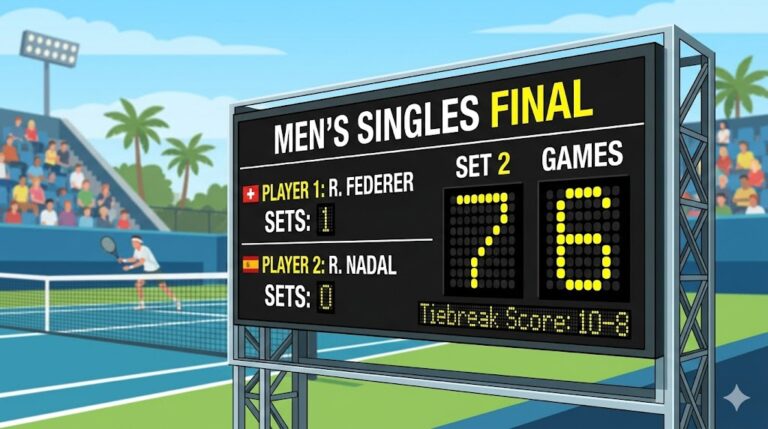
The tiebreak doesn’t replace the set. It decides it. The player who wins the tiebreak wins the set, and the set score is recorded as 7–6. The number in parentheses you often see beside that score — for example, 7–6 (4) — indicates the losing player’s point total in the tiebreak. A score of 7–6 (4) means the tiebreak ended 7–4.

Tiebreaks come in more than one format depending on the level of play and the specific event. The two you’ll encounter most often are the 7-point set tiebreak and the 10-point match tiebreak. They share the same underlying logic but differ in target score and where they appear in a match.

The Standard 7-Point Tiebreak

This is the classic tiebreak — the one used when a set reaches 6–6 in the vast majority of professional and recreational matches.

The rules are straightforward: first to 7 points wins, but must win by at least 2. That two-point margin requirement means the tiebreak doesn’t necessarily end at 7. If the score reaches 6–6 within the tiebreak itself, play continues until one player opens a two-point lead. Scores like 7–5, 8–6, 10–8, and even higher are entirely normal in tight tiebreaks. The winner of the tiebreak wins the set 7–6.

The two-point margin rule is not accidental — it’s the same principle that governs deuce in regular games. A single point shouldn’t decide a closely contested set any more than it should decide a closely contested game. At 6–6 in a tiebreak, both players have earned their way to that position, and the margin requirement ensures the winner demonstrates at least a small, sustained edge to close it out.

Serving in the Tiebreak: The Part That Confuses Everyone

The serving rotation inside a tiebreak is the single most confusing element of tennis scoring for new fans — and understandably so. It doesn’t follow the simple alternating pattern of regular games. Here’s exactly how it works.

The player whose turn it is to serve — based on the normal alternating game rotation — serves the first point only. After that first point, service passes to their opponent, who serves two consecutive points. From there, players alternate serving two points each for the remainder of the tiebreak.

Written out, the serving sequence looks like this:

Player A serves point 1. Player B serves points 2 and 3. Player A serves points 4 and 5. Player B serves points 6 and 7. And so on, in blocks of two, until the tiebreak ends.

The reason for this structure is balance. If one player served the entire tiebreak, or served significantly more points than their opponent, the serving advantage — which is substantial in tennis — would distort the outcome. The alternating two-point blocks ensure both players serve roughly the same number of points, with the one-point opening serve the only asymmetry. Over the length of a full tiebreak, that single extra point evens out statistically.

Changing Ends During the Tiebreak

Players also change ends — switching sides of the court — after every six points played in the tiebreak. So after points 1 through 6, they cross. After points 7 through 12, they cross again. And so on. This rotation accounts for any environmental factors — sun position, wind direction, crowd noise from a particular end — that might give one player an unfair advantage if they stayed on the same side throughout.

If you’ve ever watched a tiebreak and been puzzled by players constantly crossing to the other side between points, this is why. It’s a fairness mechanism, not a procedural formality.

The 10-Point Match Tiebreak

The match tiebreak — also called a super tiebreak — operates on the same principles as the 7-point tiebreak but with a higher target score and a different role in the match structure.

Instead of deciding a set at 6–6, the match tiebreak replaces an entire final set. Rather than playing a full third set (or fifth set in Grand Slam men’s events), teams or players compete in a single extended tiebreak: first to 10 points, with a two-point margin required to win. The serving rotation follows the same pattern as the standard tiebreak — one point, then alternating blocks of two.

A match tiebreak appears in a scoreline as the third number — for example: 6–4, 3–6, 10–7. That 10–7 is the match tiebreak result. It counts as the deciding set for all purposes, including the official match record.

Match tiebreaks are most commonly used in doubles formats on the professional tour, in mixed doubles at major events, and in some lower-tier singles events where compressed scheduling makes full three-set matches impractical. The format rewards the same qualities as a standard tiebreak — clean serving, disciplined returning, and mental composure — but over a longer points race that allows for slightly more variance and momentum shifts.

Final-Set Tiebreak Rules: A Sport in Transition

The final set has historically been the most contentious battleground for tiebreak policy, and the rules have changed significantly in recent decades.

For most of tennis history, the final set — the deciding third or fifth set — was played with no tiebreak at all. Players had to win by two games, full stop. This produced some of the most dramatic matches in the sport’s history, including the Isner-Mahut match mentioned earlier. It also produced matches that were physically brutal, logistically difficult for tournament scheduling, and occasionally unfair — a player could sustain an injury late in a long final set and have no realistic path to recovery before the match ended.

The sport has moved decisively away from that model. Most top-level events now use a tiebreak to decide the final set if it reaches 6–6, though the format of that tiebreak varies.

At the four Grand Slams — the Australian Open, Roland Garros, Wimbledon, and the US Open — the current standard is a 10-point match tiebreak played at 6–6 in the final set. This format was adopted progressively across the Slams through the early 2020s and represents the modern consensus at the sport’s highest level.

If you’re explaining tiebreak rules in an evergreen context, this is the safe and accurate baseline: most major events now decide the final set with a tiebreak at 6–6, with the 10-point format the current Grand Slam standard.

Tiebreak Strategy: What Separates Winners at 6–6

A tiebreak is not just a random points scramble. It rewards specific skills, and players who understand those skills — and have practiced specifically for tiebreak situations — win a disproportionate share of them.

First-serve reliability is critical. In a standard game, a double fault costs you a point but rarely ends the game outright. In a tiebreak where every point is precious, a double fault at 5–6 can be match-defining. The best tiebreak servers combine aggression on first serves with absolute reliability on second serves — they never hand points away.

Return quality on second serves becomes decisive. Because both players are serving under heightened pressure in a tiebreak, second-serve percentages often dip slightly. A returner who can consistently punish a tentative second serve — stepping in, taking the ball early, attacking the open court — can seize control quickly. In regular games, one break of serve is significant. In a tiebreak, a mini-break — winning a point while your opponent serves — is the equivalent, and the best returners hunt for them relentlessly.

Mental discipline under pressure separates tiebreak players. The compressed, high-stakes nature of a tiebreak means there is almost no margin for the kind of mental drift that a long set can occasionally absorb. Unforced errors — shots you miss without your opponent forcing you into a difficult position — are extraordinarily costly.

One unforced error at 5–6 in a tiebreak is the difference between serving for the set and facing set point. The players who win tiebreaks consistently are almost always the ones who keep unforced errors to zero in the critical stretches.

Momentum shifts quickly and must be managed. Because points alternate in two-point serving blocks, momentum can swing from one player to the other very rapidly. Losing both points on your serve puts you immediately in a difficult position.

The best tiebreak players treat each two-point serving block as a complete, self-contained unit — win both, stay neutral, move on. Allowing a bad point to infect the next one is the most common tiebreak mistake at every level of play.

Common Tiebreak Questions

Does a tiebreak always happen at 6–6? In most sets at most levels, yes. The exception is certain final-set formats at specific tournaments, though these have become increasingly rare as the sport has standardized around the 6–6 tiebreak model.

Can a tiebreak end 7–0? Yes. If one player wins seven consecutive points from the start, the tiebreak ends 7–0. It’s rare but not unheard of, particularly when one player is serving at a very high level and the other is struggling with their return.

Why do players change ends so often during a tiebreak? To neutralize environmental advantages — sun angle, wind, crowd positioning — that could unfairly favor one player if they stayed on the same side throughout. Ends change every six points.

Is a tiebreak a separate set? No. It is the final game of the set, played under different rules. The set score becomes 7–6 regardless of the tiebreak’s internal score.

What does the number in parentheses mean? The parenthetical number after a 7–6 set score shows the losing player’s point total in the tiebreak. A score of 7–6 (3) means the tiebreak ended 7–3.

Do both players serve the same number of points? Very nearly. The serving rotation — one point, then alternating blocks of two — means the player who serves first serves one more point than their opponent if the tiebreak ends on an odd total. Over a full tiebreak, this slight asymmetry is considered statistically negligible.

Key Terms at a Glance

  • Tiebreak — A points race played at 6–6 to decide a set, avoiding indefinite game play.
  • Set tiebreak — The standard 7-point tiebreak; first to 7 points with a 2-point margin wins the set 7–6.
  • Match tiebreak (super tiebreak) — A 10-point tiebreak used to replace a final set; first to 10 points with a 2-point margin.
  • Mini-break — Winning a point in a tiebreak while your opponent is serving; the tiebreak equivalent of a break of serve.
  • Parenthetical score — The number in brackets beside a 7–6 set score indicating the loser’s tiebreak point total.
  • End change — Switching sides of the court, which happens every six points during a tiebreak.
  • Two-point margin — The requirement that a tiebreak winner leads by at least two points; same principle as deuce in regular games.

The Tiebreak as Tennis at Its Most Concentrated

Everything that makes tennis compelling — the serving duel, the mental pressure, the momentum swings, the win-by-two requirement — is compressed into the tiebreak. A full set might last forty-five minutes. A tiebreak can last seven minutes or forty, depending on how it unfolds. But in that span, you often see more pure competitive intensity than in any equivalent stretch of regular-game play.

The tiebreak is not a concession to convenience, even though it was born partly from necessity. It is a genuinely superior format for deciding a deadlocked set — more dramatic than an extended game-by-game grind, more fair than a single deciding point, and more revealing of competitive character than almost any other format in sport.

When a set reaches 6–6 and the tiebreak begins, you’re watching tennis stripped to its essentials. No more room to ride out a bad game and regroup in the next one. Every point is a small crisis or a small triumph. That’s the tiebreak. And now you know exactly what you’re watching.

Part of the Tennis 101 series. Previous: Scoring from Deuce — Why “Win by Two” Changes Everything. Next: Reading the Court — Understanding Tennis Court Surfaces and Why They Matter.