Home Blog Page 93

Indian Wells 2026 Tennis Preview — Seeds Draw and Players to Watch

0

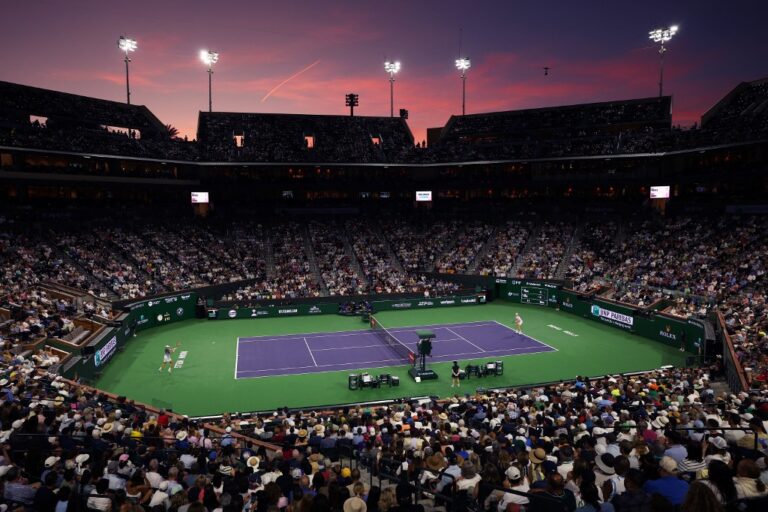
The BNP Paribas Open — better known as Indian Wells — is the first ATP Masters 1000 and WTA 1000 event of the 2026 season, played at the Indian Wells Tennis Garden in the California desert. Often called the “fifth Grand Slam” for its prestige and atmosphere, it opens the hard-court swing that leads directly into Miami.

The basics

Location: Indian Wells, California
Venue: Indian Wells Tennis Garden
Surface: Outdoor hard
Level: ATP Masters 1000; WTA 1000
Dates: March 4–15, 2026
Draw size: Singles 96, Doubles 32

Top seeds

ATP seedings: Carlos Alcaraz (1), Jannik Sinner (2), Novak Djokovic (3), Alexander Zverev (4), Lorenzo Musetti (5), Alex de Minaur (6), Taylor Fritz (7), Ben Shelton (8)

WTA seedings: Aryna Sabalenka (1), Iga Swiatek (2), Elena Rybakina (3), Coco Gauff (4), Jessica Pegula (5), Amanda Anisimova (6), Jasmine Paolini (7), Mirra Andreeva (8)

Five storylines to watch

1) The Sunshine Double opener

Indian Wells is the first half of the Indian Wells–Miami swing, and how players perform here sets the tone for the entire hard-court stretch. A deep run in the California desert means less recovery time heading into Miami, but it also means arriving with match rhythm and momentum. Managing both is one of the defining challenges of the early season.

2) A 96-player draw means early danger matches

With a 96-player singles draw, seeded players receive byes into the second round, but the first match can still be a trap.

Qualifiers arrive with match rhythm, and unseeded main-draw players can be top-30 quality. The desert conditions reward players who are already sharp, and the first week separates those who came in ready from those still finding their legs.

3) Defending champions with everything to protect

Jack Draper won the 2025 men’s title with a 6-2, 6-2 victory against Holger to claim his first Masters 1000 crown. Mirra Andreeva claimed the women’s title by defeating Sabalenka in the final.

Both arrive this year as seeded players protecting a full 1,000-point haul in their first tournament defense at this level. How they handle that pressure is one of the most interesting psychological subplots of the week.

4) The Alcaraz-Djokovic half

The draw placed Alcaraz and Djokovic in the same half of the bracket, setting up a potential blockbuster semifinal between the world No. 1 and the five-time Indian Wells champion. If both navigate the first week cleanly, that match would be the defining contest of the tournament before a ball is struck in the final.

5) WTA rhythm after a quiet February

Sabalenka and Swiatek arrive at Indian Wells having skipped the Middle East tournaments, meaning they come into the California desert without recent competitive matches.

Their opponents in the first week will carry more match sharpness, which in a 96-player draw can be enough to cause a first-week upset. How quickly the top seeds find their footing will shape the entire women’s draw.

Potential quarterfinal collisions

The ATP draw’s most anticipated collision is a potential Alcaraz–Djokovic semifinal, with the two heavyweights landing in the same half of the bracket. Alcaraz cannot face Sinner until a potential final, which means the top two seeds are guaranteed to be kept apart until the championship match — but the same protection does not apply to Alcaraz and Djokovic, who could meet as early as the semifinals.

On the WTA side, Sabalenka and Swiatek are also kept apart until a potential final, but both face difficult quarters with dangerous opponents lurking in the third and fourth rounds.

Floaters who can upset seeds early

Former top-tier contenders Qinwen Zheng, Maria Sakkari, and Paula Badosa arrive with enough big-match experience and shot-making power to turn any seed’s tournament into a nightmare. On the men’s side, Cameron Norrie — the 2021 champion — knows this desert well and remains a dangerous floater against seeds who aren’t yet match-sharp.

Casper Ruud’s heavy topspin game typically translates to Indian Wells, though his recent form coming in is a question mark.

Wild cards and qualifiers to watch

Venus Williams received a wild card for Indian Wells, returning to a tournament she knows well. On the men’s side, home favorites Taylor Fritz, Ben Shelton, Frances Tiafoe and Tommy Paul lead the American charge — all of whom carry crowd support and genuine game to cause early damage to seeded opponents. Watch the qualifier section closely: Indian Wells qualifying regularly produces players with match rhythm who can exploit seeded opponents still finding their footing.

The section of the draw that looks “open”

Identify this once the bracket is published. On the ATP side, the Zverev quarter is considered the most open of the four, with Zverev holding a 13-9 career record at Indian Wells and never advancing past the quarterfinal.

On the WTA side, the Gauff quarter looks the most winnable on paper, with her top threats including Diana Shnaider, Alexandra Eala and Linda Noskova — all capable players who lack the consistency to be reliably backed.

Conditions and how the court plays

Indian Wells is outdoor hard-court tennis in the California desert. The conditions are typically dry and fast, rewarding big servers and clean ball-strikers. Day sessions can play differently from night sessions as temperatures drop, and wind is a genuine factor — Zverev has openly called himself “the worst wind player” on tour, a notable admission at a venue where gusts routinely disturb rhythm and ball tosses.

In a draw this large, players who adjust quickly to shifting conditions tend to separate from the field in the first week.

Players most likely to win

Carlos Alcaraz

Is the overwhelming favorite and the man everyone else is trying to avoid. He arrives in California in strong early-season form, having won both the Australian Open and the Qatar Open.

He is a two-time Indian Wells champion, having won in 2023 and 2024, and is chasing a third title that would place him alongside Federer, Djokovic and Nadal as the only three-time men’s champions this century. His combination of explosive offense and elite defensive range makes him dangerous from any position on the court.

Jannik Sinner

Arrives with unfinished business. He has yet to win a title in 2026, following a semifinal exit at the Australian Open and a quarterfinal defeat in Doha, and Indian Wells represents a chance to find top gear on a surface that suits his baseline control and first-strike patterns. He has reached the Indian Wells semifinals twice before without winning the title, making this week a significant opportunity.

Novak Djokovic

Arrives with history on his side. He holds a joint-record five titles at Indian Wells and is returning after reaching the Australian Open final, where he fell to Alcaraz. His experience, return depth, and ability to manage big-match moments over two weeks make him one of the most dangerous players in the field, even if the question of his motivation in a week without a ranking milestone at stake remains open.

Alexander Zverev

Enters Indian Wells with a record that flatters to deceive — two quarterfinals is his best result in the desert — but his game is in good shape after an Australian Open semifinal that lasted five hours and 27 minutes against Alcaraz. His serve platform and backhand stability hold up well in these conditions, and if he can neutralise the wind factor, he has the tools to go deeper than he has before.

Taylor Fritz

Is the American home favorite with a genuine chance to go deep on familiar hard courts. Fritz is the last American to win the men’s title, having done so in 2022 and the crowd support at the Tennis Garden gives him a meaningful edge in tight matches. His serve-plus-one efficiency plays up in Indian Wells conditions where breaks are scarce and tiebreaks are frequent.

Aryna Sabalenka

is the clear WTA favorite despite arriving without competitive matches since the Australian Open. She is looking to reach her third Indian Wells final in the last four years, and her first-strike power and serve can shorten matches before opponents settle into their rhythm. The key question is how quickly she finds match sharpness in the early rounds.

Iga Swiatek

She is chasing history in Indian Wells. A third title here would make her the first woman to win the Indian Wells singles crown three times. She arrives similarly short on match practice after skipping the Middle East, but her return pressure and baseline consistency are well-suited to hard-court conditions and she has shown repeatedly that she can peak quickly at big events.

Elena Rybakina

Enters Indian Wells as the 2026 Australian Open champion and one of the most dangerous servers in the women’s game. Her flat, clean ball-striking rewards the faster conditions at Indian Wells, and she arrives with far more match rhythm than Sabalenka or Swiatek after a busy start to the season.

Coco Gauff

Is one of the most dangerous players in the women’s draw on home soil. Her elite athletic defense and improving first-strike patterns make her a threat to go deep, and playing in front of American crowds consistently brings out her best tennis in big moments.

Jessica Pegula

Is another American with a genuine shot at making a deep run on home hard courts. Her early-contact game and steady decision-making are well-suited to a 96-player draw, and she has the consistency to grind through awkward matchups in the first week when conditions and opponents are unpredictable.

One sleeper pick

Victoria Mboko is the name to watch on the WTA side. The Canadian teenager enters Indian Wells at the No. 10 seed, and her tennis since winning a WTA 1000 event last year has been consistently impressive.

She has the game and the temperament to make a deep run — and she lands in Sabalenka’s quarter, which means a potential quarterfinal against the world No. 1 if she gets there.

At her current level, that matchup is not as one-sided as it might look on paper. On the men’s side, Sebastian Korda is worth watching after his title run at Delray Beach, arriving with match rhythm and a game built for these conditions.

What it means for rankings

Indian Wells is a Masters 1000 and WTA 1000 week, so the points leverage is large. A deep run can swing seeding and momentum heading into Miami and the clay season, while a poor week creates immediate pressure because of how the rolling 52-week system drops points from the same window a year earlier.

For Draper and Andreeva as defending champions, protecting a full 1,000-point haul while navigating a loaded field is the defining challenge of their week.

Related reading

Tennis Rankings Explained | Masters 1000 Guide | WTA 1000 Guide | How Tennis Seeding Works | How Wild Cards Work in Tennis | How Tennis Qualifying Works | What Is a Lucky Loser in Tennis
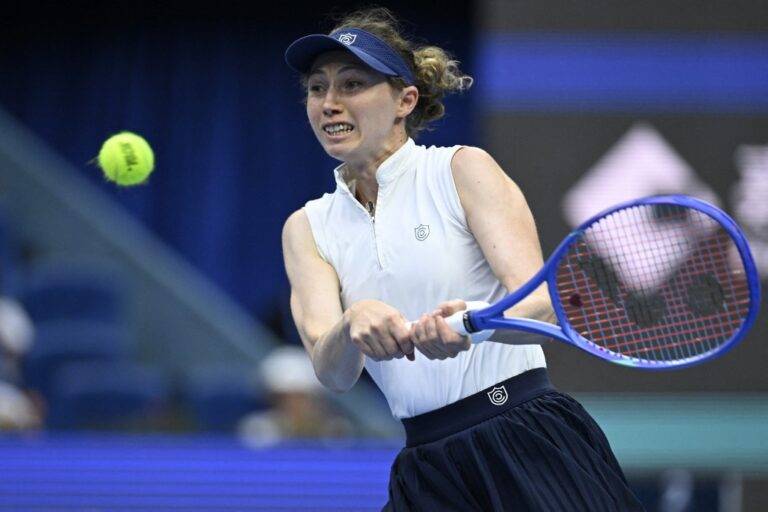
Spanish Tennis Star Bucsa Wins First Singles Crown in Mexico

0

Spanish tennis player Cristina Bucsa captured her first WTA singles title on Sunday, outlasting Poland’s Magdalena Frech in a gripping three-set final at the Mérida Open. The 28-year-old Bucsa prevailed 6-1, 4-6, 6-4 in two hours and 15 minutes, marking a breakthrough moment in her career and propelling her into the top 30 rankings for the first time.

Ranked No. 63 entering the tournament, Bucsa displayed sharp focus and resilience against the 57th-ranked Frech. The match unfolded on the hard courts of the Yucatán Country Club, where Bucsa’s precise groundstrokes and tactical patience proved decisive in a contest that swung back and forth.

The opening set saw Bucsa seize control early. She converted her first two break points to build a 3-0 lead, capitalizing on Frech’s unforced errors and double faults. Though Frech managed to break back once and force longer rallies, Bucsa’s clean play kept the pressure on. The Spaniard closed out the set in just 37 minutes, dropping only one game.

Frech, however, found her rhythm in the second set. Showing renewed energy, she raced to a 3-0 advantage with two breaks of serve. Bucsa pushed hard to level the score, nearly doing so in the eighth game, but Frech held firm behind her serve to take the set 6-4 after 54 minutes. The Pole’s improved consistency turned the match into a true battle.

The deciding set began with even exchanges until the fourth game, when Bucsa earned a crucial break to go up 3-1. Frech fought back to recover the break, but Bucsa stayed composed. Facing double match point late in the set, Frech couldn’t hold off the Spaniard, who sealed the victory with a final unreturnable shot.

This was the fourth meeting between the two players, tying their head-to-head at 2-2. Bucsa’s win not only ended a five-match losing streak coming into Mérida but also highlighted her growth. Born in Moldova and representing Spain since 2015, she has steadily climbed the ranks through consistent performances on the ITF circuit and lower-tier WTA events.

After the match, Bucsa reflected on the emotional weight of the achievement. “I want to thank my dad for always setting my limits and working so hard with me,” she said. “Today was a super tough battle, and I’m so proud of what we’re achieving with our work.”

The victory held extra meaning as it followed her first top-10 win in the semifinals against Jasmine Paolini, a 7-5, 6-4 upset that coincided with her father’s birthday. Bucsa had promised him that milestone, making the week even more personal.

Bucsa’s path to the final was impressive. She opened with a straight-sets win over Croatia’s Donna Vekic in the first round, followed by a dominant performance against Canada’s Marina Stakusic.

In the quarterfinals, she dispatched Turkey’s Zeynep Sonmez 6-3, 6-4 without dropping a set. The semifinal against Paolini showcased her ability to handle pressure against elite competition, as she overcame a 0-10 record against top-10 players prior to that match.

The Mérida Open, a WTA 500 event offering $1.2 million in prize money, has become a key stop on the Latin American swing. Held annually at the Yucatán Country Club, it attracts strong fields and provides a platform for emerging talents. This year’s edition featured competitive draws, with Bucsa emerging as the surprise champion after higher seeds like Paolini fell short.

Bucsa didn’t stop at singles glory. Later that day, she teamed with China’s Xinyu Jiang to win the doubles title, defeating the Dutch-British pair of Isabelle Haverlag and Maia Lumsden 6-4, 6-1 in one hour and one minute. It was Bucsa’s eighth doubles title overall and her first at the 500 level, capping a perfect week where she swept both events. Jiang, a rising doubles specialist, complemented Bucsa’s steady baseline game with strong net play.

For Frech, the loss stings but builds on her solid season. The 28-year-old Pole reached her second WTA final, following a runner-up finish earlier in the year. She showed fight throughout, particularly in rallying from a lopsided first set, but ultimately couldn’t overcome Bucsa’s determination.

Bucsa’s triumph is the first WTA singles title for a Spanish woman in 2026, adding to the country’s rich tennis history. Players like Garbiñe Muguruza and Paula Badosa have carried the flag in recent years, but Bucsa’s rise signals fresh depth in Spanish women’s tennis. At 28, she’s a late bloomer by tour standards, having turned pro in 2015 and grinding through challengers before breaking through.

Looking ahead, Bucsa’s new ranking around No. 31 opens doors to bigger tournaments and seeded status. She’ll carry momentum into the upcoming hard-court season, including stops in Indian Wells and Miami. Her all-around game—solid serve, reliable returns, and mental toughness—positions her well for further success.

In Mérida, Bucsa proved that persistence pays off. From a modest start to double champion, her story resonates with fans who appreciate underdogs. As she lifted the trophy amid cheers from the Mexican crowd, it was clear this was just the beginning for the determined Spaniard.

How Tennis Entry Lists Work — Cutoffs, Deadlines and How Players Get In

Before the draw is made, tournaments build an entry list. That list determines who gets direct acceptance into the main draw, who must play qualifying, and who is out unless they receive a wild card or another special entry.

Entry lists are the behind-the-scenes engine of the tour calendar. They explain why one player is in the main draw at No. 62 and another player at No. 68 is stuck in qualifying. They also explain why fans sometimes see “last-minute” additions that aren’t actually last-minute at all.

This guide explains how entry lists work, what a cutoff is, when deadlines matter, and how wild cards, protected rankings, and lucky losers fit into the system.

What an Entry List Is

An entry list is the ranked list of players who have entered a tournament by the entry deadline.

Tournaments use that list to determine:

  • Direct acceptances into the main draw
  • Direct acceptances into the qualifying draw
  • Alternates (players next in line if someone withdraws early)

The entry list is not the same as the draw. It’s the roster that will be used to create the draw later.

The Key Concept: The Cutoff

The cutoff is the ranking position of the last player who gets direct acceptance.

There are separate cutoffs for:

  • Main draw cutoff
  • Qualifying cutoff

If the main draw has 32 spots and 4 are reserved for qualifiers and 3 are reserved for wild cards, then only a certain number of players can get in through ranking alone. That’s what creates the cutoff.

Cutoffs vary by:

  • tournament tier (250/500/1000/Grand Slam)
  • draw size
  • how many spots are reserved for qualifiers and wild cards
  • how strong the field is that year

Entry Deadlines and Why Timing Matters

Players must enter tournaments by a deadline set by the tour.

After the deadline:

  • the entry list is published (or finalized internally)
  • players can still withdraw
  • but entry is no longer “open” in the same way

This is why you’ll see a player withdraw and another player get into the main draw without any dramatic reshuffling. The replacement usually comes from the entry list pipeline (alternates, qualifiers, lucky losers).

How Main Draw Spots Are Filled

A typical main draw is filled using a mix of:

1) Direct acceptances (by ranking)

These are the players who get in based on ranking at the cutoff.

2) Wild cards

Wild cards are discretionary entries granted by the tournament.

Read: How Wild Cards Work in Tennis

3) Qualifiers

Qualifiers earn their spot by winning qualifying matches.

Read: How Tennis Qualifying Works

4) Special entries (including protected ranking, where applicable)

Some players can enter using protected ranking or other special provisions.

Read: How Protected Rankings Work in Tennis

The exact mix depends on tournament rules, but the idea is constant: the main draw is not filled by ranking alone.

Qualifying Entry Lists

Qualifying has its own entry list and its own cutoff.

Players who miss the main-draw cutoff often fall into:

  • qualifying direct acceptance, or
  • alternate lists, depending on ranking and withdrawals

This is why a player can be “first alternate” for the main draw but already positioned to play qualifying.

Alternates: The Waiting List Before Qualifying Ends

An alternate is a player next in line to enter if someone withdraws early enough.

Alternates can enter:

  • the main draw (if a main draw player withdraws before certain deadlines), or
  • the qualifying draw (if spots open before qualifying starts)

Alternates are different from lucky losers.

Lucky Losers: The Replacement After Qualifying

A lucky loser enters when a player withdraws late and qualifying is already complete.

That’s why lucky losers are typically drawn from final-round qualifying losers.

Read: What Is a Lucky Loser in Tennis

How Seeding Fits In

Seeding happens after the entry list is set.

Important distinction:

  • Entry list determines who is in.
  • Seeding determines where top players are placed in the draw.

Read: How Tennis Seeding Works

A player can be in the main draw and still be unseeded. Seeding is a separate step based on ranking snapshots and tournament rules.

Why Fans See Surprises on Draw Day

A few common reasons:

  • late withdrawals trigger alternates or lucky losers
  • wild cards are announced near the draw ceremony
  • protected ranking entries can change the field composition
  • cutoff movement occurs as players withdraw from other events

To fans it can look chaotic. In reality it’s a pipeline.

Frequently Asked Questions

Is the entry list the same as the draw?
No. The entry list is the roster. The draw is the bracket.

Do cutoffs change after the list is published?
The published cutoff reflects the last direct acceptance at that time, but withdrawals can move alternates into the field.

Do wild cards affect the cutoff?
Yes. Every wild card spot reduces the number of ranking-based spots available.

Does protected ranking guarantee entry?
Not always. It depends on eligibility and tournament rules, but it can allow entry despite a low current ranking.

Luciano Darderi Wins Fifth ATP Title in Santiago Final Victory

0

Luciano Darderi captured his fifth ATP Tour title on Sunday, defeating Yannick Hanfmann 7-6(6), 7-5 in the final of the Chile Open in Santiago. The 24-year-old Italian, ranked No. 21 in the world, overcame a tough challenge from the German to secure the ATP 250 trophy on clay, marking his first win of the 2026 season.

Darderi entered the tournament as the second seed, fresh off a runner-up finish at the Buenos Aires Open two weeks earlier, where he lost to Argentina’s Francisco Cerundolo, the world No. 19. In Santiago, he showed resilience throughout the week, starting with a second-round victory over Mariano Navone of Argentina, 6-3, 3-6, 6-4. He then faced compatriot Andrea Pellegrino in the quarterfinals, prevailing 6-3, 3-6, 6-2 after dropping the second set.

In the semifinals, Darderi took down third-seeded Sebastian Baez of Argentina, 6-4, 6-3, setting up the final against Hanfmann. The German, ranked No. 81, had upset Cerundolo in the semifinals to reach his first ATP final, denying a potential rematch between Darderi and the Argentine.

The final lasted one hour and 46 minutes, with both players trading breaks and holding serve under pressure. Darderi saved breakpoints in the first set before edging the tiebreaker 8-6. In the second set, he broke Hanfmann’s serve in the 11th game and served out the match, collapsing to the clay in celebration after the final point.

Hanfmann, 34 and ten years Darderi’s senior, pushed hard but fell short of his maiden title. He had navigated a challenging draw, including wins over Juan Pablo Varillas and Tomas Barrios Vera earlier in the week.

This victory adds to Darderi’s growing collection of clay-court titles. He first broke through at the Cordoba Open in 2024, followed by triumphs in Marrakech, Bastad, and Umag in 2025. Since the start of 2024, Darderi has claimed more tour-level clay titles than any other player, solidifying his status as a specialist on the surface.

Born in Argentina but representing Italy, Darderi turned professional in 2019 and has climbed steadily through the rankings. His aggressive baseline game and strong forehand have served him well on clay, where he holds a career win-loss record of 45-20 at the ATP level. Entering 2026 at a career-high No. 21, this win should boost him further in the standings.

The Chile Open, held at the Club Deportivo Universidad Catolica in Santiago, concludes the South American clay swing. Last year’s champion, Laslo Djere of Serbia, did not defend his title this time. The event drew a competitive field, including top seed Cerundolo and Baez, who had won the Rio Open the previous week.

Darderi’s performance in Santiago highlights his consistency on clay. He has reached at least the quarterfinals in seven of his last ten ATP clay events, with four titles in that span. Analysts point to his improved serve and mental toughness as key factors in his rise.

In post-match comments, Darderi expressed surprise at his success. “I didn’t expect to win here this week because I’d never been past the quarterfinals, so I’m very happy,” he told the official broadcast. He added, “Winning a title so early in 2026 is very impressive and gives me a lot of confidence for the rest of the year.”

Hanfmann, gracious in defeat, acknowledged the close contest. He has shown form on clay before, reaching finals at Challenger events, but this was his deepest run at the ATP level.

For Darderi, the win nets him 250 ranking points and $106,000 in prize money. Hanfmann earns 165 points and $62,000 as runner-up. The tournament’s total purse was $700,045.

Looking ahead, Darderi will shift focus to the hard-court season, starting with the Indian Wells Masters in California next week. He aims to build on his clay success and crack the top 20. Hanfmann, meanwhile, will seek to carry momentum into qualifying events.

This title reinforces Darderi’s place among the tour’s emerging talents. At 24, he joins a group of young Italians making waves, including Jannik Sinner and Lorenzo Musetti. His story—from Challenger circuits to ATP champion—resonates with fans who appreciate players who grind their way up.

The Chile Open has a history of producing surprise winners, but Darderi’s dominance this week felt earned. He converted five of nine breakpoints in the final and won 78 percent of his first-serve points. Hanfmann matched him in aces but struggled on second serves.

Spectators at the 3,000-capacity center court enjoyed a sunny afternoon match, with local fans cheering for the underdog Hanfmann after Cerundolo’s exit. Darderi, however, remained composed, using his experience from recent finals to close it out.

As the clay swing wraps up, attention turns to the bigger events in Europe later this spring. For now, Darderi savors his fifth trophy, a testament to his hard work and adaptation to the pro tour.

Cristina Bucșa Stuns Top Seed Paolini to Reach Mérida Final

0
(Photo by Martin KEEP / AFP)

Spain’s Cristina Bucșa pulled off the biggest win of her career on Saturday, defeating world No. 7 Jasmine Paolini 7-5, 6-4 to advance to the final of the WTA 500 Mérida Open. The 28-year-old Bucșa, ranked No. 63, will face Poland’s Magdalena Frech on Sunday in what promises to be a hard-fought battle for the title.

Bucșa’s victory marked her first triumph over a top-10 player after 10 previous losses, and it came on a particularly meaningful day – her father’s birthday. She shared an emotional moment with him courtside after the match, having promised him a special result. The win secures her spot in her second career WTA final and her first at the 500 level, following a runner-up finish in Hong Kong last year.

The semifinal unfolded on the hard courts of the Yucatán Country Club, where Bucșa displayed steady play against the Italian top seed. Paolini, who had been a strong favorite entering the tournament, struggled with unforced errors throughout. Bucșa broke early in the first set and held firm to take it 7-5 after a competitive exchange.

In the second set, Bucșa surged to a 4-0 lead, putting Paolini on the ropes. The Italian mounted a brief comeback, hitting harder and finding more winners, but Bucșa stayed composed and closed out the match in 1 hour and 32 minutes. “I stayed very focused on my game, trying to be consistent,” Bucșa said afterward. “In the second set, Paolini started hitting harder and finding more winners, but I’m happy with this win.”

Bucșa’s path to the final has been impressive. She entered the main draw as a qualifier and hasn’t dropped a set all week, knocking out notable players like Donna Vekić and Zeynep Sönmez along the way. Adding to her Mérida success, Bucșa also qualified for the doubles final, showcasing her all-around form on these courts.

On the other side of the draw, Frech earned her place in the final with a grueling 6-2, 6-7(6-8), 6-3 victory over China’s Shuai Zhang. The match lasted 2 hours and 34 minutes, testing both players’ endurance. Frech, ranked No. 57 and also 28 years old, dominated the first set, breaking Zhang twice to win it convincingly.

The second set turned into a thriller. Frech had five match points in the tiebreak but couldn’t convert, as Zhang produced winners at critical moments to force a decider. Frech regrouped in the third set, breaking early and holding serve to seal the win. “It was an incredible match and I’m not sure how I won it,” Frech admitted. “Shuai played very well in the most important moments. On the match points I had in the second set, she hit winners. I tried to stay calm and get back to my game; I had no energy at the end.”

This marks Frech’s third career WTA final and her second at the 500 level in Mexico. She claimed her maiden title at the Guadalajara Open in 2024, giving her a proven track record on Mexican hard courts. Frech’s run in Mérida included tough wins over Marie Bouzková in a three-hour quarterfinal and Jaqueline Cristian earlier in the week.

Sunday’s final will be the fourth tour-level meeting between Bucșa and Frech, with the Pole holding a 2-1 edge in their head-to-head. Their most recent encounter came last year in Guadalajara, where Frech won in straight sets en route to her title. Bucșa, however, took their first clash in 2023 at a Challenger event. Both players are chasing significant milestones – Bucșa her first WTA singles title, and Frech her second.

The Mérida Open, held at the Yucatán Country Club, features a prize pool of $1.2 million and attracts a competitive field on outdoor hard courts. This year’s edition has seen several upsets, including Zhang’s surprising quarterfinal defeat of second seed Emma Navarro. The tournament continues to grow in prominence on the WTA calendar, offering valuable points and momentum ahead of the spring hard-court swing.

Bucșa enters the final with confidence from her flawless sets record, while Frech’s ability to grind out wins in extended matches could prove decisive. The matchup pits Bucșa’s consistency against Frech’s resilience, setting the stage for an engaging contest between two players peaking at the right time.

As the final approaches, both finalists reflect on their journeys. Bucșa, who has climbed steadily through the rankings after starting her career on the ITF circuit, sees this as a breakthrough moment. Frech, meanwhile, has built on her Guadalajara success by adapting well to high-pressure situations.

The winner will not only lift the trophy but also gain a boost in rankings and confidence for upcoming events like Indian Wells and Miami. For Bucșa, a title would cap an emotional week; for Frech, it would solidify her status as a consistent performer in Latin America.

Tennis fans in Mérida and beyond will tune in to see who emerges victorious in this unseeded showdown.

Medvedev Wins Dubai Title After Griekspoor Injury Withdrawal

0

Daniil Medvedev walked away with his second Dubai Duty Free Tennis Championships title on Saturday, but the victory came without a final match as opponent Tallon Griekspoor pulled out due to a left hamstring injury.

The Russian, who first triumphed here in 2023, added a 23rd ATP trophy to his collection in unusual circumstances, hours before regional tensions escalated with Iranian missile strikes on the United Arab Emirates.

Griekspoor, the 28-year-old Dutchman, had shown signs of trouble during his semi-final upset over Andrey Rublev on Friday. He landed awkwardly after a serve late in the first set, yet pushed through to claim a 7-5, 7-6 (8-6) win.

Limping into his press conference afterward, Griekspoor admitted the pain was severe and hinted he might not recover in time. “I barely could walk after the match,” he said, adding that he would have retired if he’d lost the second set.

Tournament officials confirmed on Saturday afternoon that Griekspoor was unfit to compete following a medical check. The announcement came shortly before the scheduled 7 p.m. start, leaving Medvedev as the walkover winner.

Griekspoor later shared his disappointment on Instagram: “Not the way I wanted to finish the week here in Dubai. I’ll be out for a few weeks.” He apologized to fans and organizers, expressing regret over missing what would have been his biggest career final.

For Medvedev, the outcome marked a bittersweet end to a strong week. The 30-year-old had cruised through his four matches without dropping a set, including a dominant semi-final over Felix Auger-Aliassime.

“Of course unfortunate, but Tallon, I could see yesterday that maybe he had an injury,” Medvedev said in comments released by the ATP. “You never know how these injuries develop through the night. Sometimes they get easier and you can play, like with some soreness. Sometimes they get worse, so I guess it got worse.”

He added, “I cannot do anything about it. I played a great tournament, the four matches I played. Of course I wanted to play the final, but it is what it is. I played an unbelievable match yesterday, so I would, either way, take it as a final for me and I’m happy to win the tournament.”

This win holds special meaning for Medvedev, as it breaks a curious pattern in his career. Before Saturday, all 22 of his titles had come at different events—no repeats. Dubai now stands as the first venue where he’s defended or reclaimed a crown.

“Of course (I take) a lot of confidence,” he reflected. “But tennis is a very fast-going sport, so one week you can play not the way you want and the other week you’re playing amazing. So I just hope to bring this confidence from the four matches I played into Indian Wells, for sure.”

Medvedev’s performance in Dubai signals a return to form after a mixed start to 2026. He kicked off the year with a title in Brisbane but stumbled early in Rotterdam and Doha. Here, his baseline precision and defensive skills shone, reminiscent of his peak years. He dispatched opponents with efficiency, dropping just 18 games across his wins over players like Jerry Shang and Auger-Aliassime.

Griekspoor’s run to the final was a breakthrough for the Dutch No. 1. Ranked outside the top 20 entering the week, he notched career-best victories over Rublev and others, showcasing his powerful serve and groundstrokes. The injury, however, cuts short his momentum and likely sidelines him for several weeks, potentially affecting his Sunshine Double preparations.

The singles final’s cancellation contrasted with the doubles event, which proceeded as planned. Ivan Dodig and Austin Krajicek claimed the title over another pair in a tight contest, providing some on-court action for spectators amid the day’s disruptions.

Adding complexity to the tournament’s close was the broader geopolitical situation. Iranian strikes targeted UAE sites following U.S. and Israeli actions against Iran, leading to partial airspace closures across the region.

Dubai’s airports suspended all operations until further notice, throwing players’ travel plans into disarray. Many, including Medvedev, were set to head directly to California for the Indian Wells Masters, an ATP 1000 event starting next week.

Medvedev expressed uncertainty about his next steps. “I still didn’t know how I was going to make it to California and will be waiting on updates regarding the reopening of the Gulf region’s airspace,” he said.

Other players echoed similar concerns, with some exploring alternative routes or delays. The ATP has not yet commented on potential scheduling adjustments for Indian Wells, but the situation underscores the challenges of global travel in tennis.

Despite the abrupt ending, Medvedev’s week in Dubai reinforces his status as a top contender. At 30, he’s navigating the later stages of his prime, but his consistency on hard courts—where he’s won 19 of his 23 titles—remains a strength. Griekspoor, meanwhile, can take positives from his deep run, even if recovery now takes priority.

As the tour shifts to Indian Wells, questions linger about player fitness and logistics. Medvedev, if he arrives in time, will aim to build on this momentum. For now, his second Dubai title stands as a testament to his preparation, even if the final chapter wrote itself.

What Is a Lucky Loser in Tennis — How It Works and When It Happens
0

Professional tennis has a problem that every major tournament faces without exception. A draw is announced, matches are scheduled, tickets are sold, and then — before the first ball of the main draw is struck — a player withdraws.

Injury in practice, illness, a personal emergency, a fitness concern that became apparent only after the draw was made. The reasons are predictable even if the specific instances are not. And the draw, once published, cannot simply be reshuffled without creating logistical chaos that affects every other player, every broadcaster, and every ticketholder in the building.

The solution to this problem is the lucky loser — one of professional tennis’s most misunderstood entry mechanisms and one of its most consequential. A player who lost in qualifying, who thought their tournament was over, who was preparing to travel to the next event — can find themselves in the main draw of a Grand Slam or a Masters 1000 event with full prize money and ranking points on offer. Not through luck in any random sense, but through a specific, regulated process that every major tour operates consistently.

What a Lucky Loser Actually Is

A lucky loser is a player who lost in the final round of qualifying but enters the main draw because a main draw player withdraws after the draw has been set and published.

The definition has two specific components that both matter.

First, the player must have lost in the final qualifying round — not an earlier round. The lucky loser pool is drawn exclusively from players who reached the final stage of qualifying before losing, which means they have already demonstrated a level of competitive quality across multiple qualifying matches.

Second, the withdrawal that creates their opportunity must occur after the main draw is already set — not before, when the draw can simply be adjusted to include the next player on the alternates list.

In draw sheets and broadcast graphics, lucky losers are typically identified with the notation LL beside their name — a designation that distinguishes them from qualifiers who won through (marked Q), wild card entrants (marked WC), and direct acceptances who appear without any designation.

Why the Lucky Loser System Exists

Understanding why the lucky loser system exists requires understanding the specific logistical constraints that professional tennis tournaments operate under.

When a Grand Slam or major tour event publishes its main draw, that draw is not simply an administrative document. It is the foundation of a broadcast schedule, a ticketing structure, a court assignment plan, and a player scheduling framework that affects hundreds of people simultaneously.

A main draw published on Thursday evening for a Monday start has already generated match schedule commitments to broadcasters in multiple time zones, court assignments for matches on multiple courts across the first week, and player schedule information that coaches, agents, and support teams have used to plan preparation.

If a player in that draw withdraws — even on the morning of their first match — the tournament cannot simply slide every other player in the affected section up by one position. That reshuffle would cascade through the entire draw, potentially affecting dozens of match assignments, court schedules, and broadcast slots simultaneously.

The lucky loser system solves this problem by providing a specific, pre-identified pool of players who can fill a vacancy in exactly the position vacated — without any draw reshuffle, without any scheduling disruption, and without any period of uncertainty about who will fill the empty spot. The substitute player inherits the withdrawing player’s draw position, faces whoever was scheduled to play the withdrawn player, and the rest of the draw proceeds without modification.

How Lucky Losers Are Selected

The selection process for lucky losers is regulated by the ATP, WTA, and individual Grand Slam organizations, and the specific procedures vary somewhat between tours and events. The core principle is consistent across all of them: the selection must be objective, transparent, and based on a published method that cannot be influenced by tournament preference or subjective assessment.

At most professional events, lucky losers are selected from the pool of final qualifying round losers based on ranking — the highest-ranked player among the final qualifying round losers is offered the lucky loser position first. If they are unavailable or decline, the next highest-ranked player is offered the spot, and so on down the ranking order until the position is filled.

Some events use a random draw among the final qualifying round losers rather than ranking priority — pulling a name from a hat, in effect, to determine which of the eligible players receives the opportunity. This approach prioritizes randomness over ranking but ensures that no player can be systematically excluded from lucky loser consideration based on ranking position alone.

The specific timing of the lucky loser offer — how much notice a player receives and how quickly they must confirm their availability — is regulated to prevent the situation where a lucky loser cannot take the court at the required time.

Players who have already departed the tournament site following their qualifying loss may not be reachable in time to accept a lucky loser spot, which is why players who lose in the final qualifying round are generally advised to remain available and prepared to compete until the first round of the main draw is underway.

When Lucky Losers Enter the Draw

The timing of a main draw withdrawal determines whether the vacancy is filled by a lucky loser, handled as a walkover, or resolved through a draw adjustment that occurred before the lucky loser mechanism was triggered.

Withdrawals before the draw is made: If a player withdraws before the main draw is conducted, their spot is simply not included in the draw. The next player on the alternates list enters the main draw in their place and is treated as a direct acceptance. No lucky loser mechanism is required because the draw has not yet been published.

Withdrawals after the draw but before play: This is the standard lucky loser scenario. The main draw has been published, a player’s specific position in the bracket is known, and their withdrawal creates a vacancy that must be filled without reshuffling the draw. The lucky loser enters the draw in the withdrawing player’s exact position.

Withdrawals after play has begun: If a player withdraws after their first match in the main draw — or retires from a match already in progress — the situation is handled differently. Their opponent advances as normal, and the lucky loser mechanism does not apply to mid-tournament withdrawals. Lucky losers can only enter the draw to replace players who have not yet played their first main draw match.

The practical implication for fans following draw developments is that the LL notation typically appears in draw sheets in the days between the qualifying conclusion and the first round of the main draw — the window when most pre-tournament withdrawals occur and when the lucky loser mechanism is most frequently activated.

Multiple Lucky Losers in the Same Tournament

When multiple main draw players withdraw after the draw is published, multiple lucky losers can enter the same tournament. Each vacancy is filled separately through the same selection process — the highest-ranked remaining eligible qualifying final-round loser fills the first vacancy, the next eligible player fills the second, and so on.

In tournaments where significant withdrawal clusters occur — particularly at events in the week before a major, when players managing minor injuries may choose to protect their health for the upcoming Slam — it is not unusual to see two, three, or occasionally more lucky losers in the same main draw. Each lucky loser inherits the specific draw position of the player they replaced and competes against whoever was assigned to face that player.

Lucky Losers vs. Qualifiers vs. Wild Cards

These three entry mechanisms are frequently confused in broadcast commentary and media coverage, and the distinctions between them matter for understanding what each player’s presence in the draw means competitively.

A qualifier — marked Q in draw sheets — is a player who won all of their qualifying rounds and earned main draw entry through competitive success. They did not lose at any point in qualifying. Their presence in the main draw is the product of unambiguous competitive achievement.

A wild card — marked WC — is a player granted main draw entry by the tournament at its discretion, outside the standard ranking and qualifying pathways. Wild cards are awarded to returning champions, promising young players, host nation representatives, and occasionally players whose commercial value to the specific tournament justifies the entry. They did not qualify through ranking or qualifying competition.

A lucky loser — marked LL — is a player who lost in qualifying but enters the main draw due to a withdrawal. Their entry is not a reflection of qualifying success but of their proximity to qualifying success — they reached the final qualifying round, which requires genuine competitive quality, before losing a single match that denied them the direct qualifying pathway.

The competitive implication of these distinctions is that qualifiers have typically played more matches and demonstrated more consistent competitive quality in the week before the main draw than lucky losers, while lucky losers have typically played more matches than wild cards whose preparation outside the tournament venue may have been limited.

Why Lucky Losers Can Be Dangerous Opponents

The competitive advantages that lucky losers carry into their main draw appearances are genuine and consistently underestimated by higher-ranked opponents and their coaching teams.

Match rhythm is the most significant advantage. A lucky loser who has played two or three qualifying matches in the days before the main draw begins arrives at their first main draw match in competitive match rhythm — their serve has been tested, their return has been calibrated to the specific balls and conditions at this venue, and their movement has been tested across real match play rather than simulated in practice. Their first-round main draw opponent may be walking onto the court cold after days of practice without competitive play.

Venue familiarity compounds the rhythm advantage. A lucky loser has been at the tournament site for the full qualifying period — they have played on the specific courts, adapted to the specific lighting and bounce conditions, and acclimatized to the weather and surroundings in ways that a player arriving from a different event or from an extended rest period has not.

The psychological dimension is equally important. A lucky loser enters the main draw having already mentally accepted the end of their tournament. They have nothing to lose — their tournament was already over before the lucky loser opportunity arrived. That psychological freedom — competing without the weight of expectation that higher-ranked direct acceptances carry into their first round matches — often produces a specific kind of fearless, aggressive competitive performance that is genuinely difficult to prepare for.

Against an opponent who is managing fatigue from travel, rustiness from rest, or the pressure of being expected to win comfortably against a lower-ranked player, these combined advantages make lucky losers disproportionately dangerous in main draw first rounds.

Ranking Points and Prize Money for Lucky Losers

A lucky loser who enters the main draw earns ranking points and prize money on exactly the same basis as every other main draw player. Winning a first-round match as a lucky loser earns the same points as winning a first-round match as a direct acceptance or qualifier. Reaching the quarterfinal as a lucky loser earns the same prize money as any other quarterfinalist.

This equal treatment is fundamental to the competitive integrity of the lucky loser mechanism. If lucky losers received different — reduced — points or prize money for their main draw results, the mechanism would create a two-tier competitive structure within the same draw that would undermine both the sporting fairness of the competition and the ranking implications of every match.

For players in the top 150–300 range for whom every ranking point matters for their access to higher-level events, a lucky loser main draw appearance that produces one or two wins can be among the most valuable results of their entire season. The points available from a Grand Slam third-round appearance — even as a lucky loser — significantly exceed what the same player could earn from winning a Challenger event, which is why the lucky loser mechanism is particularly significant for players at the margins of main tour access.

Lucky Losers at Grand Slams

The lucky loser mechanism is most significant at Grand Slams — both because the points and prize money on offer are the highest in the sport and because the Grand Slam qualifying pools contain the strongest collection of final-round qualifying losers of any events on the calendar.

Grand Slam qualifying draws typically contain 128 players competing for 16 main draw spots — which means 16 players reach the final qualifying round and lose. That pool of 16 players includes some of the strongest players outside the top 100 in the world, many of whom are capable of competitive main draw performances against players ranked significantly above them.

The specific Grand Slam lucky loser stories that generate the most media attention are those where a lucky loser makes a deep run — reaching the second week, or in rare cases the quarterfinals — against opponents whose rankings would not have predicted vulnerability to a player who entered the draw through the lucky loser pathway. These runs are genuinely surprising in isolation but less surprising when understood in the context of the competitive advantages that lucky losers carry into their main draw appearances.

Key Distinctions at a Glance

Lucky loser versus alternate: An alternate is a player who enters the draw before the draw is made — before the qualifying process is complete — to replace a withdrawal that occurred too early for the lucky loser mechanism to apply. Lucky losers enter after the draw is published. Alternates enter before it. The distinction matters for how the replacement player is treated in the draw — alternates are typically drawn into a position through the standard draw process, while lucky losers inherit a specific position.

Lucky loser versus walkover: A walkover occurs when a player cannot take the court at all — their opponent advances without play. A lucky loser fills a vacancy created by a withdrawal before play begins — they do take the court and compete in a full match. The withdrawal that creates a lucky loser opportunity and the withdrawal that creates a walkover are both withdrawals, but the timing determines which mechanism applies.

One lucky loser per vacancy: Each withdrawal creates a maximum of one lucky loser opportunity — the vacancy created by the withdrawing player is filled by a single lucky loser who inherits that specific draw position. Multiple vacancies can create multiple lucky loser opportunities, but each is handled separately.

A Built-In Solution, Not a Loophole

The lucky loser mechanism is sometimes described in casual tennis commentary as a quirk or a loophole — a player getting into a tournament they were not supposed to be in. That framing misrepresents what the mechanism actually is.

The lucky loser system is a deliberate, carefully regulated solution to a predictable problem that every professional tennis tournament faces. It fills vacancies efficiently without draw disruption, selects replacements through objective criteria, gives competitive opportunity to players who demonstrated genuine qualifying quality, and ensures that the full draw is contested without walkovers or artificial byes that would create scheduling gaps and competitive imbalances.

Far from being a loophole, the lucky loser is exactly the kind of player that a well-designed competitive system should include — someone who was close enough to direct qualifying to be genuinely competitive at main draw level, whose presence in the draw benefits the competitive quality of the event, and whose arrival creates a specific competitive dynamic that makes early-round matches more interesting rather than less.

When you see LL beside a player’s name in a Grand Slam draw, you are not looking at someone who slipped through a crack in the system. You are looking at someone who earned their way to the edge of the main draw, lost one match, and was given a second opportunity by circumstances outside their control. What they do with that opportunity is entirely up to them.


Part of the Rankings series. Related: How Tennis Qualifying Works — The Complete Guide · How Wild Cards Are Awarded — and Who Really Gets Them · How Tennis Entry Lists Work — Cutoffs, Deadlines and How Players Get In

How Tennis Tournaments Work — Draws, Seeds, and the Road to a Championship

0

Understanding how tennis tournaments work changes the way you follow the sport from the moment the draw drops. Every two weeks or so, somewhere in the world, a tennis tournament begins. A field of players arrives, a draw is posted, and over several days — sometimes nearly two weeks at the biggest events — that field is whittled down through successive rounds until one player is left standing. The structure sounds simple. The details are anything but.

How players get in, how the bracket is built, what seeds actually mean, and how the road to a title is laid out — these are the pieces that turn a draw sheet from a wall of names into a readable map. This guide covers all of it.

How Tennis Tournaments Work — Why the Tiers Matter

Before getting into draws and seeds, it helps to understand that professional tennis tournaments are organized into a hierarchy of prestige and ranking points. Not all events carry the same weight, and that hierarchy shapes everything from which players enter to how many ranking points are on offer.

On the men’s tour, run by the ATP, the tiers from top to bottom are:

Grand Slams — The four most prestigious events in the sport: the Australian Open, Roland Garros, Wimbledon, and the US Open. Each offers the most ranking points, the largest prize money, and the longest format — best-of-five sets for men’s singles. Draw size is 128 players.

ATP Masters 1000 — Nine events spread across the calendar year, played in cities including Indian Wells, Miami, Madrid, Rome, Montreal, Cincinnati, Shanghai, Paris, and formerly others. These are the closest events to Grand Slams in prestige and points. Draw sizes are typically 96 or 128.

ATP 500 — A tier below Masters events, played in cities across Europe, Asia, and the Americas. Significant events but fewer points on offer.

ATP 250 — The most numerous tier, forming the bulk of the weekly calendar. Smaller draws, fewer points, often used by top players for surface-specific preparation or by lower-ranked players to accumulate ranking points.

On the women’s tour, run by the WTA, the structure mirrors this with WTA 1000, WTA 500, and WTA 250 categories beneath the Grand Slams.

The tier a tournament sits in determines how many ranking points the winner and other finishers receive — which is why top players carefully manage their schedules, balancing recovery against the points implications of skipping or entering certain events.

How Players Get Into a Tournament

Not every professional player can simply enter any tournament they choose. Entry is governed by ranking, and at each tier there is a direct acceptance cutoff — the ranking number below which players must find another route into the draw.

Direct Acceptance

The most straightforward path. Players ranked inside the direct acceptance cutoff at the entry deadline are automatically entered. For a Grand Slam with a 128-player draw, this typically means players ranked inside roughly the top 100 receive direct acceptance, though the exact number fluctuates based on how many higher-ranked players withdraw or receive wild cards.

Wild Cards

Every tournament is allocated a fixed number of wild card entries — typically three to eight depending on the event size — which the tournament itself awards at its discretion. Wild cards are given to:

  • Local players who wouldn’t otherwise qualify on ranking, often to boost home country interest
  • Former champions returning from injury who have fallen in ranking
  • Young prospects the tournament wants to showcase
  • Occasionally, highly ranked players who missed the entry deadline

Wild cards can land anywhere in the draw, including against top seeds in the first round. They introduce an element of unpredictability that the seeding system cannot control.

Qualifying

Players who fall just outside the direct acceptance cutoff — typically ranked anywhere from just outside the top 100 to inside the top 200 or so — can enter the qualifying draw. Qualifying is a separate mini-tournament held in the days before the main draw begins, usually consisting of three rounds. Win all three qualifying rounds and you earn a spot in the main draw as a qualifier.

Qualifiers are placed into the main draw by random draw and can face any opponent, seeded or otherwise, in the first round. A qualifier who upsets a top-10 player in the first round is one of tennis’s recurring storylines — and it happens more often than casual fans might expect.

Lucky Losers

Players who lose in the final round of qualifying are not necessarily done. If a main draw player withdraws after the qualifying draw is complete but before play begins, their spot is filled by a lucky loser — a player selected from those who lost in the final qualifying round. Lucky losers enter the draw in the position vacated by the withdrawing player.

The Draw: How the Bracket Is Built

Once the field is determined, the draw is conducted — typically in a formal ceremony a day or two before the tournament begins. The draw is the process of placing all accepted players into their bracket positions, determining who plays whom and when.

The draw is not entirely random. It is structured around seeding, which shapes the entire geography of the bracket before a single random placement is made.

Draw Sizes

The size of the draw determines how many rounds are played. Common draw sizes and their round counts:

  • 128 players — 7 rounds (Grand Slams, some Masters events)
  • 96 players — 7 rounds, with top seeds receiving first-round byes
  • 64 players — 6 rounds
  • 32 players — 5 rounds
  • 28 players — 5 rounds with some first-round byes

A bye means a player advances to the next round without playing — effectively a free pass. Byes appear in draws that aren’t a perfect power of two (32, 64, 128) to balance the bracket. They are typically awarded to the highest seeds first.

Seeding: The Architecture of the Draw

Seeding is the system tennis uses to place the highest-ranked players into a tournament draw so they don’t meet each other too early. It is not a guarantee of success — it is a draw-protection mechanism designed to keep the best players available for the later rounds, where the competition should be fiercest.

Seeds are determined primarily by ATP or WTA ranking at a specific cutoff date set by the tournament. The number of seeds varies by draw size:

  • Grand Slams: 32 seeds in a 128-player draw
  • Many tour events: 8, 16, or 32 seeds depending on draw size
  • Smaller draws: proportionally fewer seeds

How Seeds Are Placed

Seeding isn’t random placement into the bracket. It follows a structured system designed to keep the top players separated until the late rounds. In a 32-seed Grand Slam draw:

  • Seed 1 is placed at the top of the draw
  • Seed 2 is placed at the bottom — guaranteeing they can only meet in the final
  • Seeds 3 and 4 are drawn into the remaining two quarters, ensuring they cannot meet seeds 1 or 2 until the semifinals
  • Seeds 5 through 8 are placed so they cannot meet the top four until the quarterfinals
  • Seeds 9 through 16 are placed so they cannot meet the top eight until the fourth round
  • Seeds 17 through 32 are placed so they cannot meet the top 16 until the third round

The exact bracket positions within those protected zones are drawn randomly — so seeds 3 and 4, for example, are randomly assigned to their respective quarters rather than predetermined. But the zones themselves are fixed. This is why analysts talk about a player’s “quarter of the draw” — which quarter you land in, and which seeds are in your section, determines your projected path to the final.

A Common Misconception About Seeding

Seeding is overwhelmingly ranking-based, not surface-based. A player is not seeded higher at Roland Garros because they are a clay court specialist. Clay results may have contributed to their ranking over time, but the seeding itself reflects ranking position at the cutoff date. The same ranking that places a player third in the world places them third seed at the Australian Open and third seed at Wimbledon, regardless of their surface preferences.

The Draw Ceremony: What Actually Happens

The draw ceremony is a formal event — broadcast on tour channels and covered by media — where unseeded players and the random elements of seeded placement are assigned. Officials draw names or numbered balls from bowls to determine positions within the protected seeding zones.

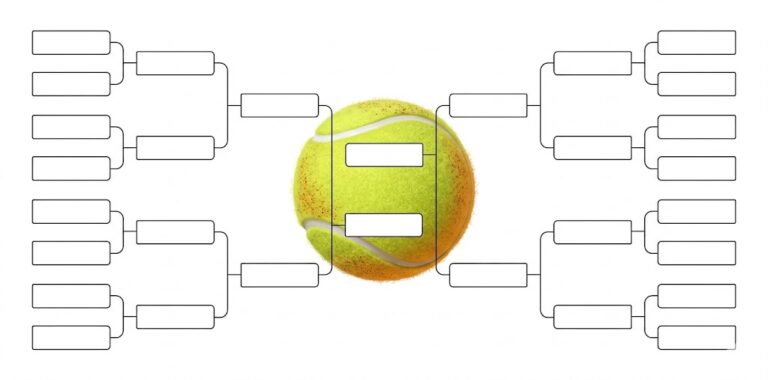
The result is the full bracket: a visual map showing every first-round matchup and the projected path each seed would take if all favorites win. That projected path — called a player’s “section” or “half” of the draw — is immediately analyzed by commentators, fans, and the players themselves. A seed who lands in a section with several dangerous unseeded players is said to have a “tough draw.” One who lands with mostly lower-ranked opponents has an “open draw.”

When people say “the draw opened up,” they typically mean a top seed was upset or withdrew, clearing a section of the bracket and making the path to the final easier for whoever is left in that section.

The Road to a Title: Rounds and Format

With the draw set, the tournament plays out through successive rounds. Each round eliminates half the remaining field. The terminology is consistent across tournaments of the same draw size:

In a 128-player Grand Slam draw:

  • Round of 128 (R1) — First round
  • Round of 64 (R2) — Second round
  • Round of 32 (R3) — Third round
  • Round of 16 (R4) — Fourth round
  • Quarterfinals (QF) — Eight players remain
  • Semifinals (SF) — Four players remain
  • Final — Two players remain; winner claims the title

To win a Grand Slam, a player must win seven consecutive matches over roughly two weeks without a single loss. There are no second chances, no consolation brackets at the top level — one loss and you’re out. This single-elimination format is what makes upsets so consequential and what makes a Grand Slam title so difficult to achieve.

Retirements, Walkovers, and Withdrawals

Tournaments don’t always proceed cleanly. Players get injured, fall ill, or face personal circumstances that force them out at various stages. How that’s handled depends on timing:

Withdrawal before the draw — The next player on the alternates list enters and the draw proceeds normally.

Withdrawal after the draw but before play — A lucky loser or alternate fills the spot. The draw position is inherited by the replacement.

Retirement during a match — If a player retires mid-match due to injury or illness, their opponent advances. The retired player receives ranking points and prize money commensurate with the round reached. Retirements during finals are among the most bittersweet outcomes in the sport.

Walkover — A player advances without playing because their opponent cannot take the court at all. Different from a retirement, which occurs after play has started.

Doubles, Mixed Doubles, and Junior Draws

Grand Slams and many tour events run multiple simultaneous draws beyond men’s singles. Doubles draws pair teams of two — either both men, both women, or one of each in mixed doubles — and follow the same seeding and draw logic as singles, with combined doubles rankings used to determine seeds. Junior draws, run concurrently at Grand Slams, follow the same format for players under 18 competing on the junior tour.

Doubles seeding uses combined team rankings or individual doubles rankings depending on the tournament’s rules, but the structural logic is identical: keep the strongest teams separated until the later rounds.

Rankings and Points: Why Tournaments Are Interconnected

No tournament exists in isolation. Every result feeds into the ATP or WTA rankings system, which determines seedings at the next event, direct acceptance into future draws, and ultimately a player’s year-end position — which determines entry into the season-ending championships.

Rankings are calculated on a rolling 52-week basis. A player’s ranking reflects their best results over the past year, with points from each tournament expiring when the tournament comes back around the following year. This creates the concept of “defending points” — a player who won a tournament last year must reach at least the same round this year to maintain their ranking. Fail to defend and the points drop off, and the ranking falls even if the player performs adequately everywhere else.

This rolling system means rankings are always in motion, always reflecting recent form, and always creating pressure on players who had strong results in the same period of the previous year.

Key Terms at a Glance

  • Draw — The bracket assigning all players their first-round opponents and projecting the path through the tournament.
  • Seed — A player given protected placement in the draw based on ranking, designed to prevent top players from meeting too early.
  • Direct acceptance — Entry into a tournament earned by ranking within the cutoff at the entry deadline.
  • Wild card — A discretionary entry granted by the tournament outside of the ranking system.
  • Qualifier — A player who earns main draw entry by winning all rounds of the pre-tournament qualifying event.
  • Lucky loser — A player who lost in the final qualifying round but enters the main draw when a direct acceptance withdraws.
  • Bye — Advancement to the next round without playing, awarded in draws that aren’t a perfect power of two, typically to top seeds.
  • Quarter of the draw — The section of the bracket a player is placed in; determines which seeds they could potentially face in the quarterfinals.
  • Retirement — A player withdrawing from a match already in progress due to injury or illness.
  • Walkover — Advancement without play because the opponent cannot take the court.
  • Defending points — Ranking points earned at the same tournament in the previous year that expire when that tournament is replayed.
  • Grand Slam — One of the four most prestigious tournaments; 128-player draw, best-of-five sets for men, most ranking points available.

The Draw Is the First Drama of Every Tournament

Long before the first ball is struck, the draw ceremony produces its own wave of analysis, reaction, and storylines. A seeded player landing in a brutal section draws headlines. A qualifier paired against the world number one in round one becomes an instant underdog narrative. Two rivals placed on a projected collision course for the quarterfinals generates weeks of anticipation.

Understanding how that bracket is built — who gets in, how seeds are placed, what the zones mean, and how the rounds unfold — gives you a framework for following every tournament from the first announcement to the final point. The draw is not just logistics. It is the first chapter of every tournament’s story, written before anyone has picked up a racket.

Part of the Tennis 101 series. Previous: Reading the Court — Understanding Tennis Court Surfaces and Why They Matter. Next: How Tennis Rankings Work — ATP, WTA, and the Points System Explained.

How Tennis Qualifying Works — The Complete Guide to Getting Into a Tournament

0

Every professional tennis tournament has a main draw — the bracket of players who compete for the title, the ranking points, and the prize money that the event offers. Most of those players earned their way into the main draw through their ranking — their position in the ATP or WTA rankings at the entry deadline placed them inside the direct acceptance cutoff and they were automatically included.

But a portion of every main draw is reserved for players who did not qualify through ranking alone — players who earned their place through qualifying competition, through wild cards, or through the lucky loser mechanism.

Qualifying is the most misunderstood entry pathway in professional tennis. It is not a consolation competition for players who almost made the main draw. It is a legitimate competitive process with its own draw, its own rounds, and its own ranking points — a tournament within a tournament that determines who gets the final spots in the main draw that rankings alone cannot fill.

Understanding exactly how qualifying works — who enters it, how many rounds it involves, what points are available, and how it connects to the main draw — is essential context for following professional tennis at every level, from Grand Slams to the smallest ATP 250 events. This guide covers the fundamentals; the rules specific to each level are in Grand Slam Qualifying Explained and How Tour-Level Qualifying Works.

What Qualifying Is and Why It Exists

The direct acceptance cutoff for any professional tennis event is determined by the number of spots available in the main draw after seeds, wild cards, and protected ranking entries have been accounted for.

At a Grand Slam with 128 players in the main draw, the standard allocation is 104 direct acceptances, 16 qualifiers and eight wild cards. Seeds are not a separate allocation: the 32 seeded players are drawn from among the direct acceptances rather than carved out alongside them. The 104 players ranked highest at the entry deadline who have not received a wild card take direct acceptance. Players ranked just below that cutoff — typically from approximately 100th to 200th in the world at Grand Slams — enter qualifying.

Qualifying therefore exists to give players who are competitive enough to potentially belong in the main draw, but not quite inside the direct acceptance cutoff on ranking, a legitimate competitive pathway into the event.

It is simultaneously a fairness mechanism — providing opportunity to players at the margins of main draw access — and a quality control mechanism — ensuring that players who advance from qualifying have demonstrated competitive quality sufficient to earn their main draw spot.

The number of qualifying spots varies by event size. Grand Slams offer 16 in the singles main draw. At tour level the count scales with the main draw, from four at an ATP 250 to twelve at a 96-player Masters 1000 or WTA 1000.

How the Qualifying Draw Works

The qualifying draw is a separate mini-tournament with its own draw, its own schedule — typically played in the three to four days before the main draw begins — and its own points allocation.

Draw Size and Rounds

The qualifying draw size at Grand Slams is typically 128 players competing for 16 main draw spots — an eight-to-one ratio that means qualifying at a Grand Slam is itself a substantial competitive achievement requiring three consecutive match wins.

At tour level the draws are smaller. ATP Masters 1000 and ATP 500 qualifying draws are half the size of the main draw, so a 96-player Masters event runs a 48-player qualifying draw and a 56-player event runs 28. At a 96-player WTA 1000, 48 players compete for 12 places over two rounds.

At ATP 250 events the qualifying draw is fixed at 16 players for four places, which means two wins to come through. Tour-level qualifying has its own mechanisms, including special exempts and reserved places for young players, covered in How Tour-Level Qualifying Works.

The number of qualifying rounds required therefore increases with the size of the event — three rounds at Grand Slams, two at Masters 1000, 500 and 250 events. Each round requires winning a full best-of-three sets match — qualifying competition is not abbreviated or shortened relative to main draw competition.

Seeding in Qualifying

The qualifying draw is itself seeded — the highest-ranked players in the qualifying field receive seeded positions that protect them from meeting each other in the early qualifying rounds. Qualifying seeds are typically the top eight or sixteen players in the qualifying draw, depending on draw size.

Qualifying seedings follow the same ranking-based principle as main draw seedings — the highest-ranked player in the qualifying draw becomes the top qualifying seed, and so on. The draw ceremony for qualifying places seeds into protected zones in the same way that main draw seedings are placed, ensuring that the strongest qualifying players cannot meet until the later rounds.

Qualifying Points: What They Are Worth

Qualifying points — points earned for winning qualifying rounds without advancing into the main draw — are a less-discussed but practically significant component of the professional ranking system. Players who reach advanced qualifying rounds but do not win through to the main draw still earn ranking points for their performance.

At Grand Slams, the qualifying points structure is:

Winning through to the main draw — three qualifying rounds won — earns 30 ranking points in addition to whatever main draw points the player subsequently earns. Reaching the final qualifying round and losing earns 16 points. Winning the first qualifying round and losing in the second earns 8 points.

These amounts are modest compared to main draw points — 30 qualifying points is equivalent to a first-round main draw loss at a Grand Slam, which also earns points — but they are not negligible for players in the top 150–250 range for whom every ranking point contributes to their position in the entry cutoffs for subsequent events.

At ATP Masters 1000 events, qualifying points follow a similar structure at proportionally reduced levels. At ATP 250 and 500 events, qualifying points are further reduced but still contribute to the overall ranking calculation.

The practical importance of qualifying points is most significant for players competing primarily on the Challenger circuit — for whom Grand Slam and Masters qualifying appearances represent opportunities to earn main tour-equivalent points from competitive performances that their ranking would not otherwise provide access to.

Who Enters Qualifying

The players who enter qualifying at each event tier come from a specific ranking range that depends on the event’s direct acceptance cutoff and the number of players who entered but received direct acceptance.

At Grand Slams, qualifying draws typically contain players ranked approximately 100th to 250th in the world — above the range where players are primarily competing on the Challenger circuit, but below the cutoff where direct acceptance into the main draw is guaranteed.

This range includes some players who compete regularly on the main tour through qualifying appearances and lucky loser entries, and some players who compete primarily on the Challenger circuit but have accumulated sufficient points to access Grand Slam qualifying.

At ATP Masters 1000 events, qualifying draws contain players ranked approximately 70th to 150th — a range that includes some players who regularly compete in ATP 250 main draws but are not yet consistently inside the Masters 1000 direct acceptance cutoffs.

At ATP 250 events, qualifying draws contain players ranked approximately 90th to 200th — overlapping significantly with the Grand Slam qualifying range and representing the core of the main tour’s development tier.

Players can also enter qualifying as protected ranking players — using their pre-injury ranking to access qualifying at events where their current ranking would not qualify them. Protected ranking entries into qualifying are more common than protected ranking main draw entries and represent a significant pathway for returning players to rebuild their rankings through competitive match play at an appropriate level.

The Physical and Scheduling Demands of Qualifying

Qualifying competition imposes specific scheduling demands that differ meaningfully from main draw competition and that have practical implications for how players manage their preparation and physical resources.

Qualifying matches are typically played in the three to four days before the main draw begins — which means a player who wins through qualifying and enters the main draw has played three matches before their first main draw opponent has played any.

If that main draw first round match is played the day after the final qualifying round, a qualifying player may be competing in their fourth consecutive match of the week while their opponent is fresh.

This scheduling asymmetry is one of the structural disadvantages of the qualifying pathway that has no equivalent in main draw competition. Seeds who receive byes into later rounds face the opposite situation — less match play entering the middle rounds of the tournament — while qualifiers who win through have accumulated significantly more physical load before the main draw begins.

Grand Slam scheduling partially mitigates this by allowing a day of rest between the final qualifying round and the first main draw round in most years, but the physical reality of three qualifying matches followed by main draw competition remains one of the most demanding competitive schedules in professional tennis.

Qualifiers in the Main Draw: What to Watch For

Once a player has qualified and entered the main draw, they compete on identical terms to every other main draw player — the same prize money for each round, the same ranking points, the same competitive conditions. There is no distinction in the main draw between a direct acceptance and a qualifier except for the specific path they took to get there.

Qualifiers at Grand Slams and Masters events are among the most interesting players to follow in the early rounds of major tournaments because their path through qualifying typically provides more competitive match play and better preparation than players who have been resting between events. A qualifier who has played three high-quality matches in the week before the tournament begins may arrive at their first main draw match in better match rhythm than a higher-ranked direct acceptance who last competed two weeks earlier.

Qualifier upset victories — a qualifying player beating a seeded or highly-ranked direct acceptance in the first round of a Grand Slam — happen regularly enough to be a recurring tournament narrative rather than a genuine shock. The competitive quality of players who have won through three qualifying rounds is often underestimated by rankings that place them significantly below their first-round main draw opponents.

Special Qualifying Formats at Specific Events

Most professional tennis events follow the standard qualifying format described above. Some events use modified formats that are worth understanding specifically.

Wild card playoffs: The ATP rulebook does not permit pre-qualifying events. A tournament may run a separate playoff to decide who receives its wild cards into qualifying or the main draw, but that playoff awards wild cards, not qualifying entry, and losing it does not stop a player entering qualifying by the ordinary route.

Combined qualifying: Some events that run both ATP and WTA draws simultaneously share qualifying facilities and scheduling windows but maintain separate qualifying draws for men’s and women’s competition. The draws are conducted and administered separately but may be physically staged on the same courts during the same qualifying period.

Doubles Qualifying

The qualifying discussion above focuses primarily on singles — which is where qualifying is most significant competitively and most commonly discussed. Doubles draws at professional events operate somewhat differently.

Most professional events do not hold doubles qualifying. The doubles main draw is filled entirely through rankings — the highest-ranked doubles teams at the entry deadline receive direct acceptance, with no qualifying process. This reflects both the smaller doubles fields — typically 16 to 32 teams rather than 64 to 128 in singles — and the logistical challenges of running both singles and doubles qualifying simultaneously.

Where no doubles qualifying is held, vacancies in the doubles draw are filled by alternates rather than lucky losers. The tour-level rules are set out in How Tour-Level Qualifying Works.

How Qualifying Connects to the Lucky Loser System

The qualifying process and the lucky loser system are directly connected — the lucky loser pool is drawn entirely from players who reached the final qualifying round but did not win through to the main draw.

When a main draw player withdraws after the qualifying draw is complete but before they have played their first main draw match, their spot is filled by a lucky loser — a player selected from the final qualifying round losers, typically by random draw from among those who are available and willing to compete. The lucky loser inherits the withdrawing player’s draw position and competes against whoever was scheduled to face the withdrawn player.

This connection means that reaching the final qualifying round — even without winning through — keeps a player in contention for a main draw appearance through the lucky loser mechanism. The practical implication is that players who lose their final qualifying round match should remain available and prepared to compete until the first round of the main draw is complete, in case a withdrawal creates a lucky loser opportunity.

Why Understanding Qualifying Matters for Following the Sport

Qualifying is the entry point of the competitive ecosystem that feeds the main tour — the level where the next generation of main tour players proves they belong at a higher competitive level than their current ranking suggests.

Following qualifying results at Grand Slams and Masters events provides early visibility into the players who are building toward main tour relevance, and tracking which qualifiers advance deep into main draws is one of the clearest early indicators of emerging talent.

For fans who follow professional tennis closely, qualifying draws provide a week of competitive tennis before the main draw begins that is often more interesting and less predictable than the first rounds of the main draw itself. The qualifying matches between players in the top 150–300 range — all of whom are competing with significant ranking implications riding on every match — are frequently contested more intensely than first-round main draw matches between a seeded player and a lower-ranked opponent with less competitive symmetry.

Qualifying is also where the competitive culture of professional tennis is most purely visible — players at the margins of main tour access, competing for every point and every opportunity, with the stakes of their entire season riding on a single match. That competitive intensity, with nothing taken for granted and every result meaningful, is professional tennis in its most essential form.

Part of the Rankings series. Related: How Tennis Entry Lists Work — Cutoffs, Deadlines and How Players Get In · What Is a Lucky Loser in Tennis — How It Works and When It Happens · How the Challenger and ITF Rankings Work — The Path to the Top 100
BNP Paribas Open Kicks Off in Indian Wells with Star-Packed Field

0

The BNP Paribas Open returns to the Indian Wells Tennis Garden this week, marking the start of the 2026 tennis season’s first major combined event. Running from March 1 to 15, the tournament draws top players from both the ATP and WTA tours to the California desert, where hard-court battles will unfold over two weeks. Qualifying rounds began on Sunday, with the main draws starting Wednesday, leading to the singles finals on Sunday, March 15.

This year’s edition celebrates the 52nd ATP event and the 37th WTA event, solidifying its status as a cornerstone of the professional calendar. Often called the “fifth Grand Slam” due to its scale and prestige, the BNP Paribas Open offers equal prize money across men’s and women’s singles, totaling over $19 million combined. The venue, with its 16,100-seat Stadium 1 and multiple practice courts, hosts 96 players in each singles draw, blending established stars with rising talents.

On the men’s side, Carlos Alcaraz enters as the top seed and a heavy favorite. The Spaniard, fresh off his Australian Open victory in January, became the youngest player to complete a career Grand Slam at age 22. Alcaraz has dominated Indian Wells in recent years, winning back-to-back titles in 2023 and 2024.

His path this time includes a bye in the first round, potential second-round clashes with qualifiers or lower-ranked opponents, and tougher tests later, possibly against Hubert Hurkacz or Novak Djokovic in the fourth round. Alcaraz’s explosive baseline game suits the slower hard courts here, where he has a 15-2 record.

Challenging Alcaraz is world No. 2 Jannik Sinner, who has carried momentum from his own major successes. Sinner skipped last year’s event due to a brief suspension but returns hungry for his first Indian Wells crown.

His draw places him in the bottom half, with possible early matches against Thanasi Kokkinakis or Quentin Halys, building to potential quarterfinals against Andrey Rublev or Stefanos Tsitsipas. Sinner’s precise serving and movement make him a threat on these surfaces.

Novak Djokovic, seeded third, aims for a record sixth title at Indian Wells, where he last won in 2016. The 38-year-old Serbian, with 24 Grand Slam titles, has shown he remains competitive despite a lighter schedule.

His section includes defending champion Jack Draper, who claimed his maiden Masters 1000 last year. Draper, seeded 14th, faces a bye before meeting Fabian Marozsan or Roberto Bautista Agut. Djokovic could encounter Draper in the fourth round, adding intrigue to a half loaded with power hitters like Hurkacz and Milos Raonic.

Alexander Zverev anchors the fourth quarter as the No. 4 seed, joined by Americans Taylor Fritz and Tommy Paul. Fritz, the 2022 champion, seeks to reclaim home glory after a strong start to 2026. His path might cross with Medvedev in the quarters, reviving their rivalry. Other notables include Ben Shelton, Lorenzo Musetti, and Felix Auger-Aliassime, all capable of upsets on the expansive courts.

The women’s field is equally compelling, led by top seed Aryna Sabalenka. The Belarusian powerhouse, with three Grand Slam titles, thrives on hard courts and enters with confidence after a solid Australian Open run.

Her draw offers a bye, then possibly Paula Badosa or Ashlyn Krueger in the second round, with Anastasia Potapova or Marie Bouzkova looming in the third. Sabalenka could face Jasmine Paolini or Anna Kalinskaya in the fourth round, setting up a potential quarterfinal against Marketa Vondrousova or Beatriz Haddad Maia.

Defending champion Mirra Andreeva, the young Russian sensation, returns to protect her title. Seeded lower due to her age-19 breakthrough, Andreeva’s draw pits her against tough early opponents, but her fearless playstyle—mixing pace with clever shot-making—could propel her deep again.

Elena Rybakina, the 2023 winner and recent Australian Open champion, is seeded third. As world No. 1 entering the event, Rybakina’s big serve and flat groundstrokes are ideal for Indian Wells. Her path mirrors Sabalenka’s in structure, with potential rematches of past finals.

Iga Swiatek, seeded second, headlines the bottom half. The Polish star, with five Grand Slams, has won Indian Wells twice and favors the conditions that reward consistency. Her section includes Ons Jabeur and Jelena Ostapenko, both unpredictable but talented. Swiatek might meet Andreeva in the semifinals if both advance, echoing their emerging rivalry.

American hopes rest on Coco Gauff, Jessica Pegula, and Madison Keys. Gauff, a two-time major winner, leads the U.S. charge in the top half, potentially facing Sabalenka in the semis. Her all-court game has improved, making her a contender. Pegula, steady in big events, could challenge Swiatek in the quarters. Keys, with her powerful forehand, adds depth to the home contingent.

Beyond singles, doubles and mixed events feature fun pairings. Medvedev teams with young American Learner Tien, while Sinner pairs with Reilly Opelka in alternates. The Eisenhower Cup, a mixed doubles invitational on March 3, includes teams like Swiatek and Hurkacz, Rybakina and Fritz, and Sakkari and Ruud.

Storylines abound: the Alcaraz-Sinner duel continues after their Australian Open epic; Djokovic chases history amid questions about his longevity; and women’s parity promises surprises, with Rybakina and Swiatek vying for dominance. Off-court, the tournament emphasizes fan experience with expanded food options and shaded seating, drawing over 450,000 attendees last year.

As play ramps up, weather forecasts predict mild temperatures in the 70s Fahrenheit, ideal for marathon matches. With no major injuries sidelining top players—though Rafael Nadal and Nick Kyrgios are absent—the stage is set for high-stakes tennis. The BNP Paribas Open not only launches the “Sunshine Double” with Miami next but signals the hard-court swing’s intensity before clay season.

Fans can catch action on the Tennis Channel, with daily coverage starting at 11 a.m. local time. For those attending, proof of vaccination remains a requirement, ensuring a safe environment. This tournament’s blend of tradition and star power keeps it essential viewing.