Home Blog Page 9

Every WTA World No. 1 — The 30 Women Who Have Topped the Rankings Since 1975

0

Thirty women have been ranked No. 1 since the WTA’s computer rankings began on 3 November 1975, with Chris Evert at the top of the first list. The newest is Elena Rybakina, who began her first week at No. 1 on 14 September 2026 after beating Aryna Sabalenka in the US Open final. She is the first player from Kazakhstan, man or woman, to lead the rankings.

The table below lists all 30 in order of total weeks at No. 1, with the week each first reached the top and the number of seasons she finished as year-end No. 1 through 2025. Sabalenka’s total runs to the end of her second spell in September 2026. Rybakina’s total is still running.

The Full List

#PlayerFirst week at No. 1Total weeks at No. 1Year-end No. 1 finishes
1Steffi Graf17 Aug 19873778
2Martina Navratilova10 Jul 19783327
3Serena Williams8 Jul 20023195
4Chris Evert3 Nov 19752605
5Martina Hingis31 Mar 19972093
6Monica Seles11 Mar 1991178*2
7Iga Swiatek4 Apr 20221252
8Ashleigh Barty24 Jun 20191213
9Justine Henin20 Oct 20031173
10Aryna Sabalenka11 Sep 20231072
11Lindsay Davenport12 Oct 1998984
12Caroline Wozniacki11 Oct 2010712
13Simona Halep9 Oct 2017642
14Victoria Azarenka30 Jan 2012511
15Amélie Mauresmo13 Sep 2004390
16Angelique Kerber12 Sep 2016341
17Dinara Safina20 Apr 2009260
18Naomi Osaka28 Jan 2019250
19=Tracy Austin7 Apr 1980210
19=Maria Sharapova22 Aug 2005210
21Kim Clijsters11 Aug 2003200
22Jelena Jankovic11 Aug 2008181
23Jennifer Capriati15 Oct 2001170
24=Ana Ivanovic9 Jun 2008120
24=Arantxa Sánchez Vicario6 Feb 1995120
26Venus Williams25 Feb 2002110
27Karolina Pliskova17 Jul 201780
28Garbiñe Muguruza11 Sep 201740
29Evonne Goolagong26 Apr 197620
30Elena Rybakina14 Sep 2026Current—
*Seles’s total includes weeks she was co-ranked No. 1 with Graf in 1995 and 1996.

The Records Inside the Table

Graf’s 377 weeks are the most at No. 1, and her eight year-end No. 1 finishes are also a record, one more than Navratilova. Graf and Serena Williams share the longest single run, 186 consecutive weeks each, ahead of Navratilova’s 156, Barty’s 114 and Evert’s 113. Navratilova also spent 103 weeks ranked No. 1 in singles and doubles at the same time, the most of any player.

Hingis is the youngest woman to reach No. 1, at 16 years and 182 days in March 1997. Kerber is the oldest to make her No. 1 debut, at 28 years and 238 days in September 2016, and Rybakina, at 27 years and 89 days, is the second oldest. Serena Williams is the oldest woman to hold the ranking, at 35 years and 230 days in May 2017. Caroline Wozniacki went six years between spells at No. 1, the longest gap of any player.

Sixteen of the 30 have finished at least one season at No. 1. Thirteen others reached the top without ending a year there, from Goolagong, whose two weeks in 1976 are the fewest on the list, to Mauresmo, who spent 39 weeks at No. 1 without a year-end finish. Rybakina’s first chance to join the 16 comes at the end of this season.

How No. 1 Is Decided

The WTA ranking is a rolling total of points earned over the previous 52 weeks, so a player can reach No. 1 on the strength of results from the previous season as well as the current one. GTN’s rankings explainer covers how the points are counted, and the WTA Finals qualification explainer covers the separate race for the season-ending event.

Season Snapshot — 3 October 2026

  • World No. 1: Elena Rybakina, since 14 September 2026. She beat Sabalenka in the finals of both the Australian Open and the US Open this season.
  • Aryna Sabalenka: 107 weeks at No. 1 across two spells, the 10th most in WTA history. Her second spell lasted 99 weeks and ended after the US Open.
  • Rybakina and Sabalenka are the top two seeds at the China Open in Beijing (30 September to 11 October). The Wuhan Open follows from 12 to 18 October.

This snapshot is dated and will change. The career record above does not.
Every ATP World No. 1 — The 29 Men Who Have Topped the Rankings Since 1973

0

Twenty-nine men have been ranked No. 1 since the ATP introduced its computer rankings on 23 August 1973, when Ilie Nastase was placed at the top of the first list. Novak Djokovic has spent the most weeks there, Roger Federer held it longest without a break, and Patrick Rafter held it for a single week. Alexander Zverev, the world No. 2, could become the 30th as soon as the Rolex Shanghai Masters ends on 18 October.

The table below is ordered by total weeks at No. 1. It also shows each man’s longest unbroken run at the top and the number of seasons he finished as year-end No. 1. The totals for Jannik Sinner and Carlos Alcaraz are current to 3 October 2026 and will keep changing; the other active players on the list would add to theirs only by returning to the top.

The Full List

#PlayerTotal weeks at No. 1Longest run (weeks)Year-end No. 1 finishes
1Novak Djokovic4281228
2Roger Federer3102375
3Pete Sampras2861026
4Ivan Lendl2701574
5Jimmy Connors2681605
6Rafael Nadal209565
7John McEnroe170584
8Bjorn Borg109462
9Andre Agassi101521
10Jannik Sinner*91651
11Lleyton Hewitt80752
12Stefan Edberg72242
13Carlos Alcaraz*66222
14Jim Courier58271
15Gustavo Kuerten43301
16Andy Murray41411
17Ilie Nastase40401
18Mats Wilander20201
19Daniil Medvedev16130
20Andy Roddick13131
21Boris Becker1290
22Marat Safin940
23=Juan Carlos Ferrero880
23=John Newcombe880
25=Yevgeny Kafelnikov660
25=Thomas Muster650
25=Marcelo Rios640
28Carlos Moya220
29Patrick Rafter110
*Active total, as of 3 October 2026.

The Records Inside the Table

Djokovic’s 428 weeks are the most in the history of the rankings, and his eight year-end No. 1 finishes are also the most. Pete Sampras is next for year-end finishes with six. Federer’s 237 consecutive weeks are the longest single run at the top; Jimmy Connors, with 160, and Ivan Lendl, with 157, are the only other men to hold it for more than 150 weeks in one stretch.

Some of the shortest reigns belong to men who never came back. Rafter held the ranking for one week and Carlos Moya for two. Nastase’s 40 weeks and Andy Murray’s 41 each came in a single run. Ten of the 29 never finished a season at No. 1: Boris Becker, Daniil Medvedev, Marat Safin, Juan Carlos Ferrero, John Newcombe, Yevgeny Kafelnikov, Thomas Muster, Marcelo Rios, Moya and Rafter. Becker spent 12 weeks at No. 1 without being there when a season closed.

The other 19 have all been year-end No. 1. Andy Roddick is the only one of them with fewer than 20 weeks at the top in total: he held the ranking for 13 weeks, all in one run, and finished one season there.

How No. 1 Is Decided

The ranking is a rolling total of points earned over the previous 52 weeks, so the No. 1 is the player with the most points across the past year, not the best player of the current season. That second measure is the Race to Turin, which counts only the current calendar year and serves as the barometer for the year-end No. 1. GTN’s ATP rankings explainer sets out how the points are counted, and the Race to Turin tracker follows this year’s standings.

The 30th Name

Zverev has never been No. 1. He can reach the top as soon as Shanghai ends if he wins the China Open in Beijing for the first time, wins Shanghai, and Sinner fails to reach the fourth round there. Sinner withdrew from Shanghai on 3 October, which leaves the two titles as the remaining conditions. Zverev, 29, won Roland Garros and the US Open this season.

Season Snapshot — 3 October 2026

  • World No. 1: Jannik Sinner, 91 weeks at the top in total. He first reached No. 1 in June 2024.
  • World No. 2: Alexander Zverev, who has not yet held the No. 1 ranking.
  • Carlos Alcaraz: 66 weeks at No. 1 and two year-end No. 1 finishes.
  • Sinner withdrew from the Rolex Shanghai Masters (7 to 18 October) on 3 October. The Shanghai Masters guide covers the event.

This snapshot is dated and will change. The career record above does not.
Sinner Is Out of Shanghai and Zverev Is Two Titles From No. 1

0

Jannik Sinner will not play the Rolex Shanghai Masters. The world No. 1 announced his withdrawal on Saturday on Instagram Stories, four days before the Masters 1000 event begins and almost three months after his last match, the Wimbledon final he won against Alexander Zverev in July.

“Unfortunately I won’t be able to play at the Rolex Shanghai Masters this year as I had hoped,” Sinner wrote. “I always enjoy playing in front of the Shanghai fans and I’m very sorry that I won’t be able to do so next week. I’m looking forward to seeing you again next year!”

The 25-year-old is still recovering from the knee injury that has kept him off the tour since Wimbledon, an absence that has cost him the North American hard-court swing, including the US Open, and his title defense in Beijing. He pulled out of Cincinnati in August with a right knee injury. Shanghai, which runs from 7 to 18 October, is a title he won in 2024, beating Novak Djokovic in the final. He is 44-3 for the season.

What it means for No. 1. Zverev can become world No. 1 when Shanghai ends if he wins the China Open in Beijing for the first time and then wins Shanghai, provided Sinner does not reach the fourth round there. Sinner’s withdrawal settles that last condition, so two titles would take Zverev to the top of the rankings for the first time. He is into the last 16 in Beijing, where his next opponent is Chinese wild card Shang Juncheng, and the China Open ends on 6 October, the day before Shanghai begins. He would be the 30th man to reach No. 1 since the ATP rankings began in 1973.

Where the points stand. After the US Open, Zverev was 1,810 points behind Sinner, but Sinner had 3,550 points to drop over the rest of the season against 1,080 for Zverev. The first 500 of Sinner’s came off this week because he could not defend his Beijing title, while Zverev was defending only a quarterfinal there, worth 100. The largest block still to come is the Nitto ATP Finals. Sinner went unbeaten in Turin last year for 1,500 points; Zverev won one round-robin match for 200.

The field. Shanghai still has four-time champion Djokovic, along with Zverev, Carlos Alcaraz, Ben Shelton, Félix Auger-Aliassime, Daniil Medvedev, Flavio Cobolli and defending champion Valentin Vacherot. Vacherot won the title last year as a qualifier ranked No. 204, the lowest-ranked Masters 1000 champion in history. Alcaraz is still chasing his first Shanghai title. Auger-Aliassime arrives with Ivan Ljubicic newly added to his team, and João Fonseca had already taken Shanghai off his schedule.

What missing it costs. Shanghai is one of the mandatory Masters 1000 events for a commitment player. How a missed one is treated in the ranking calculation, and what it takes out of a player’s share of the season-end bonus pool, is set out in GTN’s ATP bonus pool explainer.

What comes next. The rest of the ATP season includes the ATP 500 events in Vienna and Basel, the Paris Masters and the Nitto ATP Finals in Turin in November. Sinner has already qualified for Turin, where he is the two-time defending champion, and Zverev led the Race to Turin after the US Open. The Shanghai Masters guide has the dates, draw format and past champions.

Grand Prix Auvergne-Rhône-Alpes Guide — Lyon Dates, Venue, Field and the Marseille Move

0

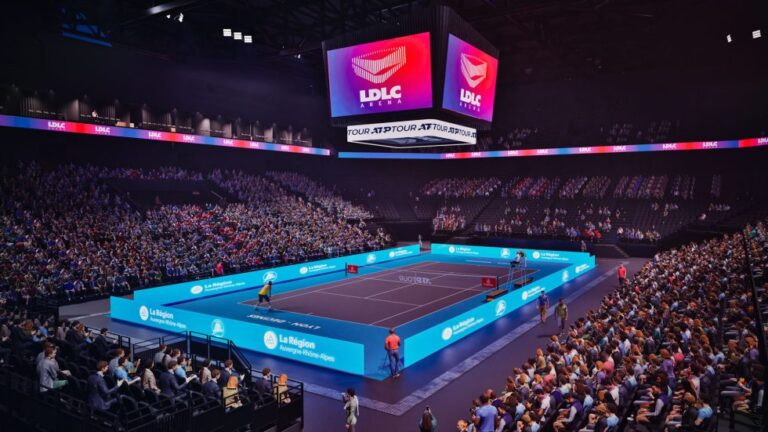
The Grand Prix Auvergne-Rhône-Alpes brings tour-level men’s tennis to Lyon’s LDLC Arena in October 2026. It is not a new licence. It is the ATP 250 that was played in Marseille as the Open 13 Provence, and its organisers announced in September 2025, with the approval of the ATP Board, that the event would move to Lyon from 2026, according to the ATP.

When and Where

The first edition runs from Sunday 18 October to Sunday 25 October 2026, according to the LDLC Arena. ATP rules require tour-level main draws to start on a Monday and finish on a Sunday unless the ATP approves otherwise, so main-draw play is scheduled to begin on Monday 19 October.

The LDLC Arena is a multi-purpose indoor venue in Lyon-Décines that opened in December 2023 and has staged basketball, wrestling and concerts, the ATP said. The All In Country Club, run by Jo-Wilfried Tsonga and Thierry Ascione, serves as the players’ training base during the week.

Format and Points

Lyon is an indoor ATP 250. Under the ATP rulebook, every ATP 250 runs a 16-player singles qualifying draw, and all tour-level singles matches are best of three tie-break sets. Doubles matches are two tie-break sets with a 10-point match tie-break at one set all, played with no-ad scoring. GTN’s ATP 250 guide sets out the points and how the category fits into the ranking.

Who Runs It

The LDLC Arena describes the tournament as a partnership between the arena, ALL IN GROUP, the company founded by Tsonga and Ascione, and the Auvergne-Rhône-Alpes Region.

“This transition represents a new chapter in the history of our tournament,” Tsonga said when the relocation was announced, according to the ATP. “Holding it at the LDLC Arena, a state-of-the-art venue, will allow us to continue to grow by offering the best possible experience to players and fans.”

“We look forward to welcoming you to this first edition in October 2026 and sharing unique emotions with you,” Ascione said.

The Field

Flavio Cobolli is the top seed and opens against wild card Stan Wawrinka or Martin Landaluce, and Tommy Paul is the fourth seed, opening against Benjamin Bonzi or Cameron Norrie, according to the official ATP draw. Two names from the organizers’ pre-event announcements are not in the draw: Frances Tiafoe, and Gaël Monfils, whom the ITIA has listed as retired since 5 October. The Lyon organizers said Monfils would not play, according to AP.

Humbert is the name with the history since he won the last two editions played in Marseille, beating Grigor Dimitrov in the 2024 final and Hamad Medjedovic 7-6(4), 6-4 in 2025, when he became the first Frenchman to win the event in back-to-back years and improved to 13-2 there, according to the ATP. GTN profiles of Vacherot, Musetti, Paul, Nakashima and Rinderknech cover the rest of the announced names.

Past Champions of the Marseille Event

Because Lyon inherits the Marseille event, its roll of honour begins in Marseille. The champions below are those GTN confirmed against ATP reports; the full list is on the ATP’s tournament pages.

  • 2025: Ugo Humbert d. Hamad Medjedovic 7-6(4), 6-4
  • 2024: Ugo Humbert d. Grigor Dimitrov
  • 2021: Daniil Medvedev d. Pierre-Hugues Herbert, in three sets
  • 2018: Karen Khachanov

Where Lyon Sits on the Calendar

Lyon shares its week with two other ATP 250s, the Almaty Open and the European Open in Brussels, and falls the week after the Shanghai Masters final. From there the tour stays indoors in Europe through the Paris Masters and the Nitto ATP Finals, a run GTN covers in The European Indoor Season Explained.

Liudmila Samsonova Profile — A Qualifier’s Title in Berlin and a Wimbledon Quarterfinal

0

Liudmila Samsonova won her first WTA title after coming through qualifying in Berlin, collected three more in 2022 and reached three finals in 2023, one of them at the China Open. It took until 2025, at Wimbledon, for her to reach the quarterfinals of a major. She owns five WTA singles titles, four doubles titles and a career-high ranking of No. 12, according to the WTA.

Early Years

Samsonova was born on 11 November 1998 in Olenegorsk, Russia, and trained in Rome, where she worked with Alessandro Dumitrache and Alessandro Piccari, according to her WTA biography. She made her professional debut on the ITF circuit in 2013 and won four ITF singles titles.

Her first WTA main draws came in 2019. She reached the semifinals in Palermo as a lucky loser, losing to eventual champion Jil Teichmann, and made her Grand Slam main-draw debut at Roland Garros as a qualifier, losing in the first round to Donna Vekic.

The Berlin Breakthrough

The turn came on grass in 2021. Samsonova came through qualifying in Berlin and won the tournament, beating Belinda Bencic in the final for her maiden WTA title. She reached the fourth round at Wimbledon that summer, broke into the top 50 on 13 September and finished the year at No. 39, her first year-end ranking inside the top 100. Earlier that season she had recorded her first win over a top-20 player, beating No. 11 Kiki Bertens in Miami.

Three Titles in 2022

Samsonova won three titles in 2022: Washington, where she beat Kaia Kanepi in the final, Cleveland, where she beat Aliaksandra Sasnovich, and Tokyo, where she beat Zheng Qinwen. She also reached the semifinals in Stuttgart, where she earned her first top-10 win over No. 7 Karolina Pliskova, and the fourth round of the US Open. She entered the top 20 on 24 October and finished the year at No. 20.

Three Finals in 2023

The 2023 season brought three finals and no title. Samsonova lost to Bencic in Abu Dhabi, to Jessica Pegula in Montreal and to Iga Swiatek in Beijing. She also reached the semifinals in Washington, qualified for the WTA Elite Trophy in Zhuhai, where she went 1-1 in group play, and finished the year at No. 16. In doubles she won the Dubai title with Veronika Kudermetova.

A Grass Title and a First Major Quarterfinal

Her fifth title came on grass at ‘s-Hertogenbosch in 2024, where she beat Bianca Andreescu in the final. That year she also reached the semifinals in Abu Dhabi, losing to eventual champion Elena Rybakina, the quarterfinals in Cincinnati, losing to eventual champion Aryna Sabalenka, and the fourth round of the US Open, where Swiatek beat her.

In 2025 she reached her ninth career final in Strasbourg, losing it, and semifinals in Adelaide and Berlin. At Wimbledon she reached the quarterfinals of a Grand Slam event for the first time before losing to Swiatek, the eventual champion. She also reached the fourth round at Roland Garros and finished the year at No. 17, her third straight season inside the top 20, according to the WTA.

Doubles

Samsonova has four WTA doubles titles: Dubai in 2023 with Kudermetova, then Seoul in 2024, Ningbo in 2025 and Stuttgart in 2026, all with Nicole Melichar-Martinez. The pair also reached the 2025 final in ‘s-Hertogenbosch.

The Player

Samsonova is right-handed and stands 1.82 metres, according to the WTA. She lists her forehand as her favourite shot and hard courts as her favourite surface, and names Maria Sharapova as her idol.

Grand Slam Best Results

  • Australian Open: second round (2021, 2022, 2023, 2025)
  • Roland Garros: fourth round (2025)
  • Wimbledon: quarterfinal (2025)
  • US Open: fourth round (2022, 2024)

Season Snapshot — 2 October 2026

Samsonova is the 29th seed at the China Open in Beijing, where the WTA draw sheet released on 1 October listed her ranking at No. 37. After a first-round bye she was drawn against lucky loser Linda Fruhvirtova in the second round; that match had not finished when this profile was prepared. At the majors in 2026 she lost in the first round of the Australian Open, Roland Garros and the US Open and reached the third round at Wimbledon, according to the WTA. She won the Stuttgart doubles title with Melichar-Martinez.

This snapshot is dated and will change. The career record above does not.
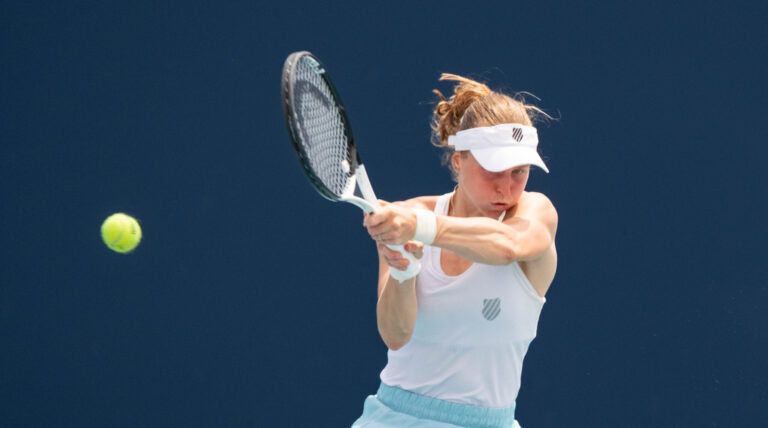
More WTA players are listed in GTN’s player profiles index, including Iga Swiatek, who beat Samsonova in the 2023 Beijing final and the 2025 Wimbledon quarterfinals.

ATP Bonus Pool Explained — What Skipping a Masters 1000 Costs a Top Player

0

When a top player skips a Masters 1000, the cost shows up in two places. His ranking records a zero for the event, as GTN’s ATP rankings explainer sets out. And under the 2026 ATP Official Rulebook, his share of a season-end bonus pool worth more than $21.5 million shrinks: by a quarter for the first missed event, and to nothing after four.

The rule is live this month. The Rolex Shanghai Masters runs from 7 to 18 October, and world No. 1 Jannik Sinner, who withdrew from Cincinnati in August with a right knee injury according to the ATP, was on the Shanghai entry list the ATP published on 10 September without having announced whether he will play. The rules below apply the same way whatever he or any other player decides. GTN does not calculate individual payouts, because they depend on final standings, promotional work and ATP determinations that are settled only after the season.

How Big the Pool Is

The ATP Tour Masters 1000 and Nitto ATP Finals Fixed Bonus Pool for 2026 is currently set at $21,537,813, according to the January 2026 edition of the ATP rulebook. The 2025 rulebook put the equivalent pool at $21,012,500. The money goes to the top 30 players in a separate set of standings built only from ranking points earned at Masters 1000 events and the Nitto ATP Finals during the calendar year.

How the Money Is Split

Seventy percent of the pool is paid as fixed amounts by finishing position. The rulebook lists $3,918,315 for first, $1,959,157 for second, $1,205,635 for third, $979,579 for fourth and $753,522 for fifth. Tenth is worth $376,761, 20th is worth $214,000 and 30th is worth $153,718.

The other 30 percent is paid per point. After the Nitto ATP Finals, the ATP sets a dollar value per ranking point and multiplies it by each player’s Masters 1000 and Finals points. Money a player forfeits is not handed to anyone else, and the list does not extend to the 31st player.

What a Missed Masters 1000 Costs

To collect the full amount, a player must play every mandatory Masters 1000 in which he is a main-draw direct acceptance, and the Nitto ATP Finals if he qualifies. The rulebook applies the cut to a direct acceptance who fails to compete “for any reason”, which includes injury. A player can recover part of the cut by doing on-site promotional work for the event he missed.

Masters 1000 events missedCut, no promotional workCut, one promotional requirement metCut, two requirements met
125%12.5%Not applicable
250%37.5%25%
375%62.5%50%
4 or more100%100%100%

Three details shape how the chart works in practice. No player can recoup more than $200,000 through promotional work. Promotional work relieves fines and bonus reductions but does not lift the ranking penalty, and the event still counts as missed. A player who was not a direct acceptance for a Masters 1000 does not have it counted as a missed event, while a suspension does count as one.

The ATP Finals Rule

Every player who qualifies for the Nitto ATP Finals must play it. A qualified player who misses Turin with a bona fide injury, or another reason the ATP accepts as good cause, can receive 80 percent of the bonus he earned by making a promotional appearance at the event. A player who misses the Finals and does not do that work is not eligible for any bonus unless the ATP approves it.

Who Is Eligible

Only members in good standing who meet the ATP’s Platinum Benefit criteria can share the pool. Those criteria exclude players who take part in what the rulebook calls a Qualified Non-Covered Event: broadly, an event outside the established structure that includes a top-100 singles player and runs three or more consecutive days within a seven-day period, or that belongs to a series or a linked set of events above set limits. Grand Slams, ATP Tour and Challenger events, the Laver Cup, the Davis Cup, the Olympic Games and existing regional leagues at or below their current format are not caught by the rule. Events that took place in 2023 are not treated as qualifying until 31 December 2026, provided they stay at or below their 2023 format.

Tie-Breaks

Players level on points in the bonus standings are separated first by the number of Masters 1000 events played, then by their highest points total from a single event, then their second highest and so on, and finally by the year-end singles ranking.

The ATP 500 Pool

A second, smaller pool rewards the ATP 500 level. It is set at $3,075,000 for 2026 and goes to the top six players by points earned at ATP 500 events, with 70 percent paid as fixed amounts from $1,025,000 for first to $51,250 for sixth and 30 percent paid per point. To earn the full amount, a player must play four ATP 500 events, including at least one from each of three swings. The third swing is Beijing, Tokyo, Vienna and Basel.

Each missed event below four costs 15 percent for one, 30 percent for two and 100 percent for three or more, and each swing left unfulfilled costs a further 25 percent, with the cuts adding up. A player who is injured or ill, verified by a physician, and out of all competition for at least 30 consecutive days does not lose money for a missed swing if he still plays four ATP 500 events over the season. Monte Carlo points do not count toward this pool, even though Monte Carlo counts in the 500 category for commitment and ranking purposes.

Who Carries the Commitment

A 2026 commitment player is anyone who was in the top 30 of the ATP singles rankings on 10 November 2025. His commitment is every Masters 1000 he is accepted into, the Nitto ATP Finals if he qualifies or is named alternate, and four ATP 500 events, one of them after the US Open. GTN covered the earlier change to that ATP 500 requirement in a separate report.

The figures in this explainer are taken from the January 2026 edition of the ATP Official Rulebook. The ATP says the online rulebook is the official version, and it describes the Masters 1000 pool as currently set, so the amounts can change during the season.

Zverev Can Reach No. 1 After Shanghai and He Needs Two Titles to Do It

0

Alexander Zverev had been in Beijing for two days when he walked out against Cameron Norrie on Thursday, a week after playing indoors for Team Europe at the Laver Cup in London. He and the British left-hander went through a full set without a decisive break, and then Zverev took the tie-break 7-1 on his way to a 7-6(1), 6-4 win at the China Open.

“I am surprised because I didn’t think I played well because I only arrived two days ago,” Zverev said, according to the ATP. “I feel a bit jet-lagged and came from an indoor tournament to an outdoor tournament, but I felt good on the court and I felt it was a high-level match.”

It was his ninth win in nine meetings with Norrie, and the ATP counts 47 wins in his past 48 matches against left-handers. Another one is next. Chinese wild card Shang Juncheng came from a set down to beat Sebastian Baez 5-7, 6-3, 7-5 for his first match win at the event, and the draw also placed six-time champion Novak Djokovic in Zverev’s quarter.

What is at stake. The ATP said this week that Zverev could become world No. 1 as soon as the Rolex Shanghai Masters ends on 18 October. The route is narrow. He would have to win Beijing for the first time, having reached the semifinals there three times, then win Shanghai, and Jannik Sinner would have to fall before the fourth round in Shanghai.

Where the points move. Sinner won Beijing last year and is not playing this week, so the 500 points from that title come off his total, while Zverev reached the quarterfinals in 2025 and defends 100, the ATP said. After the US Open, the ATP put Zverev 1,810 points behind Sinner in the rankings, but noted that Zverev had 1,080 points left to drop over the rest of the season against 3,550 for Sinner.

The Sinner question. Sinner has not played a tour match since he beat Zverev in the Wimbledon final in July. He withdrew from Cincinnati in August with a right knee injury, the ATP reported, then pulled out of the US Open and his Beijing title defense. He was on the Shanghai entry list the ATP published on 10 September and had not announced whether he will play. A withdrawal would mean he cannot reach the fourth round, which would leave the Shanghai part of the equation in Zverev’s hands.

“I think it’s a goal for anyone,” Zverev said of No. 1 at his pre-tournament press conference, as reported by the ATP. “I think at the beginning of the season everybody expected that battle to be between Carlos and Jannik, so I’m very pleased that I’m in that conversation.”

“There’s some of it in my head,” he said. “The only thing that I can control is play good tennis, play well on the court, try to feel well on the court, try to do everything I can to prepare myself to play good tennis. Everything else will fall into place.”

His season. Zverev, 29, won his first major at Roland Garros in June, beating Flavio Cobolli in five sets in the final, and added the US Open in September. The ATP lists him with a season-leading 56 match wins and a tour-leading 28 hard-court wins. He would be the 30th man to reach No. 1 in the history of the rankings. Sinner first reached the top in June 2024 and has spent 91 weeks there, according to the ATP.

Beyond Shanghai. If the top spot does not change hands in October, the year-end race stays open. After the US Open, the ATP’s Live Race to Turin had Zverev on 8,650 points and Sinner on 7,950, and the remaining Masters 1000 in Paris and the Nitto ATP Finals carry the largest offerings left on the calendar. GTN’s Race to Turin tracker explains how the field is decided, and the Shanghai Masters guide and ATP rankings explainer cover the event and the points system.

Japan Women’s Open Guide — Osaka Dates Draw Venue and Past Champions

0

The Japan Women’s Open, played under the name Kinoshita Group Japan Open, is the WTA’s 250-level stop in Osaka and one of the last tournaments of the Asian swing. The 2026 edition runs from 19 to 25 October on outdoor hard courts, with a 32-player singles draw and 16 doubles teams, according to the WTA.

It is a different tournament from the men’s Kinoshita Group Japan Open Tennis Championships in Tokyo, the ATP 500 held at the start of October and covered in GTN’s Japan Open guide. The two events share a title sponsor and an official website, but not a city, a week or a tour.

Dates and schedule

The main draw runs from Monday 19 October to Sunday 25 October 2026. The official tournament site lists the event from 17 October, which covers qualifying. The WTA has scheduled the singles final for Sunday 25 October, not before 1:30 p.m., and the doubles final for Saturday 24 October, not before 3:30 p.m., after the singles semifinals. Both times are Japan Standard Time (GMT+9), which puts the singles final just after midnight on Sunday on the US East Coast.

Draw and points

The singles draw has 32 players and the doubles draw 16 teams. A full 32-player draw has no byes, so every seed starts in the first round. As a WTA 250 event, it awards 250 ranking points to the singles champion.

Venue

Matches are played at the Utsubo Tennis Center in Osaka, whose main stadium court holds 5,000 spectators, according to the WTA. The official tournament site uses the venue’s naming-rights title, Morita Tennis Center Utsubo.

History

The WTA describes the Osaka event as a women’s-only tournament since 2009. It returned to the tour as a 250 after a three-year hiatus, and the WTA’s list of recent champions runs from 2019 to 2023 with no edition in between.

Recent champions

  • 2025 — Leylah Fernandez (Canada) d. Tereza Valentova 6-0, 5-7, 6-3
  • 2024 — Suzan Lamens (Netherlands)
  • 2023 — Ashlyn Krueger (United States)
  • 2019 — Nao Hibino (Japan)

Fernandez’s 2025 title was the fifth of her career, according to the WTA.

Where it sits in the Asian swing

Osaka shares its week with the Ningbo Open, a WTA 500 in China, and follows the Wuhan Open, the WTA 1000 that runs from 12 to 18 October. The Pan Pacific Open in Tokyo and the Guangzhou Open come a week later. For players still chasing a place at the WTA Finals, these late-October weeks are among the last chances to add points. GTN’s WTA Finals qualification explainer covers how the race works, and the Asian swing explainer covers the full stretch.

How to follow

Draws, the order of play and results are published on the WTA tournament page and on the official tournament site.

Frequently asked questions

When is the Japan Women’s Open in 2026?

The main draw runs from 19 to 25 October, with qualifying from 17 October.

Is it the same tournament as the Japan Open in Tokyo?

No. The Tokyo event is a men’s ATP 500 played earlier in October. Osaka is a women’s WTA 250. They share a sponsor and a website.

Who won in 2025?

Leylah Fernandez, who beat Tereza Valentova 6-0, 5-7, 6-3 in the final.

Jaume Munar Profile — From 0-11 in Grand Slam Second Rounds to a US Open Last 16

0

Jaume Munar spent most of a decade as a fixture of the top 100 before his best results arrived in his late twenties. The Mallorcan reached his first Grand Slam fourth round at 28, set a career-high ranking at the end of that season, and has built much of his career a level below the main tour.

Early years

Munar, from Santanyí in Mallorca, was born on 5 May 1997. He began playing at eight on hard courts, according to his ATP Tour biography, grew up idolising Rafael Nadal and David Ferrer, and rose to No. 3 in the junior rankings. His nickname, Jimbo, comes from an on-court temperament his biography likens to Jimmy Connors’.

Tennis was not the only plan. Munar once aimed to become a doctor, the ATP Tour reported. “Suddenly when I was 21, I became Top 100 and it was financially okay, so I decided to keep going,” he said.

Next Gen and a first final

He reached the semifinals of the 2018 Next Gen ATP Finals. The ATP Tour has noted that his class that year included Stefanos Tsitsipas, Alex de Minaur, Taylor Fritz, Andrey Rublev, Frances Tiafoe and Hubert Hurkacz, all of whom later reached the top 10. Munar entered the top 100 in June 2018 and reached No. 52 in 2019.

His first tour-level final came at Marbella in 2021, where he beat Carlos Alcaraz on the way before losing to countryman Pablo Carreño Busta. Two of his biggest wins came against world No. 3s: Alexander Zverev in the second round at Marrakech in 2019, and Casper Ruud in the first round in Tokyo in 2022.

The Grand Slam breakthrough

For years the majors stopped him at the same place. Munar began his career 0-11 in Grand Slam second-round matches, according to the ATP Tour. The run ended at Wimbledon in 2025, where he beat Alexander Bublik, then No. 31, in the first round and reached the third round. At the US Open that summer he went a round further, into the fourth round of a major for the first time, before losing 6-3, 6-0, 6-1 to Lorenzo Musetti, against whom he had led their head-to-head 2-1.

He had entered that US Open at a career-high No. 44. He broke into the top 50 in July 2025, finished the year with a personal-best 31 wins, and reached a career-high No. 33 in December 2025.

A Challenger mainstay

His ATP biography credits him with a 142-73 record on the ATP Challenger Tour and 10 titles from 18 finals, the most recent on clay at Bad Waltersdorf in 2024. Clay is his favourite surface, the biography says, and the serve his favourite shot.

Grand Slam best results

  • Australian Open — Second round
  • Roland Garros — Second round
  • Wimbledon — Third round (2025)
  • US Open — Fourth round (2025)

Season Snapshot (as of 1 October 2026)

  • Ranking: No. 64
  • ATP Tour titles: none
  • Tokyo: came through qualifying with wins over Marcos Giron and Aleksandar Kovacevic, then beat third seed Taylor Fritz 6-7(7), 6-4, 6-3 in the first round in two hours and 57 minutes, his first win in three meetings with Fritz. He let slip six set points in the first set and saved seven of the eight break points he faced, according to the ATP Tour.

This snapshot is dated and will change. The career record above does not.
More players: GTN player profiles.

Almaty Open Guide — Dates, Venue, Draw and Past Champions

0

Daniil Medvedev had lost six finals in the 882 days since his last title when he reached the Almaty Open final last October. He beat Corentin Moutet 7-5, 4-6, 6-3 and dedicated the trophy to his younger daughter, Victoria. “It continues my funny story of 21 titles in 21 different cities,” he said, according to the ATP. The ATP 250 in Kazakhstan returns on Oct. 19-25, 2026, the week after the Shanghai Masters.

When and where

The ATP lists the 2026 Almaty Open for Oct. 19-25. The Kazakhstan Tennis Federation gives the tournament week as Oct. 17-25. The event is played indoors on hard courts at Almaty Arena, which the ATP described as the largest sports facility in Kazakhstan when it announced the move from Astana.

Almaty shares its week with two other ATP 250 events, the European Open in Brussels and Lyon. The week after brings the ATP 500s in Basel and Vienna, the start of the European indoor season.

Format and points

Almaty is an ATP 250 tournament, so the singles champion receives 250 ranking points. The ATP’s 2025 draw had 28 players in singles, with the top four seeds given first-round byes. For players near the cut in the Race to Turin, a late-October title can matter: Medvedev’s win last year moved him up three places to 12th in the ATP’s Live Race.

From Astana to Almaty

Kazakhstan’s ATP event began in 2020 in the capital, then called Nur-Sultan, and was played there for its first four editions. In 2022 it ran as an ATP 500, and Novak Djokovic beat Stefanos Tsitsipas 6-3, 6-4 in 75 minutes for the 90th tour-level title of his career, according to the ATP. It was back at 250 level by 2023. In December 2023 the ATP announced that the event would relocate from Astana to Almaty for 2024.

The Almaty finals

Both finals in Almaty have gone to three sets. In 2024 Karen Khachanov led Gabriel Diallo 6-2, 4-2 before Diallo saved five break points in a 15-minute game and turned the second set, the ATP reported. “You can’t expect a final to be easy, without tension, but it was until 6-2, 4-2,” Khachanov said. He created 19 break points against Diallo’s serve and won the decider 6-3 for his seventh tour-level title, his first on indoor hard courts since the 2018 Paris Masters.

Medvedev’s final against Moutet lasted two hours and 29 minutes. Moutet hit nine winners and made two unforced errors to take the second set, but in the third Medvedev hit deep to pin the Frenchman behind the baseline and keep him from controlling points with the drop shot, according to the ATP.

Past champions

  • 2025 (Almaty): Daniil Medvedev d. Corentin Moutet 7-5, 4-6, 6-3
  • 2024 (Almaty): Karen Khachanov d. Gabriel Diallo 6-2, 5-7, 6-3
  • 2023 (Astana): Adrian Mannarino d. Sebastian Korda 4-6, 6-3, 6-2
  • 2022 (Astana, ATP 500): Novak Djokovic d. Stefanos Tsitsipas 6-3, 6-4
  • 2021 (Nur-Sultan): Soonwoo Kwon d. James Duckworth 7-6 (6), 6-3
  • 2020 (Nur-Sultan): John Millman d. Adrian Mannarino

Mannarino is the only player to reach two finals at the event. Kwon’s 2021 title was his first on the ATP Tour and made him the second South Korean man to win a tour-level title in the Open Era, after Hyung-Taik Lee, according to the ATP.

The 2026 field

The Kazakhstan Tennis Federation has announced commitments from Tomas Martin Etcheverry, Tomas Machac, Fabian Marozsan and Alexander Shevchenko. Commitments are not an entry list, and fields move through the final week as players withdraw and alternates move in.

Quick facts

  • Dates: 19 to 25 October 2026 (ATP).
  • Venue: Almaty Arena, Almaty, Kazakhstan.
  • Surface: indoor hard court.
  • Category: ATP 250, with 250 ranking points to the singles champion.
  • Singles draw: 28 players in 2025.
  • Defending champion: Daniil Medvedev.