

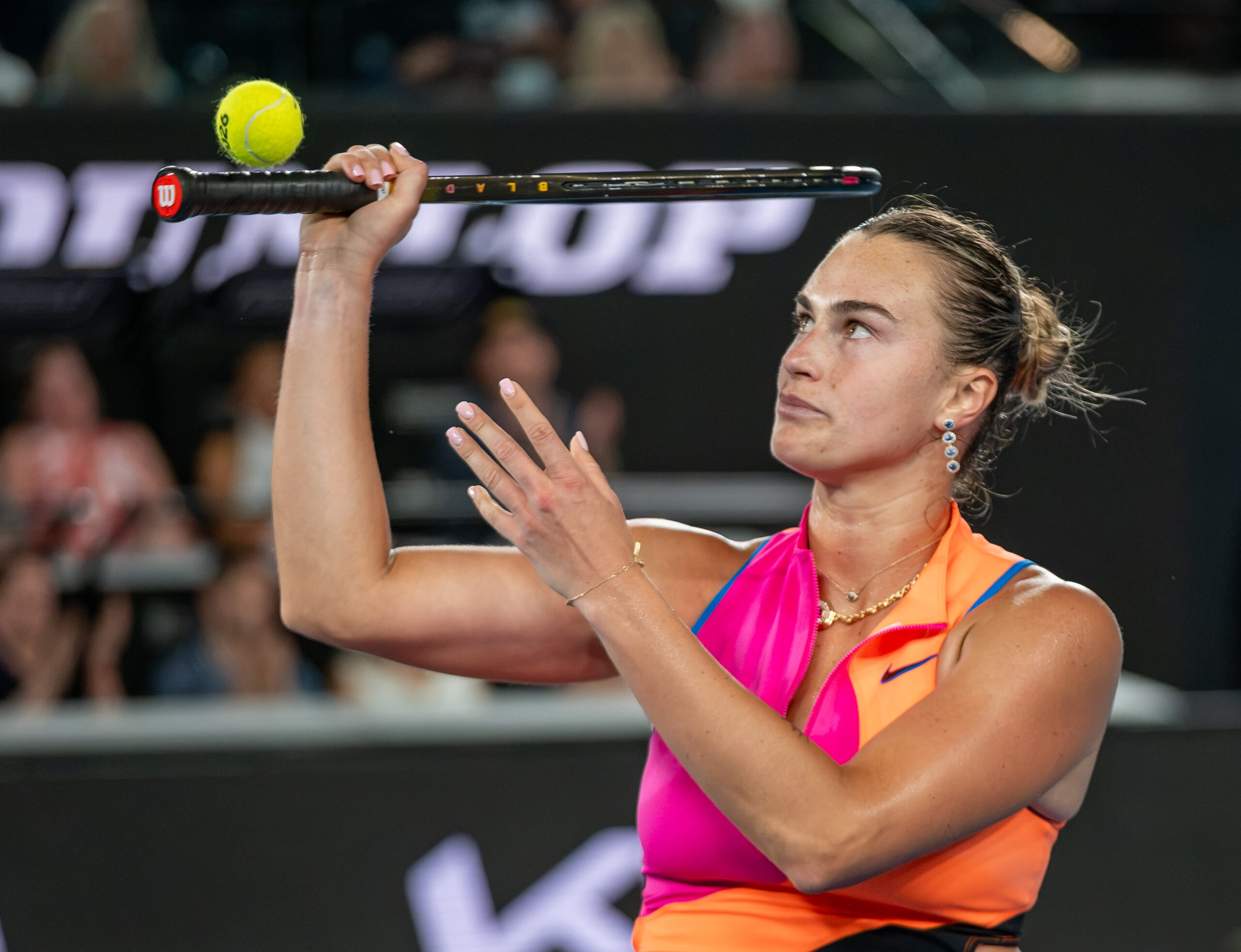
Aryna Sabalenka has become the first world No. 1 to publicly endorse the WTA’s mandatory genetic sex-testing policy, telling reporters in Toronto on Sunday that she would take the test without objection and that the rule was needed to protect fairness in the women’s game.
The Belarusian was asked about the policy at her pre-tournament news conference at the Canadian Open, the first WTA 1000 event staged since the rule took effect. She said the biological strength difference between men and women would make it unfair for a woman to face a biological man, that the tour had taken a while to reach the decision, and that she supported the outcome. Asked whether she objected to being screened herself, she said she would do it gladly, adding that “it’s pretty fair, and let’s keep it that way.”
The rule requires every player to complete a one-time screening for the SRY gene, a segment of the Y chromosome associated with male-typical development, by cheek swab, blood or saliva sample. A negative result clears a player immediately. A positive result routes her into further medical assessment, conducted by the tour’s own staff, and a player can be cleared to compete in the women’s category if she can demonstrate a recognized difference of sex development. The requirement applies at every WTA tournament, including the four Grand Slams.
It replaces an eligibility framework under which transgender women could compete after declaring their gender as female and keeping testosterone below a set threshold for at least two years. In practice the change is prospective rather than corrective: no transgender women are known to be competing on the WTA Tour.
Sabalenka’s endorsement is the most significant on-the-record comment from a leading player since the policy surfaced last month, and it lands in a debate that has so far been driven mostly by voices outside the locker room. Martina Navratilova welcomed the change while noting she had no role in drafting it. Billie Jean King has long described the exclusion of transgender athletes from sport as discriminatory. Human rights organizations and some medical experts have questioned whether a single gene marker can capture the complexity of human sex development, and have warned that the athletes most exposed are women with differences of sex development who have competed as women their entire lives.
Several practical questions remain unanswered. The tour has not publicly described where and when testing takes place, who holds the samples and results or for how long, what sanction follows a refusal, or whether any independent body hears an appeal against a positive finding. Nor has it set out whether players or medical experts were consulted before the board approved the change, a gap that sits awkwardly alongside a wider player campaign for a greater say in decisions that affect them. Those open questions have not been narrowed since the policy was introduced.
Sabalenka has taken this position before, having argued in interviews that allowing transgender women into the women’s category creates an uneven contest. What is new is the setting. She is the world No. 1 speaking at the start of the North American hard-court swing, with every top-10 player either in Toronto this week or bound for Cincinnati, which means she has effectively opened the question to the rest of the field.
Her own week begins Tuesday after a first-round bye in the Toronto draw, at an event she skipped last year. She arrives after a fourth-round exit at Wimbledon, where she lost to Naomi Osaka, and said she had gone back to basics on the practice court, rebuilding through cross-court rallies and baseline patterns rather than the variety she had been experimenting with on clay and grass. All four of her major titles have come on hard courts, and she is the two-time defending champion at the US Open, where she will also play mixed doubles alongside Novak Djokovic.
The immediate test of how far Sabalenka’s comments travel comes over the next fortnight. Toronto and Cincinnati put the entire top 10 in front of daily news conferences for the first time since the rule landed, and the players who have not yet been asked about it are about to be.