

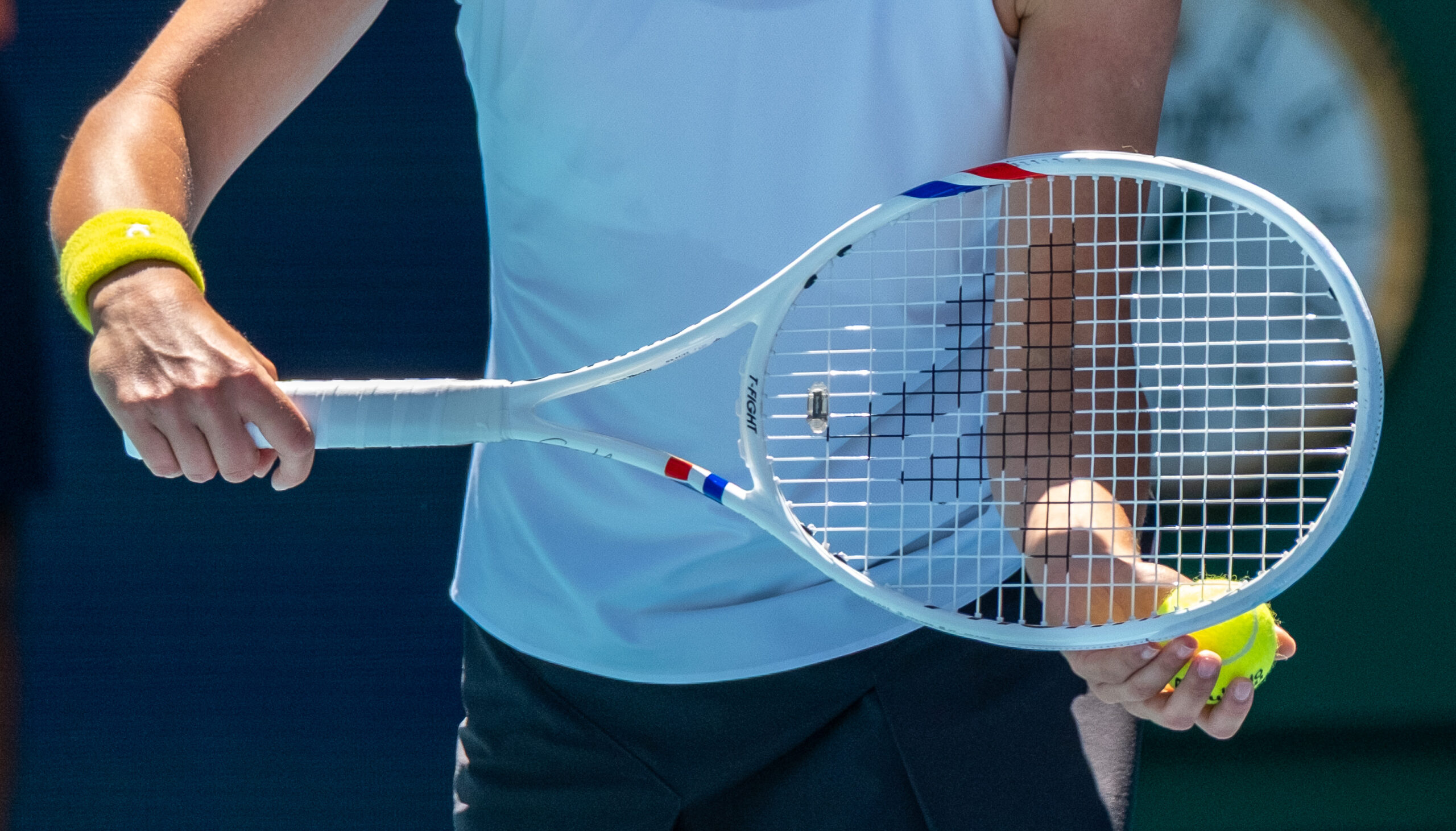
Linda Noskova won Wimbledon a fortnight ago. This week she found herself illustrating a story she had nothing to do with. The 21-year-old Czech publicly questioned why her photograph had been attached to coverage of the WTA’s new mandatory genetic sex-testing policy, asking why she was there at all.
It was brief, and it was not a comment on the policy itself. But it is the first time a leading player has been visibly drawn into a rule change that now governs every woman on tour — and it points at the thing the WTA has been least willing to discuss, which is how any of this was arrived at.
The policy, in brief: every WTA player must complete a one-time SRY gene test — cheek swab, blood or saliva — to be eligible for the women’s category. A negative result clears a player immediately; a positive result triggers further medical assessment. The rule applies at all WTA events including the four Grand Slams. Full detail in our explainer: WTA Genetic Sex Testing: SRY Gene Policy Explained.
What the tour has said, and what it hasn’t
There was no press release. The change reached the public as a website update and was surfaced by the tennis press rather than announced. The WTA has not set out its reasoning publicly, has not said whether it consulted medical experts before adopting the mandate, and has not said whether it consulted players.
Its formal statement runs to a few lines: the eligibility policy has existed since 1975, is reviewed periodically, and the board approved an updated version for 2026 based on biological sex after weighing changing standards elsewhere in women’s sport. The tour has called it a sensitive and complex matter and promised players will be treated with dignity.
That is the entirety of the public case for the most significant change to the WTA’s eligibility rules in a generation. Even the policy’s most prominent supporter appears to have been outside the process. Martina Navratilova, who welcomed the move, was careful to note she had no hand in drafting it.
There is also confusion about when the rule began. Coverage has placed the effective date at 21 July. The document circulated to players carries a commencement of 1 July. For most of this month the WTA’s own rulebook pointed only to an eligibility policy available on request from its legal department, while the version linked on the public rules page dated from October 2024.
What players still don’t know
The practical questions are not small ones, and none of them currently has a public answer.
Where and when does testing happen? — at tournaments, through national federations, or somewhere else? Who holds the sample and the result, and for how long? The WTA has said screening will proceed with confidentiality and data-privacy safeguards, but has not described them.
What does refusal actually cost? Players are understood to be signing documentation acknowledging that declining to be tested may bring disciplinary action. The scale of that sanction has not been set out.
And who hears an appeal? A positive result routes a player into medical assessment conducted by the WTA’s own staff. There is no publicly described independent review, which matters most for the group least likely to have seen it coming: women with differences of sex development who have competed as women their whole lives and may learn something about their own biology from a tour-administered swab. More than 80 human-rights and sport advocacy organisations raised versions of these objections with the International Olympic Committee in March.
A consultation fight already under way
The timing is awkward for the WTA in a way that goes beyond this policy. Player representatives are in the middle of a bruising negotiation with the Grand Slams over prize money and revenue sharing — a campaign in which one of the three stated demands is a greater say in decisions that affect players, from scheduling to rule changes. Roland Garros broke ranks on that last week by tabling a revenue-share offer that included consultation commitments, and the US Open is under pressure to follow.
Against that backdrop, a rule requiring every woman on tour to submit a DNA sample, introduced by website update with no stated reasoning, is a difficult exhibit for anyone arguing that players are adequately consulted. The WTA has framed the policy as bringing tennis into line with World Athletics, World Boxing and the IOC. On the substance, that is accurate. On the process, the tour has so far declined to make any case at all.
Noskova’s question was about a photograph. The one the rest of the locker room is asking is who got asked.