

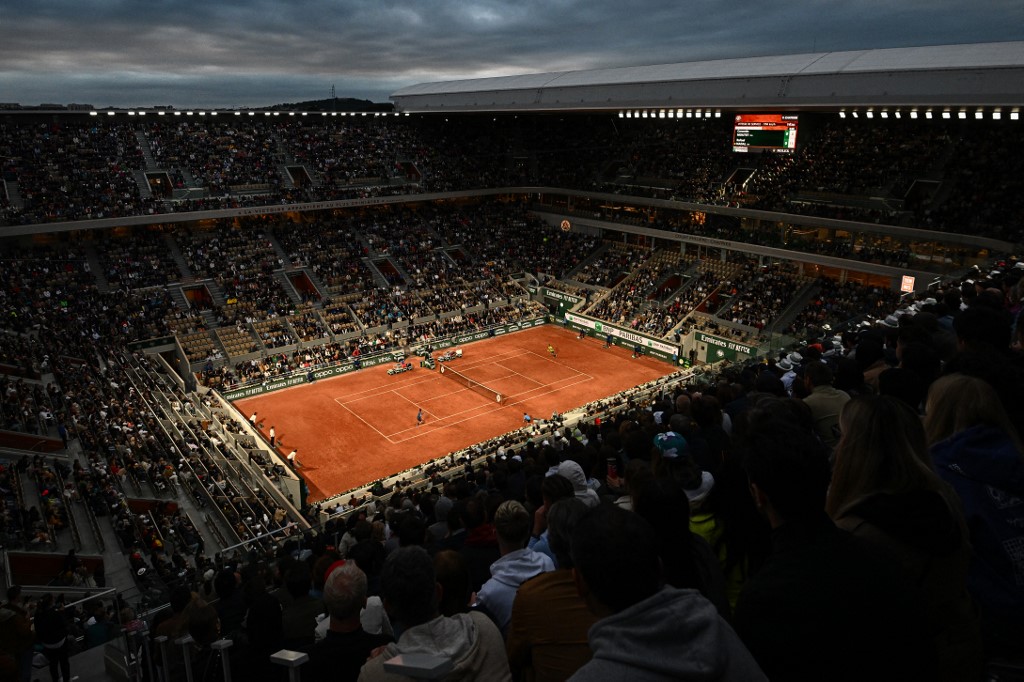
The financial standoff between the world’s leading players and the four Grand Slams has reached a decisive phase, with Roland Garros emerging as the first major willing to tie prize money to a share of its revenue — and the US Open now squarely in the players’ sights.
According to reporting from The Athletic and the Guardian on Tuesday, the French Tennis Federation (FFT) has put a concrete proposal to the player group led by veteran sports executive Larry Scott, addressing all three of the demands top players have pressed for more than a year. The offer, understood to have been tabled around the time of Wimbledon, includes a prize-money formula that links player compensation to the tournament’s financial performance — a first among the Slams.
The breakthrough matters because it cracks a united front. All four majors have previously argued that revenue is the wrong basis for calculating prize money, on the grounds that it ignores reinvestment into facilities and the wider game — a case both the All England Club and the FFT have made publicly. Roland Garros putting numbers on the table — even numbers that, per those briefed, still fall short of the players’ targets — isolates the other three.
The player coalition, whose signatories include Jannik Sinner, Carlos Alcaraz, Aryna Sabalenka, Coco Gauff, Iga Swiatek and Jessica Pegula, has asked each Slam to guarantee prize money worth at least 16 per cent of tournament revenue this year, rising to 22 per cent by 2030; to contribute $4 million a year to player pension and healthcare; and to create player councils with a say over scheduling and operations. Players estimate their current share sits around 15 per cent, against roughly 22 per cent at tour-level events.
That is where the US Open comes in. The USTA is due to announce its prize fund in early August and is expected to lift it by around 20 per cent, to roughly $100 million, preserving its status as the richest Slam. But money alone may not settle it. The player group has trained its leverage on the US Open’s revamped mixed doubles event — the glossy, star-driven centrepiece of a lucrative Fan Week, staged just before the main draw with a $1 million winner’s cheque.
Sinner is among those weighing whether to skip the mixed doubles under the current arrangement, with others prepared to follow, according to The Athletic. For an event that has already sold thousands of premium tickets on the promise of singles stars, a partial withdrawal would be an acute embarrassment. Pegula led a 4 July meeting in London with USTA chairman Brian Vahaly and new tournament director Eric Butorac; both sides reported progress, but the USTA has not committed to a revenue-sharing formula, and the players have not withdrawn the threat.
Complicating the timing, Craig Tiley — the former Tennis Australia chief regarded as one of the sport’s more player-friendly administrators — only took over as USTA chief executive on Monday. He declined to engage with the group on revenue sharing last year, and Vahaly and Butorac had told players the USTA could make no firm commitment until he was in post.
The Slams’ counter-argument is reinvestment. The US Open points to an $800 million Arthur Ashe Stadium renovation and a new player facility; the FFT cites its non-profit status and recent facility spending. In 2024, the most recent year for which figures are available, the USTA reported around $560 million in tournament revenue — meaning its 2025 prize pool of $85 million equated to just over 15 per cent.
Wimbledon raised its 2026 prize money 20 per cent to about $86 million, and the players acknowledged the gesture while noting it came without a revenue-share commitment — which is why most maintained the media protest they began at Roland Garros, limiting pre-tournament availability to 15 minutes. A handful, including Alex de Minaur, opted out of that protest, citing the increase as a sign of progress.
For now the players are holding firm on a structural fix rather than one-off raises. With Roland Garros breaking cover and the US Open’s showpiece exhibition exposed as a pressure point, the leverage has shifted — and the biggest names in the sport know it.