

Update — Aug. 25, 2026: Three of the eight free days have now been used. Fan Week opened Sunday with Arthur Ashe Kids’ Day, singles qualifying began Monday and runs through Friday, and the mixed doubles championship is being played Tuesday and Wednesday, with the Louis Armstrong Stadium matches free to attend on a grounds pass and Arthur Ashe ticketed separately. That split is the same one that will apply on Sept. 10: the grounds are open, the stadium is not. The tournament has still not said whether the Fan Access Pass requirement described below extends to Open for All Day, and it remains the one detail a spectator planning for Sept. 10 cannot yet settle. Five free days remain, four of them in Fan Week through Saturday.
Update — Aug. 22, 2026: Fan Week opens Sunday, and the Fan Access Pass requirement noted below has produced confusion worth clearing up. A closure notice on the USTA’s Fan Access Pass hub has circulated this week as evidence that pass registration had shut and the free days were full. It has not: that notice is scoped to RSVPs for three capacity-limited special events inside Fan Week, and the pass registration form was still open and accepting entries on Saturday morning. Full detail in our guide to what the Fan Access Pass actually requires.
The US Open will admit spectators to its grounds free of charge on eight of the 22 days it stages this year, and the last of those eight falls deep inside the main draw, on the Thursday the women’s singles semifinals are scheduled to be played. The tournament calls it Open for All Day. It lands on Sept. 10, in the second week of a main draw that begins Aug. 30 and closes with the men’s final on Sept. 13. Grounds admission that day costs nothing. It is the only day of the championship proper on which that is true.
The other seven free days are established practice. Fan Week runs Aug. 23 through Aug. 29 and carries free grounds admission throughout, covering the qualifying tournament, open practice sessions, Arthur Ashe Kids’ Day and the mixed doubles championship. That model is well understood and has become an attraction in its own right. What is newer is the extension of the same idea into the fortnight itself, when the USTA Billie Jean King National Tennis Center turns into one of the most expensive sports venues in the world.
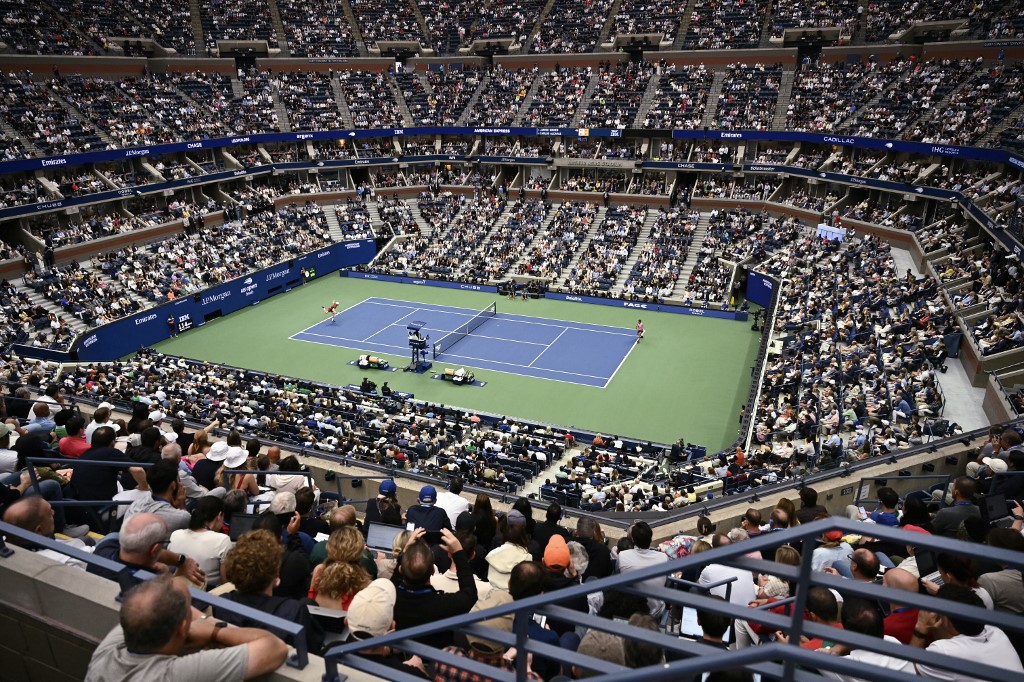
The distinction that matters is between the grounds and the stadium. Free entry on Sept. 10 covers the site. It does not cover Arthur Ashe Stadium, where the women’s semifinals are scheduled as an evening session. A spectator walking in without a ticket that day reaches the outside courts, the practice courts, the plazas and the video screens, but not the two matches that decide who plays for the title on Saturday. The tournament has not yet published what will be programmed on the outside courts that afternoon, and by the second Thursday both singles draws are down to four players.
This is the largest edition the tournament has staged. Twenty-two days of competition and entertainment across three weeks is the longest schedule in an event approaching its 150th year. Arthur Ashe Kids’ Day has moved to the opening Sunday of Fan Week rather than standing as a separate fixture. The mixed doubles championship, reformatted in 2025, has added a qualifying competition. Every one of those changes points the same direction: more days, more access, and more reason to come to Flushing Meadows before the tennis people pay for begins.
One condition has tightened. Spectators aged 18 and over now need a free Fan Access Pass, registered through the tournament’s app, to enter the grounds during Fan Week. It costs nothing, but it is no longer possible to simply walk up to the gate. Whether the same requirement applies on Sept. 10 has not been stated.
The commercial reasoning is not complicated. Free admission produces no ticket revenue, but it fills the grounds with people who buy food, merchandise and access to sponsor activations, and it introduces the tournament to an audience that would not otherwise pay several hundred dollars to attend. Qualifying weekends have drawn tens of thousands across four days. Extending the principle to a single day inside the main draw is a modest experiment by comparison, though it costs a day of grounds-pass sales at the point in the fortnight when demand is at its highest.
By Sept. 10 the tournament will have answered most of its questions. Aryna Sabalenka will either still be defending the title she won in each of the last two years or she will not. Novak Djokovic, chasing a 25th major at 39, will have played his quarterfinal two days earlier. The American contingent will have thinned, and the wild cards handed out across the summer will have been spent. Roger Federer’s exhibition return to Arthur Ashe during Fan Week has already sold out, and his Hall of Fame induction in Newport falls the day before the main draw begins.
For a New York audience the practical read is narrow and useful. There are eight days this year on which the gates open for nothing. Seven of them arrive before a single main-draw point has been struck, when the players on court are ranked between roughly 100 and 250 in the world and the grounds are close to empty by August standards. The eighth arrives when four women are left in the draw and the tennis that matters is behind a door the free pass does not open.