

Update — Aug. 22, 2026: Fan Week 2026 opens Sunday, Aug. 23 and runs through Saturday, Aug. 29. Two clarifications for this year. Arthur Ashe Kids’ Day has moved to the opening day of Fan Week, Sunday, Aug. 23 — an earlier section below still describes it as falling on the Saturday, which was the pre-2026 fixture. And every adult now needs a free Fan Access Pass to enter the grounds; a closure notice circulating this week refers to RSVPs for three capacity-limited special events, not to pass registration, which remained open on Saturday morning. See our full guide to the Fan Access Pass.
For most of its history, the US Open began on a Monday in late August and ran for 14 days. From 2025 onwards, this is no longer true. The tournament now operates on an expanded 15-day format that begins on a Sunday, preceded by a “Fan Week” of free, public-access tennis and entertainment at the USTA Billie Jean King National Tennis Center. The combined format — Fan Week plus the main draw — runs for 21 days, making the US Open the longest-format Grand Slam in the calendar.
Here is the complete story of what Fan Week is, how the 15-day format works, and why the USTA’s reshaped tournament calendar has become one of the most ambitious commercial expansions in modern Grand Slam tennis.
What Fan Week Is
Fan Week is the period of free public access at the USTA Billie Jean King National Tennis Center in the week immediately before the US Open main draw begins. Its length has changed. In 2025 it ran six days, from Monday, August 18 through Saturday, August 23, with the main draw starting the following day. For 2026 the USTA expanded it to seven days, running Sunday, August 23 through Saturday, August 29, with the main draw beginning Sunday, August 30. The tournament now bills Fan Week as Week 1 of the US Open rather than a preamble to it, and the full event spans 22 days.
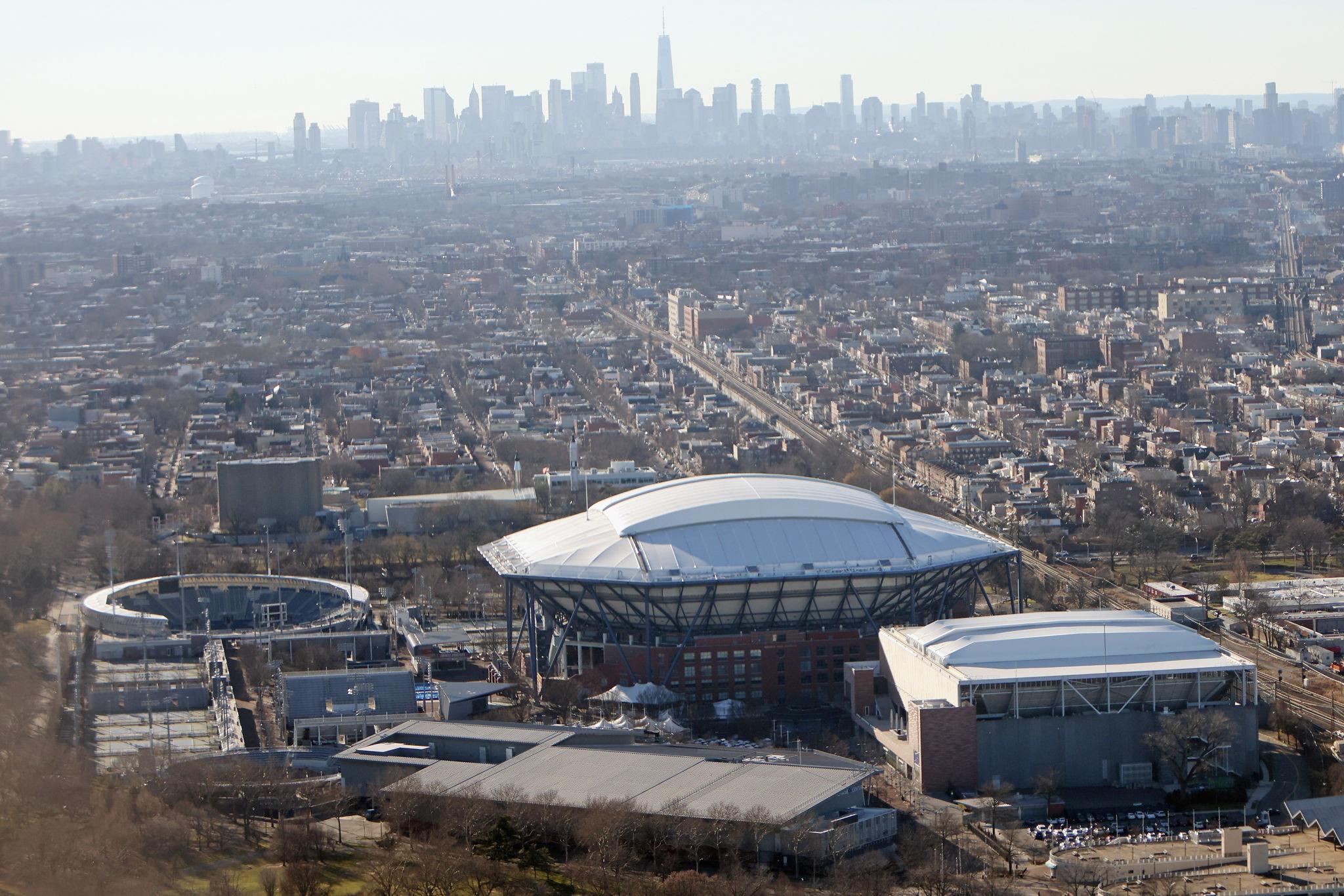
Throughout Fan Week, grounds admission to the USTA Billie Jean King National Tennis Center is free. Anyone can walk onto the grounds without buying a ticket, though from 2026 the USTA requires every visitor aged 18 and over to register for a free Fan Access Pass through the tournament app before entering. The pass costs nothing, and it opens a site that during the main draw is one of the most expensive sports venues in the world. The result is a week-long stretch in which the facility transforms into something closer to a public summer festival than a competitive tennis tournament.
Several specific events anchor Fan Week each year. The qualifying tournament — a 128-draw competition for both men and women, played for the final 16 spots in the singles main draws — runs through the first four days of Fan Week. Players ranked roughly 100 to 250 in the world compete on the field courts of the National Tennis Center, with free public admission. For tennis fans who want to see elite-level professional competition without paying main-draw ticket prices, qualifying matches at the US Open are one of the most accessible viewing experiences in the international calendar.
The revamped US Open Mixed Doubles Championship, restructured for the 2025 tournament, plays during Fan Week. The 32-team competition runs across two days (Tuesday and Wednesday of Fan Week), with semifinals and the final all played on Arthur Ashe Stadium across that 48-hour span.
The 2025 prize money for the winning pair was $1 million — the same as men’s and women’s doubles champions earn in the main draw. The mixed doubles event also features a deliberately star-studded field. The 2025 edition attracted nine of the world’s top ten men and nine of the world’s top ten women, including Coco Gauff and Iga Świątek, and was won by defending champions Sara Errani and Andrea Vavassori.
Arthur Ashe Kids’ Day, the long-running family event held annually at the USTA Billie Jean King National Tennis Center since 1997, takes place on the Saturday of Fan Week. The event combines tennis clinics, live performances, and educational activities, with proceeds supporting the National Junior Tennis and Learning network — the program Arthur Ashe co-founded to provide tennis access to underserved youth. The 2024 edition drew a record 47,875 attendees.
Other Fan Week events have evolved across the years. The 2025 tournament introduced the first-ever US Open Silent Disco at the Fountain Plaza, with three DJ-led music streams playing simultaneously on Monday evening of Fan Week. The Stars of the Open exhibition, a ticketed event benefiting the USTA Foundation, brings together current top players and former champions for a single evening of doubles tiebreaks played on Arthur Ashe Stadium with all participants microphoned for broadcast. The 2025 Stars of the Open featured Coco Gauff, João Fonseca, Andre Agassi, Venus Williams, John McEnroe, Andy Roddick, and Juan Martín del Potro alongside two-time World Cup winner Alex Morgan.
How the 15-Day Format Works
The 2025 US Open marked the first time the main draw expanded to 15 days. The change added a Sunday start to the schedule — the day before what had historically been the traditional Monday opening — and produced an extra day of opening-round play. The tournament now runs from the Sunday following Fan Week through the second Sunday two weeks later, with the men’s singles final closing the event on the second Sunday. Labor Day itself now falls in the middle of the main draw rather than on finals weekend; in 2026 it lands on Monday, September 7, during the round of 16.
The 2026 schedule shows the pattern in its current form:
- Fan Week: Sunday, August 23 to Saturday, August 29
- Qualifying: Monday, August 24 to Thursday, August 27
- Main draw begins: Sunday, August 30
- First round runs through Tuesday, September 1 (three days of opening-round play instead of the previous two)
- Subsequent rounds proceed at one round per day through the second week
- Women’s singles final: Saturday, September 12
- Men’s singles final: Sunday, September 13
The additional opening-round day means that first-round matches are spread across three days rather than two — reducing the daily match-load on individual show courts and giving the broadcast schedule more flexibility for marquee matches. The change has also produced a slightly less compressed opening week for players, with longer recovery windows between early-round matches.
For ticket holders, the 15-day format effectively adds one extra Sunday session to the calendar. Sunday tickets for the opening round have become a new entry point for fans who previously would have found the Saturday end of Fan Week to be their last cheap option before main-draw prices kicked in.
The Commercial Logic Behind the Expansion
The USTA’s decision to expand the US Open from 14 to 15 days, and to formalise Fan Week as a marketed and branded program, expanded to seven days for 2026, was driven by a clear commercial logic. The combined effect of the two changes has been to extend the US Open’s commercial reach across nearly three weeks each year — and to generate revenue streams that did not previously exist.
The Fan Week qualifying tournament has become a substantial draw on its own. Free public admission means there are no ticket revenues from qualifying — but the foot traffic those days generate produces significant on-site revenue from food and beverage concessions, merchandise sales, and brand activations. The 2025 qualifying weekend drew tens of thousands of spectators across its four days.
The Mixed Doubles Championship, restructured to feature the world’s top singles players, has produced a new ticketed event that did not previously exist in its current form. The 2025 mixed doubles competition sold out Arthur Ashe Stadium for both nights and drew significant television audiences — generating not just direct ticket revenue but also new sponsorship inventory for partners like Vital Proteins.
The Stars of the Open exhibition has been a similar commercial success. The single-evening event, ticketed at a price-point that allows fans who can’t afford main-draw show court tickets to experience Arthur Ashe Stadium, has become a reliable annual draw for the USTA Foundation. In 2026 the ticketed side of Fan Week extends further still, with Roger Federer appearing at Arthur Ashe on Aug. 25 before his Hall of Fame induction in Newport on Aug. 29, the day before the main draw begins.
The expansion of the main draw to 15 days produced an additional day of broadcast inventory for ESPN, generating substantial incremental rights value as part of the broader US Open ESPN deal. The additional Sunday session also produced incremental ticket sales — with Sunday opening-round seats now available where previously the tournament began on the following day.
Why the USTA Made the Change
The broader reasoning behind the expansion is structural. The other three Grand Slams operate on roughly comparable two-week structures, with limited pre-tournament public access. Roland Garros has a similar qualifying week but with less elaborate fan programming. Wimbledon’s qualifying takes place off-site at Roehampton. The Australian Open has its “Summer of Tennis” festival programming around the main draw but no equivalent formalised “Fan Week” branding.
The USTA, by creating Fan Week and then expanding the main draw, has positioned the US Open as the longest, most accessible, and most commercially varied Grand Slam in tennis. The combination of free public access during the qualifying week, premium-priced main-draw tickets across 15 days, and a star-led mixed doubles championship that bridges the two has produced something that no other major has matched.
The strategic implication is that the US Open is no longer competing only with the other Grand Slams for global tennis attention during its specific two weeks each year. It is competing more broadly — for three weeks of New York’s late-summer attention, for a share of the broader American sports calendar in late August and early September, and for the cultural relevance that comes from being not just a tennis tournament but a city-wide event with its own programmed festival.
How Fan Week Differs From the Main Draw
For most casual visitors, the distinction between Fan Week and the main draw matters in practical terms. The two periods offer fundamentally different experiences.
During Fan Week:
- Grounds admission is free, with a Fan Access Pass required for ages 18 and over
- Qualifying matches feature lower-ranked players competing for main-draw spots
- The atmosphere is festival-oriented, with music, food, and family-friendly programming
- Top players are typically present for practice sessions but do not compete in qualifying
- The Mixed Doubles Championship and Stars of the Open are ticketed events open to the public
- On-site sponsor activations, merchandise stores, and concessions are open
During the main draw:
- Tickets are required for all access, ranging from $20 grounds passes to $5,000+ Arthur Ashe Stadium seats for the finals
- The world’s top players compete in the singles main draw across 15 days
- Night sessions on Arthur Ashe Stadium begin at 7:00 p.m. and frequently run past midnight
- Atmosphere shifts to the more intense, higher-stakes character of Grand Slam competition
The financial gap between the two experiences is substantial. A family of four can spend a full Saturday at Fan Week — watching qualifying matches, enjoying food and music, and experiencing Arthur Ashe Stadium during a Mixed Doubles session — for less than the price of a single second-week reserved seat in the main draw. The accessibility gap is, in many ways, the point. Fan Week is the US Open’s most concrete demonstration that the tournament aspires to be available to a broad audience, not just to those who can afford main-draw prices.
What to Expect at Fan Week
For first-time visitors, the practical guide to Fan Week is simple. It opens on the Sunday with Arthur Ashe Kids’ Day, which moved to the first day of Fan Week in 2026 after years as a separate fixture. Billed as the largest grassroots tennis event in the world, it is free to attend and built around family activities across the grounds and a stadium show inside Arthur Ashe. The qualifying tournament begins the following day and runs Monday through Thursday. Grounds admission is free across all seven days, though specific ticketed events, including the Mixed Doubles Championship and Stars of the Open, require purchase.
Players, including some of the tournament’s eventual main-draw entrants, practice on the practice courts throughout the week. Fans can typically watch players practice from designated viewing areas — often as close to the players as any spectator gets all year. The combination of free admission and practice court access has made Fan Week one of the best opportunities to see professional tennis players up close in the international calendar.
The on-site experience extends beyond tennis. Concession stands are open. Sponsor activations including the American Express Fan Experience are running. Restaurants and bars across the grounds serve from morning through the evening. The Fountain Plaza becomes a programming hub with music, family activities, and casual events. The overall atmosphere is more relaxed and exploratory than the focused intensity of main-draw competition.
The Bottom Line
US Open Fan Week and the 15-day main draw together represent one of the most ambitious commercial expansions in modern Grand Slam tennis. The USTA has, in the space of a few years, transformed what was a two-week competition into a three-week public event — with free public access during the first week, premium ticketed access during the main draw, and a structurally different commercial model from any other Grand Slam. For 2026 the USTA has extended the principle one step further, adding a single free-admission day inside the main draw itself on Thursday, Sept. 10.
The strategic ambition behind this expansion is to make the US Open more than a tennis tournament. The USTA wants the event to be a New York summer institution — programmed for families, accessible to broad audiences, and culturally distinct from the more exclusive character of Wimbledon, Roland Garros, and the Australian Open.
Whether this approach maintains the competitive integrity that defines the Grand Slam experience remains a subject of ongoing discussion within tennis. What is clear is that the US Open is no longer playing the same game as the other three majors. It has, deliberately and successfully, become its own kind of event — and Fan Week is the most visible expression of that institutional choice.