

The US Open mixed doubles championship seeds its teams by combined singles ranking. By Tuesday evening, three of the four seeded teams were out in the first round, the defending champions were out in the first round, and the two players ranked No. 1 in doubles were out in the quarterfinals. Whatever that seeding method measures, it is not measuring who wins this tournament.
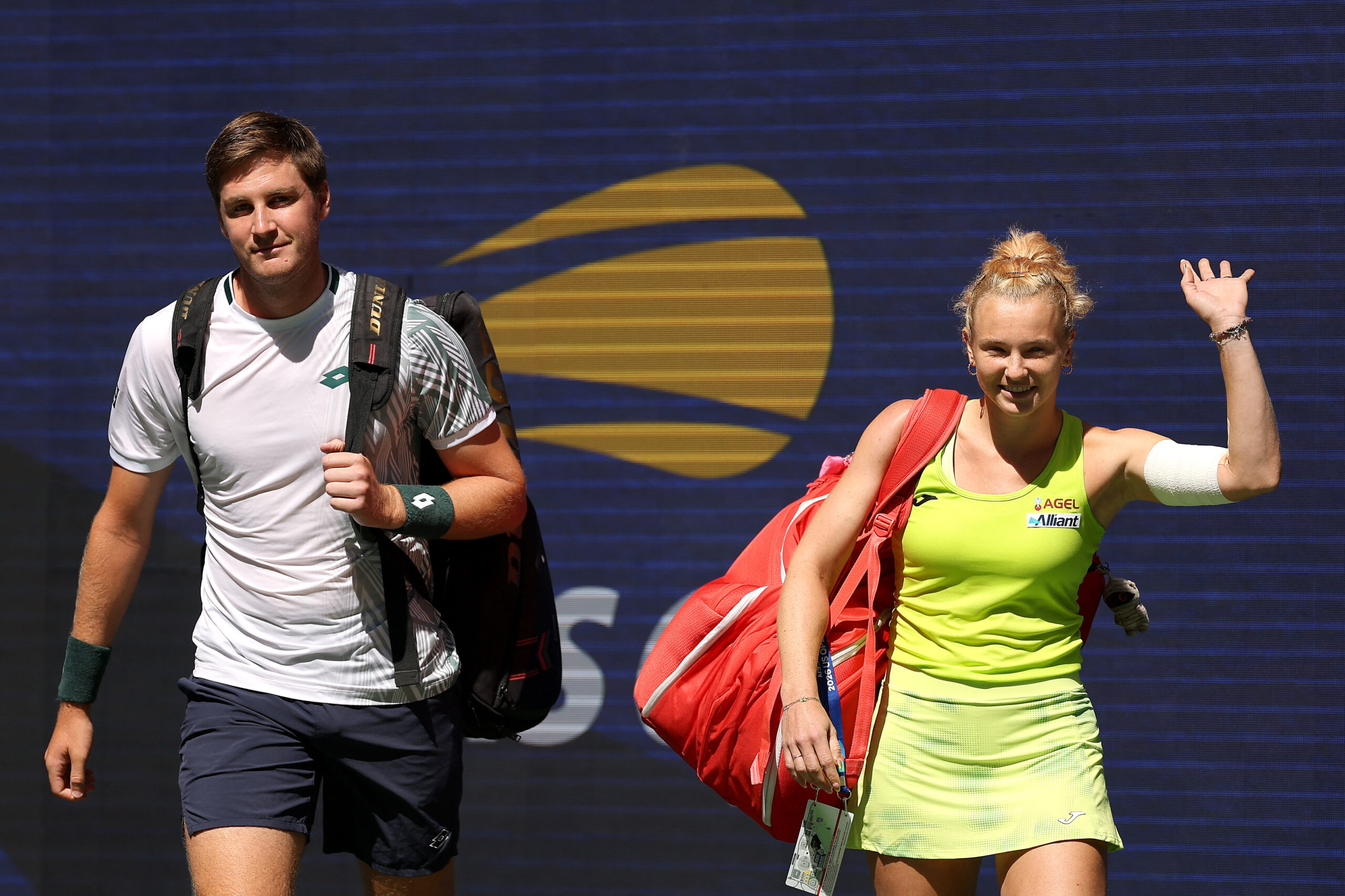
The top seeds went first. Aryna Sabalenka and Novak Djokovic lost to Katerina Siniakova and Henry Patten 1-4, 4-2, 10-2 in the opening match on Arthur Ashe Stadium, Siniakova closing it with an ace at Djokovic. The No. 2 seeds, Jessica Pegula and Taylor Fritz, lost to Diana Shnaider and Casper Ruud. The No. 3 seeds, Amanda Anisimova and Learner Tien, lost to Emma Navarro and Tommy Paul. Sara Errani and Andrea Vavassori, champions in each of the last two years, lost to Mirra Andreeva and Andrey Rublev. Only the No. 4 seeds, Belinda Bencic and Flavio Cobolli, survived the day, and they did it by ending the run of Serena Williams and Carlos Alcaraz.
A method that has now missed twice. When the event was rebuilt last year, the complaint from doubles players was that a field selected on combined singles ranking would squeeze specialists out in favour of singles names. The specialists then won it anyway. This year the criticism has been answered from the opposite direction: every specialist team was gone before the semifinals, and so were three of the four teams the ranking system had identified as strongest. A seeding method that fails in both directions in consecutive years is not unlucky. It is measuring the wrong thing.
What four-game sets actually do. Matches from the first round through the semifinals are best of three sets to four games, with no-ad scoring and a tiebreak at 4-4. A third set is replaced by a match tiebreak to 10. In that structure a single break of serve settles a set, and a handful of deciding points settle a match. Patten, whose team removed the top seeds and then lost in the quarterfinals themselves, described the effect precisely afterwards: “one bad game and all of a sudden the first set’s gone.” Compress a match that far and the difference between the best team in the field and the fifth-best has nowhere to express itself. The format does not identify the strongest pair. It manufactures variance, which is a different product and, for two nights in Fan Week, arguably the more entertaining one.
The tournament’s own tell. The final does not use that format. Wednesday night’s championship match reverts to sets of six games with a tiebreak at 6-6, keeping only the no-ad scoring and the match tiebreak. The USTA has built a two-day event on short sets and then declined to decide the title with them. That is a reasonable instinct and also an admission: the short format is for the show, and the long one is for the result.
There is an irony in the first casualty. Djokovic has publicly argued for shorter sets and no-ad scoring as a way to modernise the sport. He lost his only match at this year’s US Open to exactly that.
None of which means the redesign has failed on its own terms. It was built to draw singles stars into an event that had been drifting, and the draw delivered them: the semifinal field contains four of the top 12 in the WTA rankings. The crowds have come, the ESPN slots have been filled, and the winning pair collects $1 million on Wednesday night. Judged as a commercial exercise, it is working. Judged as a competition, it is closer to a well-attended coin toss.
What is left is a semifinal pairing of Elina Svitolina and Gaël Monfils against Bencic and Cobolli, and Karolina Muchova and Jakub Mensik against Andreeva and Rublev. Svitolina and Monfils are married, and Monfils is playing his final Grand Slam before retirement. A first major title for either of them would be a genuinely good story. It would also be a story about a format in which the seedings stopped predicting anything two years ago.