

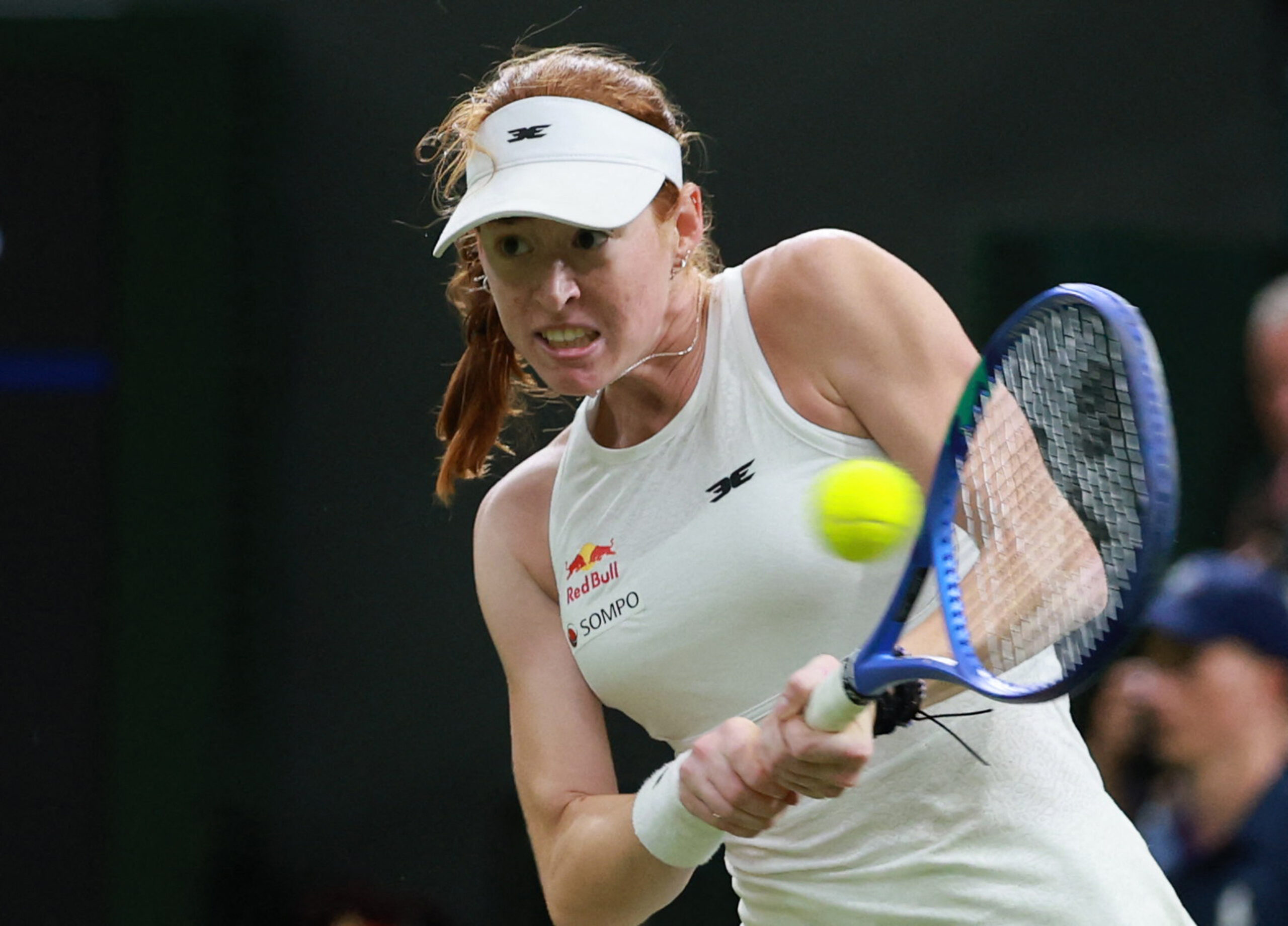
Maya Joint’s win over Serena Williams at Wimbledon on Tuesday arrived seven months into the worst slump of her career. The 20-year-old Australian reached a career-high ranking of No. 28 in February. By June, an 11-match losing streak — including a first-round exit to Emiliana Arango at her title defense in Eastbourne — had dropped her out of the world’s top 80. She enters the second week of Wimbledon ranked No. 87.
The win. Joint beat the 44-year-old Williams 6-3, 6-7(6), 6-3 in two hours and 22 minutes on Centre Court, saving a match point in the second-set tiebreak before closing out the third. It is her first tour-level main-draw win since the slump began.
The context most coverage is skipping. Williams’s comeback — her first singles match since the 2022 US Open — has dominated the story, and understandably so. But the more interesting tennis question is what Joint’s win says about her own trajectory. This was not a young player rising in a straight line to an upset. It was a player who had lost 11 of her previous matches finding her form against one of the most decorated athletes in the sport’s history, on the surface where she has traditionally been strongest — Joint is 5-3 for her career on grass, her best surface winning percentage.
What’s next. Joint faces Alexandra Eala in the second round — a rematch of last month’s Eastbourne final, which Joint won in three sets after saving four championship points. That match will be a clearer signal than Tuesday’s result of whether the win over Williams was a turning point or an outlier.
Background. Born in Grosse Pointe, Michigan, Joint switched allegiance to Australia in 2023 to train at Tennis Australia’s National Academy in Brisbane, following the nationality of her father, a former professional squash player. She turned professional in December 2024 rather than take up a scholarship at the University of Texas.