

Every Grand Slam has a main show court whose architecture, history, and competitive significance make it more than simply the largest venue at the tournament. Centre Court at Wimbledon. Arthur Ashe Stadium at the US Open.
Rod Laver Arena at the Australian Open. Each of these courts carries the weight of its tournament’s identity — the place where the most important matches are played, the most significant moments occur, and the competitive history of the event is most completely written.
At Roland Garros, that court is Court Philippe-Chatrier. Named in 1988 after the man most responsible for transforming the French Open into the modern Grand Slam it became, Chatrier has hosted nearly a century of significant tennis — from the Four Musketeers era of the late 1920s through Nadal’s fourteen titles and the introduction of night sessions that have transformed the court’s competitive and commercial role in the twenty-first century.
Understanding Court Philippe-Chatrier — its physical design, its history, its recent transformation, and its specific role in the French Open’s identity — is understanding the physical center of the most distinctive Grand Slam in professional tennis.
The Physical Setting
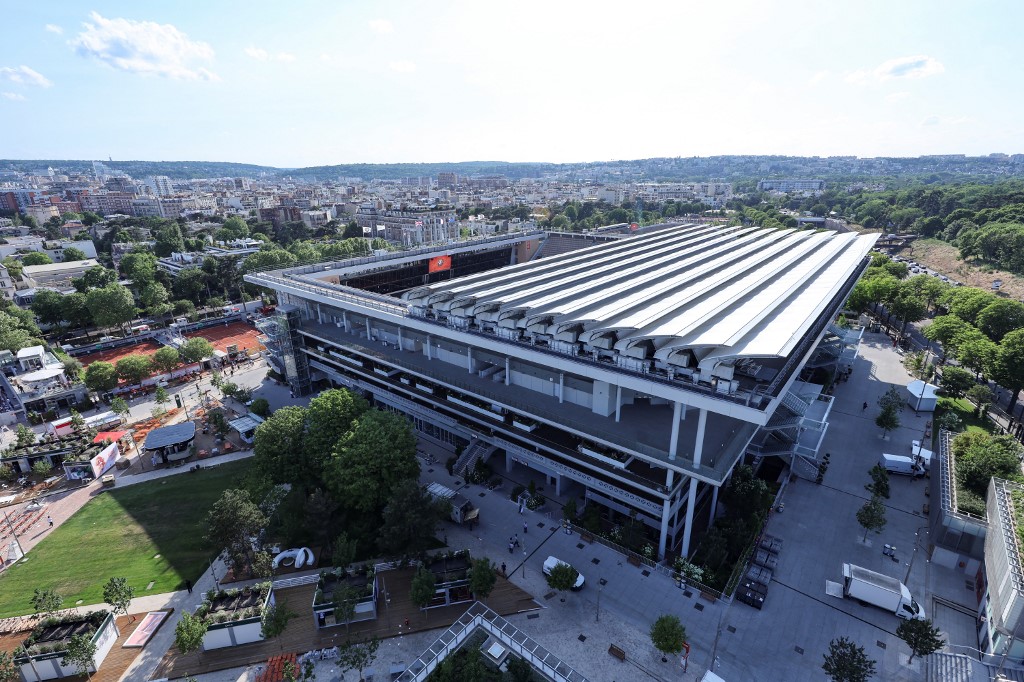
Court Philippe-Chatrier sits at the heart of the Roland Garros complex in the 16th arrondissement of Paris — adjacent to the Bois de Boulogne, one of the French capital’s largest parks, and surrounded by the broader tournament campus that has expanded significantly through the renovation and extension projects of the past two decades.
The court’s red clay surface — the same crushed brick composition that covers every match court at Roland Garros — is maintained by the groundskeeping team whose management of moisture content, surface packing, and day-to-day condition directly determines the playing characteristics that competitors and viewers experience.
The stadium that surrounds the court has been rebuilt and expanded multiple times since the original facility opened in 1928. The current configuration holds approximately 15,000 spectators — expanded through successive renovations from the original capacity that accommodated the Davis Cup matches for which the venue was constructed.
The seating wraps around the court in a configuration that creates a contained, intimate atmosphere despite the stadium’s capacity — the specific acoustic and visual environment that has made Court Philippe-Chatrier one of the most recognizable and most discussed competitive venues in professional tennis.
The orientation of the court — running roughly north-south, with the main stands on the east and west sides — determines the sun and shadow patterns that players manage across day session matches. The specific light quality at different times of day on Court Philippe-Chatrier has been a recurring topic in player discussions of the court’s playing conditions — the afternoon sun angle creating specific visibility challenges for certain shot types at certain points in the competitive day.
The History of the Court and Its Name
The court that bears Philippe Chatrier’s name has been the center of Roland Garros since the stadium was constructed in 1928 — built in approximately six months to accommodate France’s Davis Cup defense following their 1927 victory. Its original name was simply the Court Central — the central court of a new facility built for a specific competitive purpose rather than conceived as the permanent home of a Grand Slam tournament.
The renaming in 1988 honored Philippe Chatrier — a former French Davis Cup player who became the president of the French Tennis Federation in 1973 and held that position until 1993, simultaneously serving as president of the International Tennis Federation from 1977 to 1991.
Chatrier’s influence on professional tennis extended far beyond the French Open — he was instrumental in the establishment of the ATP rankings system, the expansion of the Grand Slam structure, and the broader commercial development of professional tennis as a global sport.
At Roland Garros specifically, Chatrier’s presidency transformed the French Open from a respectable but somewhat underdeveloped Grand Slam into a commercially sophisticated major tournament with expanded facilities, improved prize money, and the global broadcast reach that made it competitive with Wimbledon and the US Open in the commercial landscape of professional tennis.
The court naming in 1988 — during his presidency and at the height of his influence on the sport — was a recognition of his contribution to the tournament and to the sport more broadly.
The specific significance of naming the court after Chatrier rather than after a player — the approach taken by the Australian Open with Rod Laver Arena — reflects a specific institutional philosophy at Roland Garros about honoring administrative and developmental contribution alongside competitive achievement.
The Lenglen Court, the Mathieu Court, and the Chatrier Court together honor the sport’s great champion, the sport’s great women’s champion, and the sport’s great administrator — a combination that reflects the French Tennis Federation’s specific approach to institutional memory.
The Retractable Roof: Transformation of the Court
The most significant physical transformation in the history of Court Philippe-Chatrier was the installation of the retractable roof — completed in 2020 and first used for its intended purpose of enabling night sessions in 2021 — that resolved the court’s most significant operational limitation and changed the French Open’s competitive and commercial possibilities.
The engineering challenge of installing a retractable roof over Court Philippe-Chatrier was substantially more complex than the equivalent projects at other Grand Slams. The existing stadium structure — built in 1928 and expanded multiple times without a roof ever being considered — was not designed to support the loads that a retractable roof system requires. The surrounding Roland Garros campus — dense with other facilities, courts, and infrastructure — limited the engineering approaches available.
The solution involved a cable-supported roof structure that transfers loads to foundations outside the existing stadium walls — a design that avoided the need to replace the stadium’s existing structure while providing the weather protection that night sessions required.
The specific roof design — which closes in approximately eight minutes when weather requires — reflects the engineering constraints of the site and the operational requirements of a tournament that needs rapid weather response.
The roof’s visual impact on the Court Philippe-Chatrier experience is significant beyond its operational function. The closed roof creates a specific acoustic and atmospheric environment — amplifying crowd noise, altering the light quality inside the stadium, and producing the contained intensity that distinguishes night session matches at Roland Garros from any other competitive environment in professional tennis.
Players who have competed under the closed roof consistently describe the specific atmosphere it creates — the crowd noise bouncing off the roof structure, the specific light of the floodlighting against the red clay — as unlike anything they experience at other venues.
The Night Session Atmosphere
The transformation of Court Philippe-Chatrier from a daytime-only venue to one capable of hosting prime-time night sessions has created a new competitive identity for the court that coexists with its century-long daytime history.
Night session matches on Court Philippe-Chatrier — beginning at 9:00 PM Paris time under the closed roof and the stadium lights — have generated some of the most discussed competitive moments of recent Roland Garros editions. The specific atmosphere of the court at night has been described by players, commentators, and spectators as creating a competitive intensity that daytime matches, for all their quality, do not always produce in the same concentrated form.
The acoustic properties of the closed roof transform the crowd’s engagement with the match — applause and reactions that would dissipate into the open air during day sessions are contained and amplified by the roof structure, creating a sound environment that players describe as more immediately present and more physically impactful than outdoor venues produce.
The crowd’s ability to influence the competitive atmosphere of a night session match on Court Philippe-Chatrier has been one of the most discussed features of the night session experience — both by players who have drawn energy from the partisan support and by players who have found the crowd hostility more difficult to manage under the roof than in an open stadium.
The visual identity of Court Philippe-Chatrier at night — the red clay illuminated by the stadium’s floodlighting, the roof structure visible overhead, the Parisian night visible through the gaps around the roof’s perimeter when conditions allow — has become one of the most distinctive visual images in professional tennis.
The court looks different at night. It feels different at night. And it has produced competitive moments that the daytime-only French Open of the previous 130 years could never have generated.
The Court’s Role in French Open Identity
Court Philippe-Chatrier is not simply the largest venue at Roland Garros — it is the physical expression of the French Open’s competitive identity and the place where the tournament’s most significant moments have been played and remembered.
Every Roland Garros singles final since the tournament moved to the current venue in 1928 has been played on this court. The Four Musketeers’ era titles, the great clay court champions of the amateur era, the Open Era’s defining matches from Borg’s dominance through Lendl, Evert, Graf, and Navratilova, Nadal’s fourteen titles, and the most recent generation of French Open champions — all of these competitive legacies were created on the same red clay surface that the court has maintained across nearly a century of competition.
The specific competitive milestones of the French Open’s history are inseparable from the physical setting where they occurred. Nadal’s first Roland Garros title in 2005 — the beginning of the most extraordinary individual relationship between a player and a Grand Slam venue in the history of the sport — was claimed on Court Philippe-Chatrier.
His fourteenth and final title in 2022, the farewell that the French Open crowd recognized as such even before Nadal himself confirmed it, was played and celebrated on the same court.
Graf’s 6–0, 6–0 final in 1988. Lendl’s comeback against McEnroe in 1984. Gaudio’s recovery from two sets down in 2004. Djokovic’s five-set victories that finally confirmed his status as a genuine Roland Garros champion.
The specific competitive narratives that define what the French Open is were all written on Court Philippe-Chatrier — the physical space whose dimensions, surface, and atmosphere have remained consistent across the sport’s evolution from the amateur era through the modern professional game.
Comparing Court Philippe-Chatrier to Other Grand Slam Show Courts
Each Grand Slam’s main show court has a specific identity shaped by its physical design, its history, and the specific competitive environment it creates. Understanding how Court Philippe-Chatrier compares to its equivalents at the other three Grand Slams illuminates what makes it specifically distinctive.
Centre Court at Wimbledon is the oldest Grand Slam show court — the venue that established the template for Grand Slam main show courts when it was constructed at the All England Club’s current Church Road site in 1922.
Its grass surface, its royal box, its traditional architecture, and the specific social and cultural identity of the All England Club give Centre Court a prestige that reflects the sport’s historical origins in ways that no other venue replicates.
The retractable roof installed in 2009 brought Centre Court into the modern era of weather-protected play while preserving the architectural identity that distinguishes it.
Arthur Ashe Stadium at the US Open is the largest tennis stadium in the world — holding approximately 24,000 spectators in a configuration that creates the specific scale and energy of New York’s Grand Slam.
The retractable roof installed in 2016 and the night session atmosphere that the US Open pioneered give Arthur Ashe a commercial and competitive identity built around scale, modernity, and the specific energy of late-night tennis in New York.
Rod Laver Arena at the Australian Open combines retractable roof capability with a hard court surface and the southern hemisphere summer context that gives the Australian Open its specific competitive identity. The arena’s modern construction — opened in 1988 as the Melbourne Park main court — reflects the Australian Open’s transition from a grass court Grand Slam to the modern hard court event it became in the same year.
Court Philippe-Chatrier’s distinctive qualities within this group are its clay surface — unique among Grand Slam main show courts — its Parisian urban setting, its history extending back to 1928, and the specific combination of traditional architecture and modern roof infrastructure that the 2020 renovation created.
It is simultaneously the most historically embedded Grand Slam main show court — built in the same location it has always occupied, named after a man who shaped it, hosting matches on the same surface it has always used — and the most recently transformed, through a roof installation that changed its operational possibilities more fundamentally than any previous modification.
The Court That Defines Clay Court Tennis
Court Philippe-Chatrier is, in the end, the physical center of the most surface-specific competitive environment in professional tennis. The red clay that has covered it for nearly a century is the defining characteristic of both the court and the tournament it hosts — the surface whose properties determine who wins Roland Garros, what competitive qualities are required to win it, and why the French Open’s champions are celebrated differently from champions at the other three Grand Slams.
The court’s architecture, history, and recent transformation are the setting within which those clay court stories are told — the contained stadium that amplifies the crowd’s engagement, the retractable roof that extended the court’s competitive hours into the Paris evening, and the specific atmosphere that nearly a century of significant tennis has created in a place whose identity is inseparable from the surface it has always been built around.
When the Roland Garros fortnight begins and the first match is played on Court Philippe-Chatrier, the court’s specific history is present in every point — not as an abstraction but as the accumulated competitive legacy of the physical space that has hosted the most demanding Grand Slam in professional tennis for longer than any other major has occupied its current venue.
Part of the Roland Garros series. Related: The History of Roland Garros — How the French Open Was Founded · Night Sessions at Roland Garros — How the French Open Schedule Changed · Why Roland Garros Is the Hardest Grand Slam to Win