

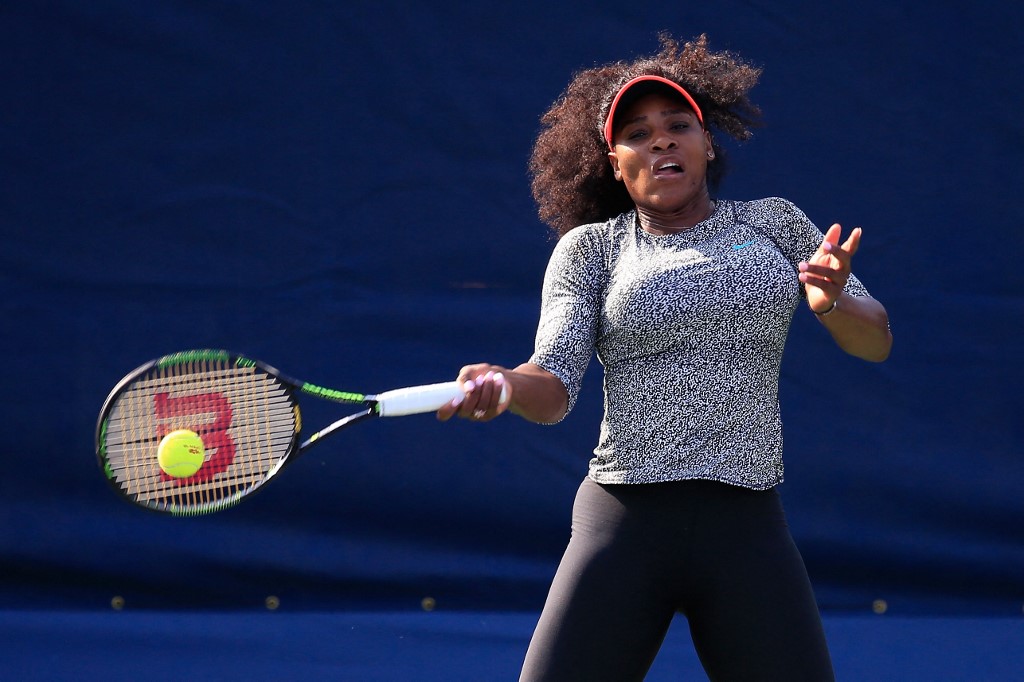
The greatest women’s tennis players of all time debate is in some ways richer and more complex than its men’s equivalent — not because the women’s game has produced more greatness, but because it has produced greatness across a wider range of eras, styles, and competitive contexts that resist easy comparison.
The question spans nearly a century and a half of competitive tennis, from the Victorian pioneers who established the sport’s early competitive culture to the modern professionals who have transformed it into a global commercial phenomenon.
What follows is not a definitive ranking. It is a serious examination of the strongest cases for the greatest women’s players in tennis history — the players whose combinations of competitive achievement, dominance over contemporaries, surface versatility, longevity, and cultural impact have made the most compelling arguments for historical greatness.
The Framework: What Makes a Women’s Player Great
The dimensions of greatness in women’s tennis broadly mirror those in the men’s game — Grand Slam titles, dominance relative to contemporaries, surface versatility, longevity, and head-to-head records against the other great players of the era — but with some important contextual differences that affect how the comparisons work.
The women’s Grand Slam calendar has not always been the same four events it is today. The Australian Open was played irregularly through parts of its history, and many top players skipped it entirely in certain decades because of its remoteness and the travel demands it imposed.
This means that raw Grand Slam totals for players from earlier eras require contextual adjustment — a player from the 1960s who won twelve Grand Slams in an era when the Australian Open was frequently skipped by the top players is not straightforwardly comparable to a modern player who won twelve Grand Slams in an era when all four majors were mandatory competitive targets.
Women’s professional tennis also has a different relationship to the Open Era than men’s tennis does. The professional-amateur divide affected the women’s game differently — women’s professional tennis developed later and along a different commercial path — and the prize money inequality that the WTA was founded to address means that the economics of women’s professional careers in the early Open Era were materially different from those of men.
With those contextual qualifications in place, here are the strongest cases for greatness in women’s tennis history.
Serena Williams
Serena Williams is the most decorated women’s tennis player of the Open Era — twenty-three Grand Slam singles titles, accumulated across a career that spanned four decades of professional competition and produced sustained excellence at the highest level of the sport from the late 1990s through the early 2020s.
Williams was born in Saginaw, Michigan in 1981 and turned professional in 1995. Her first Grand Slam title came at the US Open in 1999 at the age of seventeen, beginning a career of competitive achievement that would eventually encompass every major honor in the sport and transform the commercial and cultural profile of women’s professional tennis.
The statistical case for Williams’s primacy in the women’s all-time discussion is formidable. Her twenty-three Grand Slam titles — the most of any player in the Open Era, men’s or women’s — were accumulated across a span of nearly two decades, from 1999 to 2017, representing sustained excellence at the highest level that no other Open Era player has matched in either tour.
She won all four Grand Slam titles multiple times, demonstrating surface versatility that her surface-specific reputation as a power player sometimes obscures. She won the Olympic gold medal four times — three in doubles and once in singles.
Williams’s physical game — the serve, the forehand, the athletic movement — was the most powerful expression of what the modern women’s game could produce. Her serve was the best in women’s tennis history by most technical measures.
Her ability to change the tempo of a match through physical dominance — to simply overpower opponents who were technically sound but physically outmatched — was a competitive weapon that no other women’s player of her era possessed to the same degree.
The cultural case for Williams’s primacy extends well beyond tennis. She competed as a Black woman in a sport with a predominantly white competitive history, navigating barriers of race and gender that her white contemporaries did not face, and achieving a level of global cultural recognition that transformed the perception of what a tennis player could be.
Her influence on the commercial development of women’s professional tennis, on the representation of Black athletes in predominantly white sports, and on the broader cultural conversation about women’s athletic excellence was as significant as any of her on-court achievements.
The case against Williams’s primacy in the all-time women’s discussion is primarily a cross-era comparison argument. Players like Steffi Graf and Martina Navratilova, who dominated their respective eras with comparable or superior dominance relative to their contemporaries, have legitimate claims that their concentrated excellence deserves comparable weight to Williams’s longer-accumulated total. The era comparison debate in women’s tennis is as unresolvable as its equivalent in the men’s game.
Steffi Graf
Steffi Graf’s case for the greatest women’s player of all time rests on achievements that no other player in the sport’s history has fully replicated — including a level of single-season dominance that remains unmatched across both the men’s and women’s games.
Graf was born in Mannheim, West Germany in 1969 and turned professional in 1982. She reached the world number one ranking for the first time in 1987 and held it for 377 weeks across her career — the third most in women’s tennis history, accumulated in a career that ended with her retirement in 1999 at the age of thirty.
Her twenty-two Grand Slam singles titles — one fewer than Serena Williams — were accumulated between 1987 and 1999 across all four surfaces, with particular concentration at Wimbledon, where she won seven titles, and Roland Garros, where she won six. Her surface versatility was extraordinary — she won each of the four Grand Slams at least four times, demonstrating an adaptability across clay, grass, and hard court that no other women’s player has fully matched.
The 1988 Golden Slam — winning all four Grand Slams and the Olympic gold medal in a single calendar year — is the single greatest achievement in the history of either professional tennis tour. No player before or since has won all five major titles available in a single year.
Graf did it at the age of nineteen, in a year when she won 72 of 75 matches, and against a field that included the world’s top players at every event. The Golden Slam is not just a record — it is a standard of excellence that defines the outer limit of what a single tennis season can contain.
Graf’s dominance relative to her contemporaries is another dimension of her case. During her peak years — roughly 1987 through 1994 — she was not merely the best player in the world but operating at a level that her nearest rivals could only occasionally threaten.
Her head-to-head records against Monica Seles — interrupted by Seles’s stabbing in 1993, which removed Graf’s most significant challenger from competition for over two years — and against Martina Navratilova illustrate a player who performed at a different competitive level from virtually everyone she faced.
The primary case against Graf’s primacy is that her career, though exceptional in achievement, was shorter than Williams’s — her retirement at thirty left titles on the table that a player of her quality might have added with continued competition. And the Golden Slam, for all its historical significance, was a single season’s achievement rather than the sustained decade-long accumulation that Williams’s record represents.
Martina Navratilova
Martina Navratilova’s case for all-time greatness in women’s tennis rests on the most comprehensive combination of title accumulation, longevity, and sustained excellence in the history of the sport — a career that produced eighteen Grand Slam singles titles, thirty-one Grand Slam doubles titles, and ten Grand Slam mixed doubles titles, alongside a level of physical and tactical innovation that transformed women’s professional tennis.
Navratilova was born in Prague, Czechoslovakia in 1956 and defected to the United States in 1975. Her first Grand Slam singles title came at Wimbledon in 1978, and her last came at the US Open in 1987 — a nine-year span of singles Grand Slam victory that does not fully capture her competitive longevity, since she continued competing at the highest levels of doubles long after her singles career had concluded.
Her nine Wimbledon singles titles — the most in the Open Era at any Grand Slam by any player — are the most concentrated expression of surface-specific dominance in women’s tennis history. Navratilova’s game on grass was simply different from anything the women’s tour had previously produced: the serve-and-volley tactics, the athletic movement, the net skills, and the physical training approach she pioneered — working with strength and conditioning coaches at a time when such preparation was unusual in women’s tennis — combined to produce a player who was not just better than her contemporaries but operating in a different tactical and physical register.
Her rivalry with Chris Evert — spanning the 1970s and 1980s in what is widely regarded as the greatest sustained rivalry in women’s tennis history — produced eighty Grand Slam meetings and a head-to-head record of 43 wins to 37 losses in Navratilova’s favor.
The Evert-Navratilova rivalry shaped women’s professional tennis for a decade and demonstrated that women’s tennis could sustain the kind of long-form competitive narrative that generates sustained commercial interest.
Navratilova’s total of fifty-nine Grand Slam titles across singles, doubles, and mixed doubles is a record that will almost certainly never be approached. Her case for all-time greatness extends beyond singles titles to encompass the totality of her competitive achievement across the sport’s full range of competitive formats.
Chris Evert
Chris Evert’s case for all-time greatness rests on eighteen Grand Slam singles titles accumulated between 1974 and 1986, the highest Grand Slam singles final winning percentage in the history of women’s tennis, and a level of baseline consistency that defined the competitive standard of women’s professional tennis through the 1970s and early 1980s.
Evert was born in Fort Lauderdale, Florida in 1954 and turned professional in 1972. Her game — the two-handed backhand, the controlled baseline play, the extraordinary consistency from the back of the court — was not physically dominant in the way that later champions would be, but it was tactically sophisticated and mentally resilient in ways that no opponent of her era could consistently overcome.
Her seven Roland Garros titles and six US Open titles reflect a clay court and hard court excellence that combined with solid grass court performance to produce a surface versatility comparable to Navratilova’s. Her winning percentage at Grand Slams — reaching the semifinals at all fifty-six consecutive Grand Slams she entered between 1971 and 1983 — is a consistency record that has no equivalent in either men’s or women’s tennis history.
The primary case against Evert’s primacy in the all-time discussion is her head-to-head record against Navratilova — 37 wins to 43 losses — which reflects a player who was comprehensively excellent but whose most direct rival was marginally better in the competitions that mattered most. Her eighteen Grand Slam titles are equal to Navratilova’s in number but the head-to-head comparison consistently places her behind her greatest contemporary.
Maureen Connolly
Maureen Connolly’s place in the all-time women’s discussion is secured by an achievement that no other player has matched — the calendar Grand Slam in 1953 — and by a level of dominance across a tragically short career that produced nine Grand Slam titles before a horse riding accident ended her competitive life at the age of nineteen.
Connolly was born in San Diego, California in 1934 and turned professional — in the informal sense of the amateur era — effectively immediately after achieving her competitive peak. Her 1953 Grand Slam — winning the Australian, French, Wimbledon, and US Championships in a single year at the age of eighteen — was the first women’s calendar Grand Slam and remains one of only two in the history of women’s tennis.
Her career win-loss record — approximately 50 wins and only 2 losses across Grand Slam competitions — is a dominance ratio that no other player in the sport’s history has come close to matching. She did not lose a single Grand Slam match after turning eighteen. The injury that ended her career in 1954 prevented her from accumulating a title total that would almost certainly have been the highest in women’s tennis history.
Connolly’s case is ultimately a counterfactual argument comparable to Laver’s in the men’s game — a player whose career was cut short by external circumstance rather than competitive decline, and whose abbreviated record almost certainly understates what she would have achieved. The nine titles she did win, accumulated at a pace that no subsequent player has matched, are sufficient to place her among the all-time greats regardless of how the counterfactual is resolved.
Margaret Court
Margaret Court’s twenty-four Grand Slam singles titles — the most in women’s tennis history by any measure, Open Era or otherwise — make her the statistical leader in the all-time women’s discussion by the single metric that most directly captures sustained excellence at the sport’s highest level.
Court was born in Albury, New South Wales, Australia in 1942 and turned professional in the conventional sense by competing in the early Open Era. Her Grand Slam titles were accumulated between 1960 and 1973 — a period that spans both the late amateur era and the early Open Era — which means that some of her titles were won in fields that excluded professional players and some were won in Open Era fields that included them.
Her 1970 calendar Grand Slam — winning all four majors in a single year in the Open Era — is one of only two women’s calendar Grand Slams in history and is the only one achieved in the Open Era. That achievement places her alongside Connolly as the only women’s players to win all four majors in a single year.
The primary complication in Court’s all-time case is contextual. Eleven of her twenty-four Grand Slam titles were won at the Australian Open — the tournament that other top players of her era frequently skipped because of its remoteness and travel demands. In an era when the Australian Open did not attract the full international field, titles there were won against a less comprehensive competitive field than the other majors.
This contextual limitation affects how directly her total compares to those of players who competed in an era when all four Grand Slams were genuinely mandatory competitive targets.
Court’s legacy is also complicated by her post-playing career statements on social issues that have made her a controversial figure — context that does not affect the evaluation of her competitive achievements but that shapes how those achievements are received and discussed publicly.
Billie Jean King
Billie Jean King’s twelve Grand Slam singles titles — accumulated between 1966 and 1975 — do not place her at the top of the statistical rankings in the all-time women’s discussion. Her place among the all-time greats of women’s tennis rests on a different kind of significance: her role as the foundational figure in the development of women’s professional tennis as a viable commercial and competitive enterprise.
King’s competitive achievements are genuinely impressive — six Wimbledon singles titles, four US Open titles, and a level of sustained excellence across the late 1960s and early 1970s that established her as the dominant player of the early Open Era.
But it is impossible to evaluate King’s historical significance purely through competitive metrics, because her contributions to the sport extend far beyond the matches she won.
Her founding of the WTA, her advocacy for equal prize money, her victory in the Battle of the Sexes, and her decades of work building the commercial and institutional infrastructure of women’s professional tennis are contributions that shaped the conditions in which every subsequent women’s player competed.
Serena Williams’s twenty-three Grand Slams were made possible partly by the commercial and institutional foundation that King built. Steffi Graf’s Golden Slam was made possible partly by King’s insistence that women’s tennis deserved the same competitive seriousness and financial support as men’s.
Evaluating King purely as a competitive player — which her twelve Grand Slam titles would invite — systematically understates her historical significance. She is the figure whose contributions to the sport’s development most clearly exceed what any statistical record of her playing career can capture.
Justine Henin and Monica Seles
Two players whose careers sit outside the very top tier of the all-time rankings but who represent important points of reference for understanding the breadth of women’s tennis excellence deserve specific mention.
Justine Henin won seven Grand Slam singles titles between 2003 and 2007 — including four Roland Garros titles — with a one-handed backhand that is widely regarded as the finest in women’s tennis history and a clay court game that challenged Serena Williams’s dominance more consistently than any other player of the era.
Her retirement in 2008 at the age of twenty-five — at the peak of her powers, citing exhaustion and loss of motivation — means her title total significantly undercounts her likely achievement with continued competition.
Monica Seles won nine Grand Slam singles titles between 1990 and 1996 and was the dominant player in women’s tennis in the early 1990s before being stabbed by a deranged fan at a tournament in Hamburg in 1993.
Her return to competition in 1995 was brave and commercially significant, but she never fully recaptured the dominance of her pre-stabbing peak. The titles lost to her enforced absence — during which Graf won five Grand Slams in a field missing its strongest competitor — are one of women’s tennis history’s most significant counterfactuals.
The All-Time Picture
Women’s tennis history has produced an extraordinary concentration of genuine greatness across multiple distinct eras — players whose achievements, competitive styles, and historical contexts resist simple ranking but collectively represent the outer limits of what the sport can produce.
The statistical leader by Grand Slam titles is Margaret Court at twenty-four. The Open Era leader is Serena Williams at twenty-three. The single-season peak achievement belongs to Steffi Graf’s 1988 Golden Slam. The longest sustained dominance relative to contemporaries arguably belongs to Navratilova across the 1980s.
The highest rate of Grand Slam success in a career cut short belongs to Maureen Connolly. The greatest institutional contribution to the sport’s development belongs to Billie Jean King.
No single player is supreme on every dimension. What can be said is that the women’s game has produced greatness as genuine, as sustained, and as historically significant as anything the men’s game has generated — and that the debate about who sits at the top of the all-time women’s rankings is as rich, as contested, and as ultimately unresolvable as its men’s equivalent.
That richness is itself a tribute to how much greatness women’s tennis has produced.
Part of the Tennis History series. Previous: The Greatest Men’s Tennis Players of All Time. Next: The Big Three — How Federer, Nadal, and Djokovic Redefined Men’s Tennis.