

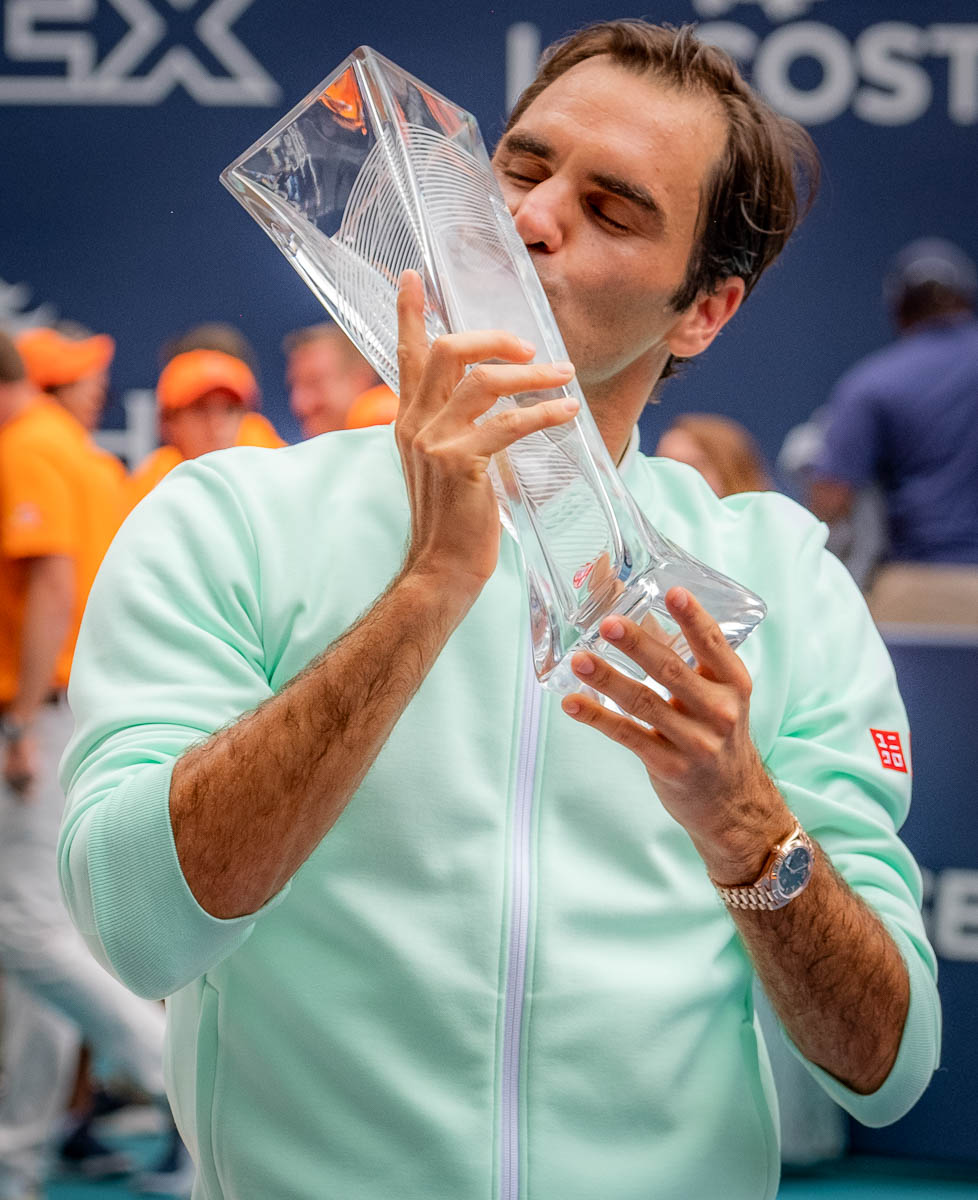
No question in tennis generates more passionate debate than this one. The greatest men’s tennis player of all time — the GOAT debate, as it has been known since the acronym entered sports discourse — is a conversation that has been running for decades, has changed shape multiple times as new players have emerged and surpassed previous records, and shows no sign of producing consensus any time soon.
That is partly because the question is genuinely difficult. Professional tennis has been played across multiple eras with different equipment, different surfaces, different competitive depths, and different physical demands.
Comparing players across those eras requires judgment calls about what matters most — raw competitive achievement, dominance relative to contemporaries, longevity, versatility across surfaces, or the quality of the competition faced. Different frameworks produce different answers, and reasonable people applying different frameworks reach different conclusions.
What follows is not a definitive ranking — no such thing exists or could exist. It is a serious attempt to examine the strongest cases for the greatest men’s players in tennis history, explain what makes each case compelling, and provide the historical context that makes the comparisons meaningful.
The Framework: What Makes a Player Great
Before examining specific players, it helps to establish the dimensions along which greatness in men’s tennis is most meaningfully measured.
Grand Slam titles are the most commonly cited metric and the most defensible single measure of sustained excellence at the highest level. Winning Grand Slams requires winning seven consecutive matches at the sport’s most important events against the best players in the world across a fortnight of competition. The number of Grand Slam titles a player accumulates across a career is the clearest available measure of their sustained ability to perform at the peak of the sport.
Dominance relative to contemporaries matters because Grand Slam totals are affected by the competitive depth of the era in which they were accumulated. A player who dominated a weaker era may accumulate comparable titles to a player who competed against exceptional contemporaries — but the competitive contexts are meaningfully different.
Surface versatility distinguishes complete players from specialists. A player who wins Grand Slams on all three surfaces — clay, grass, and hard court — has demonstrated a breadth of excellence that a single-surface specialist has not, regardless of how many titles they accumulate on their preferred surface.
Longevity measures the ability to maintain elite performance across time — to compete at the highest level not just for a peak season or two but across a decade or more of professional competition. Long careers at the top require physical resilience, tactical adaptability, and the psychological durability to remain competitive as the sport evolves around you.
Head-to-head records against contemporaries provide a direct competitive comparison that abstract statistics cannot. A player who consistently beats the other great players of their era has demonstrated something that title counts alone do not capture.
No player in tennis history is supreme on every one of these dimensions. What follows is an examination of the players whose combinations of these qualities have made the strongest cases for historical greatness.
Novak Djokovic
Novak Djokovic holds more Grand Slam singles titles than any other man in tennis history — twenty-four at the time of writing — and his career achievements across every measurable dimension of greatness make him the strongest statistical case for the greatest men’s player of all time.
Djokovic was born in Belgrade in 1987 and turned professional in 2003. His rise through the rankings was steady rather than meteoric — he reached the top ten in 2006 and won his first Grand Slam, the Australian Open, in 2008, but the full realization of his potential came in 2011 when he had one of the greatest single seasons in tennis history, winning three Grand Slams and finishing with a 70-6 win-loss record for the year.
The statistical case for Djokovic’s primacy is formidable. He has won more Grand Slams than anyone. He has spent more weeks ranked world number one than anyone — surpassing 400 weeks, a figure that will almost certainly never be matched. He has won each of the four Grand Slams multiple times, demonstrating surface versatility that neither Federer nor Nadal has fully matched. He has won the Olympic gold medal. He has reached more Grand Slam finals than any other player in history.
His game is built around defensive excellence transformed into offense — extraordinary movement, elite return of serve, and the ability to take balls early from inside the baseline that has been examined in depth elsewhere in this series. His mental resilience under pressure — particularly in five-set matches at the Grand Slams — is arguably the greatest in the sport’s history. His record in deciding sets at majors is remarkable and reflects a player who improves, rather than declines, as the competitive stakes are highest.
The case against Djokovic’s primacy is primarily cultural rather than statistical. He has competed in an era dominated by two other all-time greats — Federer and Nadal — which has meant that his achievements have been constantly contextualized against theirs rather than celebrated independently.
His playing style — brilliant but less aesthetically celebrated than Federer’s, less emotionally resonant than Nadal’s for many fans — has meant that his statistical dominance has not always translated into the cultural recognition that his numbers arguably warrant.
Roger Federer
Roger Federer is the player most commonly cited when the greatest men’s player of all time question is asked outside of purely statistical frameworks, and his claim to that title rests on a combination of achievements, aesthetic excellence, and cultural impact that no other player has fully replicated.
Federer was born in Basel, Switzerland in 1981 and turned professional in 1998. His first Grand Slam title came at Wimbledon in 2003, and the decade that followed produced a run of sustained dominance that had no precedent in the Open Era: five consecutive US Open titles, five consecutive Wimbledon titles, a period of world number one ranking that stretched for 237 consecutive weeks between 2004 and 2008.
At his peak, Federer was not merely the best player in the world — he was operating at a level that made the gap between himself and his contemporaries visible even to casual observers.
Federer’s twenty Grand Slam titles — accumulated between 2003 and 2018, when he won his twentieth Australian Open at the age of thirty-six — were the record until Nadal surpassed them in 2022. His eight Wimbledon titles remain the men’s record at any single Grand Slam. His longevity at the top — maintaining a place in Grand Slam finals into his late thirties — is unmatched by any comparable player in the modern era.
The cultural case for Federer’s primacy is inseparable from the aesthetic dimension of his game. Federer is widely regarded as the most technically beautiful player in the history of men’s tennis — the one-handed backhand, the apparently effortless movement, the variety and precision of shot-making that no other player has replicated at the same level of sustained success.
Tennis analysts who disagree about almost everything tend to agree that Federer at his peak was playing the sport as close to its aesthetic ideal as any player has managed.
The case against Federer’s primacy is primarily a Nadal problem. Federer’s head-to-head record against Nadal — 16 wins to 24 losses — is the most significant single competitive data point against his claim to absolute primacy.
A player who lost more often than he won against his most direct contemporary cannot be unambiguously called the greatest of all time on competitive grounds, regardless of his overall record. The Nadal head-to-head is the asterisk that accompanies every statistical argument for Federer’s primacy.
Rafael Nadal
Rafael Nadal’s claim to the greatest men’s player of all time rests on a combination of achievements that includes the most Grand Slam singles titles in history when he surpassed Federer in 2022, the most dominant sustained performance at a single major in the sport’s history, and a competitive record against the other members of the Big Three that is unambiguously the strongest.
Nadal was born in Manacor, Mallorca in 1986 and turned professional in 2001. His first Grand Slam title came at Roland Garros in 2005 at the age of nineteen, beginning a relationship with the French Open that produced fourteen titles across nineteen years — a level of sustained dominance at a single major that has no precedent in the Open Era and arguably in tennis history.
Nadal won Roland Garros without losing a set in 2008 and lost only two matches at the French Open across his entire career, a competitive record at a specific event that represents the most extreme concentration of excellence the sport has produced.
Nadal’s physical game — the heavy topspin forehand, the defensive excellence from behind the baseline, the extraordinary physical endurance — is the fullest expression of what the topspin revolution produced. His game on clay is the most dominant playing style any surface has ever produced.
But Nadal is not merely a clay court specialist: his two Australian Open titles, four US Open titles, and two Wimbledon titles demonstrate a breadth of excellence that his surface-specific reputation sometimes obscures.
His head-to-head record against Federer — 24 wins to 16 losses — and against Djokovic — essentially even across their careers — reflects a player who has been the direct competitive superior of one all-time great and the equal of another. His record in Grand Slam finals — winning twenty-two of thirty appearances — is the highest conversion rate of any player in the Open Era.
The case against Nadal’s primacy is primarily one of surface concentration. Fourteen of his twenty-two Grand Slam titles came at a single event — Roland Garros. A player who won fourteen Grand Slams at one event and eight across the other three has a less versatile record than a player who distributed his titles more evenly.
Whether that concentration of excellence at the world’s most demanding surface represents a limitation or simply the clearest expression of specialization the sport has produced is one of the GOAT debate’s most genuinely contested questions.
Rod Laver
Rod Laver’s case for the greatest men’s player of all time is unique in tennis history because it rests not just on what he achieved but on what he was prevented from achieving — and on the judgment that what was prevented was almost certainly more than what any other player has accumulated.
Laver was born in Rockhampton, Queensland, Australia in 1938 and turned professional in 1963, the year after completing the amateur Grand Slam. His professional exile from the Grand Slams lasted six years — from 1963 to 1968 — during which period he continued to compete as the world’s best player on the professional circuit, winning consistently against the other professionals who had similarly been excluded from the major events.
When the Open Era began in 1968 and Laver was finally able to return to Grand Slam competition, he won eleven titles across the remaining years of his career — including the 1969 calendar Grand Slam, the only such achievement in Open Era history and only the second in men’s tennis history overall.
His total of eleven Grand Slam titles, accumulated across a truncated Grand Slam career, is almost certainly a significant undercount of what he would have won with uninterrupted access to the majors.
The historical consensus among those who watched Laver compete — players, coaches, and analysts of the era — is that he was the dominant player of his generation and that his six years of Grand Slam exile almost certainly cost him between six and twelve Grand Slam titles that he would have won.
Applied to his actual total of eleven, that estimate produces a career Grand Slam count of seventeen to twenty-three — which would place him at or near the top of the all-time list even by the statistical measure that most favors the modern Big Three.
Laver’s case is ultimately a counterfactual argument, and counterfactual arguments have inherent limitations. What can be said with confidence is that he is the only player in history to have won the calendar Grand Slam in the Open Era — against the full field of professional players — and that his achievement in doing so deserves a place in any serious discussion of the greatest men’s players in the sport’s history.
Pete Sampras
Pete Sampras dominated men’s professional tennis from 1993 through 2000 with a combination of serving power, net play, and mental composure under pressure that produced fourteen Grand Slam titles — the record until Federer surpassed it in 2009 — and six year-end world number one finishes.
Sampras was born in Washington DC in 1971 and turned professional in 1988. His first Grand Slam title came at the US Open in 1990 at the age of nineteen — the youngest men’s US Open champion at the time.
What followed was a decade of sustained excellence centered on Wimbledon, where he won seven titles between 1993 and 2000, and the US Open, where he won five titles between 1990 and 2002.
Sampras’s game was built around the serve — one of the greatest serves in tennis history by any technical or statistical measure — combined with excellent volleying, a sound baseline game, and a competitive composure that was particularly evident in the most pressured moments of Grand Slam finals.
His ability to elevate his game for the biggest matches of the biggest tournaments — to produce his best tennis precisely when it mattered most — was one of the most consistently remarked-upon qualities of his career.
The case against Sampras’s primacy in the all-time discussion is primarily the Roland Garros gap. Sampras won his fourteen Grand Slams on grass and hard courts — he never won Roland Garros, reached the final only once, and was generally less competitive on clay than on faster surfaces.
His surface versatility, by the standards of the Big Three era, was limited — a limitation that reflects both the faster court speeds of his era and the specific style of game he developed.
Bjorn Borg
Bjorn Borg’s claim to a place in the all-time discussion rests on eleven Grand Slam titles accumulated between 1974 and 1981 — a relatively short peak career that produced some of the most dominant sustained performances in the history of the sport’s major championships.
Borg won six Roland Garros titles and five consecutive Wimbledon titles — a combination of clay court and grass court excellence that no other player before the Big Three era came close to matching. His ability to dominate on both clay and grass — the sport’s two most distinct surfaces — demonstrated a versatility and adaptability that contemporaries who specialized on one surface could not match.
The factors that limit Borg’s all-time case are primarily structural. He competed in an era before the Australian Open was a genuinely international event, meaning his Grand Slam total significantly undercounts his likely achievement had he competed with the same dedication to all four majors that modern players apply.
He retired at twenty-six — at the absolute peak of his powers — citing burnout and loss of motivation, which means his career total reflects a compressed peak rather than the extended excellence that Federer, Nadal, and Djokovic have sustained.
His head-to-head record against John McEnroe — 7 wins to 7 losses — and the quality of his contemporaries suggest he was not operating in a weak era, but the competitive depth of the late 1970s and early 1980s is difficult to compare directly with the depth of the Big Three era.
John McEnroe and Jimmy Connors
John McEnroe and Jimmy Connors are the most prominent American players in the all-time men’s discussion, and their cases — while not competitive with the Big Three or Laver by most modern frameworks — represent important points of reference for understanding the historical breadth of men’s tennis excellence.
McEnroe won seven Grand Slam singles titles between 1979 and 1984, including four US Open titles and three Wimbledon titles. His serve-and-volley game was the most complete expression of that tactical approach in the Open Era, and his hand skills at the net — widely regarded as the finest in tennis history — produced shot-making that no player before or since has fully replicated.
His head-to-head record against Borg — 7 wins to 7 losses — and his consistent performance at the sport’s biggest events make him a serious historical figure even within the context of a lower Grand Slam total than the sport’s all-time leaders.
Connors won eight Grand Slam titles between 1974 and 1983 and is notable for his longevity at the top level — reaching the US Open semifinals at the age of thirty-nine in 1991 in one of the most remarkable late-career performances in tennis history.
His competitive intensity and his ability to maintain elite performance across an extended career were qualities that influenced the competitive culture of the professional game beyond his individual achievements.
The Big Three and the Historical Record
The emergence of Federer, Nadal, and Djokovic as the three dominant players of the same extended era is the most remarkable competitive coincidence in men’s tennis history — and arguably in the history of any individual sport.
Three players of genuinely exceptional quality competing simultaneously across nearly two decades, each pushing the others to performances they might not have achieved against weaker competition, collectively transforming every historical benchmark.
Their combined Grand Slam totals — Federer twenty, Nadal twenty-two, Djokovic twenty-four at the time of writing — represent an accumulation of major titles that is historically unprecedented.
Between 2003 and 2023, one of the three won the men’s singles title at sixty-five of the eighty Grand Slams contested — an extraordinary concentration of excellence that left most of their contemporaries competing for the remaining fifteen titles across a twenty-year period.
The GOAT debate among the Big Three is ultimately unresolvable by any single metric, and it will remain unresolvable as long as reasonable people apply different frameworks. Those who weight Grand Slam totals most heavily will favor Djokovic.
Those who weight aesthetic excellence and cultural impact most heavily will favor Federer. Those who weight clay court dominance and head-to-head records most heavily will favor Nadal. And those who insist that Laver’s counterfactual case deserves full weight will maintain that the greatest of the Open Era is not necessarily the greatest in the sport’s history.
What the Big Three have collectively done — more than any individual achievement by any one of them — is redefine what sustained excellence at the top of men’s professional tennis looks like. The standard they have set, individually and collectively, is the reference point against which every future generation of men’s players will be measured.
Key Figures at a Glance
- Novak Djokovic — 24 Grand Slam titles; most weeks at world number one; most Grand Slam finals appearances; four-surface champion.
- Rafael Nadal — 22 Grand Slam titles; 14 Roland Garros titles; strongest head-to-head record among the Big Three; highest Grand Slam final conversion rate.
- Roger Federer — 20 Grand Slam titles; 8 Wimbledon titles; 237 consecutive weeks at world number one; most widely cited for aesthetic and cultural impact.
- Rod Laver — 11 Grand Slam titles in a truncated career; only two-time calendar Grand Slam winner; dominant professional circuit record during six-year Grand Slam exile.
- Pete Sampras — 14 Grand Slam titles; 7 Wimbledon titles; 6 year-end world number one finishes; dominant 1993–2000 peak.
- Bjorn Borg — 11 Grand Slam titles; 6 Roland Garros titles; 5 consecutive Wimbledon titles; retired at twenty-six at the peak of his powers.
- John McEnroe — 7 Grand Slam titles; finest net skills in Open Era history; 7–7 head-to-head with Borg.
- Jimmy Connors — 8 Grand Slam titles; extraordinary competitive longevity; US Open semifinalist at thirty-nine.
The Debate Continues
The GOAT debate in men’s tennis is not a question with a correct answer. It is a question that reveals what the person answering it values most — Grand Slam totals, surface versatility, dominance over contemporaries, aesthetic excellence, cultural impact, or the counterfactual weight of careers interrupted by historical circumstance.
What can be said with confidence is that the sport has produced a remarkable concentration of genuine greatness — players whose achievements, in different ways and across different eras, represent the outer limits of what professional tennis can produce. The debate about their relative ranking is less important than the recognition that each of them, in their own way, has contributed to making tennis the sport it is.
The numbers will keep changing. The debate will continue. That, in itself, is a tribute to how much greatness the sport has generated.
Part of the Tennis History series. Previous: The History of the ATP and WTA — How the Professional Tours Were Built. Next: The Greatest Women’s Tennis Players of All Time.