

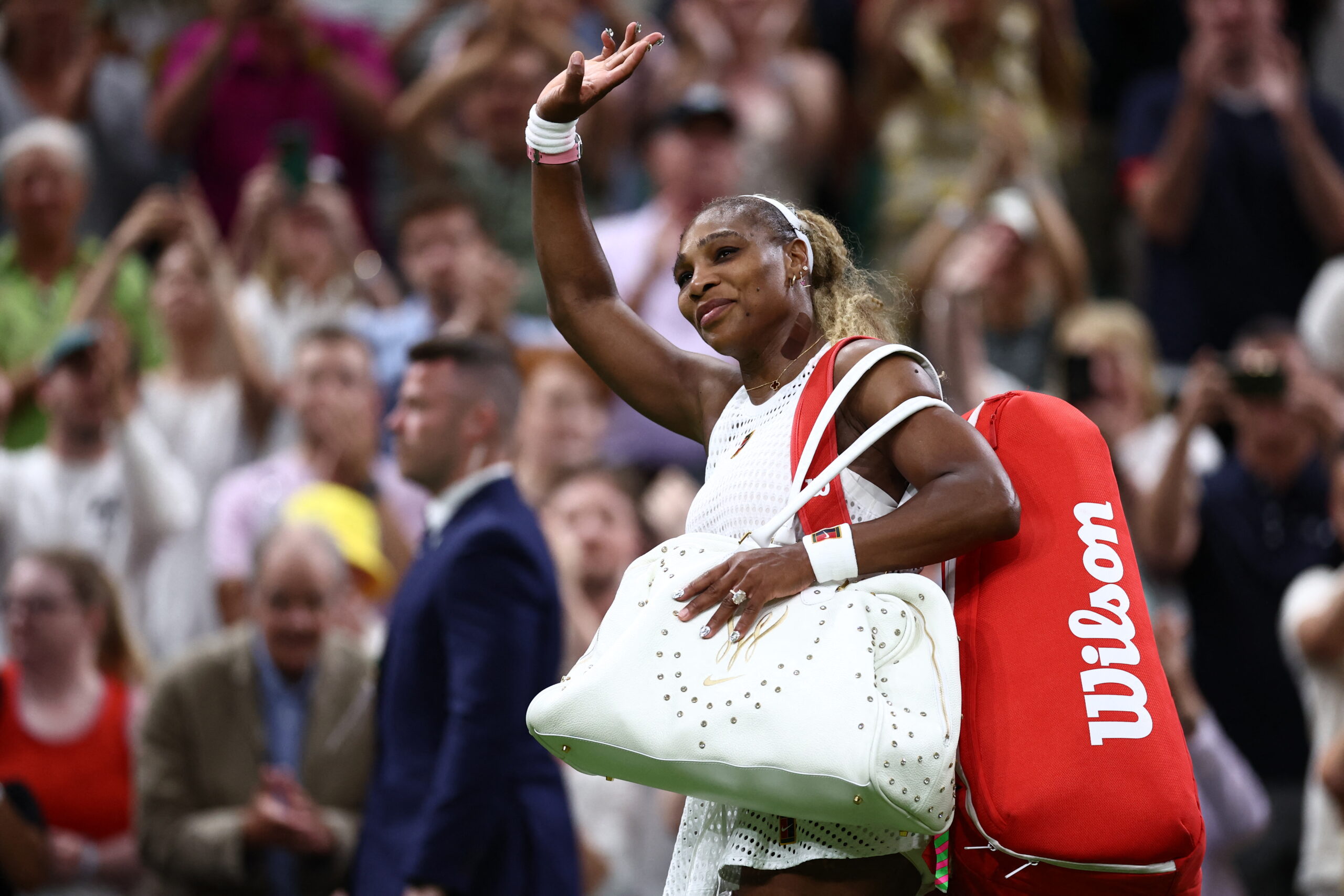
Updated Aug. 23, 2026 — resolved: The question this post set out has an answer. The USTA gave the last women’s main-draw wild card to Sofia Kenin on Saturday. Serena Williams will not play US Open singles. She has instead accepted a wild card into the Mixed Doubles Championship alongside Carlos Alcaraz, which will be her first competitive appearance at Flushing Meadows since 2022. This post is retired as a live tracker; the routes it mapped are no longer in play and the material below stands as record.
Updated Aug. 18, 2026: The wild card question this post set out is still open, but the USTA has now shown its hand. Announcing its US Open main-draw invitations on Tuesday, the tournament named seven of eight women and left the final place marked “to be announced.” Williams is not among the seven. Her sister Venus is, along with Sloane Stephens, Carol Young Suh Lee, Reese Brantmeier, Thea Frodin, Leolia Jeanjean and Taylah Preston. Williams has not said whether she intends to play, and the tournament has not said whom the eighth place is for. She did play in Cincinnati this week, partnering Venus in the doubles for the first time since 2022 and losing a first-round match tiebreak. Singles qualifying begins Monday.
Serena Williams gave her comeback a pulse this week with nine words on TikTok: “Looks like my knee is finally getting better. Finally!” The clip, posted alongside a dancing video, was the clearest signal yet that the right knee that derailed her return at Wimbledon is no longer the emergency it looked like three weeks ago, when she shared images of syringes filled with fluid drained from the joint. What the post did not do was put her name on an entry list.
Williams, 44, does not appear in the fields for Washington, the Canadian swing or Cincinnati — the three hard-court stops that make up the traditional runway into Flushing Meadows. The DC Open begins Monday. Cincinnati wraps in the third week of August. The US Open singles main draw starts Sunday, August 30. On current paper, Williams would arrive in New York without a competitive hard-court match in her legs.
That is a problem her own camp has already identified. Coach Rennae Stubbs said at Wimbledon that Williams intends to keep going — “Her intention is to keep playing; the US Open as well” — and made clear that she would like to compete somewhere before the final major. Stubbs also suggested hard courts should be kinder to her than grass, where her movement was visibly compromised in a three-set first-round loss to Maya Joint, her first singles match since 2022.
The preparation gap matters because of what happened last time. Williams went into Wimbledon with two doubles matches and zero singles matches behind her. She still pushed a rising Australian to three sets, and Stubbs said she had been beating main-draw players in practice sets before the tournament. But she injured the knee mid-match, could not defend herself in the rallies, and withdrew from the doubles reunion with Venus before it ever started.
Repeating that formula in New York — a cold start, best-of-three on a slower, higher-bounce surface, in front of the biggest audience of her career — is the outcome nobody around her wants. So the summer now hinges on a wild card. There are three of them available, and each one buys her something different.
Route one: a singles wild card into a lead-in event
The purest option, and the one Stubbs has effectively asked for. A singles wild card at a hard-court tournament would give Williams what she has not had since 2022: a competitive match on the surface she is preparing for, with the option to withdraw quietly if the knee objects. She would have no difficulty getting the invitation. Tournament directors would take the ticket sales and the broadcast numbers without blinking.
The cost is exposure. A first-round loss in a smaller draw becomes a referendum on whether the comeback is real, two weeks before she is due in New York. There is also the perennial wild-card argument — that spots handed to a 44-year-old icon are spots taken from a player who spent the season grinding for them. Williams has heard that argument for a decade. It has never stopped a tournament from making the offer.
The window is narrowing. The events left before the US Open are few, and a late entry into a 250 in the final week would be tight preparation rather than proper preparation.
Route two: doubles with Venus
The reunion that Wimbledon was denied. Doubles is the softest landing available: shorter points, half a court to cover, a partner to absorb the workload, and a knee that gets asked to change direction far less often. It is also, commercially, close to bulletproof — the Williams sisters on a hard court in an American summer is a stadium-filling event regardless of the result.
The catch is that it is not a singles tune-up. Two doubles matches were exactly the preparation that failed her at Wimbledon. Doubles keeps the comeback alive and gives the knee a live test; it does not solve the problem Stubbs has publicly named.
Route three: the mixed doubles event
The most interesting card in the deck, and the one most people are overlooking. The US Open’s reimagined mixed doubles championship runs during Fan Week, from August 24 to 26, in the days before the singles main draw begins — a compressed, short-set, no-ad format spread over three days, with eight of the sixteen team slots handed out as wild cards. This year the event has added an eight-team qualifying competition on August 24.
For Williams, the appeal is obvious. It is played at the venue she has owned more than any other. It is the lightest physical load of any of the three routes. And critically, it is not a separate trip — she could use it as a live rehearsal on the exact courts she would play the following week, then decide about singles with real information rather than a hunch. The format’s star-power draw makes her one of the most obvious wild-card recipients on the board.
It also raises the question that will dominate the next month: who partners her, and does that decision tell us anything about how the knee is actually doing?
What to watch
Entry deadlines and wild-card announcements are the tell. If Williams accepts a singles wild card at a lead-in event in the next fortnight, the ambition is intact and New York is a genuine target. If the only card she takes is mixed doubles during Fan Week, the comeback is being managed carefully rather than pushed. If nothing comes at all, the TikTok update was a health bulletin, not a schedule.
Her own summary after Wimbledon still stands as the best guide to her intentions. Stay tuned, she said, to a city near you.