

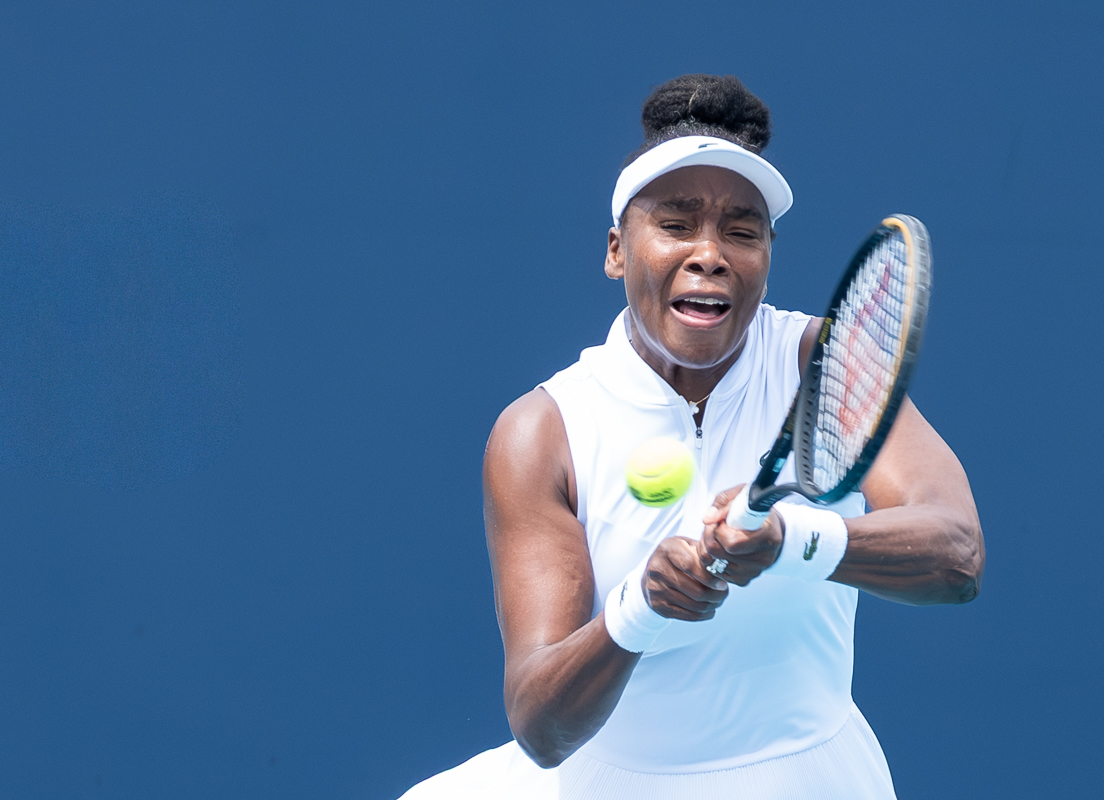
In the summer of 1999, a seventeen-year-old from Compton, California walked onto the court at the US Open and won the women’s singles title. It was Serena Williams’s first Grand Slam championship — the beginning of a competitive career that would produce twenty-three more and establish her as the most decorated player in the Open Era. T
wo years earlier, her older sister Venus had reached the US Open final at the age of seventeen, becoming the first unseeded finalist in the tournament’s Open Era history and serving notice that something genuinely new had arrived in women’s professional tennis.
The Williams sisters did not simply become great tennis players. They transformed the sport — its competitive standards, its physical culture, its commercial profile, and its cultural significance — in ways that extended far beyond their individual achievements on the court.
Understanding their impact requires understanding not just what they won but what they changed, not just the titles they accumulated but the barriers they broke, the standards they set, and the version of women’s professional tennis they created that would not have existed without them.
Where They Came From: The Compton Story
The Williams sisters’ origin story is inseparable from their impact — because the circumstances from which they emerged were so different from the background of virtually every other player who had reached the top of women’s professional tennis that their success constituted a statement about the sport’s accessibility as much as about their individual talent.
Venus Williams was born in Lynwood, California in 1980 and Serena in Saginaw, Michigan in 1981. The family moved to Compton, California — one of Los Angeles’s most economically disadvantaged communities, known more for gang activity and urban poverty than for tennis courts — when the girls were young children.
Their father, Richard Williams, had decided before either daughter was born that he would raise two tennis champions, having taught himself the sport from books and videotapes and identified tennis as a pathway to financial security and professional success for his children.
Richard Williams coached both daughters on the public courts of Compton — cracked concrete surfaces shared with local gang members and neighborhood residents, far removed from the private clubs and academies where most elite junior tennis players developed.
The physical environment of their early training was not just different from the standard development pathway — it was its antithesis. Where most future professional players trained in controlled environments with professional coaches on pristine surfaces, the Williams sisters developed on courts that reflected the community they came from.
This origin story matters for understanding their impact because it challenged the unspoken assumption that tennis was a sport for a specific kind of person from a specific kind of background.
The Williams sisters were Black women from an economically disadvantaged urban community who had not followed the established development pathway to professional tennis success. Their emergence at the top of the sport — and their sustained dominance once they arrived — was a statement about talent and determination that the sport’s demographic history made particularly powerful.
The Physical Revolution They Brought
Before the Williams sisters, women’s professional tennis had been evolving toward greater physicality throughout the 1980s and 1990s. Martina Navratilova had introduced serious strength and conditioning work into her preparation in the 1980s. Steffi Graf had brought a level of athletic movement that her contemporaries could not match. Monica Seles had demonstrated that two-handed power from the baseline could be competitive at the highest level.
The Williams sisters accelerated that evolution to a degree that transformed the competitive standards of the women’s game permanently. They brought a combination of physical attributes — power, athleticism, serve quality, and court coverage — that was qualitatively different from what had previously been possible in women’s professional tennis, and their sustained competitive success demonstrated that this physical approach to the game was not merely viable but dominant.
Venus’s serve was, at its peak, the fastest in women’s tennis history — exceeding 120 miles per hour on first serves and generating free points at a rate the women’s game had never previously produced.
The combination of her serving power with her athletic court coverage and her ability to strike the ball at pace from anywhere on the court represented a style of play that no previous women’s player had attempted at the same level of competitive success.
Serena’s physical profile was different from Venus’s — more muscular, less elongated, built differently for power rather than speed — but no less revolutionary. Her serve became the most dominant weapon in women’s tennis history, combining pace, placement, and spin variation in ways that no women’s player before or since has fully replicated.
Her forehand — struck with extraordinary racket head speed from a wide stance — generated pace and spin that regularly pushed opponents behind the baseline and onto the defensive.
The practical consequence of this physical revolution was a change in what women’s professional players felt they needed to prepare physically. The Williams sisters demonstrated that women could train like athletes — that strength work, power development, and the full range of physical preparation that elite male athletes had long employed were compatible with women’s tennis excellence rather than inimical to it.
The players who came after them trained differently because of what the Williams sisters showed was possible.
The Serena Slam and Career Grand Slam Achievements
Serena Williams’s twenty-three Grand Slam singles titles are the statistical centerpiece of any discussion of the sisters’ competitive impact — but the specific pattern of those titles, and the specific achievements they contained, tells a richer story than the number alone.
Serena won at least one Grand Slam title in each of three consecutive decades — the 1990s, 2000s and 2010s, — a span of sustained competitive excellence at the Grand Slam level that no other player in either tour has matched. She won her first Grand Slam in 1999 and her last in 2017, an eighteen-year span that encompasses competitive generations that most players never bridge at all.
The Serena Slam — a term used to describe two distinct periods when she held all four Grand Slam titles simultaneously — was achieved twice: once across 2002 and 2003, when she won four consecutive Grand Slams, and once across 2014 and 2015, when she again held all four titles at the same time.
The second Serena Slam, achieved at the age of thirty-three, was arguably the more remarkable of the two — a player in the second half of her career performing at a level that most players achieve only at their peak.
Her 2017 Australian Open title — won while she was in the early weeks of pregnancy, confirmed only after the tournament concluded — became the most discussed individual Grand Slam victory of her career, raising questions about what that title meant for understanding the physical demands of professional tennis and the capacities of elite female athletes.
Venus Williams’s seven Grand Slam singles titles — five Wimbledons and two US Opens — do not capture her competitive impact as fully as Serena’s do, partly because the sisters competed against each other across the peak of both their careers and their head-to-head record — Serena leading 19 to 12 — reflects Venus’s competitive position as the second-best player of her era rather than an underperformance of her genuine ability.
Venus’s five Wimbledon titles place her among the most successful grass court players in women’s tennis history, and her physical longevity — competing on the professional tour into her forties — is a testament to the physical preparation and competitive discipline she maintained across a career spanning three decades.
The Sisters Against Each Other
One of the most unique and occasionally uncomfortable dimensions of the Williams sisters’ career was the frequency with which they competed against each other at the sport’s most important events. Their head-to-head record across professional competition — thirty-one meetings, with Serena leading nineteen to twelve — included nine Grand Slam finals, making them the most frequent Grand Slam final opponents in the Open Era.
The dynamic of competing against a sibling at the highest level of professional sport created a competitive and emotional complexity that neither player fully resolved in public. Their matches against each other had a different texture from their matches against other opponents — less visibly aggressive, more emotionally guarded, with both players acknowledging the difficulty of competing fully against the person they were closest to in the world.
The narrative around their meetings was also shaped by allegations — never proven but persistent in certain corners of tennis media — that some of their matches were influenced by their father’s preferences about who should win at specific tournaments. Both players consistently denied these allegations, and the specific evidence offered in their support was never conclusive.
The allegations reflected broader discomfort — within parts of the tennis establishment and media — with the Williams family’s unconventional approach to the sport and their refusal to operate within its established cultural norms.
What can be said with confidence is that the nine Grand Slam finals between the sisters produced legitimate competitive matches that determined the sport’s most important titles, that both players competed to the best of their abilities in the majority of those encounters, and that the discomfort generated by their sibling rivalry was partly a reflection of how unprecedented their simultaneous dominance was rather than any specific evidence of impropriety.
Race, Identity, and the Tennis Establishment
The Williams sisters competed in a sport whose competitive history was almost entirely white — and their navigation of that reality was a dimension of their careers that shaped both their experience of the sport and the sport’s experience of them.
Women’s professional tennis had produced Black champions before the Williams sisters — most notably Althea Gibson, who won five Grand Slams between 1956 and 1958 and broke the color barrier at Wimbledon and the US Championships. But Gibson had competed in a different era under different conditions, and the Williams sisters’ emergence in the 1990s arrived in a professional tennis environment that was more diverse than Gibson’s time but still overwhelmingly white in both its competitive field and its institutional culture.
The sisters faced racist abuse from crowds at certain tournaments — most infamously at Indian Wells in 2001, where both Venus and Serena faced hostile treatment from the crowd that they attributed to racial prejudice and which led to a boycott of the tournament by both sisters that lasted for years.
The Indian Wells episode became the most publicly discussed specific incident of racism in their careers, but both sisters have described it as representative of a broader pattern of hostile reception at certain venues and in certain segments of tennis media.
Their navigation of these experiences — competing at the highest level of the sport while facing hostility that their white contemporaries did not encounter, maintaining public composure while being privately affected, and choosing when and how to address racial dynamics publicly — was itself a form of professional excellence that their competitive records alone cannot capture.
The cultural impact of their success on the representation of Black players in tennis — and on the perception of tennis as a sport accessible to players from backgrounds like theirs — extended beyond their individual careers.
They were the most prominent demonstration in the sport’s history that the established development pathway — private clubs, expensive academies, the traditional social background of competitive tennis — was not the only route to the top of the sport.
Fashion, Commerce, and Culture Beyond Tennis
The Williams sisters’ impact on professional tennis extended into dimensions of the sport that had nothing to do with competitive results — the fashion, the commercial culture, and the public identity of women’s professional tennis were all transformed by their presence in ways that outlasted their individual competitive careers.
Venus Williams’s interest in fashion produced some of the most discussed on-court outfits in women’s tennis history — designs that reflected a personal aesthetic sensibility rather than the conventional tennis clothing norms and that generated media attention, controversy, and imitation in roughly equal measure.
Her founding of a fashion company and her subsequent work as a designer represented a post-playing-career commercial identity that extended the Williams family’s cultural presence well beyond the tennis court.
Serena Williams’s commercial portfolio — endorsements across multiple categories, acting appearances, business investments, and her founding of a venture capital firm focused on diverse and minority-owned businesses — built one of the most diverse and commercially sophisticated post-playing careers in the history of women’s professional sport.
Her commercial value extended well beyond tennis to encompass fashion, entertainment, and business in ways that no previous women’s tennis player had achieved at comparable scale.
Both sisters demonstrated that the commercial identity of a women’s tennis player could extend far beyond the sport itself — that the visibility and cultural significance generated by sustained excellence at the top of tennis could be channeled into a broader public presence that persisted and grew independently of competitive results.
That demonstration changed what it was commercially possible for women’s tennis players to aspire to, and its influence on the players who followed them is visible in the broadened commercial ambitions and cultural identities of the current generation of women’s professionals.
Their Influence on the Next Generation
The Williams sisters’ influence on the players who followed them is both direct and structural — direct through the specific inspiration their careers provided to young players who saw themselves in the sisters’ backgrounds and identities, and structural through the physical and commercial standards their success established.
Players who have cited the Williams sisters as formative influences include some of the most significant figures in the contemporary women’s game — players whose physical approach, commercial ambitions, and competitive identities reflect the Williams template in specific and traceable ways.
The combination of power, athleticism, and competitive resilience that characterizes the best players on the current WTA tour is partly a product of what the Williams sisters demonstrated was possible.
The representation dimension of their influence — the signal their success sent to young Black girls and to players from economically disadvantaged backgrounds that the sport was accessible to them — is less quantifiable but potentially as significant as the purely competitive influence.
The demographic composition of junior tennis in the United States has shifted measurably in the decades since the Williams sisters’ emergence, and while the causes of that shift are multiple and complex, the sisters’ visibility and success are a contributing factor that player surveys and coaching reports consistently acknowledge.
The Retirement of an Era
Venus Williams’s transition from competitive tennis has been gradual — she continued competing on the professional tour into her forties, managing the physical demands of a long career with the same discipline that had characterized her preparation since childhood.
Her competitive results in the final years of her career reflected the physical reality of a body that had competed at the highest level of professional tennis for more than two decades, but her presence on the tour — the consistency of her preparation, the quality of her court skills even in physical decline — maintained a standard that her younger contemporaries respected.
Serena Williams’s retirement announcement at the 2022 US Open — framed as an “evolution away from tennis” rather than a conventional retirement, reflecting her characteristic refusal to conform to sporting convention even in her final act as a competitive player — brought an effective end to the Big Two era of the women’s game.
Her final professional match, a third-round loss at Flushing Meadows to Ajla Tomljanovic in front of a crowd that treated the occasion as a celebration of her entire career, was an emotionally significant moment for the sport that acknowledged the scale of what she had given it.
The era they defined — roughly from the late 1990s through the early 2020s — will be remembered as one of the most consequential in the history of women’s professional tennis.
Not simply because of the titles they won, the records they set, and the competitive standards they established, but because of the version of the sport they created — more powerful, more physically demanding, more commercially ambitious, more culturally diverse, and more globally significant than the one that existed before they arrived.
What the Williams Sisters Changed
The Williams sisters changed professional tennis in ways that will persist long after their competitive careers have ended. They changed the physical standards of women’s professional tennis — what players are expected to prepare for, what physical attributes competitive excellence requires.
They changed the commercial profile of women’s tennis — what players can aspire to commercially, how broadly the sport’s visibility can be channeled into cultural and business success. They changed the representation of the sport — who sees themselves as a potential tennis player, what backgrounds and communities feel that the sport is accessible to them.
And they changed the competitive history of women’s tennis — twenty-three Grand Slams from Serena, seven from Venus, thirty combined, accumulated across careers that between them spanned nearly three decades of professional competition at the highest level.
The sport they found and the sport they left are different sports. That difference is their legacy.
Part of the Tennis History series. Previous: The Big Three — How Federer, Nadal, and Djokovic Redefined Men’s Tennis. Next: The Greatest Tennis Matches Ever Played.