

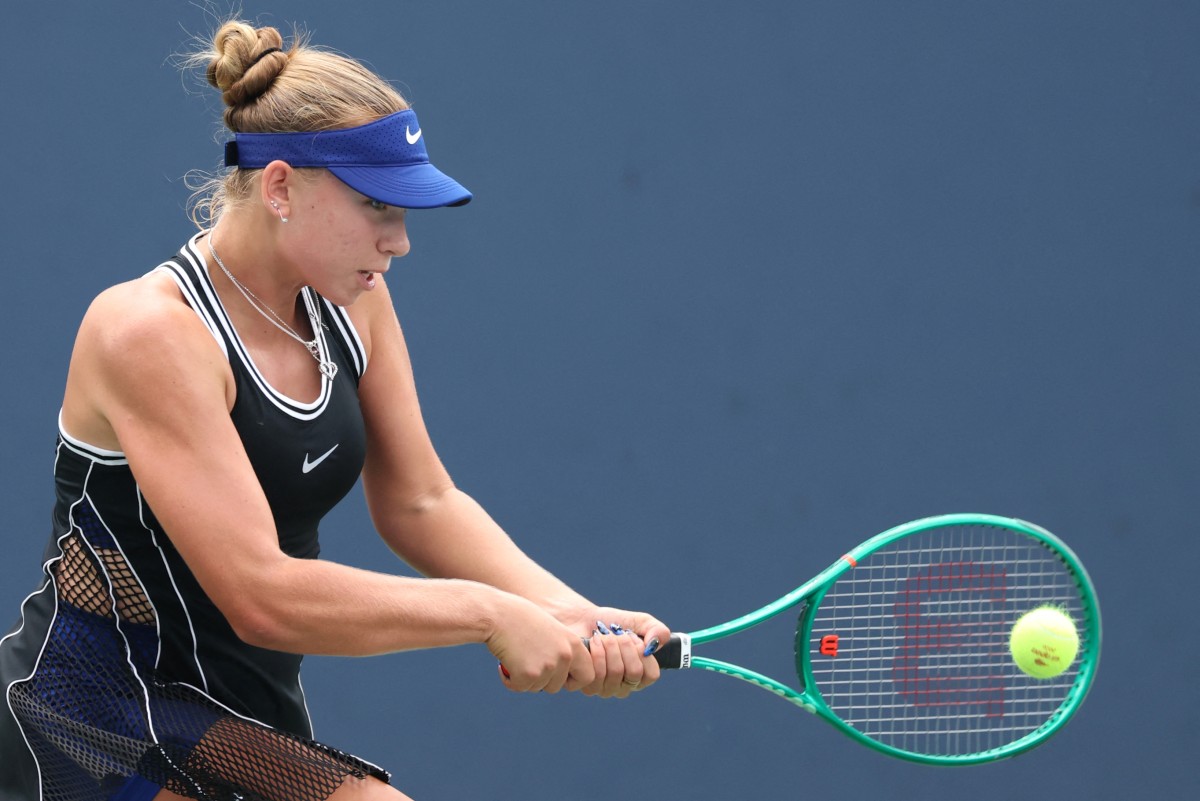
The last junior events of the year, from Mérida to the Orange Bowl, decide more than trophies. The ITF’s year-end junior ranking also decides who gets guaranteed places in professional draws the following season. The scheme that hands them out is the ITF Junior Accelerator Programme, and it is the main reason a girl ranked 18th in December can be playing a W50 main draw in March.
What It Is
The Junior Accelerator Programme began on 1 January 2023 and replaced the old Junior Exempt positions. It gives the best juniors main-draw entry to events on the ITF World Tennis Tour, the men’s M15 and M25 events and the women’s W15 to W100 events, and it gives the leading boys places at ATP Challenger 50 and 75 events.
The point is access, not wild cards. The ITF’s 2026 junior regulations describe the places as direct entry for players “where they would not otherwise gain entry on the basis of their WTA / ITF World Tennis / National ranking”. A 17-year-old with a high junior ranking often has almost no professional ranking, so without the scheme she would be fighting for wild cards or starting in qualifying at the lowest level.
Who Qualifies
Eligibility comes from the ITF year-end junior ranking of the previous season. The places used in 2026 were allocated on the 2025 year-end list.
- Girls: the top 20 on the year-end ranking, plus any junior Grand Slam singles champion or runner-up ranked outside the top 20.
- Boys: the top 30 on the year-end ranking, plus junior Grand Slam singles champions and finalists.
That is why points at the late-season events matter so much. A girl who climbs from 22nd to 19th at the last J500 of the year moves from nothing to five professional main draws.
What the Girls Get
Every girls’ place is a singles main-draw place, and each player gets five events. The higher her year-end ranking, the higher the level she can use them at.
| Year-end junior ranking | Main-draw places |
|---|---|
| No. 1 | Three at events up to W100, two up to W75 |
| No. 2 | Two up to W100, three up to W75 |
| No. 3, or a junior Grand Slam champion | One up to W100, two up to W75, two up to W50 |
| Nos. 4–5, or a junior Grand Slam runner-up | Two up to W75, three up to W50 |
| Nos. 6–10 | Two up to W50, three up to W35 |
| Nos. 11–20 | One up to W50, four up to W35 |
W100 is the top of the ITF women’s circuit. The scheme does not reach WTA 125 or tour-level events. The girls’ places also sit under the WTA’s age rule: the regulations state that “the provisions of the WTA Age Eligibility Rule will be taken into account”, so a 15-year-old still has to fit any Accelerator events inside her annual tournament allowance.
What the Boys Get
The boys’ scheme reaches higher, into the ATP Challenger Tour.
| Year-end junior ranking | ATP Challenger 50 and 75 | ITF M25 and M15 |
|---|---|---|
| Nos. 1–10, and junior Grand Slam champions | Up to eight main draws | Up to two main draws |
| Nos. 11–20, and junior Grand Slam runners-up | Up to eight qualifying draws | Up to two main draws |
| Nos. 21–30 | None | Up to eight main draws |
The Challenger places overlap with the junior route of the PIF ATP Next Gen Accelerator, which also offers the top 20 juniors eight main-draw or qualifying places at Challenger 50 and 75 events. The ATP’s programme goes further for players who have already built a professional ranking, with bands based on the ATP ranking and a college route, while the ITF programme is the one that starts from the junior ranking alone.
How a Player Uses a Place
- One per draw. The ITF allocates only one Junior Accelerator position per tournament.
- Apply first. Players submit an application form listing the events they want. Forms received by the year-end deadline are allocated in order of the year-end junior ranking, so when two players want the same tournament, the higher-ranked junior gets it. Later forms are dealt with in the order they arrive.
- Request a week ahead. A player must ask to use the position at least one week before that tournament’s entry deadline, and plans can be changed or added to during the year.
- Enter as normal. The ITF does not enter anyone. The player still enters the tournament through the ITF’s IPIN system, and the Accelerator position lifts her or him into the main draw from the entry list.
Junior Reserved Places — the Other Route
A second, wider scheme sits underneath the Accelerator. Junior Reserved places exist only at the entry level of the professional game, M15 and W15 events, where up to three main-draw places per event are held for players inside the top 100 of the ITF combined junior ranking who have turned 14 and cannot get in on their professional ranking. No qualifying places are reserved, and any Junior Reserved places that go unused are handed back to direct acceptances.
The two schemes do different jobs. Junior Reserved gives a broad group of good juniors a first look at professional draws, with no cap on how many times a player can use it. The Accelerator gives a small group of the very best a fixed number of places at a higher level. For the oldest juniors, the regulations let players born in 2007 carry their 15 December 2025 combined ranking for Junior Reserved purposes until they turn 19.
Does It Work?
Accelerator places were used on 118 occasions in 2025, and some turned straight into titles. Laura Samson won the W50 in Pazardzhik on one. Petr Brunclik won the M25 in Santo Domingo and Reda Bennani the M15 in Tanger. For players with no professional points, a title at that level is worth more than a junior result: it puts them on the professional ranking ladder described in our guide to how the Challenger and ITF rankings work.
The scheme does not replace the year-end junior events themselves. The World Tennis Tour Junior Finals, the IMG Academy championships in Bradenton and the Orange Bowl still carry the points that decide where a junior lands on the list, and therefore which row of the tables above applies to her or him.
Season Snapshot — 28 November 2026
- 2026 places were allocated on the 2025 year-end junior ranking. Kristina Penickova, the 2025 girls’ No. 1, was among the 2026 recipients; the boys’ top 10 included Ivan Ivanov of Bulgaria and Max Schoenhaus of Germany.
- The boys who earned Challenger main-draw places for 2025, on the 2024 year-end list, included Rafael Jodar and Jan Kumstat. Jodar finished 2026 in the ATP year-end top 10, and Kumstat qualified for the Next Gen ATP Finals.
- 2027 places will follow the 2026 year-end junior ranking, which the remaining events of the junior season will settle.
- The allocations above follow the 2026 ITF World Tennis Tour Juniors Regulations, published on 5 December 2025. GTN had not seen the 2027 Regulations as of 28 November 2026.
This snapshot is dated and will change. The career record above does not.