

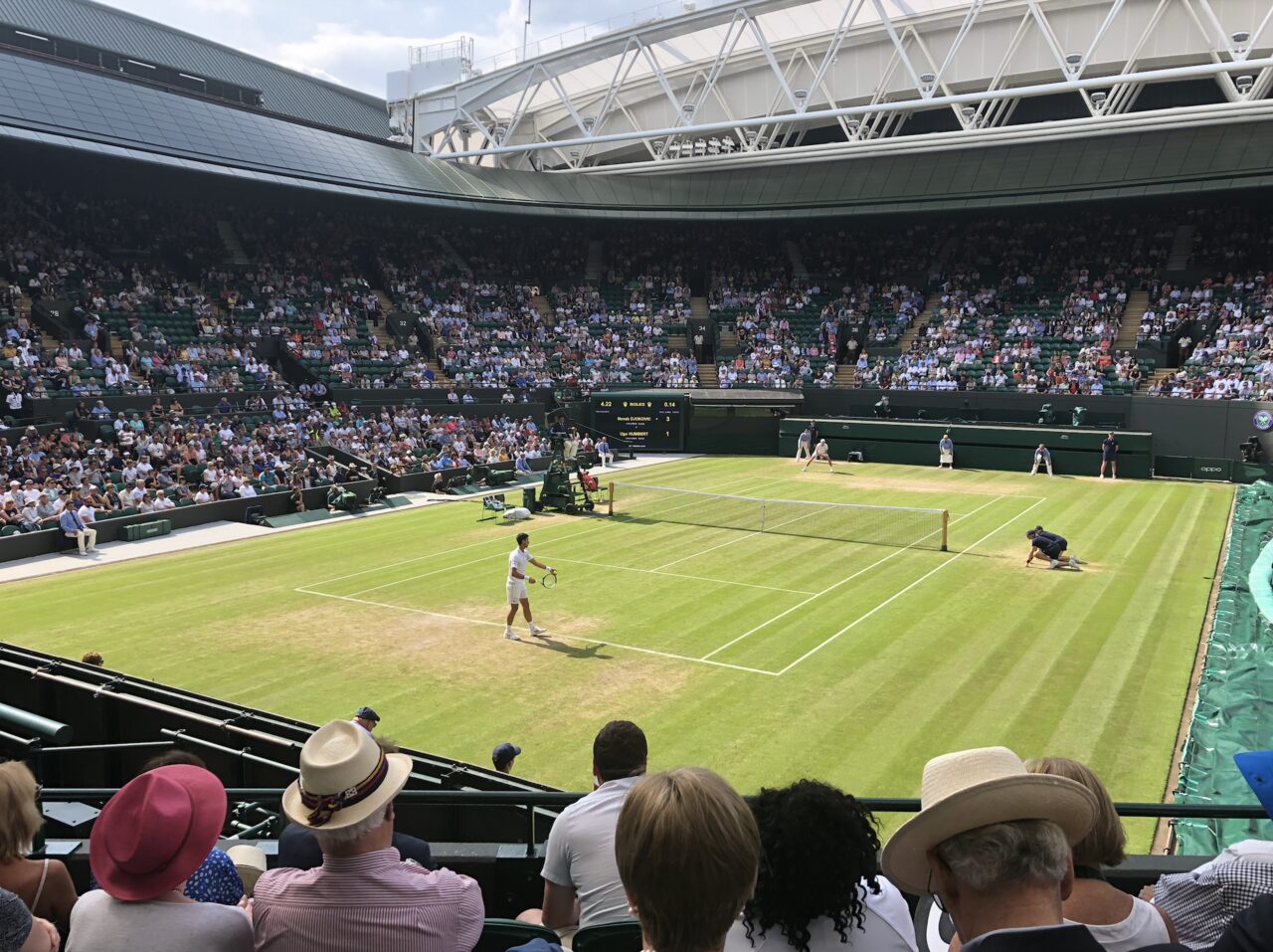
Eight seeded players were beaten on the opening day of the 2026 Championships, a heavy toll for a single session and a revealing one. None of the eight was seeded inside the top 10. The damage fell entirely on the band ranked between No. 11 and No. 32 — the seeds with the least margin for a poor start on grass.
The men’s casualties. No. 11 Casper Ruud, who has never advanced past the second round at the All England Club, lost in straight sets to Hubert Hurkacz. No. 12 Andrey Rublev was edged out in a five-set tie-break thriller by countryman Roman Safiullin. No. 14 Luciano Darderi fell to American Ethan Quinn, and No. 26 Cameron Norrie — the lone seeded Briton after Jack Draper’s withdrawal — lost a four-hour, five-set match to qualifier Michael Zheng.
The women’s casualties. No. 22 Leylah Fernandez, who has likewise never reached the third round here, lost to Janice Tjen. No. 27 Anastasia Potapova was beaten by Jéssica Bouzas Maneiro, and No. 28 Ann Li went down to Zeynep Sönmez in three sets. The eighth seed to exit, No. 20 Maja Chwalińska, was hampered after turning an ankle in the second set against Mananchaya Sawangkaew — a result better read as misfortune than form.
Why grass does this. The pattern is not random. Grass is the shortest season in tennis, roughly a month across only a handful of tour events, and most professionals do not set foot on it until late in their development. The surface keeps the ball low and fast, skidding through the court rather than sitting up, which compresses reaction time and rewards clean serving and forward movement over the baseline grinding that defines the rest of the calendar. Margins shrink accordingly. A single break of serve often decides a set, and a server on a hot afternoon can erase a ranking gap in two tie-breaks.
That math favors the lower-ranked specialist and punishes the seed who arrives under-prepared. Ruud and Fernandez, both repeat early losers at Wimbledon, fit the profile of strong players whose games travel poorly to the surface.
The contrast with last year. The volatility looked different in 2025, when eight top-10 seeds lost in the first round — the most at any major since the 32-seed format began in 2001, according to figures cited by The Athletic. This year the top tier held. Jannik Sinner, Novak Djokovic, Aryna Sabalenka and Coco Gauff all advanced, several after dropping sets. The carnage hit one rung down.
What it means. Monday’s play covered only half of each first-round draw; the remaining first-round matches begin Tuesday. If the pattern holds, the most exposed seeds are again those outside the top 10 — the players for whom grass offers the least time to find form and the most ways to lose before they do.