

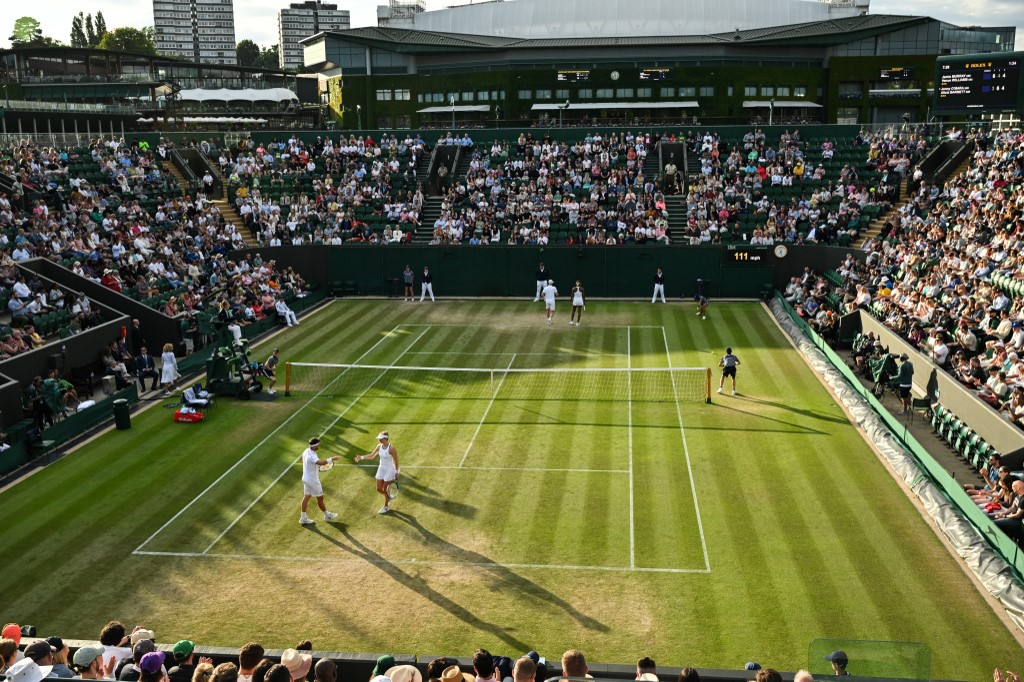
Wimbledon attracted a record 550,151 spectators during the 2026 Championships, strengthening the tournament’s position as one of the world’s most popular sporting events despite direct competition from the FIFA World Cup. The attendance figure narrowly surpassed the total recorded in 2025. Wimbledon also established daily attendance records on Days 7, 12 and 14 of the two-week tournament.
The All England Club credited several factors for the increase, including unusually favorable weather. The 2026 tournament was the first Wimbledon to avoid rain throughout the entire fortnight since 2019, reducing interruptions and helping more spectators make full use of their tickets.
Wimbledon’s traditional on-site queue also remained an important part of the event’s appeal. Tens of thousands of spectators purchased tickets on the day, with the opening Monday believed to have produced the largest first-day queue in tournament history. The record came during a difficult period for attracting global sports audiences. Wimbledon overlapped with the expanded 2026 World Cup, placing the grass-court Grand Slam in direct competition with the biggest international soccer tournament.
However, strong storylines helped Wimbledon hold the attention of British and international viewers. One of the tournament’s biggest surprises was Arthur Fery, a British wildcard ranked outside the world’s Top 100 who reached the men’s semifinals. Fery became the first British men’s wildcard to reach that stage during the Open Era before losing to Alexander Zverev.
His run provided Wimbledon with a popular home player after Emma Raducanu, Jack Draper and Sonay Kartal withdrew before the opening round. Jannik Sinner ultimately won the men’s singles title, successfully defending his Wimbledon crown by defeating Zverev in the final. Linda Noskova captured the women’s title after beating fellow Czech Karolina Muchova.
The all-Czech women’s final produced particularly strong television numbers in the Czech Republic. The match reached a peak audience of 900,000 viewers and recorded a 38.5% audience share after coverage was made available on free-to-air television. Wimbledon also recorded substantial growth outside the grounds.
The Championships generated approximately 4.8 billion social media impressions, while Wimbledon’s total following across its platforms increased by 11% to 26.6 million. In the United States, ESPN reported its second-most-watched Wimbledon tournament, behind only the 2019 edition. Coverage across ABC, ESPN and ESPN2 averaged 853,000 viewers, representing an increase of 18% compared with the previous year.
The women’s final became ESPN’s most-watched Wimbledon women’s championship match, averaging 1.9 million viewers and reaching a peak of 2.46 million. The men’s final averaged 2.4 million viewers and peaked at 3.39 million. Serena Williams’ first-round match against Maya Joint was another major television attraction. The three-set match produced ESPN’s largest audience for the second day of Wimbledon on record.
The BBC recorded more than 54.8 million streams of its Wimbledon coverage in the United Kingdom, amounting to approximately 206 million hours watched. The men’s final attracted a combined peak television and online audience of 6.24 million. The commercial results were equally striking. Wimbledon sold a record 117,995 hats during the tournament, another indication that the event continued to attract strong spending and merchandise interest despite the crowded summer sports calendar.
The figures suggest Wimbledon’s combination of tradition, same-day ticket access and major international stars remains powerful enough to compete with even the World Cup. Rather than being overshadowed, the 2026 Championships expanded their live audience, digital reach and television viewership, making the tournament one of Wimbledon’s most commercially successful editions.