

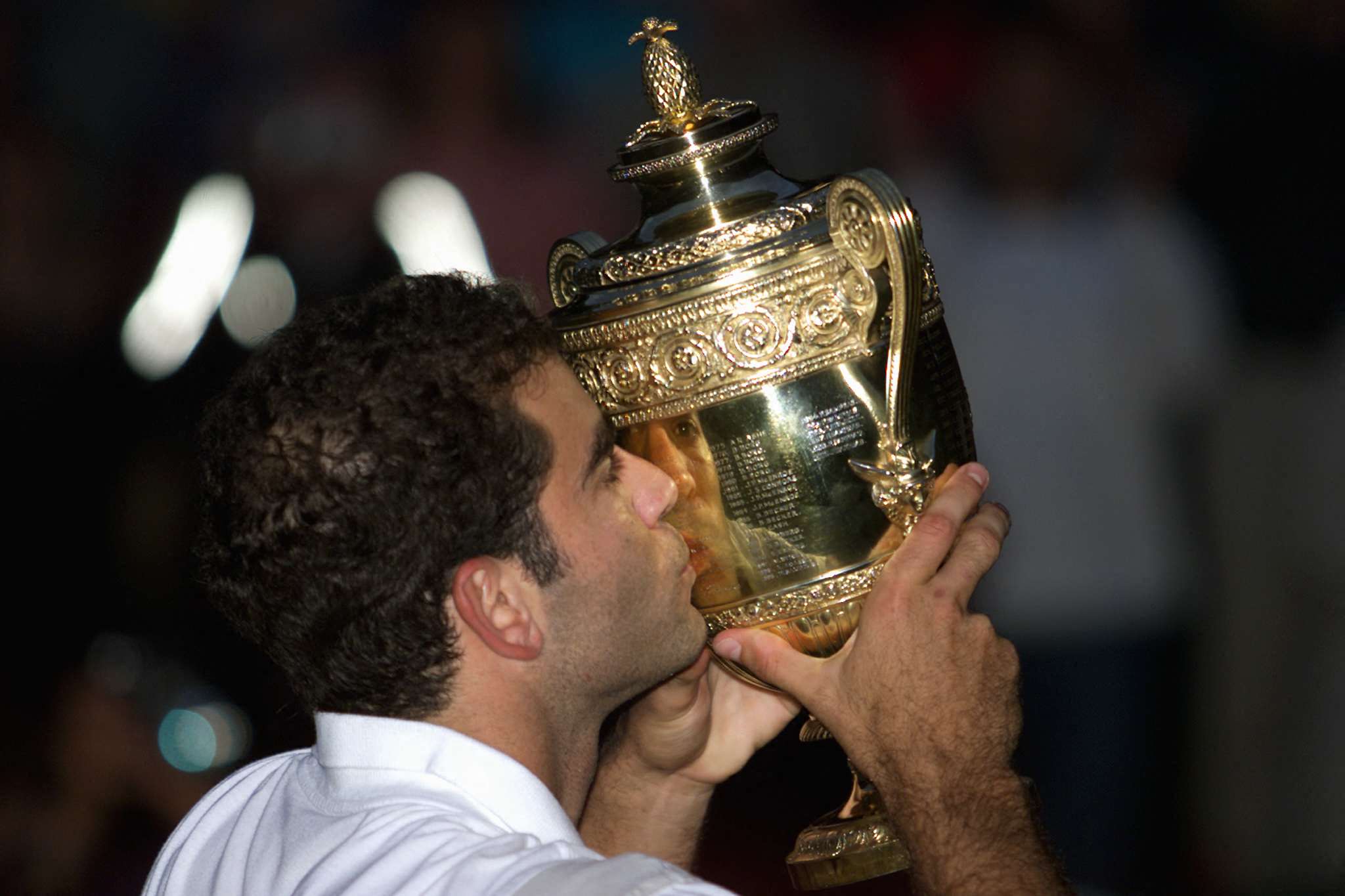
The year-end world number one ranking is professional tennis’s most complete single-season distinction. It is not awarded for winning the most prestigious tournament or for the most dramatic individual performance — it is awarded to the player who accumulates the most ranking points across the full professional calendar from January through November, demonstrating sustained excellence across every surface, every tournament tier, and every competitive context the season contains.
Reaching the year-end number one is harder than reaching number one at any specific point during the season because it requires maintaining that position through the full competitive year rather than simply peaking at the right moment.
A player who holds number one in April but fades through the clay and grass seasons will not finish the year at the top. A player who peaks in the autumn but struggled early in the season may not have accumulated sufficient points to claim the year-end distinction even with a strong finish.
The players who have finished the most seasons at year-end number one — and the players whose specific year-end number one seasons were most dominant — represent the clearest measure of sustained single-season excellence in professional tennis.
This article examines both: the all-time leaders in year-end number one finishes and the specific seasons whose competitive quality set them apart from all others.
The Men’s Year-End Number One Leaders
Novak Djokovic — 8 Year-End Number One Finishes
Novak Djokovic has finished the year ranked number one more times than any other player in men’s tennis history — eight year-end number one finishes accumulated between 2011 and 2023.
His eight year-end number ones surpass Pete Sampras’s previous record of six and represent the most complete expression of sustained single-season excellence across an extended career.
Djokovic’s eight year-end number one seasons span an extraordinary breadth of the modern era: 2011, 2012, 2014, 2015, 2018, 2020, 2021, and 2023. The gaps in that sequence — the years when Federer, Nadal, or Murray claimed the year-end distinction — reflect the specific competitive environment of the Big Three era, in which three all-time greats competed simultaneously and the year-end number one was genuinely contested rather than predetermined.
His 2015 season was the most dominant of his year-end number one campaigns — winning three Grand Slams, reaching the final of the fourth, and accumulating a win-loss record that made his year-end number one as unambiguous as any single-season performance in men’s tennis since Federer’s peak years.
His 2021 season — winning the first three Grand Slams of the year before losing the US Open final to Medvedev while also losing the Olympic gold medal match — produced the most points of any season in ATP ranking history despite not winning the Calendar Grand Slam that seemed inevitable through August.
Pete Sampras — 6 Year-End Number One Finishes
Pete Sampras finished the year ranked number one six consecutive times between 1993 and 1998 — a consecutive year-end number one record that remains the longest in men’s tennis history and that defined his competitive legacy as the dominant player of the 1990s.
His six consecutive year-end number ones were produced by a specific competitive formula: dominant performances at Wimbledon and the US Open — the two Grand Slams most suited to his serve-and-volley game — combined with consistent results at hard court Masters events and sufficient clay court performances to maintain the points lead through the full calendar year.
The consecutive nature of his year-end number one record is its most significant feature. To finish six successive years at the top of the rankings requires not just peak performance at any single point but sustained competitive relevance across a full decade of professional tennis — managing injuries, adapting to the evolution of the competitive field, and maintaining the results that the year-end distinction requires through periods of both peak form and relative struggle.
Roger Federer — 5 Year-End Number One Finishes
Roger Federer finished the year ranked number one five times — 2004, 2005, 2006, 2007, and 2009 — with his four consecutive year-end number ones between 2004 and 2007 representing the peak of his sustained dominance and the most concentrated period of single-season excellence in men’s tennis in the modern era.
His 2006 season was the most statistically dominant of his year-end number one campaigns — 92 wins, 5 losses, twelve tournament titles, and a win rate of 94.8 percent across a full professional season. That season, examined in detail in the dominant seasons article in this series, represents the outer limit of what single-season men’s tennis excellence has produced in terms of raw win-loss statistics.
His 2009 year-end number one — achieved in a season when he won both Wimbledon and the US Open and completed the Career Grand Slam with his Roland Garros title — was the most complete single-season Grand Slam performance of his career and the year that most fully expressed his all-surface excellence.
John McEnroe — 4 Year-End Number One Finishes
John McEnroe finished the year ranked number one four times — 1981, 1982, 1983, and 1984 — in a competitive era that also contained Connors, Borg, and Lendl competing at elite levels simultaneously.
His four year-end number ones were produced by a game of extraordinary variety and net skill that made him the most complete player in men’s tennis during his peak years and the clearest expression of what serve-and-volley excellence looked like at its apex.
His 1984 season — 82 wins, 3 losses, across the full professional calendar — was the most dominant year-end number one campaign of his career and one of the most statistically impressive single seasons in men’s tennis history.
The three losses that season were so unexpected and so celebrated by those who witnessed them that they defined the competitive narrative of 1984 almost as much as his victories — the Lendl comeback at Roland Garros, the French Open that got away, the defining competitive frustration of a season that was otherwise as close to perfect as men’s tennis has produced.
Ivan Lendl — 4 Year-End Number One Finishes
Ivan Lendl finished the year ranked number one four times — 1985, 1986, 1987, and 1989 — in consecutive years that represented the peak of his dominance and the period when his baseline power game was the definitive competitive force in men’s professional tennis.
His year-end number one seasons were built around Grand Slam title accumulation — he won eight Grand Slams across his career and his best year-end number one campaigns were those in which his Grand Slam results were strongest.
His 1985 and 1986 seasons — each producing multiple Grand Slam titles and dominant results across the full calendar — were the most complete expressions of his year-end number one excellence.
Jimmy Connors — 5 Year-End Number One Finishes
Jimmy Connors finished the year ranked number one five times — 1974, 1975, 1976, 1977, and 1978 — in the early years of the computerized ranking system when his aggressive baseline game and extraordinary competitive intensity made him the dominant player in men’s tennis.
His five year-end number ones were accumulated in the first competitive era of the Open Era ranking system and reflect a level of sustained dominance that established the standard against which subsequent year-end number one records were measured.
His specific competitive formula — the aggressive two-handed backhand, the exceptional returning, the relentless competitive pressure — made him the most reliable year-end performer in men’s tennis through the mid-1970s.
Rafael Nadal — 3 Year-End Number One Finishes
Rafael Nadal finished the year ranked number one three times — 2008, 2010, and 2013 — in seasons that were defined by his clay court dominance and his ability to accumulate sufficient hard court and grass court results to maintain the points lead through a full calendar year.
His 2013 year-end number one — following his return from knee injury that had cost him the second half of 2012 — was the most celebrated of his three year-end number one campaigns, reflecting both the competitive quality of his return season and the recognition that finishing the year at number one after a significant injury absence represented an extraordinary competitive achievement.
Andy Murray — 1 Year-End Number One Finish
Andy Murray finished the year ranked number one once — in 2016 — following an autumn season of extraordinary sustained excellence that produced the most dramatic year-end number one campaign of the modern era.
Murray’s path to the 2016 year-end number one required winning the last three Masters 1000 events of the season — Shanghai, Vienna, and Paris — as well as the ATP Finals, while Djokovic simultaneously lost results that allowed Murray to overtake him at the last possible moment.
The specific mathematics of the final weeks of the 2016 season — in which Murray’s position at year-end number one was secured only at the ATP Finals itself — created a narrative tension that no year-end number one campaign in men’s tennis history has fully replicated.
The Women’s Year-End Number One Leaders
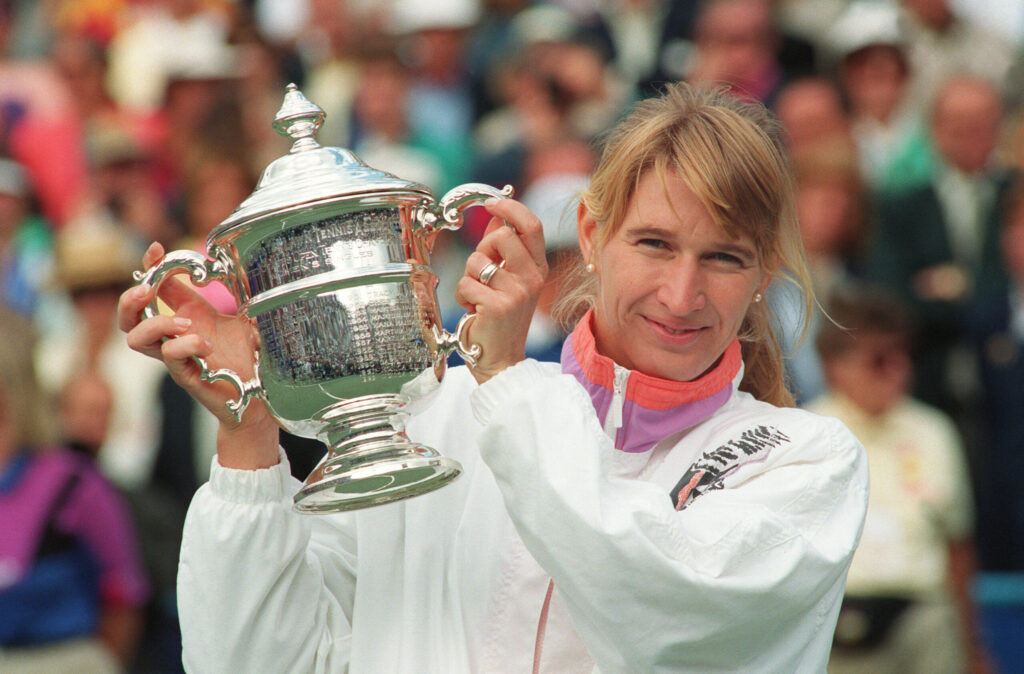
Steffi Graf — 8 Year-End Number One Finishes
Steffi Graf finished the year ranked number one eight times — 1987, 1988, 1989, 1990, 1991, 1993, 1994, and 1996 — the most year-end number one finishes in women’s tennis history and a record that reflects the most sustained dominance in the history of the WTA ranking system.
Her eight year-end number ones span a decade of competitive excellence from 1987 through 1996 with only the specific interruptions of Monica Seles’s peak years breaking the consecutive sequence.
The gap in her year-end number one record — 1992, when Seles finished the year at number one — represents the only sustained challenge to her dominance across her entire career peak.
Her 1988 year-end number one — the Golden Slam season — was the most dominant year-end campaign in women’s tennis history and one of the most dominant in either tour’s history.
Winning all four Grand Slams and the Olympic gold medal in a single calendar year, finishing with a 72–3 win-loss record, and producing a level of competitive excellence that no opponent of the era could consistently approach — Graf’s 1988 year-end number one is the standard against which all other year-end number one campaigns in women’s tennis are measured.
Martina Navratilova — 7 Year-End Number One Finishes
Martina Navratilova finished the year ranked number one seven times — 1978, 1979, 1982, 1983, 1984, 1985, and 1986 — across a career that produced the longest winning streak and one of the most dominant single seasons in women’s tennis history.
Her four consecutive year-end number ones between 1983 and 1986 represented the peak of her sustained dominance — the years when her game was the most complete in women’s tennis and when her physical preparation and tactical excellence made her essentially unbeatable across the full range of competitive contexts the calendar provided.
Her 1983 year-end number one — the 86-win season with a single loss — was the most statistically dominant campaign of her year-end number one record and one of the most statistically impressive single seasons in either tour’s history.
The win-loss record and the breadth of her tournament participation in 1983 reflect a player who was not selectively managing her schedule to protect a ranking but competing across the full professional calendar and winning almost everything she entered.
Chris Evert — 5 Year-End Number One Finishes
Chris Evert finished the year ranked number one five times — 1975, 1976, 1977, 1980, and 1981 — across a career that defined the competitive standard of women’s professional tennis through the 1970s and early 1980s.
Her five year-end number ones were built on the extraordinary baseline consistency and mental resilience that made her the most reliable performer in women’s tennis across a decade of competition.
Her specific year-end number one formula — consistent deep runs at all four Grand Slams, reliable results at the most important tour events, and the mental composure under pressure that her opponents consistently cited as her most difficult quality to overcome — produced year-end results that reflected genuine all-season excellence rather than concentrated peak performances.
Serena Williams — 5 Year-End Number One Finishes
Serena Williams finished the year ranked number one five times — 2002, 2009, 2013, 2014, and 2015 — across the most extended competitive career in women’s tennis history.
Her 2013 and 2015 year-end number ones were the most dominant of her five campaigns. Her 2013 season — 78 wins, 4 losses, eleven tournament titles — was her most complete competitive year and the clearest expression of what her game was capable of producing across a full professional calendar.
Her 2015 season — winning the first three Grand Slams before losing the US Open semifinal to Vinci in the match examined in the upsets article — produced the highest points total of her career and the most complete approach to a Calendar Grand Slam in women’s tennis since Graf’s 1988 achievement.
Martina Hingis — 4 Year-End Number One Finishes
Martina Hingis finished the year ranked number one four times — 1997, 1998, 1999, and 2000 — in consecutive seasons that represented the most concentrated period of her competitive dominance and the years when her tactical sophistication and consistent results made her the defining player in women’s tennis.
Her four consecutive year-end number ones between 1997 and 2000 reflected a specific competitive quality — the ability to maintain the highest ranking across four full seasons against a field that included Steffi Graf in decline and before the Williams sisters had reached their full competitive dominance — and established her as the most consistent performer of the transitional period in women’s tennis between the Graf era and the Williams era.
The Most Dominant Individual Year-End Seasons
Beyond the leaders in year-end number one finishes, certain specific seasons stand out as the most dominant individual year-end number one campaigns in the history of either tour.
Steffi Graf — 1988
The 1988 season is the most dominant year-end number one campaign in the history of either professional tennis tour. The Golden Slam — all four Grand Slams and the Olympic gold medal — combined with a 72–3 win-loss record and eleven tournament titles to produce a season that has no comparable precedent in either men’s or women’s tennis.
The specific quality of Graf’s dominance in 1988 was not simply that she won everything available — it was that she won it against the full depth of women’s professional tennis at a level that made the competitive gap between herself and her opponents visible in every match.
Her Roland Garros final win over Zvereva — 6–0, 6–0 in thirty-two minutes — was the extreme expression of that gap and the single result that most completely illustrated what the 1988 season contained.
Roger Federer — 2006
Roger Federer’s 2006 season produced the highest win total in men’s professional tennis history — 92 wins, 5 losses — and a level of sustained excellence across the full calendar that reflects the outer limit of what men’s single-season dominance has produced in the Open Era.
His three Grand Slam titles in 2006, combined with his Masters event results and his overall win rate, produced a year-end number one campaign that was statistically dominant across every measure available.
His five losses across the full season were spread across different surfaces and different stages of events — reflecting a player who was genuinely vulnerable only in the most extreme competitive circumstances.
Martina Navratilova — 1983
Martina Navratilova’s 1983 season — 86 wins, 1 loss — produced the highest win total and lowest loss count in women’s professional tennis history and reflected a level of single-season dominance that the sport has not produced before or since.
The single loss — to Kathy Horvath at Roland Garros — was the only interruption in a season of otherwise complete dominance across the full professional calendar. Navratilova’s 1983 year-end number one campaign is the women’s equivalent of Federer’s 2006 in terms of statistical dominance, and its win total reflects the breadth of her tournament participation that season — she was not protecting a ranking through selective scheduling but competing and winning across the full calendar.
Novak Djokovic — 2015
Novak Djokovic’s 2015 season — three Grand Slam titles, the ATP Finals title, and a win-loss record that made his year-end number one as unambiguous as any men’s season since Federer’s peak — is the most dominant year-end number one campaign of the Big Three era and the clearest single-season expression of his all-surface excellence.
His specific achievement of winning three Grand Slams — the Australian Open, Wimbledon, and the US Open — across three different surfaces in the same calendar year demonstrated a breadth of competitive excellence that only a small number of players in the history of either tour have replicated.
John McEnroe — 1984
John McEnroe’s 1984 season — 82 wins, 3 losses — is the third most dominant win-loss record in men’s professional tennis history and produced a year-end number one campaign that was historically significant as much for its three losses as for its eighty-two victories.
His loss to Lendl in the Roland Garros final — from two sets up, in what would have been his first French Open title and his Career Grand Slam — remains the most discussed single match in his career and the competitive frustration that the 1984 season is most remembered for. The 82–3 record that surrounded that loss was the most complete single-season performance in men’s tennis between Borg’s retirement and Djokovic’s emergence.
What Year-End Number One Reveals
The year-end number one record is the purest single-season measure of sustained excellence in professional tennis. It cannot be won through a single brilliant tournament performance or a single hot streak — it requires maintaining the highest competitive standard across the full professional calendar from January through November.
The players who have won it most — Djokovic and Graf with eight each — are the players whose sustained excellence has been most completely expressed across full competitive seasons rather than concentrated at specific events or specific moments.
Their year-end number one records are the statistical expression of the same quality that their weeks at number one totals and their Grand Slam titles separately reflect — the ability to compete at the highest level of the sport not just occasionally but consistently, not just for a fortnight but for a full competitive year, not just on one surface but across the full range of surfaces and competitive contexts that professional tennis provides.
That quality — sustained, comprehensive, consistent excellence across the full breadth of what professional tennis demands — is what the year-end number one measures. And the players who have accumulated the most of them are the players who have demonstrated it most completely.
Part of the Rankings series. Related: Who Has Spent the Most Weeks at World Number One in Tennis History · The Youngest Players to Reach World Number One in Tennis History · Tennis’s Longest Winning Streaks and Most Dominant Seasons