
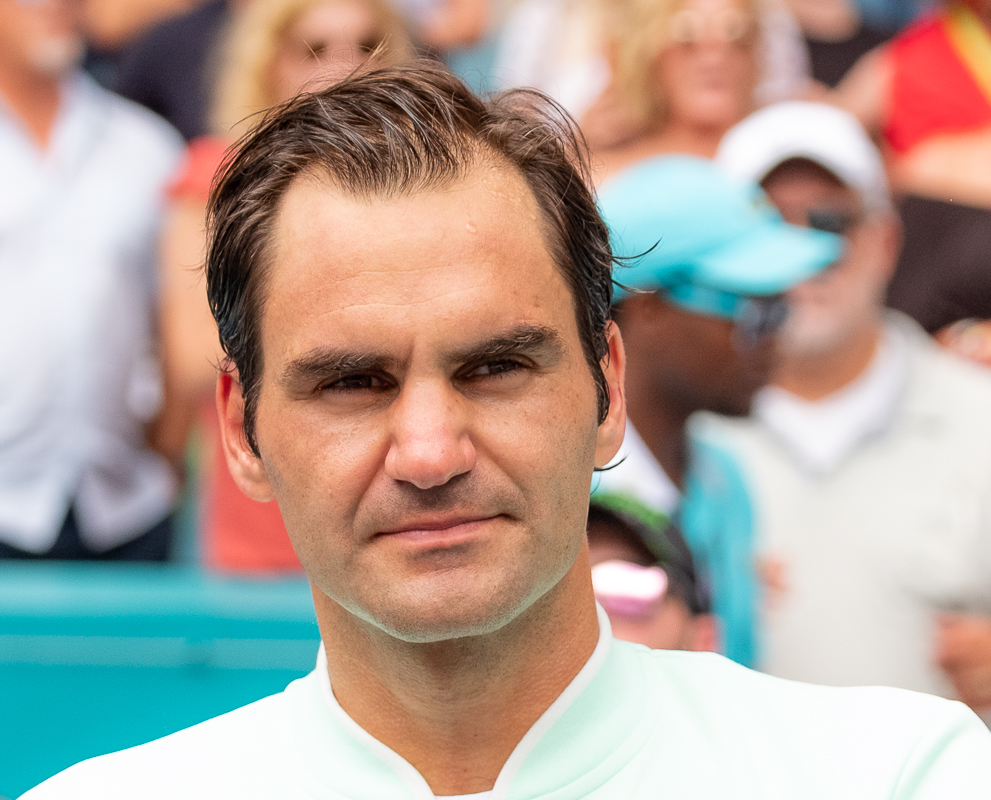
Roger Federer stopped being a billionaire on Tuesday afternoon, and he did not have to do anything to make it happen. By half past twelve in New York, Forbes had marked his fortune down to $952.4 million — a fall of at least $52 million in the space of a single morning. There was no lost endorsement, no failed venture, no misjudged investment. There was a quarterly earnings report from a Swiss shoe company, and a market that did not like what it read.
Roger Federer’s net worth fell to an estimated $952.4 million on 11 August 2026, dropping him below billionaire status, after shares in On Holding fell around 19% on a second-quarter sales miss. Federer owns roughly 2.5% of the Swiss sportswear company, which he joined as a co-owner in 2019. The decline cost him at least $52 million on paper. He first reached billionaire status in 2025.
The quarter that moved the number
On Holding, the sportswear brand Federer joined as a co-owner in 2019, published its second-quarter figures on Tuesday. Net sales came in at 850.4 million Swiss francs, roughly $1.04 billion, up around 13 per cent on the same period a year earlier. That is growth. It was simply not the growth the market had priced in: analysts had modelled 878.4 million francs, and the company’s full-year guidance of 3.47 to 3.56 billion francs also landed below expectations.
The reaction was immediate. Shares fell about 19 per cent during Tuesday’s session and finished more than 20 per cent lower, the stock’s weakest point in twelve months. Buried inside the same release was a genuinely strong line — net income of 105 million francs, against a loss of nearly 41 million francs in the equivalent quarter last year — but nobody was reading that far down.
Federer is estimated to own around 2.5 per cent of the company. That is the entire mechanism. He did not sell a share, issue a statement, or appear anywhere near the story. His net worth moved because somebody else’s revenue forecast did.
A fortune that was never really about prize money
Across twenty-four years on tour, Federer earned just over $130 million in official prize money. It is one of the largest career hauls in the sport’s history, and it is now a rounding error inside his own balance sheet. What made him a billionaire in 2025 was not tennis. It was a decision made three years before he retired.
He came into On as a co-owner in 2019, helping develop The Roger shoe line. When the company went public in 2021, the stake was valued at more than $375 million. Everything since has been leverage. The equity has grown faster than any endorsement cheque could, and it has done so on someone else’s operational performance rather than his own.
That is the trade. His reported $300 million Uniqlo deal pays regardless of what the market thinks on any given Tuesday. His arrangements with Rolex, Mercedes-Benz, UBS and NetJets behave the same way. Team8, the management company he co-founded, and the Laver Cup, the event he helped build, are businesses he can influence directly. The On stake is the one asset that answers to nobody in his camp — and it is the one that now sets the headline number.
Why the billion mattered at all
It should be said plainly: nothing has changed about Federer’s financial position. He has not lost money in any sense that means anything. He sold nothing, realised nothing, and if On’s share price recovers, the billion returns without a single further action on his part. Analysts have been clear that this is a mark-to-market movement, not a loss.
What it does reveal is how the modern athlete fortune is actually constructed. The threshold Federer crossed in 2025 was one of the most reported financial stories in tennis, precisely because it seemed to confirm something — that the sport’s most commercially successful player had converted global affection into permanent wealth. A single earnings miss has now demonstrated the opposite. The number was never permanent. It was a share price wearing a tennis player’s name.
What happens next
Almost certainly, very little. On remains a growing company posting rising revenue and improved profitability; the stock was punished for a guidance shortfall, not a collapse. Federer’s stake is unchanged. The threshold is close enough that a modest rebound restores it.
The more interesting question is what this does to the way his post-playing career is described. Federer has spent the four years since his retirement carefully avoiding the word “comeback” while remaining more visible than most active players — the exhibition programme he has been building around the US Open, the ticketing frenzy it produced, and the Hall of Fame induction waiting for him in Newport later this month have all kept him in the conversation on his own terms.
Tuesday was the exception. For one afternoon, the most commercially controlled figure in tennis history had his fortune rewritten by a spreadsheet in Zurich, and there was nothing on the other side of the net to hit back at.
Frequently asked questions
Is Roger Federer still a billionaire?
Not as of 11 August 2026. Forbes estimates his net worth at $952.4 million after a fall in On Holding’s share price. The shortfall is small enough that a recovery in the stock would restore his billionaire status.
How much of On Holding does Roger Federer own?
Estimates place his stake at roughly 2.5% of the company, though some reports put it closer to 3%. He joined On as a co-owner in 2019 and the stake was valued at over $375 million when the company went public in 2021.
Why did On Holding’s share price fall?
The company reported second-quarter net sales of 850.4 million Swiss francs, up around 13% year on year but short of the 878.4 million francs analysts expected. Full-year guidance also came in below market forecasts.
How much did Roger Federer earn in prize money?
Just over $130 million across a 24-year professional career, alongside 20 Grand Slam singles titles and 103 career titles.
When did Roger Federer become a billionaire?
Forbes first listed him as a billionaire in 2025, driven largely by the value of his On Holding stake.