

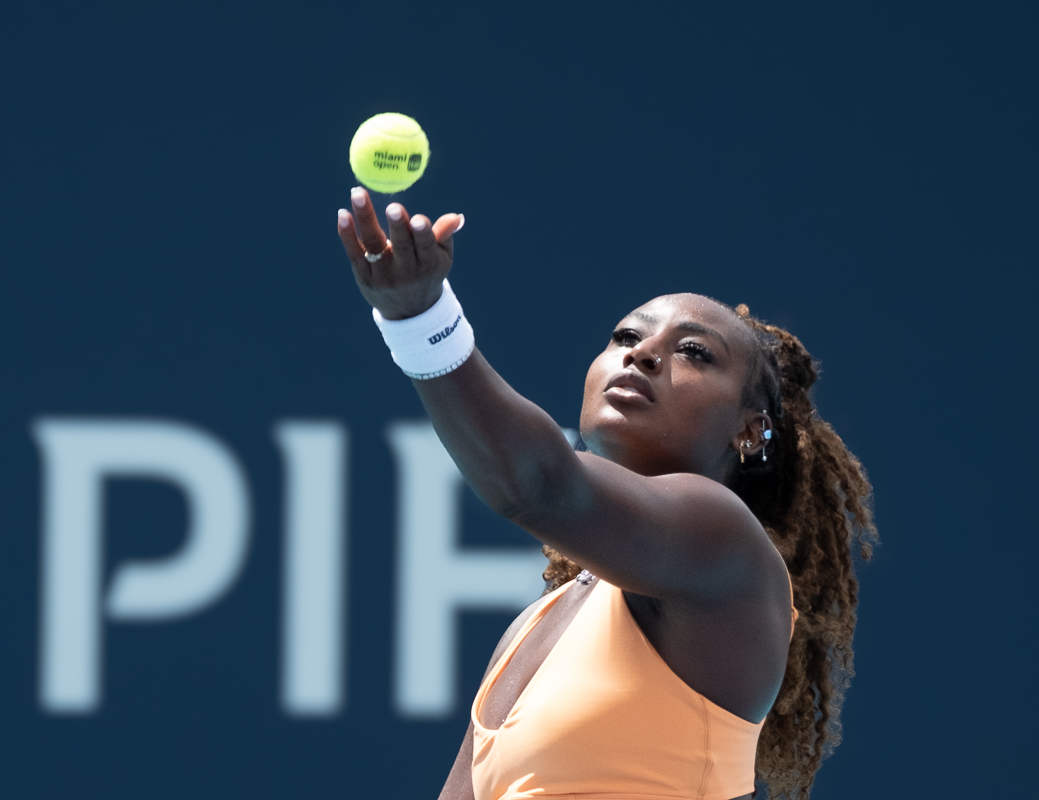
Ask a casual tennis fan which serve matters more and the answer is almost always the first serve. The first serve is the one hit at full pace. It produces the aces. It ends points before they begin. It is the shot that generates audible crowd reactions and highlight packages. The second serve, by contrast, is the one that goes in — the cautious, spinny, slightly slower delivery that exists primarily to avoid the catastrophe of a double fault.
That framing is understandable. It is also increasingly wrong.
At the highest levels of professional tennis today, the second serve is not a fallback position. It is a tactical weapon, a competitive differentiator, and in many of the most consequential moments of professional matches, the single most important shot on the court. Understanding why — and understanding what the second serve actually does in the modern professional game — changes how you watch every single service game in every match you follow.
Why the Second Serve Has Always Mattered
Before explaining how the second serve has grown in tactical importance, it is worth establishing why it has always mattered more than casual observation suggests.
The basic arithmetic of professional tennis is this: every service game begins with a server who has two attempts to put the ball in play. The first serve is hit aggressively. It misses a significant percentage of the time — even the best servers in the world miss their first serve on roughly thirty to forty percent of points. When that happens, a second serve must go in, or the point is surrendered to the returner without a rally.
This means that across a professional match, a substantial proportion of all points — often between thirty and forty-five percent — begin with a second serve. A player who serves fifty service games in a match and misses their first serve at a rate of thirty-five percent is beginning roughly seventeen or eighteen of those games with a second serve in progress before the first rally even begins. That is not a marginal consideration. It is a structural feature of the service game.
What has changed in the modern professional game is not the frequency with which second serves occur — that has always been high — but what the best players in the world are doing with them, and what the best returners in the world are doing in response.
The Traditional Second Serve: Safety First
For most of tennis history, the professional second serve was defined by its primary function: not losing the point before it began. A double fault is among the most costly events in a tennis match — a free point surrendered to the opponent without them having to do anything. The second serve existed primarily to prevent that outcome.
The traditional approach to achieving this was to hit the second serve with significantly less pace and more margin than the first serve — slower, safer, higher over the net, deeper into the service box. The spin used was typically slice, which curves the ball’s trajectory and allows a wider margin over the net without sacrificing placement entirely.
This approach achieved its primary objective. It kept the double fault rate low. But it also created a predictable, attackable delivery that professional returners learned to exploit with growing effectiveness as the game evolved.
A slow, high-bouncing second serve landing in the middle of the service box gave a good returner exactly what they needed: time to set their feet, a ball arriving at a comfortable height, and a server who was not applying any meaningful pressure through the delivery itself.
The second serve, in this traditional conception, was a defensive necessity. It was not a weapon. And that limitation became increasingly costly as the quality of professional returning improved.
How the Kick Serve Changed Everything
The tactical evolution that transformed the second serve from a defensive necessity into a genuine weapon was the development and widespread adoption of the kick serve — sometimes called the topspin serve or the American twist — as the primary second delivery at the professional level.
The kick serve is struck with heavy topspin applied at an angle that causes the ball to bounce high and kick away from the returner after landing. Unlike a flat serve, which travels fast and low, or a slice serve, which stays low and skids through, the kick serve’s value comes not from pace but from bounce — it arcs higher over the net than a flat serve, providing greater margin for error, and then kicks up sharply after the bounce, forcing the returner to handle a ball that is rising above shoulder height at a difficult angle.
What makes the kick serve different from the traditional slow second serve is that it is not simply safer — it is genuinely difficult to attack. A ball rising above shoulder height at pace is biomechanically challenging to strike cleanly.
The returner has to adjust their swing plane upward, losing leverage and making it harder to generate controlled pace in return. A kick serve directed at the backhand — typically the weaker side for most players — can force a defensive return even from a player who is technically sound and well-positioned.
The kick serve’s high net clearance — made possible by the topspin that pulls the ball down after its peak — means servers can apply significantly more pace to their second serve than the traditional slice approach allowed, without meaningfully increasing their double fault risk. This combination of pace, bounce, and margin is what transformed the second serve from a defensive tool into an offensive one.
The Modern Second Serve as a Weapon
The best second serves in professional tennis today are not simply safe deliveries designed to avoid double faults. They are targeted tactical shots designed to achieve specific outcomes: disrupting the returner’s preparation, generating weak returns that the server can attack, controlling which side of the court the return comes from, and establishing a favorable structure for the point before the first rally shot is struck.
This weaponization of the second serve operates on several levels simultaneously.
Placement creates specific problems. A kick serve directed at the returner’s backhand in the deuce court kicks away from a right-handed player, pushing them off the court and exposing the open forehand side.
The same serve directed at the body jams the returner, making it physically difficult to take a full swing without the arm and body getting in the way. A kick serve down the T on the ad court gives a right-handed returner a ball rising into their body that is difficult to handle with the forehand. Each placement creates a specific problem that the server has chosen deliberately.
Pace keeps the returner honest. A second serve that combines heavy topspin with genuine pace — rather than using spin as a substitute for pace — prevents the returner from simply stepping forward and swinging aggressively. The combination of pace and kick requires the returner to make more complex adjustments than a slow, spinning delivery would demand.
The second serve sets up the third shot. At the elite level, the server is not just thinking about getting the second serve in — they are thinking about what return it will produce and where they want to be positioned for their next shot.
A kick serve to the backhand typically produces a return back down the line, which the server can anticipate and move to cover. A second serve into the body is likely to produce a cramped, shorter return that the server can step into and attack. The second serve, in this sense, is the first move in a planned sequence rather than a defensive fallback.
Why the Second Serve Matters More in the Modern Game
Several specific developments in professional tennis have elevated the importance of the second serve relative to earlier eras of the sport.
The quality of returning has increased dramatically. The inside-the-baseline return positioning that defines modern professional tennis — discussed in depth in the previous article in this series — has made it progressively harder to get through service games on first serve alone.
Returners standing inside the baseline take the first serve earlier and more aggressively than previous generations, meaning the first serve’s advantage has been partially neutralized. The second serve faces an even more aggressive returner who is positioned to step in and attack any delivery that lacks pace, spin, or placement quality.
The margins on first serves have narrowed. Top professional players hit their first serves harder than at any previous point in the sport’s history. That pace comes with a cost: first serve percentages at the professional level have remained relatively stable, meaning that the increased pace of first serves has been matched by increased miss rates. More aggressive first serves mean more second serves — which means the quality of the second serve is tested more frequently than ever.
The physical demands of long rallies have raised the cost of weak second serves. As professional matches have become more physically demanding — longer rallies, higher court speeds, greater emphasis on movement and endurance — the cost of starting a point at a disadvantage from a weak second serve has increased.
A server who gifts their opponent a comfortable return on second serve is not just losing the point — they are potentially beginning an extended rally from a defensive position that drains physical resources and accumulates fatigue across a long match.
Returners have specifically trained to attack second serves. Modern professional returners do not simply react to second serves — they prepare for them. Many top players stand noticeably closer to the baseline on second serve returns than first serve returns, signaling their intention to step in and attack.
This positioning discipline is the product of specific training designed around exploiting weak second serves, and it means that a poor second serve is punished more systematically today than at any point in the sport’s history.
The Double Fault: What It Really Costs
Understanding the second serve’s importance requires understanding what a double fault actually costs — not just in the immediate term but in the broader context of a competitive match.
A double fault is not merely the loss of a point. It is the loss of a point that the server had two chances to win. It is a concession of control — an acknowledgment, however involuntary, that the server could not execute their most fundamental responsibility, which is to put the ball in play. And in tight, close matches between high-level professionals, double faults have a psychological weight that exceeds their face value as single points.
A double fault at 30–40 in a game that has been going for six minutes does not just lose the game — it ends a long investment of energy and concentration with nothing to show for it and hands the opponent a break they did not have to earn. A double fault at 6–6 in the second set tiebreak, in a match where everything has been decided by margins, can be genuinely match-defining.
This is why the best servers in professional tennis are distinguished not just by their ace counts but by their double fault rates. A player who serves 15 aces but hits 8 double faults has a more vulnerable service game than one who serves 8 aces and hits 2 double faults.
The net effect of double faults — measuring how much they hurt relative to how much aces help — is one of the most telling statistics in professional tennis analysis.
The Relationship Between First and Second Serve
One of the most important and least-discussed strategic dimensions of professional serving is the relationship between first and second serve quality — and how improving one often comes at the cost of the other.
A server who wants to maximize their first serve effectiveness will hit as hard and flat as possible, accepting a high miss rate in exchange for maximum pace and difficulty when the first serve lands. That approach leaves a significant number of points beginning on second serve — which means the second serve quality must be high enough to hold up against aggressive returning.
A server who is worried about their second serve — who has been broken from second serve returns, or who has hit several double faults — may unconsciously soften their first serve to increase the percentage, reducing the pace and difficulty of the first serve to give themselves a buffer.
This adjustment is tactically self-defeating: by making the first serve easier to handle in order to protect the second serve, the server is actually increasing the number of return attacks they face, because a softer first serve is attacked almost as aggressively as a second serve by top returners.
The servers who navigate this tension most effectively — who maintain aggressive first serves while delivering reliable, quality second serves — are the ones whose service games hold up most consistently under pressure. This combination is genuinely difficult to achieve and is one of the clearest differentiators between elite servers and good ones.
The Best Second Serves in the Modern Game
The players most associated with elite second serve quality in the modern professional game share certain technical and tactical characteristics that illuminate what excellent second serve construction looks like in practice.
High kick serve quality — the ability to generate heavy topspin with genuine pace — is the most consistent technical feature. The best second servers in the game today produce kick serves that combine bounce above shoulder height with enough pace to prevent the returner from simply stepping in and driving aggressively.
The combination of these qualities requires both technical excellence and physical capability — generating heavy topspin at pace is demanding on the shoulder and arm, which is why second serve quality often deteriorates late in long matches as physical fatigue accumulates.
Placement variety is the second key characteristic. Elite second servers do not hit the same delivery repeatedly — they move the kick serve across the service box, targeting different points in the returner’s stance and forcing continuous adjustment.
A returner who knows exactly where the second serve is going can prepare for it almost regardless of its quality. A returner who has to adjust for placement variance in addition to pace and spin is significantly more compromised.
Mental composure under pressure is the third and least visible factor. The best second serves in professional tennis are hit with the same technical quality at 5–5, 40–40 in a tiebreak as they are at 40–0 in the opening game of the match.
Maintaining that quality under pressure — when the physical temptation to guide the ball in safely rather than commit to a full technical swing is strongest — is what separates players who can hold serve in tight moments from those who cannot.
What to Watch For in Any Service Game
Understanding the second serve changes what you watch in a professional service game. Here is what to look for:
The returner’s position on second serve. Watch whether the returner steps inside the baseline when a second serve is coming. A returner who moves forward is signaling their intention to attack. A returner who stays back is respecting the server’s second serve quality — or being cautious about a kick that will bounce above their comfortable strike zone.
The kick height. Watch how high the ball bounces off the second serve. A kick serve that rises to or above the returner’s shoulder is doing its job. A second serve that sits up below shoulder height is attackable and will typically produce an aggressive return.
What happens in the first two shots of second serve rallies. The server’s first shot after a second serve — the third shot in the point — is the clearest indicator of whether the second serve did its job. A weak, defensive third shot means the return was too good. A clean, aggressive third shot means the second serve created the opportunity the server was looking for.
Double fault clustering. A player who hits two double faults in the same service game is under significant pressure. Watch whether the double faults affect their first serve aggression in subsequent games — a subtle reduction in first serve pace often signals that second serve anxiety is bleeding into the rest of the service game.
The Shot That Decides Matches
The second serve will never generate the crowd reactions that aces produce. It will never appear in highlight packages the way a 140mph first serve winner does. It operates in a quieter register — technical, tactical, pressure-managed — that does not announce itself with the immediacy of the game’s most spectacular shots.
But in the accumulation of professional tennis — across the thirty or forty service games of a competitive three or five set match, in the tiebreak points and the break points and the games that swing sets — the second serve is present at more consequential moments than any other single shot.
It is the shot that is tested most when the pressure is highest. It is the shot whose failure is most immediately and ruthlessly punished by the best returners in the world. And it is the shot whose consistent excellence most reliably separates players whose service games hold up across a full match from those whose don’t.
The first serve opens the point. The second serve decides whether the server can hold it.
Related: How Court Position Has Changed the Modern Baseline Game · How Serving Works — The Most Important Shot in the Game · Why Topspin Changed Professional Tennis