

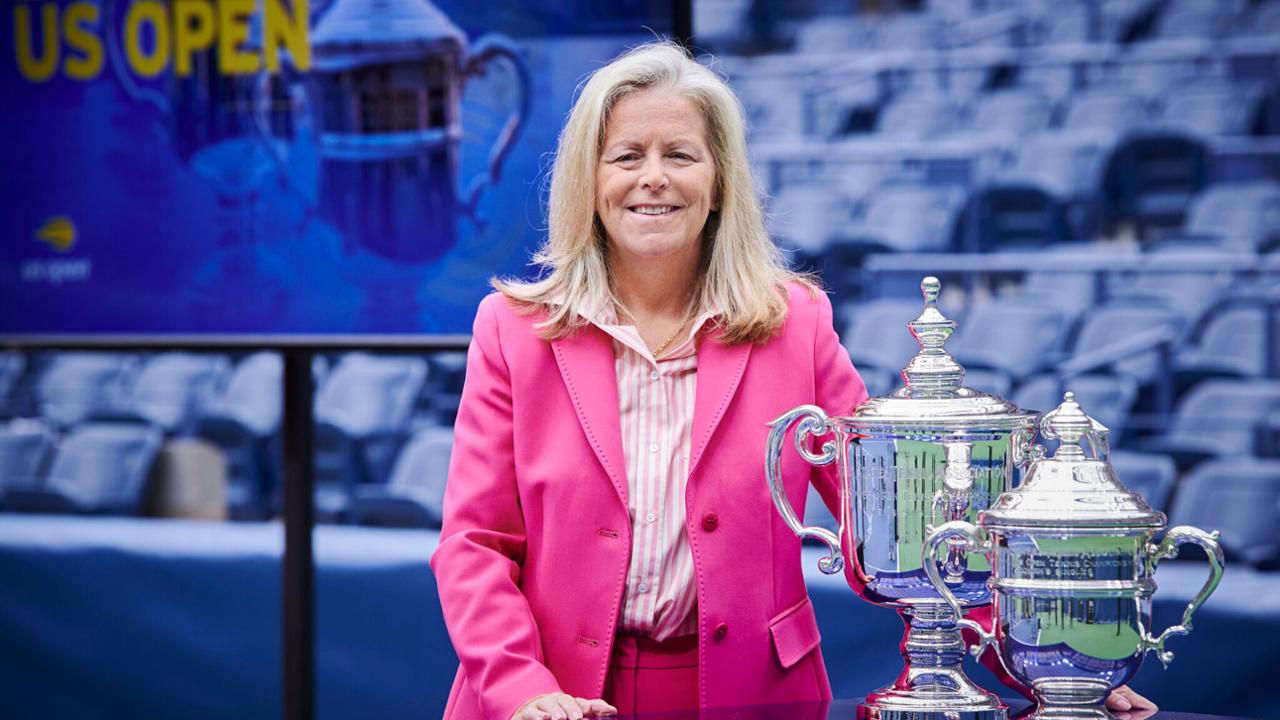
Behind every Grand Slam tournament is a small group of executives whose decisions shape what the event becomes — what changes are made to the format, what the surface looks like, how much prize money is distributed, what the broadcast feel resembles, and what cultural ambitions the tournament pursues.
At the US Open, that group has undergone one of the most dramatic leadership transitions in modern Grand Slam history. In an 18-month stretch between mid-2024 and early 2026, the tournament lost its chief executive, its tournament director, and its long-time strategic architect — and replaced all three with a combination of internal promotion and the most surprising Grand Slam executive crossover in living memory.
Here is the complete story of who runs the US Open, how the leadership has evolved across decades, and why the current transition matters for the tournament’s future direction.
The Structure: Who Does What
The USTA — the United States Tennis Association — owns and operates the US Open. Within the USTA, three executive roles shape the tournament:
The Chief Executive Officer of the USTA sits at the top of the organization, overseeing the broader strategic direction of American tennis as a whole. The role covers grassroots tennis development, regional sections, the Pro Circuit, and the commercial operations of the US Open itself. The USTA CEO is accountable to the USTA Board of Directors and chairs the executive decisions about the US Open’s largest strategic moves — including renovations, sponsorship structure, broadcast rights, and the broader vision for the tournament’s future.
The Chief Executive of Professional Tennis is a senior role within the USTA focused specifically on the professional game — the US Open as well as the USTA’s Pro Circuit events. This role bridges the strategic ambitions of the wider USTA with the day-to-day operational decisions of the tournament.
The US Open Tournament Director is the executive responsible for the day-to-day operations of the tournament itself — the player relations, the scheduling, the rules implementation, the on-site experience, and the management of the fortnight at Flushing Meadows. The tournament director is the public face of the event during the two-week competition and the figure most directly accountable for what the US Open feels like to players and fans.
Across the modern era of the US Open, these three roles have been held by different people in different combinations, with the exact division of responsibilities shifting over time. The current transition has seen significant changes to all three.
The Long Era: David Brewer (2012–2019)
Before the modern transition, the US Open’s longest-serving tournament director was David Brewer, who joined the USTA in 1997 and served as tournament director from 2012 to 2019. Brewer presided over one of the most transformative periods in the venue’s history: the construction of the Arthur Ashe Stadium retractable roof (completed 2016), the Louis Armstrong Stadium renovation with its own retractable roof (completed 2018), and the addition of the new Grandstand court that became central to the broader renovation of the USTA Billie Jean King National Tennis Center.
Brewer’s tenure was characterized by infrastructure investment — the substantial commitment of capital to transform the National Tennis Center from a hard-court Grand Slam venue with weather problems into the most weather-resilient and acoustically distinct major tournament site in tennis. The roofs ended generations of rain delays. The new courts expanded capacity. The complex became one of the most ambitious sports venues anywhere in the United States.
He stepped down after the 2019 US Open, with the USTA announcing a year in advance that the transition was coming. The COVID-19 pandemic complicated the search for his replacement, but the eventual decision — when it came — was historic.
The Allaster Era: 2020–2025
In June 2020, in the middle of the global pandemic that would force the US Open to play behind closed doors, the USTA announced that Stacey Allaster would become the next US Open tournament director — the first woman in the tournament’s 139-year history to hold the role.
Allaster’s appointment was rooted in a remarkable career. Born in Windsor, Ontario, and raised in Welland, Ontario, she had begun her tennis career at Tennis Canada before moving to the WTA, where she served as chairman and CEO of the women’s professional tour. Under her leadership at the WTA, she had been a key figure in securing equal prize money at Wimbledon and Roland Garros — making her arrival at the US Open, which had pioneered equal pay in 1973, a logical culmination of her career’s central campaign.
She had joined the USTA in 2016 as Chief Executive of Professional Tennis, and her elevation to tournament director in 2020 made her the first person to hold both roles simultaneously in the modern era. The combination gave her unusual structural power within the organization — the strategic positioning of an executive responsible for the broader professional landscape combined with the day-to-day authority of running the Grand Slam.
Her five-year tenure as tournament director coincided with some of the most consequential changes in the US Open’s recent history:
She oversaw the 2020 tournament played behind closed doors during the pandemic — the only Grand Slam to go ahead in 2020 — and the financial decisions that followed. She drove the strategic shift toward the 15-day main draw format, formally introduced in 2025, which expanded the tournament from 14 days to 15 by adding a Sunday opening day.
She helped develop the Fan Week structure, the six-day pre-tournament public-access programming that has transformed how the US Open is marketed and experienced. She presided over the 2025 reimagined Mixed Doubles Championship — a $1 million event featuring nine of the world’s top ten men and women — that became one of the most-talked-about innovations at any Grand Slam in years.
Under her leadership, the US Open reached one million on-site fans for the first time in 2024. The 2025 tournament distributed a record $90 million in prize money, with each singles champion receiving $5 million — the largest single Grand Slam champion’s cheque in tennis history.
She announced her departure from the tournament director role in December 2024, with the 2025 US Open serving as her final tournament. Carlos Alcaraz and Aryna Sabalenka — the 2025 champions — both thanked her by name in their trophy presentations. She is continuing in the role of Chief Executive of Professional Tennis at the USTA until May 2026, after which she will move into a strategic advisory role.
The CEO Transition: Lew Sherr to Craig Tiley
Running parallel to the tournament director succession was a separate, equally consequential CEO transition at the USTA itself.
Lew Sherr had joined the USTA in 2010 and become CEO and Executive Director in 2022. During his three years as CEO, the USTA saw significant growth in US Open attendance, sponsorship revenue, broadcast rights values, and tennis participation across the country. He oversaw the renegotiation of the ESPN media rights deal — extending the network’s exclusive US rights to the US Open through 2037 in an agreement worth roughly $2 billion. He unveiled the $800 million renovation of Arthur Ashe Stadium and the National Tennis Center grounds.
In May 2025, Sherr announced he was leaving the USTA to become President of Business Operations at the New York Mets — a move that surprised much of the tennis industry. Steve Cohen’s Mets ownership, with its ambitions around casino licensing and entertainment district development at Citi Field (literally next door to the National Tennis Center), offered Sherr a different kind of role than the one he had at the USTA. He departed at the end of June 2025 and began his Mets role the following month.
During the search for Sherr’s replacement, the USTA appointed Brian Vahaly, the chairman of the USTA Board, and Andrea Hirsch, the USTA’s Chief Operating Officer and Chief Legal Officer, as interim co-CEOs. Their period in charge bridged the second half of 2025 and the first months of 2026, covering the 2025 US Open and the public phase of the search for a permanent CEO.
That search concluded in February 2026, with the announcement of one of the most consequential executive moves in modern tennis history. Craig Tiley, the long-time Tournament Director of the Australian Open and CEO of Tennis Australia, was named as the new CEO of the USTA — making him only the second person to lead two different Grand Slam-organizing federations.
Tiley’s appointment to lead the USTA carries enormous significance. He has served as Tennis Australia’s CEO since 2013, transformed the Australian Open into one of the most commercially successful Grand Slams in the world, and oversaw the expansion of the Australian Open to 15 days — the model that the US Open adopted for 2025.
His combination of Grand Slam operations experience, commercial expertise, and tennis development leadership made him, by widespread industry view, the most qualified candidate the USTA could possibly have approached.The fact that he agreed to leave Tennis Australia after 13 years and move back to the United States — where he had served as the head coach of the University of Illinois men’s tennis team from 1994 to 2005, winning the NCAA championship in 2003 — was the surprise.
Tiley is expected to begin his USTA role in the second half of 2026, after Tennis Australia identifies and onboards his successor in Melbourne.
The New Tournament Director: Eric Butorac
In November 2025, the USTA announced that the next US Open tournament director would be Eric Butorac — a former Top-20 doubles professional, 2014 Australian Open doubles finalist, and former president of the ATP Player Council.
Butorac’s career arc is itself unusual. He played on the ATP Tour for 14 years, winning 18 doubles titles and reaching the doubles final at the 2014 Australian Open. He served as ATP Player Council president, advocating for player welfare and competition reforms across the men’s tour. After retiring from competition, he joined the USTA in 2016 as a senior executive focused on player relations and business development — a role in which he became the bridge between the players’ experience at the US Open and the organisation’s commercial decision-making.
His preparation for the tournament director role was distinctive. He served as tournament director of the Cincinnati Open in 2022 — running the second-largest hard-court event in North America during a critical pre-US-Open period. He led the development of the US Open Fan Week concept, particularly the integration of player programming into the public-access days. He was the tournament director for the reimagined 2025 Mixed Doubles Championship — the high-profile new event that brought nine of the world’s top ten men and women to Arthur Ashe Stadium during Fan Week.
His appointment took effect in 2026. On taking the role, Butorac described it as “in many ways, a dream come true and the culmination of my life and career in tennis.” His top priority, he indicated in early interviews, would be improving the player experience at the US Open — a continuation of the work he had done as a USTA executive since 2016.
The combination of his playing background, his ATP Player Council leadership, and his decade of USTA executive experience makes him the most player-experienced tournament director in the US Open’s modern history.
What the Transition Means for the US Open
The simultaneous transition of all three senior roles — CEO (Tiley), Chief Executive of Professional Tennis (Allaster moving to advisory), and Tournament Director (Butorac) — represents the most comprehensive leadership change at the US Open since the institution moved to Flushing Meadows in 1978. Whether it produces continuity or a fundamental shift in direction will become clear over the next several US Opens.
Several themes seem likely to define the new era:
Continued infrastructure investment. The $800 million Arthur Ashe Stadium and National Tennis Center renovation is already underway, with completion scheduled for 2027. The renovation will add roughly 2,000 courtside seats, expand premium hospitality, and integrate restaurants and retail directly into the stadium bowl for the first time. Butorac will preside over the final years of construction.
The Tiley playbook applied to New York. Craig Tiley’s Australian Open transformation included multiple innovations that the US Open has, in some cases, partially adopted (the 15-day format) and may now look to extend further. His approach to player welfare, broadcast partnership, and commercial development is widely respected across professional tennis, and bringing that approach to the USTA will likely produce changes both visible and structural.
Player-centric programming. Butorac’s background as a former player and ATP Player Council president strongly suggests that player experience and welfare will be central to the tournament’s evolution under his leadership. His comments since taking the role have repeatedly emphasized this priority.
The Mixed Doubles continuing experiment. The 2025 reimagined Mixed Doubles Championship, which Butorac oversaw, was the most-discussed format innovation in Grand Slam tennis that year. The format’s continuation, expansion, or refinement under his tournament director leadership will be one of the most closely watched developments.
The Bottom Line
The people who run the US Open shape what the tournament becomes. In 2026 and beyond, that group looks dramatically different than it did just two years earlier. Stacey Allaster, the trailblazing tournament director whose tenure included the pandemic, the prize money records, and the 15-day format expansion, has moved into advisory roles.
Lew Sherr, the CEO who oversaw the ESPN extension and the $800 million renovation announcement, has moved to the New York Mets. Craig Tiley, the long-time Australian Open architect, is taking over the USTA. Eric Butorac, the former doubles pro and player council president, is the new tournament director.
The combination is unprecedented. A former Grand Slam tournament director from another country running the USTA. A former player running the day-to-day operations of the US Open. A retiring trailblazer transitioning to advisor. None of the four major Grand Slams has assembled this combination of leadership before.
What it produces — over the next five years, the next decade, the next era of the US Open — will be one of the most important questions in modern tennis. The Allaster era is ending. The Butorac and Tiley era is beginning. The institution they inherit is the most commercially successful Grand Slam in the world. What they do with it is now their decision to make.