

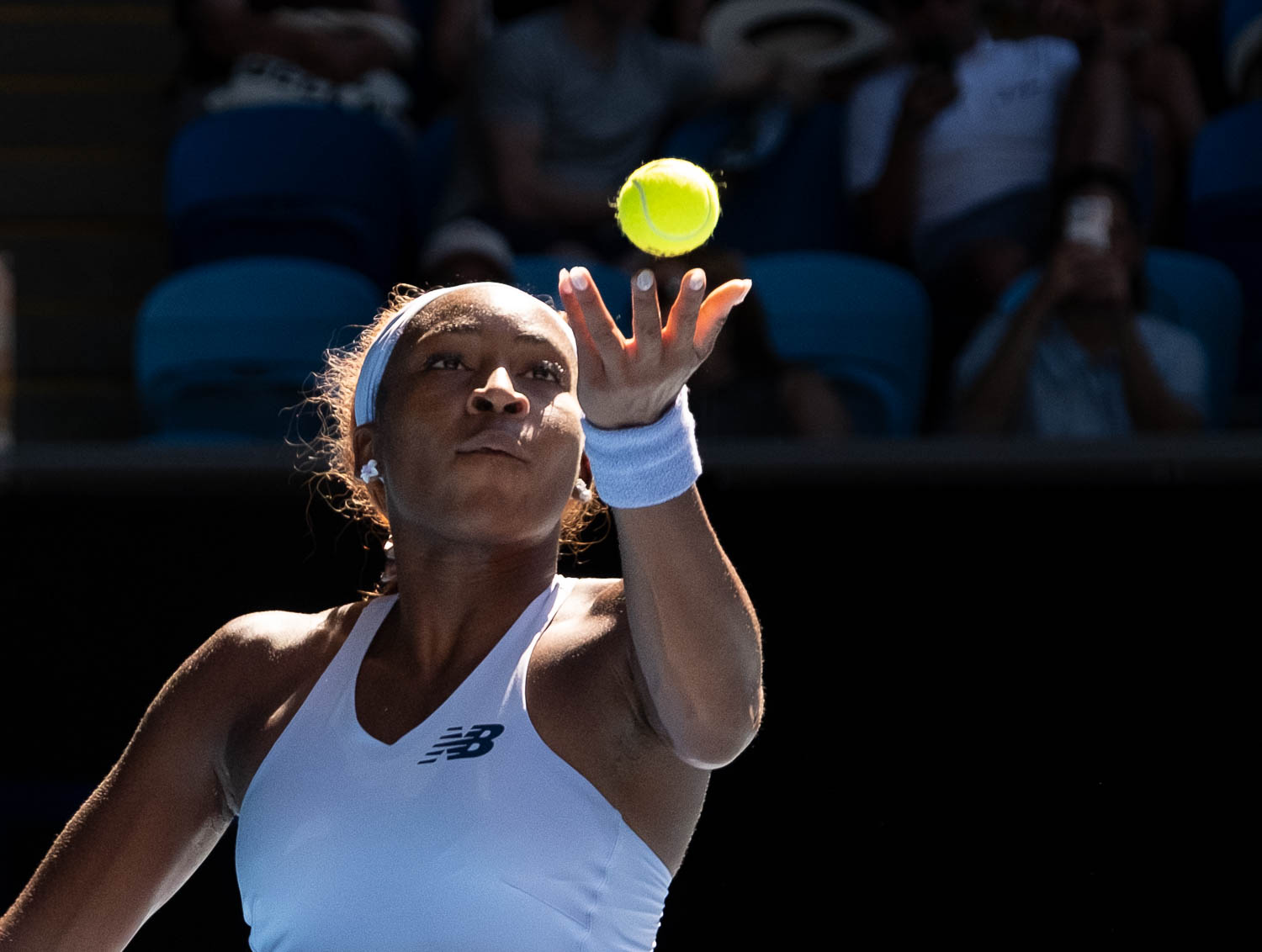
Understanding how serving works in tennis starts with one fact: it’s the only shot a player controls completely. If you’ve watched a professional match and seen a player blast the ball so hard the returner barely flinched, you’ve witnessed the serve at its most dominant. No reaction required, no opponent dictating the pace — it’s yours to execute, on your terms, from a standing start. That’s precisely why it’s the most important shot in the game.
This guide breaks down how serving works in tennis — the rules, the mechanics, the strategy, and the terminology you’ll hear commentators use throughout every match.
How Serving Works in Tennis — and Why It Matters So Much
Every single point in tennis begins with a serve. The serving player stands behind the baseline and strikes the ball into a designated service box on the other side of the net. Until that ball lands in bounds and the point begins, nothing else happens. The server controls the tempo, the spin, the speed, and the placement of that opening shot — and at the professional level, a well-executed serve can end the point immediately, before the returner has any say at all.
That’s not an exaggeration. In men’s professional tennis, first-serve points are won by the server at a rate exceeding 70% on average. On fast surfaces like grass, that number climbs even higher. The serve is so influential that entire match strategies are built around it — and losing your serve, as we’ll get to shortly, is one of the most consequential events in a match.
The Basic Rules of Serving
Before strategy and technique, you need to know the fundamental rules that govern every serve.
Where the Server Stands
The server must stand behind the baseline — the line at the back of the court — and within the boundaries of the court’s width. For the first point of each game, the server stands to the right of the center mark (this side is called the “deuce side”). For the second point, they move to the left of the center mark (the “ad side”). They alternate sides with every point throughout the game.
Where the Ball Must Land
The serve must land in the service box diagonally opposite to where the server is standing. The court is divided into two service boxes on each side of the net — a right box and a left box. Serving from the right, the ball must land in the opponent’s left box. Serving from the left, it must land in the opponent’s right box.
If the ball lands outside the service box — in the net, beyond the service line, or wide of the sideline — it’s called a fault.
Two Chances Per Point
This is one of the most important rules in tennis: each server gets two attempts to land a legal serve on every point.
- The first attempt is called the first serve.
- If the first serve is a fault, the server gets a second attempt — the second serve.
- If the second serve is also a fault, it’s called a double fault, and the point is immediately awarded to the returner.
This two-serve rule shapes the entire strategy of serving in tennis. Players typically hit their first serve harder and more aggressively, accepting a higher miss rate. The second serve must go in — which generally means more spin, less pace, and a safer margin over the net.
The Let
There is one exception to the fault rule: the let. If a legally struck serve clips the top of the net and still lands in the correct service box, it is called a let — and the serve is replayed. A let is not a fault. It’s simply a do-over, and it can happen on either the first or second serve without penalty. If a let occurs on a first serve, the server still has both serves available for that point.
Types of Serves
Professional players have a full vocabulary of serves, each used for different tactical purposes. Here are the main ones you’ll hear about:
The Flat Serve
The flat serve is struck with minimal spin, traveling in as straight a line as possible. It’s the fastest serve in tennis — top professionals regularly exceed 130 mph, with the all-time recorded speed exceeding 163 mph. The flat serve is typically used on first serves, aimed down the center or wide to the corners. Its pace leaves the returner minimal time to react. The trade-off: a lower margin for error, which is why it’s rarely the go-to for second serves.
The Slice Serve
The slice serve is struck with sidespin, curving the ball horizontally as it travels through the air and skidding low after the bounce. A right-handed player’s slice serve to the deuce side curves away from a right-handed opponent, potentially pushing them off the court entirely. On the ad side, a slice serve can jam into the body of a right-handed returner. The slice is highly effective at creating difficult angles and uncomfortable positions for the returner.
The Kick Serve
The kick serve — also called a topspin serve — is the most technically demanding of the three. Struck with heavy topspin, the ball arcs high over the net and then kicks up sharply after the bounce, often rising above shoulder height. It’s the most common second serve at the professional level because its high net clearance makes it far safer to execute, while its bounce makes it genuinely difficult to attack. A well-placed kick serve to the backhand is one of the most effective defensive weapons in the game.
Serving Strategy: More Than Just Power
Raw pace is only part of what makes a serve effective. Professional players think about every serve in terms of placement, spin combination, and how it sets up the next shot. Here are the main strategic concepts:
The T, the Body, and the Wide
Every service box has three primary target zones:
- The T — down the middle of the court, where the service box meets the center line. A serve here cuts off the returner’s angles and keeps the point central.
- The Body — aimed directly at the returner’s hip or torso. This “jams” the returner, making it difficult to take a full swing.
- Wide — aimed toward the outer sideline. A wide serve, especially with slice, can pull the returner completely off the court, opening up the entire opposite side for the next shot.
Mixing these three targets unpredictably is the hallmark of a sophisticated server. A player who hits the same zone repeatedly becomes far easier to read and attack.
Serving to Set Up the Next Shot
Elite servers don’t just think about winning the point with the serve itself — they think about where the return will come back and where they want to be positioned afterward. A wide slice serve on the deuce side, for example, pulls the returner off the court and typically produces a return back down the line — allowing the server to step in and attack the open court with a forehand. This combination — serve plus one — is a core strategic pattern at every level of professional play.
First Serve Percentage
One statistic that analysts watch closely is first serve percentage — how often a player’s first serve lands in. A player hitting 75% of first serves in is typically serving from a position of strength. Drop below 50% and the server is essentially playing many points on second serve alone, which is a significant tactical disadvantage. The best servers in the game balance aggression with consistency, maintaining high first-serve percentages while still generating free points.
The Ace
An ace is a serve that the returner cannot touch with their racket at all — the point ends the moment the ball bounces in the service box. Aces are the purest expression of serving dominance and are tracked as a key statistic in every match. Top servers like John Isner, Ivo Karlovic, and Milos Raonic have built entire careers around massive serve games that regularly produce double-digit aces per match. At Wimbledon — the fastest Grand Slam surface — ace counts frequently reach into the 20s and 30s in a single match.
Holding and Breaking Serve
Because the server holds such a structural advantage, holding serve — winning the game when you are serving — is the expected baseline outcome at the professional level. When a server fails to hold, it’s called a break of serve, and it’s one of the most significant events in a match.
A break point is any point where the returner is one point away from winning the game. These moments attract the most focus from commentators and analysts because they represent the highest-leverage opportunities in a set. Saving break points is as important as converting them — a server who consistently saves break points under pressure is one of the most difficult players to beat.
The rhythm of a set is often described in terms of serve: both players hold comfortably until someone blinks. That first break — whether it holds up or gets broken back immediately — frequently determines who wins the set.
Serving Rotation: Who Serves When
Service alternates between players after every game. At the start of a match, a coin toss or racket spin determines who serves first. The player who wins the toss can choose to serve, receive, or select which end of the court to start on.
Within a tiebreak, serving rotates differently: the player who would have served next serves the first point, and then service alternates every two points for the duration of the tiebreak. This ensures neither player serves more than two consecutive points in a row.
At the start of a new set, the player who was receiving at the end of the previous set becomes the server for the first game of the new set.
Key Terms at a Glance
- Ace — A serve the returner cannot touch; instant point for the server.
- Fault — A serve that lands outside the service box, in the net, or that the server commits a foot fault on.
- Double fault — Two consecutive faults on the same point; the returner wins the point.
- Let — A serve that clips the net and lands in; replayed with no penalty.
- First serve — The initial serve attempt on each point; typically hit aggressively.
- Second serve — The backup serve after a first-serve fault; typically hit with more spin and margin.
- Hold — Winning the game while serving.
- Break — Winning the game while your opponent is serving.
- Break point — A point where the returner is one point from winning the service game.
- Deuce side — The right side of the court from the server’s perspective; used on even-numbered points (0, 2, 4…).
- Ad side — The left side of the court from the server’s perspective; used on odd-numbered points (1, 3, 5…).
- Foot fault — A fault called when the server steps on or over the baseline before striking the ball.
Why the Serve Defines the Match
No other shot in tennis offers the combination of control, power, and consequence that the serve does. A great serve can neutralize a superior opponent. A poor serving day can unravel an otherwise dominant performance. It’s the one shot where the ball is entirely in your hands — literally — before the point begins.
Understanding serving transforms how you watch tennis. You’ll start to notice serve patterns, read when a player is going wide versus down the T, and recognize the gravity of every break point. The serve isn’t just the start of a point. In many ways, it’s the engine of the entire match.
Part of the Tennis 101 series. Previous: How Sets and Games Work. Next: Scoring from Deuce — Why “Win by Two” Changes Everything.