

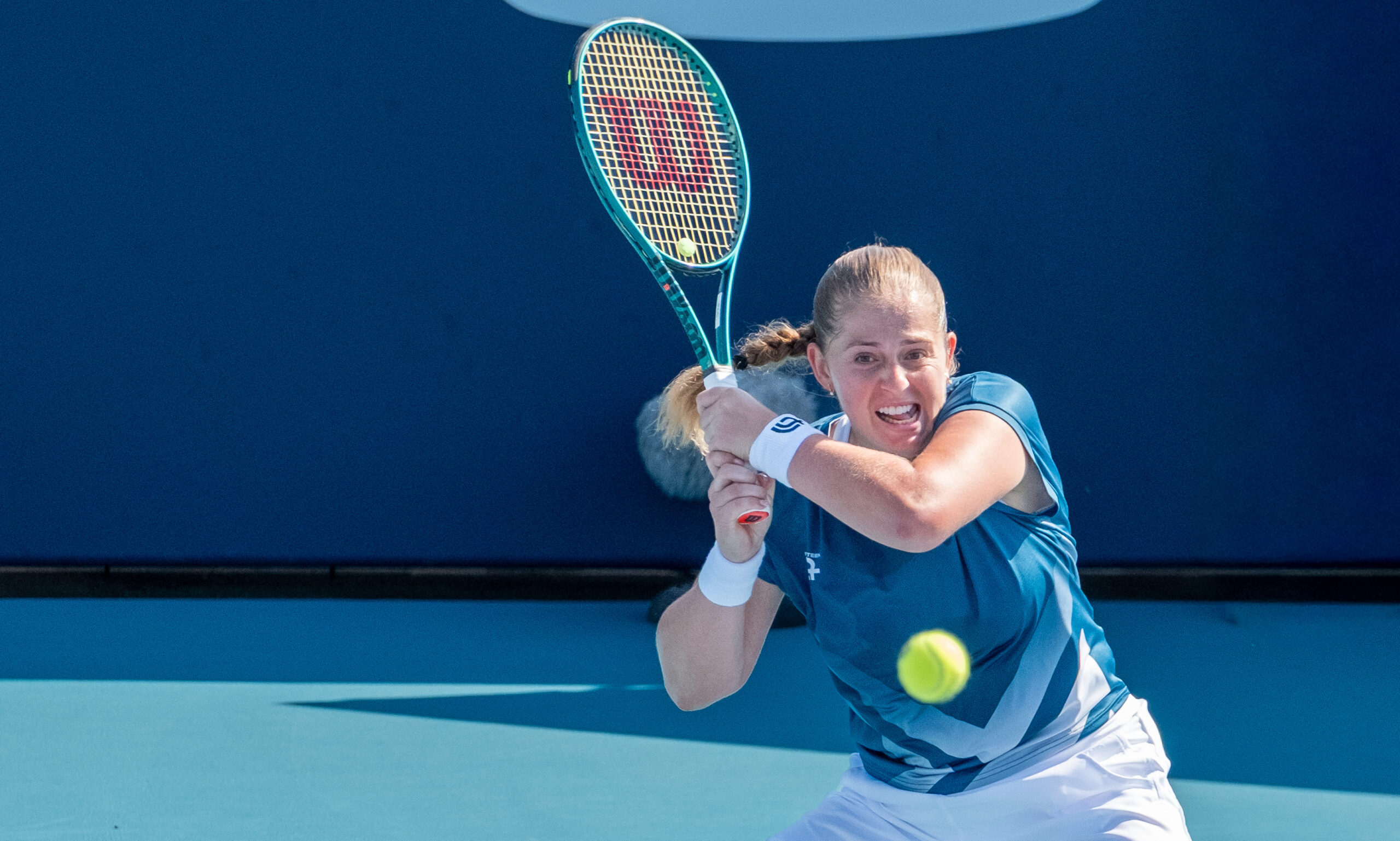
Jeļena Ostapenko stopped playing in Toronto on Tuesday night. She did not stop hearing about it. The Latvian, seeded 26th at the WTA 1000 event, retired from her second-round match against Zhang Shuai trailing 0-6, 0-4, having taken a medical timeout two games earlier. Within hours she had begun publishing screenshots on her Instagram account of the messages that arrived afterward — abuse about her performance, abuse about her body and her weight, and at least one message she described as threatening her life and her family.
She tagged Instagram directly and asked the platform to act against a specific account, saying the problem was not hers alone but one affecting other players on tour. She also indicated she had been unwell on court. Neither she nor the tournament has given a formal medical explanation for the retirement, and no diagnosis has been made public.
What followed the match is, by now, an unremarkable feature of professional tennis, which is precisely the problem. Three weeks ago the WTA and World Tennis published their second annual report into online abuse directed at players, and the numbers describe an industrial process rather than a handful of bad nights.
More than 1.2 million posts and comments were analyzed across the 2025 season through the Threat Matrix monitoring service. Roughly 12,000 were categorized as abusive. Of those, 3,726 were classified as serious, a category covering violent, sexual, racist and targeted threats.
The report also identified where the pressure originates. Gamblers accounted for 42% of all verified abuse and 59% of the serious abuse, a pattern that has held across both years of the study and that points at the economics rather than the emotions of it. A losing bet, not a lost set, is what generates most of the traffic. A retirement mid-match — which voids some wagers and settles others in ways bettors rarely welcome — sits directly in the path of that.
The enforcement side has produced results without changing the underlying volume. Sixty-six percent of serious abusive content was removed from platforms last season. Thirty-five accounts, traced to 12 individuals, were escalated to law enforcement, and 68 abusive accounts were fully or partially identified, up from 39 the previous year. Eighty-nine percent of the accounts responsible for serious abuse in 2024 did not reappear in 2025.
The tours have repeatedly said that further progress depends on parties they do not control: social media companies, prosecutors and the betting industry. That last group has begun, narrowly, to move. Last month Fanatics Sportsbook became the first betting operator to adopt the monitoring tools, through a program aimed at identifying the account holders responsible for abuse. One operator is not an industry, and the tours have said as much.
Ostapenko is not the first player to make the contents of her inbox public. Amanda Anisimova spoke about being afraid to look at her phone after losing the 2025 Wimbledon final 6-0, 6-0, and Katie Boulter has described death threats reaching her and her family. The pattern in each case is the same: a heavy defeat, a rapid escalation, and a player deciding that publishing the messages is more useful than absorbing them privately.
There is a competitive footnote. Ostapenko has never reached the fourth round in 10 appearances at this tournament, and Tuesday’s exit costs her ranking points she was defending. Zhang advances into the third round. Ostapenko is entered in the Cincinnati Open, which begins its main draw Aug. 13, and in the US Open field. Her availability for either has not been addressed.
The timing matters beyond her. The North American swing runs through the heaviest betting weeks of the calendar, from Toronto and Montreal into Cincinnati and then New York, with matches in American prime time and legal sportsbooks operating in most of the states watching. Every mechanism the report describes is about to run at volume.
The WTA has spent two seasons building the apparatus to measure and remove this material, and it works reasonably well at removal. What no monitoring service can do is reduce the number of people sending it. Until that changes, the response available to a player who has just walked off court unwell is the one Ostapenko chose: screenshot it, post it, and ask a platform to help.