

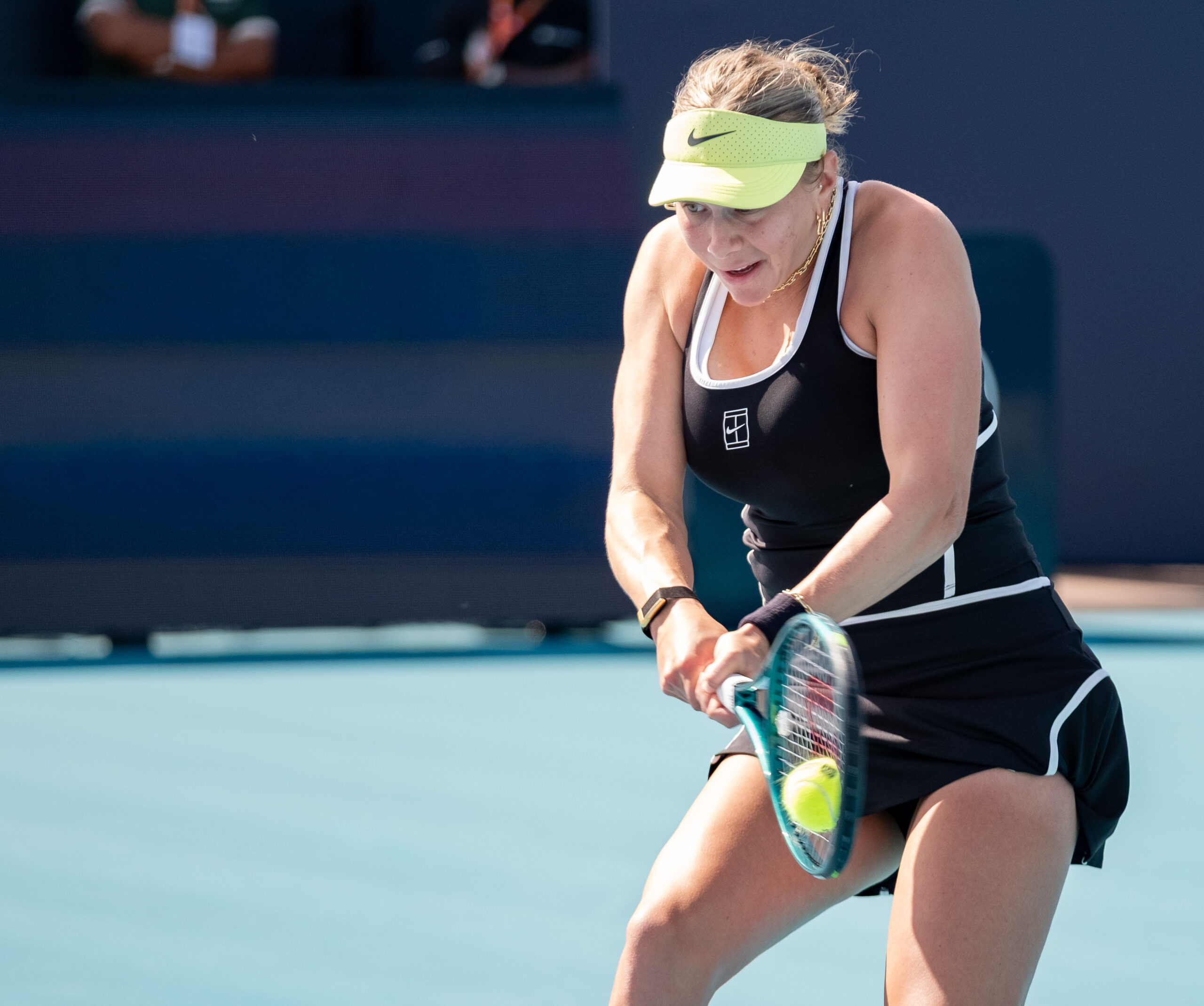
Amanda Anisimova has answered a body-shaming comment the way a top-ten player can afford to: without dignifying it. The American posted a poolside selfie this week captioned “How your comments find me”, a one-line reply to an anonymous social-media user who had called her “too fat” and told her to lose weight after her Wimbledon exit. The response, first widely shared on 13 July, was read across the tennis world as a study in unbothered confidence.
The context sharpened it. Anisimova is a two-time Grand Slam finalist, runner-up at both Wimbledon and the US Open in 2025, and reached a career-high of world No. 3 in January 2026. She is one of the most accomplished players on the WTA Tour, and the suggestion that her physique explained a defeat drew immediate pushback from fans who pointed to her record. Tennis Temple, Tennis Up To Date and Tennis World USA all framed the exchange the same way: a player reclaiming the narrative rather than absorbing the insult.
It was not the first time. Anisimova has faced body-focused abuse before, and that pattern is part of why the episode resonated. Outlets covering the story pointed to the wider tension it exposed — that professional athletes are expected to perform like machines while being judged as though they were models, on platforms that reward outrage over the sport itself.
The timing added weight. Anisimova has been open about the cost of life on tour. She stepped away from tennis for mental-health reasons in 2023, and before this year’s Championships she spoke about burnout and exhaustion, pulling out of Berlin and Bad Homburg and returning home to rest after Queen’s Club. She came back to compete at Wimbledon, then lost in the third round to compatriot Madison Keys in a tight three-setter, unable to defend the runner-up points she had earned in 2025.
That result reshaped her ranking. Having entered Wimbledon inside the top five, Anisimova slipped to world No. 9 in the update that followed, and her 2026 form places her at No. 19 in the WTA Race, which measures the current calendar year alone. The North American hard-court swing now carries extra weight. She has significant points to defend from her run to the US Open final last year, and her next scheduled event is the WTA 1000 in Toronto, which begins in early August.
None of that was the subject she chose to engage with. Anisimova, 24, has built her season around a return to the elite after that 2023 break, and her supporters have increasingly treated her openness as a strength rather than a vulnerability. The selfie fit the pattern. It offered no argument, no defence of her fitness and no engagement with the specifics of the insult — only the suggestion that the comment had reached her poolside and changed nothing.
By answering a remark about her body with a photograph and five words, Anisimova kept the conversation on her own terms. The moment travelled well beyond the tennis audience precisely because it refused to treat the criticism as serious, and because the person making it stayed anonymous while the player did not. For a sport that increasingly asks its stars to live in public, it was a small, pointed reminder that visibility and judgement are not the same thing — and that the second is a great deal easier to ignore from a top-ten ranking with two major finals behind you.
Her focus now returns to the court. The summer hard courts will decide whether Anisimova can rebuild the ranking she lost at Wimbledon, starting in Toronto and building toward a US Open where she has the most to defend and, a year on from the final, the most to prove