

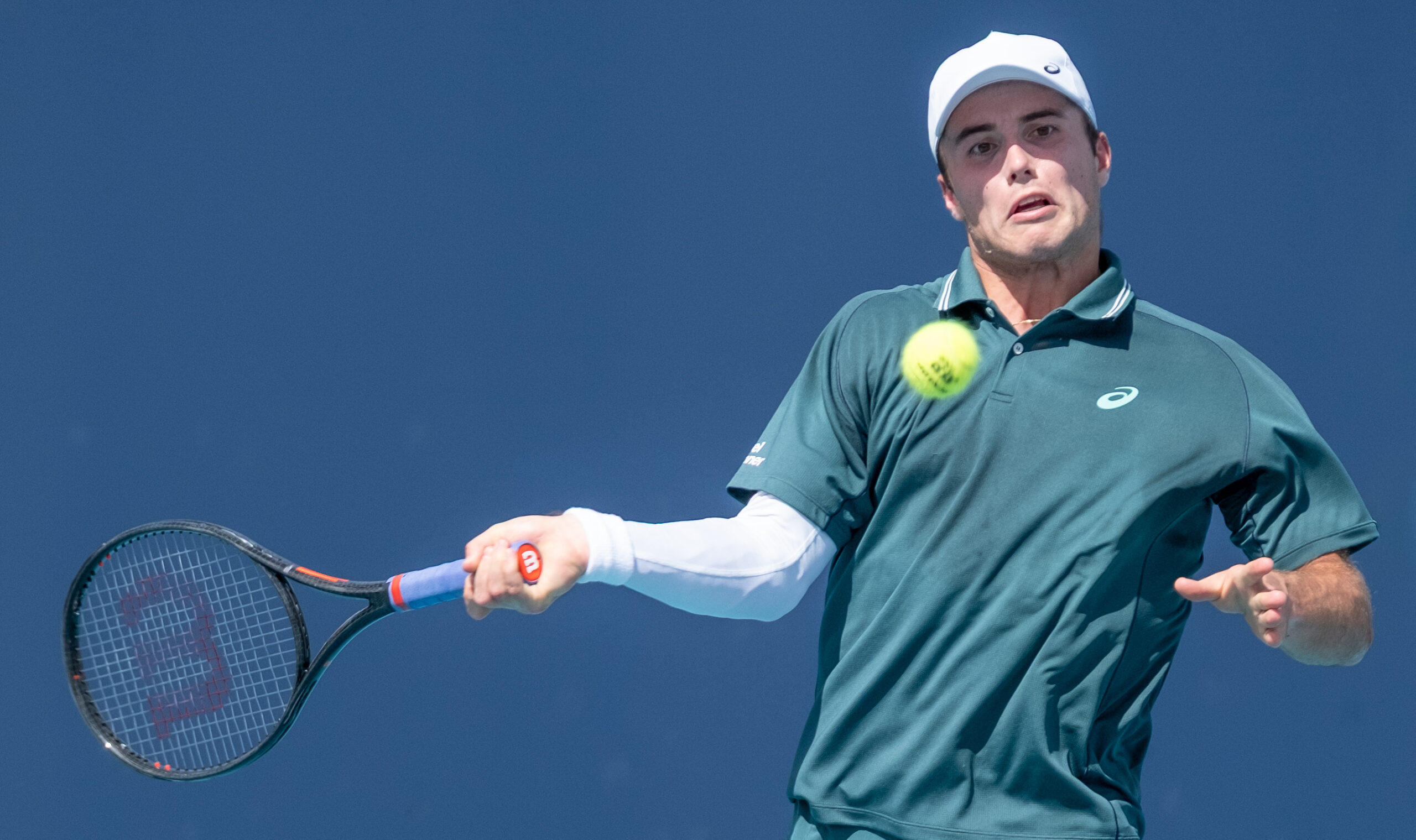
Arthur Fery climbed 78 places to a career-high World No. 36 in the ATP rankings published Monday, becoming British No. 1 for the first time. He is the twentieth British man to hold the national ranking since records began in 1973. He turned 24 the day before. The Lawn Tennis Association confirmed the change. Three weeks ago Fery was ranked 114th and needed a wild card to enter Wimbledon at all.
What he did with it has one modern precedent. Fery beat Damir Džumhur, Otto Virtanen, Zizou Bergs, former world No. 3 Grigor Dimitrov and ninth seed Flavio Cobolli before losing to Alexander Zverev in the semi-finals. He is the first British man to reach a Grand Slam semi-final from a wild card, the first unseeded British player of either sex to reach the last four at Wimbledon in the Open Era, and only the second wild card of any nationality to get that far at the All England Club. The first was Goran Ivanišević, in 2001, who won the tournament.
The ranking is the headline. What it removes is the story. At 114, Fery’s professional life was organised around access. Qualifying draws, Challenger events, wild cards requested and occasionally refused. At 36, none of that applies. He enters the US Open as a direct entrant to the main draw and has secured a full season of tour-level events without asking. Speaking to Puntodebreak, he acknowledged that managing what now arrives will be a challenge, and that being aware of it is the first step.
The British game he inherits is in an odd condition. Cameron Norrie, national No. 1 since March, lost in the first round at Wimbledon, failed to defend his quarter-final points and has fallen to No. 38 — one place behind the man who replaced him. Jack Draper is out of the top 100 entirely. Jan Choinski climbed 25 places to No. 75, giving Britain three men inside it.
The man now leading them was born in Sèvres to French parents. His mother played on the professional tour; his father owns a Ligue 1 football club. The family moved to London when he was a month old and Fery grew up in Wimbledon, a short walk from the court he played on last Friday. He spent three years at Stanford. His college coach there, Paul Goldstein, told Tennishead that Fery has been a professional for only three years, that injuries wrecked the first two, and that 2026 is the first season he has been able to play a full schedule.
The ledger he now carries is the inverse of Alex Eala’s. Where she arrives at the hard-court swing defending almost nothing, Fery arrives with 78 places’ worth of points that exist because of one fortnight on grass. He has barely played the North American swing. His opponents have watched the tape. The rankings that reward a breakthrough require it to be repeated, and the repetition begins at the Canadian Open in three weeks.
He has never had this problem before